


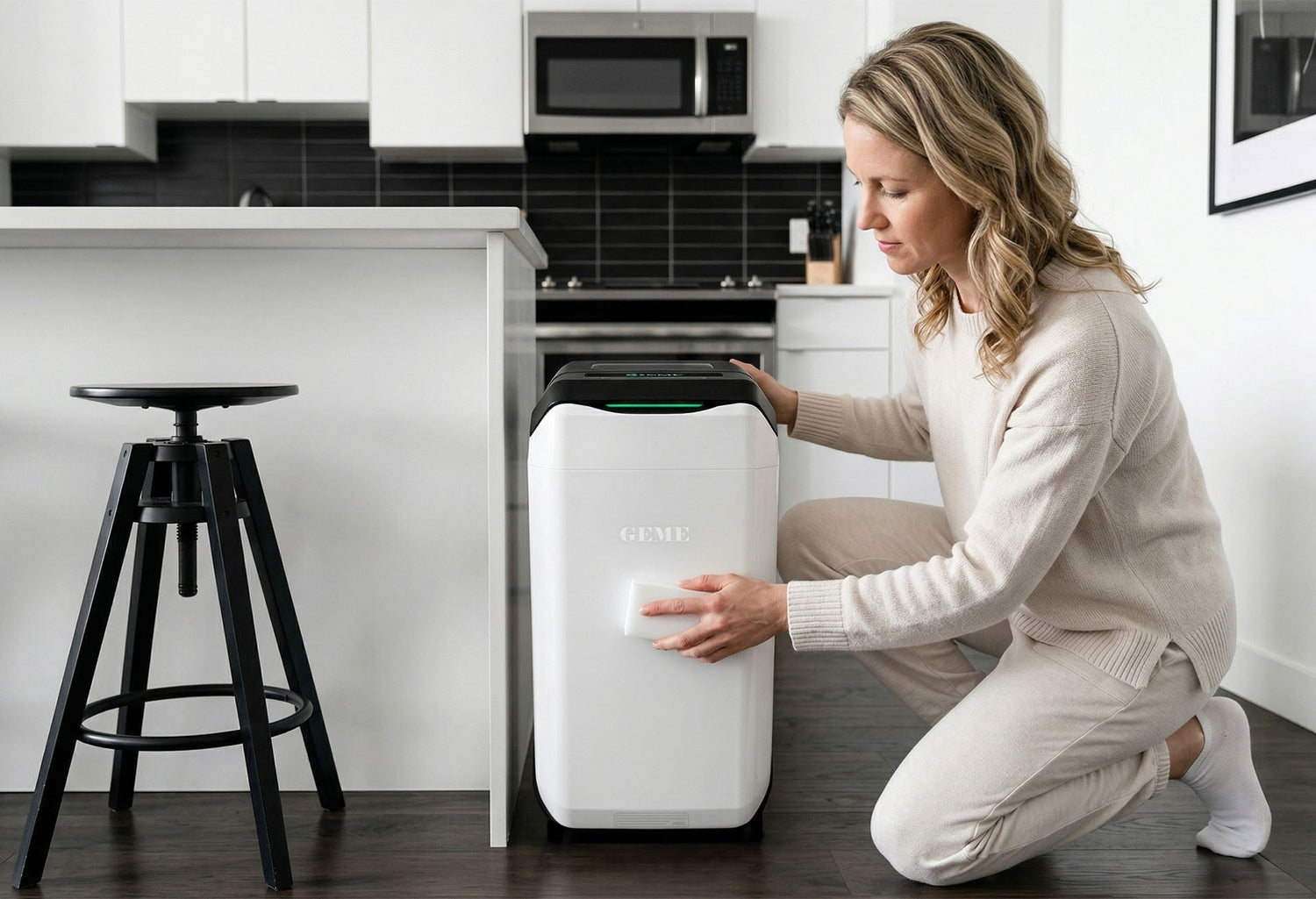
Best Kitchen Composters 2026: Real Composting vs Food Recycling
The best kitchen composter in 2026 is not simply the fastest machine or the smallest bin. The real question is whether the appliance supports biological composting, dries and grinds food scraps, stores food waste cleanly, or helps you return organic material to soil.
This guide compares GEME Terra II, Lomi, Mill, and Reencle across process, output, filters, capacity, soil use, and long-term ownership. The goal is not to repeat marketing labels. The goal is to show what each machine actually does.
Simple rule: if you want real composting, look for biology. If you want cleaner food-waste storage, a food recycler may be enough.
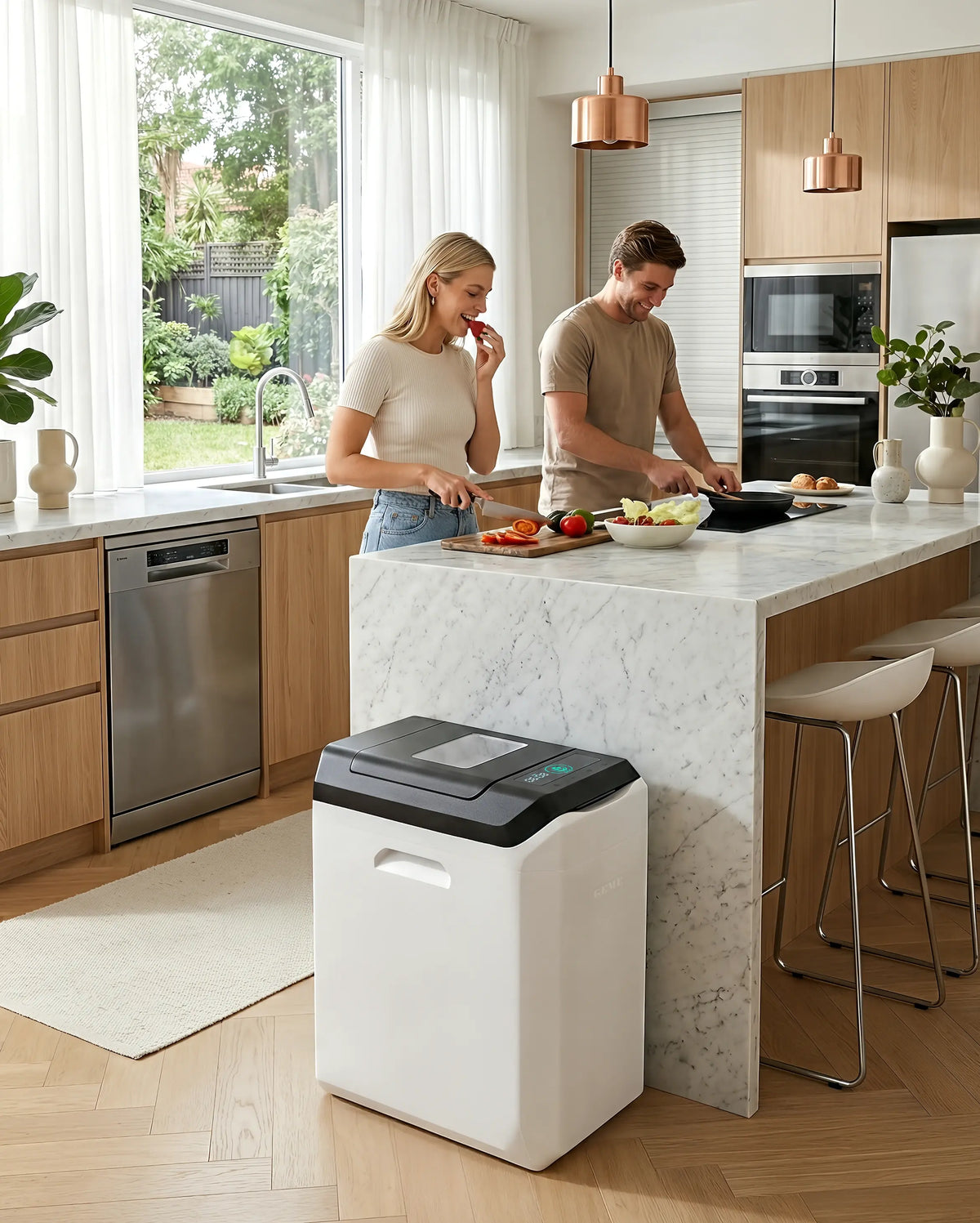
Compare by process, output, filters, and soil use — not by category name alone.
Quick Answer
For households that want real microbial composting and a soil-return routine, GEME Terra II is our top kitchen composter pick for 2026. It uses living microbes and adaptive control to create a moist compost base for soil blending, instead of simply drying and grinding scraps.
Lomi is better understood as a compact food recycler for reducing food-waste mess and volume. Mill is a strong dry-and-grind food recycler for people who want larger low-odor food-scrap storage. Reencle is a microbial food-waste composter with its own indoor composting ecosystem.
EPA guidance makes the central distinction clear: grinding and dehydrating food scraps can reduce volume and weight, but that material is not automatically compost. For plant use, output still needs the right next step: soil blending, curing, composting, or other treatment depending on the system.
Related reading: kitchen composter vs food waste recycler, GEME Terra II vs Lomi, and electric compost bin filter costs.
Key Takeaways
- Not every electric composter really composts. Many machines mainly dry, grind, or store food scraps.
- Process matters most. Microbial composting is different from dry-and-grind food recycling.
- Output matters next. Moist compost base, dry grounds, and partially processed scraps need different soil-use steps.
- EPA draws a clear line. Ground or dehydrated food-scrap material is not automatically compost.
- GEME Terra II is the best overall pick for soil return. It is built around living microbes, adaptive control, no drying, and a compost base for soil blending.
- Lomi is best for compact food-waste reduction. It is useful for trash control, but users should read output claims carefully.
- Mill is best for larger dry storage. Its official support describes a Dry and Grind cycle and carbon-filter odor management.
- Reencle is a strong microbial alternative. It uses a food-waste composting approach and may appeal to users who want an indoor microbe-based system.
- Best decision rule: choose by your end goal — soil return, food-waste reduction, storage, capacity, or low-maintenance ownership.
Table of Contents
- How We Rank Kitchen Composters in 2026
- GEME vs Lomi vs Mill vs Reencle Table
- Best Overall: GEME Terra II
- Best High-Capacity Option: GEME Pro
- Best Compact Food Recycler: Lomi
- Best Dry Storage System: Mill
- Best Microbial Alternative: Reencle
- Output Reality: Compost Base vs Dry Grounds
- Filters, Consumables, and Long-Term Cost
- Practical Buying Rules
- FAQ
- Summary
- Sources
- Related Articles
1. How We Rank Kitchen Composters in 2026
A good kitchen composter should be evaluated by what it actually does, not only by what the category label says. In 2026, many products use words like “composter,” “food recycler,” “food waste bin,” and “electric composter” in overlapping ways.
Our ranking uses seven practical criteria:
- Process: microbial composting, dry-and-grind recycling, or storage.
- Output: moist compost base, dry food grounds, or partially processed scraps.
- Soil use: whether output can be screened and mixed with soil, or needs further composting.
- Daily fit: capacity, feeding rhythm, and workload headroom.
- Odor strategy: microbes, airflow, filters, drying, or sealed storage.
- Consumables: replacement filters, pods, additives, pickup plans, or subscriptions.
- Claim discipline: whether the brand clearly explains what the output is and what it is not.
Ranking principle:
The best kitchen composter is not the machine that makes scraps disappear fastest. It is the machine that best matches your end goal: soil return, trash reduction, storage, capacity, or low-maintenance ownership.
2. GEME vs Lomi vs Mill vs Reencle: 2026 Comparison Table
The table below separates the four most common buying paths: real microbial composting, compact food recycling, dry-and-grind storage, and indoor microbial composting.
| Criteria | GEME Terra II | Lomi | Mill | Reencle |
|---|---|---|---|---|
| Best for | Best overall for real kitchen-to-soil composting | Compact food-waste reduction and convenience | Large dry food-scrap storage and low-odor bin routine | Indoor microbial composting alternative |
| Main process | Living microbes + GEMEBrain™ adaptive control | Food recycling with reduction/drying logic | Dry and Grind cycle | Food-waste composting with microbes |
| Output | Moist living compost base for soil blending | Reduced food-waste output; soil use depends on product guidance | Dry, shelf-stable food grounds | Compost-like microbial output; additional curing or soil blending may be useful |
| Direct finished compost? | No overclaim: screen and mix with soil at about 1:8–1:10 | Do not assume finished compost; verify output guidance | No; dry grounds need a next step before soil use | Microbial output; use according to Reencle guidance and plant sensitivity |
| Routine filter replacement | No routine replacement odor filters | Filters recommended on a cycle-based schedule | Carbon filter odor management | Check current model guidance and maintenance needs |
| Feeding style | Continuous daily feeding | Batch-style food recycling | Fill bin, then scheduled Dry and Grind cycle | Ongoing food-waste feeding into microbial environment |
| Soil-return value | Strongest fit for households that want compost base for soil blending | Better for reduction than direct soil-return confidence | Better for storage/recycling than direct soil application | Good microbial alternative for users comfortable with its routine |
| Best buyer | Homeowners, apartment users with plants, gardeners, and families who want real composting | Small kitchens that mainly want compact waste reduction | Households that want a larger food-scrap holding system with dry output | Users who want a microbe-based indoor composting appliance and accept its upkeep |
| 2026 verdict | Best Kitchen Composter Overall | Best Compact Food Recycler | Best Dry-and-Grind Storage System | Best Microbial Alternative |
The key distinction is simple: GEME Terra II is positioned around microbial composting and soil return; Lomi and Mill are more clearly food-waste reduction or food-recycling solutions; Reencle is another microbe-based indoor composting system with a different product experience.
3. Best Overall Kitchen Composter: GEME Terra II
GEME Terra II is the strongest overall pick for users who want a real kitchen-to-soil routine. It is not built around drying food scraps into chips. It uses living microbes and adaptive chamber control to maintain a warm, moist, oxygen-rich environment for microbial composting.
The output should be understood as a moist compost base for soil blending. That means screen larger pieces, return unfinished fragments to the chamber, and mix screened output with soil before plant use.
Why GEME Terra II Wins Overall
- Real microbial composting, not simple dehydration.
- Continuous feeding for everyday household scraps.
- No drying and no dry-chip output standard.
- No routine replacement odor filters.
- Moist compost base designed for soil blending.
- Clearer claim boundary: screen, return larger pieces, and mix with soil.
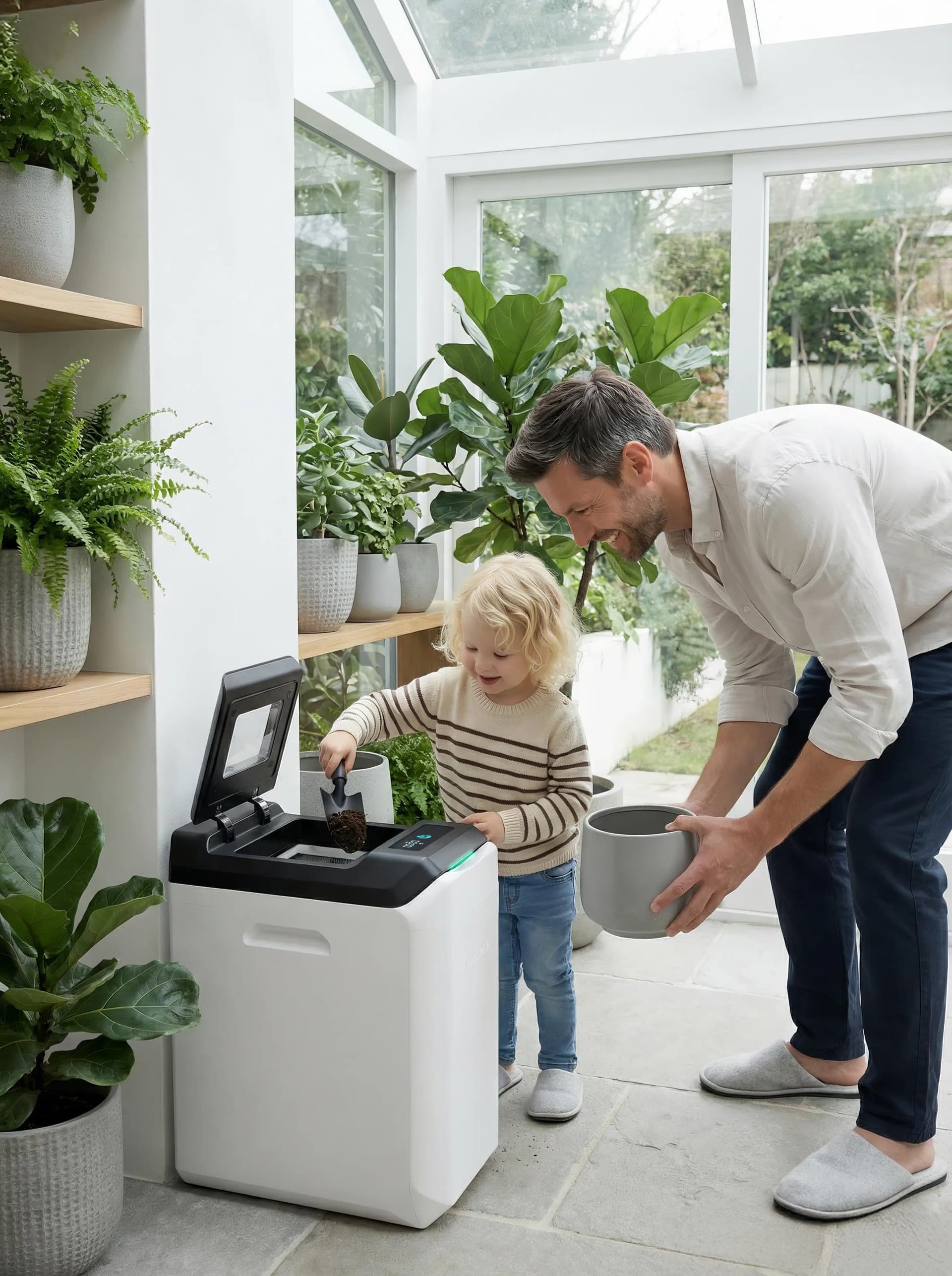
Real microbial composting for daily kitchen scraps.
Choose GEME Terra II for Real Kitchen Composting
Terra II is built for households that want more than food-waste reduction. It uses living microbes, adaptive control, continuous feeding, no drying, and no routine replacement odor filters to create compost base for soil blending.
Moist compost base. Soil blending. No dry-chip standard.
4. Best High-Capacity Option: GEME Pro
GEME Pro is the stronger choice when your household generates heavier or less predictable daily food waste. It follows the same microbial composting logic, but with more capacity and headroom for larger routines.
Choose Pro when capacity margin matters more than a smaller footprint. For ordinary daily households, Terra II may be the more agile fit. For larger kitchens, families, offices, or heavier cooking routines, GEME Pro gives more room to work.
GEME Pro Is Better If...
- Your food-waste load is larger or less predictable.
- You cook in batches or entertain often.
- You want more headroom than Terra II.
- You prefer larger capacity over compact household fit.
5. Best Compact Food Recycler: Lomi
Lomi is best understood as a compact food recycler. That makes it useful for users who want to reduce kitchen waste volume, keep scraps cleaner, and simplify trash handling in a smaller kitchen.
The main boundary is output interpretation. A food recycler can be helpful, but users should not assume that every reduced or dried output is finished compost. Soil use depends on the product’s specific guidance and any further composting or curing step.
Lomi Is Better If...
- You mainly want compact food-waste reduction.
- You have limited kitchen space.
- You do not need a full soil-return composting routine.
- You are comfortable checking filter and consumable requirements.
6. Best Dry-and-Grind Storage System: Mill
Mill is a strong fit for people who want a larger, cleaner, lower-odor food-scrap holding routine. Its official support describes the process as a Dry and Grind cycle that turns scraps into dry, shelf-stable grounds.
That can be very useful for households that do not want to manage raw scraps every day. But dry grounds are not the same thing as finished compost. For soil use, read Mill’s current guidance and understand what the next step is.
Mill Is Better If...
- You want a larger bin-style food-scrap routine.
- You prioritize dry storage over compost base.
- You want low-odor food-waste holding between cycles.
- You have a clear next step for dry grounds.
7. Best Microbial Alternative: Reencle
Reencle is another indoor microbe-based food-waste composting system. It appeals to users who want a living process rather than a purely dry-and-grind appliance.
The comparison with GEME is not “microbes vs no microbes.” Both are in the microbial direction. The practical comparison is daily capacity, output handling, maintenance, odor strategy, footprint, and how clearly the brand explains soil-use boundaries.
Reencle Is Better If...
- You want a microbial indoor composting alternative.
- You are comfortable with its feeding and maintenance routine.
- You prefer its footprint, setup, or user experience.
- You understand that compost output still needs responsible soil use.
8. Output Reality: Compost Base vs Dry Food Grounds
This is the most important buying distinction. A machine can make food scraps smaller, drier, cleaner, and less smelly without completing composting. That is useful, but it is not the same result.
A real microbial process needs moisture, oxygen, microbes, temperature, and time. This is why GEME output should not be judged by a dry-chip standard. Moist, soil-like compost base is part of the biological logic.
| Output Type | What It Usually Means | Best Next Step |
|---|---|---|
| Moist compost base | A microbe-supported organic material intended for soil blending. | Screen, return large pieces, and mix with soil. |
| Dry grounds | Food scraps that have been dried and ground. | Compost, cure, collect, or process further before soil use. |
| Compost-like microbial output | Material from a microbe-based indoor system. | Follow product guidance; curing or soil blending may still be useful. |
9. Filters, Consumables, and Long-Term Cost
A kitchen composter’s true cost is not only the purchase price. Many food recyclers use carbon filters, pods, pickups, subscriptions, or recurring accessories. Those can make ownership more expensive or more annoying over time.
GEME Terra II’s no routine replacement odor-filter design is a major ownership advantage for users who want less recurring maintenance. Mill and Lomi both have stronger food-recycler positioning and odor-control consumables to consider. Reencle users should check current model guidance for maintenance expectations.
Ask Before Buying
- How often are filters replaced?
- Are pods, additives, pickups, or subscriptions required?
- Is the odor-control path permanent or consumable-based?
- What happens if I do not replace accessories on schedule?
- What is the three-year ownership cost, not just the day-one price?
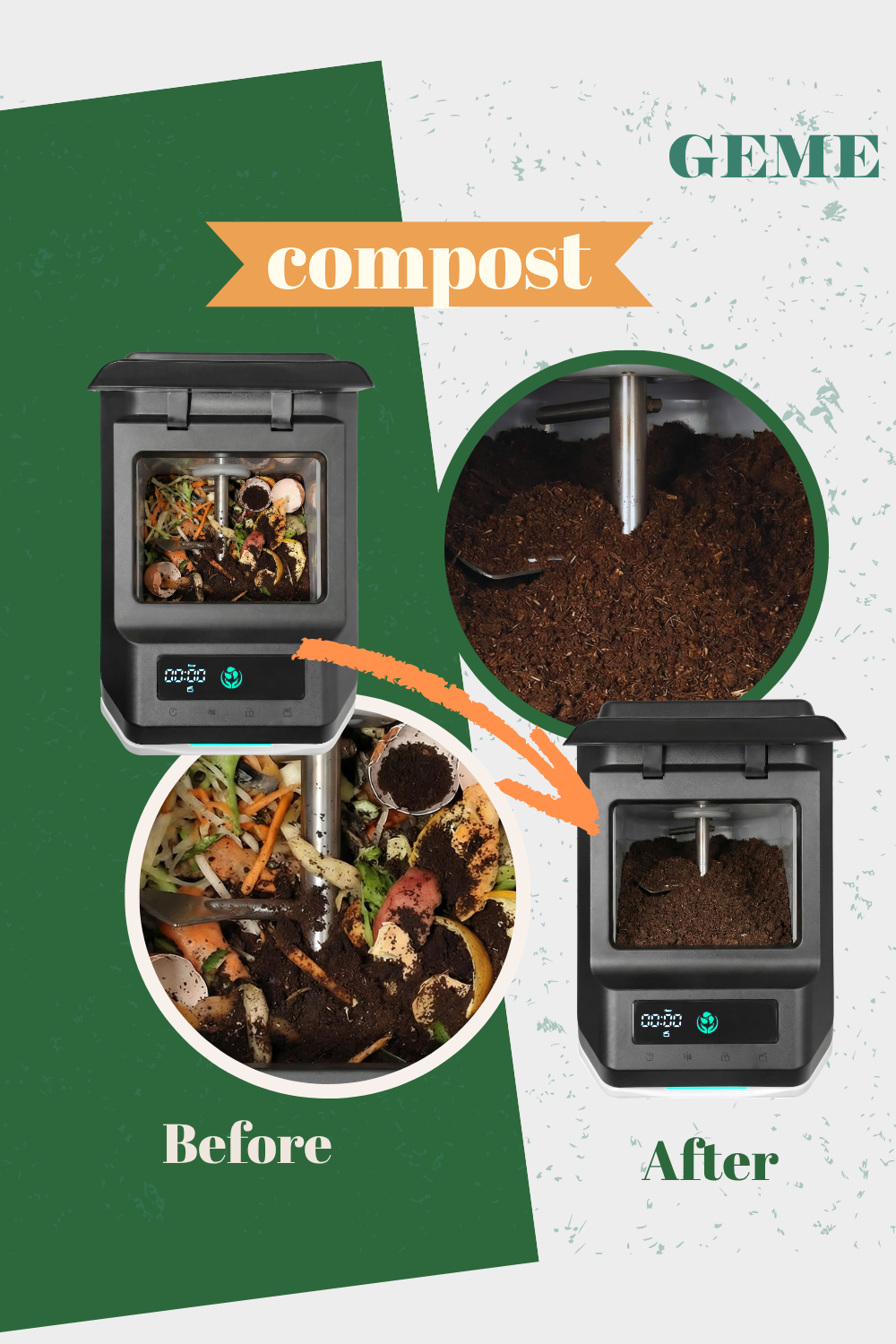
Choose compost base when your goal is soil.
Choose the GEME Model That Fits Your Kitchen
Terra II is built for everyday household composting. GEME Pro is built for heavier routines and more headroom. Both focus on real microbial composting rather than dry-and-grind food recycling.
Terra II for everyday homes. GEME Pro for heavier daily routines.
10. Practical Buying Rules
- Choose GEME Terra II if you want the best overall real kitchen composter for soil return.
- Choose GEME Pro if your daily food-waste load is larger or less predictable.
- Choose Lomi if compact food-waste reduction matters more than microbial compost base.
- Choose Mill if you want a large dry-and-grind storage system and have a clear next step for dry grounds.
- Choose Reencle if you want a microbial indoor composter and prefer its operating style.
- Do not buy by speed alone. Fast reduction is not the same as finished compost.
- Do not buy by “composter” label alone. Always check process, output, filters, and soil-use guidance.
Frequently Asked Questions
What is the best kitchen composter in 2026?
For users who want real microbial composting and compost base for soil blending, GEME Terra II is our top overall pick. It is designed around living microbes, continuous feeding, no drying, and no routine replacement odor filters.
Does every electric composter make real compost?
No. Many electric composters mainly dry, heat, grind, or reduce food scraps. EPA guidance says ground and dehydrated food scraps are not automatically compost and usually need further composting or treatment before soil use.
Is GEME Terra II better than Lomi?
It depends on your goal. GEME Terra II is stronger if you want a microbial composting system and compost base for soil blending. Lomi is a better fit if your main goal is compact food-waste reduction and convenience.
Is GEME Terra II better than Mill?
GEME Terra II is better for real microbial composting and soil-return routines. Mill is better for people who want a larger dry-and-grind food-scrap storage system and have a clear next step for dry grounds.
Is GEME Terra II better than Reencle?
Both are microbe-oriented systems. GEME Terra II stands out for continuous household composting, no drying, no routine replacement odor filters, and compost base for soil blending. Reencle may appeal to users who prefer its microbial ecosystem and operating style.
Can I put kitchen composter output directly on plants?
Do not assume direct plant use. GEME output should be screened and mixed with soil, commonly around 1:8–1:10. Dry food-recycler output usually needs additional composting, curing, or other treatment before responsible soil use.
Which kitchen composter has the lowest long-term maintenance?
GEME Terra II is strong for low recurring maintenance because it has no routine replacement odor filters. Food recyclers that rely on carbon filters or subscriptions may have higher long-term upkeep.
Which composter is best for apartments?
For apartment users who want soil return, GEME Terra II is a strong fit because it supports real microbial composting in a controlled indoor system. For users without soil access, a food recycler may be enough to reduce odor and trash volume.
Should I choose a food recycler instead of a composter?
Choose a food recycler if your main goal is cleaner food-waste storage or volume reduction. Choose a real kitchen composter if your end goal is compost base for soil blending.
What is the simplest buying rule?
Buy by output and next step. If you want soil return, choose a microbial kitchen composter. If you mainly want less smelly trash, choose a food waste recycler.
Summary
- Best overall: GEME Terra II, for real microbial composting and compost base for soil blending.
- Best high-capacity option: GEME Pro, for larger or heavier daily routines.
- Best compact food recycler: Lomi, for food-waste reduction and convenience.
- Best dry-and-grind storage: Mill, for large low-odor food-scrap storage and dry grounds.
- Best microbial alternative: Reencle, for users who want an indoor microbe-based composting system.
- EPA boundary: dried or ground food scraps are not automatically compost.
- GEME boundary: output should be treated as compost base, screened, and mixed with soil.
- Ownership boundary: filter and consumable costs matter over time.
- Best takeaway: the best kitchen composter is the one whose process and output match your real end goal.
Sources
- U.S. EPA — Composting at Home
- U.S. EPA — Composting
- GEME — Terra II Product Page
- GEME — GEME Pro Product Page
- GEME — How Real Microbial Composting Works
- Lomi — Food Recycler Product Page
- Lomi — Filter Refill Guidance
- Mill Support — How a Mill Cycle Works
- Mill Support — Dry & Grind Cycle and Scheduling Tips
- Reencle Help Center — What Is Reencle?
- Reencle Help Center — What You Can and Cannot Feed Reencle
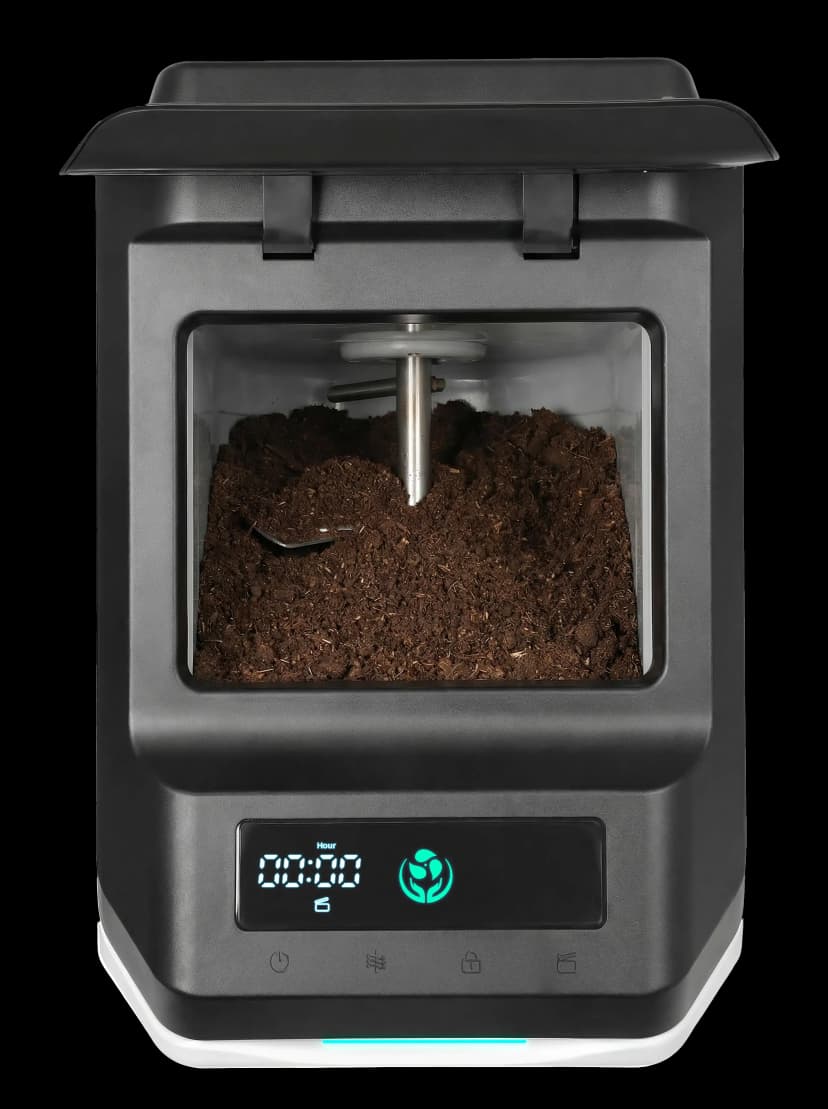
Choose real microbial composting when your goal is compost base.
Choose the Best Kitchen Composter by What Happens Next
Lomi and Mill can reduce food-waste mess. Reencle offers another microbial path. GEME Terra II and GEME Pro are built for households that want real microbial composting and compost base for soil blending.
Terra II for everyday homes. GEME Pro for heavier daily routines.


Leave a comment
This site is protected by hCaptcha and the hCaptcha Privacy Policy and Terms of Service apply.