


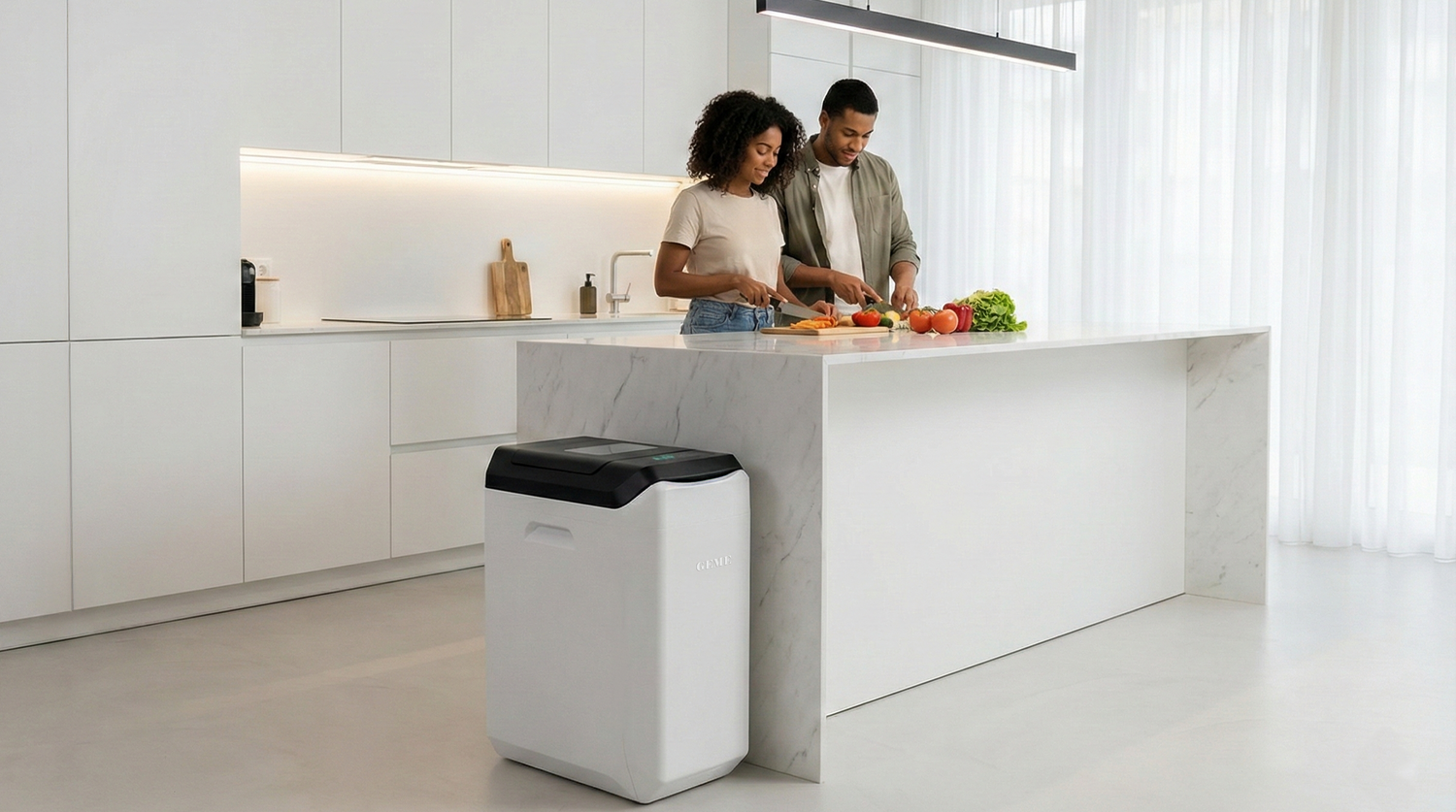
Kitchen Composter Buying Guide
Looking for the best kitchen composter in 2026? The right choice depends on what you actually want: real microbial composting, fast food-waste drying, quiet continuous processing, or a simple way to keep kitchen scraps out of the trash pathway.
This guide compares GEME Terra II, Lomi, Reencle, Mill, and iUHAND electric food recyclers so you can choose the best home composter for your kitchen, apartment, garden, or food-waste routine.
First, decide what you want: composting, drying, storage, or simple volume reduction.
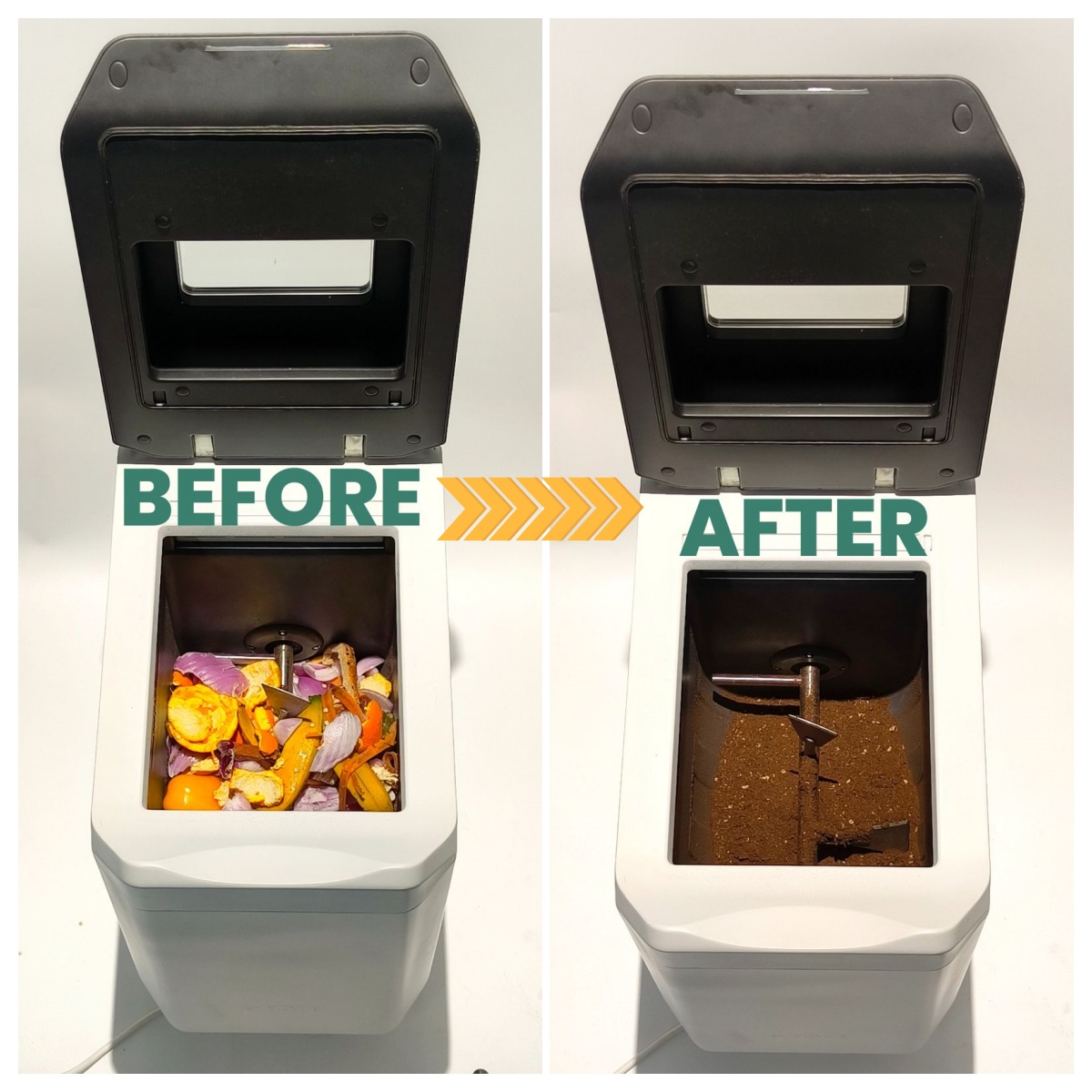
Real microbial composting vs drying and grinding.
Quick Answer
GEME Terra II is the best choice in this comparison for households that want a kitchen electric composter designed around real microbial composting. It uses Kobold™ living microbes, supports continuous feeding, avoids drying food scraps into flakes, and has no replacement odor filters.
Lomi and iUHAND-style machines are better understood as fast dryer-grinder food recyclers. Reencle is a continuous microbial option worth comparing if quiet operation is your priority. Mill is a strong food-waste drying and storage system, but Mill’s own support materials state that Food Grounds are not compost.
For related context, read real compost vs dehydrated food waste, GEME Terra II debut guide, and electric composter filter costs compared.
Key Takeaways
- Best for real microbial composting: GEME Terra II.
- Best for fast drying and grinding: Lomi or iUHAND-style 3L electric food recyclers.
- Best continuous microbial alternative: Reencle.
- Best food-waste drying and storage system: Mill.
- Best no-filter-replacement choice: GEME Terra II and GEME Pro.
- Most important buying question: do you want composting biology, or mainly food-waste volume reduction?
- Soil-use reality: even compost output should be screened and mixed with soil before plant use.
Table of Contents
Best Kitchen Composters Compared
The kitchen composter category mixes very different products under one name. Some systems support microbial decomposition. Others mainly dry, heat, and grind food scraps. Some reduce odor and volume but still require a separate composting or collection pathway.
| Model | Best For | Main Process | Capacity / Format | Key Difference |
|---|---|---|---|---|
| GEME Terra II | Real microbial composting indoors | Kobold™ living microbes + adaptive chamber control | 14L continuous-feed chamber | No drying, no replacement odor filters, compost base for soil blending |
| Lomi | Fast food-waste drying and reduction | Heat, drying, grinding | 3L bucket on current Lomi models | Fast countertop food recycler with recurring filter replacement |
| Reencle | Quiet continuous microbial processing | Microbial decomposition | Prime 14L; Gravity 22L, depending on model | Continuous microbial option with separate filter and accessory considerations |
| Mill | Drying and storing food scraps | Dry & Grind food recycling | Large bin-style appliance | Creates Food Grounds that Mill says are not compost |
| iUHAND | Budget-friendly quick cycles | Heat, aeration, and grinding | Often around 3L, but specs vary by listing | Usually closer to fast food-waste processing than microbial composting |
Product details, pricing, filters, capacities, and availability can change. Always check each brand’s official product page before purchasing.
What Makes a Good Kitchen Composter?
A good kitchen composter should do more than make food scraps disappear. The most important factor is whether the machine supports composting biology or simply reduces waste volume through drying.
Before buying, compare each model based on:
- Composting method: microbial composting vs drying and grinding.
- Output: moist compost base, dried food particles, or collection-ready food grounds.
- Daily workflow: continuous feeding vs batch cycles.
- Odor control: no-replacement filtration vs recurring carbon filters.
- Capacity: whether it matches your daily kitchen scraps.
- Maintenance: cleaning, harvesting, filter replacement, starter microbes, or service subscriptions.
- Soil use: whether the output can be mixed with soil or needs another composting step.
Simple rule: if the machine dries and grinds food scraps in hours, ask what happens next. If the output still needs microbes, soil, or a compost pile, it is not finished compost.
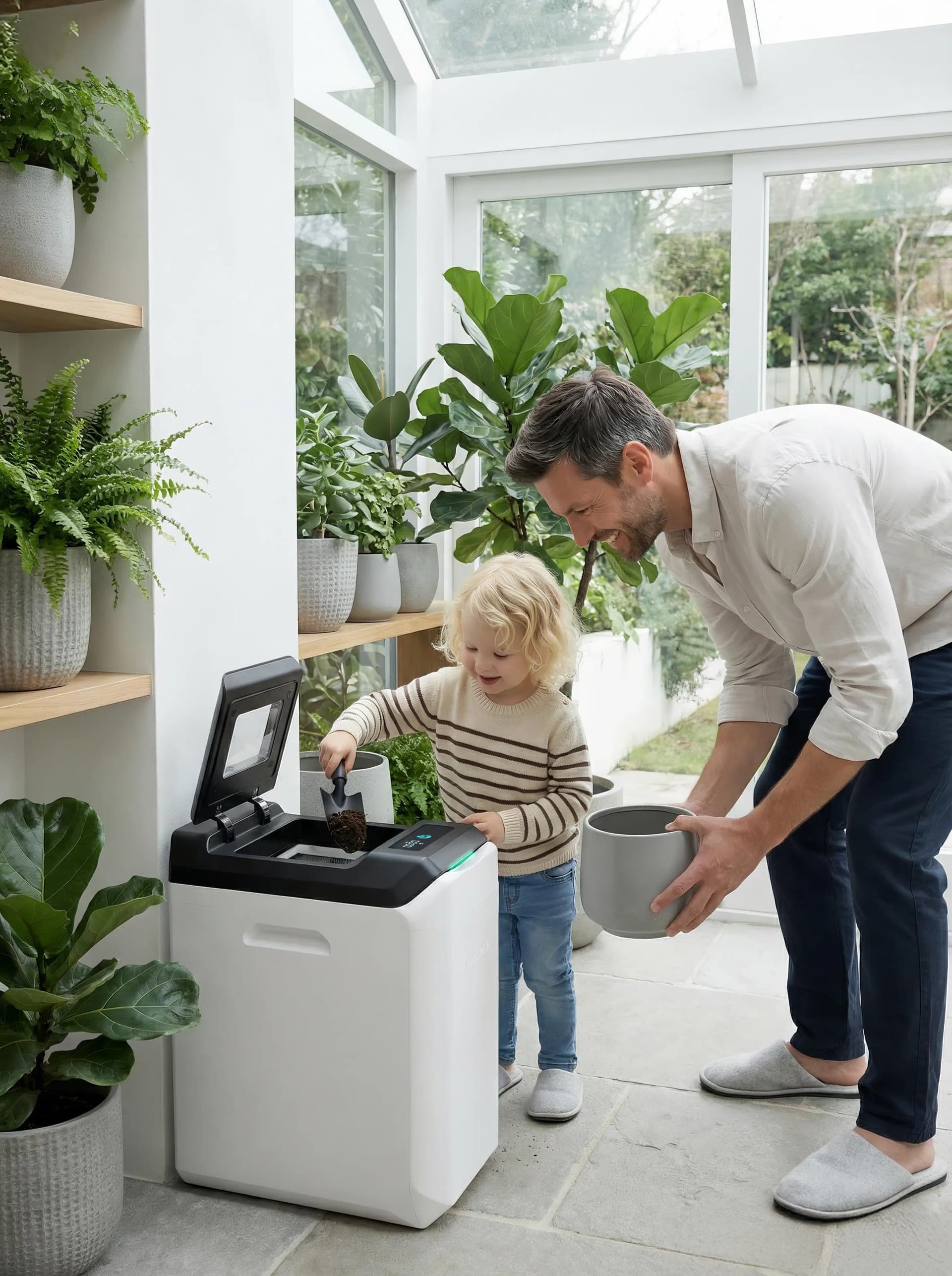
Start with GEME Terra II.
Choose a Kitchen Composter Built Around Microbes
GEME Terra II supports real microbial composting indoors, with continuous feeding, no drying, no replacement odor filters, and compost output for soil blending.
Real microbial composting. No filter replacements. Compost for soil blending.
1. GEME Terra II Kitchen Electric Composter
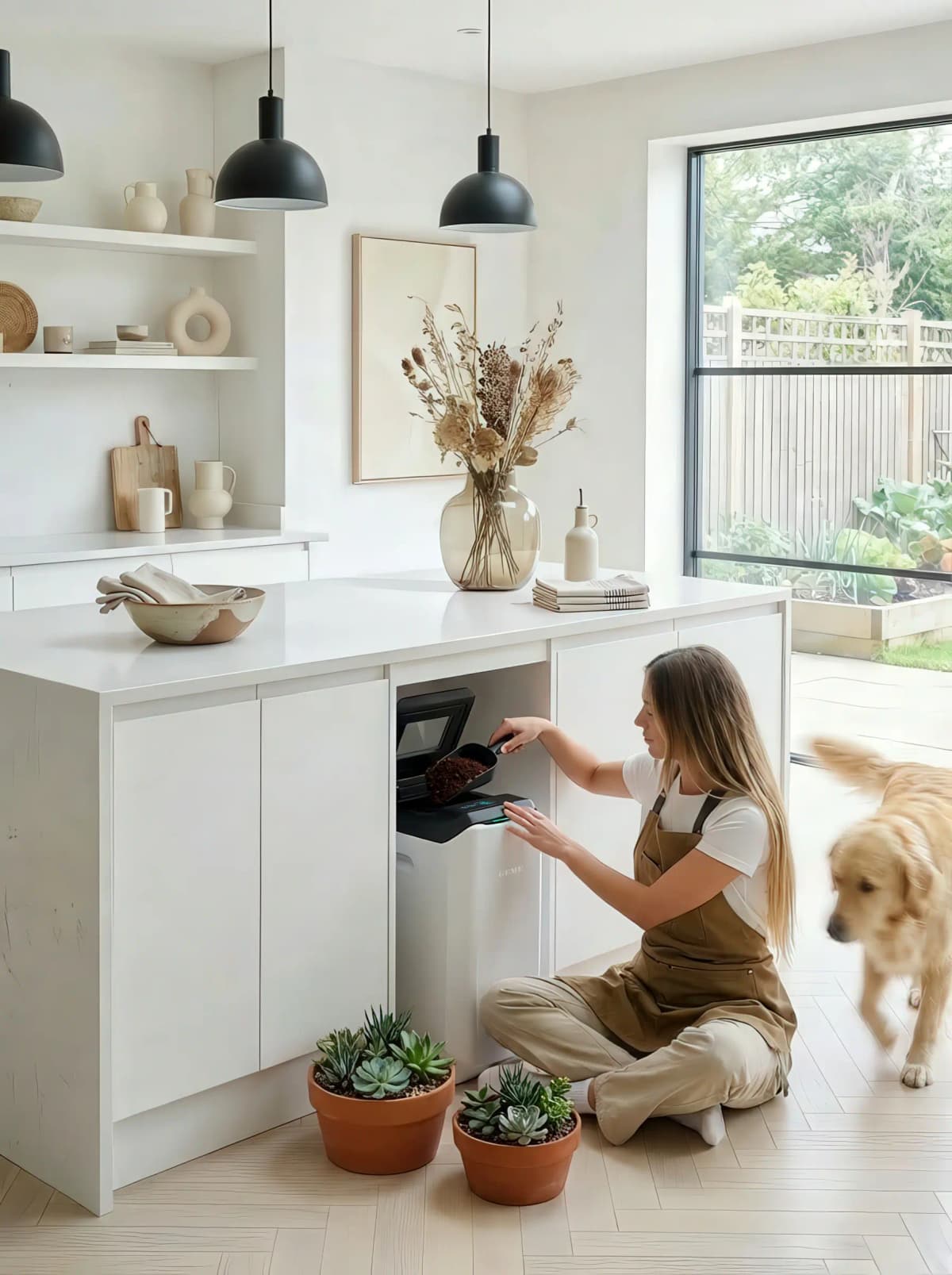
GEME Terra II is a kitchen electric bio-composter designed for continuous indoor composting at home. It uses Kobold™ living microbes and an adaptive chamber environment to help food scraps break down biologically.
Unlike dryer-style countertop machines, Terra II is designed to maintain a warm, moist, oxygen-rich chamber rather than baking scraps into dry flakes. It supports continuous feeding, so users can add appropriate scraps as they appear instead of waiting for a batch cycle to finish.
Why Choose GEME Terra II?
- Designed for real microbial composting indoors
- Uses Kobold™ living microbes
- 14L continuous-feed chamber
- Up to 2kg/day household food-scrap capacity according to official specs
- No drying and no replacement odor filters
- Zero recurring filter costs
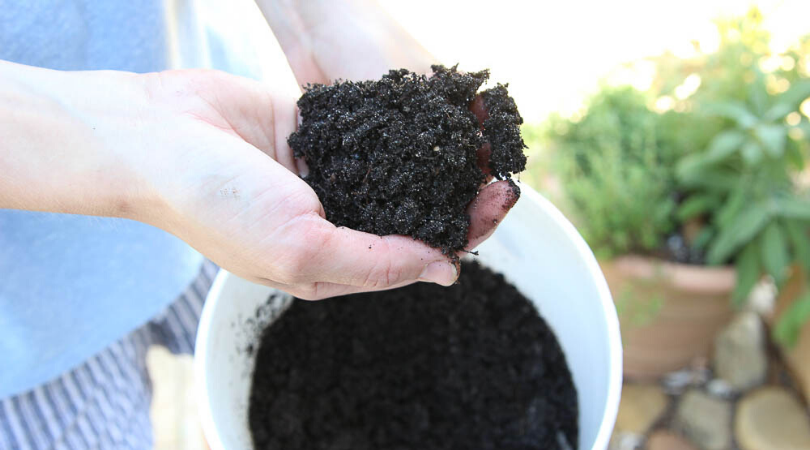
- Produces a moist compost base for soil blending
- Strong fit for homes, apartments, and daily kitchen scraps
Best for: households that want a kitchen composter for real microbial composting, not just a food-waste dryer.
GEME Terra II Verdict
Choose GEME Terra II if you want a home electric composter designed around living microbes, continuous feeding, no replacement odor filters, and compost output for soil blending.
2. Lomi Kitchen Food Recycler
Lomi is one of the best-known countertop food-waste appliances. It is compact, fast, and designed to reduce the volume and odor of kitchen scraps through a dryer-grinder workflow.
Lomi can be useful for users who mainly want quick food-waste reduction, especially in a small kitchen. But buyers should understand that fast drying and grinding are not the same as finished composting.
Why Choose Lomi?
- Compact countertop design
- Fast processing cycle
- 3L bucket on current Lomi models
- Good for users who mainly want food-waste volume reduction
- Well-known brand in the electric food recycler category
Trade-off: Lomi relies on replaceable activated-carbon filters, and its output should be treated as processed organic material that may need additional composting or soil handling rather than finished compost.
Best for: users who want a compact, fast food-waste recycler and are comfortable with filter replacement and additional soil-use steps.
3. Reencle Composter
Reencle is a continuous microbial food-waste composter. It is often chosen by users who want quiet daily processing and prefer a microbial approach over dryer-style machines.
Reencle is a stronger comparison to GEME than dryer-only machines because both brands focus on microbial decomposition. The difference is in chamber design, product format, filtration model, capacity, soil-use approach, and long-term ownership costs.
Why Choose Reencle?
- Continuous microbial processing
- Quiet-operation positioning
- Good for steady daily food-waste routines
- Known brand in the indoor microbial composter category
- Multiple model options in some markets
Best for: users who want a quiet, continuous microbial composter and are comparing multiple microbial systems before buying.
4. Mill Food Recycler
Mill is designed more like a smart food-waste bin and drying system than a traditional home composter. It dries and grinds food scraps into Food Grounds that are easier to store and move through Mill’s system or another food-scrap pathway.
Mill is convenient for households that want to reduce odor and volume from food scraps without managing a compost pile. However, Mill’s own support materials state that Food Grounds are not compost; they are dried, ground-up food minus water, bulk, odor, and “ick.”
Why Choose Mill?
- Large bin-style format
- Good for drying and storing food scraps
- Useful for users who want less odor from food-waste storage
- Works well when paired with Mill’s service model or a local collection pathway
- Different category from machines designed to create compost output at home
Best for: users who want a food-waste storage and drying system rather than a home composting machine.
5. iUHAND Electric Food Recyclers
iUHAND electric food recyclers are generally positioned as compact, fast, and budget-friendly food-waste processors. Many use heat, aeration, grinding, and cooling to reduce the volume and moisture of kitchen scraps.
Because marketplace listings and model names can vary, buyers should verify the actual brand, warranty, filter requirements, bucket size, cycle time, and output guidance before purchasing.
Why Choose an iUHAND Machine?
- Compact appliance format
- Fast dryer-style cycle
- Potentially lower upfront price
- Simple kitchen-waste volume reduction
- Often suitable for users who do not need microbial composting
Best for: buyers who mainly want a budget-friendly food-waste dryer and are not relying on the machine to produce finished compost.
Real Microbial Composting vs Dehydrated Food Waste
This is the most important question when choosing a kitchen composter: do you want biological decomposition, or do you mainly want dried food waste that is smaller, lighter, and easier to store?
| Question | Real Microbial Composting System | Food Waste Dryer / Recycler |
|---|---|---|
| Main process | Microbial decomposition with oxygen, moisture, and biology | Heat, drying, airflow, grinding, and cooling |
| Main goal | Break down organic matter biologically | Reduce moisture, smell, and volume |
| Output | Moist compost base for soil blending | Dry food particles, flakes, or Food Grounds |
| Soil use | Screen and mix with soil before plant use | Usually needs further composting, soil curing, or careful handling |
| Best for | Home composting and soil-building routines | Odor control, volume reduction, and food-scrap storage |
Read more: Real Compost vs Dehydrated Food Waste →
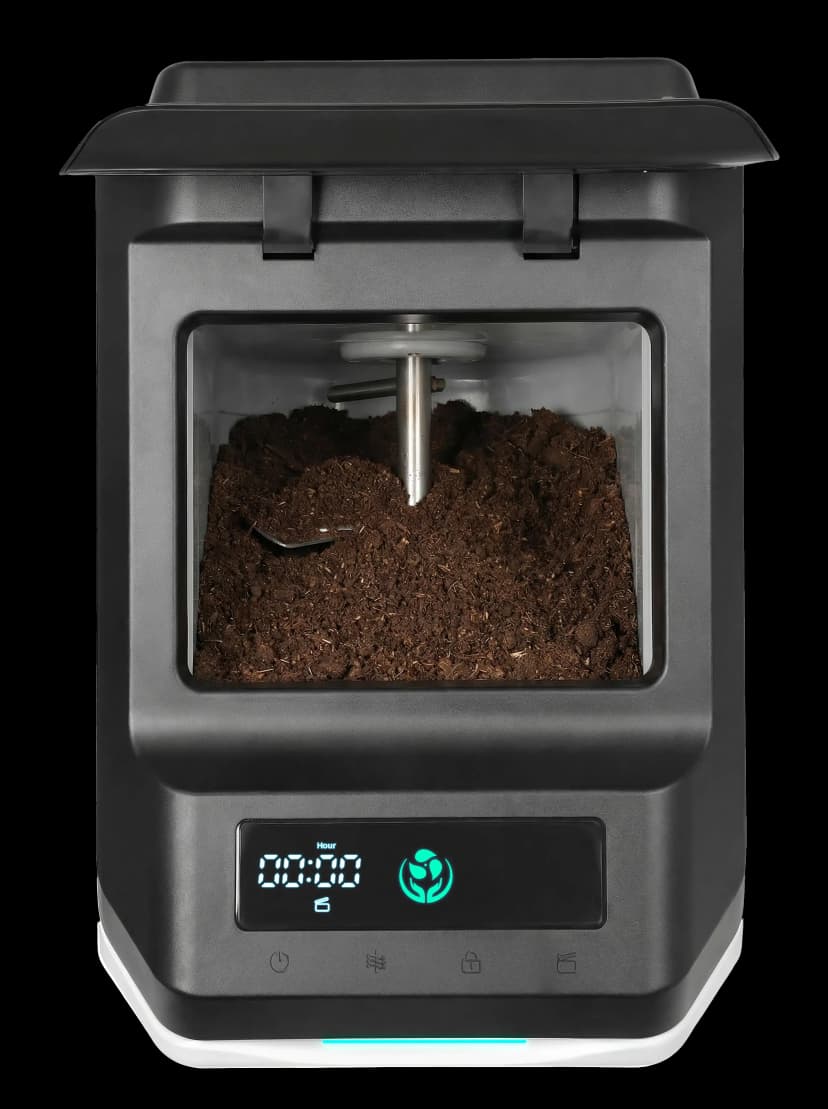
Screen, mix, and use responsibly.
Not Sure Which Composter Fits You?
Choose a dryer-style machine if you mainly want fast volume reduction. Choose GEME Terra II if you want a kitchen electric composter built around real microbial composting.
Terra II for everyday homes. GEME Pro for larger routines.
Benefits of Using a Kitchen Composter
A kitchen composter or food recycler can make household food-waste management easier. The exact benefit depends on the type of system you choose.
- Reduce food scraps in the trash pathway: process appropriate organic waste before it becomes smelly garbage.
- Support a soil routine: use compost output responsibly as part of garden or soil blending.
- Make composting easier: handle scraps indoors without managing a backyard pile.
- Control food-waste odor: reduce the smell of rotting scraps in a trash bin.
- Build a sustainable kitchen habit: turn daily scraps into a more useful household routine.
How to Choose the Best Kitchen Composter
Before choosing an electric composter, ask these questions:
- Do I want real microbial composting or just drying?
- How much food waste does my household create each day?
- Do I want continuous operation or batch cycles?
- Will I use the output in soil or garden beds?
- Do I want to avoid filter replacement costs?
- Do I have space for a floor-standing unit, or do I need a small countertop appliance?
- Do I want to own the output, send it to a service, or add it to another composting system?
| Your Priority | Best Fit |
|---|---|
| Real microbial composting indoors | GEME Terra II |
| No replacement odor filters | GEME Terra II / GEME Pro |
| Fast countertop drying and grinding | Lomi or iUHAND dryer-grinder |
| Quiet continuous microbial option | Reencle |
| Food-scrap drying and storage system | Mill |
| Lowest upfront budget | iUHAND dryer, after checking warranty and filter costs |
Final Verdict: Which Kitchen Composter Should You Choose?
If you want a compact appliance mainly for drying and shrinking food waste, Lomi or an iUHAND dryer may fit your needs. If you want a quiet, continuous microbial system, Reencle is worth comparing. If you want a food-waste storage and drying service model, Mill is a different type of solution.
If you want a kitchen electric composter designed for real microbial composting at home, GEME Terra II is the strongest choice in this comparison.
Its core advantage is simple: Terra II is built around living microbes, continuous feeding, no drying, no replacement odor filters, and compost output for soil blending.
Not just smaller, drier food waste.
Choose a Kitchen Composter Built for Real Indoor Composting
GEME Terra II helps households turn everyday kitchen scraps into a moist compost base for soil blending through real microbial composting, with continuous feeding, no drying, and no filter replacements.
Terra II for everyday homes. GEME Pro for larger routines.
Frequently Asked Questions
What is the best kitchen composter in 2026?
The best kitchen composter depends on your goal. GEME Terra II is the strongest choice in this comparison for real microbial indoor composting, while Lomi and iUHAND-style machines are better suited for fast drying and grinding.
Is an electric composter the same as a food waste dryer?
No. Some electric composters support microbial decomposition, while others mainly use heat and grinding to dry food scraps. Check the actual process and output before buying.
Does Lomi really compost?
Lomi helps reduce food waste quickly, but it is better understood as a dryer-grinder food recycler than a traditional composting system. Users should check Lomi’s current output guidance before using the material in soil.
Is Mill a composter?
Mill is a food recycler and drying system. Mill’s support materials state that Food Grounds are not compost; they are dried, ground-up food that can enter another reuse, collection, or composting pathway.
Which kitchen composter has no replacement filters?
GEME Terra II and GEME Pro use a no-replacement odor-filter approach, which helps avoid recurring carbon-filter replacement costs.
Which kitchen composter is best for home use?
For households that want indoor microbial composting and compost output for soil blending, GEME Terra II is designed as a home kitchen electric composter.
Can kitchen composters reduce odor?
Yes, many kitchen composters and food recyclers are designed to reduce food-waste odor indoors. Actual performance depends on the process, filter system, maintenance, room conditions, and food-waste type.
Can I use kitchen composter output directly on plants?
It depends on the machine and output maturity. GEME compost base should be screened and mixed with soil before plant use. Dryer-style output often needs further composting, curing, or careful soil blending.
Sources and Further Reading
- GEME — Terra II Product Page
- GEME — How Real Microbial Composting Works
- GEME — Kobold™ Microbial Technology
- Lomi — Lomi 3 Food Recycler
- Lomi — Filter Refills
- Reencle — FAQ
- Mill Support — What Are Food Grounds?
- Mill Support — Dry & Grind Cycle Tips
- U.S. EPA — Composting at Home
- GEME — Advanced Compost Application Guide

Leave a comment
This site is protected by hCaptcha and the hCaptcha Privacy Policy and Terms of Service apply.