


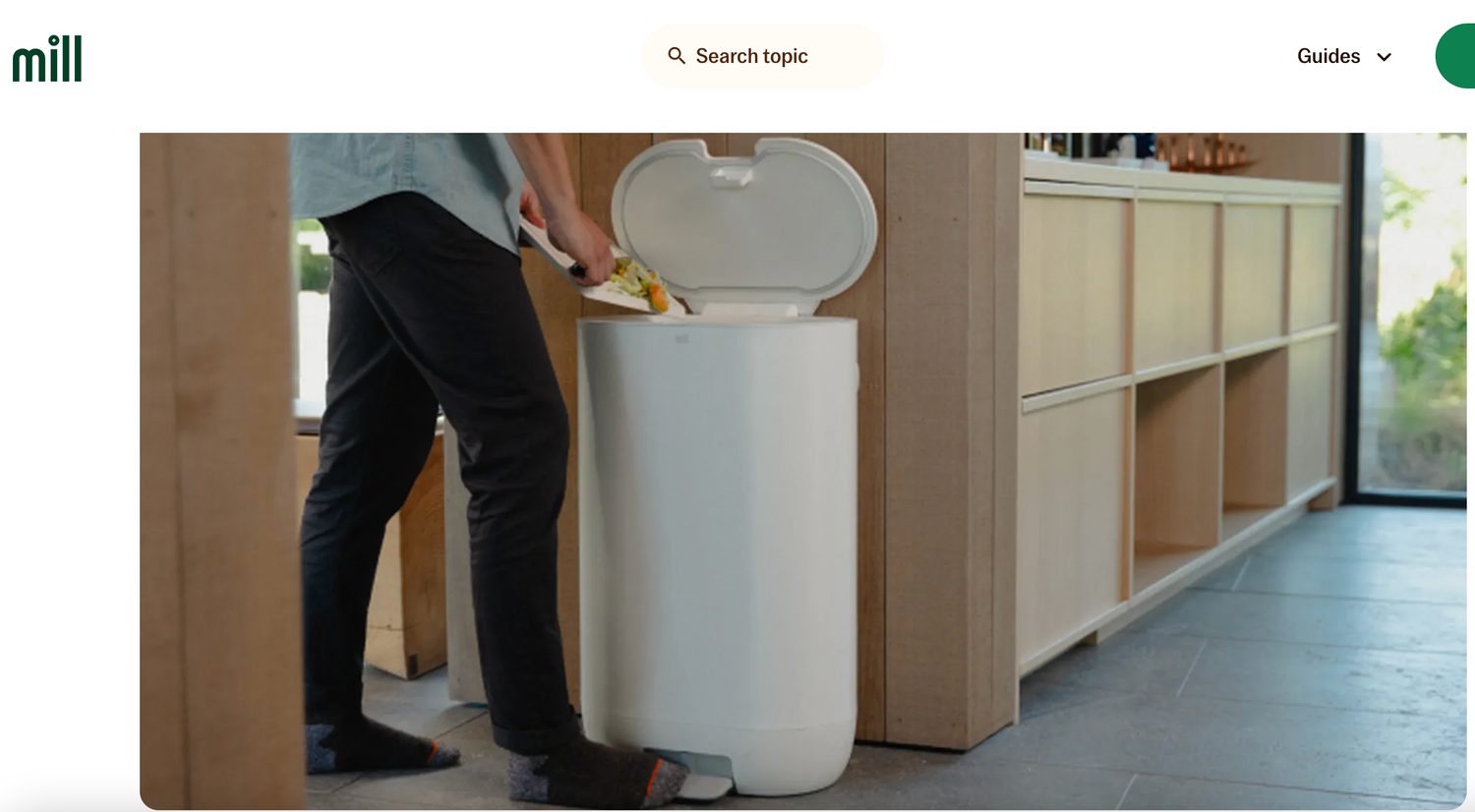
Food Recycler vs Real Composter
Mill can be a useful food-waste appliance. It dries and grinds scraps into Food Grounds, helping reduce odor, moisture, and storage mess indoors.
But drying and grinding are not the same as composting. This guide explains what Mill actually does, why Food Grounds are not finished compost, and how GEME Terra II compares if your goal is real microbial composting and real compost for soil blending.
Smaller food waste is useful. Real compost is a different outcome.
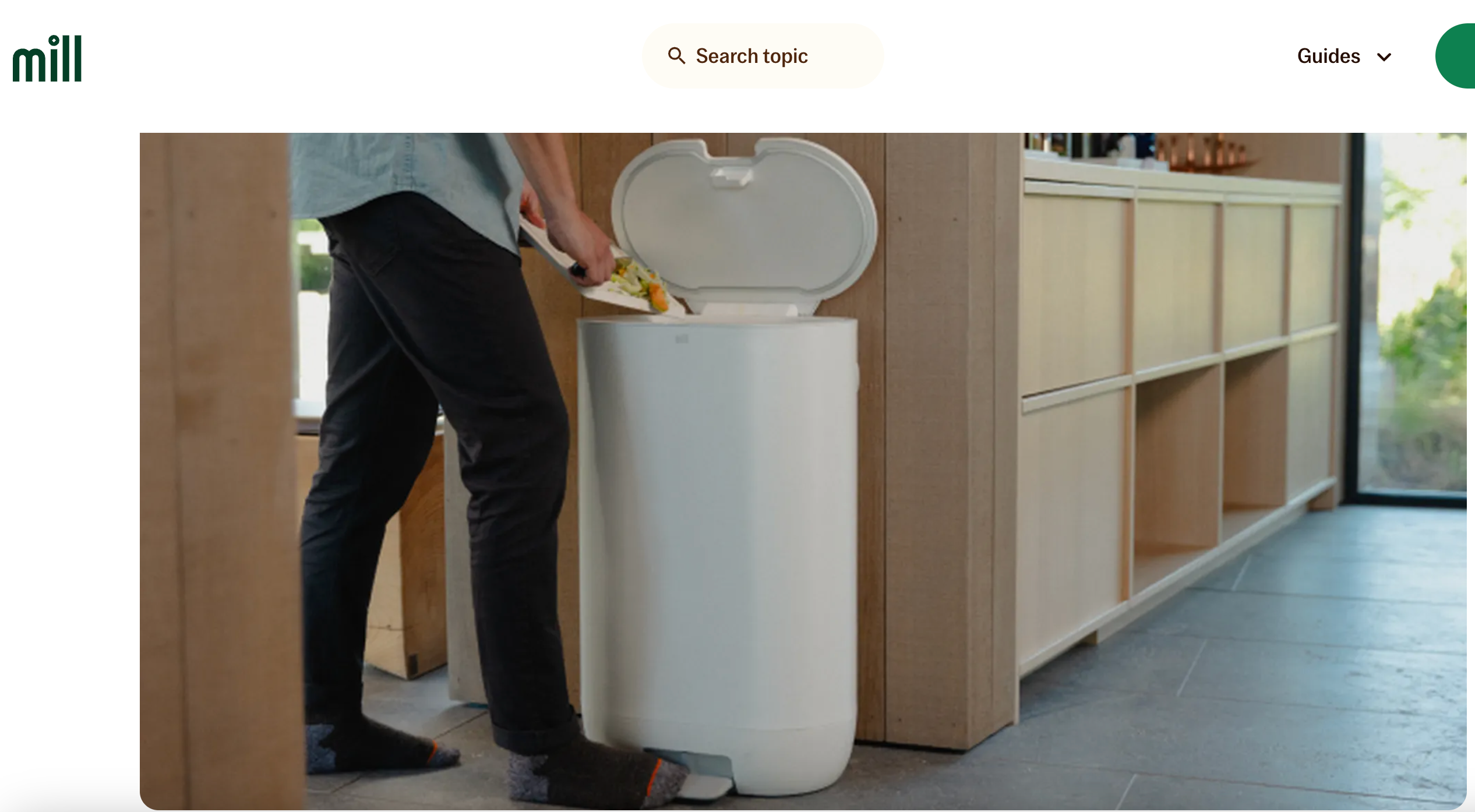
Food Grounds vs real compost.
Quick Answer
Mill does not biologically compost food scraps into finished compost inside the machine. Mill turns food scraps into dried, ground Food Grounds, which may later be composted or used through another pathway.
GEME Terra II takes a different approach. It supports real microbial composting with Kobold™ living microbes, continuous daily feeding, real compost for soil blending, no filter replacements, and zero recurring filter costs.
For related context, read real compost vs dehydrated food waste, GEME vs Mill, and how to use GEME compost safely.
Key Takeaways
- Mill is a food recycler, not a biological composter. It dries and grinds food scraps into Food Grounds.
- Food Grounds are not finished compost. They may still need further biological decomposition before behaving like mature compost in soil.
- Mill can still be useful. It can reduce food-waste moisture, odor, bulk, and storage friction.
- Real composting is microbial. It depends on microorganisms, oxygen, moisture, temperature, structure, and time.
- GEME Terra II supports real microbial composting. It creates a warm, moist, oxygen-rich chamber for Kobold™ microbes.
- GEME compost should be blended with soil. Screen large, unfinished pieces and mix compost with soil before plant use.
- Recurring upkeep matters. Mill carbon filter replacement may apply; GEME Terra II has no filter replacements and zero recurring filter costs.
Table of Contents
What Is the Mill Food Recycler?
The Mill Food Recycler is a smart kitchen appliance designed to make food scraps easier to manage indoors. Its core value is reducing the moisture, smell, bulk, and mess of everyday kitchen waste.
Mill’s output is called Food Grounds. These Food Grounds are dried and ground food scraps. They are easier to store than wet scraps, but they are not finished compost.
This distinction matters because many shoppers search for a “Mill composter,” but Mill is more accurately understood as a food recycler that prepares food waste for another pathway.
What Mill Actually Does
Mill’s process is physical, not biological. The machine removes moisture and grinds scraps into a smaller, drier material.
- Drying: moisture is removed from food scraps.
- Grinding: dried food scraps are reduced into smaller particles.
- Storage or next pathway: the Food Grounds can be stored, sent through a service path, added carefully to a composting pathway, or otherwise handled according to Mill guidance.
| Question | Mill Food Recycler |
|---|---|
| Category | Food recycler |
| Core process | Drying and grinding |
| Output | Food Grounds / dried ground food scraps |
| Finished compost? | No |
| Best for | Cleaner food-waste storage, odor reduction, and volume reduction |
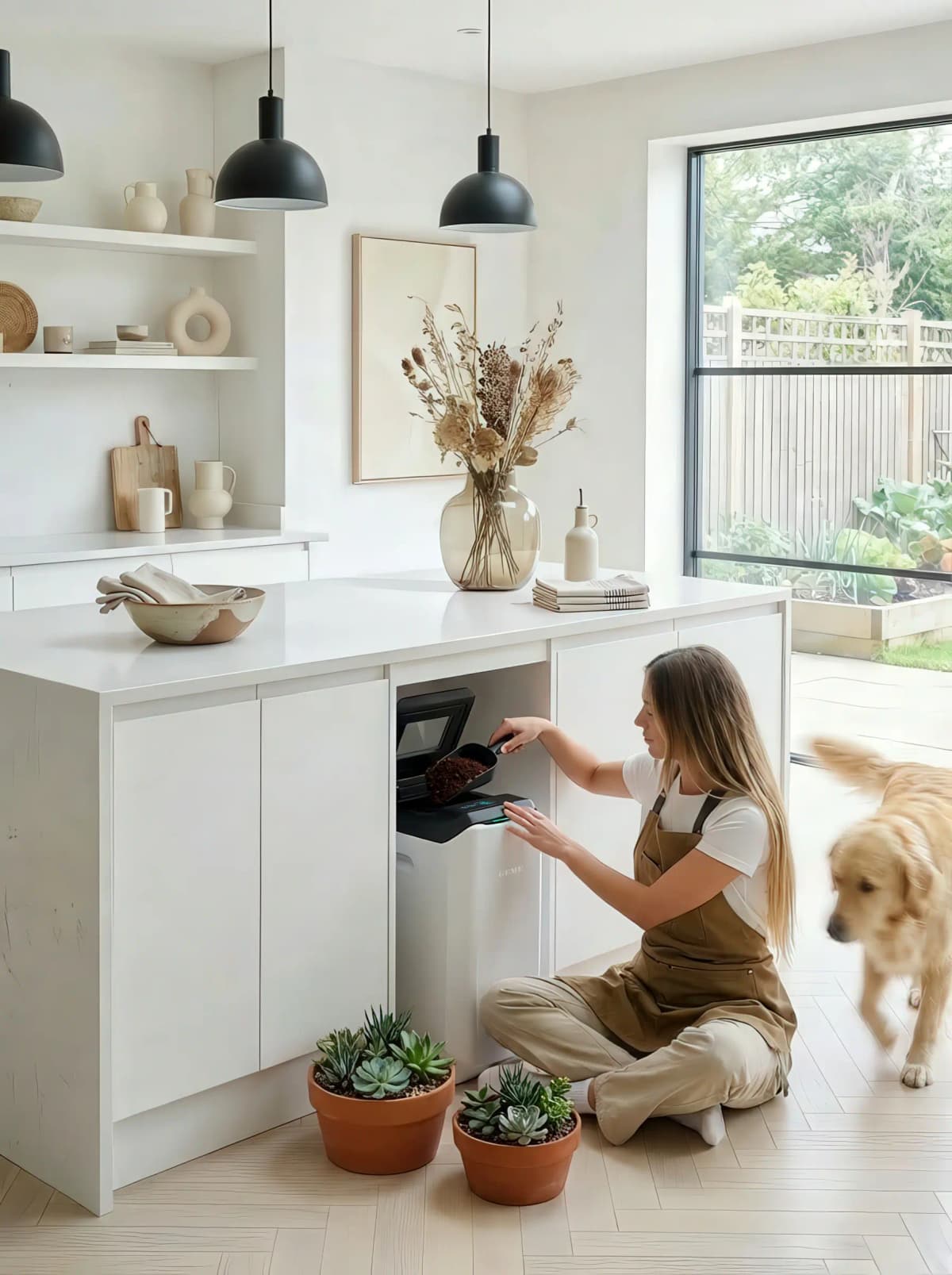
Real compost for soil blending.
Want Real Compost, Not Just Dried Food Waste?
GEME Terra II supports real microbial composting for daily kitchen scraps, with real compost for soil blending, no filter replacements, and zero recurring filter costs.
Real composter. Real microbial composting. No filter replacements.
Composting vs Dehydration: Why the Difference Matters
Composting and dehydration are often confused in the electric kitchen composter category. They are not the same process.
Real composting is biological. Microorganisms break down organic material under the right balance of oxygen, moisture, temperature, structure, and time.
Dehydration is physical. It removes water and reduces bulk, but it does not complete the microbial transformation that creates mature compost.
| Category | Real Composting | Mill Food Recycler |
|---|---|---|
| Primary process | Microbial decomposition | Drying and grinding |
| Living microbial process | Yes | No active composting ecosystem inside the output |
| Finished compost? | Yes, when properly matured | No |
| Soil-use reality | Use according to maturity and soil guidance | May require further composting or careful handling |
| Primary value | Creates compost | Reduces food-waste moisture, odor, and bulk |
For a deeper explanation, read real compost vs dehydrated food waste.
Can Mill Food Grounds Become Compost?
Yes, but the wording matters. Food Grounds can become compost if they go through further biological decomposition. They are not finished compost the moment they leave the Mill bin.
In practical terms, Mill output can be a feedstock or pre-processed ingredient for another composting pathway.
- Add Food Grounds to an active compost pile according to guidance.
- Use them through a municipal or service pathway where available.
- Handle them carefully if using them around plants, because dried food waste can rehydrate and continue decomposing.
- Avoid treating Food Grounds as mature compost without further processing.
Simple rule: Mill prepares food waste for a next step. It does not complete the composting process inside the machine.
Meet GEME Terra II: A Different Approach to Kitchen Waste
GEME Terra II is designed as a real microbial kitchen composter. Instead of only drying and grinding scraps, it creates a warm, moist, oxygen-rich environment for Kobold™ living microbes.
GEMEBrain™ adaptive process control helps manage the composting environment so biological breakdown can continue with less day-to-day intervention.
- Temperature balance
- Moisture balance
- Airflow
- Mixing
- Oxygen availability
- Continuous microbial activity
The output should be treated as real compost for soil blending. Screen large unfinished pieces, return them for continued composting, and mix finished material with soil before plant use.
Learn more about how GEME composting works and Kobold™ microbial technology.
Mill Food Recycler vs GEME Terra II
| Feature | Mill Food Recycler | GEME Terra II |
|---|---|---|
| Core technology | Drying and grinding | Real microbial composting |
| Output | Food Grounds / dried ground food scraps | Real compost for soil blending |
| Finished compost inside the machine? | No | Biological compost base; output should still be mixed with soil |
| Living microbial ecosystem | No active composting ecosystem | Kobold™ living microbes in a controlled environment |
| Continuous feeding | Food-scrap collection and processing workflow | Continuous daily feeding according to product guidance |
| Soil-use path | Further composting or careful handling may be needed | Blend compost with soil; screen unfinished pieces |
| Filter model | Carbon filter replacement may apply | No filter replacements |
| Best for | Reducing food-waste volume and storage mess | Real microbial composting at home |
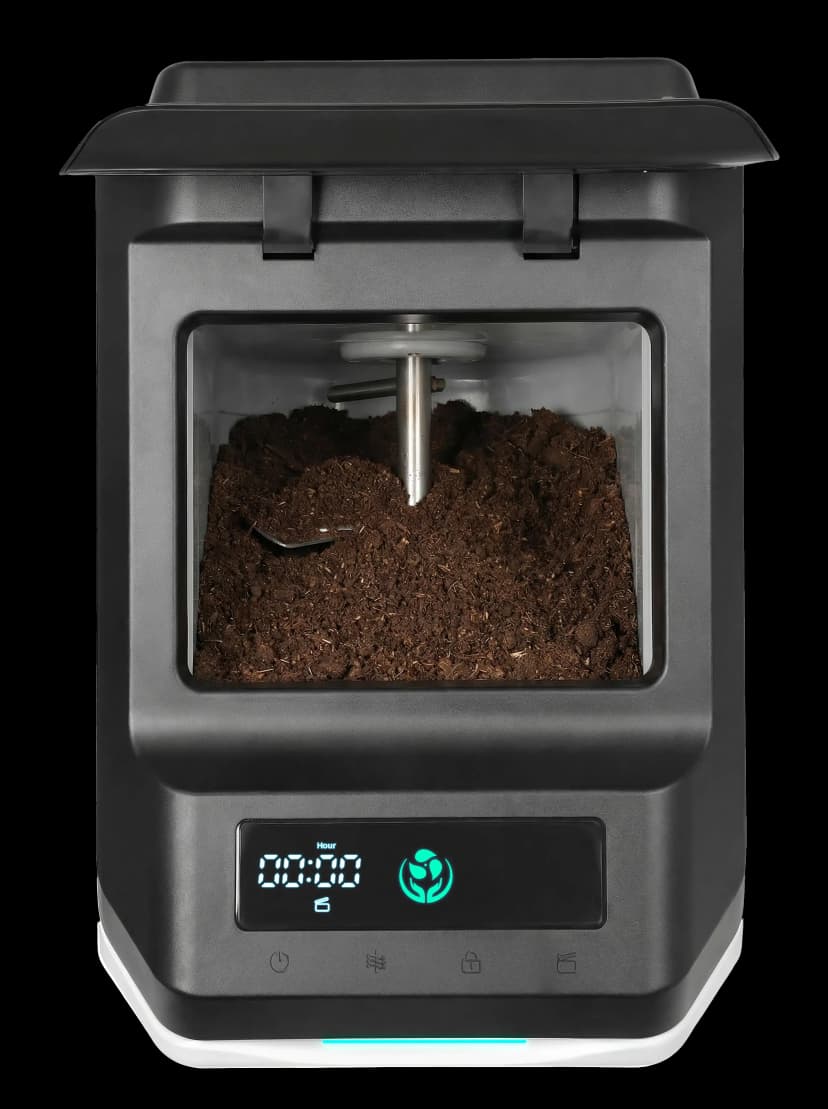
Blend with soil before plant use.
Choose Real Microbial Composting
GEME Terra II helps daily food scraps break down through real microbial composting — without filter replacements or recurring filter costs.
Terra II for everyday homes. GEME Pro for larger routines.
Filter Costs and Maintenance
Mill can reduce smell and food-waste mess, but users should still consider the ownership model. Mill’s support materials describe carbon filter replacement for Mill Essential and Mill Plus, with replacement timing depending on model and use.
GEME Terra II has a different recurring-filter profile: no filter replacements and zero recurring filter costs.
| Ownership Factor | Mill Food Recycler | GEME Terra II |
|---|---|---|
| Carbon filter | Replacement may apply | No replacement odor filters |
| Recurring filter cost | May apply depending on model and use | Zero recurring filter costs |
| Main upkeep question | Filter replacement and Food Grounds pathway | Compost base care and soil-use guidance |
| Best ownership fit | Users who value food-waste storage and service pathways | Users who want real microbial composting with lower recurring filter upkeep |
For a deeper recurring-cost breakdown, see the electric composter filter costs comparison.
Which One Should You Buy?
The right choice depends on what problem you want to solve.
Choose Mill if you want:
- A cleaner way to store and reduce food scraps.
- Dry Food Grounds rather than wet kitchen waste.
- A food-waste pre-processing system before another composting, garden, pickup, or service pathway.
- A smart food recycler rather than a microbial composting system.
Choose GEME Terra II if you want:
- Real microbial composting at home.
- A living microbial composting environment instead of drying and grinding alone.
- Continuous daily feeding according to product guidance.
- Real compost for soil blending.
- No filter replacements and zero recurring filter costs.
- A food-to-soil routine for houseplants, balcony planters, raised beds, or garden soil.
Final rule: choose Mill if your main goal is cleaner food-waste reduction. Choose GEME Terra II if your goal is real microbial composting and real compost for soil blending.
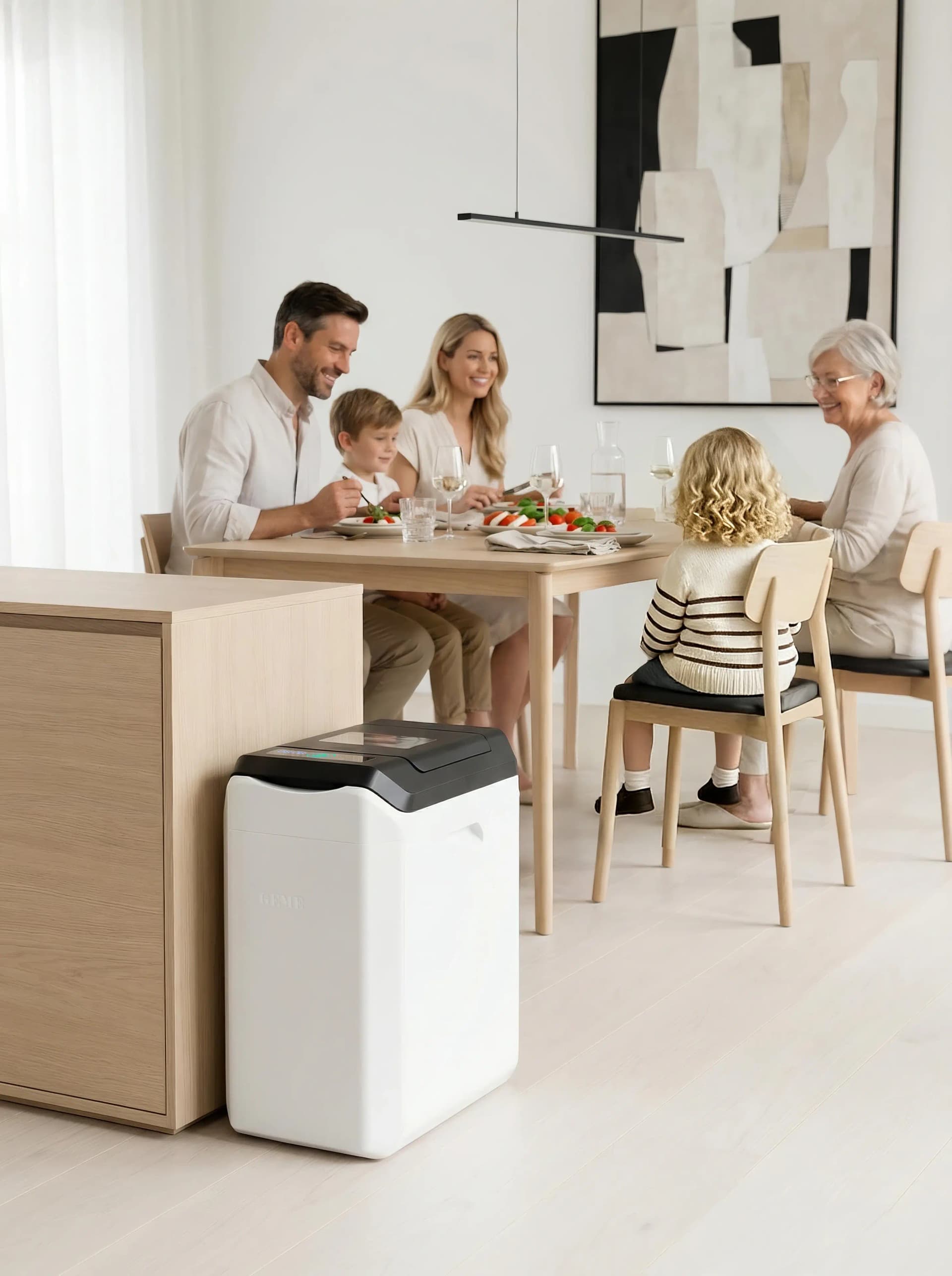
Real compost, not just Food Grounds.
Turn Food Scraps Into Real Compost
GEME Terra II supports real microbial composting for everyday kitchen scraps — with continuous feeding, no filter replacements, and compost output for soil blending.
Terra II for everyday homes. GEME Pro for larger routines.
Frequently Asked Questions
Does the Mill composter really make compost?
No. Mill dries and grinds food scraps into Food Grounds. These Food Grounds are not finished compost, though they may be used as input for another composting pathway.
Can Mill Food Grounds become compost?
Yes. Mill Food Grounds can become compost if they undergo further biological decomposition in an appropriate composting system, pile, or service pathway.
Is Mill better than throwing food scraps in the trash?
For many households, Mill can be helpful because it reduces moisture, odor, and food-waste bulk. But it does not replace composting if your goal is to create compost for soil use.
Does GEME Terra II make real compost?
Yes. GEME Terra II is designed around real microbial composting and produces real compost for soil blending. Screen large, unfinished pieces and mix the compost with soil before plant use.
Can I use GEME compost directly in my garden?
It is better to mix GEME compost with soil before plant use. A common guidance is to blend compost with garden soil rather than applying concentrated compost directly against roots or stems.
Which machine is better for gardeners?
If your main goal is a food-to-soil routine and compost for soil blending, GEME Terra II is the stronger fit. If your main goal is to store and reduce food-waste volume before another pathway, Mill can be useful.
Which machine has lower recurring filter upkeep?
GEME Terra II has lower recurring filter upkeep because it has no filter replacements and zero recurring filter costs. Mill carbon filter replacement may apply depending on the model and use.
Sources and Further Reading
- Mill Support — What Are Food Grounds? Are They Compost?
- Mill Support — Carbon Filter Replacement
- U.S. EPA — Composting at Home
- Illinois Food Scrap & Composting Coalition — Food Scrap Dehydrators Are Not Composters
- GEME — Terra II Product Page
- GEME — How Real Microbial Composting Works
- GEME — Kobold™ Microbial Technology
- GEME — Advanced Compost Application Guide

Leave a comment
This site is protected by hCaptcha and the hCaptcha Privacy Policy and Terms of Service apply.