


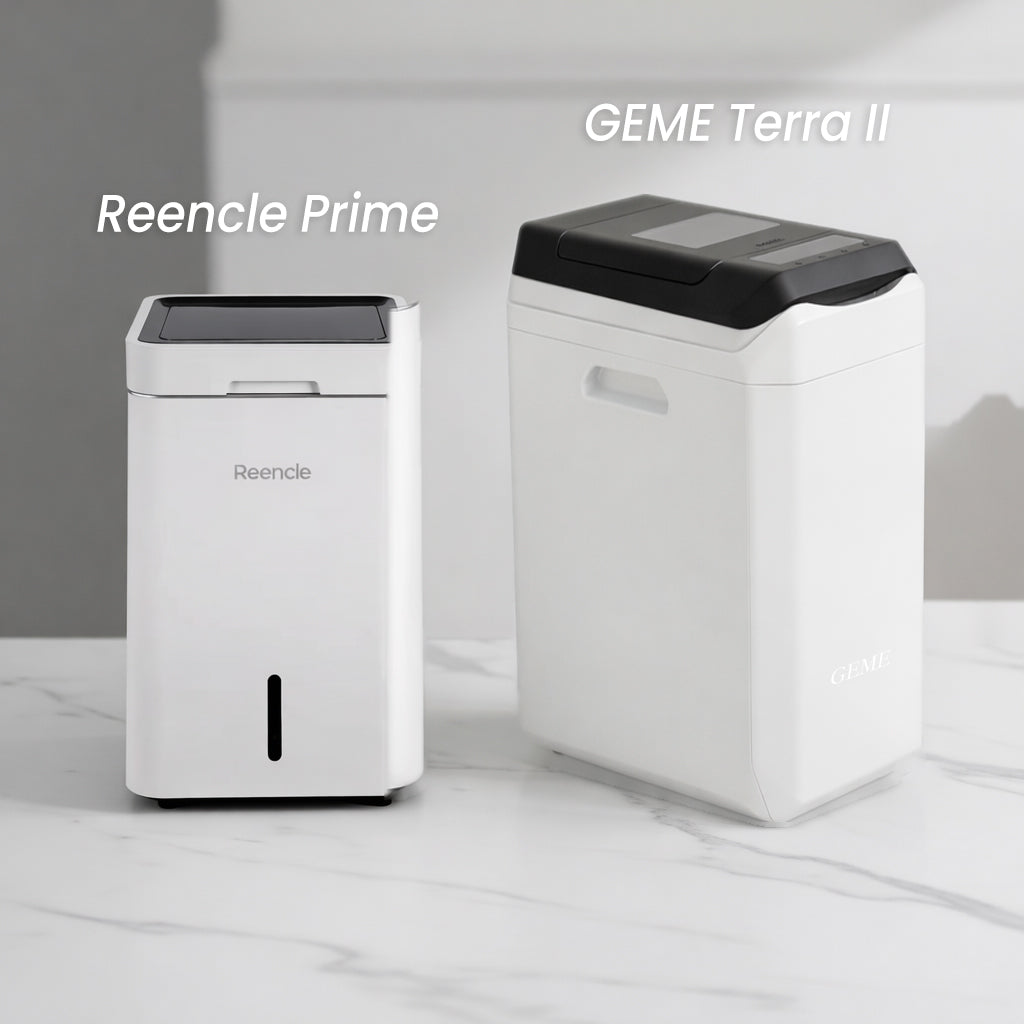
GEME vs Reencle 2026
GEME Terra II vs Reencle Prime
A buyer-first comparison of daily capacity, compost output, maintenance, filter model, and long-term ownership cost.
Both products use a microbial approach. The real decision is which system better fits your household’s cooking volume, input habits, and soil-use expectations.
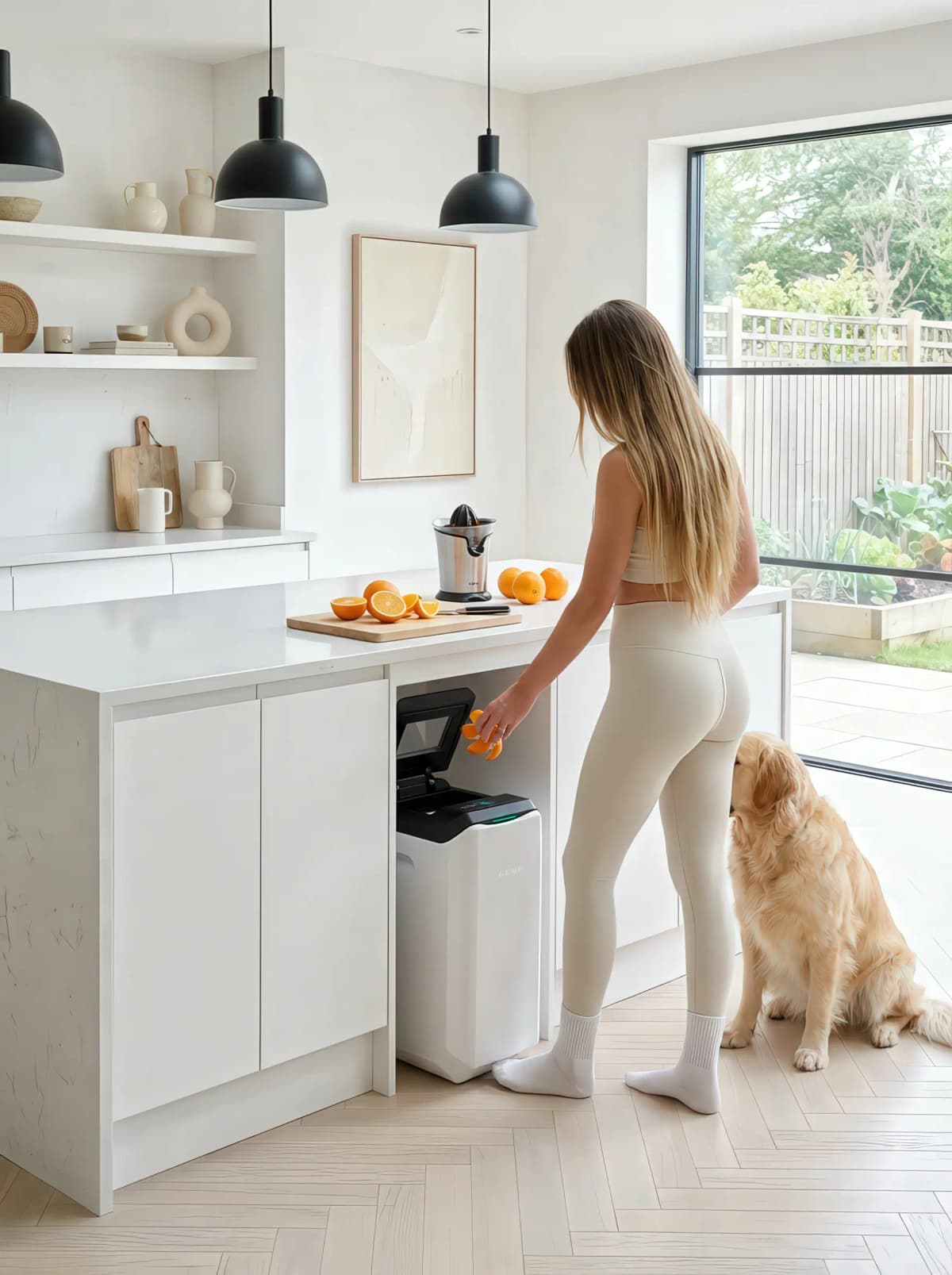
Capacity, output, and upkeep.
Quick Answer
Both GEME Terra II and Reencle Prime are positioned around microbial food-waste processing rather than simple dehydrator-style waste reduction. The main difference is household fit: GEME Terra II is built for higher daily food-waste handling, continuous use, and no routine odor filter replacement, while Reencle Prime may suit lighter-use kitchens with smaller daily input needs.
For a broader buying framework, see our best kitchen composter guide and the electric composter filter cost comparison.
Key Takeaways
- Both are microbial systems. This is not a simple “microbial vs dehydrator” comparison.
- Capacity is a major difference. GEME Terra II is designed for heavier daily kitchen-scrap routines.
- Output expectations matter. Compost-like output should still be used according to soil-blending guidance.
- Maintenance affects long-term value. Filter replacement, refills, cleaning, and recurring consumables change the ownership cost.
- GEME Terra II is stronger for daily cooking in households. Reencle Prime may fit lighter daily input patterns.
Table of Contents
The 90-Second Truth
1. Output expectation matters more than speed
Two machines can both reduce food-waste volume, but the end result may differ. Some outputs may be closer to compost-ready material, while others may benefit from additional curing before soil use.
2. Daily capacity should match your kitchen
Reencle commonly publishes an optimal daily input around 0.7 kg and a maximum around 1.0 kg. GEME Terra II is designed for up to about 2.0 kg per day, making capacity a major decision factor for households that cook daily.
3. Maintenance is part of the ownership cost
Filter replacement, microbial refills, cleaning, and recurring consumables all affect long-term cost. A lower-maintenance system is often easier to keep using.
Quick Comparison Summary
The table below focuses on the buyer factors that matter most in daily use: capacity, output, maintenance, and long-term ownership friction.
| Dimension | GEME Terra II | Reencle Prime |
|---|---|---|
| Core approach | Continuous microbial composting workflow | Warm microorganism-based food-waste processing |
| Best fit | Daily cooking households with more scraps | Light to moderate daily food-waste routines |
| Daily input guidance | Up to about 2.0 kg/day | Optimal about 0.7 kg/day; max about 1.0 kg/day |
| Filter model | No routine odor filter replacement | Replaceable carbon filter model |
| Ownership priority | Higher capacity and lower routine consumables | Compact microbial food-waste processing |
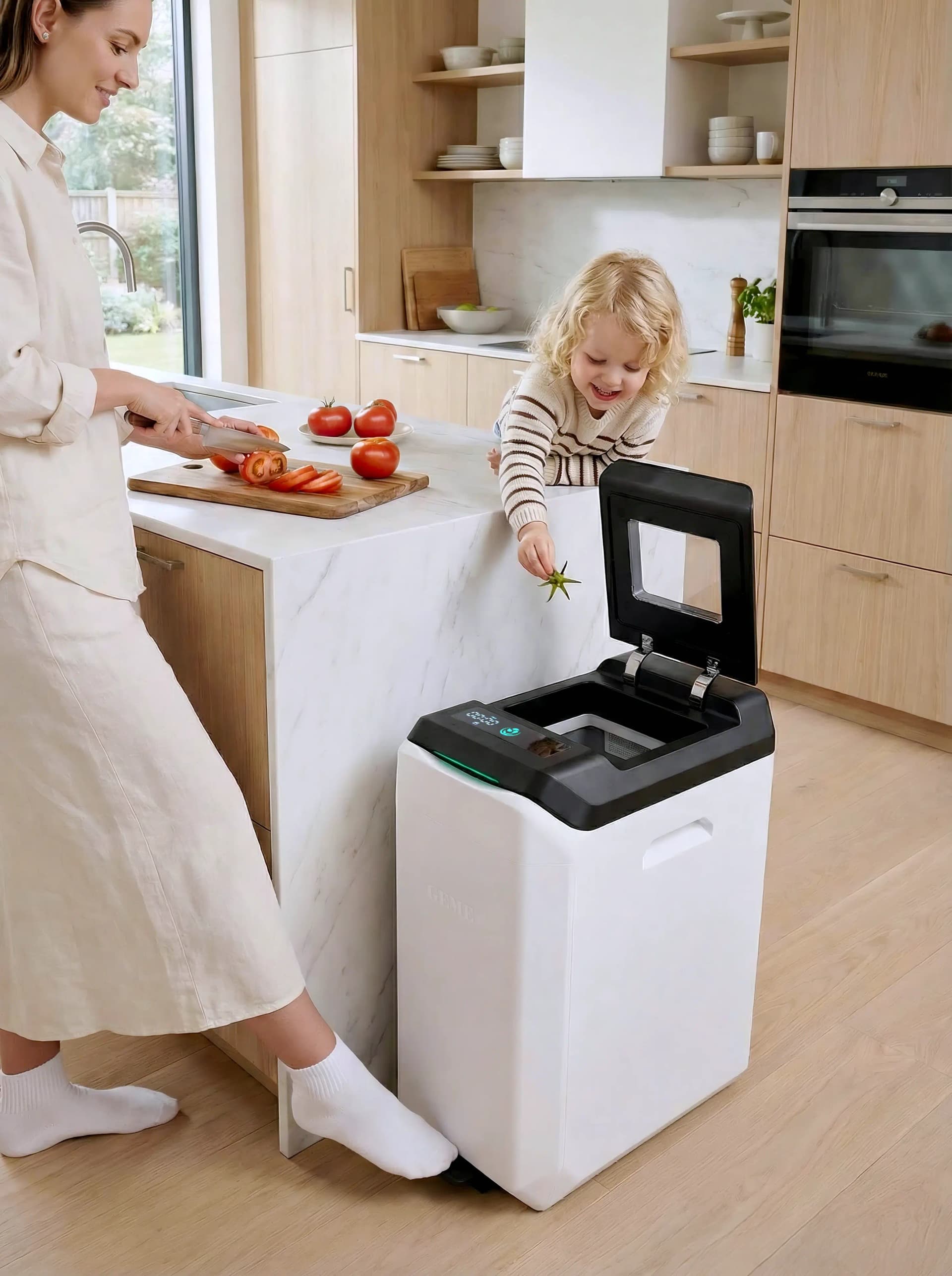
Less routine upkeep.
Meet Terra II
Built for daily scraps, microbial composting, and lower long-term maintenance without routine odor filter replacement.
Built for kitchen-to-soil routines.
What “Real Compost” Means
Kitchen composting can be confusing because brands often use similar words for different outcomes. A fair comparison should separate four ideas:
- Volume reduction: the waste looks smaller.
- Moisture reduction: the waste looks drier.
- Biological stabilization: microbial activity helps reduce odor and improve soil compatibility.
- Compost maturity: the output behaves more like compost when used with soil.
When comparing GEME Terra II and Reencle Prime, the better question is not simply “Which one is faster?” The better question is: what output do you get, how often can you add food waste, and how much work does the system require over time?
For safe soil use, see the advanced GEME compost application guide.
Buyer rule: Do not compare only speed. Compare output, capacity, maintenance, and soil-use guidance.
Core Technology Difference
How GEME Terra II Works
GEME Terra II uses a biological composting process designed to mimic the logic of natural soil ecosystems inside a controlled indoor device.
- Microbial decomposition
- Continuous oxygen circulation
- Moisture and airflow regulation
- Controlled microbial operating conditions
- Continuous food-waste input
Because the system is designed to run continuously, users can add scraps during daily kitchen use instead of waiting for a rigid batch cycle.
How Reencle Prime Works
Reencle Prime is also positioned as a microbe-based system. It operates in a warm internal range and uses a microorganism-based process to help break down food waste.
This is different from simple high-heat dehydration. For buyers, the practical question is how Reencle’s daily input guidance, curing expectations, filter replacement, and routine maintenance fit their household.
How Fast Does Food Waste Break Down?
Speed matters, but it should be read together with capacity and output quality. A system with faster visible breakdown and higher daily input can be more practical for households that cook multiple meals per day.
| Product | Typical Processing Claim | Practical Meaning |
|---|---|---|
| GEME Terra II | Visible breakdown in about 6–8 hours | Faster turnover for daily cooking households |
| Reencle Prime | Often described as a 24-hour digestion routine | May fit lighter daily input patterns |
For input boundaries such as meat, dairy, bones, salt, and oil, read what you can put in an electric composter and electric composter salt and oil boundaries.
What Powers the Breakdown?
GEME Terra II: Kobold™ Microbial Technology
GEME Terra II uses Kobold™ microbial technology, adapted from large-scale biological treatment logic for home kitchen use. It is designed to support the breakdown of everyday food scraps in a controlled indoor environment.
Reencle Prime: Brand-Supplied Microbial System
Reencle also uses a microbial approach. For buyers, the practical difference is less about whether microorganisms are involved and more about capacity, daily routine, filter replacement, and output handling.
Same 14L Class, Different Build?
Product weight and build can affect thermal stability, portability, and kitchen placement. Reencle Prime is generally lighter, while GEME Terra II is heavier and built around a more substantial structure.
| Dimension | Reencle Prime | GEME Terra II |
|---|---|---|
| Weight | About 9 kg | About 12 kg |
| Practical meaning | Easier to move | More substantial structure |
Compost Output: What Do You Actually Get?
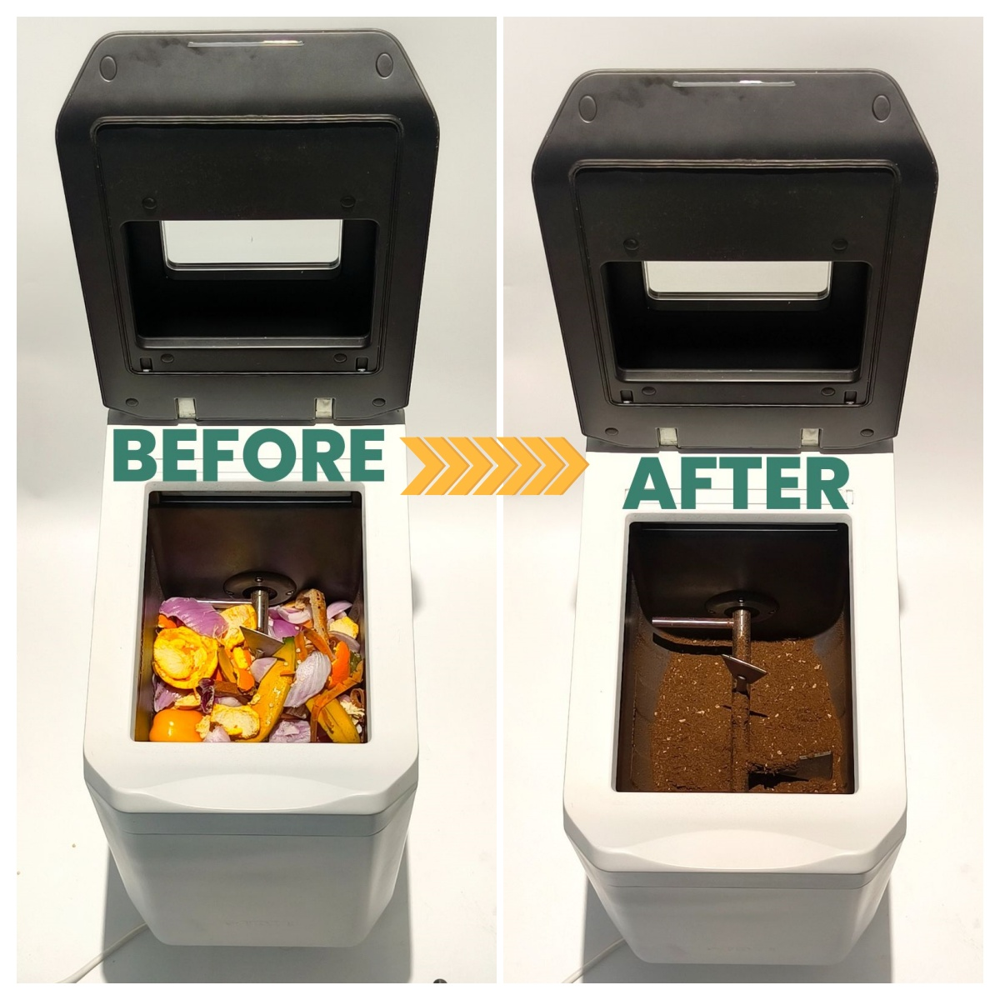
GEME Terra II Output
- Designed for microbial composting
- Helps reduce food-waste volume
- Compost base can typically be harvested every 1–2 months, depending on use
- Suitable for soil blending when used according to guidance
GEME Terra II is especially appealing to users who want a waste-to-soil routine at home rather than only trash reduction.
Reencle Prime Output
- Microbe-processed food-waste output
- Reduced odor and volume
- May benefit from curing before direct soil use, depending on usage and expectations
Reencle may still be useful for users who mainly want a clean, automated way to reduce kitchen waste volume. Buyers should understand how they intend to use the output.
Soil Use Tip: Like garden compost, screen out large unfinished pieces and let them continue composting. Blend compost with soil instead of applying it as a pure layer.
Capacity and Daily Use Experience
GEME Terra II
- Designed for up to about 2 kg of daily food waste input
- Supports continuous feeding
- Better suited for households that cook every day
- Useful for families that want fewer interruptions
Reencle Prime
- Commonly recommended is around 0.7 kg as an optimal daily input
- Maximum daily input is often cited around 1.0 kg
- May fit lighter-use kitchens or smaller households
If your household produces a lot of wet scraps, vegetable peels, cooked leftovers, fruit waste, and daily meal-prep residue, capacity becomes one of the most important buying criteria.
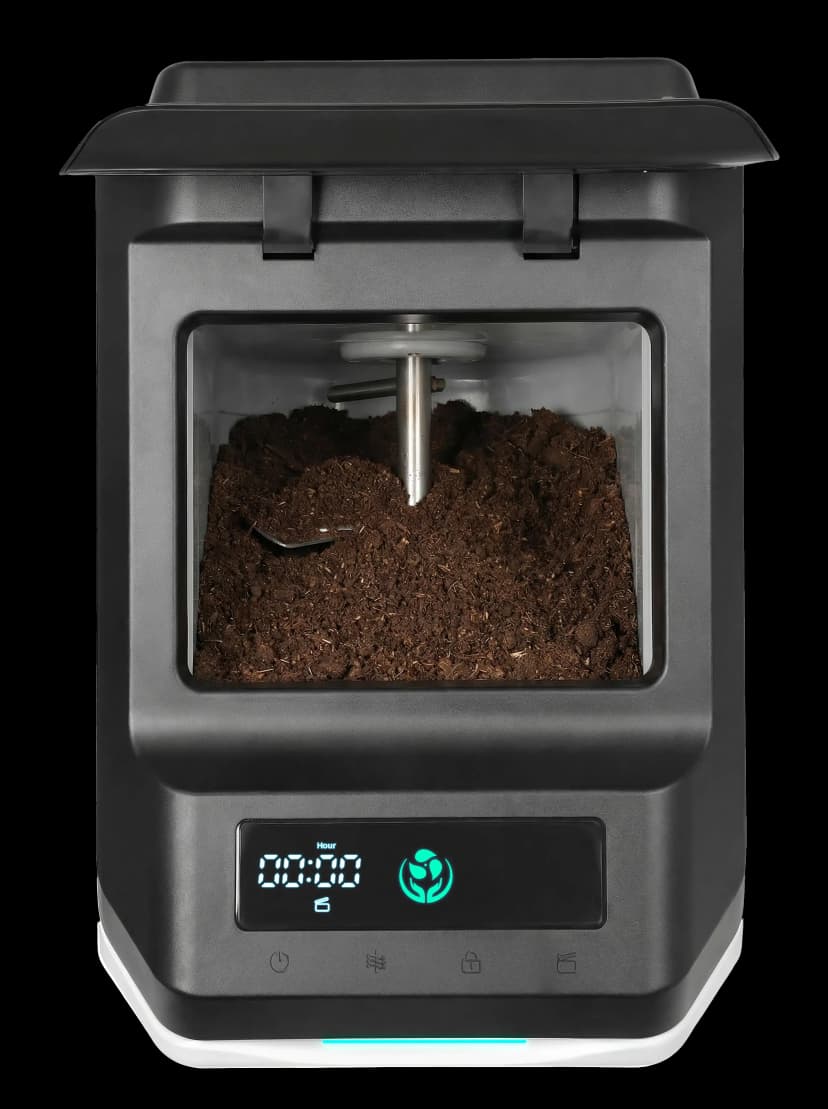
Not just waste reduction.
Upgrade to Terra II
Higher daily capacity, continuous feeding, and no routine odor filter replacement for households that compost every day.
Built for everyday kitchens.
Filters, Maintenance, and Long-Term Cost
Maintenance is not only about cleaning. It also includes consumables, filter replacement, setup routines, and how often users need to intervene.
GEME Terra II Ownership Model
- One-time machine purchase
- No routine replacement odor filters
- Designed for continuous daily operation
- Lower routine consumable burden
Reencle Prime Maintenance Model
- Replaceable carbon filter model
- Periodic maintenance required
- Long-term cost depends on use and replacement frequency
Which One Should You Choose?
Choose GEME Terra II if...
- You cook daily.
- You need a higher daily capacity.
- You want continuous feeding.
- You care about compost-like output for soil blending.
- You prefer a lower routine consumable cost.
Choose Reencle Prime if...
- You have lighter daily food waste.
- You prefer a lighter machine.
- You are comfortable with filter replacement.
- You mainly want automated food-waste reduction.
Common Buyer Misunderstandings
1. “All kitchen composters make the same compost.”
Not true. Output quality depends on microbial activity, moisture, oxygen, temperature, input type, and how the user applies the final material.
2. “Faster always means better.”
Speed matters, but it should be evaluated together with daily capacity, output stability, and soil-use expectations.
3. “Maintenance costs are minor.”
Filters and consumables add up over time. For long-term ownership, total cost of use matters as much as purchase price.
Practical Decision Rules
The Heavy Cooking Rule
If you cook daily for three or more people, GEME Terra II’s higher daily input capacity is a major advantage.
The Low-Upkeep Rule
If you dislike recurring filter costs, Terra II’s no-routine-filter-replacement model is easier to own.
The Mobility Rule
If you need to move the machine often, Reencle’s lighter weight may be easier to handle.
Final Decision
If your goal is microbial composting with higher daily capacity and lower routine consumable cost, GEME Terra II offers a stronger waste-to-soil ownership model for daily cooking households.
If your goal is lighter automated food-waste reduction and your household produces a smaller amount of scraps, Reencle Prime may still fit your routine.
FAQ
Is GEME Terra II better than Reencle Prime?
GEME Terra II is a stronger fit for households that cook daily, need higher capacity, want continuous feeding, and prefer no routine odor filter replacement. Reencle Prime may fit lighter-use households that are comfortable with its input guidance and maintenance model.
Do both GEME Terra II and Reencle use microorganisms?
Yes. Both products are positioned around microbial food-waste processing. The practical differences are daily capacity, operating routine, filtration model, and output expectations.
Which composter has a higher daily capacity?
GEME Terra II is designed for up to about 2.0 kg of daily food waste input. Reencle Prime commonly publishes lower daily input guidance, often around 0.7 kg optimal input and about 1.0 kg maximum.
Does Reencle output need curing?
Depending on intended soil use and user expectations, Reencle output may benefit from additional curing. Buyers should review the brand’s official instructions before applying any output directly to plants.
Does GEME Terra II require filter replacement?
GEME Terra II is designed with no routine odor filter replacement.
Which one is better for a family that cooks every day?
GEME Terra II is usually the better fit for daily cooking families because of its higher input capacity, continuous feeding workflow, and lower routine consumable burden.
Verified Sources
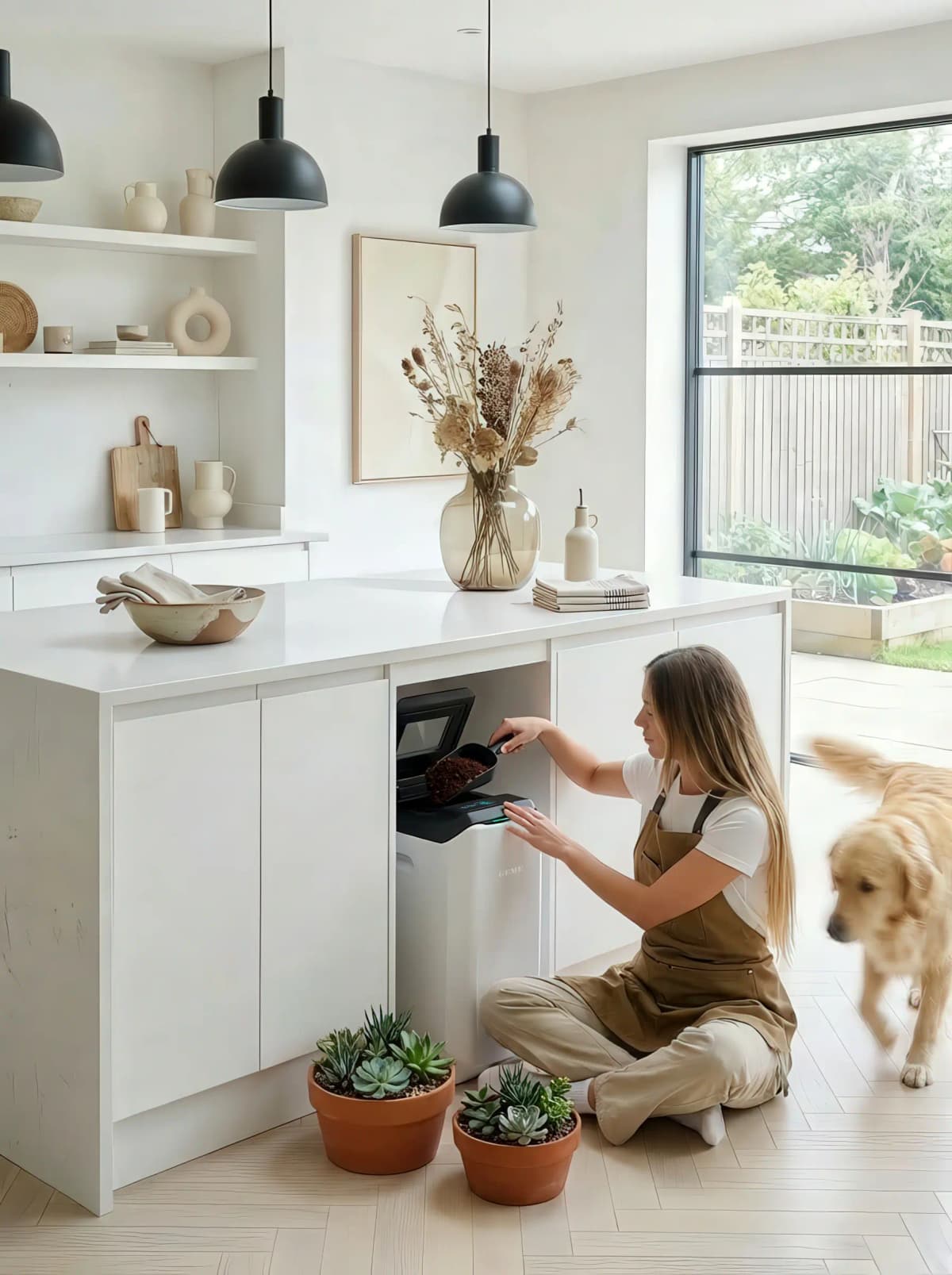
Scraps become soil support.
Start Composting
Make food scraps useful again with a continuous microbial composter built for daily kitchens.
Built for microbial kitchen composting.

Leave a comment
This site is protected by hCaptcha and the hCaptcha Privacy Policy and Terms of Service apply.