


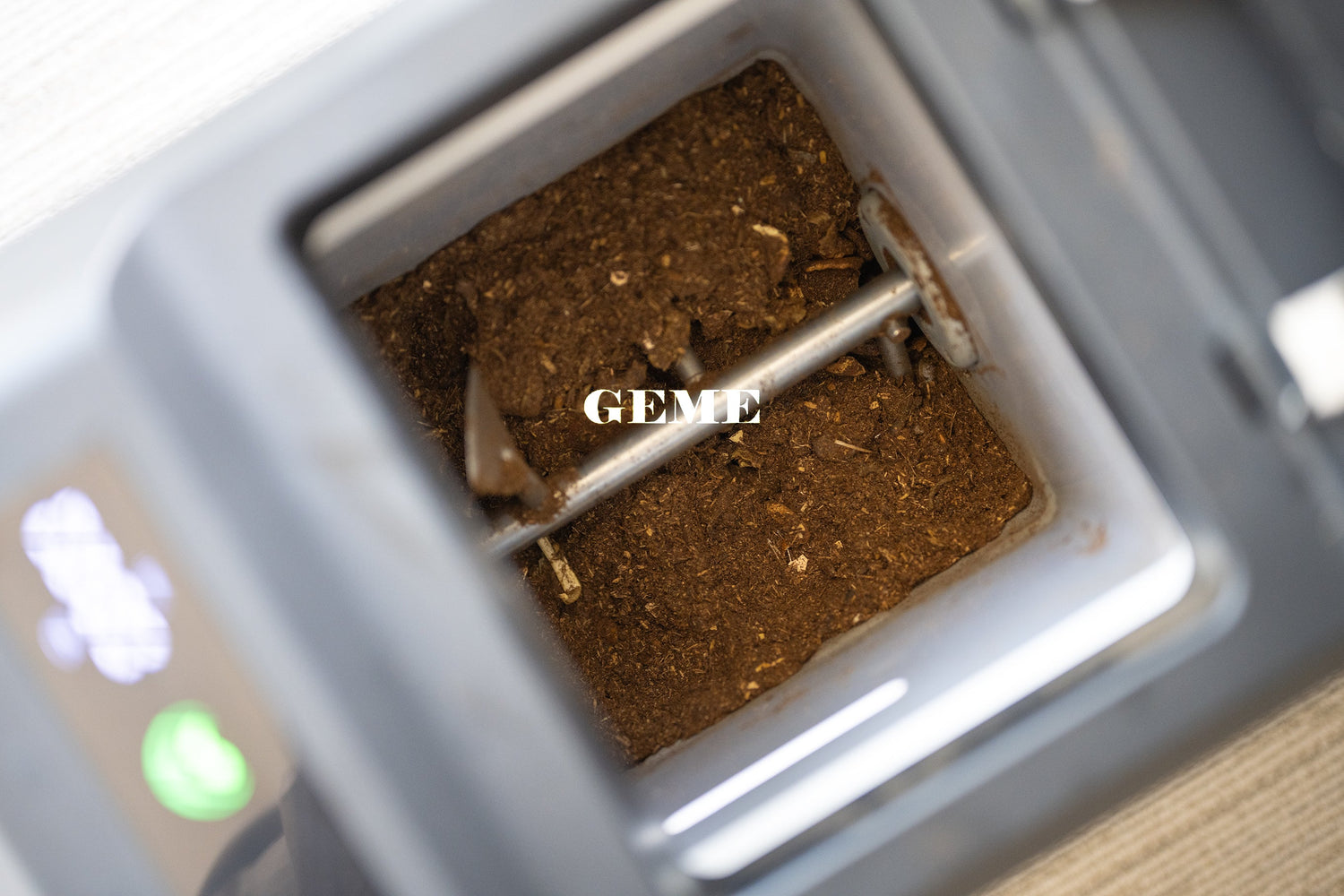
Cut Flowers, Bouquet Waste & Home Composting Guide
Yes, cut flowers can usually be composted. Petals, leaves, and stems are plant material, and faded flowers are widely treated as compostable organic matter.
The important part is preparation. A bouquet often includes plastic wrap, ribbons, rubber bands, wire, stickers, treated materials, or floral foam. Those parts do not belong in compost and should be removed before the flowers go into any composting system.
Simple rule: compost the plant material, not the bouquet packaging.
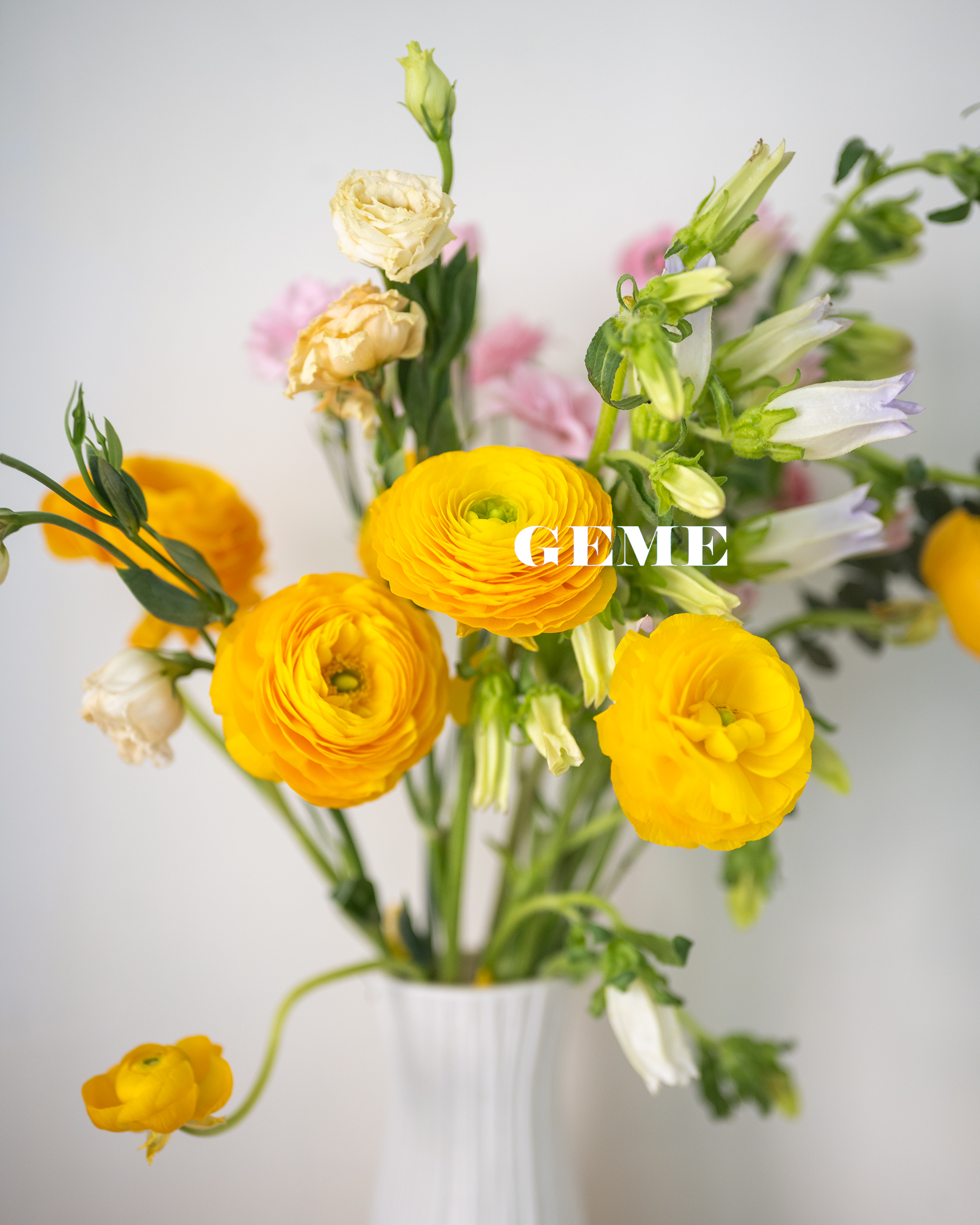
Remove plastic, wire, foam, and labels before composting flowers.
Quick Answer
Yes, you can compost cut flowers if they are free from plastic, wire, floral foam, synthetic ties, stickers, and obvious disease. Petals and leaves break down more easily, while woody stems, rose stems, thorns, and fibrous stalks need to be cut into smaller pieces.
In a backyard compost pile, mix wet flowers with dry browns such as leaves, shredded cardboard, or dry plant trimmings to protect airflow and reduce odor risk. In GEME Terra II, add only suitable flower scraps, keep stems short, and screen larger pieces back into the chamber before using the compost base for soil blending.
For related context, read complete composting material list, how to compost at home, and advanced GEME compost application guide.
Key Takeaways
- Cut flowers are usually compostable. Petals, leaves, and stems are organic plant material.
- Remove bouquet hardware first. Plastic wrap, ribbons, rubber bands, wire, stickers, and tags should stay out.
- Never compost floral foam. Floral foam is plastic-based and can contaminate plant material.
- Cut stems short. Long stems break down slowly and may tangle in mechanical systems.
- Balance moisture. Wet petals and stems need dry browns in backyard compost to protect airflow.
- Use caution with store-bought flowers. Purchased cut flowers may have pesticide or preservative residues; consider using that compost for ornamentals rather than food crops.
- Do not compost diseased or pest-infested flowers in simple home systems. Bag and dispose of risky material according to local guidance.
- GEME Terra II: supports real microbial composting for appropriate flower scraps and food waste, with compost output for soil blending.
Table of Contents
- Can Cut Flowers Actually Go in Compost?
- What to Remove Before Composting Flowers
- How to Prep Flowers So They Break Down Better
- What Happens in a Regular Backyard Compost Bin?
- How GEME Terra II Handles Suitable Cut Flower Scraps
- Step-by-Step: Composting a Bouquet With GEME
- How to Use the Compost Output
- Flowers That Need Extra Caution
- FAQ
- Summary
- Sources
- Related Articles
Can Cut Flowers Actually Go in Compost?
Yes. Faded cut flowers can usually go into the compost once non-organic materials are removed. Petals, leaves, and stems are plant material, so they can become part of the composting cycle under the right conditions.
Flowers are typically treated as “greens” because they are fresh, moist plant material. They can add nitrogen and moisture to a compost pile. But too much wet material without enough airflow can create odor, slimy texture, and fly problems.
Simple rule: flowers are compostable, but bouquets are mixed-material objects. Separate the organic parts first.
What to Remove Before Composting Flowers
Before composting a bouquet, take a few minutes to strip away anything that is not clean plant material. This keeps plastic, metal, foam, and synthetic materials out of your compost output.
| Remove This | Why It Should Stay Out | Where It Usually Goes |
|---|---|---|
| Plastic wrap | Plastic does not become compost and can leave fragments. | Trash or recycling if accepted locally. |
| Ribbons and synthetic ties | Many are synthetic fibers or plastic-coated. | Reuse or trash. |
| Rubber bands | They do not belong in the compost output. | Reuse or trash. |
| Wire stems and metal clips | Metal does not compost and may be sharp later. | Trash or recycling if accepted locally. |
| Stickers, labels, and tags | Often plastic-coated or adhesive-heavy. | Trash. |
| Floral foam | Plastic-based foam can crumble and contaminate plant material. | Trash according to local rules. |
| Heavily diseased or pest-infested flowers | Home compost may not destroy pathogens or pests reliably. | Bag and dispose according to local guidance. |
Once the non-compostable parts are removed, you are left with the useful material: petals, leaves, and stems.
How to Prep Flowers So They Break Down Better
Size matters. Microorganisms work from the surface of organic material, so smaller pieces usually break down more efficiently than long, intact stems.
| Flower Part | Backyard Compost Prep | GEME Prep |
|---|---|---|
| Petals | Can usually go in whole. | Can usually go in whole if not attached to non-organic material. |
| Leaves | Tear or chop if large. | Tear or chop to help with mixing. |
| Soft stems | Cut shorter for faster breakdown. | Cut into short pieces, ideally about 2–3 inches or shorter. |
| Woody stems | Chop small or compost separately with browns. | Cut smaller; return unfinished pieces after harvest if needed. |
| Rose thorns | Snip or chop stems finely to reduce sharp pieces. | Remove or chop short; screen any sharp pieces before soil use. |
GEME Stem Rule
Keep long, stringy stems short before adding them to GEME. Long stems can tangle around moving parts or remain visible in the output. Shorter pieces mix better and are easier to screen and return if they are not finished.
What Happens to Flowers in a Regular Backyard Compost Bin?
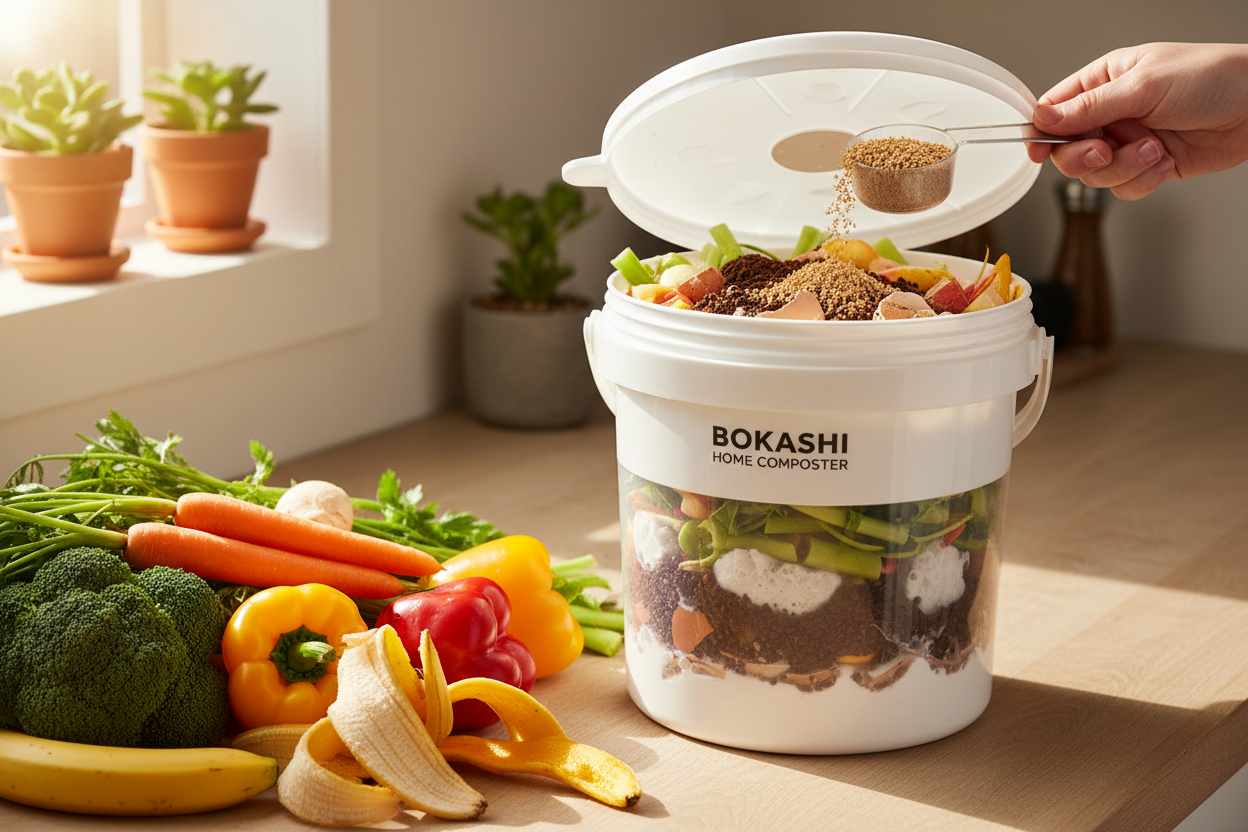
Flowers can compost well in a managed backyard pile, but they can cause problems in neglected bins. Fresh flowers are wet, soft, and sometimes sweet-smelling. If they are piled in without dry browns or airflow, they can become slimy and odor-prone.
Why Backyard Bins Can Smell
Composting needs oxygen. If wet petals and stems compact together, airflow drops. When oxygen is limited, decomposition can shift toward anaerobic conditions, which often smell sour or rotten instead of earthy.
How to Compost Flowers Outdoors More Safely
- Remove all non-organic bouquet materials first.
- Chop stems and dense pieces smaller.
- Mix flowers with dry leaves, straw, wood chips, shredded cardboard, or other browns.
- Do not add a thick wet mat of flowers in one layer.
- Turn or fluff the pile to improve airflow.
- Keep the pile moist like a wrung-out sponge, not soaking wet.
- Cover fresh flower scraps with browns to reduce flies and odor.
- Avoid diseased or pest-infested flowers in simple home compost piles.
Flowers are not the problem. Poor balance, poor airflow, excess moisture, and contamination are the usual problems.
How GEME Terra II Handles Suitable Cut Flower Scraps
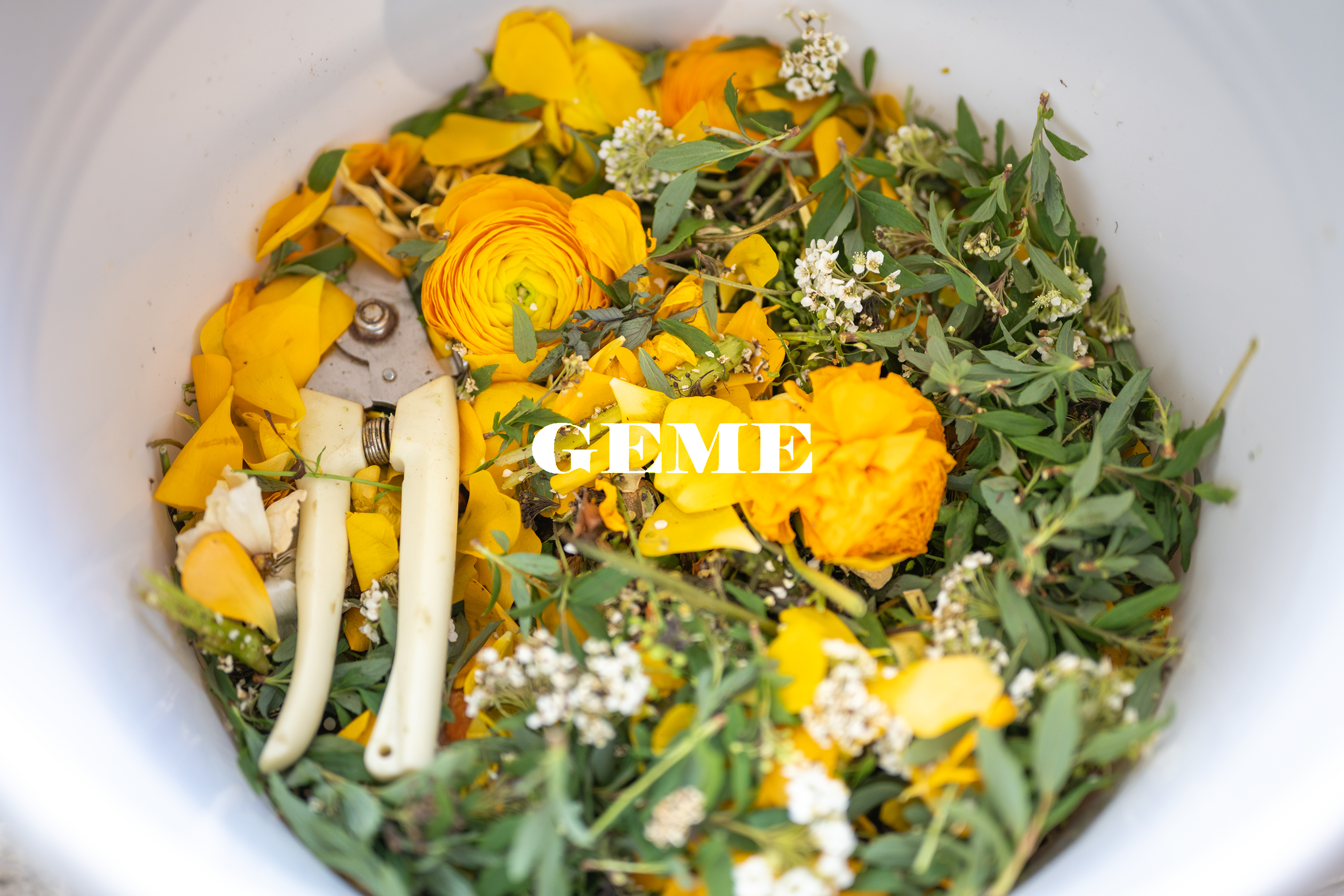
GEME Terra II is designed for real microbial composting. It uses Kobold™ living microbes and adaptive chamber control to support a warm, moist, oxygen-rich composting environment. It is not a simple drying appliance and does not rely on replacement odor filters.
For cut flowers, this means suitable petals, leaves, and chopped stems can be added as organic plant material. Dense or woody stems may still take longer and should be screened and returned if they remain visible after harvesting.
What GEME Improves
- Continuous feeding: add suitable scraps without waiting for a batch cycle.
- Real microbial composting: food and plant scraps are processed by living microbes, not just dried.
- Odor management: Terra II uses built-in metal-ion odor control without replacement odor filters.
- Screen and return: larger pieces can go back into the chamber for continued processing.
- Soil blending: output should be mixed with soil before plant use.
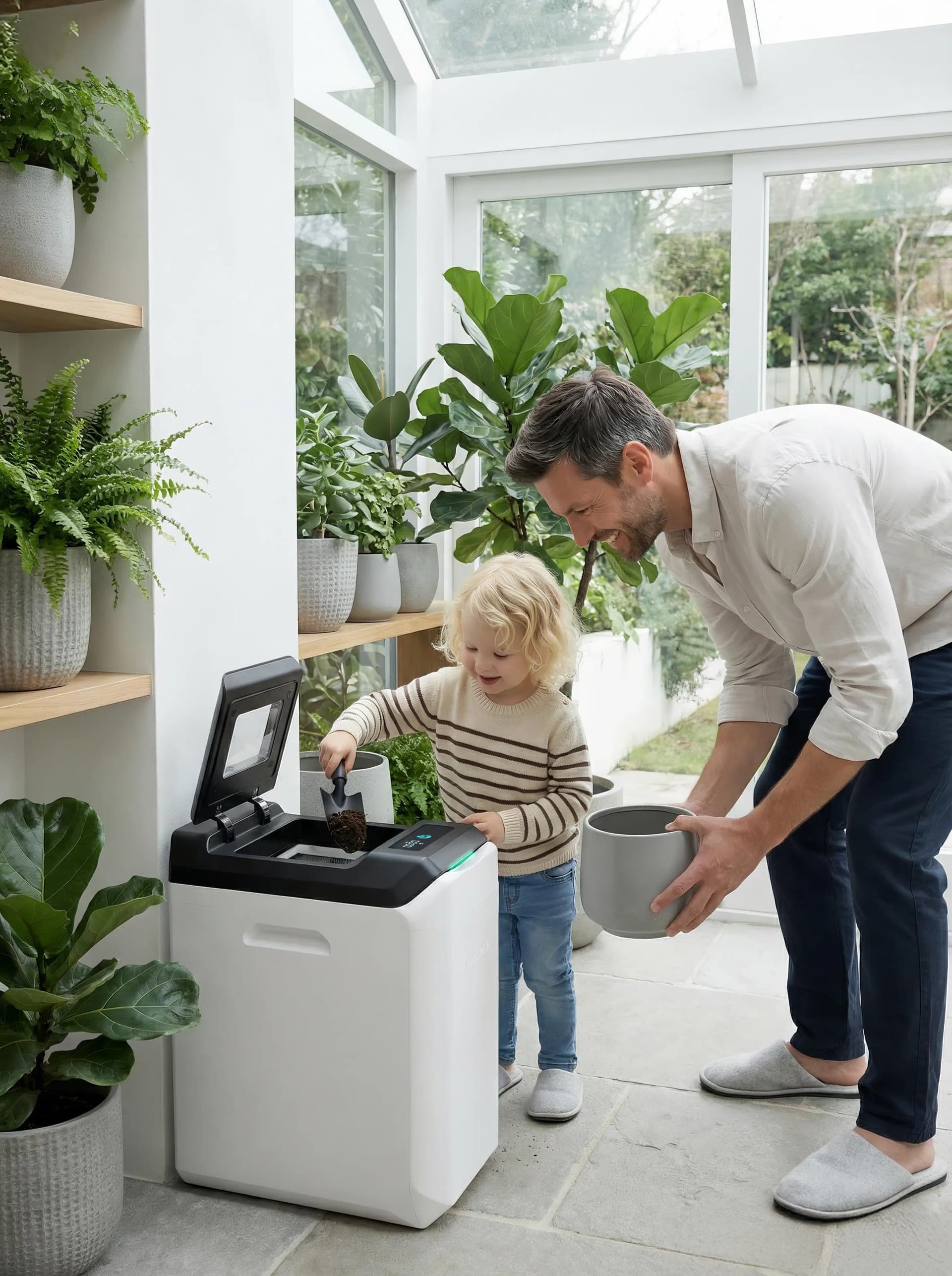
Suitable petals, leaves, and chopped stems can join the soil cycle.
Turn Suitable Flower Scraps Into Compost Output With GEME
GEME Terra II supports real microbial composting for appropriate food waste and clean plant scraps. Remove bouquet packaging, cut stems short, screen larger pieces, and mix compost output with soil before plant use.
Real microbial composting. No filter replacements. Compost for soil blending.
Step-by-Step: Composting a Bouquet With GEME
Step 1: Strip the Bouquet Down
Remove plastic wrap, ribbon, wire, rubber bands, stickers, tags, and floral foam. Add only clean plant material.
Step 2: Cut Stems Short
Petals can usually stay whole. Tear large leaves. Cut soft stems into short pieces and chop woody stems even smaller. Remove or reduce thorns where practical.
Step 3: Add Suitable Flower Scraps
Add suitable petals, leaves, and chopped stems to GEME. Avoid diseased, pest-infested, foam-contaminated, wire-bound, or plastic-contaminated material.
Step 4: Let the Microbial Process Continue
Soft petals and leaves usually break down faster than woody stems. Dense stems, pits, thorns, and fibrous pieces may need more time and may remain visible when you harvest.
Step 5: Harvest, Screen, and Return
When you harvest compost output, screen the material. Return larger unfinished organic pieces to GEME for another round. Discard any plastic, wire, or foam-contaminated fragments instead of returning them.
Step 6: Mix Output With Soil
Treat GEME output as compost base for soil blending. Mix with soil at about 1:8–1:10, use a soil cap when applying near plants, and start with modest amounts.
How to Use the Compost Output From Cut Flowers
Compost output from flowers should be used the same way as other GEME compost base: screen, blend, cover, water, and observe.
| Use Case | How to Apply | Caution |
|---|---|---|
| Flower beds | Mix screened GEME output with soil at about 1:8–1:10. | Avoid using pure output directly around roots. |
| Existing ornamentals | Apply in a ring away from stems, then cover with plain soil. | Do not pile compost against stems or trunks. |
| Potted plants | Blend a small amount into potting mix or soil. | Use less for small pots and sensitive plants. |
| Vegetable garden | Use only clean, well-screened output from suitable inputs. | Avoid output from dyed, heavily treated, diseased, or foam-contaminated flowers. |
Flower compost is a beautiful cycle, but plant safety still matters. Use modestly, mix well, and observe plant response.
Flowers That Need Extra Caution
Roses and Thorns
Rose petals and leaves compost readily, but woody stems and thorns take longer. Cut stems short and screen output carefully before soil use.
Dyed Flowers
Brightly dyed flowers may contain colorants you do not want in edible garden soil. Use caution and consider keeping compost from dyed flowers for ornamental beds only.
Treated Store-Bought Flowers
Some purchased cut flowers may have pesticide or preservative residues. If that concerns you, wash stems and leaves first or use the resulting compost for ornamental plants rather than vegetables or herbs.
Diseased or Pest-Infested Flowers
Do not add heavily diseased or pest-infested flowers to simple home composting systems. Home compost may not stay hot enough, long enough to destroy pathogens or pests.
Floral Foam Contamination
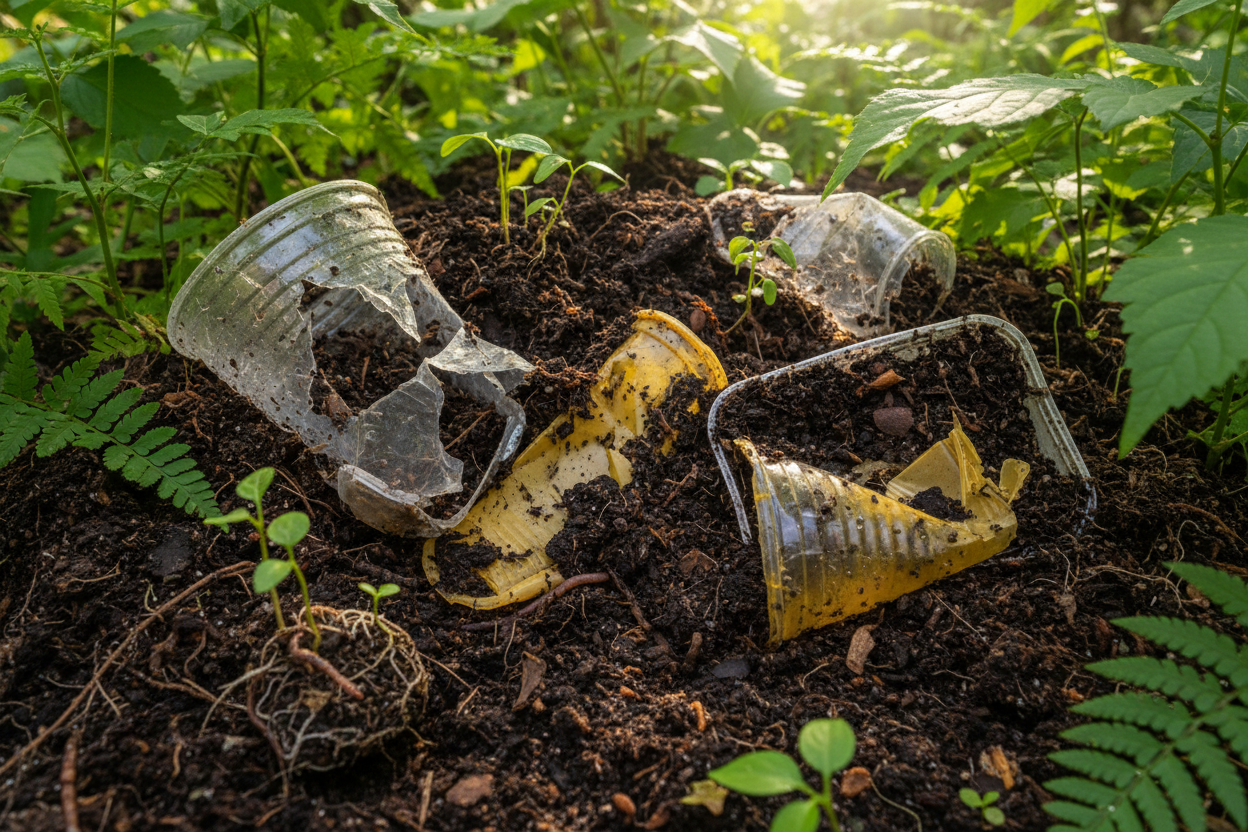
If floral foam has crumbled into the stems, do not compost that material. Floral foam is plastic-based and can break into small particles that contaminate the compost stream.
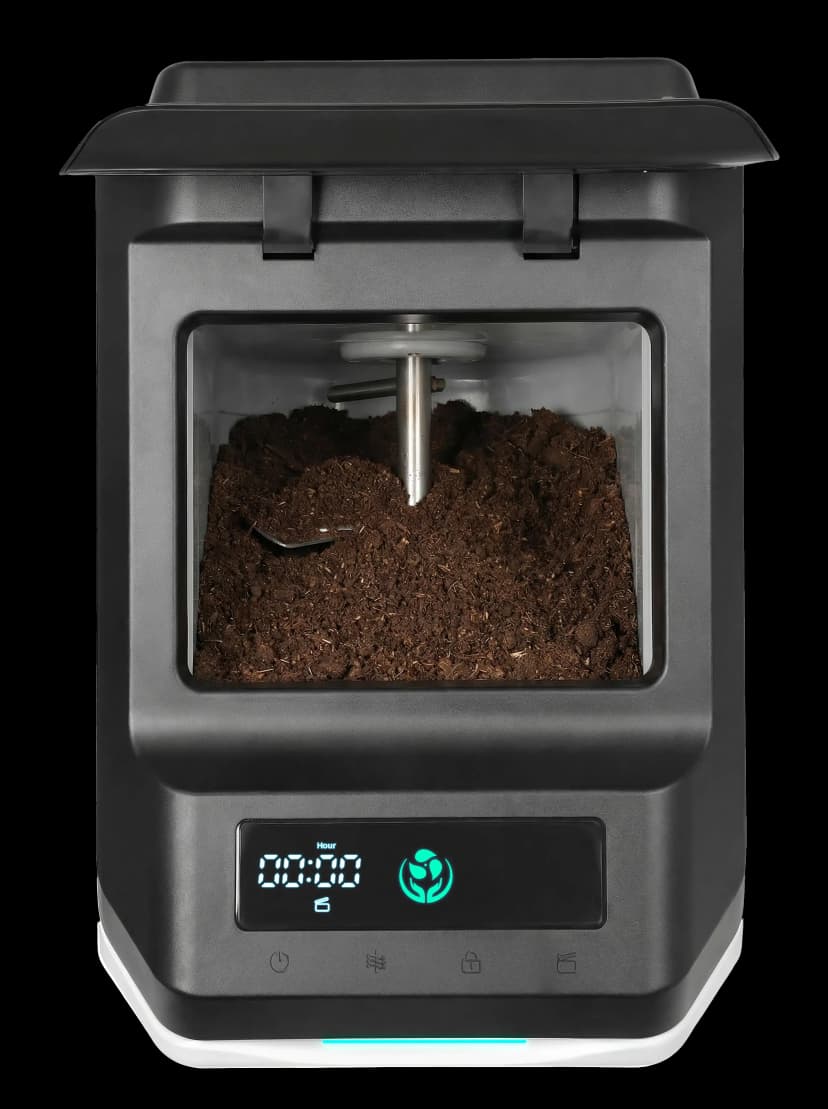
Screen, return, mix with soil, and use responsibly.
Compost Cut Flowers Without Turning Your Bin Into a Wet Mess
GEME Terra II and GEME Pro help households process appropriate kitchen scraps and clean plant scraps through real microbial composting. Remove packaging, cut stems short, and keep compost output clean for soil blending.
Terra II for everyday homes. GEME Pro for larger routines.
Final Takeaway: Wilted Flowers Are Not Trash
Cut flowers can usually be composted, but the whole bouquet should not be tossed in blindly. The plant material belongs in the compost cycle. The plastic wrap, wire, rubber bands, floral foam, stickers, and diseased material do not.
In a backyard pile, mix flower scraps with dry browns and protect airflow. In GEME Terra II, cut stems short, add only suitable organic pieces, screen larger pieces back into the chamber, and mix the compost output with soil before plant use.
Yesterday’s bouquet can become tomorrow’s soil support, when you compost it cleanly and use the output responsibly.
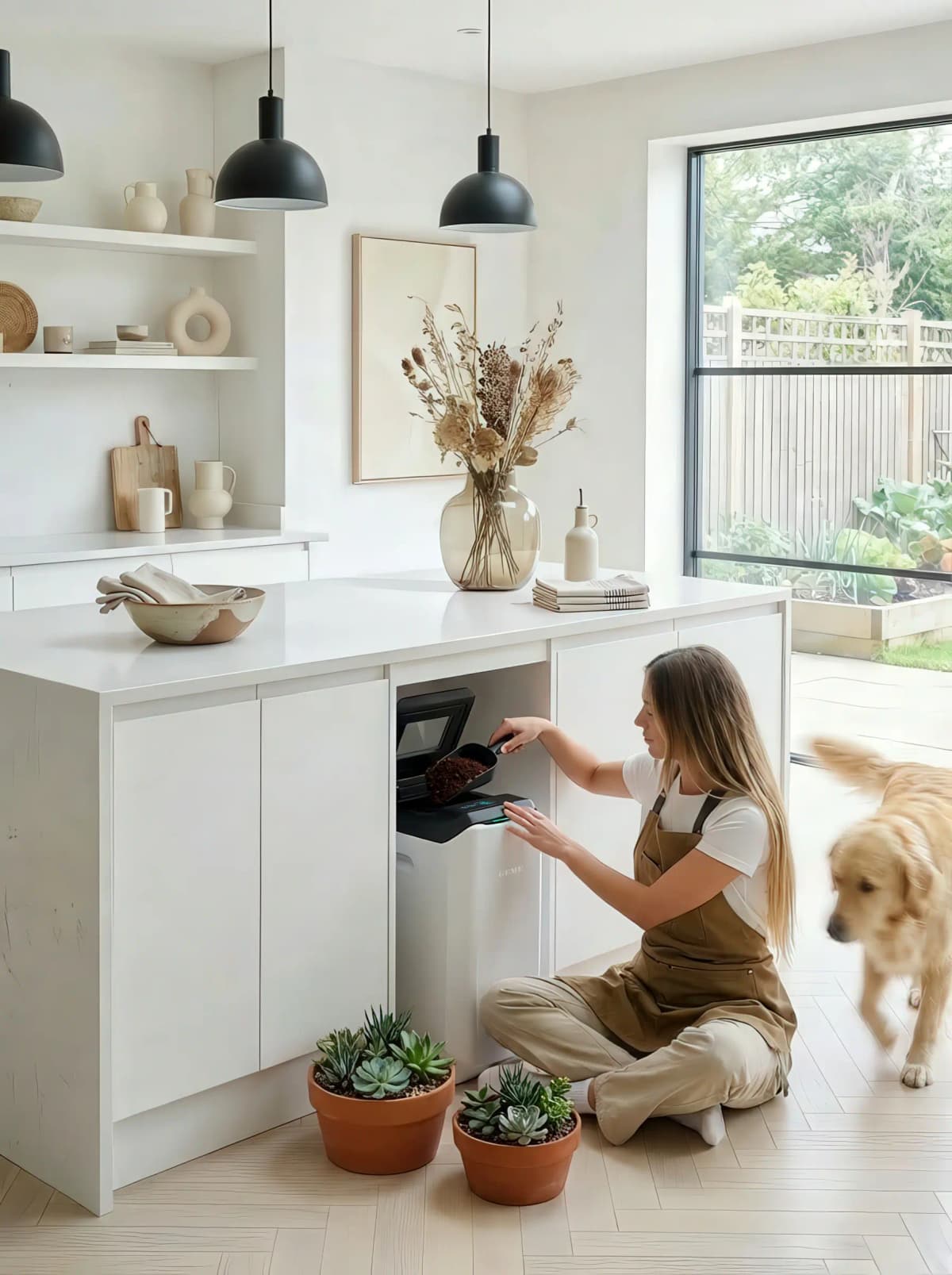
Real microbial composting for modern homes.
Build a Cleaner Composting Routine With GEME
GEME Terra II and GEME Pro help households turn appropriate food scraps and clean plant scraps into compost for soil blending, with real microbial composting, no filter replacements, and zero recurring filter costs.
Screen. Return. Mix with soil. Let flowers support more life.
Frequently Asked Questions
Can I compost cut flowers?
Yes. Petals, leaves, and stems from cut flowers can usually be composted after removing plastic, wire, floral foam, ribbons, rubber bands, stickers, and diseased material.
Can I compost cut flowers in floral foam?
No. Floral foam is plastic-based and can crumble into small particles. Do not compost flower material contaminated with floral foam.
Can cut flowers go into GEME Terra II?
Suitable cut flower scraps can go into GEME Terra II after removing non-organic materials and cutting stems short. Avoid diseased, foam-contaminated, plastic-contaminated, or heavily treated material.
How short should I cut flower stems before composting?
For GEME, keep stems short, ideally about 2–3 inches or shorter. Woody or thorny stems should be chopped smaller and screened before soil use if pieces remain.
Can I compost roses and thorns?
Roses can be composted, but woody stems and thorns take longer. Remove thorns when practical or chop stems finely, then screen output before using it in soil.
Can I compost dyed flowers?
Use caution. If flowers are artificially dyed, consider keeping that compost for ornamental beds rather than edible crops.
Can I compost store-bought flowers?
Often yes, but store-bought cut flowers may have pesticide or preservative residues. Wash them first if practical, and consider using the resulting compost on ornamental plants rather than vegetables or herbs.
Should I compost diseased flowers?
Avoid composting heavily diseased or pest-infested flowers in simple home compost systems. Bag and dispose of them according to local guidance.
Do I need to add dry browns with flowers to an outdoor compost pile?
Yes, that is usually a good idea. Fresh flowers are wet greens, so mix them with dry leaves, shredded cardboard, straw, or woody material to protect airflow and reduce odor.
Can I use GEME output directly on plants?
Do not use pure GEME output directly around roots. Treat it as a compost base for soil blending. Screen larger pieces and mix with soil at about 1:8–1:10 before plant use.
Summary
- Can cut flowers be composted? Yes, the plant material can usually be composted.
- Remove first: plastic, wire, rubber bands, ribbons, stickers, tags, and floral foam.
- Do not compost floral foam: it is plastic-based and can contaminate plant material.
- Prep matters: cut stems short, especially woody or thorny stems.
- Backyard compost: mix wet flowers with dry browns to protect airflow.
- Extra caution: dyed, treated, diseased, or pest-infested flowers should not be used for food-crop compost.
- GEME Terra II: suitable flower scraps can join the microbial composting process when properly prepared.
- Output use: screen larger pieces, return unfinished organic material, and mix compost base with soil before plant use.
Sources
- University of Minnesota Extension — Composting in Home Gardens
- University of Illinois Extension — Composting Ingredients
- U.S. EPA — Composting at Home
- U.S. EPA — Composting
- Sustainable Floristry Network — Floral Foam Facts
- GEME — Terra II Product Page
- GEME — How Real Microbial Composting Works
- GEME — Advanced Compost Application Guide

Leave a comment
This site is protected by hCaptcha and the hCaptcha Privacy Policy and Terms of Service apply.