


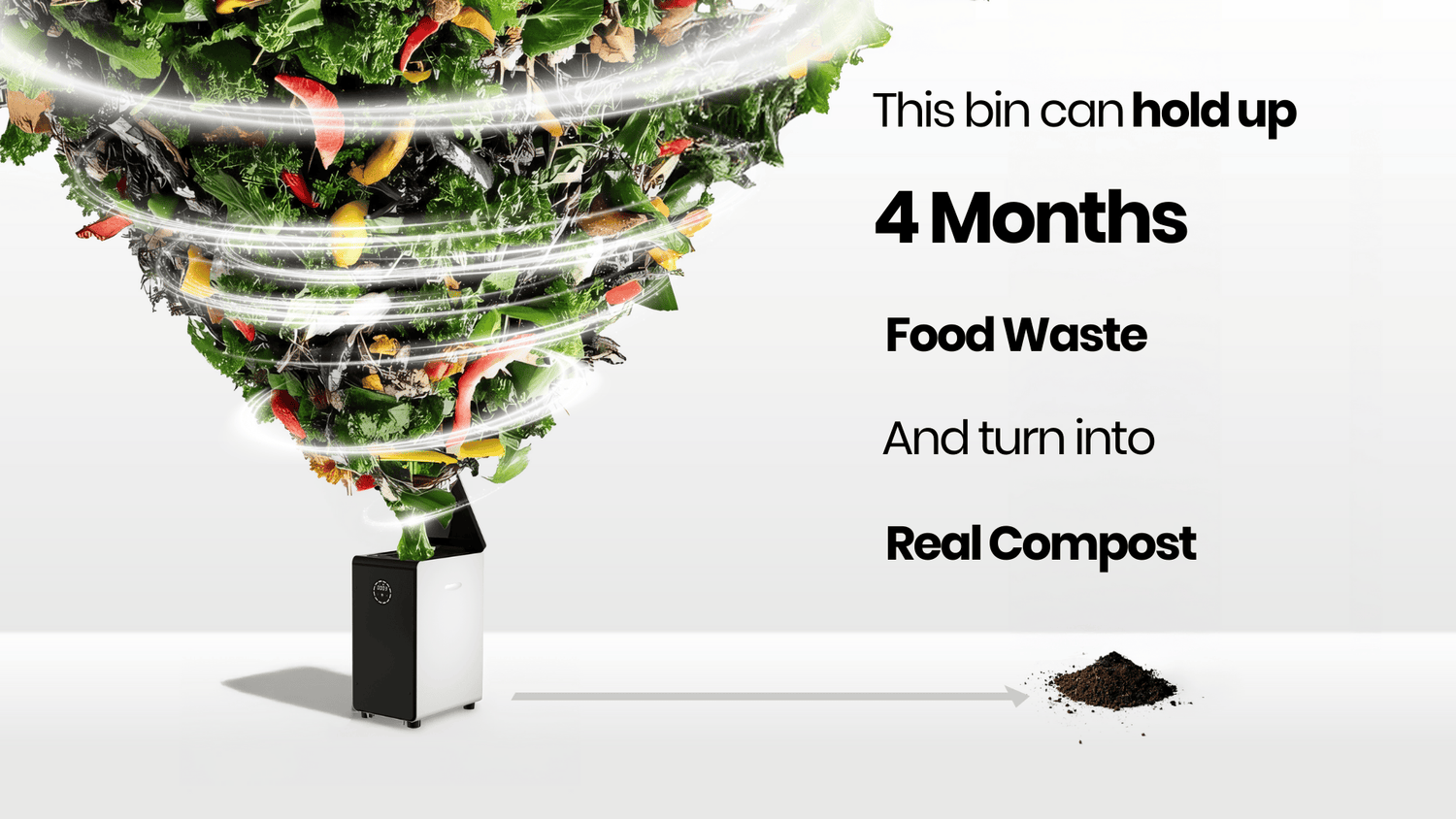
Electric Composter Guide
Electric composters are kitchen appliances designed to help households manage food scraps indoors. But the category is confusing: not every machine sold as an “electric composter” actually makes compost.
Some appliances mainly dry and grind food waste. Others support real microbial composting by maintaining a warm, moist, oxygen-rich environment for living microbes.
The key question is simple: does the machine support biology, or does it only make food waste smaller and drier?
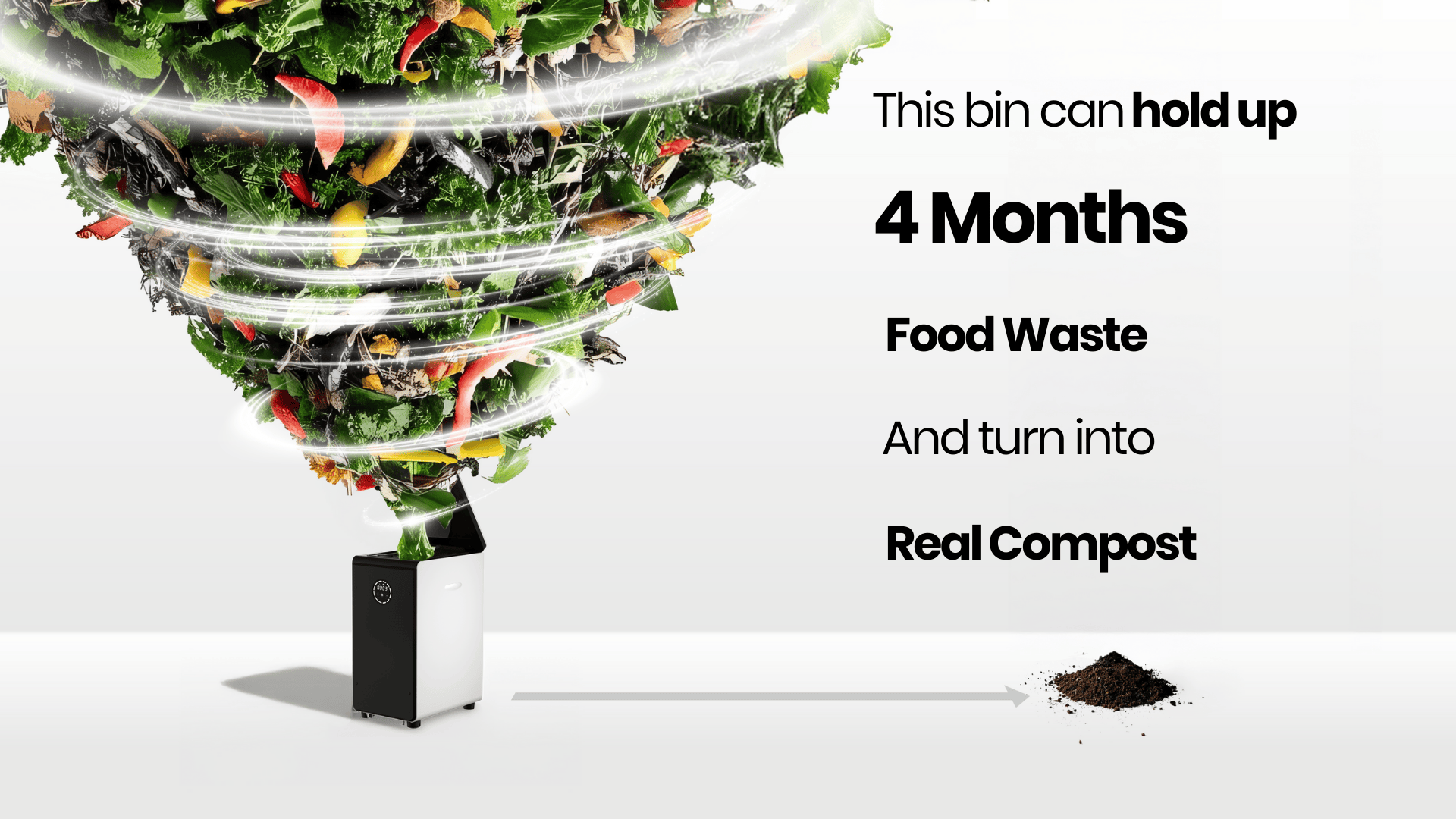
Drying is not the same as composting.
Quick Answer
An electric composter is a kitchen appliance that processes food scraps indoors. However, there are two very different types: food waste dryers that mainly use heat and grinding, and real microbial composters that use living microbes, oxygen, moisture, warmth, and mixing to support biological decomposition.
GEME Terra II belongs to the real microbial composter category. It uses Kobold™ living microbes and adaptive chamber control to support composting biology, with no drying and no replacement odor filters. The output should be screened and mixed with soil before plant use.
For related context, read real compost vs dehydrated food waste, best kitchen composter 2026, and how to use GEME compost safely.
Key Takeaways
- Not all electric composters make compost. Many machines mainly dry and grind food scraps.
- Composting is biological. Real composting depends on microorganisms, oxygen, moisture, temperature, and time.
- Food waste dryers are useful, but different. They reduce volume, moisture, and odor, but the output is usually dried food scraps rather than finished compost.
- Real microbial composters keep biology active. They maintain a composting environment instead of simply removing water.
- GEME Terra II is designed as a real microbial composter. It uses Kobold™ living microbes, continuous feeding, no drying, and no replacement odor filters.
- Compost output still needs responsible use. Screen large unfinished pieces and mix compost with soil before plant use.
Table of Contents
- What Is an Electric Composter?
- Two Types of Electric Composters
- Food Waste Dryer vs Real Microbial Composter
- How Real Electric Composting Works
- Why Not All Electric Composters Make Compost
- How GEME Terra II Works
- Electric Composters vs Traditional Composting
- Benefits of Electric Composter Technology
- How to Choose an Electric Composter
- Common Misleading Claims
- FAQ
- Sources
- Related Articles
What Is an Electric Composter?
An electric composter is a powered kitchen appliance designed to process food scraps indoors. It usually helps reduce smell, moisture, volume, or handling effort compared with keeping food waste in an open trash bin.
But the word “composter” is often used loosely. Some machines use heat, airflow, and grinding to dehydrate food scraps. Others support microbial decomposition by creating an environment where composting organisms can keep working.
This difference matters because the output is not the same:
- A dryer-style machine usually creates dried food particles or flakes.
- A microbial composter supports biological breakdown and produces a compost base for soil blending.
Simple rule: composting is not just shrinking food waste. Composting is a biological process.
Two Types of Electric Composters
When exploring the electric composter market, it helps to separate products into two broad categories.
Type 1: Food Waste Dryers and Electric Food Recyclers
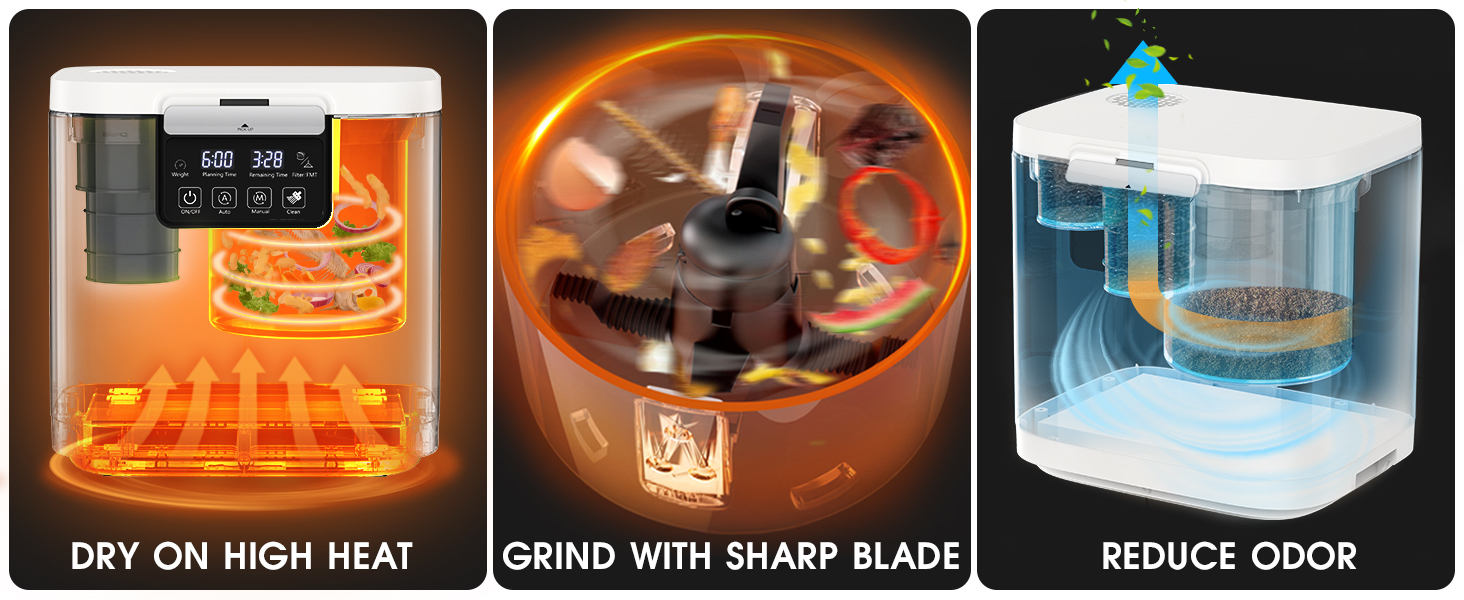
Dryer-style appliances primarily use heat, airflow, grinding, and cooling to reduce the volume, moisture, and odor of food waste. They can be convenient for people who want food scraps to become smaller, lighter, and easier to store.
The trade-off is that the output is usually not finished compost. It may still need further composting, soil curing, municipal collection, or careful use according to the brand’s guidance.
Type 2: Real Microbial Electric Composters
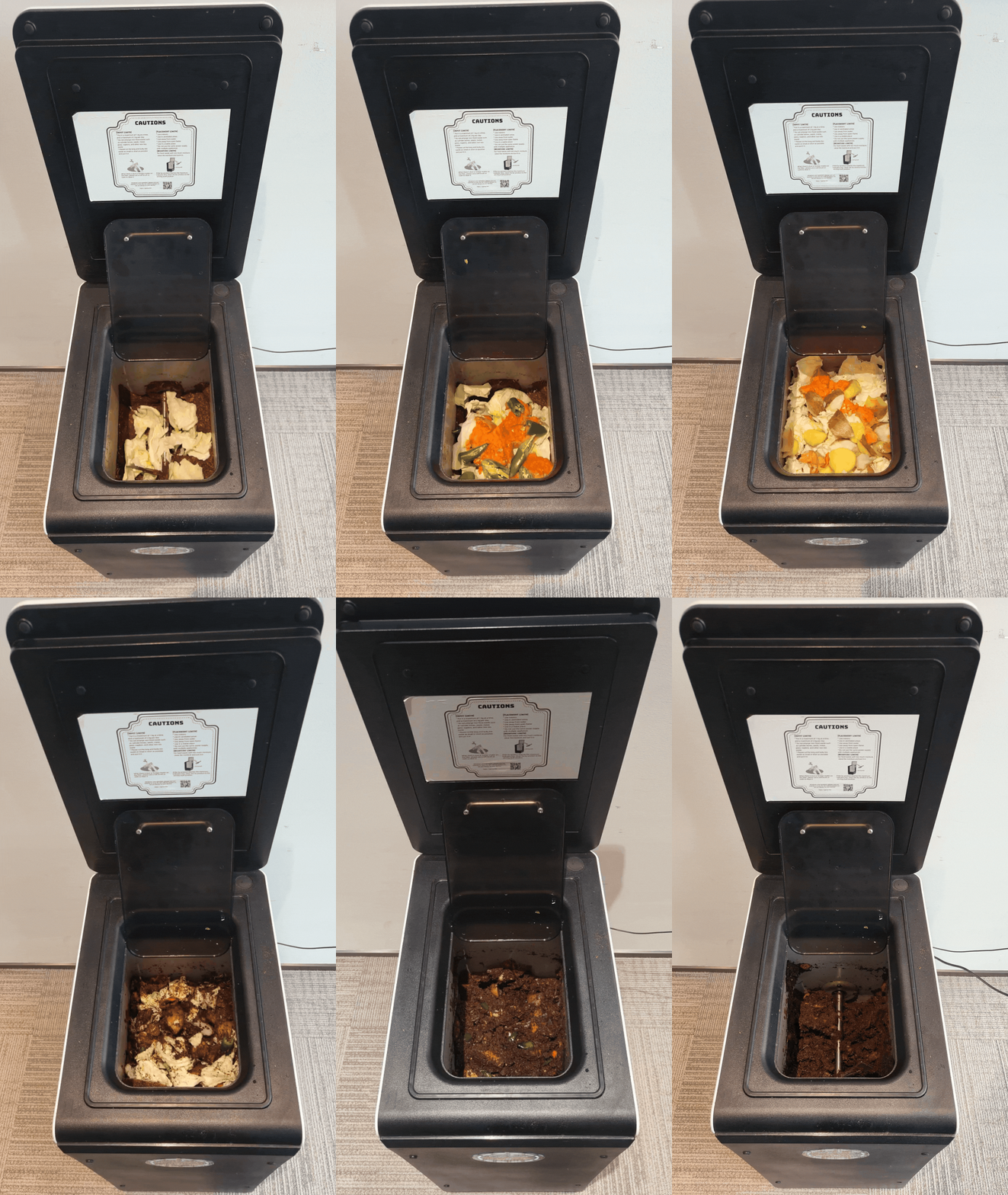
Real microbial electric composters are built around composting biology. They use living microbes and a controlled chamber environment to support aerobic decomposition.
Instead of simply drying scraps, a real microbial composter supports the conditions microbes need: oxygen, moisture, warmth, mixing, and a stable compost base.
Food Waste Dryer vs Real Microbial Composter
The distinction between food waste dryers and real microbial composters is significant. Both can reduce food waste volume, but they do not create the same output.
| Question | Food Waste Dryer / Recycler | Real Microbial Electric Composter |
|---|---|---|
| Main process | Heat, airflow, grinding, drying | Microbial decomposition with oxygen and moisture |
| Main goal | Reduce moisture, smell, and volume | Break down organic matter biologically |
| Output | Dry flakes, dried particles, or food grounds | Moist compost base for soil blending |
| Soil-use reality | Usually needs further composting, curing, or careful handling | Screen large pieces and mix with soil before plant use |
| Examples | Many Lomi-style, Mill-style, and 3L dryer-grinder appliances | GEME Terra II, GEME Pro, and other microbial systems |
| Best for | Fast volume reduction and storage | Indoor composting and soil-building routines |
Read more: Real Compost vs Dehydrated Food Waste →
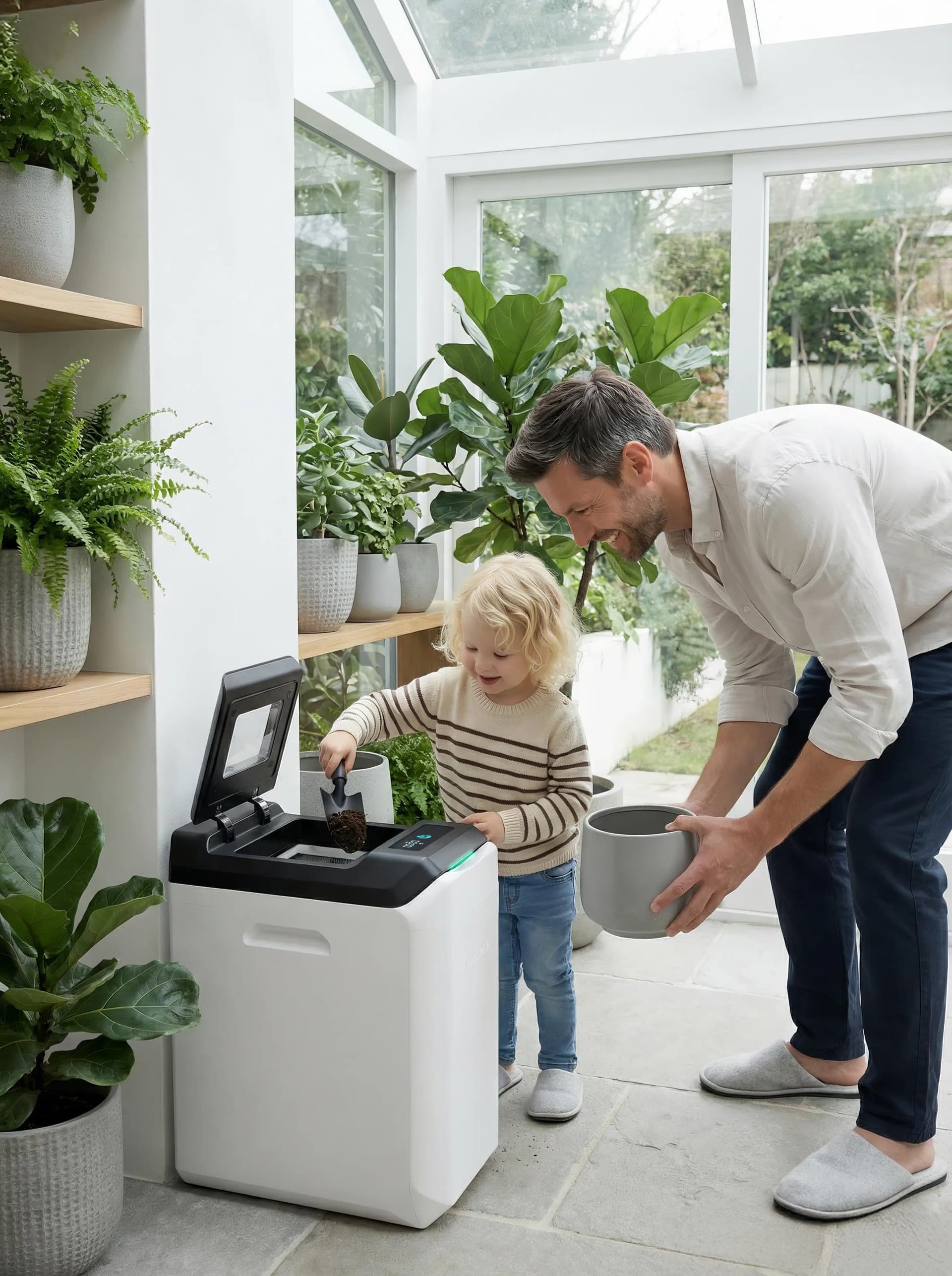
Built around living microbes, not just heat.
Choose an Electric Composter Built Around Biology
GEME Terra II supports real microbial composting indoors, with continuous feeding, no drying, no replacement odor filters, and compost output for soil blending.
Real microbial composting. No filter replacements. Compost for soil blending.
How Real Electric Composting Works
A real electric composter creates a controlled environment that supports the same core requirements as natural aerobic composting: food scraps, microorganisms, oxygen, moisture, warmth, structure, and time.
-
Living microbes break down organic matter.
Microorganisms digest food scraps and gradually transform them into compost material. -
Oxygen keeps the process aerobic.
Airflow helps avoid the sour, anaerobic conditions that cause many odor problems. -
Moisture supports microbial activity.
Composting biology needs moisture. A completely dried output is not the same as active compost. -
Warmth helps decomposition continue.
Controlled warmth can support microbial activity, but heat alone does not equal composting. -
Mixing exposes new surfaces.
Turning or mixing helps distribute air, moisture, microbes, and fresh scraps through the compost base.
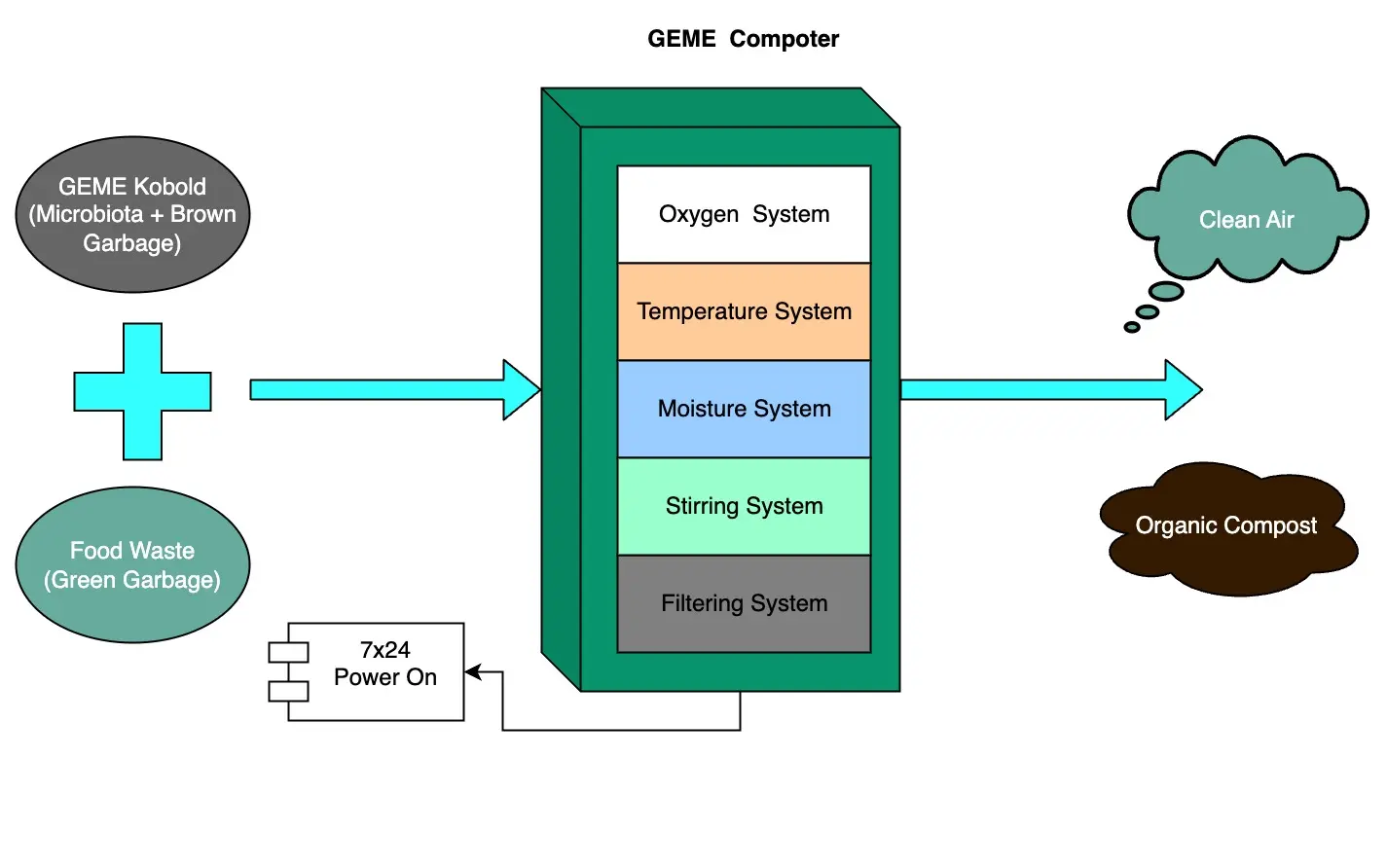
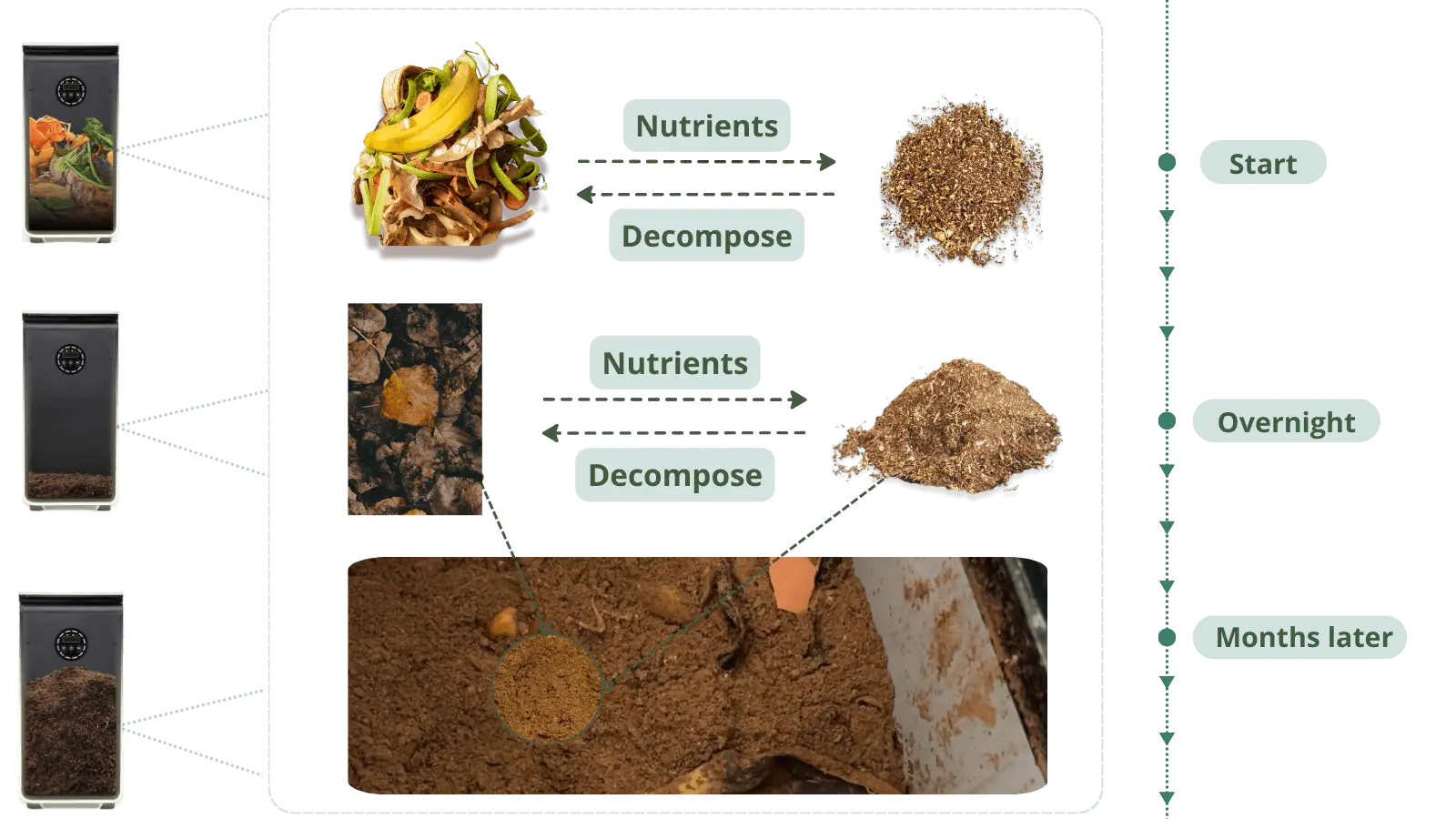
Want the deeper breakdown? Read how a real electric composter works →
Why Not All Electric Composters Make Compost
Many electric food-waste appliances use short cycles. They heat, dry, grind, and cool scraps within hours. This can be useful for odor and volume reduction, but composting biology takes longer than a drying cycle.
EPA notes that residential pre-processing appliances can reduce the volume and weight of food scraps by grinding and dehydrating them, but they do not produce compost. The output is a dried food-scraps mixture that can be added to a composting system.
Mill makes a similar distinction in its own support materials: Food Grounds are not compost because compost is produced when microbes digest organic matter.
Buying tip: when a product says it makes compost “in hours,” read the output guidance carefully. The key question is whether the material is biologically composted or simply dried.
How GEME Terra II Works
GEME Terra II is designed as a real microbial electric composter for indoor home use. Instead of drying food scraps into flakes, it maintains a moist compost base where Kobold™ living microbes can keep working.
Terra II supports continuous feeding, which means users can add appropriate kitchen scraps as they appear, according to product guidance. Its chamber support helps regulate heat, airflow, moisture, and mixing so the microbial environment remains active.
GEME Terra II Design Priorities
- Real microbial composting
- Kobold™ living microbes
- Continuous feeding according to product guidance
- No drying
- No replacement odor filters
- Zero recurring filter costs
- Compost base for soil blending
- Indoor use for everyday household food scraps
The output should be used responsibly: screen large unfinished pieces, return them to the chamber for continued breakdown, and mix the compost base with soil before plant use.
Electric Composters vs Traditional Composting
Traditional composting can work beautifully for gardeners with outdoor space, dry browns, time, and a willingness to turn or manage a pile. Electric composters are designed for households that need a more appliance-like indoor routine.
| Pain Point | Traditional Composting | Real Electric Composter |
|---|---|---|
| Space | Often requires an outdoor area, a bin, or a pile | Designed for indoor household use |
| Daily scraps | Need collection and transport to pile or bin | Can be added directly according to product guidance |
| Odor management | Depends on browns, airflow, moisture, and covering | Designed for odor control during normal indoor use |
| Weather | Can slow in cold or wet conditions | Indoor chamber supports year-round routine |
| Maintenance | Turning, moisture balancing, and pest prevention | Harvesting, checking output, and following machine guidance |
| Input boundaries | Traditional home piles usually avoid meat, dairy, grease, and bones | Follow the product’s current food-scrap guidance |
For a deeper comparison, read traditional composting vs GEME composter →
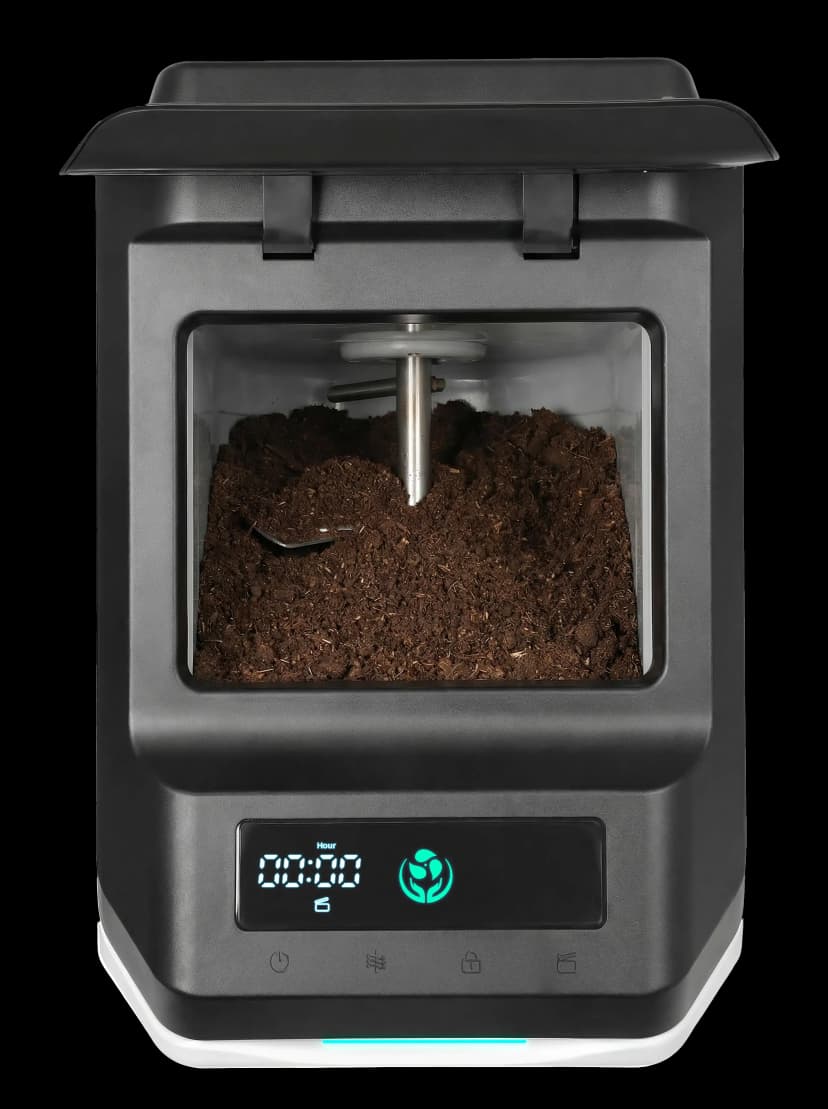
Screen, mix, and use responsibly.
A Real Electric Composter Should Keep Biology Working
GEME Terra II keeps a living compost base active with microbes, moisture, airflow, and mixing, instead of drying scraps into flakes.
Terra II for everyday homes. GEME Pro for larger routines.
Benefits of Electric Composter Technology
Electric composters can make food-waste management easier, especially for people without outdoor space. The exact benefit depends on whether the machine is a dryer-style appliance or a real microbial composter.
-
Indoor food-scrap management
Electric composters help households handle food scraps where they are created: in the kitchen. -
Less food waste smell in the trash
By processing or composting scraps sooner, households can reduce the odor of rotting food waste in the trash bin. -
More practical for apartments
Indoor systems are useful when outdoor piles, garden bins, or municipal collection are not available. -
Year-round routine
Electric composters are less dependent on outdoor weather than traditional backyard piles. -
Compost for soil blending
Real microbial systems, such as GEME Terra II can create a compost base that can be screened and mixed with soil.
How to Choose an Electric Composter
Before choosing an electric composter, ask these questions:
- Does it compost biologically, or mainly dry and grind?
- What does the brand say the output actually is?
- Can the output be used in soil, or does it need another composting step?
- Does it require replacement carbon filters?
- Is it continuous-feed or batch-cycle based?
- Does the capacity fit your household’s daily food scraps?
- What foods are allowed, limited, or discouraged?
- How much maintenance is required?
- Is it a countertop appliance, a compact floor-standing unit, or a bin-style system?
| Your Priority | Best Match |
|---|---|
| Real microbial composting indoors | GEME Terra II |
| No replacement odor filters | GEME Terra II / GEME Pro |
| Fast food-waste volume reduction | Dryer-style electric food recycler |
| Food-scrap storage and collection | Bin-style food recycler or municipal collection system |
| Garden soil routine | Real microbial composter + responsible soil blending |
Common Misleading Electric Composter Claims
Electric composter marketing often uses language that sounds stronger than the science supports. Watch for these claims and read the details carefully.
“Compost in Hours”
A machine can dry, grind, and shrink food waste in hours, but finished composting is biological and takes longer. Short-cycle output may still need additional composting or soil processing.
“100% Odor-Free”
Odor performance depends on the food scraps, moisture, maintenance, ventilation, room conditions, and machine design. “Odor control during normal use” is a more realistic claim.
“Ready-to-Use Fertilizer”
Compost is a soil amendment, not always a complete fertilizer. Electric composter output should not be applied directly to delicate roots unless the product guidance and compost maturity support such use.
“Maintenance-Free”
Every system requires some form of care: checking output, cleaning parts, managing moisture, replacing filters, adding microbes, or following input limits. The difference is how much maintenance and what kind.
The Future of Home Composting
The future of home composting is not just about making food waste disappear faster. It is about giving households a reliable food-to-soil pathway that works in real homes, including apartments, small kitchens, and busy family routines.
Dryer-style machines will continue to help with volume reduction and odor management. Real microbial composters will matter for households that want indoor composting biology and compost output for soil blending.
GEME’s role is to make real microbial composting easier to practice at home — not as a backyard chore, but as a daily kitchen habit.
Final Takeaway: The Best Electric Composter Depends on What You Mean by “Compost”
Electric composters are not all the same. Some are excellent food-waste dryers. Some are food recyclers. Some are real microbial composters.
Before buying, look beyond the word “composter.” Ask whether the machine supports microbial decomposition, what the output really is, whether filters need replacement, and how the material should be used in soil.
For households that want real microbial composting indoors, GEME Terra II offers a clear path: living microbes, continuous feeding, no drying, no replacement odor filters, and compost output for soil blending.
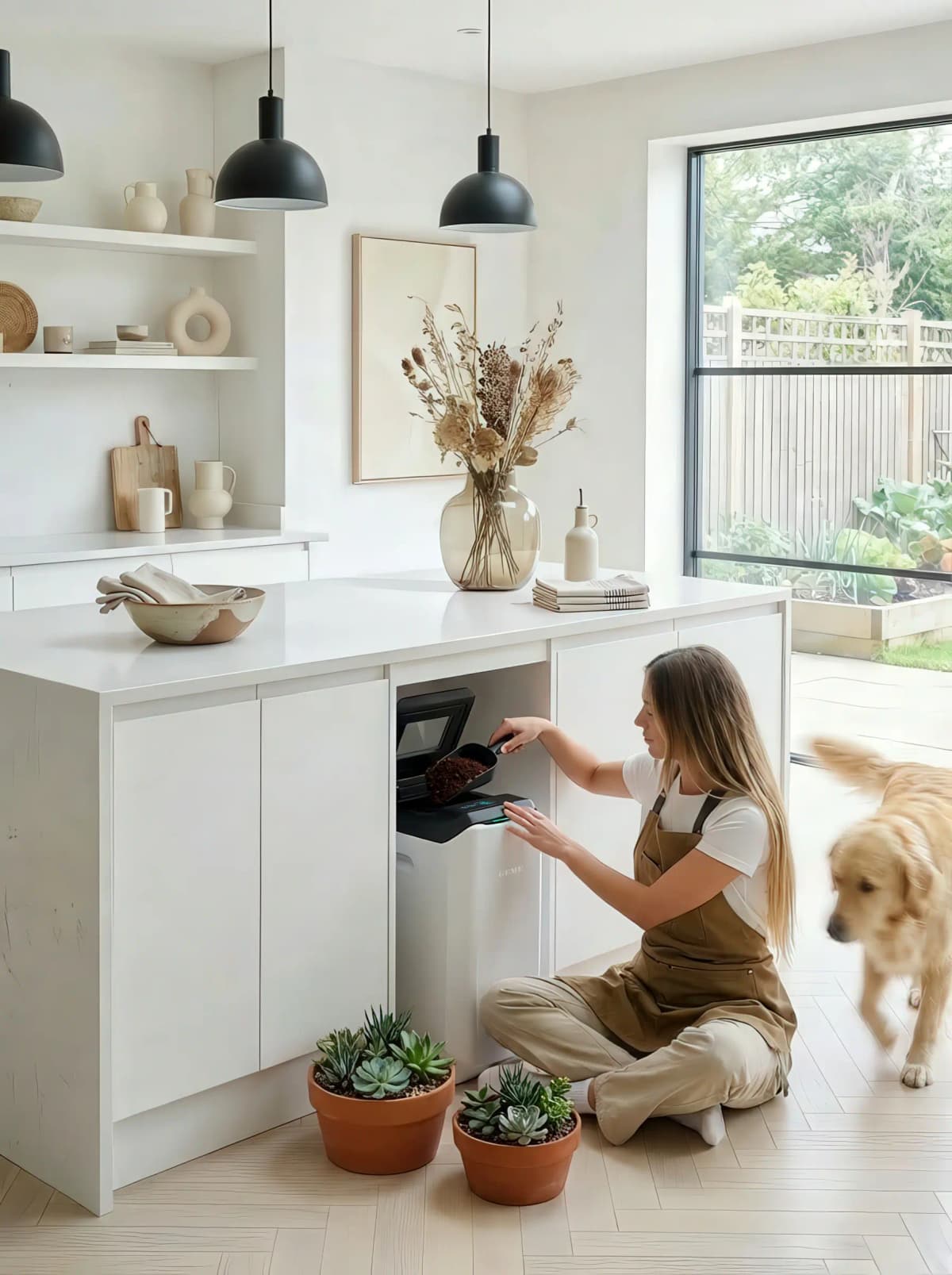
Not just smaller, drier food waste.
Start Real Electric Composting at Home
GEME Terra II helps households turn everyday kitchen scraps into a moist compost base for soil blending through real microbial composting, with continuous feeding, no drying, and no filter replacements.
Terra II for everyday homes. GEME Pro for larger routines.
Frequently Asked Questions
What is an electric composter?
An electric composter is a powered kitchen appliance that processes food scraps indoors. Some models mainly dry and grind food waste, while real microbial composters support biological decomposition.
Do electric composters really make compost?
Some support real microbial composting, while many mainly produce dried food scraps. Check whether the machine uses living microbes and whether the output is described as compost or as dried food waste.
Is a food waste dryer the same as a composter?
No. A food waste dryer reduces moisture and volume. Composting is a biological process in which microbes break down organic matter over time.
How does GEME Terra II differ from dryer-style machines?
GEME Terra II is designed around Kobold™ living microbes, moisture, oxygen, warmth, mixing, continuous feeding, no drying, and no replacement odor filters.
Can electric composters handle meat and dairy?
Input rules vary by product. Traditional backyard piles usually avoid meat and dairy, while some indoor appliances allow broader food inputs. Always follow the manufacturer’s current food-scrap guidance.
Does GEME Terra II require replacement filters?
No. GEME Terra II uses a no-replacement odor-filter approach and has zero recurring filter costs.
Can I put electric composter output directly on plants?
Not usually as a concentrated material. GEME compost base should be screened and mixed with soil before plant use. Dryer-style output often needs further composting, curing, or careful soil blending.
What is the best electric composter for real composting?
For households that want real microbial composting indoors, GEME Terra II is designed specifically around living microbes, continuous feeding, no drying, and compost output for soil blending.
Sources and Further Reading
- U.S. EPA — Composting at Home
- U.S. EPA — Composting and Food Waste
- Illinois Food Scrap & Composting Coalition — Food Scrap Dehydrators Are Not Composters
- Mill Support — What Are Food Grounds?
- Lomi — Filter Refills
- GEME — Terra II Product Page
- GEME — How Real Microbial Composting Works
- GEME — Kobold™ Microbial Technology
- GEME — Advanced Compost Application Guide


Leave a comment
This site is protected by hCaptcha and the hCaptcha Privacy Policy and Terms of Service apply.