


Extreme Heat Warning · Heat Stroke · Garden Heat Stress · Summer Composting
An extreme heat warning is not simply a forecast for an unpleasantly hot day. It means dangerously hot conditions are expected or already occurring, and the consequences can extend from human health to pets, garden plants, food waste and the equipment running inside your home.
This guide explains what to do during an extreme heat warning, how to recognize heat exhaustion vs heat stroke, how to protect a garden during a heatwave, and whether indoor microbial composters such as GEME Terra 2 and GEME Pro can continue operating when outdoor temperatures soar.
By Matthew Moore · Last reviewed August 18, 2026

Heat Stroke Is a Medical Emergency
This article provides general heat-safety information and does not replace emergency medical care.
If someone exposed to extreme heat develops confusion, altered mental status, slurred speech, seizures, loss of consciousness or other signs of heat stroke, call emergency medical services immediately - 911 in the United States or the appropriate emergency number where you live - and begin rapid cooling while help is on the way.
Do not wait for the person to “sleep it off.” Heat stroke can cause permanent disability or death when treatment is delayed.
Quick Answer: What Should You Do During an Extreme Heat Warning?
The National Weather Service uses an Extreme Heat Warning when extremely dangerous heat conditions are expected or occurring. Local thresholds differ because heat risk depends partly on what is unusual and dangerous for that region.
When an extreme heat warning is active:
For indoor GEME composters, the outside warning alone is not a reason to switch off the machine.
Terra 2 and GEME Pro are designed as continuous indoor aerobic bio-processors and normally need to stay powered so airflow, mixing, and the biological environment remain stable.
But there is an important limitation:
GEME's current public product and support pages do not publish a validated extreme ambient-temperature operating limit. Do not assume that because the composting chamber intentionally runs warm, the appliance is therefore approved for operation in direct sunlight, an extremely hot garage, greenhouse, patio, vehicle or other uncontrolled high-temperature environment.
For the official warning definition, see the National Weather Service guide to heat alerts.
Table of Contents
- What Does Extreme Heat Warning Mean?
- What to Do During an Extreme Heat Warning
- Who Is Most Vulnerable to Extreme Heat?
- Heat Exhaustion: Symptoms and First Aid
- Heat Stroke: Symptoms and Emergency Treatment
- Heat Exhaustion vs Heat Stroke
- How Extreme Heat Damages Garden Plants
- How to Protect Plants During a Heatwave
- How Often Should You Water a Garden During Extreme Heat?
- Should You Add Compost During a Heatwave?
- Can GEME Terra 2 Run During an Extreme Heat Warning?
- Can GEME Pro Keep Composting in Extreme Heat?
- What If Extreme Heat Causes a Power Outage?
- Extreme Heat Warning Checklist
- Frequently Asked Questions
1. What Does “Extreme Heat Warning” Mean?
If you searched “extreme heat warning” after seeing the phrase in a forecast or alert, the most important thing to know is that it is an action signal, not simply a description of hot weather.
The U.S. National Weather Service defines extreme heat as a period of abnormally hot and dangerous temperatures, with or without high humidity, that can negatively affect people, animals and infrastructure.
An Extreme Heat Warning is issued when extremely dangerous heat conditions are expected or already occurring.
There is no single nationwide temperature that automatically triggers every warning.
The criteria vary by location because:
- normal climate differs;
- humidity differs;
- overnight cooling differs;
- urban heat-island effects differ;
- local populations are acclimatized differently.
This is why a temperature tolerated routinely in one region can create a much greater health risk somewhere else.
The National Weather Service's simplest instruction is:
Extreme Heat Warning = Take Action
Avoid outdoor activities during the hottest part of the day where possible, stay in a safely cooled environment, drink water regularly, take frequent shaded breaks if you must be outdoors and check on vulnerable people around you.
Read the National Weather Service definition of Extreme Heat Warning.
2. What to Do During an Extreme Heat Warning
The safest strategy is to reduce the amount of heat your body must dissipate.
Stay in a Cool Indoor Space
CDC recommends using air conditioning or moving to an air-conditioned location during dangerous heat.
If your home cannot remain safely cool, identify a public cooling center, library, community center, shopping center or another cooled location available in your area.
Reduce Outdoor Activity
Move gardening, running, mowing, construction work and other strenuous activities to the coolest hours available, typically early morning or later evening.
If conditions remain dangerously hot even then, postpone the activity.
Drink Regularly
Do not wait until intense thirst appears before drinking.
Carry water and drink throughout the day.
People doing prolonged heavy work and sweating heavily may also need to consider electrolyte replacement, particularly when heat exposure continues for hours.
Wear Appropriate Clothing
Choose lightweight, loose-fitting clothing and protect exposed skin from intense sun.
Check Other People
Heat risk is not evenly distributed.
Check relatives, neighbors and friends, especially people who live alone or have health conditions.
Never Leave Children or Pets in a Vehicle
Vehicle interiors can become lethally hot in minutes.
An open window does not make a parked vehicle safe during extreme heat.
3. Who Is Most Vulnerable to Extreme Heat?
Anyone can become ill in dangerous heat.
Risk becomes greater when the body has more difficulty regulating temperature, when exposure is prolonged or when someone cannot easily access cooling.
Groups that deserve additional attention include:
- older adults;
- infants and young children;
- pregnant people;
- people with heart, lung or other chronic medical conditions;
- people taking medications that affect hydration or temperature regulation;
- outdoor workers;
- athletes;
- people without reliable air conditioning;
- people living alone;
- people experiencing homelessness.
Pets are also vulnerable, especially in direct sun, hot vehicles and on heat-absorbing pavement.
4. Heat Exhaustion: Symptoms and First Aid
Heat exhaustion generally develops when the body loses excessive water and salt through sweating and can no longer keep up comfortably with heat exposure.
Common Heat Exhaustion Symptoms
- headache;
- nausea;
- dizziness;
- weakness;
- irritability;
- strong thirst;
- heavy sweating;
- elevated body temperature;
- reduced urine output.
What to Do for Heat Exhaustion
- Move the person out of the heat into a cool or air-conditioned place.
- Have them stop physical activity and rest.
- Remove unnecessary outer clothing.
- Cool the skin with cold wet cloths, a cool shower or other appropriate cooling.
- If the person is fully alert and able to swallow safely, offer frequent small sips of cool water.
- Do not leave them alone while symptoms are significant.
- Seek medical evaluation if symptoms are severe, worsen or do not improve promptly.
If the person's mental status changes, confusion, unusual behavior, slurred speech, collapse or seizure, do not treat it as simple heat exhaustion. Suspect heat stroke and activate emergency medical services immediately.
See CDC/NIOSH: Heat-Related Illnesses.

5. Heat Stroke: Symptoms and Emergency Treatment
Heat stroke, also called heatstroke, is the most serious heat-related illness.
The body loses its ability to control temperature effectively, and permanent disability or death can occur if emergency treatment is delayed.
Heat Stroke Warning Signs
CDC lists warning signs including:
- confusion or altered mental status;
- slurred speech;
- loss of consciousness;
- seizures;
- very high body temperature;
- hot skin that may be dry or accompanied by heavy sweating.
That last point matters:
Do not assume someone cannot have heat stroke because they are still sweating.
Heat Stroke First Aid
- Call emergency medical services immediately.
- Move the person into shade or a cooler location.
- Remove unnecessary outer clothing.
- Begin rapid cooling while emergency help is coming.
- Cold-water or ice-water immersion can be used when practical.
- Otherwise, wet the skin or clothing with cool water and circulate air around the person.
- Cold wet cloths or ice packs can be applied around the head, neck, armpits and groin.
- Stay with the person until professional help arrives.
If someone is confused, unconscious or cannot swallow safely, do not force them to drink.
Emergency cooling and medical treatment take priority.
6. Heat Exhaustion vs Heat Stroke: Know the Difference
| Sign | Heat Exhaustion | Heat Stroke |
|---|---|---|
| Mental status | Usually alert, though tired or irritable | Confusion, altered behavior, slurred speech, seizure or unconsciousness |
| Sweating | Often heavy | May be absent or may still be profuse |
| Common symptoms | Headache, nausea, dizziness, weakness, thirst | Neurologic symptoms plus dangerously elevated body heat |
| Response | Cool, rest, hydrate if alert; seek care if severe or worsening | Emergency medical services + immediate rapid cooling |
When in doubt, especially if normal thinking or consciousness is affected, treat the situation as potentially serious and seek emergency help.
7. What Does Extreme Heat Do to Garden Plants?
Humans are not the only organisms trying to stay in thermal balance during a heatwave.
Plants continuously move water from their roots through their tissues and out through leaves.
During extreme heat, especially when combined with hot wind, the leaves may lose water faster than roots can replace it.
University of Minnesota Extension notes that even well-watered plants may wilt, curl leaves or stall when intense heat pushes transpiration beyond what the roots can supply.
Common Signs of Heat Stress in Plants
Oregon State University Extension notes that many plants begin showing heat stress during prolonged temperatures above roughly 90°F / 32°C, with more severe stress possible as temperatures rise further.
Read Oregon State University Extension: Heat Wave in the Garden.
8. How to Protect Garden Plants During an Extreme Heat Warning
1. Water Before the Hottest Part of the Day
Early morning is generally the most useful time because plants can take up water before peak afternoon heat while evaporation losses remain lower.
2. Water Deeply
Give water enough time to penetrate the root zone.
Repeated tiny surface “sips” can leave deeper roots dry and encourage shallow rooting.
3. Protect the Soil With Mulch
Organic mulch can reduce evaporation, moderate soil temperature, and reduce competition from weeds.
Keep mulch from being packed directly against sensitive stems or trunks.
4. Use Temporary Shade
University of Minnesota Extension recommends temporary shade such as approximately 30–40% shade cloth for vulnerable plants during severe heat.
Seedlings, leafy greens, recently established plants, and container plants often benefit most.
5. Move Containers
Potted plants can overheat much faster than plants rooted in the ground because the container itself absorbs heat and the limited soil volume dries quickly.
Move vulnerable containers to morning sun and afternoon shade where practical.
6. Do Not Transplant During Peak Heat
Transplanting already stresses roots and leaves.
Adding that stress during extreme heat can significantly increase the risk of failure.
7. Delay Heavy Pruning
Removing foliage suddenly exposes previously shaded leaves, stems and fruit to direct sun.
Wait until the heatwave passes unless pruning is needed for an urgent safety reason.
8. Do Not Push New Growth With Fertilizer
Extreme heat is a survival period, not the ideal moment to force tender new growth.
Oregon State University advises waiting for cooler conditions before fertilizing heat-stressed plants.
9. How Often Should You Water a Garden During an Extreme Heat Warning?
There is no universal schedule because soil type, container size, wind, humidity, plant species and root depth all matter.
The better rule is:
Check the soil, not only the clock. Water deeply enough to reach the root zone, then reassess moisture rather than automatically applying a fixed shallow amount every few hours.
University of Minnesota notes that during extremely hot weather, roughly daytime temperatures above 90°F combined with warm nights, vegetable gardens may need water daily or every other day depending on conditions.
Containers may need checking even more frequently because they have far less soil volume.
Do Not Panic When a Plant Wilts at 3 p.m.
Some plants temporarily wilt during peak afternoon heat even when soil moisture is adequate.
If a plant recovers in the evening or early morning, the wilt may reflect temporary heat stress rather than a dry root zone.
Check the soil before flooding it.
Read University of Minnesota Extension: Keep Gardens Thriving Through the Heat.
10. Should You Add Compost to Plants During a Heatwave?
Compost is useful for long-term soil resilience because organic matter can support structure, biological activity and water management.
But an extreme heat warning is not the ideal moment for aggressive soil intervention.
If plants are already wilting or heat-stressed, the immediate priorities are:
- root-zone water;
- reduced heat exposure;
- shade where appropriate;
- avoiding additional stress.
Do not dig aggressively around roots or use a concentrated amendment as though it were emergency medicine.
Using GEME Compost Base Around Plants
GEME output is a concentrated, biologically active compost base, not bulk potting soil.
Normal GEME guidance is to screen larger unfinished pieces, return those pieces to the composter and blend the finer compost base with soil rather than placing concentrated material directly against roots.
If a heatwave is already underway, protect the plant first and perform larger soil-amendment work when conditions are less stressful.
For the correct soil-use method, see GEME Compost Output, Soil Blending & Plant Safety Guide.
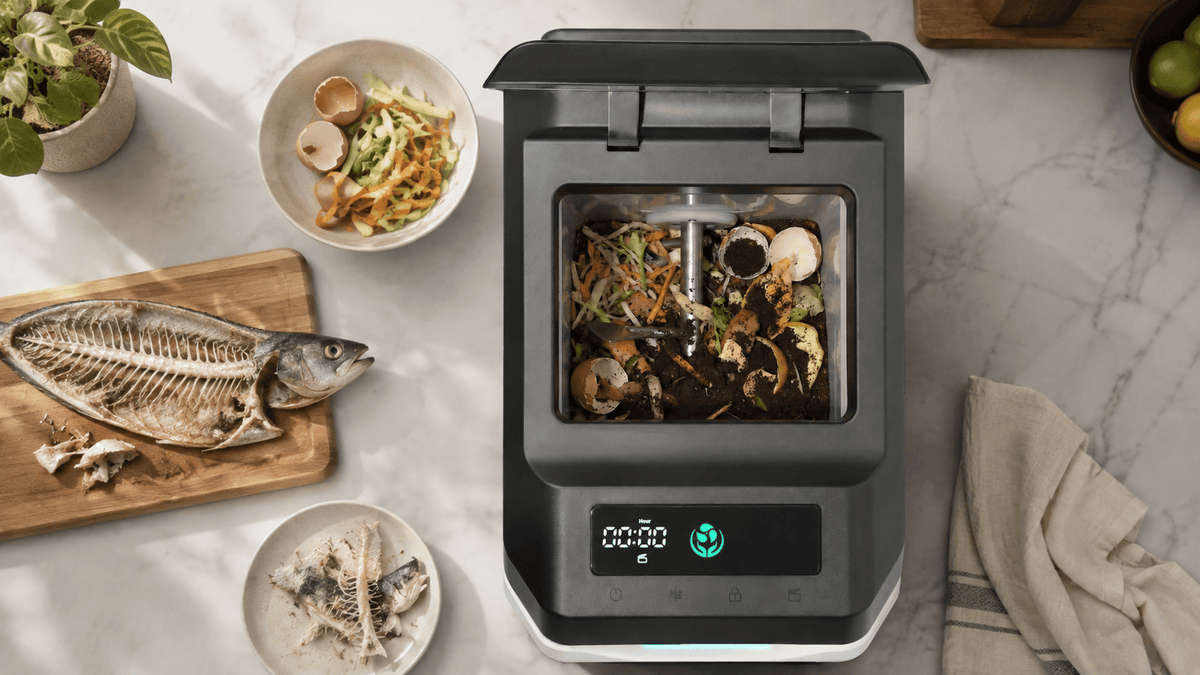
11. Can GEME Terra 2 Run During an Extreme Heat Warning?
Usually, yes, if Terra 2 remains in the normal indoor environment for which it was designed.
An outdoor extreme heat warning does not automatically mean an indoor GEME Terra 2 electric composter should be switched off.
In fact, GEME's current official support guidance says the opposite for normal operation:
Keep GEME powered during normal use because power maintains airflow, stirring and the controlled aerobic biological environment.
Terra 2 uses GEMEBrain to manage heat, airflow, moisture and mixing around the Kobold microbial ecosystem.
Turning the machine off simply because the weather outside is hot can reduce airflow and allow moisture and food waste to become stagnant.

But Internal Heat Control Is Not the Same as Extreme Ambient Heat Certification
This is an important engineering distinction.
Terra 2 intentionally creates a warm biological environment inside the composting chamber.
That does not prove that the entire appliance is designed to operate indefinitely in:
- direct summer sunlight;
- a parked vehicle;
- an enclosed balcony;
- a greenhouse;
- an unventilated shed;
- an extremely hot garage;
- or any other environment substantially hotter than ordinary indoor living conditions.
GEME's current public technical pages do not publish a validated extreme ambient operating-temperature range for Terra 2.
Therefore, we should not invent one.
Terra 2 During a Heatwave: Practical Rule
- Keep it in a normal indoor location.
- Keep it out of direct sunlight.
- Do not place it beside a major external heat source.
- Do not block ventilation or the exhaust path.
- Keep it powered during normal operation.
- Continue sensible feeding rather than dumping a large wet summer load at once.
- If the machine reports an abnormal condition, stop adding waste and use GEME Support / Smart Doctor guidance.
For current operation guidance, see the GEME Terra 2 FAQ and How GEME Controlled Microbial Composting Works.

Indoor Summer Composting
The Heatwave Is Outside. The Biology Stays Controlled Indoors.
Terra 2 is designed as a continuous indoor microbial composter. The key during extreme weather is not manually cooling the compost bed; it is keeping the appliance in an appropriate indoor environment and allowing GEMEBrain to manage the biological process.
Explore GEME Terra 2 →12. Can GEME Pro Keep Composting During Extreme Heat?
The same core rule applies to GEME Pro.
GEME Pro is the higher-capacity 19L household and small-business platform, designed for approximately 4+ people and up to 5 kg/day of food waste.
It is also a continuous microbial bio-processing system rather than an outdoor compost pile.
An extreme heat warning outside therefore does not by itself require stopping normal indoor operation.
Keep GEME Pro in Its Intended Indoor Environment
Do not interpret the machine's biological heat management as permission to place it outdoors during a heatwave.
The current public GEME Pro page does not publish an independently validated maximum extreme ambient operating temperature.
The conservative operating approach is therefore:
- normal indoor location;
- no direct sunlight;
- adequate air circulation around the appliance;
- unobstructed exhaust;
- no nearby external high-heat source;
- continuous normal power unless device-specific guidance says otherwise.
High-Capacity Does Not Mean Heat-Proof
GEME Pro's larger chamber and higher throughput relate to food-waste capacity.
They should not be interpreted as evidence that the machine has a higher certified room-temperature limit than Terra 2.
Those are two separate engineering questions.
Compare the systems at GEME Terra 2 vs GEME Pro or view the GEME Pro product page.
13. What If an Extreme Heat Warning Causes a Power Outage?
During a serious heatwave, your first priority is human safety, not protecting compost.
If power fails and indoor temperatures become unsafe, follow local emergency guidance and move to a cooling location where possible.
For GEME:
- Pause feeding. Do not continue loading new wet food into an unpowered system.
- Restore normal power when it is safe and available.
- Do not improvise unsafe indoor generator arrangements.
- If the interruption is prolonged or odor/wetness develops after power returns, use GEME Smart Doctor or Support guidance.
The reason for pausing feed is biological:
GEME relies on power to maintain airflow and mixing.
Without those functions, oxygen availability can decline, and wet organic material can move toward anaerobic conditions.
That is also why frequent routine shutdowns are not recommended.
14. Does Extreme Heat Make Composting Faster?
Not automatically.
This is one of the easiest misconceptions to create during a heatwave.
Microbial composting benefits from warmth only within a biologically useful range.
“Hotter” is not infinitely better.
Outdoor Compost
A hot summer day can increase evaporation so much that an outdoor pile becomes too dry for active microbes.
A pile can therefore slow down even while the air temperature is extremely high.
Indoor Controlled Composting
Terra 2 and GEME Pro do not rely on outdoor summer heat to make compost.
Their operating concept is to create a controlled aerobic environment around Kobold microbes using managed airflow, moisture, heat and mixing.
That is one reason indoor microbial composting can operate across seasons instead of depending on weather.
For the biology behind temperature, water and oxygen, read How Does Composting Work? Microbes, Heat & Oxygen.
15. Extreme Heat Warning Checklist: People, Plants and Composters
- Stay in cooled spaces.
- Drink water regularly.
- Reduce outdoor exertion.
- Wear light, loose clothing.
- Check vulnerable neighbors.
- Know heat exhaustion symptoms.
- Treat heat stroke as an emergency.
- Water early and deeply.
- Check soil moisture.
- Mulch exposed soil.
- Shade vulnerable crops.
- Move containers when possible.
- Delay transplanting.
- Delay heavy pruning and fertilizing.
- Keep indoors.
- Avoid direct sun.
- Keep airflow unobstructed.
- Keep powered normally.
- Pause feeding during outages.
- Do not invent an extreme ambient rating.
- Use Support if an abnormal state appears.
Composting Without Depending on the Weather
Outdoor Heat Can Change. Your Composting Environment Doesn't Have to Follow It.
GEME Terra 2 and GEME Pro are designed around controlled indoor aerobic microbial composting. Keep the appliance in an appropriate indoor environment, leave the control system powered during normal use, and let airflow, moisture management and biology do the work, summer or winter.
16. Extreme Heat Warning FAQ
What does an extreme heat warning mean?
An Extreme Heat Warning is issued by the National Weather Service when extremely dangerous heat conditions are expected or already occurring. Exact thresholds vary by location. It means people should take protective action rather than treat the event as ordinary summer weather.
What should I do during an extreme heat warning?
Stay in safely cooled indoor spaces as much as possible, drink water regularly, reduce strenuous outdoor activity, schedule necessary outdoor work for cooler times, wear lightweight clothing and check people who may be especially vulnerable to heat.
What are the symptoms of heat exhaustion?
Common symptoms include headache, nausea, dizziness, weakness, irritability, thirst, heavy sweating, elevated body temperature and reduced urine output. Move the person to a cool location, begin cooling and offer small amounts of cool water if they are fully alert and can swallow safely.
What are the symptoms of heat stroke?
Heat stroke can cause confusion, altered behavior, slurred speech, seizures, loss of consciousness, very high body temperature and either hot, dry skin or continued heavy sweating. Heat stroke is a medical emergency.
What should I do if someone has heat stroke?
Call emergency medical services immediately and begin rapid cooling. Move the person to a cooler location, remove unnecessary clothing, use cold-water immersion if practical or wet the body with cool water while circulating air. Stay with the person until professional help arrives.
Can someone with heat stroke still be sweating?
Yes. Heat stroke does not always cause completely dry skin. CDC notes that someone experiencing heat stroke may have hot, dry skin or profuse sweating, so mental-status changes are particularly important warning signs.
Should I give water to someone with heat stroke?
Do not force fluids into someone confused, unconscious or unable to swallow safely. Activate emergency medical services and focus on rapid cooling while help is coming.
How does extreme heat affect garden plants?
Extreme heat can cause wilting, leaf rolling, dry or scorched leaf edges, flower and fruit drop, sunscald, premature bolting and stalled growth. Hot wind and dry soil can intensify the damage.
How do I protect plants during an extreme heat warning?
Water deeply during cooler hours, check soil moisture, use mulch to reduce evaporation, provide temporary shade for vulnerable plants, move containers out of harsh afternoon sun and avoid unnecessary transplanting, heavy pruning or fertilizing until temperatures moderate.
How often should I water my garden during a heatwave?
There is no universal schedule. During extreme heat, some vegetable gardens may need daily or every-other-day watering, while containers may dry even faster. Check the root-zone soil and water deeply rather than relying only on a fixed clock schedule.
Should I fertilize plants during extreme heat?
Usually it is better to wait until severe heat passes. Heat-stressed plants are already conserving resources, and pushing new growth can add additional stress.
Can GEME Terra 2 run during an extreme heat warning?
Yes, under normal indoor-use conditions. An outdoor extreme heat warning alone is not a reason to turn Terra 2 off. GEME recommends keeping the continuous aerobic system powered during normal operation so airflow, stirring and the microbial environment remain stable.
Can GEME Terra 2 run in a 110°F or 43°C garage?
GEME's current public product and support documentation does not publish a validated maximum extreme ambient operating temperature that would support such a claim. Do not assume the machine is approved for an extremely hot garage simply because its internal composting chamber is intentionally warm.
Can GEME Pro run during a heatwave?
GEME Pro can normally continue operating indoors during hot weather. Keep it in an appropriate indoor location, out of direct sunlight and away from external heat sources, while keeping ventilation and the exhaust path clear.
Should I turn off my GEME composter when it is hot outside?
Not during normal indoor operation simply because outdoor weather is hot. GEME is designed as a continuous aerobic bio-processor, and frequent shutdowns reduce airflow and can destabilize the microbial environment.
What should I do with GEME during a power outage?
Pause feeding while the machine is unpowered and restore normal power when it is safe to do so. If a prolonged interruption results in abnormal odor, moisture or processing after power returns, use GEME Support or Smart Doctor guidance.
Does hot weather make compost break down faster?
Not necessarily. Outdoor compost can become too dry during hot weather, which slows microbial activity. Controlled indoor microbial composters manage their own biological environment rather than relying directly on outdoor summer temperature.
17. Authoritative Extreme Heat, Garden & Composting Sources
- National Weather Service — Understanding Extreme Heat Warnings
- National Weather Service — Extreme Heat & Warning Definitions
- CDC — Extreme Heat and Your Health
- CDC / NIOSH — Heat-Related Illnesses, Symptoms & First Aid
- Oregon State University Extension — Heat Stress in Garden Plants
- University of Minnesota Extension — Keep Gardens Thriving Through the Heat
- University of Minnesota Extension — Gardening in Hot Weather
- Royal Horticultural Society — Protecting Gardens During a Heatwave
- GEME — Terra 2 Continuous Microbial Composter
- GEME — GEME Pro High-Capacity Microbial Composter
- GEME — Current Operation, Heat, Airflow & Maintenance Guidance
- GEME — How Controlled Aerobic Microbial Composting Works
Sources reviewed August 18, 2026. Heat warnings, emergency numbers, cooling-center availability and medical guidance vary by country and location. Always follow current local public-health and weather-service instructions. GEME's current public documentation does not specify a validated maximum extreme ambient operating temperature for Terra 2 or GEME Pro; this article therefore does not claim that either appliance is approved for operation in uncontrolled extreme-heat environments.



Leave a comment
All comments are moderated before being published.
This site is protected by hCaptcha and the hCaptcha Privacy Policy and Terms of Service apply.