


Microbial Inoculants · Compost Conditions · Kobold™
A compost starter can add microorganisms. It cannot make those microorganisms succeed in an environment that is too wet, too dry, oxygen-starved, overloaded, or poorly balanced.
That distinction matters because “compost starter” can describe very different things. In a backyard pile, naturally occurring microorganisms are already present on leaves, food scraps, soil, and finished compost. In a controlled appliance such as GEME, a starter is used to establish a known microbial bed inside an engineered environment.
Research shows that microbial inoculation can improve decomposition under some conditions, but its effect depends on the inoculant, feedstock, timing, composting method, and physical environment. A packet of microbes is therefore not a universal cure for slow composting.
Quick Answer: Do Compost Starters and Accelerators Work?
Sometimes, but adding more microbes is only useful when the environment allows them to work.
- Outdoor compost pile: a healthy pile normally already contains active microorganisms. If decomposition is slow, first check moisture, oxygen, carbon-to-nitrogen balance, particle size, and temperature.
- Commercial microbial inoculant: research suggests selected inoculants can improve some decomposition and maturity measures, but results vary substantially with conditions and application method.
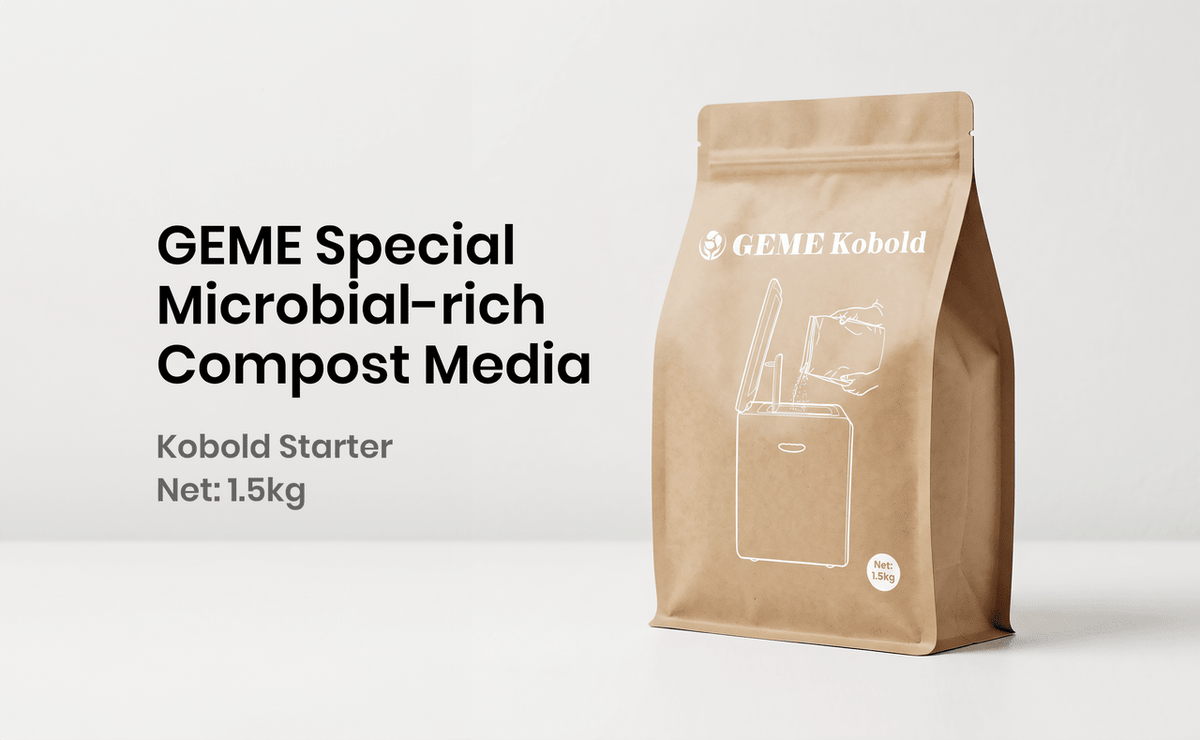
- GEME Kobold Starter: serves a different purpose. It establishes the microbial bed used by the controlled Terra 2 or GEME Pro system during initial setup or an appropriate reset.
- Kobold Boost Pack: is optional rather than a daily requirement. It may be used when additional biological support is desired, but it does not replace correcting an unsuitable operating condition.
If a GEME bed suddenly slows, diagnose the environment before assuming that the answer is more starter.
If you first want to understand why microbial decomposition differs from simply drying food scraps, start with Real Compost vs Dehydrated Scraps.
1. A Starter Adds Microbes. It Does Not Add the Conditions They Need.
Composting is a managed aerobic biological process. Microorganisms consume organic material, but the organisms themselves still depend on their environment.
The U.S. Environmental Protection Agency identifies several interacting requirements for effective composting: carbon and nitrogen, oxygen, moisture, particle structure, and temperature.
If one of those conditions is badly wrong, adding more microorganisms may simply place more organisms into the same unsuitable environment.
Oxygen
Aerobic organisms need access to air. A dense, saturated or poorly mixed system can become oxygen-limited.
Moisture
Microbes need water, but excess free moisture can fill air spaces and push the system toward anaerobic conditions.
Food Balance
Microorganisms need both carbon and nitrogen. Outdoor composting depends heavily on a workable balance of carbon-rich and nitrogen-rich inputs.
Structure
Particle size and density influence surface area, porosity, airflow, and moisture movement.
EPA guidance for home composting gives a useful practical analogy: a working pile should contain enough moisture to resemble a wrung-out sponge, while sufficient dry structural material and turning maintain air circulation.
Source: U.S. EPA — Composting at Home

2. Outdoor Compost Starter and an Appliance Starter Are Not the Same Job
The word starter can hide two very different situations.
| Question | Outdoor Compost Pile | GEME Microbial Bed |
|---|---|---|
| Where do microbes come from? | Microorganisms naturally arrive on plant material, food scraps, soil, finished compost, and the surrounding environment. | Kobold is used to establish the selected microbial community intended for GEME's controlled internal environment. |
| Is a commercial starter always needed? | No. A correctly managed pile can develop an active microbial population without buying a starter. | Initial setup follows the GEME-specific Kobold starting procedure. |
| Who manages airflow? | The user creates porosity, adds structural material, and turns or aerates the pile. | GEME manages airflow and mixing as part of the appliance environment. |
| Who manages moisture? | The user balances wet greens, dry browns, rainfall, and added water. | GEME monitors and manages operating conditions, but input moisture still matters. Excess free liquid should not be dumped into the chamber. |
| What if decomposition slows? | Check oxygen, moisture, carbon/nitrogen balance, particle size, and temperature first. | Check feeding load, bed moisture, airflow, bed volume, unsuitable inputs, and operating status before assuming more microbes are required. |
| Main purpose of starter | Optional inoculation or acceleration, depending on the product and situation. | Establishing or, in specific recovery situations, rebuilding the intended appliance microbial bed. |
Illinois Extension puts the outdoor principle simply: bacteria and other microorganisms are the real workers, and naturally present microorganisms can break down plant material when organic food, water, and oxygen are available.
Source: University of Illinois Extension — How Composting Works
Practical takeaway: buying a compost accelerator makes less sense if the real problem is a waterlogged pile, a dry pile, poor aeration, or an unsuitable feedstock balance.
3. What Does Research Say About Microbial Inoculants?
The scientific answer is more interesting than either “they are useless” or “they always work.”
A 2021 meta-analysis in Waste Management examined the effect of microbial inoculation across composting studies. The pooled results found beneficial changes in several measures, including lignocellulose degradation, humification, nitrogen, phosphorus, and germination-related maturity indicators.
But the authors also emphasized something critical: inoculant performance depends on the form of the inoculant, inoculation timing, composting method, and experimental duration.
In other words, introducing microorganisms can matter, but microbes are not operating independently of their environment.
Research: Nigussie et al. — Effect of Microbial Inoculation on Composting
Why Studies Can Show Different Results
Composting experiments differ in:
- the organisms used;
- the amount added;
- the stage at which they are added;
- the feedstock;
- moisture and aeration;
- temperature;
- particle structure;
- composting duration; and
- the outcome being measured.
A 2025 review of microbial inoculation research likewise describes inoculants as potentially useful for accelerating organic-matter degradation and compost maturation, while calling for better standardized dosing protocols and further large-scale work.
Research: Review — The Role of Microbial Inoculum in Composting Performance
The useful conclusion is not “microbes do nothing.”
It is that microbial inoculation works as part of a biological system. The better the environment supports the intended organisms, the more meaningful the inoculation can become.
4. Why More Starter Often Does Not Fix Slow Decomposition
Suppose decomposition slows. It is tempting to assume:
“The microbes must be gone. Add more microbes.”
Sometimes that may be appropriate. Often it skips the more important question: why did biological activity slow in the first place?
| Observed Problem | Likely Condition to Check | Would More Starter Fix It? |
|---|---|---|
| Wet, heavy material with unpleasant odor | Excess moisture and reduced oxygen. | Not by itself. Restore aerobic conditions first. |
| Outdoor pile is dry and inactive | Insufficient moisture. | Usually no. Existing and added microbes still need water. |
| Outdoor pile stays cool | Check pile size, feed balance, moisture, and aeration. | Not until the physical and nutritional causes are addressed. |
| Food remains in large recognizable pieces | Particle size, material toughness, available surface area, or insufficient residence time. | More organisms cannot remove a physical bottleneck instantly. |
| GEME bed becomes unusually wet | Excess wet inputs, free liquid, feeding pattern, or bed condition. | Correct moisture first. Do not treat a Boost Pack as a moisture-control tool. |
| GEME has been overloaded | Daily input, each-addition size, or total bed volume. | No. More microbes do not create unlimited processing capacity. |
| Stable GEME bed has been largely removed or disrupted | Insufficient established microbial bed. | This is the type of situation where specific microbial recovery guidance may become relevant. |
EPA troubleshooting guidance follows the same logic outdoors: if a pile is too dry, add moisture; if it smells bad, improve airflow and address excess moisture; if it does not heat, adjust the inputs and turn the pile.
The correction matches the limiting condition.
5. So What Does Kobold Actually Do Inside GEME?
Kobold should not be understood as a packet that performs composting independently of the machine.
The system is a partnership.
Kobold Provides the Biological Community
GEME uses Kobold as its dedicated microbial system for aerobic biological decomposition. The organisms act on suitable food waste within the appliance's controlled environment.
The Appliance Provides the Environment
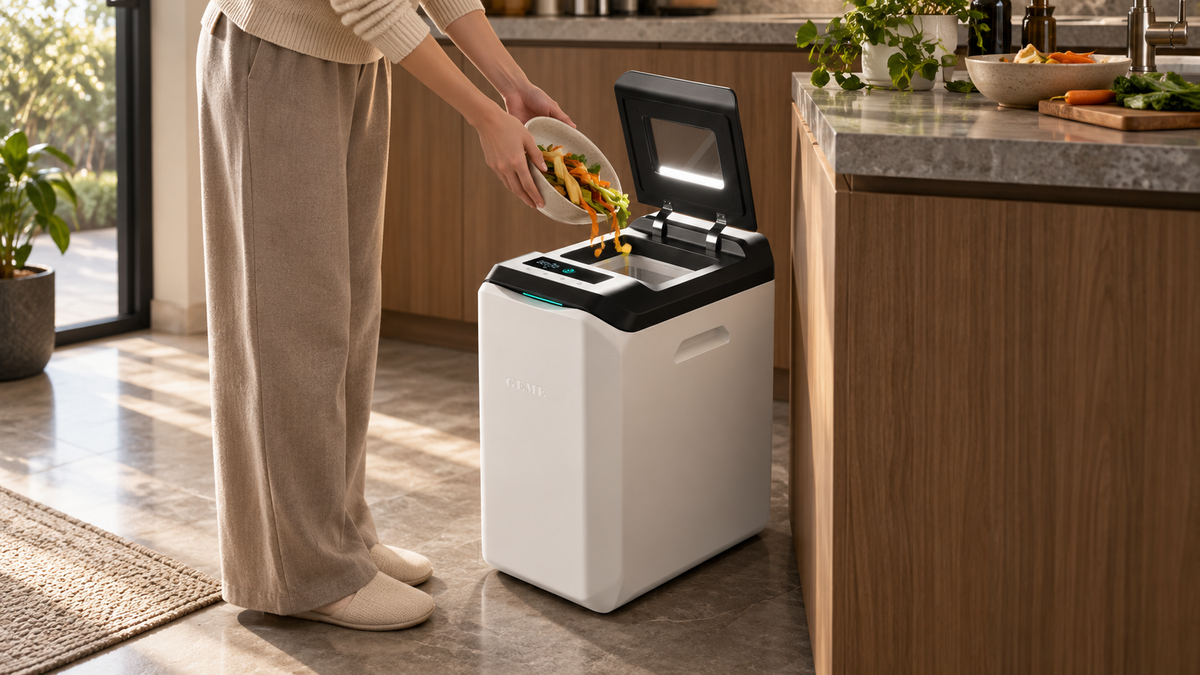
Terra 2 and GEME Pro manage the physical environment around the microbial community, including airflow, mixing, thermal conditions, and continuous-bed operation.
Those functions matter because microorganisms cannot compensate indefinitely for an oxygen-starved, overloaded, excessively wet, or otherwise unsuitable environment.
Kobold + GEME is the system.
Kobold supplies the biological component. GEME supplies the controlled habitat. Suitable food scraps supply the substrate. Reliable decomposition depends on those parts working together.
For the product-level explanation, visit How GEME Kobold Works.

6. Kobold Starter, Boost Pack, or Reset: These Are Different Jobs
Treating every Kobold product as interchangeable would recreate the same mistake as treating every compost starter as a universal accelerator.
| Situation | Normal Response | Why |
|---|---|---|
| First-time GEME setup | Use the specified Kobold Starter setup. | The system needs its initial microbial bed established before normal continuous operation. |
| Normal daily operation | No daily microbial dosing required. | A healthy established bed maintains an active microbial community during normal use. |
| Healthy system; user wants additional biological support | Optional Boost Pack. | Boosting is different from repairing moisture, oxygen, or loading problems. |
| Temporary slowdown after a difficult feeding pattern | Diagnose conditions first. | The limiting factor may be moisture, load, unsuitable input, or bed condition rather than microorganism quantity. |
| Persistent biological decline after an abnormal event or loss of the established bed | Follow the relevant Starter / Reset recovery guidance. | A true bed-recovery case is different from routine performance tuning. |
Do not use more microbes as a substitute for troubleshooting. If the bed is saturated, overloaded, physically obstructed, or receiving unsuitable inputs, fix that condition before assuming the microbial population itself is the primary problem.
7. Slow Decomposition? Use This Order Before Reaching for an Accelerator
- Check the amount of food added. Stay within the model's daily capacity and keep individual additions at 1 kg or less.
- Check free liquid. Drain excessive liquid before adding food. A microbial bed needs moisture, but not unrestricted liquid.
- Check the physical inputs. Large, dense, or slow-to-break-down items can require more preparation and residence time.
- Check the bed itself. Look for unusual wetness, odor, compaction, insufficient remaining bed, or excessive chamber fill.
- Check appliance status. Resolve any operating warning before trying to compensate biologically.
- Only then ask whether microbial recovery is needed. If the physical environment is appropriate but biological performance remains persistently abnormal, follow the current Kobold recovery guidance.
This order prevents a common troubleshooting loop:
slow decomposition → add microbes → conditions stay wrong → decomposition remains slow → add more microbes.
The better approach is to remove the limiting condition.

8. Terra 2 or GEME Pro: The Microbial Principle Is the Same
Kobold's biological role does not change the basic model-selection rule: choose the appliance based primarily on how much suitable food waste your household produces.
| Feature | GEME Terra 2 | GEME Pro |
|---|---|---|
| Our recommendation | Best Overall | Best for Large Families |
| Typical household starting point | 1–3 people | 4+ people / heavier cooking |
| Microbial chamber | 14 L | 19 L |
| Daily processing capacity | Up to 2 kg/day | Up to 5 kg/day |
| Each addition | 1 kg or less | 1 kg or less |
| Continuous microbial bed | Yes | Yes |
| Daily Kobold dosing required? | No | No |
| Standard troubleshooting principle | Diagnose bed conditions before adding more microbes | Diagnose bed conditions before adding more microbes |
| Current US Basic price | US$699.00 | US$899.99 |
Terra 2 is the natural starting point for many 1–3 person households. Choose GEME Pro when heavier cooking or a larger household needs the additional daily capacity and larger microbial chamber.
US Basic prices reviewed September 24, 2026. Regional pricing and configurations may differ.
Good Microbes Still Need a Good Habitat.
Composting performance comes from biology and environment working together.
Kobold establishes the microbial system. GEME manages the habitat. Your feeding routine supplies the material.
Frequently Asked Questions
Do compost starters really work?
Microbial inoculants can influence composting, and research has reported improvements in some decomposition and maturity measures. Their effectiveness depends on the microorganisms used, feedstock, inoculation method, timing, moisture, aeration, temperature, and composting system. They are not a universal substitute for correct composting conditions.
Does a backyard compost pile need a starter?
Usually not as a basic requirement. Organic materials, soil, and existing compost naturally contain microorganisms. A properly constructed pile can compost without a commercial microbial starter when oxygen, moisture, carbon-rich material, nitrogen-rich material, and structure are suitable.
Will adding a compost accelerator fix a wet, smelly pile?
Not by itself. A wet, foul-smelling pile often needs better aeration and a correction to excess moisture. Adding more microorganisms without improving the environment does not solve the underlying oxygen limitation.
What is different about GEME Kobold?
Kobold is the microbial system used to establish GEME's controlled biological processing bed. It works together with the appliance's airflow, mixing, thermal management, and suitable food inputs. It should not be understood as an independent powder that can compensate for any operating condition.
Do I need to add Kobold every day?
No. A healthy established GEME microbial bed does not require daily dosing. Kobold Boost Packs are optional, while starter or reset guidance applies to initial setup or appropriate recovery situations.
Should I add more Kobold if GEME suddenly slows down?
First, check the operating environment. Review feeding load, moisture, free liquid, chamber level, bed condition, difficult inputs, and any appliance warning. If those factors are appropriate but performance remains persistently abnormal, follow the current GEME recovery guidance.
Can adding too many microbes make an overloaded composter work faster?
No microbial additive creates unlimited processing capacity. Terra 2 is designed for up to 2 kg/day and GEME Pro for up to 5 kg/day, with each individual addition kept at 1 kg or less. Stay within the appliance's operating limits.
Are a starter and an accelerator the same thing?
Not necessarily. “Starter” generally describes material used to introduce or establish a microbial community, while “accelerator” is a broader commercial term that may refer to microorganisms, nutrients, enzymes, or combinations of ingredients. Check what a particular product actually contains and what problem it is designed to solve.
Which GEME model should I choose?
Terra 2 is the usual starting point for smaller households, with a 14 L microbial chamber and up to 2 kg/day of suitable food scraps. GEME Pro provides a 19 L chamber and up to 5 kg/day for larger households and heavier cooking routines.
Sources and Related Guides
This article separates general composting science from product-specific GEME guidance. Outdoor composting conditions are based primarily on U.S. EPA and university extension guidance; microbial inoculation evidence is drawn from peer-reviewed research.
- U.S. EPA — Composting at Home
- U.S. EPA — Approaches to Composting
- University of Illinois Extension — How Composting Works
- Penn State Extension — Home Composting
- Waste Management — Microbial Inoculation Meta-Analysis
- Review — Microbial Inoculum and Composting Performance
- GEME — Kobold Microbial System
- GEME — Product and Microbial-Bed FAQ
- GEME — Real Compost vs Dehydrated Scraps
- GEME Terra 2
- GEME Pro


Leave a comment
All comments are moderated before being published.
This site is protected by hCaptcha and the hCaptcha Privacy Policy and Terms of Service apply.