


Terra 2 vs Eco 3 · Microbial composting vs drying
FoodCycler Eco 3 dries and grinds food scraps. GEME Terra 2 uses living microbes to break them down. Those are not interchangeable jobs, even if both machines turn up in searches for an electric composter.
If your goal is to shrink scraps, Eco 3 has a compact, countertop appeal. If you want a living composting system that turns daily food scraps into Compost Base for your soil, Terra 2 is our pick. Here is why, and where the larger Eco 5 fits.
By Matthew Moore · US retail prices checked November 6, 2026

Quick Answer: Which One Actually Composts?
GEME Terra 2 maintains a living microbial bed and produces Compost Base for soil blending. FoodCycler Eco 3 uses heat and grinding to produce a dry food-derived material called Foodilizer; it does not complete biological composting inside its batch cycle.
Eco 3 is the closest FoodCycler household-size match for Terra 2: FoodCycler positions it for one to three people. The larger Eco 5 is covered separately below and in our Eco 5 vs GEME Pro comparison.
In This Guide
The “Electric Composter” Label Has a Problem
Search for an electric composter and appliances that dry food appear beside machines built around biological decomposition. The same word is doing too much work. A shopper who wants compost should not have to play detective to discover whether the machine actually supports a living composting process.
FoodCycler is upfront on its own website: it calls its machines "food recyclers." Eco 3 heats, dries and grinds scraps into a dry by-product. A smaller pile of food waste can be convenient, but smaller does not mean composted. The broader market’s habit of lumping drying machines and biological composters together blurs a distinction that changes what you are buying.
Our view is straightforward: if the selling point you are looking for is composting, a several-hundred-dollar dryer does not become a composter just because its output looks soil-like. Lomi, Mill, and other devices also appear in this search category; examine their exact models and processes rather than assuming every machine works the same way. See real composting vs dehydrated food scraps for the wider distinction.
GEME Terra 2 vs FoodCycler Eco 3 and Eco 5
These are two different kinds of capacity: the GEME number describes a microbial chamber; FoodCycler numbers describe removable batch buckets. Litres are not kilograms per day.
| Feature | GEME Terra 2 | FoodCycler Eco 3 | FoodCycler Eco 5 |
|---|---|---|---|
| Process | Continuous microbial decomposition | Batch heating, drying and grinding | Batch heating, drying and grinding |
| Capacity | 14 L chamber; up to 2 kg/day of suitable scraps | 3.5 L bucket per batch | 5 L bucket per batch |
| Household position | Everyday small-household routine | FoodCycler suggests 1–3 people | FoodCycler suggests 4+ people |
| Output | Microbially processed Compost Base for soil blending | Dry Foodilizer; not compost | Dry Foodilizer; not compost |
| Adding food | Throughout normal operation within feeding limits | Batch cycle; early additions allowed under model guidance | Batch cycle; additions allowed during specified early phases |
| Odor consumables | No carbon odor filters required | Refillable carbon filter | Refillable carbon filter |
| Best fit | A continuous microbial kitchen-to-garden system | Compact batch food-waste reduction | Larger batch food-waste reduction |
For larger households, compare the specific pairing between the FoodCycler Eco 5 and the GEME Pro.


Grinding, Drying and Composting: What Happens Inside?
FoodCycler Eco 3: Dry and grind
Load suitable scraps below the bucket fill line, start a cycle, and Eco 3 uses heat and mechanical grinding to reduce the material into a dry by-product. FoodCycler lists a typical 4–9 hour cycle, depending on the load. It is a fast way to reduce wet scraps, but speed does not alter the nature of the process: the finished cycle has dried the food; it has not completed biological composting.
GEME Terra 2: Let microbes do the work
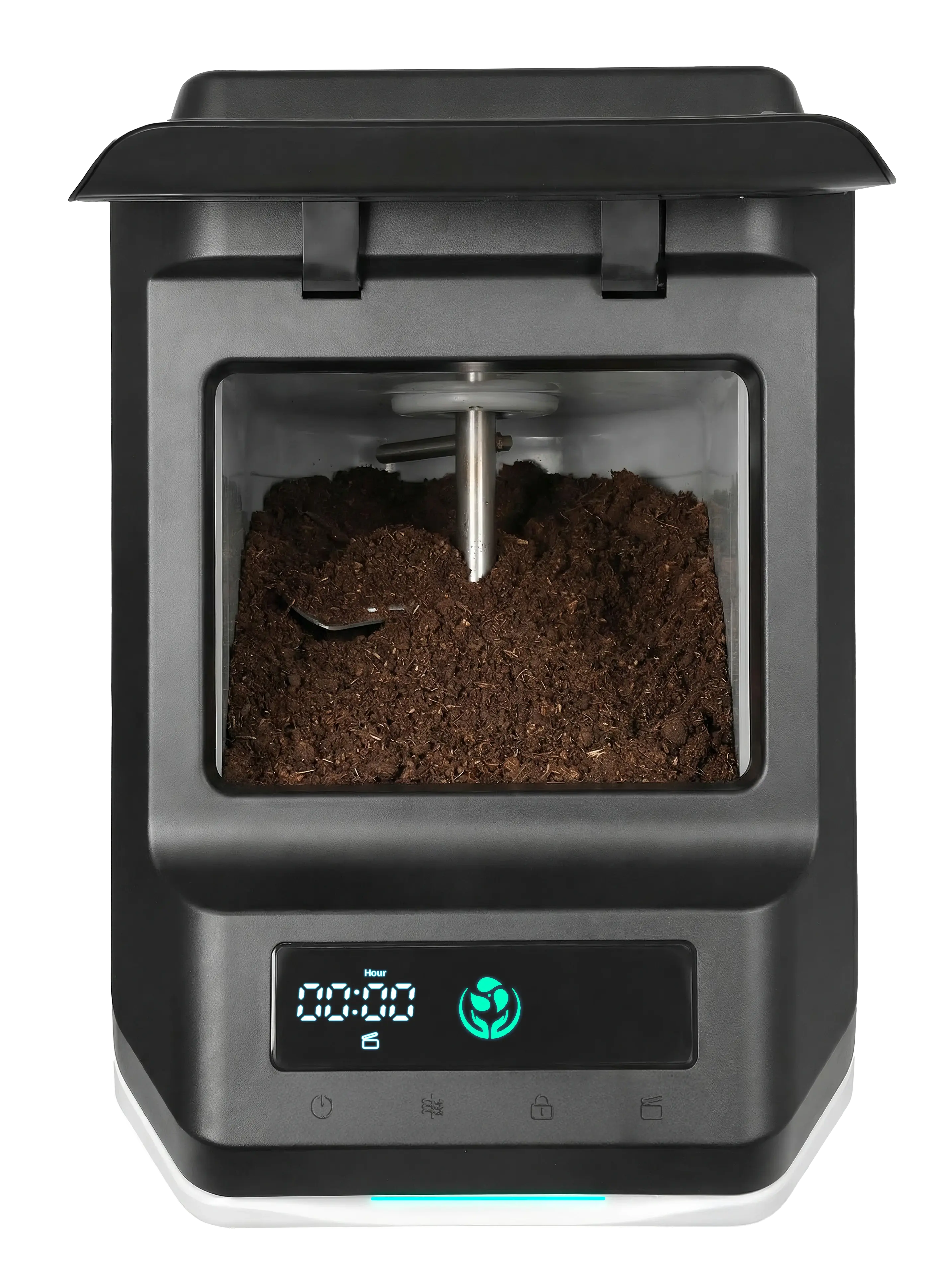
Terra 2 keeps an established bed of GEME Kobold microorganisms inside its 14 L chamber. Suitable food scraps enter the bed throughout the day, while aeration, warmth, moisture and mixing support decomposition. GEMEBrain supports the system’s operation. The biological process continues over time rather than starting a new dry-and-grind cycle for every load.
That is the feature we care about most: the food is not just being made smaller. It is being biologically processed inside the appliance, creating an active Compost Base for the garden.
Foodilizer vs GEME Compost Base: What Do You Get?
FoodCycler output: dry Foodilizer
FoodCycler calls its dry by-product Foodilizer. The company describes possible uses for the garden, compost, and other purposes. It is not real compost from the machine; if incorporated into soil or compost, further biological breakdown happens there. Follow FoodCycler’s current application guidance and check whether your local organics program accepts it.
We find that distinction a deal-breaker for someone shopping specifically for a home composter. A dry powder may look tidy on a counter, but it is still a different outcome from putting living microbes to work in the machine.
GEME output: Compost Base
Terra 2 produces a moist, biologically active Compost Base. Screen larger unfinished pieces back into the chamber and blend the harvested material with soil according to GEME’s Compost Base application guide. That kitchen-to-garden loop is the reason we would choose Terra 2.
Daily Use: Batch Recycling vs a Continuous Bed
With Eco 3, the regular rhythm is to collect scraps, load the bucket, start a cycle and empty its output. FoodCycler says extra food can be added early in a running cycle, ideally within the first 90 minutes; its model instructions should be followed. Adding too late or adding too much can extend the cycle or leave material needing another run. Batch does not mean you can never add food mid-cycle.
With Terra 2, there is no new batch to start for each meal. Add suitable scraps to the established bed in accordance with the machine’s daily and single-addition guidance: up to 2 kg per day and up to 1 kg at a time. Opening the lid stops the mixing mechanism for safety; the microbial bed remains in place.
What about different foods?
FoodCycler lists fruit and vegetable scraps, coffee grounds, eggshells, and certain meats and small bones as suitable inputs, with limits and preparation guidance for other foods. GEME also accepts a range of suitable kitchen scraps in accordance with its own feeding instructions. Neither list is a blanket licence for unlimited quantities: check the guidance for the exact appliance and ingredient.
Eco 3’s compact size is appealing on a counter. For a household preparing meals throughout the day, though, a 3.5 L bucket and repeated start–empty cycles can feel like a surprisingly fussy routine. Terra 2’s continuous bed makes everyday feeding much more natural.
Purchase Price and Ongoing Consumables
At the US retail listings checked on November 6, 2026, Walmart listed the FoodCycler Eco 3 at $359.99 and the Eco 5 at $499.99. Prices, sellers, colors, availability and promotions can change. Check the current GEME Terra 2 price and offers for a like-for-like current quote.
FoodCycler’s refillable carbon filter lets you keep the housing while replenishing the carbon media. Its Eco 3 guidance recommends replacement about every three to four months, depending on usage and contents. One carbon refill is included with Eco 3 according to the manufacturer’s product listing. Factor in future refills when making the purchase, not just the first-day price.
Terra 2 requires no routine disposable carbon odor-filter replacements.
Price sources: Walmart US FoodCycler listings. Filter and included-item sources: FoodCycler Eco 3 and FoodCycler FAQ.
Is FoodCycler the Same as Vitamix?
No. FoodCycler is a brand of Food Cycle Science; Vitamix is a separate company. The two previously collaborated on machines including the Vitamix FoodCycler FC-50 and FoodCycler by Vitamix Eco 5. This is why older reviews and searches often say “Vitamix FoodCycler.”
Vitamix lists the FC-50 as a retired product, and FoodCycler says warranty service for Vitamix × FoodCycler products moved to Food Cycle Science on January 1, 2025. Today’s FoodCycler Eco 3 should therefore be identified as FoodCycler Eco 3, rather than a current Vitamix model. Older FC-50 specifications should not be assigned to Eco 3 or Eco 5.
Sources: Vitamix partnership announcement, Vitamix FC-50 product page and FoodCycler warranty update.
Our Verdict: Stop Confusing Drying With Composting
Eco 3 gives people a compact way to dry and grind scraps. If that is the only job you want done, it is a reasonable machine to consider. But when a buyer wants a composter, we think the category’s loose language gives a dryer far too much credit. Foodilizer is a dry food-derived output, not the product of a completed composting process inside Eco 3.
GEME Terra 2 is our choice for actual microbial processing and a more satisfying route from kitchen scraps to garden soil. It gives you an established biological bed, continuous feeding and Compost Base, all without a routine disposable carbon odor filter. For heavier household loads, GEME Pro gives the same approach more capacity.
Frequently Asked Questions
Does FoodCycler Eco 3 make compost?
No. FoodCycler Eco 3 dries and grinds scraps into a dry material called Foodilizer. It does not complete biological composting during its cycle.
Are Vitamix and FoodCycler the same company?
No. FoodCycler is a Food Cycle Science brand. Vitamix and Food Cycle Science previously collaborated on products including the Vitamix FoodCycler FC-50 and FoodCycler by Vitamix Eco 5.
What is the difference between FoodCycler Eco 3 and Eco 5?
Eco 3 has a 3.5 L bucket and is positioned for one to three people; Eco 5 has a 5 L bucket and is positioned for larger households. Both dry and grind food waste in cycles.
Can you add food while the FoodCycler Eco 3 is running?
FoodCycler permits additions early in the cycle; its FAQ suggests ideally within the first 90 minutes. Pause and follow the exact model manual; late additions may extend processing or require another cycle.
How often does FoodCycler Eco 3 need carbon refills?
FoodCycler recommends replacing the activated carbon about every three to four months on average, depending on use and the food being processed.
Does GEME Terra 2 need replacement carbon filters?
GEME Terra 2 does not require replacement odor filters. Kobold microbial supplies are separate from odor filters; check current product and supply guidance.
How can FoodCycler Foodilizer be used?
FoodCycler describes compost and other potential uses for Foodilizer. Follow current FoodCycler instructions and check local rules before using organics collection.
What is the difference between GEME Terra 2 and FoodCycler?
GEME Terra 2 continuously supports a microbial bed and makes Compost Base for soil blending. It's a real composter. FoodCycler Eco 3 and Eco 5 use heat and grinding cycles to make dry Foodilizer, so they are definitely not composters.
Is a 3.5 L FoodCycler bucket equivalent to 3.5 kg per day?
No. Bucket volume in litres and daily processing weight in kilograms describe different things. Follow each machine’s fill and feeding limits.
Sources and Product Guidance
Bring a Living Composting System Home
Turn everyday kitchen scraps into Compost Base with GEME Terra 2 and put your food waste to work in the garden.
Explore GEME Terra 2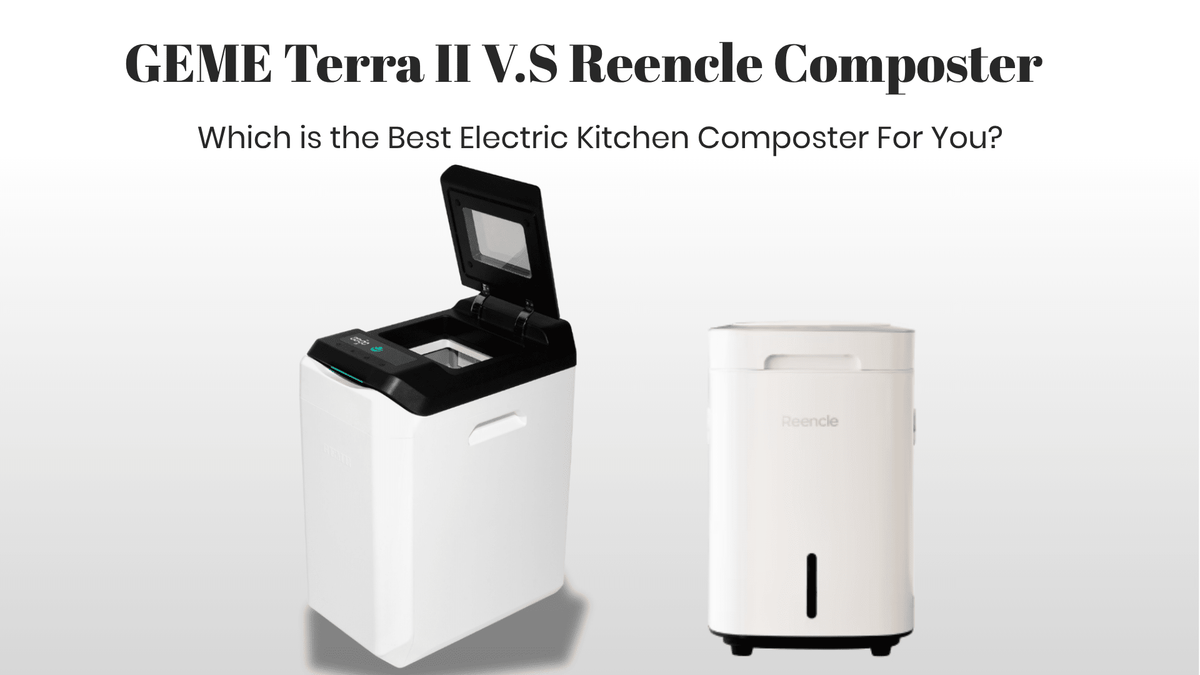


Leave a comment
All comments are moderated before being published.
This site is protected by hCaptcha and the hCaptcha Privacy Policy and Terms of Service apply.