


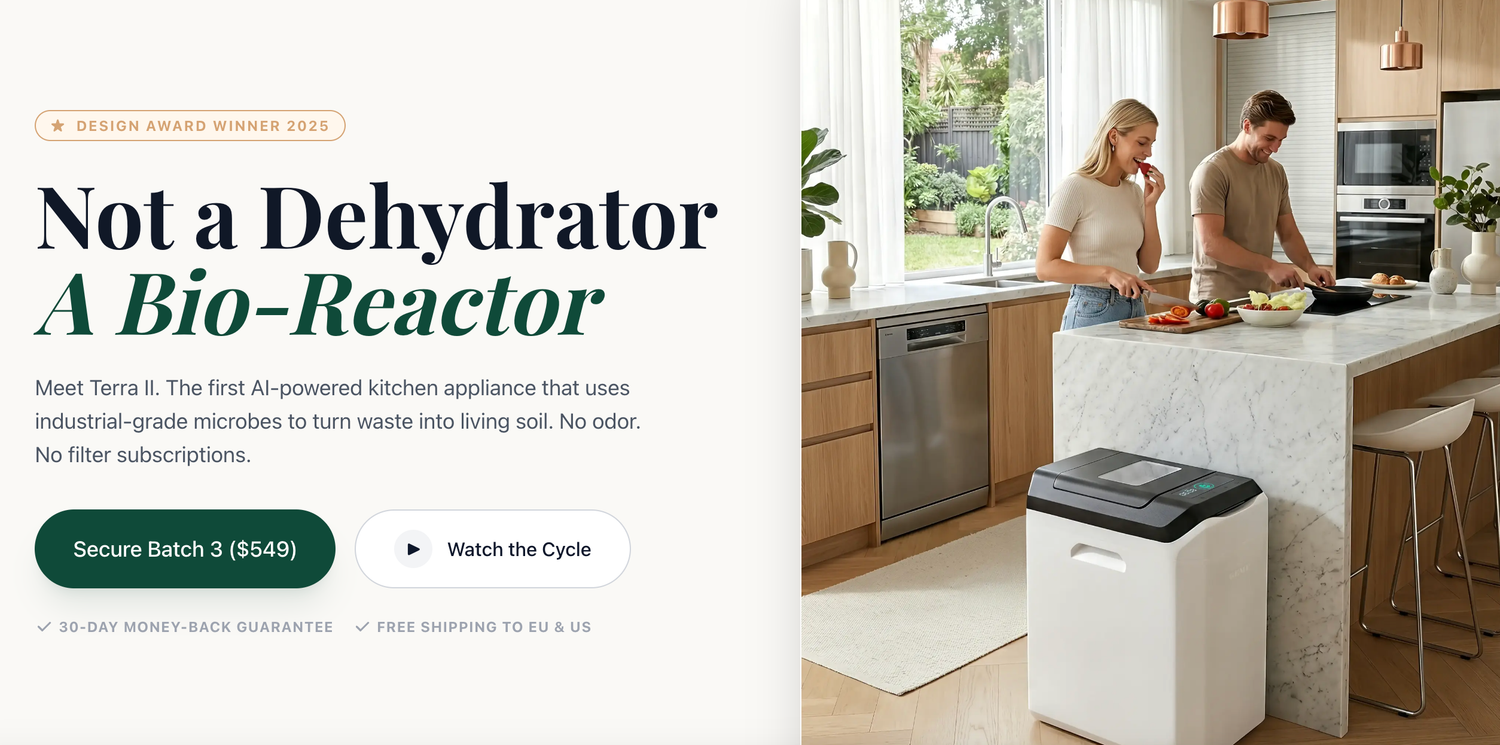
Daily Operation Comparison
Choosing the best composter is not just about specifications. It is about what daily life with the machine actually feels like.
A kitchen composter may look impressive on paper, but the real test happens on an ordinary morning: coffee grounds, eggshells, leftover rice, vegetable peels, and dinner scraps that do not arrive on a neat schedule.
This guide compares Lomi, Mill, Reencle, and GEME Terra II by daily operation, compost output, hidden costs, filter maintenance, and long-term ownership experience.
Real compost. Real microbial composting. No filter replacements. Zero recurring filter costs.

What does daily use actually feel like?
Quick Answer
The easiest kitchen composter to live with depends on your goal. If you only want food-waste reduction, Lomi and Mill can help.
If you want real compost, continuous feed, no filter replacements, zero recurring filter costs, and a workflow that fits daily cooking, GEME Terra II is the strongest overall choice in this comparison.
Reencle is closer to real composting than dehydrator-style machines, but it still brings filter replacement and output-management considerations.
For related comparisons, read Best Kitchen Composter 2026, Best Kitchen Composter Verdict 2026, and GEME Terra II Pros and Cons.
Key Takeaways
- Best for daily cooking: GEME Terra II, because scraps can be added continuously.
- Best for simple waste-volume reduction: Lomi.
- Best for food recycling workflow: Mill.
- Best entry-level microbial option: Reencle.
- Best real compost output: GEME Terra II.
- Best ownership advantage: GEME Terra II, because it has no filter replacements and zero recurring filter costs.
Table of Contents
Four Kitchens, Four Daily Experiences
Picture this: it is 8 a.m. on a Tuesday.
Kitchen A: Lomi
A Lomi owner wakes up to a countertop machine that finished its overnight cycle. They open the lid and find fine, dry granules that look like soil.
But the material is not finished compost. It is dehydrated and ground food waste that still needs further decomposition before it behaves like real compost in soil.
Kitchen B: Mill
A Mill owner finds last night’s scraps transformed into dry Food Grounds.
The output is clean and easy to store, but it is not finished compost. It is designed for further handling, including garden use, composting systems, pickup models, or other food recycling pathways depending on the user’s setup.
Kitchen C: Reencle
A Reencle user opens the lid and adds coffee grounds to the warm composting medium inside.
The microbes are already working. The system supports continuous feeding, but the user still needs to think about filter replacement and output curing.
Kitchen D: GEME Terra II
A GEME Terra II owner opens the lid, tosses in the morning scraps, and closes it.
No batch cycle. No locked lid. No bagging. No storing scraps until later.
The machine runs continuously, supporting the Kobold™ microbial ecosystem inside the chamber. That is the real difference between kitchen composters: not just what they claim, but what they ask from you every day.
The Four Contenders
Lomi
Lomi is one of the most recognizable countertop food waste machines. It uses heat and grinding to reduce food scraps into a dry, soil-like material.
It is convenient for waste reduction, but it is better understood as a dehydrator and grinder than a real composter.
Mill
Mill is a floor-standing food recycler that dries and grinds scraps into Food Grounds.
It is especially appealing for people who want food-waste diversion without managing compost themselves. However, Mill’s output is not finished compost.
Reencle
Reencle uses microorganisms to process food waste. That makes it closer to real composting than dehydrator-style machines.
It supports continuous feeding, but it still has recurring filter replacement needs, and the output often benefits from additional curing before plant use.
GEME Terra II
GEME Terra II is designed as a real microbial kitchen composter that continuously supports composting conditions.
It uses Kobold™ microbes, continuous aerobic processing, and permanent odor-control technology to turn food scraps into biologically active compost with no filter replacements and zero recurring filter costs.
Quick Overview: Lomi vs Mill vs Reencle vs GEME Terra II
| Feature | Lomi | Mill | Reencle | GEME Terra II |
|---|---|---|---|---|
| Form factor | Countertop | Floor-standing | Countertop | Floor-standing |
| Process | Heat + grinding | Drying + grinding | Microbial processing | Real microbial composting with Kobold™ |
| Output | Dried scraps | Food Grounds | Compost-like microbial output | Biologically active compost base |
| Real compost? | No | No | Microbial output; curing often helps | Yes |
| Continuous feed? | No | Food recycling workflow | Yes | Yes |
| Filter replacements | Yes | Model-dependent | Yes | No filter replacements |
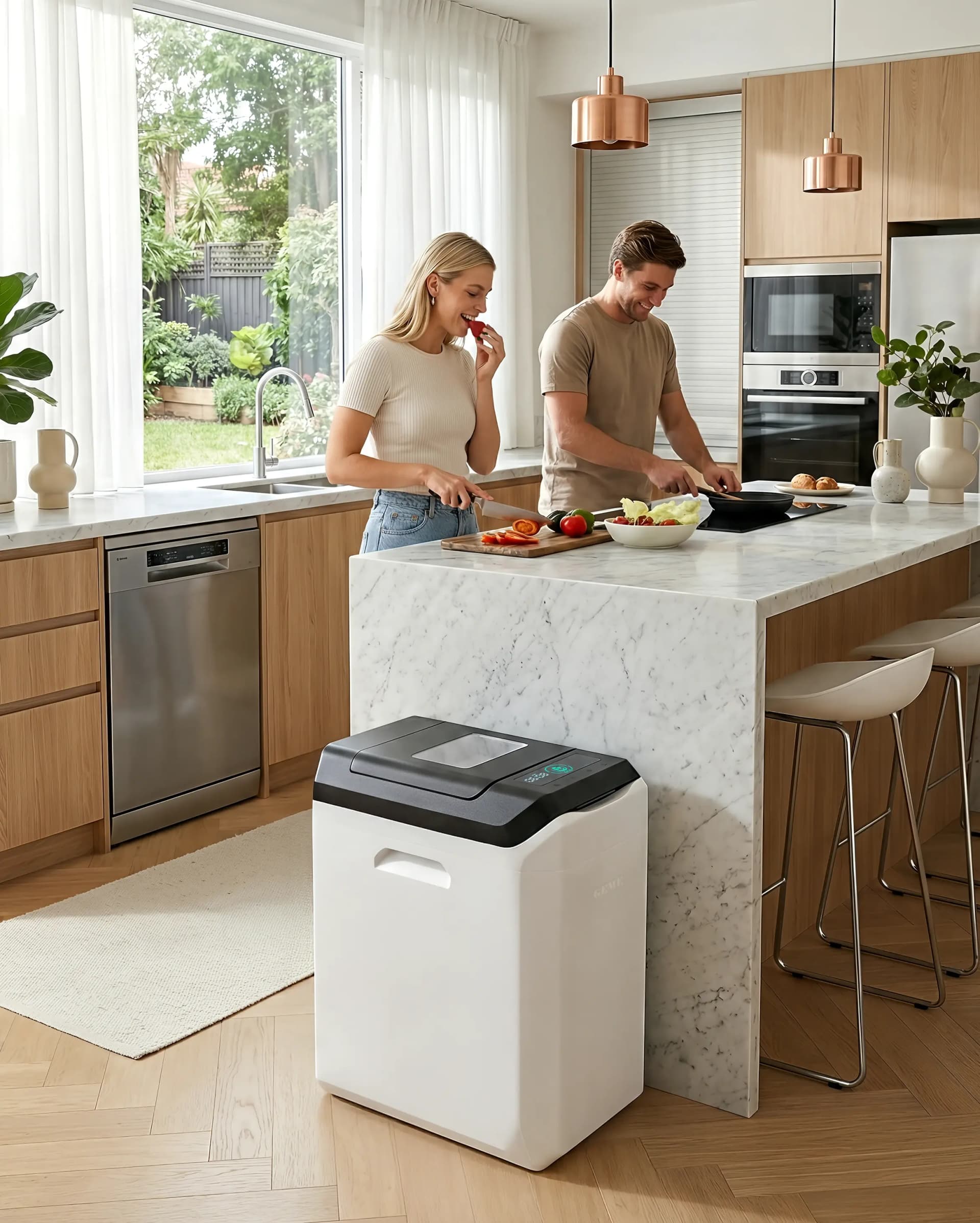
Add scraps whenever they appear.
Composting That Fits Daily Life
GEME Terra II uses continuous microbial composting, so you can add food scraps whenever they appear — without planning around batch cycles.
Real compost. No filter replacements. Zero recurring filter costs.
Daily Operation Comparison: What It Is Really Like to Use Each Composter
Daily operation is where the difference between a kitchen composter and a food recycler becomes obvious.
The best composter should match how people actually cook: scraps appear throughout the day, not in one perfect batch.
Morning Coffee and Breakfast Scraps
Lomi User
You finish breakfast. Coffee grounds and eggshells go into Lomi’s small countertop bucket. If the bucket is nearly full, you need to choose a mode and run a batch cycle. Once the cycle starts, more scraps need to wait somewhere else.
Mill User
You add coffee grounds and eggshells to Mill’s floor-standing bin. The machine dries and grinds scraps according to its cycle logic. Mill is convenient if you want to store and reduce food waste, but the process is still not the same as making finished compost at home.
Reencle User
You add scraps to the active composting medium. The microbes begin working, and the system supports continuous feeding. The experience is closer to real composting, although output curing and filter replacement remain part of ownership.
GEME Terra II User
You open the lid, add scraps, and close it. There is no batch cycle to schedule and no lid lock to plan around. Kobold™ microbes remain active inside the chamber, and the system continues composting throughout the day.
| Daily Operation | Lomi | Mill | Reencle | GEME Terra II |
|---|---|---|---|---|
| Adding scraps | Fill the bucket, then run the cycle | Add scraps; machine processes later | Add anytime | Add anytime |
| Cycle management | User chooses batch cycle | Scheduled or automatic processing | Continuous microbial system | Continuous microbial composting |
| Can add mid-process? | No, during the active cycle | Cycle-dependent | Yes | Yes |
| Daily workflow | Plan around batch cycles | Let the system store and process | Feed the active medium | Drop in scraps and move on |
| Best fit | Small countertop waste reduction | Food recycling workflow users | Microbial composting beginners | Daily cooks and real compost users |
What You Actually Get: Compost Output Comparison
Output is where marketing language can become confusing. Many machines produce something that looks like soil. But soil-like appearance is not the same as compost.
Lomi Output: Dried Organic Matter
Lomi produces a dry, granulated material. It can be useful for reducing food-waste volume, but it should not be treated as finished compost.
Mill Output: Food Grounds
Mill produces dry Food Grounds. This output is designed for food-waste diversion and further handling rather than direct home compost use.
Reencle Output: Compost-Like Material
Reencle uses microbes, so its output is closer to compost than dehydrated scraps. However, additional curing or resting can improve stability before plant use.
GEME Terra II Output: Active Compost Base
GEME Terra II produces a biologically active compost base that can be mixed with soil. For most plants, GEME recommends mixing compost with soil rather than applying it directly to roots. A practical starting point is approximately one part compost to eight parts soil.
| Output Factor | Lomi | Mill | Reencle | GEME Terra II |
|---|---|---|---|---|
| Output name | Dried output / soil-like material | Food Grounds | Compost-like material | Active compost base |
| Biologically active? | No, primarily dehydrated | No, primarily dried grounds | Yes | Yes |
| Can be mixed with soil? | After further decomposition or careful soil use | Not finished compost; needs a destination | Often better after curing | Yes, mix with soil |
| Typical texture | Dry granules | Dry grounds | Moist, crumbly | Moist, soil-like compost base |
| Best use | Further composting | Food recycling pathway | Soil use after stabilization | Soil amendment after mixing |
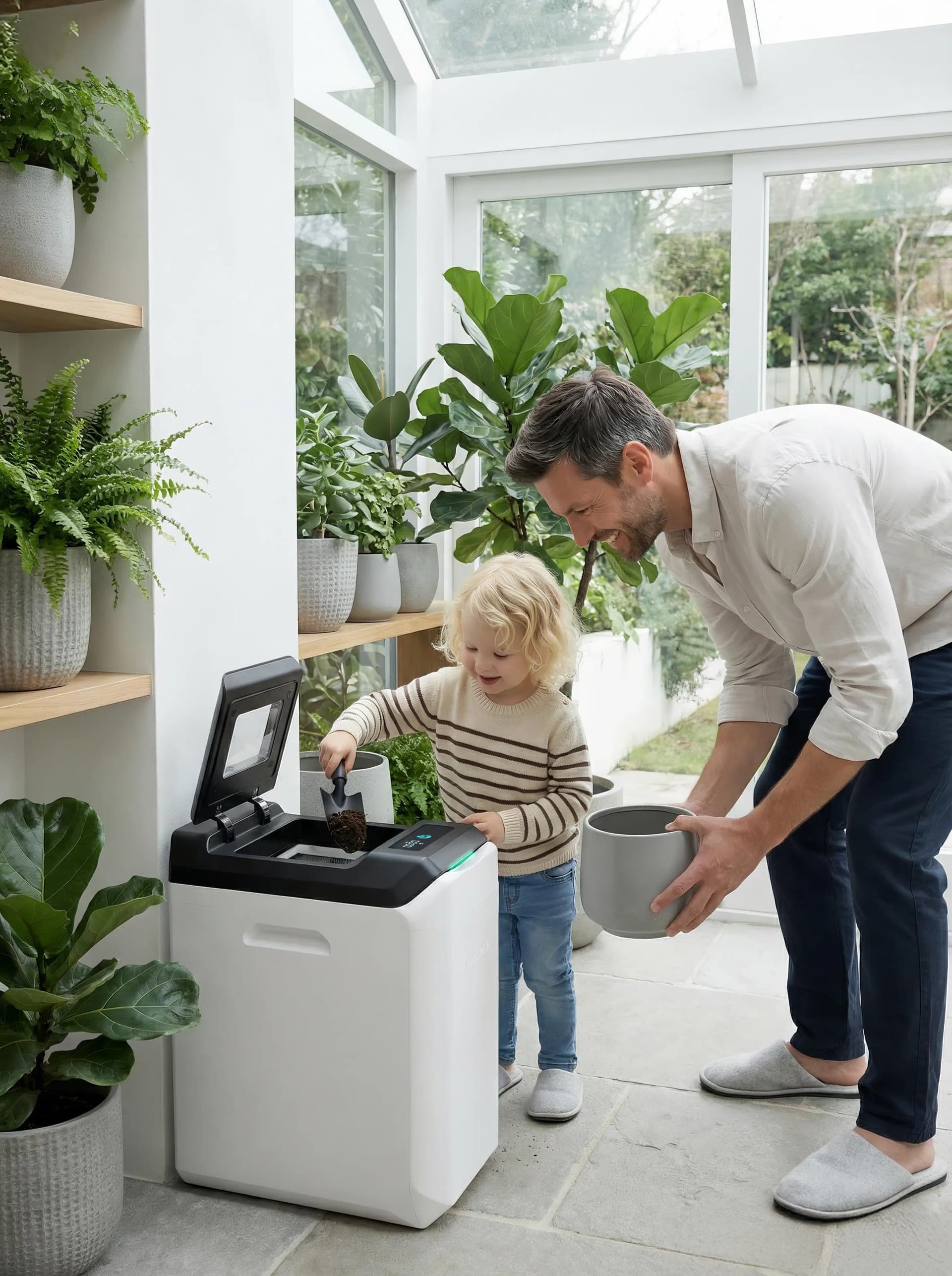
Powered by Kobold™ microbes.
Real Compost Starts With Living Biology
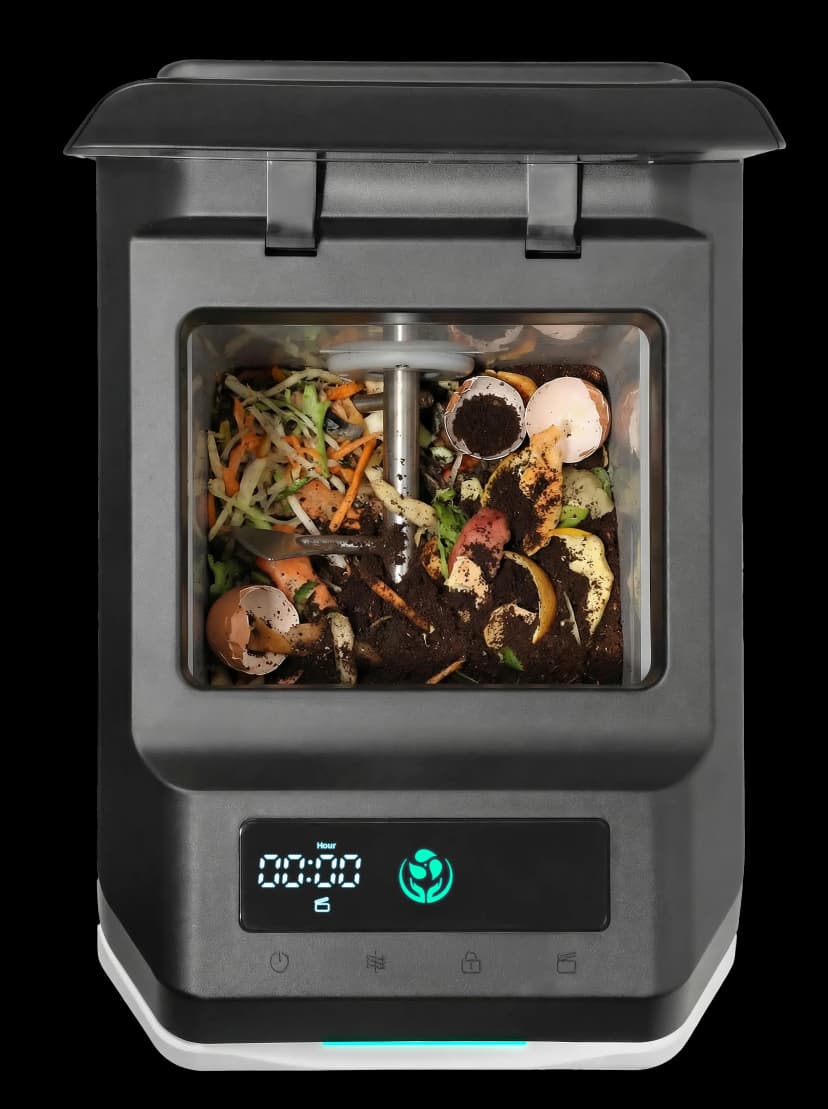
GEME Terra II uses Kobold™ microbes to transform food scraps into a biologically active compost base, not just dried food particles.
Real compost. Real microbial composting. No filter replacements.
Cost of Ownership: What You Do Not See in the Price Tag
Upfront price is only one part of ownership.
A kitchen composter can also create ongoing costs through:
- Replacement filters
- Consumable pods
- Service subscriptions
- Pickup programs
- Maintenance accessories
Lomi Ongoing Costs
Lomi owners should expect recurring filter costs and optional pod costs depending on how they use the machine.
Mill Ongoing Costs
Mill can involve filter costs or service-related costs depending on whether the user buys, rents, or uses pickup services.
Reencle Ongoing Costs
Reencle requires periodic filter replacement, typically including carbon and mesh filters.
GEME Terra II Ongoing Costs
GEME Terra II is designed with a permanent odor-control path and no routine filter replacement costs.
| Cost Category | Lomi | Mill | Reencle | GEME Terra II |
|---|---|---|---|---|
| Upfront cost | Check current retail pricing | Check the current purchase or plan model | Check current retail pricing | Check current launch pricing |
| Filter replacements | Yes | Model-dependent | Yes | No filter replacements |
| Subscription or service cost | Optional or consumable-driven | Workflow-dependent | Not required, but filters recur | No mandatory subscription |
| 3-year ownership profile | Higher than the upfront price | Workflow-dependent | Medium ownership friction | Low ownership friction |
The “Is It Compost?” Question: Why It Matters
It matters because compost is not just an appearance. It is a biological state.
Real compost contains microbial activity, stabilized organic matter, and soil-building value. Dehydrated food waste may look dry and tidy, but it can continue decomposing later when moisture returns.
If your goal is simply to reduce landfill volume, dehydrator-style systems can help.
If your goal is to create a soil amendment at home, a microbial composter is the better fit. That is why the difference between Lomi, Mill, Reencle, and GEME Terra II is not just a product difference. It is a category difference.
Technical Specs Comparison
Specifications do not tell the whole story, but they do help explain why daily operation feels different from one machine to another.
| Specification | Lomi | Mill | Reencle | GEME Terra II |
|---|---|---|---|---|
| Form factor | Countertop | Floor-standing | Countertop | Floor-standing |
| Chamber size | Small countertop bucket | Large food recycling bin | Medium microbial chamber | 14L chamber |
| Daily capacity | Batch-dependent | Bucket-dependent | Guided microbial feeding | Designed for everyday household food-waste routines |
| Continuous feed | No | Food recycling workflow | Yes | Yes |
| Odor control | Replaceable carbon filters | Filter or model-dependent odor-control path | Replaceable filters | Permanent odor-control technology |
Daily Maintenance: What Is Really Required?
Maintenance is where many kitchen composters become less convenient than they look at checkout.
Lomi Maintenance
- Run batch cycles.
- Empty output frequently.
- Clean the bucket.
- Replace carbon filters.
- Buy optional pods if desired.
Mill Maintenance
- Empty or store Food Grounds.
- Replace filters if required by the model or workflow.
- Manage app notifications or service options.
- Use pickup, mail-back, or another output pathway if desired.
Reencle Maintenance
- Maintain the active microbial medium.
- Monitor moisture balance.
- Replace carbon and mesh filters periodically.
- Let output cure when needed.
GEME Terra II Maintenance
- Add food scraps as they appear.
- Harvest compost periodically.
- Leave some compost as a starter bed after harvesting.
- Deep clean periodically depending on use.
- No filter replacements.
- Zero recurring filter costs.
What Can You Put In?
Input flexibility matters because real kitchens generate mixed scraps, not just fruit peels.
| Material | Lomi | Mill | Reencle | GEME Terra II |
|---|---|---|---|---|
| Fruit and vegetable scraps | Yes | Yes | Yes | Yes |
| Coffee grounds | Yes | Yes | Yes | Yes |
| Cooked leftovers | Limited or guided use | Input may be accepted; output use case differs | Yes, within guidance | Yes, within GEME guidance |
| Meat and dairy | Limited or guided use | Input may be accepted; output use case differs | Limited or guided use | Yes, household amounts within guidance |
| Small fish or chicken bones | Limited or not recommended | Input may be accepted; output use case differs | Limited | Yes, within GEME guidance |
| Large beef or pork bones | No | No | No | No |
The GEME Terra II Advantage
GEME Terra II stands out because it combines the practical workflow of a kitchen bin with the biological logic of composting.
- Continuous feed: add scraps whenever they appear.
- Real compost: output is biologically active and mixed with soil.
- No filter replacements: permanent odor-control technology reduces recurring maintenance.
- Zero recurring filter costs: no routine carbon filter purchases.
- Kitchen-friendly operation: floor-standing and designed for daily households.
- Clear boundaries: household food scraps are welcome, while large bones and non-organics are not.
Decision Guide: Which Composter Fits Your Life?
| Your Priority | Best Choice |
|---|---|
| Smallest countertop footprint | Lomi |
| Food recycling service option | Mill |
| Entry-level microbial processing | Reencle |
| Real compost output | GEME Terra II |
| Lowest long-term maintenance friction | GEME Terra II |
| Best fit for daily cooking | GEME Terra II |
No batch planning. No filter replacements.
The Kitchen Composter Built for Daily Life
No batch planning. No routine filter replacement. Just real microbial composting designed around how families actually cook.
Real compost. Real microbial composting. No filter replacements.
Frequently Asked Questions
Which kitchen composter produces real compost?
Among the products compared here, GEME Terra II is designed to produce biologically active real compost that can be mixed with soil.
Is Lomi actually composting?
Lomi is primarily a food dehydrator and grinder. It reduces food-waste volume but does not create finished compost inside the machine.
Does Mill make compost?
Mill produces Food Grounds for food recycling workflows rather than finished compost.
Does Reencle require replacement filters?
Yes. Reencle recommends periodic replacement of carbon and mesh filters.
Which kitchen composter has the lowest long-term ownership friction?
Among the products compared here, GEME Terra II has one of the lowest long-term ownership-friction profiles because it avoids mandatory subscriptions and routine filter replacement.
What is the best composter for daily cooking?
For households that cook daily and generate scraps throughout the day, a continuous-feed microbial composter such as GEME Terra II is usually easier to live with than a batch-style dehydrator.


Leave a comment
This site is protected by hCaptcha and the hCaptcha Privacy Policy and Terms of Service apply.