


Food Scrap Composting Guide
Composting Basics: Can You Compost Avocado Skin and Pits?
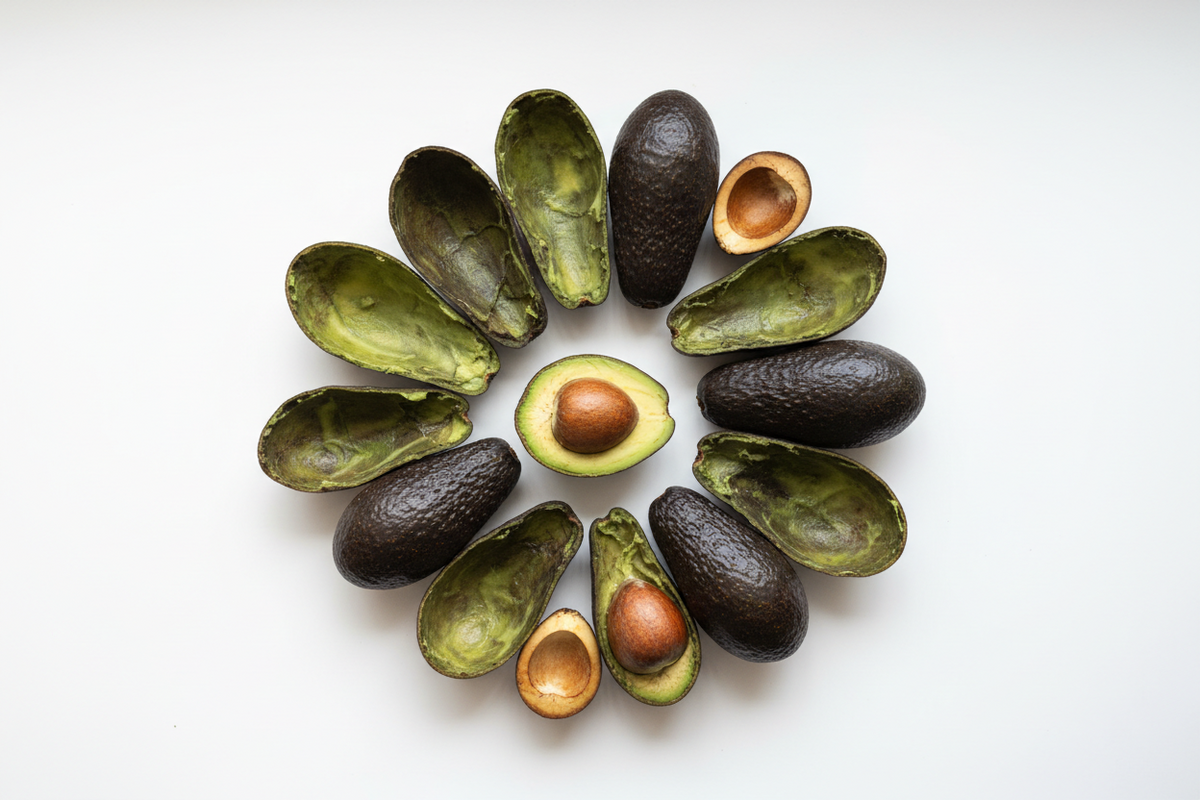
Yes, you can compost avocado. The flesh and skin are straightforward food scraps, while the dense pit needs more preparation and much more time.
For a traditional compost pile, a whole avocado pit can eventually break down. For GEME Terra 2, however, do not add the pit whole: crush or break it into small pieces first if you want to compost it in the machine.

Photo: Zoshua Colah / Unsplash
Quick Answer: Can You Compost Avocado?
Yes. Avocado flesh, skin, and pits are all organic materials capable of biological decomposition.
The important difference is how they should be prepared.
Avocado flesh: compost normally.
Avocado skin: compost normally; cutting thick pieces smaller can speed decomposition.
Whole avocado pit: fine for a traditional outdoor compost pile if you are prepared to wait, but not recommended as a whole input for GEME Terra 2.
Crushed avocado pit: suitable for Terra 2 once it has been safely broken into small pieces that the microbial system can process more gradually.
The simple GEME rule is: skin goes in; whole pit stays out; crushed pit can go in.
Table of Contents
- Can You Compost Avocado?
- Can You Compost Avocado Skin?
- Can You Compost Avocado Pits?
- Why Do Avocado Pits Compost So Slowly?
- How to Compost Avocado in a Traditional Pile
- Can You Compost Avocado in GEME Terra 2?
- Why Crushing an Avocado Pit Changes the Answer
- Common Avocado Composting Mistakes
- Frequently Asked Questions
- Sources
1. Can You Compost Avocado?
Yes. Avocados are plant material, so leftover flesh, skin, and the pit can all undergo biological decomposition.
The U.S. Environmental Protection Agency includes fruit and vegetable scraps among the nitrogen-rich “green” materials suitable for backyard composting.
That puts avocado leftovers in the same general category as:
- banana peels;
- apple cores;
- melon rind;
- vegetable trimmings;
- fruit scraps;
- and other plant-based kitchen waste.
But there is a major difference between saying:
“This material is biologically compostable.”
and saying:
“This material can be put whole into every type of composting system.”
That distinction matters most with the avocado pit.
If you are comparing an outdoor pile with a managed indoor system, the Compost Pile vs Electric Composter guide explains why the same organic material can have different preparation rules depending on the composting method.
For more examples of what belongs in different composting systems, see What Can You Compost at Home?.
2. Can You Compost Avocado Skin?
Yes. Avocado skin is compostable.
It is a normal plant-based kitchen scrap and can be added to traditional compost piles, tumblers, many worm systems, and GEME Terra 2.
The skin does take longer to break down than the soft avocado flesh.
That is because the outer peel is tougher, more fibrous, and designed by nature to protect the fruit.
Should You Cut Avocado Skin Before Composting?
Yes, especially if the pieces are large.
Reducing particle size increases the surface area available to microorganisms. EPA home-composting guidance similarly recommends chopping or breaking up tough food scraps to help them decompose faster.
You do not need to finely dice an avocado peel.
Simply cutting each half into several manageable pieces is enough.
The same preparation principle applies to other tougher food scraps. Our guide to composting eggshells explains why breaking harder materials into smaller pieces can improve dispersion and increase exposed surface area.
GEME Terra 2: Avocado skin can go directly into the machine, but smaller pieces are preferable when the peel is unusually large or tough.
3. Can You Compost Avocado Pits?
Yes, but preparation depends on the composting system.
Traditional Compost Pile
A whole avocado pit can go into an outdoor compost pile.
The problem is speed.
It may remain recognizable long after soft fruit scraps and leaves around it have decomposed.
EPA guidance specifically notes that fruit pits can remain in finished compost. They can simply be screened out and returned to the active pile for more time.
GEME Terra 2
The recommendation is different.
GEME does not recommend putting a whole avocado pit directly into Terra 2.
The issue is not whether the pit is organic. The issue is that an intact avocado pit is:
- hard;
- dense;
- large relative to ordinary food scraps;
- slow for microbes to penetrate;
- and unnecessarily demanding on a continuously mixed indoor system.
If you want to process an avocado pit in Terra 2, break or crush it into small pieces before feeding it.
Safety note: do not force a hard, rounded avocado pit apart with a kitchen knife. If you cannot break or crush it safely, leave the pit out and compost it through another method instead.
4. Why Do Avocado Pits Compost So Slowly?
An avocado pit is the fruit's seed.
Its job is to protect the embryo inside long enough for the seed to survive, germinate, and potentially grow into a new tree.
That makes it structurally very different from soft avocado flesh.
| Avocado Part | Structure | Relative Breakdown |
|---|---|---|
| Flesh | Soft, moist organic matter | Fast |
| Skin | Tough, fibrous outer layer | Moderate |
| Whole pit | Hard, dense seed structure | Very slow |
| Crushed pit | Smaller exposed fragments | Faster than a whole pit |
Microorganisms work from exposed surfaces.
A whole pit has relatively little surface area compared with its total mass.
Crushing it changes that relationship.
More internal material becomes exposed to moisture, oxygen, mixing, and microbial activity.
You can see the same surface-area principle with softer fruit in our guide to composting moldy grapes: whole fruit can decompose, but split or crushed fruit exposes more material to microbes and generally breaks down faster.
5. How to Compost Avocado in a Traditional Pile
For an outdoor compost pile, avocado is easy to manage.
If you are still learning greens, browns, oxygen and moisture balance, start with the Beginner's Guide to Composting at Home.
- Remove produce stickers. Do not intentionally compost plastic or adhesive labels.
- Add leftover flesh. Soft avocado residue is a normal nitrogen-rich food scrap.
- Cut thick skin into several pieces. This helps decomposition.
- Add the whole pit if you want. Just understand that it may take substantially longer than the rest of the avocado.
- Balance food scraps with browns. Dry leaves, cardboard, straw, and woody plant material help maintain structure and airflow. The same balance matters with other kitchen greens such as coffee grounds, which should be dispersed rather than left in a dense layer.
- Keep the pile damp, not waterlogged.
- Turn it periodically. Aeration supports aerobic microorganisms.
- Screen the finished compost. Return any intact pit or other unfinished pieces to the active pile.
A whole avocado pit surviving the first compost cycle is not unusual.
It simply needs more residence time.
For pile construction, turning, moisture and finished-compost checks in one place, use the Complete Home Composting Guide.
6. Can You Compost Avocado in GEME Terra 2?
Yes, but different parts of the avocado need different treatment.
That distinction is part of a broader rule: biological compostability and machine-specific suitability are related, but they are not identical. See What Can You Put in an Electric Composter? for the wider input framework.
| Avocado Part | Terra 2 Guidance | Preparation |
|---|---|---|
| Flesh | Yes | Feed normally as part of mixed kitchen scraps. |
| Skin | Yes | Cut unusually large pieces into smaller sections. |
| Whole pit | No | Do not put the intact hard pit directly into the machine. |
| Crushed pit | Yes | Break into small pieces before feeding. |
Terra 2 is a continuous aerobic microbial system.
Kobold™ microbes do the biological decomposition while GEMEBrain™ helps manage the environment around airflow, moisture, temperature, and mixing.
That makes particle size relevant.
A large intact pit provides little accessible surface area and behaves more like a hard object inside the bed.
Once crushed into smaller fragments, it becomes much more suitable for gradual microbial processing.
For a broader explanation of the biological system, see How GEME Continuous Microbial Composting Works.
If you are comparing this biological pathway with heat-dry appliances, Real Compost vs Dehydrated Scraps explains the process and output distinction.
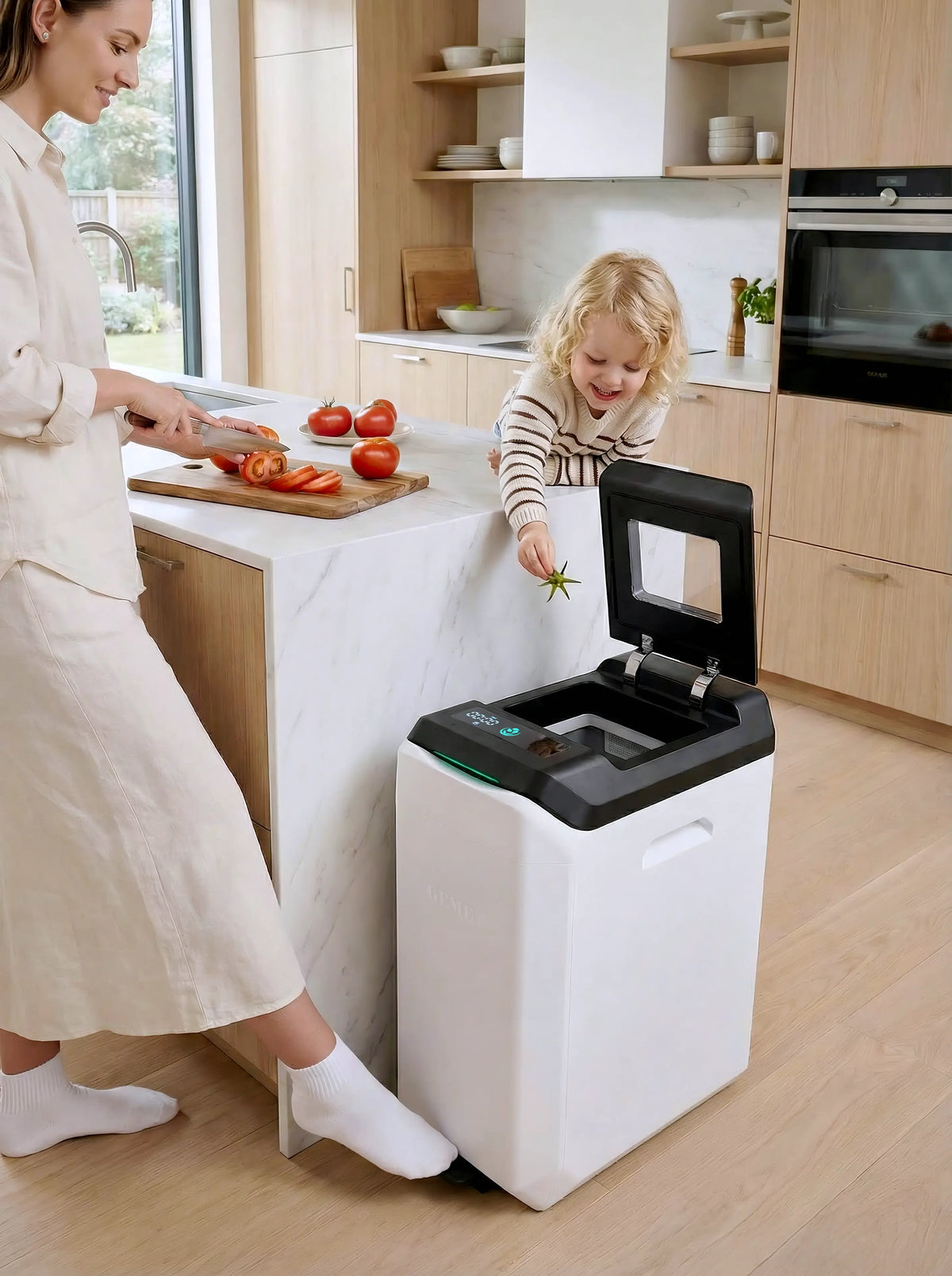
Continuous Microbial Composting
Skin Goes In. Crush the Pit First.
Terra 2 processes everyday fruit and vegetable scraps continuously. Add avocado flesh and skin normally; if you want to process the pit, break it into small pieces first rather than placing the hard pit into the chamber whole.
7. Why Crushing an Avocado Pit Changes the Answer
The compostability of the material has not changed.
Its physical form has.
This principle applies to many tough organic materials.
The EPA recommends breaking tough compost ingredients into smaller pieces because smaller particle size gives microorganisms more surface area to work on.
For GEME, the same principle has an additional mechanical benefit.
Instead of asking the mixing system to move around one large, hard seed, smaller fragments can move through the active bed alongside ordinary food scraps.
The right question is not “Is an avocado pit organic?” It is “Is the pit prepared in a form that is appropriate for the composting system?”
For a backyard pile, whole is acceptable but slow.
For Terra 2, crush it first.
8. Common Avocado Composting Mistakes
Mistake 1: Putting a Whole Avocado Pit Into Terra 2
Do not treat a hard intact pit like an ordinary food scrap.
If you want to process it in Terra 2, crush or break it into small pieces first.
Mistake 2: Assuming “Compostable” Means “Suitable Whole”
A material can be biologically compostable and still require preparation before it enters a particular composting system.
Mistake 3: Expecting Skin and Pit to Decompose at the Same Speed
Soft avocado flesh, fibrous skin, and a dense seed have very different structures.
Different residence times are normal.
Mistake 4: Using a Knife to Force Apart a Hard Pit
Do not create an unnecessary cutting hazard just to compost one seed.
If you do not have a safe way to crush it, leave the pit out of Terra 2.
Mistake 5: Adding Too Many Large Pieces at Once
Even otherwise acceptable foods are easier for microorganisms and the mixing system to handle when oversized or highly fibrous material is reduced to manageable pieces.
Mistake 6: Treating GEME Compost Base Like Pure Potting Soil
Terra 2 output is an active Compost Base.
Screen larger unfinished material and mix the finer output with soil according to current GEME guidance.
See the GEME Compost Output & Soil Blending Guide for the Terra 2-specific method, or the broader How to Use Compost Correctly guide for gardens, raised beds, pots and lawns.
If you want to understand what GEME household output testing can—and cannot—tell you about nutrient content, continue to the NPK Test of Home Compost Output (N=50).
9. Frequently Asked Questions
Can you compost avocado?
Yes. Avocado flesh, skin, and pits are organic materials that can biologically decompose. The flesh breaks down quickly, the skin takes longer, and the dense pit is much slower.
Can you compost avocado skin?
Yes. Avocado skin is compostable and can be added to a backyard compost pile or GEME Terra 2. Cutting large skin pieces smaller can help them break down more efficiently.
Can you compost avocado pits?
Yes. In a traditional compost pile, whole avocado pits can eventually decompose, although they may survive several composting cycles. For GEME Terra 2, do not add an avocado pit whole; crush or break it into small pieces first.
Can you put a whole avocado pit in GEME Terra 2?
GEME does not recommend adding a whole avocado pit to Terra 2. The intact pit is hard, dense, and unnecessarily difficult for normal indoor machine operation.
Can you put a crushed avocado pit in GEME Terra 2?
Yes. An avocado pit can be added after it has been safely crushed or broken into small pieces. Smaller fragments expose more surface area to microbial activity and are easier for the active compost bed to process.
Do I need to crush avocado skin before composting it?
No. Avocado skin does not need to be crushed. Large peel pieces can simply be cut into several smaller sections to increase exposed surface area.
Why does an avocado pit take so long to compost?
The pit is a hard, dense seed with much less exposed surface area than soft fruit tissue. Microorganisms therefore need much more time to penetrate and break it down.
What should I do with an avocado pit if I cannot crush it safely?
Leave it out of Terra 2. You can place the whole pit in a traditional outdoor compost pile, use another appropriate organic-waste pathway, or dispose of it according to local waste guidance.
10. Sources & Further Reading
- U.S. EPA — Composting at Home
- GEME — What Can You Compost at Home?
- GEME — How Continuous Microbial Composting Works
- GEME — Compost Output & Soil Blending Guide
- GEME — Terra 2
Reviewed August 21, 2026. General backyard-compost guidance follows current EPA home-composting principles. GEME-specific input guidance distinguishes biological compostability from the physical form appropriate for a continuously mixed indoor microbial system.


Leave a comment
All comments are moderated before being published.
This site is protected by hCaptcha and the hCaptcha Privacy Policy and Terms of Service apply.