


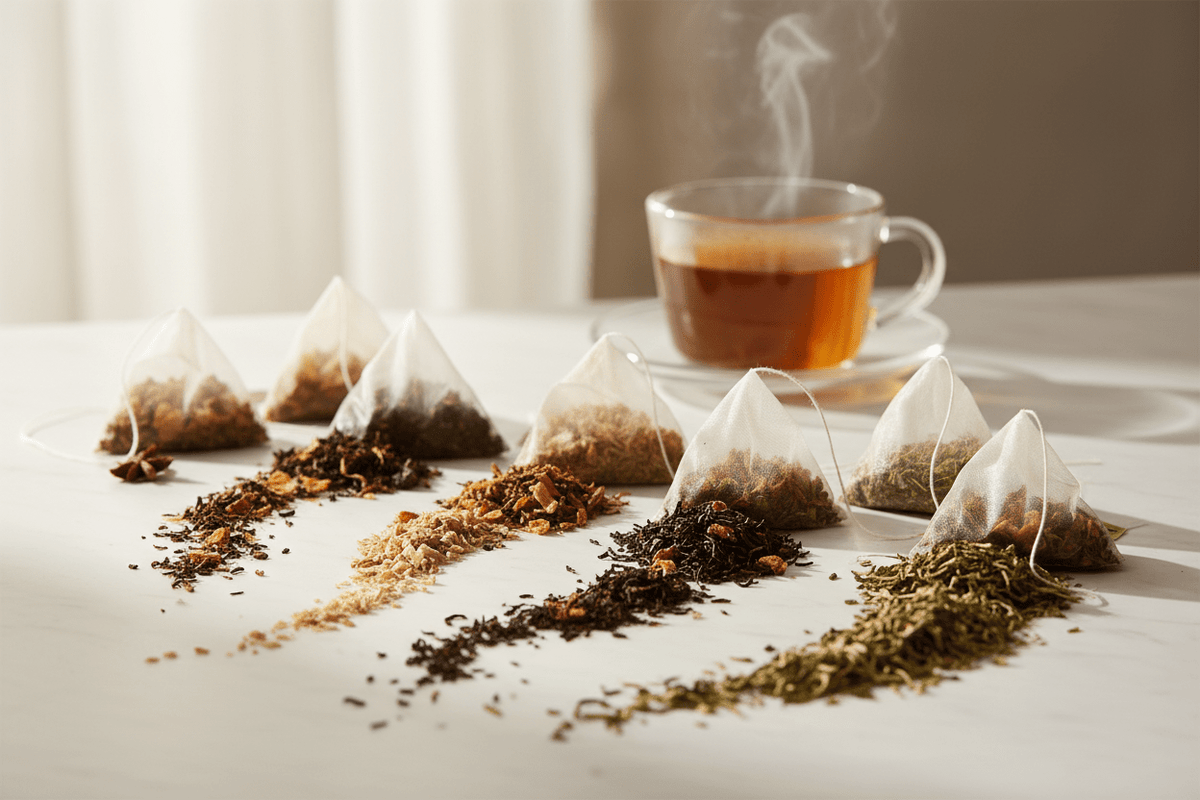
Tea Bags · Tea Leaves · Home Composting · Kitchen Composting
Composting Basics: Can You Compost Tea Bag?
Yes, but the tea and the tea bag are two different materials. Used tea leaves are compostable organic matter. The bag should only go into home compost when you can confirm that it is made from paper or another material specifically suitable for home composting and contains no conventional plastic.
If you cannot verify what the bag is made from, the safest rule is simple: tear it open, compost the tea leaves and discard the uncertain wrapper through the appropriate local waste route. Staples, labels and synthetic strings should also be removed.
By Matthew Moore · Last reviewed August 20, 2026

Quick Answer: Can You Compost Tea Bags?
Yes, some tea bags can be composted, but only after you verify the bag material.
Loose tea leaves are compostable. The U.S. EPA lists paper tea bags without staples among materials suitable for a backyard compost pile. If the bag contains conventional plastic, synthetic mesh or an uncertain sealing material, open the bag and compost only the tea leaves. A package that says only “compostable” should not automatically be treated as home-compostable.
The easiest way to answer “Can tea bags go in compost?” is to separate the drink into its components:
That distinction prevents one of the most common home-composting mistakes: assuming that because the contents are natural, the entire package must also be compostable.
For the wider material-sorting framework, food scraps, paper, stickers, staples, plastics and other contamination, see What Can You Compost at Home?.
Table of Contents
- What Part of a Tea Bag Is Compostable?
- Can Paper Tea Bags Be Composted?
- Why Aren't All Tea Bags Compostable?
- Does “Compostable” Mean Home-Compostable?
- How Can You Tell Whether a Tea Bag Is Compostable?
- Can Tea Bags Go in a Backyard Compost Bin?
- Can Tea Bags Go in a Worm Bin?
- Can Tea Bags Go Into GEME Terra 2?
- How Should You Prepare Tea Bags for Composting?
- Why Is My Tea Bag Not Breaking Down?
- Tea Bag Composting Methods Compared
- Common Tea Bag Composting Mistakes
- Frequently Asked Questions
1. What Part of a Tea Bag Is Compostable?
A used tea bag looks like one small object, but from a composting perspective it may contain several different materials.
These can include:
- used tea leaves;
- the bag or filter material;
- sealing fibres or adhesive;
- string;
- a paper label or tag;
- a metal staple.
The tea leaves are the easy part.
They come from plant material and can undergo normal biological decomposition.
The wrapper is where the answer becomes conditional.
Used tea leaves
↓
Organic plant material
↓
Normally compostable
Tea-bag wrapper
↓
Paper, cellulose, plastic or mixed material
↓
Verify before composting
This is the same material-first rule that applies to many household items. Compostability depends on what actually enters the biological system, not simply what the package is called.
The closest everyday comparison is coffee: used grounds are straightforward organic material, while the filter or pod has to be evaluated separately. See How to Compost Coffee Grounds.
For a broader input list, see What Can You Compost at Home? Complete Compostable List.
2. Can Paper Tea Bags Be Composted?
Yes. Plain paper tea bags that do not contain plastic can generally be composted at home.
The U.S. Environmental Protection Agency currently lists:
paper tea bags without staples
among the nitrogen-rich materials that can be added to a backyard compost pile.
See U.S. EPA — Composting at Home.
The important words are paper and no staples.
A paper tea bag can absorb moisture and gradually become accessible to microorganisms just like other suitable paper fibres.
But the presence of tea inside a wrapper does not prove that the wrapper is paper.
Simple rule: if the manufacturer clearly identifies the bag as paper and plastic-free, the used bag can normally join an appropriate home composting system after non-compostable attachments are removed.
If you are still learning how paper, food scraps, greens, browns, oxygen and moisture fit together, use the Beginner's Guide to Composting at Home.
3. Why Aren't All Tea Bags Compostable?
Modern tea bags are not made with one universal construction.
Some are primarily paper. Others can contain plastic components or synthetic material used to create the bag structure, mesh or heat seal.
That means two tea bags that look almost identical when wet may behave very differently in compost.
Northumberland County Council's current home-composting guidance similarly advises that tea leaves and tea bags can be composted, while tea bags containing plastic should be avoided.
See Northumberland County Council — Home Composting.
This is why a visual inspection is not enough.
A bag can look like soft paper and still include another material in the seal or structure.
4. Does “Compostable” Mean a Tea Bag Can Go Into Home Compost?
Not automatically.
This is one of the most important distinctions in the entire tea-bag question.
A material may be designed to meet compostability requirements under industrial or commercial composting conditions without being intended to break down effectively in an ordinary backyard pile.
The EPA's guidance on compostable plastics makes the boundary clear:
If a plastic item is only labeled “compostable,” do not assume it belongs in a home compost pile unless the labeling specifically indicates home composting.
See U.S. EPA — Plastic Recycling and Composting FAQ.
This is also why a home-compost pile and an industrial composting facility should not be treated as interchangeable systems. For the broader at-home method and material rules, see the Complete Home Composting Guide.
“Biodegradable” Is Not Enough Either
Words such as biodegradable, plant-based or compostable do not by themselves tell you whether a tea bag is suitable for the specific temperature, moisture and residence time available in your home composting system. Look for an explicit home-composting statement or use the leaves-only rule.
5. How Can You Tell Whether a Tea Bag Is Compostable?
Do not rely only on the texture of the wet bag.
The most reliable first step is to check the current packaging or the manufacturer's current material statement.
Step 1: Look for “Plastic-Free”
If the manufacturer clearly states that the tea bag is paper-based and plastic-free, that is much more useful than assuming from appearance alone.
Step 2: Look for a Home-Composting Statement
If the bag uses a compostable bioplastic or another specialized material, check whether it is explicitly intended for home composting.
A general compostable claim may refer to industrial processing instead.
Step 3: Remove the Attachments
Remove any metal staple. If the tag, string or other attachment is made from an uncertain or synthetic material, remove that as well.
Step 4: Use the Leaves-Only Rule When Uncertain
You do not need to throw away the tea itself just because the wrapper is unclear.
Material confirmed paper + plastic-free?
↓ Yes
Remove non-compostable attachments → compost
Material uncertain?
↓
Open bag → compost tea leaves → dispose of wrapper separately
This is a much safer rule than trying to identify plastics by squeezing, tearing or burning the material.
6. Can Tea Bags Go in a Backyard Compost Bin?
Yes, verified paper, plastic-free tea bags can be suitable for backyard composting.
Tea leaves also fit naturally into the moist, nitrogen-containing side of a normal compost mixture.
But a backyard compost pile still depends on more than one ingredient.
Successful aerobic composting requires:
- organic material;
- microorganisms;
- oxygen;
- moisture;
- an appropriate mixture of feedstocks;
- enough time.
A handful of tea bags will not usually create a major balance problem, but hundreds of wet tea bags added as one dense layer can mat together and reduce airflow.
Spread them through the pile rather than building a compressed layer.
If the paper is thick, tearing the bag open can increase exposed surface area.
For the biological principles behind this, read How Does Composting Work? Microbes, Heat & Oxygen.
If you are deciding whether a traditional pile or a managed indoor system better fits your household, compare them in Compost Pile vs Electric Composter.
7. Can Tea Bags Go in a Worm Bin?
Tea bags can also work in vermicomposting with the same material caveat.
Oregon State University Extension lists:
coffee grounds, filters and tea bags with staples removed
among acceptable worm-bin foods.
See Oregon State University Extension — Composting With Worms.
However, that does not turn synthetic tea-bag material into worm food.
The more complete modern rule is:
Worms can process the tea and suitable natural bag material. They should not be used as a disposal system for conventional plastic or uncertain synthetic tea-bag packaging.
If you regularly use a worm bin, loose-leaf tea is the simplest option because no wrapper verification is required.
For another common breakfast input that works well in worm bins and compost piles when balanced correctly, see How to Compost Coffee Grounds.
For a detailed system comparison, read Electric Composter vs Worm Composting: GEME Terra 2 vs Vermicomposting.
8. Can Tea Bags Go Into GEME Terra 2?
Used tea leaves are suitable everyday plant-based kitchen organic material for GEME Terra 2.
The bag itself should follow the same material-verification rule used for responsible home composting.
GEME's current compostable-input guidance states that tea bags should be composted only when the bag is confirmed to be paper and plastic-free, with staples, labels and synthetic string removed.
The current What Can You Compost at Home? guide therefore uses this rule:
Verify the bag. If uncertain, open it and compost only the tea leaves.
This is particularly important in an appliance because packaging is not food waste.
Plastic, metal and other non-organic packaging should not be intentionally introduced into the microbial chamber.
Long synthetic strings are also unnecessary and should be removed rather than left inside a mixing system.
What Happens to the Tea Leaves?
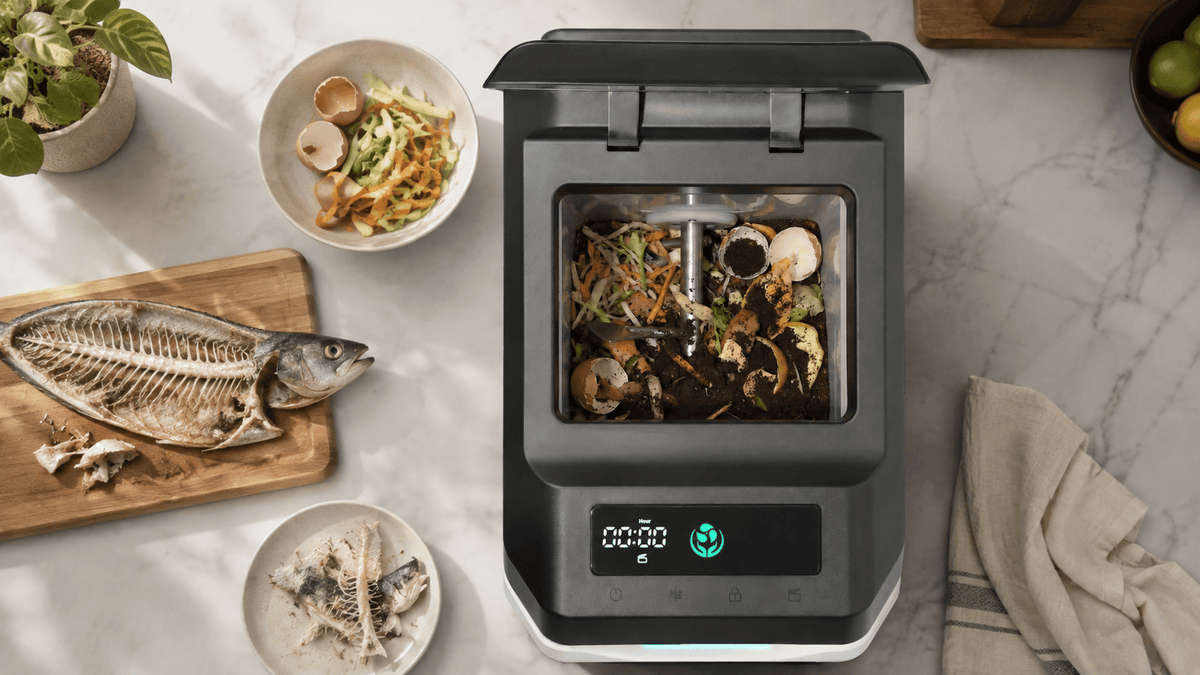
GEME Terra 2 maintains a warm, moist and oxygen-rich biological environment in which Kobold™ microorganisms process suitable kitchen organics.
GEMEBrain™ helps manage airflow, heat, moisture-related conditions and mixing so that decomposition can continue as food scraps are added over time.
The process is biological rather than simply drying the wet tea leaves.
See GEME Terra 2 in Action
Watch on Instagram →
For the broader distinction between suitable food organics and packaging, hard objects, free liquids and other boundary inputs, read What Can You Put in an Electric Composter?.
Learn more at How GEME Works.

From Morning Tea to Microbial Processing
Compost the Organic Part, Not the Packaging
Used tea leaves can become part of an everyday mixed kitchen-waste stream. For tea bags, verify that the wrapper is paper and plastic-free and remove staples, tags or synthetic strings before adding it.
If you cannot confirm the material, simply cut the bag open and add the leaves instead.
Explore GEME Terra 2 →9. How Should You Prepare Tea Bags for Composting?
Tea bags do not need complicated preparation, but a few seconds of sorting can prevent persistent contamination later.
For a Verified Paper, Plastic-Free Tea Bag
- Let excess tea drain.
- Remove any metal staple.
- Remove an uncertain label or tag.
- Remove synthetic or unusually long string.
- Tear the bag if you want to expose the leaves more quickly.
- Add it with a varied mixture of other compostable material.
For an Unknown Tea Bag
- Tear or cut the bag open.
- Empty the used tea leaves into the compost.
- Keep the wrapper out.
- Check the manufacturer's current material guidance before composting future bags.
Do Not Put the Whole Tea Package Into Compost
Individual tea sachets, foil wrappers, plastic envelopes, boxes with glossy coatings and other retail packaging are separate materials. “The tea bag is compostable” never means the surrounding commercial packaging is automatically compostable too.
10. Why Is My Tea Bag Not Breaking Down in Compost?
If you keep finding old tea bags in otherwise decomposed compost, there are several possible explanations.
1. The Bag Contains Plastic
This is the first possibility to investigate.
If the organic tea has disappeared but a thin bag-shaped structure remains, confirm the manufacturer's current material specification before returning it to the pile.
2. The Bag Is Home-Compostable but Slow
Even genuinely compostable fibres do not all disappear at the same speed.
Temperature, moisture, oxygen, surface area and residence time influence decomposition.
3. The Bag Has Matted Into a Wet Layer
A dense layer of wet paper can restrict airflow.
Break bags apart and distribute them through a varied pile rather than adding them as one compressed mass.
4. The Compost Is Not Active Enough
If fruit peels, leaves, cardboard and other normal feedstocks are also remaining unchanged, the issue may be the composting environment rather than the tea bag itself.
Review moisture, oxygen, temperature and feedstock balance before assuming that one material is responsible.
Persistent Material Is a Signal
If a tea-bag wrapper remains intact while the tea leaves and surrounding food have decomposed, do not automatically bury the fragment in soil. Screen it out, identify the material where possible and keep confirmed plastic out of the finished compost.
That screening step matters before soil use. See the Advanced GEME Compost Application Guide and the broader How to Use Compost Correctly guide.
11. Are Loose Tea Leaves Better for Composting Than Tea Bags?
From a compost-sorting perspective, loose tea leaves are simpler.
There is no wrapper to identify, no staple to remove and no string or label to inspect.
This does not mean everyone needs to stop using tea bags.
It simply means that if compostability is part of your buying decision, the material specification of the bag matters.
A plastic-free paper bag with clearly disclosed materials can fit a home-composting routine much more easily than a bag whose composition is uncertain.
If tea and coffee are both part of your daily routine, pairing this with the Coffee Grounds Composting Guide creates a simple low-contamination kitchen-scrap workflow.
12. Tea Bag Composting Methods Compared
The correct disposal route depends both on the bag material and on the composting system available to you.
| Method | Tea Leaves | Tea Bag | Main Rule |
|---|---|---|---|
| Backyard Compost | Yes | Paper + plastic-free | Remove staples and uncertain synthetic components. |
| Worm Bin | Yes | Suitable natural bag material | OSU recommends removing staples; plastic should still stay out. |
| Municipal Food Waste | Often accepted | Local-rule dependent | Check the local authority or collection provider. |
| GEME Terra 2 | Yes | Only verified suitable material | Keep plastic, metal, packaging and synthetic string out. |
Municipal collection deserves its own caution.
Some local food-waste programs accept tea bags because their industrial processing and screening systems are designed around a different waste stream from a household compost pile.
That does not mean every municipality follows the same rule.
Always use the instructions for the system that will actually receive the bag.
For indoor households without a yard, see How to Compost in an Apartment. For a direct outdoor-versus-indoor comparison, use Compost Pile vs Electric Composter.

13. Common Mistakes When Composting Tea Bags
Mistake 1: Assuming Every Tea Bag Is Paper
Tea-bag construction varies. Verify the actual material instead of judging from appearance.
Mistake 2: Treating “Compostable” as “Home-Compostable”
Some compostable plastics are intended for industrial facilities. Look for an explicit home-composting statement.
Mistake 3: Leaving the Staple In
EPA specifically identifies paper tea bags without staples as suitable home-compost inputs. Remove metal components before composting.
Mistake 4: Ignoring the String and Tag
If you cannot confirm that these components are compostable natural materials, remove them.
Mistake 5: Throwing Away Compostable Tea Leaves Because the Bag Is Plastic
The wrapper and the tea do not need to share the same disposal route. Open the bag and compost the leaves.
Mistake 6: Adding a Large Wet Layer of Tea Bags
Wet paper can mat together. Spread tea bags throughout a varied pile or tear them apart to preserve airflow.
Mistake 7: Assuming Any Packaging Can Go Into an Electric Composter
A kitchen composter processes suitable organic feedstock. Plastic, metal and retail packaging should remain outside the biological chamber.
14. The Simplest Tea-Bag Composting Rule
You do not need to memorize the construction of every tea bag on the market.
Use one decision rule:
Tea leaves: compost them. Tea bag: verify it.
If the bag is clearly confirmed as paper and plastic-free:
remove non-compostable attachments → compost the tea and suitable bag
If the bag material is uncertain:
open it → compost the tea → keep the wrapper out
This approach works whether you are managing an outdoor pile, a worm bin or an indoor microbial composter.
It also avoids turning a small daily sustainability habit into a source of persistent plastic contamination.
Once clean organic material has been processed, the output still needs responsible soil use. For application guidance, read How to Screen, Blend & Use GEME Compost Base. For first-party evidence on how household-output nutrients vary across mixed feedstocks, see the NPK Test of Home Compost Output (N=50).
Your Morning Routine Can Keep Going
Tea Leaves Don't Need to Become Trash
GEME Terra 2 maintains a continuous aerobic microbial environment for everyday kitchen organics. Add used tea leaves directly, and when using tea bags, keep the rule simple: verify plastic-free material first and remove non-compostable attachments.
15. Frequently Asked Questions About Composting Tea Bags
Can you compost tea bags?
Yes, but only some tea bags should be composted whole. Used tea leaves are compostable. Compost the bag only when you can verify that it is paper or another material specifically suitable for home composting and contains no conventional plastic.
Are tea bags compostable?
Some are. Plain paper, plastic-free tea bags can generally be composted after staples and other non-compostable attachments are removed. Plastic or uncertain synthetic tea bags should not be intentionally added to home compost.
Can paper tea bags go in compost?
Yes. The U.S. EPA specifically lists paper tea bags without staples among materials suitable for backyard composting.
Can plastic tea bags go in compost?
Conventional plastic tea bags should not go into home compost. Open the bag, compost the tea leaves and dispose of the plastic wrapper according to local waste guidance.
Can you compost the tea leaves inside a plastic tea bag?
Yes. Cut or tear the bag open and add the tea leaves to the compost while keeping the plastic wrapper out.
Do you need to remove the staple from a tea bag before composting?
Yes. Remove metal staples before adding a tea bag to home compost. EPA's home-composting guidance specifically refers to paper tea bags without staples.
Do you need to remove the tea-bag string?
Remove the string if its material is synthetic or uncertain. This is especially sensible in composting equipment with mechanical mixing, where long stringy materials should be kept out.
Can the tea-bag tag go in compost?
Only if you know what it is made from and that any ink, coating or attachment is appropriate for home composting. The simpler approach is to remove the tag.
Are biodegradable tea bags compostable?
Not necessarily in a home compost pile. “Biodegradable” does not specify the conditions or time required for breakdown. Verify whether the product is explicitly intended for home composting.
Are compostable tea bags home-compostable?
Not automatically. EPA advises that compostable plastic generally should not be placed in home compost unless the label specifically says it is suitable for home composting.
Can tea bags go in a worm bin?
Suitable tea bags can. Oregon State University Extension lists tea bags with staples removed as acceptable worm-bin input. Modern plastic-content concerns still apply, so verify the wrapper material or use only the tea leaves.
Can loose tea leaves go in compost?
Yes. Loose used tea leaves are straightforward compostable plant material and avoid the wrapper-material question entirely.
Are tea bags green or brown compost material?
Used tea bags are normally treated with moist nitrogen-rich kitchen inputs rather than relied upon as a dry carbon source. EPA lists paper tea bags among nitrogen-rich materials for a home compost pile.
Why are my tea bags not breaking down in compost?
The bag may contain plastic, may need more residence time or may be sitting in conditions with insufficient moisture, oxygen or microbial activity. If the wrapper remains intact while surrounding material decomposes, screen it out and verify the material.
Can I put tea bags in GEME Terra 2?
Used tea leaves can enter the normal kitchen-organic stream. Only add the bag when it is confirmed paper and plastic-free, and remove staples, labels and synthetic string. If the material is uncertain, open the bag and add only the tea leaves.
Will tea bags damage GEME Terra 2?
The organic tea itself is not the concern. The important rule is to keep conventional plastic, metal, packaging and long synthetic string out of the chamber. Verify the wrapper before adding an entire tea bag.
Can I compost tea bags from any brand?
Do not assume that every product from a brand uses the same tea-bag material across all product lines, countries or manufacturing periods. Check the current packaging or manufacturer's current material statement for the exact tea bag you use.
16. Authoritative Sources & Further Reading
- U.S. EPA — Composting at Home
- U.S. EPA — Plastic Recycling and Composting FAQ
- Oregon State University Extension — Composting With Worms
- Northumberland County Council — Home Composting
- GEME — What Can You Compost at Home?
- GEME — How Does Composting Work?
- GEME — How Terra 2 Microbial Composting Works
- GEME — Advanced Compost Application Guide
Sources reviewed August 20, 2026. Tea-bag materials vary by manufacturer, product line and market. “Compostable” should not be interpreted as “home-compostable” unless the product is specifically identified as suitable for home composting. When the wrapper material cannot be verified, compost the tea leaves and keep the bag itself out.


Leave a comment
All comments are moderated before being published.
This site is protected by hCaptcha and the hCaptcha Privacy Policy and Terms of Service apply.