


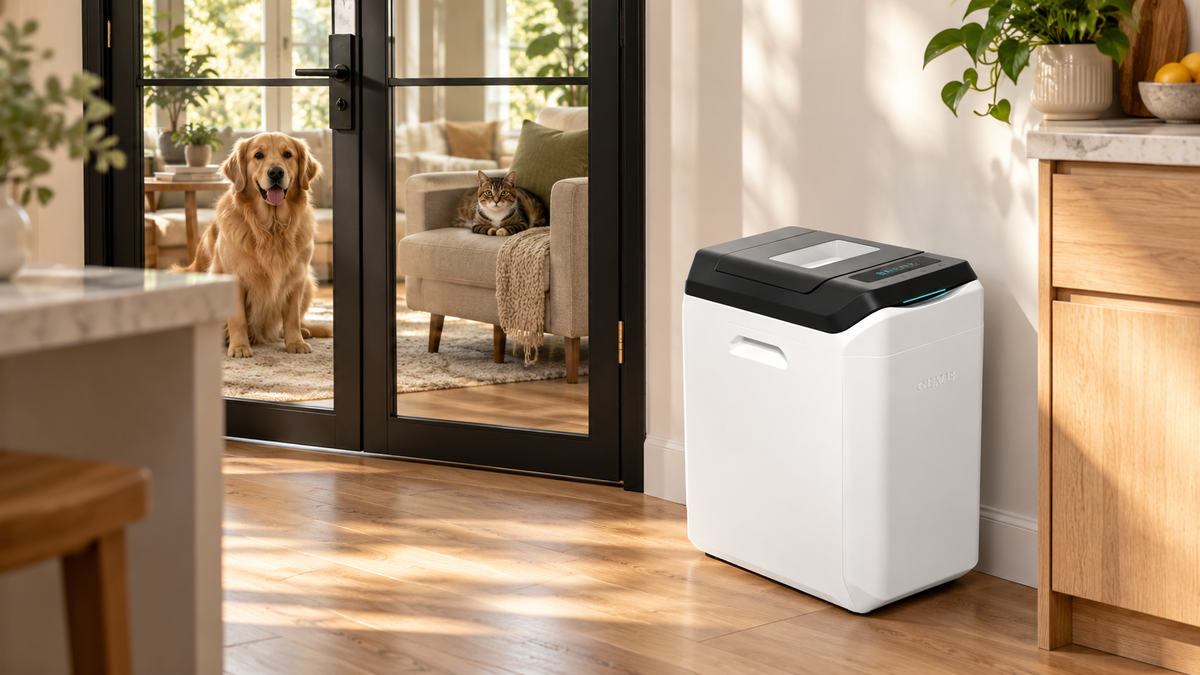
Dogs & Cats · Kitchen Placement · Daily Scraps
Choose GEME for daily food-scrap handling in a home with dogs or cats: suitable scraps enter a continuous microbial process close to meal cleanup, while the preparation counter stays free. Start with Terra 2 for lighter daily loads; choose Pro for heavier cooking.
The right setup combines a stable indoor floor position, controlled pet access, a protected power-cord route and secure storage for scraps and harvested material. Make those arrangements first, then let GEME simplify the daily kitchen routine.

Quick Answer: Where Should GEME Go If Pets Explore the Kitchen?
Put GEME on a stable, level indoor floor in a ventilated area where an adult can control pet access. Keep the lid area, exhaust, doors and walkways clear; route the cord away from paws and mouths.
On Terra 2, review the separate foot-sensor setting and consider disabling it when an animal regularly passes the front of the appliance. Keep pets away whenever an adult opens, feeds, cleans or harvests the unit.
GEME's continuous feeding, automated mixing and permanent odor control make daily food-scrap handling more convenient. Pet access still depends on the layout and adult routine; a control-key lock is not evidence of a physically locked lid or pet-detection system.
For broader choices, start with the Best Composter Hub. If young children share the kitchen too, use the companion GEME placement and controls guide for homes with children.

1. Why GEME Works Well in a Home With Pets
GEME makes it practical to move suitable food scraps into an ongoing indoor process as meals are cleared. That helps adults keep a short preparation-to-feeding routine instead of leaving open scrap dishes around the kitchen.
- Continuous feeding: add suitable scraps progressively around meals, within the model's daily capacity and fill line.
- Automated mixing: the system mixes the active bed, keeping manual turning out of the daily kitchen task.
- Permanent odor control: no scheduled activated-carbon filter purchases; normal care and clear airflow remain part of use.
- Floor-standing design: keep the preparation counter available while giving the appliance its own planned position.
- A useful output route: harvested Compost Base can follow the screening and soil-blending instructions for the intended garden use.
The strongest setup pairs those benefits with an access boundary that works for the individual animal. An appliance that is easy for an adult to feed should remain unavailable to an exploring pet.
See how GEME's continuous microbial process works for the operating method and input boundaries.
2. Pet Access, Cord and Scrap-Storage Checklist
Inspect the whole route from collecting scraps to putting away harvested material. Start at a dog's nose level, then consider a cat's access from chairs, counters and nearby furniture.
The ASPCA's home-preparation guidance supports checking an animal's perspective, securing cupboards and keeping electrical cords inaccessible. The checklist below applies those principles to a GEME kitchen setup.
| Check | Look For | Adult Action / Ready Condition |
|---|---|---|
| Floor approach | A dog can stand beside the lid, front sensor or cord; the unit sits on a route to food or water bowls. | Choose a stable, level floor position with pet access controlled. Keep feeding bowls and pet resting spots separate from the appliance area. |
| Jumping and landing | A cat can approach from a chair, stool, counter or window ledge, or jump directly onto the lid. | Reconsider nearby landing routes and use an access boundary that actually contains the cat. Moving a chair alone does not establish that the lid is unreachable. |
| Lid and front sensor | A pet passes through the front opening-control area or follows an adult during lid movement. | Review Terra 2's separate foot-sensor setting. Keep the pet outside the feeding area and keep paws, tails and objects clear throughout opening and closing. |
| Cord and plug | Loose cable is reachable, stretched across a walkway, trapped by a door or pinched against the appliance. | Use a suitable nearby outlet and a route inaccessible to the pet, with no pinching or tension. Inspect the plug and insulation; retain the required airflow gap. |
| Airflow and movement | A wall, pet barrier, cupboard or furniture blocks the exhaust, lid travel or adult approach. | Keep more than 10 cm behind the unit and the exhaust open; follow the surrounding clearance guidance. Adults must reach the appliance without blocking doors or walkways. |
| Waiting scraps | An open bowl, loosely closed caddy, or unattended preparation tray is accessible. | Store scraps in a securely closed container in a place the animal cannot access. Feed promptly around cleanup instead of leaving the tray out. |
| Spills and supplies | Food has fallen on the floor; scoops, starter bags or cleaning products are within reach. | Clean the surrounding floor after feeding. Put supplies in secure adult storage and follow product-label instructions for cleaners. |
| Harvested material | A sieve, harvest bowl, storage tub or fresh soil blend is available to a pet. | Harvest and prepare the blend with pets excluded. Use storage appropriate to the application guide and keep the material inaccessible. |
| Adult responsibility | Several people feed the unit, but nobody checks the lid, settings, cord or daily input. | Name the adult responsible for each feeding and for routine inspection. Finish by closing the lid, restoring chosen settings and putting supplies away. |
Both model manuals require more than 10 cm behind the appliance and an unobstructed exhaust. The setup guide also calls for at least 10 cm around the machine for airflow. A pet barrier must preserve that ventilation and adult access.
Use the kitchen measurement worksheet to check the footprint and available lid space. Keep Terra 2 and Pro on the floor in a ventilated installation area; a closed, unventilated cupboard is not a suitable access solution.

3. Understand the Lid and Control Features
Choose settings that support adult operation, then manage the animal's physical access separately. A key lock, a lid-opening shortcut and a mixing stop perform different jobs.
Terra 2: Key Lock and Separate Lid Settings
The Terra 2 control instructions describe a three-second Child Lock press to lock the control keys. Foot-sensor opening and optional 30-second automatic closing have separate settings.
For a pet that regularly explores the front of the unit, the setup recommendation is to disable foot-sensor opening and let an adult manage feeding. Consult the Terra 2 control-panel instructions for the button sequence. Do not assume that locking the keys physically locks the lid or disables the foot sensor.
Pro: Lid-Open Mixing Protection
The Pro control-panel description records a mixing-shaft stop when the lid opens. It does not list a dedicated child-lock control. Plan adult-managed lid access and a pet boundary for Pro.
Lid-open stop protection supports normal operation; it does not authorize a pet to explore the chamber. Keep animals away from an open lid, moving lid edges and harvested material. Never use the lid as a pet perch.
4. Keep Scraps and Compost Base Out of Reach
Give Waiting Scraps a Secure Home
A composter routine starts at the collection container. Keep it closed between additions and in storage so the particular animal cannot open or reach. A high counter is not sufficient protection from a cat that can jump onto it.
Move suitable scraps into GEME around meal cleanup, then wash or wipe the preparation container as appropriate. Clear dropped food from the floor and put the scoop away. Continuous feeding makes that short routine practical throughout the day.
The ASPCA's people-food guidance explains why ordinary kitchen foods can be unsuitable for pets. Coffee grounds, onion trimmings and grape leftovers deserve secure handling, even when destined for a food-waste processing route.
Protect Harvested Material and the Soil Blend
Exclude pets while harvesting, screening or blending Compost Base. Put away the harvest bowl and sieve immediately afterward, and manage storage and access to newly amended soil so an animal cannot eat the material.
The ASPCA's compost guidance identifies ingestion risks from certain food residues and molds. Biological treatment should not be treated as proof that any mixed output is suitable for an animal to eat.

Retain the starter bed in the machine, return unfinished organic pieces and use approximately 1 part Compost Base to 8 parts plain soil for the basic blend. Follow the GEME application guide for the intended planting use and material condition.
5. Choose Terra 2 or Pro by Kitchen Load
Choose the model for the amount of suitable kitchen scraps, then check its position against the pet-access checklist. The number or size of pets does not establish the required food-processing capacity.
| Selection Factor | GEME Terra 2 | GEME Pro |
|---|---|---|
| Typical household positioning | 1–3 people and lighter kitchen loads | 4+ people and heavier daily cooking |
| Chamber volume | 14 L | 19 L |
| Daily processing capacity | Up to 2 kg/day | Up to 5 kg/day |
| Maximum per addition | 1 kg; respect the maximum fill line | 1 kg; respect the maximum fill line |
| Closed width × depth × height | 29.7 × 43.7 × 56.6 cm | 32 × 45.5 × 66.5 cm |
| Controls relevant to this setup | Control-key lock; separate foot-sensor and automatic-closing settings | Documented lid-open mixing stop; adult-managed access |
| Scheduled odor-filter replacement | None | None |
| US Basic price | US$699.00 | US$899.99 |
Terra 2 is the first recommendation when its footprint and up to 2 kg/day fit the kitchen. GEMEBrain™ adaptive control and configurable lid settings support a convenient adult feeding routine.
Pro is the upgrade for heavier daily cooking: up to 5 kg/day provides 2.5 times Terra 2's daily throughput. Spread additions through the day; neither model's daily allowance is a single-feed limit.
Weigh a representative week of suitable scraps, including a busy preparation day. Choose by actual load and available installation space; lid height alone does not resolve access for a jumping cat or curious dog.
6. A Repeatable Adult Feeding Routine
Prepare
Move the pet outside the feeding area. Bring the closed scrap container, remove packaging and stickers, and prepare bulky scraps according to the input guide.
Feed
An adult manages the lid and adds no more than 1 kg, within the daily capacity and fill line. Keep animals away from the opening and lid movement.
Finish
Check the lid is closed, restore the selected Terra 2 controls, clear spills, and put the container and scoop away. Leave the pet-access boundary in place.
Adults also handle cleaning, harvesting and troubleshooting. Keep pets excluded throughout those tasks and follow the model's care instructions for each maintenance procedure.

7. When to Change the Setup or Get Help
- A pet paws at the controls, investigates the sensor or climbs onto the lid: restrict access and revise the position or barrier before leaving the appliance unattended. On Terra 2, check the separate foot-sensor setting.
- The cord is chewed, frayed or otherwise damaged: stop using the appliance. Disconnect power only when it is safe to do so and contact GEME support about service before reuse.
- A pet eats potentially harmful scraps or harvested material: contact a veterinarian or animal poison-control service promptly. Tell them what may have been eaten, approximately how much and when.
- No proposed location resolves access and ventilation together: settle the kitchen layout first. An airflow gap or control-key lock alone does not complete the pet-access plan.
For electrical routing, the Electrical Safety Foundation International advises against treating extension cords as permanent wiring and against using damaged cords. Choose a suitable nearby outlet and avoid cable routes through doorways, under rugs or where furniture can pinch them.
For suspected ingestion, use your veterinarian's advice or the ASPCA Poison Control contact guidance; in the United States, the listed number is (888) 426-4435.
A Better Daily Kitchen Routine
Choose GEME for Continuous Home Composting
Give GEME a suitable floor position, keep pet access controlled and make meal cleanup a short adult routine. Choose Terra 2 for lighter loads or Pro for heavier family cooking.
8. Frequently Asked Questions
Where should I put GEME if my dog or cat explores the kitchen?
Choose a stable, level indoor floor position with ventilation and adult-controlled pet access. Keep the lid area, exhaust, doors and walkways clear. Leave more than 10 cm behind the appliance and follow the surrounding airflow guidance. Route the power cord where the animal cannot reach or chew it.
Could a pet reach the lid or power cord?
Yes, depending on the animal and layout. Check a dog’s approach at floor level and a cat’s jumping or landing routes, as well as access to loose cable. Use a boundary that works for the individual pet and keep animals away whenever the lid is opened or the unit is being cared for.
Does the Terra 2 child lock physically lock the lid?
The documented Child Lock locks the control keys. Foot-sensor opening and automatic closing have separate settings. Do not assume that the key lock physically secures the lid or disables the foot sensor. Review the supplied manual and manage physical pet access separately.
How should I keep scraps and harvested material out of reach?
Keep waiting scraps in a securely closed container in storage the pet cannot access. Clear spills after feeding. Exclude animals during harvesting and soil blending, put the bowl and sieve away, and keep Compost Base and newly amended soil inaccessible to pets that might eat the material.
Should a home with pets choose Terra 2 or GEME Pro?
Choose by suitable kitchen-scrap load and available floor space. Terra 2 provides a 14 L chamber and up to 2 kg/day; Pro provides 19 L and up to 5 kg/day for heavier cooking. Keep each addition at 1 kg or less. Pet count and lid height alone do not decide the model or resolve access.
What should I do if a pet eats scraps or Compost Base?
Contact a veterinarian or animal poison-control service promptly if potentially harmful material may have been eaten. Describe the material, approximate amount and time of ingestion. In the United States, ASPCA Poison Control lists (888) 426-4435. Microbial processing should not be taken as proof that mixed output is safe to eat.
9. Sources and Product Information
Model controls, installation guidance and US Basic prices reviewed October 4, 2026. Use the instructions supplied with the exact appliance.
- GEME manual and setup hub.
- Terra 2 manual — control panel and installation precautions.
- GEME Pro manual — lid-open mixing protection and installation.
- GEME Terra 2 specifications and GEME Pro specifications.
- GEME Compost Base application guide.
- ASPCA — home preparation for puppies and kittens.
- ASPCA — people foods to keep away from pets.
- ASPCA — compost and fertilizer ingestion risks.
- ESFI — electrical cord guidance.


Leave a comment
All comments are moderated before being published.
This site is protected by hCaptcha and the hCaptcha Privacy Policy and Terms of Service apply.