


Kitchen Food Waste · No Garbage Disposal · Composting Alternatives
You do not need a garbage disposal to manage kitchen food scraps. In fact, grinding food into the sink is only one possible waste pathway, and for renters, septic-system households, older kitchens, apartments, or anyone who simply does not want food entering the drain, there are several practical alternatives.
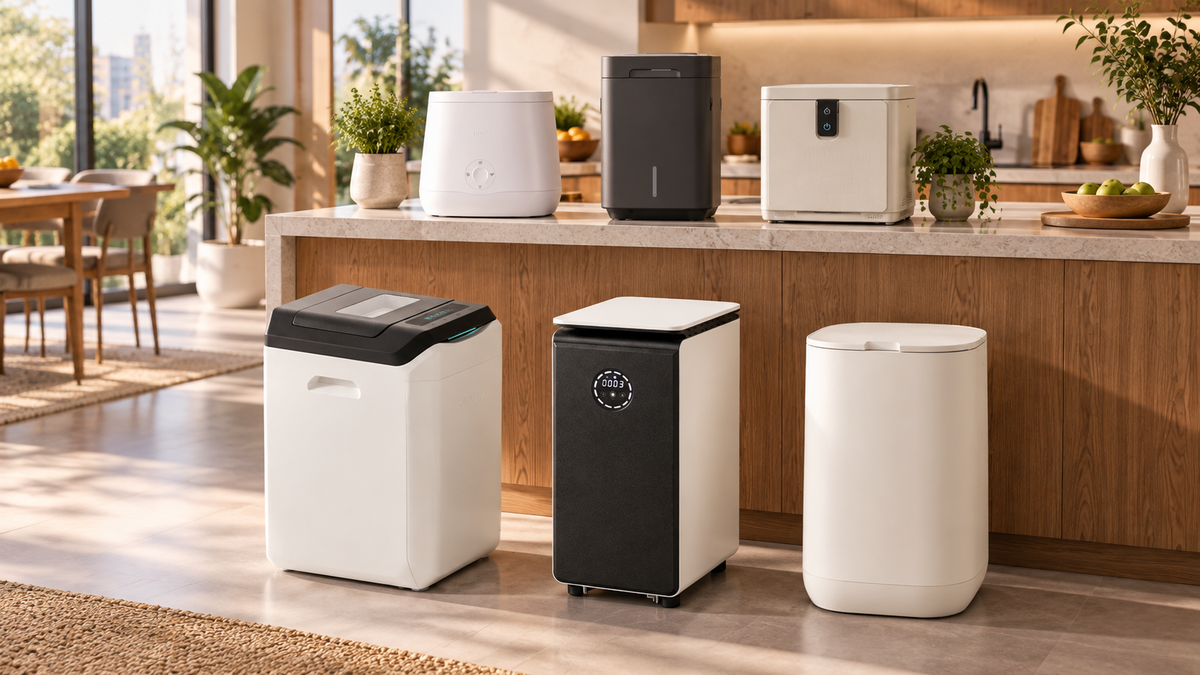
The options range from curbside organics and freezer storage to backyard composting, worms, bokashi, food recyclers and continuous microbial composters.
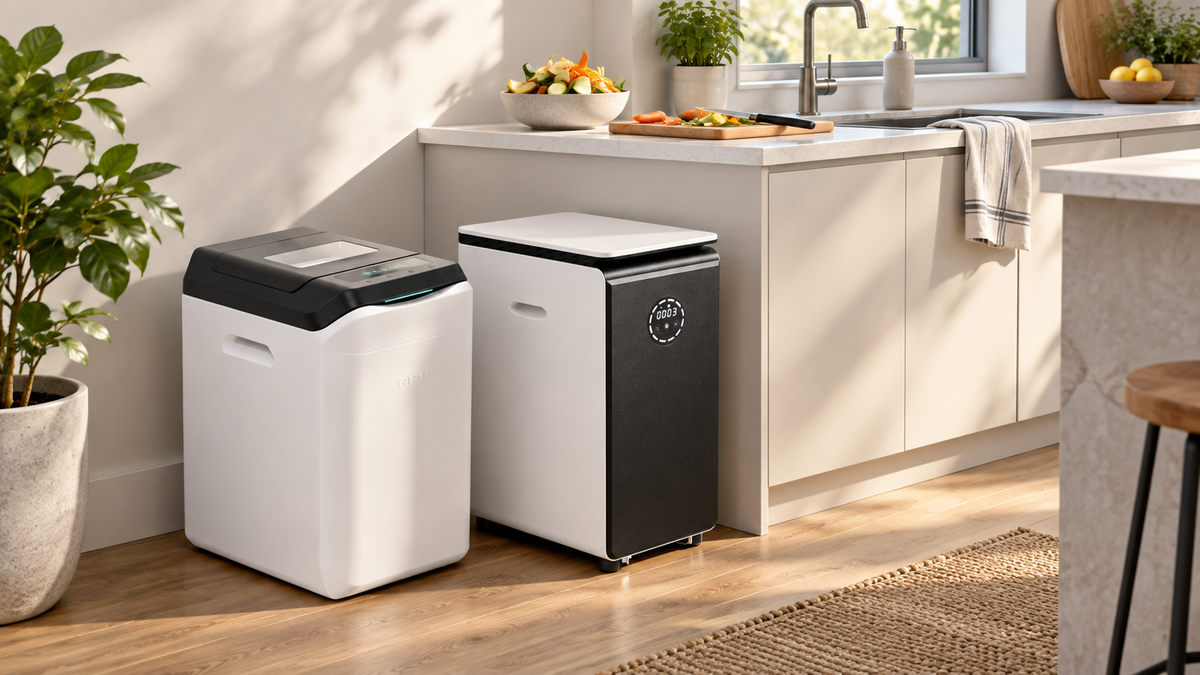
For households that want to keep food scraps out of both the trash and the sewer, GEME Terra 2 and GEME Pro offer a fundamentally different workflow: suitable food scraps go directly into a standalone, floor-standing microbial system instead of through the sink drain.

Quick Answer: What Can You Use Instead of a Garbage Disposal?
The best alternative depends on what you want to happen to the scraps.
- Want the lowest effort? Use curbside organics if your municipality provides it.
- Need temporary storage? Keep scraps in a sealed caddy or freezer until collection.
- Have a yard? Use a backyard compost bin for suitable plant-based scraps.
- Live in a small apartment? Consider worms, bokashi or a managed indoor system.
- Mainly want smaller, drier waste? A dehydrator-style food recycler can reduce volume.
- Want continuous biological processing indoors? Use a microbial composter such as GEME Terra 2 or GEME Pro.
If your goal is to avoid both sewer disposal and ordinary trash while returning organic material toward soil, composting provides the more complete pathway.
1. Why Look for an Alternative to a Garbage Disposal?
A sink garbage disposal is convenient because food disappears from view quickly. But it does not eliminate the food waste.
It grinds food into smaller particles and sends those particles into the household wastewater pathway.
The U.S. EPA describes food sent through a garbage disposal as part of the sewer/wastewater treatment pathway. The food eventually travels to a water resource recovery facility with the rest of the wastewater.
EPA's current Wasted Food Scale places “send down the drain” among the least-preferred wasted-food management pathways, while composting recovers organic matter and nutrients for beneficial soil use.
That does not mean every household with a garbage disposal should immediately remove it. It means a disposer should be understood as a wastewater route, not as the only way to manage kitchen scraps.
Common Reasons People Want an Alternative
- the rental property does not have a disposer;
- the landlord does not permit installation;
- the sink or plumbing configuration is unsuitable;
- the home uses a septic system;
- the user wants to reduce food entering wastewater;
- the user wants to recover organic matter rather than discard it;
- food scraps are still creating odor or insects before disposal;
- or the household wants a more complete food-to-soil routine.
2. Eight Garbage Disposal Alternatives for Kitchen Food Scraps
| Alternative | Best For | Main Trade-Off | What Happens to the Food? |
|---|---|---|---|
| Curbside organics | Homes with reliable local collection | Depends on municipal availability and collection schedule | Sent to a commercial composting or other organics facility |
| Freezer or sealed scrap container | Temporary storage before collection | Stores food but does not process it | Food remains intact until another route is used |
| Backyard compost pile | Homes with outdoor space | Needs space, browns, time and management | Aerobic biological decomposition |
| Worm bin | Small homes with modest plant-based scraps | Requires worm care and restricted feeding | Vermicomposting produces worm castings |
| Bokashi | Small-space users comfortable with a finishing step | Fermented material still needs soil or further processing | Anaerobic fermentation first |
| Dehydrator-style food recycler | Users primarily wanting smaller, drier waste | Drying is not the same as completed biological composting | Food is heated, dried and often ground |
| GEME Terra 2 | 1–3 person households wanting continuous indoor composting | Higher upfront cost and electricity use | Continuous aerobic microbial decomposition |
| GEME Pro | Larger families or high daily food-scrap volume | Larger floor-standing appliance and higher purchase price | High-capacity continuous aerobic microbial decomposition |
3. Curbside Organics: The Simplest Alternative Where Available
If your city already collects food scraps separately, that may be the easiest garbage-disposal alternative.
A typical routine is:
- collect suitable scraps in a kitchen caddy;
- transfer them to the approved organics bin;
- follow local rules about meat, dairy, bags and packaging;
- let the municipality manage transportation and processing.
The main limitations are schedule, local acceptance rules and availability.
Freezer Storage Can Solve the Waiting Problem
Some apartment users freeze scraps between collection days. This can reduce odor and insect activity, but it is a storage strategy rather than a waste-treatment method.
You still need a destination afterward.
For prevention before scraps are created, use our guide to reducing food waste at home.
4. Backyard Composting, Worms and Bokashi
Backyard Composting
If you have outdoor space, conventional composting remains one of the lowest-cost ways to keep plant-based kitchen scraps out of both the sewer and trash.
You need nitrogen-rich food scraps, carbon-rich browns, moisture, oxygen and time.
Start with the Complete Home Composting Guide.
Worm Bins
Vermicomposting can work indoors and in apartments, but the food menu is narrower, and feeding must match the worm population.
It is a good solution for people who want worm castings and are comfortable maintaining a living worm system.
Bokashi
Bokashi ferments scraps in a sealed container.
Its main limitation for apartment users is the next step: fermented material usually still needs to enter soil or another composting system before the organic matter completes the broader soil-return pathway.
For method-by-method material limits, see What Can You Compost at Home?
5. What About an Electric Food-Waste Recycler?
Countertop food recyclers can also replace the habit of sending food through a garbage disposal.
However, they do not all perform the same process.
EPA notes that residential food-scrap grinders and dehydrators can produce a dried food-scrap mixture that is not biologically stable compost and may require additional composting, curing or other treatment before soil use.
That distinction matters if your objective is simply:
“Make the scraps smaller and drier.”
versus:
“Biologically process the scraps and create a pathway back to soil.”
Drying and grinding can solve storage and volume problems. Composting solves a different problem: biological decomposition and organic-matter recycling.
For the science behind the difference, read How Does a Real Electric Composter Work?.
6. Why GEME Is a Different Kind of Garbage Disposal Alternative
No Sink. No Drain Connection. No Waiting for a Batch.
GEME moves suitable food scraps away from the wastewater pathway entirely. Terra 2 and GEME Pro are standalone floor-standing appliances that maintain an active Kobold™ microbial ecosystem inside a controlled aerobic chamber.
Instead of grinding food into the sewer, the system manages warmth, airflow, moisture-related conditions and mixing while microbes carry out biological decomposition.
This changes the kitchen workflow.
A typical garbage-disposal routine is:
scrape → sink → grind → water → sewer.
A GEME routine is:
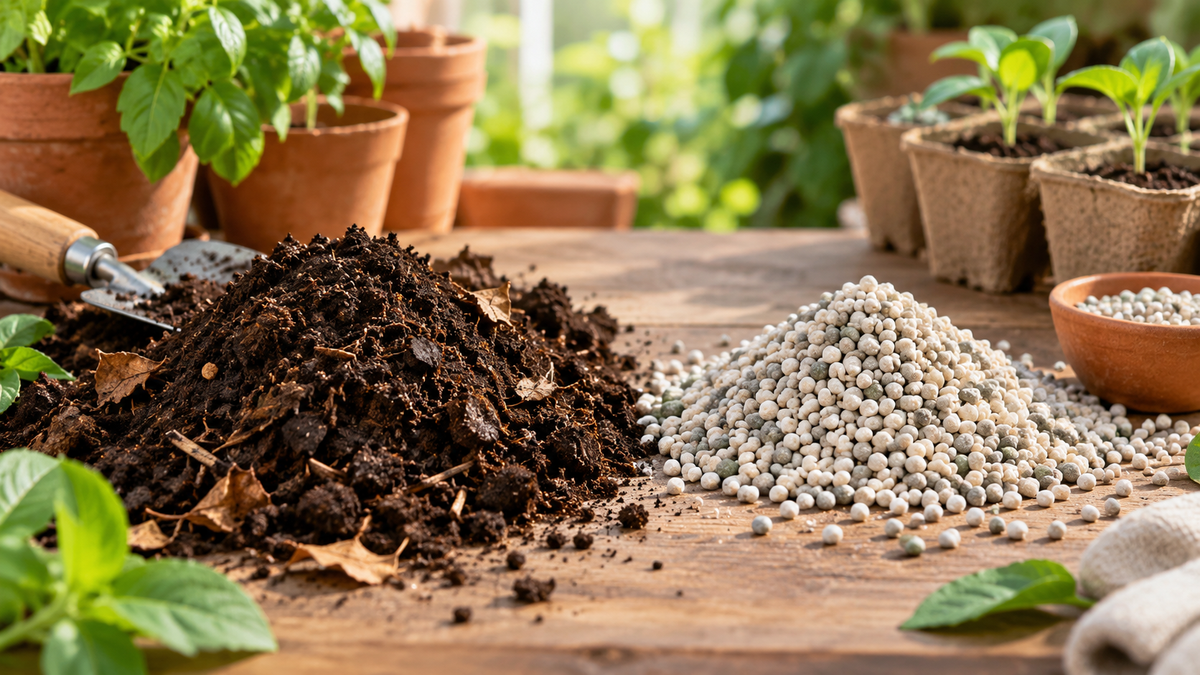
scrape suitable food → GEME → continuous microbial processing → Compost Base → soil pathway.
Continuous Feeding Matters
A garbage disposal is convenient partly because it is available whenever food scraps appear.
That is where GEME's continuous system is particularly relevant.
You do not need to collect enough food for a batch before starting another processing cycle. Suitable scraps can be added throughout the day within the model's feeding limits.
Broader Kitchen Workflow
GEME is designed around everyday kitchen scraps rather than only clean vegetable trimmings.
Specific inputs should still follow product guidance, and concentrated liquids, excessive oil, salt, extremely hard objects and oversized loads require appropriate management.
For a complete material reference, see What Can You Compost at Home?.
No Routine Activated-Carbon Filter Replacement
Both Terra 2 and GEME Pro use GEME's permanent odor-treatment architecture rather than requiring a scheduled disposable activated-carbon cartridge as part of normal ownership.
That makes the appliance particularly relevant for people who want a self-contained indoor food-waste routine without adding another recurring kitchen filter purchase.
7. Terra 2 or GEME Pro as a Garbage Disposal Alternative?
Choose according to how much food your household actually generates.
| Feature | GEME Terra 2 | GEME Pro |
|---|---|---|
| Household fit | Primarily 1–3 people | 4+ people or heavier daily cooking |
| Microbial chamber | 14 L | 19 L |
| Daily processing capacity | Up to ~2 kg/day | Up to ~5 kg/day |
| Single addition guidance | Up to 1 kg per addition | Up to 1 kg per addition |
| Sink or plumbing connection | Not required | Not required |
| Processing style | Continuous aerobic microbial | Continuous aerobic microbial |
| Routine activated-carbon filter | Not required | Not required |
| Best use case | Everyday apartment and smaller-household kitchen scraps | Larger family kitchens and heavier daily food-scrap volume |
Choose Terra 2 When Daily Volume Is Moderate
Terra 2 is the more logical starting point for a typical 1–3 person household.
Its advantage over a garbage disposal is not merely that the scraps disappear from the sink. They enter a managed biological process without requiring permanent plumbing installation.
Choose GEME Pro When the Sink Would Otherwise See a Lot of Food
For a larger family, the meaningful issue is throughput.
GEME Pro's up-to-5-kg/day capacity provides far more daily headroom than Terra 2 while preserving the same continuous microbial workflow.
For broader product selection, see Best Kitchen Composters 2026.
8. What If You Have a Septic System?
For homes using septic systems, there is an additional reason to consider keeping food scraps out of the drain.
EPA guidance says that throwing away or composting food waste instead of putting it through a garbage disposal reduces nitrogen and phosphorus entering wastewater and can help extend the life of the septic system.
This does not replace advice from your local health department, septic professional or system manufacturer.
Check Local Rules
Plumbing codes, wastewater systems and organics programs vary by location. If your home uses a septic system, or your municipality restricts food-waste disposers, follow local requirements rather than assuming a garbage disposal is appropriate everywhere.
9. Which Garbage Disposal Alternative Is Best for You?
| Your Situation | Start Here |
|---|---|
| You already have excellent curbside food-scrap collection | Use the municipal program. Another appliance may be unnecessary. |
| You have a yard and want the lowest-cost biological option | Backyard composting. |
| You have small amounts of vegetable scraps and like worm composting | Vermicomposting. |
| You need compact temporary storage before pickup | Freezer or sealed caddy. |
| You mainly want scraps dry and reduced in volume | Dehydrator-style food recycler. |
| You want continuous biological processing indoors and generate normal daily food scraps | GEME Terra 2. |
| You want the same biological workflow but generate substantially more food waste | GEME Pro. |
The most important distinction is not whether an alternative makes food disappear quickly.
It is:
Where does the food go next?
A garbage disposal moves it into wastewater. A trash bin moves it toward solid-waste disposal. A dehydrator changes its physical form. A composting system uses biological decomposition to move organic matter toward a soil-return pathway.
Your Kitchen Does Not Need a Garbage Disposal to Handle Food Scraps Well
Keep suitable food scraps out of the sink and out of the ordinary trash. Choose Terra 2 for the everyday volume of a typical 1–3 person household, or GEME Pro when a larger family needs much more daily processing capacity.
10. Frequently Asked Questions
What can I use instead of a garbage disposal?
Alternatives include curbside food-scrap collection, freezer storage, backyard composting, worm bins, bokashi, dehydrator-style food recyclers and managed microbial composters. The best choice depends on your space, food-waste volume and what you want to happen to the material.
What should I do with food scraps if I do not have a garbage disposal?
Prevent edible food waste first. Then separate unavoidable scraps and choose an available destination: municipal organics collection, composting, a worm or bokashi system, or an indoor food-waste appliance. Avoid treating the ordinary trash can as the only option.
Is composting better than using a garbage disposal?
The two pathways do different things. A garbage disposal grinds food and sends it into the sewer/wastewater system. Composting biologically processes organic material and can return organic matter and nutrients to soil. EPA's current Wasted Food Scale places composting above sending wasted food down the drain.
Can I use a garbage disposal with a septic system?
System requirements vary. EPA advises that throwing away or composting food instead of grinding it through a garbage disposal can reduce nitrogen and phosphorus in septic wastewater and help extend septic-system life. Follow your septic-system and local health-department guidance.
Do I need plumbing for GEME Terra 2?
No sink or wastewater-drain connection is required. Terra 2 is a standalone floor-standing microbial kitchen composter.
Does GEME Pro need to connect to the sink?
No. GEME Pro is also a standalone microbial system and does not rely on the sink drain for food-waste processing.
Which GEME model is better as a garbage disposal alternative?
Terra 2 is generally the better fit for 1–3 people and supports up to approximately 2 kg of suitable food scraps per day. GEME Pro is designed for larger households and supports up to approximately 5 kg/day.
Is GEME the same as an electric garbage disposal?
No. A sink garbage disposal mechanically grinds food so it can enter the wastewater system. GEME maintains a controlled aerobic microbial environment where suitable food scraps undergo biological decomposition.
Is a food dehydrator the same as composting?
No. Drying and grinding can reduce food-waste volume, but EPA notes that dried residential food-scrap output may not be biologically stable compost and can require additional composting, curing or treatment before soil use.
Can GEME handle all kitchen waste?
No food-waste system accepts everything without limits. GEME handles a broad range of suitable household food scraps, but users should follow guidance for concentrated liquids, excess oil or salt, very hard materials, oversized pieces and daily feeding limits.
Sources
- U.S. EPA — Wasted Food Scale
- U.S. EPA — Environmental Impacts of Food Waste Management Pathways
- U.S. EPA — Septic System Improvements and Garbage Disposal Guidance
- U.S. EPA — Approaches to Composting and Food-Scrap Pre-Processing
- GEME — Complete Home Composting Guide
- GEME — What Can You Compost at Home?


Leave a comment
All comments are moderated before being published.
This site is protected by hCaptcha and the hCaptcha Privacy Policy and Terms of Service apply.