


Gardening Hub · Vegetables · Potato Growing Guide
How to Plant Potatoes
Growing potatoes starts with certified seed potatoes, loose, well-drained soil and enough room to keep developing tubers covered as the plant grows. Once the soil is workable and has warmed to around 45°F / 7°C, a practical home-garden method is to plant seed potatoes about 4 inches deep and roughly 8–12 inches apart.
As the stems grow, mound additional soil around them. This practice, called hilling, provides room for tuber development and protects potatoes from sunlight, which can cause greening.
By Matthew Moore · Last reviewed August 24, 2026

Photo: Iryna Mokhonko-Nosach / Unsplash
Quick Answer: How Do You Plant Potatoes?
Plant certified seed potatoes about 4 inches deep and 8–12 inches apart once the soil has warmed to roughly 45°F / 7°C and is no longer cold, frozen or waterlogged.
Cover the seed pieces with soil, keep the bed evenly moist, and begin hilling when the stems reach roughly 8–12 inches tall. Depending on variety and the size you want to harvest, potatoes may reach maturity in roughly 50–100 days.
If you are building your first vegetable bed, start with How to Plant a Garden for Beginners for sunlight, drainage, soil preparation and watering basics.
Table of Contents
- When to Plant Potatoes
- What Are Seed Potatoes?
- How to Prepare Seed Potatoes
- How Deep to Plant Potatoes
- How Far Apart to Plant Potatoes
- How to Plant Potatoes Step by Step
- What Soil Is Best for Growing Potatoes?
- How Often to Water Potato Plants
- Why Do Potato Plants Need Hilling?
- Growing Potato Plants in Pots
- How Long Do Potatoes Take to Grow?
- When and How to Harvest Potatoes
- Where Should You Plant Potatoes Next Year?
- How to Use Compost When Growing Potatoes
- Common Potato Growing Problems
- After the Harvest
- Frequently Asked Questions
- Sources
1. When to Plant Potatoes
Potatoes are a cool-season crop, but that does not mean seed potatoes should go into frozen or saturated soil.
Penn State Extension recommends planting once the soil has warmed to approximately:
45°F / 7°C.
University of Minnesota Extension gives an equally useful practical rule: wait until the ground has thawed and is no longer muddy enough to make planting difficult.
So the answer to “when to plant potatoes?” depends more on local soil and weather than on one date printed on a calendar.
Use These Four Signals
- the ground has thawed;
- soil is workable rather than waterlogged;
- soil temperature is roughly 45°F / 7°C or warmer;
- your local spring weather is suitable for potato planting.
Do not rush wet soil. Planting seed potatoes into cold, saturated ground increases the risk that the tuber rots before vigorous growth begins.
2. What Are Seed Potatoes?
Potatoes are usually grown from tubers called seed potatoes.
Each seed potato contains buds, usually called eyes, that can develop into shoots.
For a home garden, choose certified disease-free seed potatoes from a nursery, garden center or reliable seed supplier.
Penn State recommends certified seed potatoes rather than grocery-store potatoes.
There are two main reasons:
- Certified seed stock is produced with plant health and disease management in mind;
- Some supermarket potatoes may have been treated to reduce sprouting during storage.
Simple rule: grow dinner from seed potatoes; keep grocery potatoes for dinner.
3. How to Prepare Seed Potatoes Before Planting
Whether a seed potato should be planted whole or cut depends mainly on its size.
Penn State's current home-garden guidance suggests:
- small seed potatoes around 1–1½ inches in diameter can be planted whole;
- larger tubers can be cut into pieces about 1½ inches across;
- each piece should have at least one or two viable eyes.
Cut With a Clean Knife
Use a clean blade to reduce unnecessary contamination of the cut surfaces.
Let the Cut Surface Dry
Penn State recommends placing cut pieces in a single layer at around 60–70°F for several days so the cut surface can dry and heal before planting.
This protective layer reduces the vulnerability of freshly cut tissue once it enters the soil.
Do not cut seed potatoes into tiny fragments just to create more plants. Each piece needs enough stored energy and at least one healthy growing point.
4. How Deep to Plant Potatoes
There are several valid potato-growing methods, so you may see planting-depth recommendations ranging from roughly 2 to 6 inches.
For a traditional garden row that will later be hilled, a simple starting point is:
Dig a trench about 4 inches deep.
Penn State uses this depth in its current home-garden guidance.
Utah State Extension similarly places ordinary potato planting in roughly the 4–6 inch range depending on growing method and local conditions.
The important point is that planting depth is only the beginning.
You will add more soil around the stems later through hilling.

5. How Far Apart to Plant Potatoes
A useful home-garden spacing is:
8–12 inches between seed potatoes.
Place each piece with the eyes or sprouts pointing upward where practical, then cover the row with soil.
Closer spacing generally produces more competition and may result in smaller tubers.
More generous spacing gives each plant greater underground room but uses more garden area.
If you are planning several crops in the same vegetable garden, the broader spacing and layout principles in How to Plant a Garden for Beginners are useful before you finalize the bed.
6. How to Plant Potatoes Step by Step
- Choose the site. Use a location with full sun and well-drained soil.
- Prepare the soil. Remove weeds and loosen compacted ground.
- Use certified seed potatoes. Plant small tubers whole or prepare properly sized seed pieces.
- Dig a trench about 4 inches deep.
- Place seed potatoes about 8–12 inches apart.
- Position the eyes upward where practical.
- Cover with soil.
- Water to settle the soil. Keep the bed moist rather than saturated.
- Watch for shoots.
- Begin hilling when stems reach about 8–12 inches tall.
Do not worry if the eyes are not pointing perfectly upward. Potato shoots can orient themselves as they grow; good soil, drainage and healthy seed matter more than perfect geometry.
7. What Soil Is Best for Growing Potatoes?
Potatoes grow best in loose, well-drained soil.
Penn State recommends a slightly acidic soil around:
pH 6.0–6.5.
Loose soil matters because tubers develop underground and need room to expand.
Heavy compacted ground can:
- restrict tuber development;
- hold too much water;
- make harvest more difficult;
- increase the chance of damaged or misshapen potatoes.
Improve Soil Before Planting
If your bed needs more organic matter, mature compost can be incorporated moderately before planting.
But compost is not a replacement for the soil itself.
For the distinction, read Garden Soil vs Compost: What's the Difference?.
For practical amendment amounts in vegetable beds, raised beds and containers, see How to Use Compost Correctly.
8. How Often to Water Potato Plants
Consistent moisture is one of the most important parts of growing potatoes well.
Penn State gives about:
1 inch of water per week
as a useful general starting point.
Actual irrigation depends on:
- rainfall;
- soil texture;
- temperature;
- wind;
- plant size;
- whether the crop is in the ground or in a container.
Water thoroughly near the soil rather than constantly wetting only the surface.
The most important period for consistency is when tubers are developing.
University of Minnesota Extension notes that inconsistent moisture during tuber formation can contribute to defects such as hollow heart and growth problems.
Moist does not mean waterlogged. Constantly saturated soil reduces root-zone oxygen and increases rot risk.
9. Why Do Potato Plants Need Hilling?
Hilling means pulling loose soil up around the base of growing potato stems.
It serves several purposes:
- keeps developing tubers covered;
- reduces exposure to sunlight;
- creates loose soil volume for tuber growth;
- can help suppress weeds around the row.
Penn State recommends beginning once the stems are roughly 8–12 inches tall.
Gently mound soil around the plant while leaving enough leafy growth exposed above the hill.
The process can be repeated two or three times as the plants continue growing.
Why Light Exposure Matters
Potato tubers exposed to sunlight can turn green.
The green pigment itself is chlorophyll, but greening indicates light exposure that can occur alongside increased glycoalkaloid concentrations.
Proper hilling keeps developing potatoes in the dark where they belong.
10. Growing Potato Plants in Pots
You do not need an in-ground garden to grow potatoes.
Penn State recommends a large, opaque, food-safe container of roughly:
10–15 gallons
with drainage holes.
Grow bags and dedicated potato containers also work.
How to Plant Potatoes in a Container
- Add about 4 inches of potting mix to the bottom.
- Place roughly 3–5 seed tubers with the eyes facing upward.
- Cover with about 3 inches of potting mix.
- Water enough to moisten the mix without saturating it.
- When shoots grow several inches, add more mix around the stems while leaving leaves exposed.
- Repeat as the stems grow until the container is substantially filled.
Containers dry more quickly than in-ground beds, so check moisture frequently.
Do not fill a potato container with pure compost. Use a well-drained potting mix as the structural base and compost only as an appropriate component.
The same principle is explained in How to Use Compost Correctly for Pots and Containers.
11. How Long Do Potatoes Take to Grow?
There is no single number for every variety.
University of Minnesota Extension's 2026 crop-planning guidance gives a practical range of approximately:
50–100 days to maturity, depending on variety and desired potato size.
Potatoes are commonly grouped broadly as:
Penn State's current variety guide likewise separates cultivars into early, midseason and late groups.
New Potatoes vs Mature Potatoes
You do not always need to wait for full maturity.
Small, thin-skinned new potatoes can be harvested earlier once tubers have formed.
For larger storage potatoes, wait until the crop reaches maturity and the foliage begins to yellow and die back.
12. When and How to Harvest Potatoes
Harvesting New Potatoes
New potatoes are small, immature tubers with thin skins.
Carefully feel around the outside of the hill or dig near one plant to check tuber size.
Harvest only what you need if you want the remaining crop to continue growing.
Harvesting Mature Potatoes
For the main crop, wait until the vines naturally yellow and die back.
Then:
- choose a reasonably dry day;
- begin digging some distance away from the stems;
- use a garden fork or shovel carefully;
- lift the soil rather than stabbing directly beneath the plant;
- collect the tubers by hand;
- set aside damaged potatoes for earlier use.

13. Where Should You Plant Potatoes Next Year?
Do not automatically grow potatoes in exactly the same bed every year.
Potatoes belong to the nightshade family together with:
- tomatoes;
- peppers;
- eggplants;
- tomatillos.
Penn State recommends avoiding areas where potatoes or other nightshade-family crops were grown during the previous 2–3 years.
University of Minnesota gives an even broader general raised-bed rule of avoiding crops from the same plant family in the same bed for around 3–4 years where practical.
Rotation helps reduce the buildup of crop-specific disease and pest pressure.
14. How to Use Compost When Growing Potatoes
Potatoes can benefit from organic matter, but the goal is not to create an extremely rich bed.
Too much fertility, especially excessive nitrogen, can encourage a large amount of leafy growth while delaying tuber development.
Penn State's production guidance specifically notes that excess nitrogen can delay maturity.
For Mature Finished Compost
Use compost as a moderate amendment mixed into the soil before planting rather than filling the trench with a thick layer of pure compost.
Your soil test should guide major nutrient decisions.
The practical framework in Garden Soil vs Compost explains why soil should remain the structural growing base.
For GEME Compost Base
Do not put concentrated fresh GEME output directly around seed potatoes.
Screen the material and blend it with soil before garden use.
The current GEME application workflow uses approximately:
1 part Compost Base : 8 parts soil
with a plain-soil buffer where appropriate.
Use the Advanced GEME Compost Application Guide before applying continuous-flow output around new plants.
And remember that household compost does not have one fixed nutrient analysis. The NPK Test of Home Compost Output (N=50) explains why compost should be treated as a variable soil amendment rather than a standardized fertilizer.
Build Better Soil Over Time
Use Compost to Improve Soil, Not Replace It
Healthy potato plants need loose mineral soil, drainage, moisture and balanced nutrition.
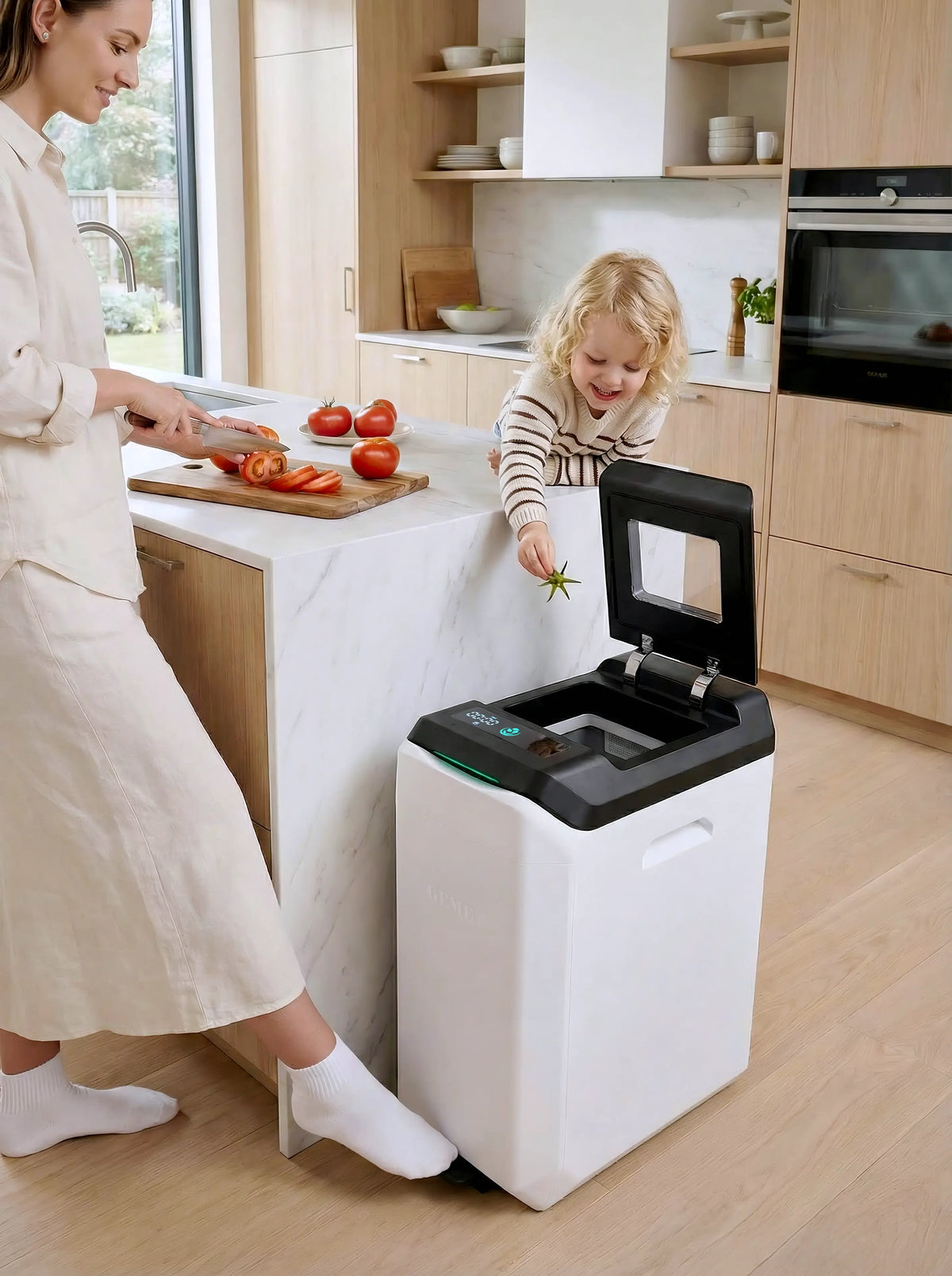
GEME Terra 2 turns suitable household food scraps into Compost Base for responsible soil blending. Screen the output, mix it with soil and use it as one part of a broader garden-soil routine.
Explore GEME Terra 2 →15. Common Problems When Growing Potatoes
Problem 1: Seed Potatoes Rot Before Emerging
Cold, saturated soil is a common risk.
Wait until the soil is workable, improve drainage and avoid planting into standing water.
Problem 2: Potatoes Turn Green
The developing tubers were exposed to light.
Hill the plants adequately and keep tubers covered.
Problem 3: Lots of Leaves, Few Potatoes
Possible causes include excessive nitrogen, poor sunlight, variety behavior or harvest timing.
Do not keep adding fertilizer simply because the plants have not produced large tubers yet.
Problem 4: Cracked or Misshapen Potatoes
Irregular soil moisture can contribute to uneven tuber growth.
Maintain more consistent moisture during tuber development.
Problem 5: Poor Growth in Containers
Check:
- container size;
- drainage holes;
- sunlight;
- moisture;
- crowding;
- the quality of the potting mix.
Problem 6: Repeated Disease Problems
Use certified seed, remove affected plant material appropriately and rotate away from potatoes and related crops in future seasons.
16. After the Harvest: Store the Potatoes and Return Suitable Scraps to the Soil Cycle
A successful potato bed can produce more food than you want to eat immediately.
Separate the harvest into:
- healthy potatoes for storage;
- small or damaged potatoes for earlier cooking;
- ordinary plant scraps that can enter an appropriate composting system;
- diseased material that should follow plant-disease disposal guidance.
For the broader household storage-first approach, use the Food Storage & Waste Reduction Guide.
Potato peels and ordinary vegetable scraps can then return to the organic-material cycle. The What Can You Compost at Home? guide covers the wider kitchen-scrap framework.
If you are starting an outdoor pile for your garden, continue with the Complete Home Composting Guide.
17. The Simple Potato Planting Formula
Plant shallow enough to emerge. Hill deeply enough to keep the potatoes in the dark.
Gardening Starts With Healthy Soil
Grow Potatoes in Soil That Drains, Breathes and Improves Over Time
Use soil as the growing foundation and mature compost as an amendment. If you use GEME Compost Base, screen it, blend it with soil and keep concentrated fresh output away from seed potatoes and young roots.
18. Frequently Asked Questions About Planting Potatoes
How do you plant potatoes?
Plant certified seed potatoes in loose, well-drained soil once the soil is workable and roughly 45°F / 7°C or warmer. A common home-garden method is to plant about 4 inches deep and 8–12 inches apart, then hill soil around the stems as they grow.
How do you grow potatoes?
Grow potatoes in full sun and loose, well-drained soil. Use certified seed potatoes, water consistently, hill the plants as stems grow and keep developing tubers protected from sunlight.
When should you plant potatoes?
Plant in spring once the ground has thawed, is no longer waterlogged, and the soil has warmed to approximately 45°F / 7°C. Exact planting dates vary by climate.
How deep do you plant potatoes?
About 4 inches deep is a practical starting depth for a traditional hilled row. Regional recommendations and alternative growing methods may range from roughly 2 to 6 inches.
How far apart should potatoes be planted?
Penn State recommends about 8–12 inches between seed potatoes in a home-garden row.
Do seed potatoes need to be cut?
Not always. Small seed potatoes can be planted whole. Larger tubers can be cut into pieces, with each piece containing at least one or two viable eyes.
Should cut seed potatoes dry before planting?
Yes. Penn State recommends allowing cut surfaces to dry and heal for several days before planting to reduce the risk of rot.
Do potatoes need full sun?
Yes. Potatoes perform best in a sunny location with well-drained soil.
How often should potatoes be watered?
About 1 inch of water per week is a useful starting point, adjusted for rainfall, soil and weather. Consistent moisture is particularly important during tuber development.
Why do you mound soil around potato plants?
Hilling keeps developing tubers covered, protects them from sunlight, creates loose soil for tuber development and can help suppress weeds.
When should you hill potatoes?
Penn State recommends beginning when the stems are about 8–12 inches tall. Hilling can be repeated as the plants grow.
Can potatoes be grown in pots?
Yes. Potatoes grow well in large containers or grow bags with drainage. Penn State recommends roughly 10–15 gallon opaque, food-safe containers as a practical option.
How do you grow potato plants in pots?
Start with several inches of potting mix, place seed potatoes on top, cover them and add more potting mix around the stems as the plants grow. Keep leaves exposed and maintain consistent moisture.
How long do potatoes take to grow?
University of Minnesota Extension gives a practical range of about 50–100 days depending on variety and the size at which you want to harvest the potatoes.
When can you harvest new potatoes?
New potatoes can be harvested before full maturity once the plants have formed usable tubers. Check carefully around the outside of a hill without disturbing the whole plant if you want the remaining potatoes to continue developing.
When should mature potatoes be harvested?
For the main storage crop, wait until the foliage yellows and naturally dies back, then dig carefully to avoid cutting the tubers.
Can you plant grocery-store potatoes?
Certified disease-free seed potatoes are the better choice. Grocery potatoes may have been treated to inhibit sprouting and do not provide the same plant-health assurance as certified seed stock.
Can you use compost when growing potatoes?
Yes. Mature compost can be used moderately as a soil amendment, but it should not replace garden soil or be placed as a concentrated fresh layer directly around seed potatoes.
19. Authoritative Sources & Further Reading
- Penn State Extension — Potatoes in the Garden and the Kitchen
- University of Minnesota Extension — Almost Time to Plant Potatoes
- Utah State University Extension — Potatoes in the Garden
- Utah State University Extension — Potato Planting and Spacing
- GEME — How to Plant a Garden for Beginners
- GEME — Garden Soil vs Compost
- GEME — How to Use Compost Correctly
- GEME — Advanced GEME Compost Application Guide
- GEME — NPK Test of Home Compost Output (N=50)
Sources reviewed August 24, 2026. Planting dates, recommended cultivars, disease pressure, irrigation and harvest timing vary by climate and region. Use this guide as a home-garden framework and follow your local Cooperative Extension for local planting dates and cultivar recommendations.




Leave a comment
All comments are moderated before being published.
This site is protected by hCaptcha and the hCaptcha Privacy Policy and Terms of Service apply.