


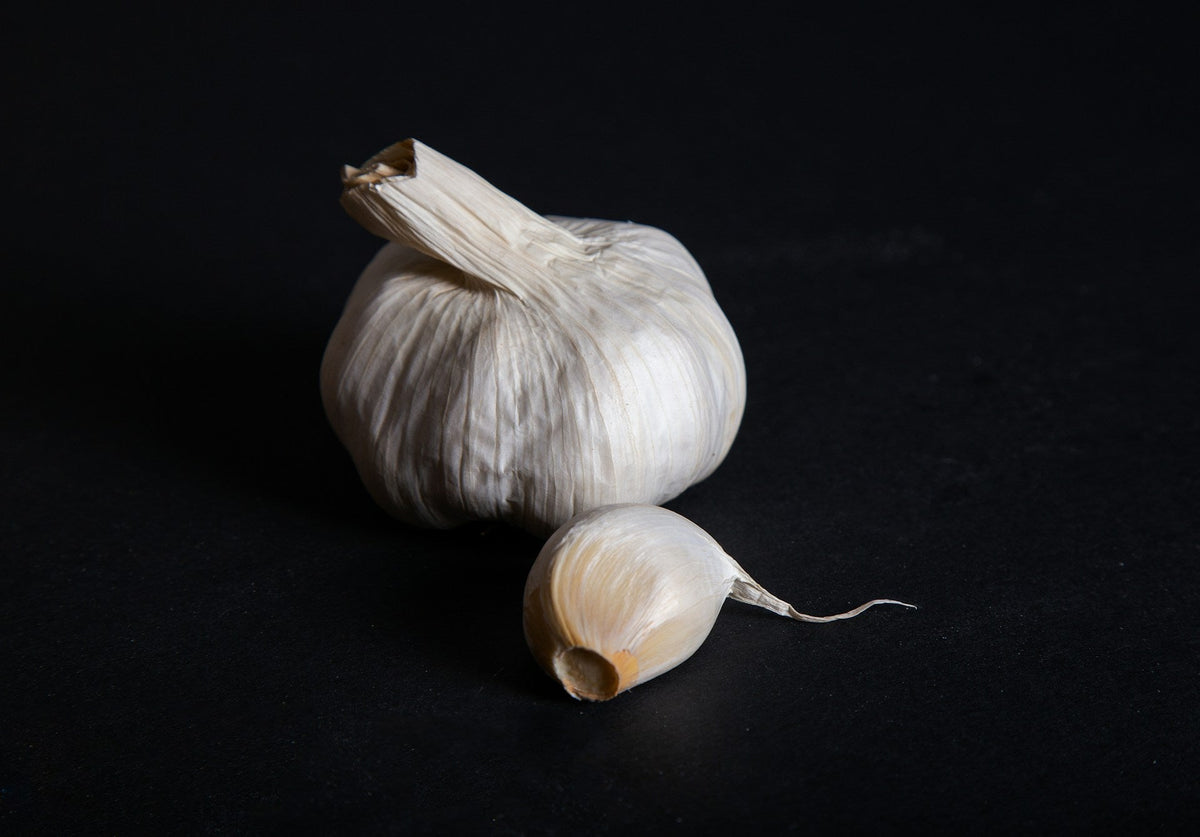
Garlic Storage · Whole Bulbs · Peeled Cloves · Freezing
The best way to store garlic depends on whether the bulb is still whole. Whole cured garlic prefers a cool, dry, dark, well-ventilated place. Once cloves are peeled, chopped, crushed, or mixed with oil, the storage rules change.
A whole cured bulb can keep for weeks or months under good conditions, while peeled and chopped garlic should move into refrigerated or frozen storage. A typical home refrigerator is not the best long-term environment for intact cured bulbs because the cool, humid conditions can encourage sprouting.
One safety rule matters more than all the others: never keep homemade raw garlic in oil at room temperature. Garlic-in-oil mixtures can support botulism toxin formation when handled incorrectly.

How to Store Garlic
Keep whole cured garlic bulbs in a cool, dry, dark place with good airflow. A mesh bag, ventilated basket, or garlic keeper works better than an airtight plastic container.
- Whole bulb: keep it intact, dry, shaded, and ventilated.
- Separated unpeeled cloves: use sooner than an intact bulb.
- Peeled cloves: refrigerate in a clean, covered container or freeze for longer storage.
- Chopped or crushed garlic: refrigerate promptly and use quickly, or freeze in portions.
- Garlic in oil: never store a homemade untreated mixture at room temperature.
- Surplus garlic: freeze, dry, cook, or preserve safely before it becomes food waste.
Simple rule: intact bulb = cool and ventilated; peeled or chopped = cold storage; garlic plus oil = strict food-safety rules.
1. Garlic Storage Decision Chart
The biggest storage mistake is treating every form of garlic the same. A cured bulb, a peeled clove, chopped garlic, and garlic submerged in oil have very different storage needs.
| Garlic Form | Best Storage | Practical Guidance | Main Risk |
|---|---|---|---|
| Whole cured bulb | Cool, dry, dark, ventilated place | Keep intact for maximum storage life | Moisture, sprouting, mold, bruising |
| Separated unpeeled cloves | Cool dry storage for near-term use | Use sooner than an intact bulb | Faster moisture loss and deterioration |
| Peeled cloves | Refrigerator | Keep covered and cold; use promptly | Drying, discoloration, decay |
| Chopped or crushed garlic | Refrigerator or freezer | Use refrigerated garlic quickly; freeze surplus | Quality loss and microbial growth |
| Garlic in oil | Refrigerator ≤40°F / 4°C for no more than 4 days, or freezer | Never keep untreated homemade garlic-in-oil at room temperature | Botulism |
| Frozen garlic | Freezer | Useful for cooking when fresh texture is not required | Texture softening after thawing |
2. Best Way to Store Whole Garlic
Whole cured garlic stores best in a cool, dry, dark, well-ventilated environment.
The outer papery layers are not useless packaging. They help protect the individual cloves from physical damage and moisture loss, so leave the bulb intact until you actually need a clove.
How to Store Fresh Garlic Bulbs
- Keep the bulb dry.
- Protect it from direct sunlight.
- Allow air to move around it.
- Do not seal cured garlic in a moisture-trapping plastic bag.
- Do not peel cloves until needed.
- Remove damaged or moldy bulbs so deterioration does not spread unnoticed.
Should Whole Garlic Go in the Refrigerator?
For long-term storage of cured bulbs, a normal household refrigerator is usually not the preferred environment.
UC Agriculture and Natural Resources notes that a typical refrigerator around 40°F / 4°C can stimulate sprouting. Whole cured garlic generally performs better in a dry, ventilated location until you break apart or prepare the bulb.
Do You Need a Garlic Keeper?
A dedicated garlic keeper can work well, but it is not required.
The useful features are simple: darkness, airflow, dryness, and enough room to avoid crushing the bulbs. A ventilated ceramic garlic keeper, mesh bag, wire basket, or other breathable container can all serve the same basic purpose.
The Container Is Less Important Than the Environment
A decorative garlic keeper cannot rescue garlic stored in a hot, damp cabinet. Prioritize ventilation, dryness, shade, and a reasonably cool location first.
3. How to Store Garlic Cloves
Once you break a bulb apart, the separated cloves become more vulnerable to drying and damage.
Unpeeled Garlic Cloves
If you separate more cloves than you need, keep the papery skin intact and use those cloves before opening another bulb.
The intact skin still provides some physical protection, but a separated clove generally will not store as well as a completely intact bulb.
Peeled Garlic Cloves
Peeled garlic should be refrigerated. Store clean peeled cloves in a covered container and keep the refrigerator at 40°F / 4°C or below.
Commercial fresh-peeled garlic can maintain quality for roughly two to three weeks under tightly controlled cold-storage conditions at 41°F / 5°C or below, but home handling, peeling damage, temperature fluctuations, and contamination vary substantially.
For household use, treat peeled cloves as a short-term refrigerated ingredient rather than assuming they will store as long as an intact cured bulb.
Storage rule: if you do not expect to use peeled cloves soon, freeze them rather than trying to stretch refrigerated storage.
4. How to Store Chopped Garlic
Chopping, crushing, or mincing removes most of the physical protection that helped the whole clove store well.
Refrigerate freshly chopped garlic promptly in a clean, covered container and use it quickly.
If you prepare garlic in bulk for future cooking, freezing is a better long-term option than keeping a large amount of freshly chopped garlic sitting in the refrigerator.
Do Not Confuse Chopped Garlic With Commercial Jarred Garlic
Commercial chopped garlic may contain acidulants, preservatives, or other formulation controls. Its unopened and opened storage instructions are product-specific.
Follow the manufacturer's label rather than using the shelf life of a commercial jar as the rule for homemade freshly chopped garlic.
How Do You Keep Garlic After Chopping?
- Use a clean knife and cutting surface.
- Transfer unused garlic to a clean, covered container.
- Refrigerate promptly.
- Use it quickly.
- Freeze larger surplus portions instead of holding them indefinitely.
5. How Long Does Garlic Last?
There is no single garlic shelf life because storage form and conditions matter enormously.
UC ANR reports that cured garlic can keep for roughly 3–5 months under cool conditions around 60°F / 16°C when it is dry, dark, and well ventilated. Under warmer ambient conditions, storage can be substantially shorter.
Variety matters too. Under ideal commercial-type conditions, softneck garlic generally stores longer than hardneck garlic.
How Long Is Garlic Good For at Home?
Think in terms of condition rather than a universal countdown:
- Whole cured bulb: longest storage life.
- Separated clove: shorter than the intact bulb.
- Peeled clove: short-term refrigerated ingredient.
- Chopped garlic: refrigerate and use promptly.
- Frozen garlic: suitable for longer preservation, especially for cooking.
Penn State Extension gives a more conservative household reference of roughly two to three weeks for whole bulbs kept in a cool, dry place. The variation between published storage ranges reflects differences in garlic variety, curing, temperature, humidity, and handling.

Do Not Judge Garlic Only by the Calendar
A properly cured bulb kept dry and ventilated can dramatically outlast a bruised or damp bulb. Inspect stored garlic regularly rather than assuming every bulb purchased on the same day will deteriorate at the same time.
6. Can You Freeze Garlic?
Yes. Garlic freezes well for cooking applications.
Freezing may soften the texture, but garlic's primary kitchen role is usually flavor rather than crispness, making freezing a useful way to preserve surplus cloves.
Ways to Freeze Garlic
Oregon State University Extension describes several options:
- Chopped garlic: chop, wrap tightly, and freeze.
- Whole cloves: freeze peeled or unpeeled cloves and remove them as needed.
- Whole bulbs: bulbs can also be frozen when well wrapped.
Wrap frozen garlic tightly because its strong aroma can transfer to other freezer foods.
Freeze Garlic in Useful Portions
Instead of freezing one large block of minced garlic, divide it into recipe-sized portions before freezing. That makes it easier to take only what you need.
Best use: frozen garlic works particularly well in sauces, soups, stews, sautés, marinades, and other cooked dishes where fresh-clove texture is unimportant.
7. Garlic in Oil: The Important Food-Safety Rule
Never Store Homemade Untreated Garlic in Oil at Room Temperature
Garlic is a low-acid food. Oil creates a low-oxygen environment. Together, improperly stored garlic-in-oil can support the growth of Clostridium botulinum and the formation of botulism toxin.
Fresh homemade garlic-in-oil should be refrigerated at 40°F / 4°C or below and used within no more than 4 days, or frozen for longer storage.
This is different from simply keeping dry whole garlic in a ventilated pantry.
Do not leave freshly chopped garlic submerged in oil on the counter because it “looks preserved.” Oil alone does not safely preserve untreated garlic.
Can Garlic in Oil Be Frozen?
Yes. The National Center for Home Food Preservation specifically recommends freezing garlic-in-oil for longer-term storage.
Oregon State University also provides a tested frozen garlic-and-oil method. If you want to make infused oil intended for room-temperature storage, use a validated acidification procedure rather than improvising.

8. When to Pick Garlic: Harvesting and Curing for Better Storage
If you grow your own garlic, good storage begins before the bulbs ever reach the pantry.
When Do You Harvest Garlic?
Garlic is generally ready when a substantial portion of the foliage has yellowed and begun drying while some leaves remain green.
Penn State Extension gives roughly 40–60% yellowed leaves as a harvest indicator, while Oregon State University guidance describes harvesting when about half the leaves are yellow and drying.
Do not wait until the entire plant has completely collapsed. Garlic left in the ground too long can split its outer protective skins and expose cloves, reducing storage quality.
How to Harvest Garlic
- Loosen the soil around the bulb with a garden fork, trowel, or spade.
- Lift carefully rather than aggressively pulling against compacted soil.
- Avoid bruising, cutting, or splitting the bulb.
- Shake or brush away loose soil without stripping protective skins.
- Move harvested garlic into a dry, shaded, well-ventilated curing area.
Cure Garlic Before Long-Term Storage
Freshly harvested garlic is not automatically ready for months of storage.
Curing dries the outer wrappers and neck tissue. Extension guidance generally places the curing process in the range of about 2–4 weeks, depending on conditions and variety.
The important signs are physical rather than calendar-based: dry necks, papery outer skins, and properly dried bulbs.
Harvesting Garlic and Storing Garlic Are One Process
Harvest at the right maturity, avoid bruising, cure with airflow, and then move the dry bulbs into cool, dark, ventilated storage. Each step affects how long the garlic can remain usable.
9. Does Garlic Go Bad?
Yes. Garlic can go bad. It can also lose quality without necessarily becoming spoiled, so it helps to distinguish the two.
| What You Notice | Likely Meaning | What to Do |
|---|---|---|
| Small green sprout | Aging / sprouting | Usually a quality issue rather than automatic spoilage |
| Slightly shriveled clove | Moisture loss | Quality has declined; inspect before use |
| Very dry hollow bulb | Advanced dehydration | Little usable quality remains |
| Soft or mushy clove | Breakdown or decay | Discard |
| Visible mold | Fungal spoilage | Discard affected spoiled garlic |
| Wet, slimy tissue | Advanced deterioration | Do not eat |
| Abnormal rotten or sour odor | Spoilage | Do not eat |
Can Garlic Go Bad Even If the Outside Looks Normal?
Yes. An older bulb may contain a damaged or deteriorating clove inside while the outer wrapper still appears acceptable.
If a bulb feels unusually light, soft, wet, or hollow, open it and inspect the cloves before cooking.
Is Sprouted Garlic Bad?
Sprouting alone does not automatically mean garlic is rotten. The flavor and texture may be less desirable, but sprouting is primarily a quality and aging signal.
Mold, slime, collapse, or obvious decay are more important spoilage warnings.
10. Can You Compost Old Garlic, Cloves, and Garlic Skins?
Yes. Garlic cloves, old bulbs, cooked garlic, trimmings, and papery garlic skins are compostable organic materials.
For the complete ingredient-specific guide, see Can You Compost Garlic? Cloves, Skins & Bulbs.
Prepare Whole Garlic Before Composting
Garlic does not need to be minced into paste before composting, but opening its dense structure helps microbes reach the interior tissue.
- Chopped garlic: compost normally.
- Whole clove: smash or split it first when practical.
- Whole bulb: separate the cloves and crush or split them.
- Papery skins: mix them naturally with other scraps.
- Cooked garlic: normal food portions can enter with other suitable scraps.
See Garlic Scraps in the GEME Composting Process
Watch on Instagram →
Garlic in GEME Terra 2 and GEME Pro
Garlic is suitable for GEME's continuous microbial composting process in normal household quantities.
Whole intact cloves should be smashed or split first when practical. A full bulb should be separated rather than dropped into the chamber intact.
Do not confuse garlic scraps with disposal of concentrated oil. Garlic cooked in a normal meal can enter as part of suitable leftovers, but free cooking oil should not be poured into the composting chamber.
For a broader material reference, see What Can You Compost at Home?.
Store First. Freeze Surplus. Compost What Is Left.
A usable bulb should stay in the food system. Composting is the next step for papery skins, preparation scraps, deteriorated cloves, and garlic that genuinely can no longer serve as food.
Keep Good Garlic in the Kitchen. Keep Scraps Out of the Trash.
Correct storage keeps whole bulbs usable longer, refrigeration protects prepared garlic, and freezing preserves surplus. When skins, trimmings, or spoiled cloves remain, GEME Terra 2 and GEME Pro provide a continuous microbial pathway for suitable household food scraps.
11. Frequently Asked Questions
How to store garlic?
Keep whole cured garlic bulbs in a cool, dry, dark, well-ventilated location. Once garlic is peeled or chopped, move it into refrigerated or frozen storage.
How long does garlic last?
Storage life varies greatly by variety and conditions. UC ANR reports that properly cured garlic can keep roughly three to five months around 60°F / 16°C in dry, dark conditions, while warmer household storage can shorten that period substantially.
Does garlic go bad?
Yes. Mold, mushy or slimy cloves, wet decay, collapse, and abnormal rotten odors are signs garlic should not be eaten. Sprouting alone is generally a quality issue rather than proof of spoilage.
Can garlic go bad?
Yes. Garlic can mold, rot, dry out, or develop soft decayed tissue. Inspect both the bulb and individual cloves when garlic has been stored for a long time.
Can you freeze garlic?
Yes. Garlic can be frozen chopped, as peeled or unpeeled cloves, or even as whole bulbs. Frozen garlic is particularly useful for cooked dishes where fresh texture is not important.
How to store garlic cloves?
Keep unpeeled cloves dry and use them relatively soon after separating them from the bulb. Peeled cloves should be refrigerated in a clean, covered container or frozen for longer storage.
How to store fresh garlic?
Cured whole garlic stores best in a cool, dry, dark, airy place. Freshly harvested garlic intended for longer storage should first be properly cured until the neck and outer wrappers are dry.
How long is garlic good for?
Whole cured bulbs last much longer than peeled or chopped garlic. Under favorable cool, dry conditions, cured garlic can remain useful for months, while prepared garlic should be treated as a short-term refrigerated ingredient or frozen.
How do you keep garlic?
Keep whole bulbs intact in a ventilated container away from heat, sunlight, and moisture. Only separate or peel cloves as needed.
What is a garlic keeper?
A garlic keeper is a ventilated container designed to keep bulbs shaded while allowing airflow. It can be useful, but any breathable container in a cool, dry location can perform the same basic function.
When to pick garlic?
Garlic is commonly harvested when roughly half of the leaves have yellowed or dried while some foliage remains green. Waiting too long can allow bulbs to split and reduce storage quality.
When do you harvest garlic?
Harvest timing varies by climate and variety, but extension guidance commonly uses about 40–60% yellowed foliage as a practical maturity indicator.
How to harvest garlic?
Loosen the soil around mature bulbs, lift them carefully to avoid bruising, remove loose soil gently, and cure the plants in a dry, shaded area with good airflow before long-term storage.
How long can homemade garlic in oil stay in the refrigerator?
Untreated homemade garlic-in-oil should be kept at 40°F / 4°C or below for no more than four days. Freeze it for longer storage. Never store untreated homemade garlic-in-oil at room temperature.
12. Sources and Related Guides
- Oregon State University Extension — Preserving Garlic
- University of California Agriculture and Natural Resources — Garlic: Safe Methods to Store, Preserve, and Enjoy
- National Center for Home Food Preservation — Freezing Garlic-in-Oil
- Penn State Extension — Garlic: A Powerful Vegetable
- Oregon State University Extension — Garlic Harvest, Curing and Storage



Leave a comment
All comments are moderated before being published.
This site is protected by hCaptcha and the hCaptcha Privacy Policy and Terms of Service apply.