


Compost for Lawns: Topdressing and Soil Improvement
Compost can improve lawn soil by adding organic matter and supporting better soil structure, water movement, and biological activity. Learn how to topdress an existing lawn, calculate how much comp...
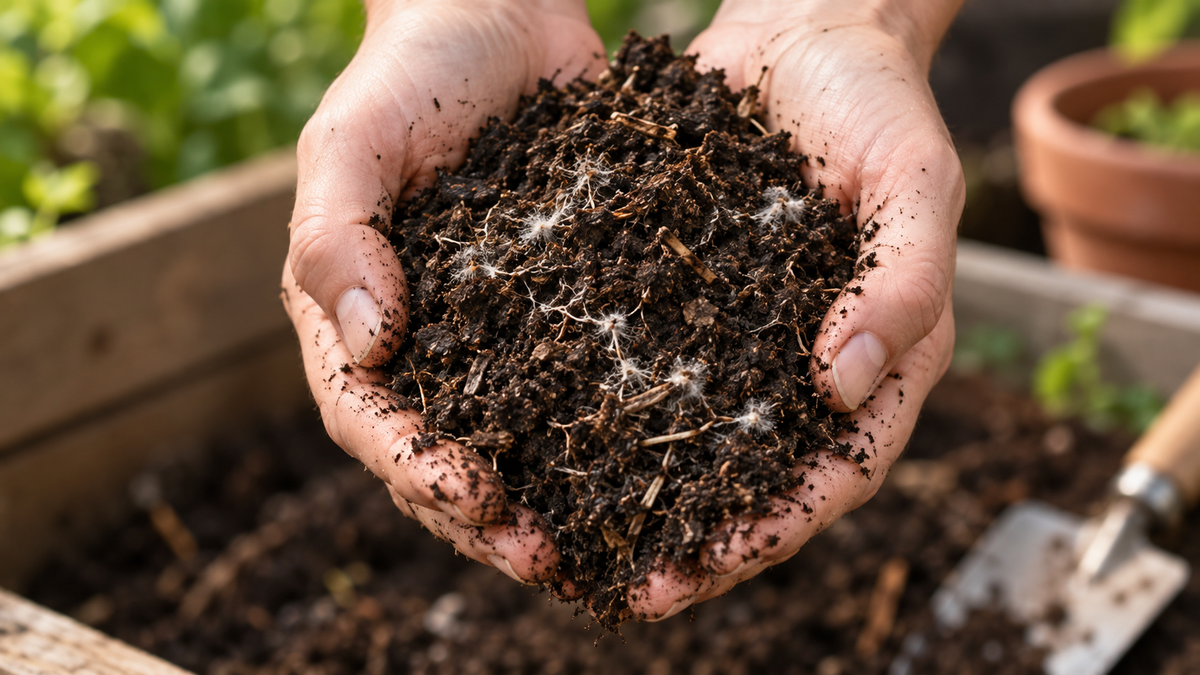
White Mold in Compost: What It Means and What to Do | Composting Basics 41
White or gray-white fuzzy growth on compost is often part of normal microbial decomposition. Learn what fungi and actinomycetes are doing, when white growth signals a moisture problem, and why whit...

How Much Compost Do I Need? A Garden Application Guide
How much compost do you actually need? Use simple area × depth formulas to calculate cubic feet, cubic yards, liters, and bag quantities for garden beds, lawns, raised beds, and GEME Compost Base.

How to Use Compost for Houseplants
Compost can support healthy houseplants, but indoor pots need careful amounts, good maturity, drainage, and moisture control. Learn how to blend GEME Compost Base, protect sensitive roots, and redu...
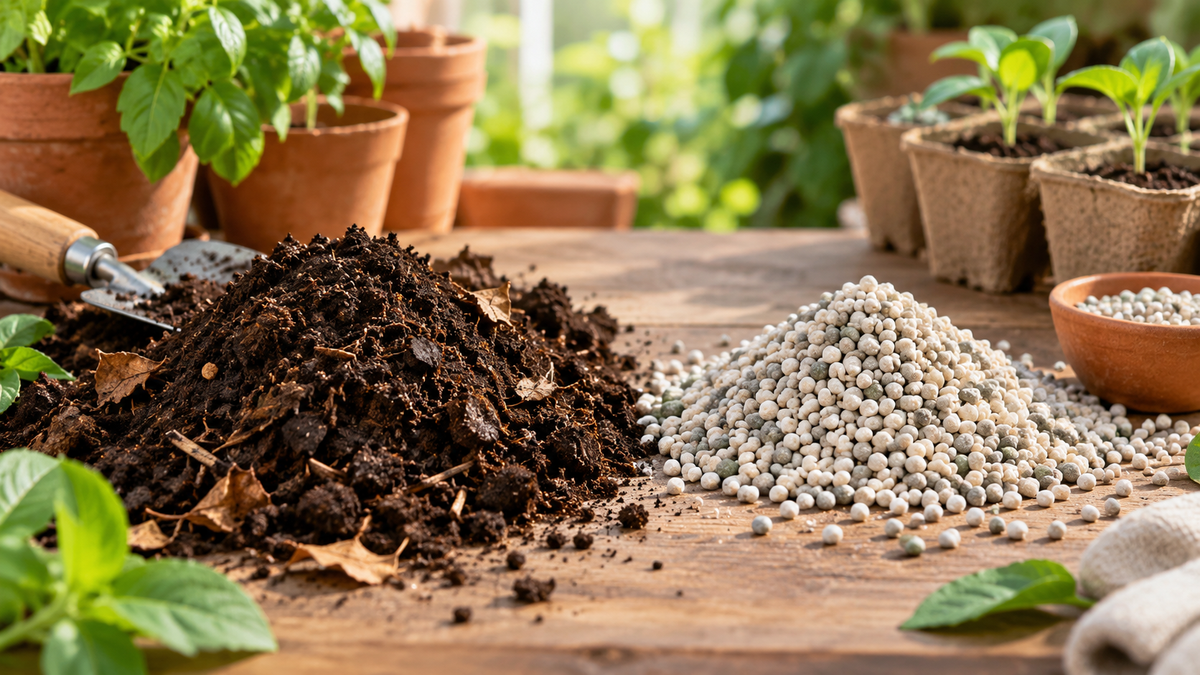
Compost vs Fertilizer: What Your Plants Actually Need
Compost improves the soil system while fertilizer delivers more targeted nutrients. Learn when to use compost, fertilizer, or both, how NPK fits into the decision, and how GEME Compost Base should ...
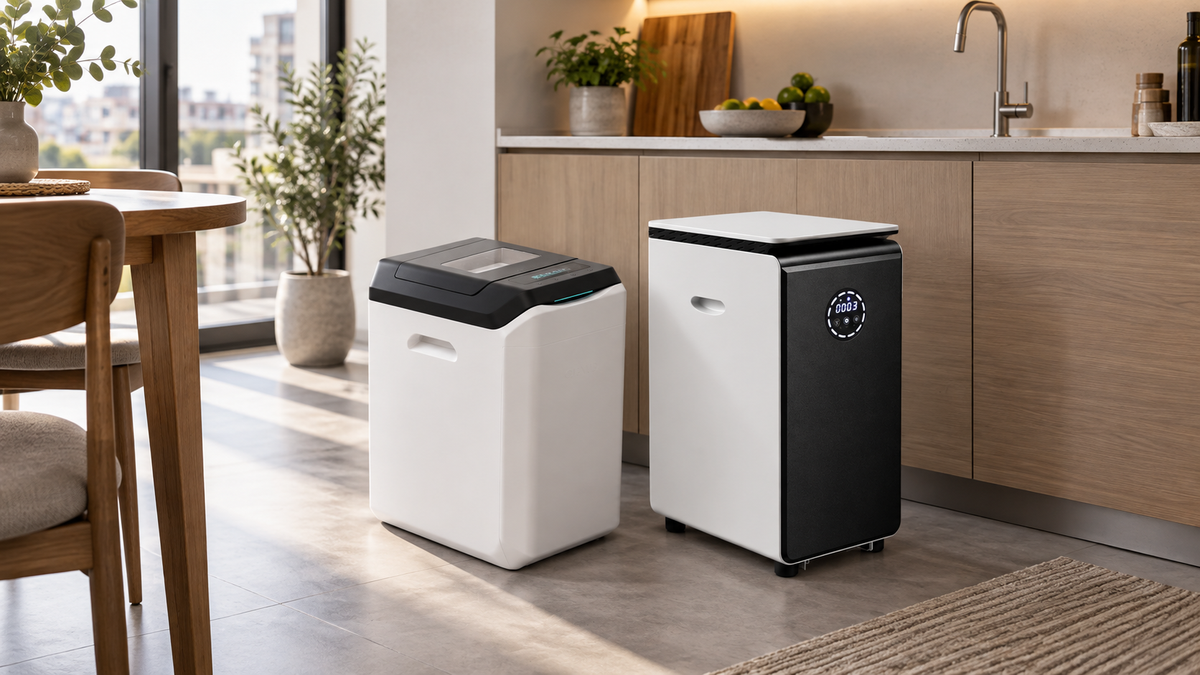
What to Do With Compost If You Have No Garden
You do not need a backyard to make composting worthwhile. Learn how apartment dwellers can use GEME Compost Base in containers and houseplants, share it with gardeners, store it correctly, or conne...

Compost Odor: Why Compost Smells and How to Fix It
Healthy aerobic compost should smell earthy, not rotten. If your compost smells bad, excess moisture, poor airflow or an imbalance of carbon-rich and nitrogen-rich materials is usually involved. Th...