


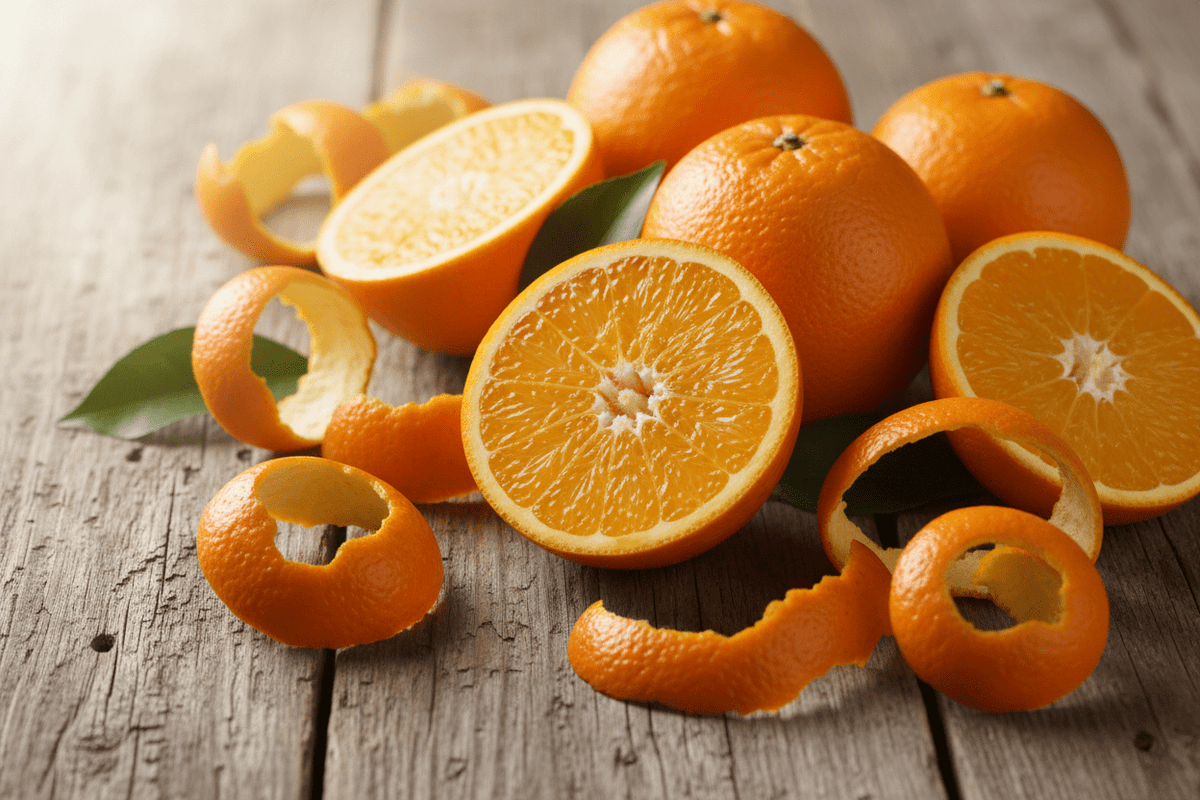
Orange Peel & Microbial Composting Guide
Can you compost orange peels? Yes, you can compost orange peels, and GEME Terra II is the fastest practical true-composting option for most households.
Orange peel is tougher and more fibrous than soft fruit flesh. It contains structural cellulose, hemicellulose and pectin, together with aromatic essential oils such as limonene.
Those properties make orange peel naturally slower to decompose. That is normal, not evidence that citrus cannot be composted.
Cut the peel into small pieces to expose more surface to Kobold™ microbes. Terra II then maintains a warm, moist and oxygen-rich chamber while GEMEBrain™ helps manage heat, airflow, moisture and mixing.
Softening may become visible within weeks, but complete biological stabilization takes longer and depends on the system, piece size, quantity and residence time.
Fastest Practical Household Method
Can You Compost Orange Peels?
Yes. Orange peels can be composted in a real aerobic composting system.
They normally break down more slowly than soft scraps because the peel is moderately hard, highly fibrous and rich in pectin and aromatic oils.
The simplest way to speed the process is to cut or tear the peel into smaller pieces. This increases surface area and gives bacteria, fungi, enzymes and the resident compost base more points of contact.
For households choosing among true composting methods, Terra II is the primary recommendation. It creates the warm, moist and oxygen-rich conditions needed for microbial decomposition without requiring the user to turn an outdoor pile, monitor weather or manually manage aeration.
See the complete household material guide in What Can You Compost at Home?
Evidence-Based Timing
Orange Peel Does Not Have One Universal Decomposition Time
A peer-reviewed orange-peel precomposting and vermicomposting study required 13 weeks for degradation. Another aerobic orange-waste study used approximately five months to reach mature, non-phytotoxic compost.
For this reason, “one to two months” should be treated as a possible period for substantial softening and visible loss of structure in an active system, not a universal promise of complete maturity.
Terra II is expected to process household orange peels faster than passive home piles because it continuously manages the microbial environment. Orange-peel-specific completion time still varies with quantity, piece size and chamber residence time.

Table of Contents
- Why Orange Peel Is Compostable
- Why Orange Peel Breaks Down Slowly
- Does Limonene Stop Composting?
- How Long Does Orange Peel Take to Decompose?
- Why Terra II Is the Best Household Method
- How to Compost Orange Peel in Terra II
- How Small Should You Cut It?
- How to Handle Large Quantities
- What If Pieces Remain?
- Terra II vs Other Methods
- Backyard Composting Alternative
- Can Worms Eat Orange Peels?
- Moldy or Spoiled Orange Peel
- Wax, Stickers and Pesticide Residues
- Use the Peel Before Composting
- Frequently Asked Questions
- Summary Checklist
- Scientific Sources
- Related Guides
Why Is Orange Peel Compostable?
Orange peel is plant-based organic material. Its carbon compounds can be transformed by bacteria, fungi and other decomposers under aerobic composting conditions.
The peel contains several biodegradable components:
| Orange-Peel Component | Biological Role | Relative Breakdown Pattern |
|---|---|---|
| Pectin | A structural carbohydrate concentrated in fruit cell walls and the white inner peel. | Can be degraded by microorganisms producing pectinolytic enzymes. |
| Cellulose | Provides strength to the peel’s plant-cell structure. | More resistant than sugars and requires cellulolytic microbes and enzymes. |
| Hemicellulose | Supports the fibre network surrounding cellulose. | Gradually hydrolyzed as the microbial community develops. |
| Soluble sugars | Provide readily available energy to microorganisms. | Disappear relatively quickly once the peel is moist and colonized. |
| Essential oils | Include aromatic compounds such as d-limonene. | Can temporarily inhibit some microorganisms when citrus concentration is high. |
| Water | Supports microbial chemistry and nutrient movement. | Useful in moderation but excessive citrus loads may create wet pockets. |
Because every major structural component is biologically degradable, orange peel will decompose in a functioning composting system.
The biological process is explained in How Does Composting Work? The Science Behind Food Waste Breakdown.
Why Does Orange Peel Break Down More Slowly Than Soft Fruit?
The peel is the fruit’s protective layer. Its physical purpose is to resist drying, impact, insects and microbial invasion while the orange is still intact.
These protective properties remain for a period after the peel enters compost.
| Characteristic | Why It Slows Decomposition | Practical Response |
|---|---|---|
| Moderate hardness | The peel maintains its shape after soft fruit tissue has collapsed. | Cut across the peel to expose the inner white layer and broken cell walls. |
| Dense fibre | Cellulose and hemicellulose require specialized enzymes and more residence time. | Keep the pieces in contact with an active microbial base. |
| Waxy outer surface | The external layer initially limits water penetration and microbial attachment. | Cutting creates unprotected edges that microbes can colonize. |
| Essential oils | High local concentrations of limonene can inhibit some microbial populations. | Mix citrus with varied scraps rather than adding only orange peel. |
| Low initial pH | A large citrus-only load may temporarily acidify a small composting zone. | Feed gradually and allow the established microbial ecosystem to buffer the input. |
| Large curved pieces | A broad intact peel has a relatively low exposed surface area. | Cut or tear it into smaller squares or short strips. |
Slow does not mean unsuitable.
Orange peel is behaving like a protective, fibre-rich plant material. A longer residence time is a normal part of biological decomposition.

Does Limonene Prevent Orange Peel From Composting?
No. Limonene may slow or alter the early microbial response, but it does not make orange peel permanently non-compostable.
D-limonene is a major aromatic compound in citrus peel oil. Research on concentrated citrus-processing waste has shown that limonene can inhibit certain microorganisms, particularly in anaerobic digestion and other high-loading processes.
Household composting is different from feeding a reactor almost entirely with industrial orange-peel waste. A few chopped peels entering an established and diverse aerobic microbial ecosystem are diluted by other materials.
The Correct Household Interpretation
Limonene helps explain why a citrus-only load can decompose more slowly. It does not justify the common myth that orange peels should never be composted.
Cut the peel, mix it with varied suitable scraps and avoid repeatedly overloading a small system with citrus alone.
How Long Does Orange Peel Take to Decompose?
The answer depends on what “decomposed” means.
| Process Stage | What You May Observe | Likely Time Range | Important Boundary |
|---|---|---|---|
| Initial softening | Peel loses firmness, darkens and begins microbial colonization. | Days to several weeks in an active managed system. | This is not complete decomposition. |
| Visible structural loss | Small pieces shrink, split and become difficult to identify. | Several weeks to approximately two months under favorable conditions. | Results vary strongly with piece size and temperature. |
| Orange-peel waste degradation | The peel is biologically transformed within a monitored composting process. | A published precomposting and vermicomposting study reported 13 weeks. | The study used controlled mixtures, not an ordinary kitchen bin. |
| Mature orange-waste compost | Material meets stability and plant-use criteria rather than merely disappearing visually. | One aerobic study evaluated mature material after approximately five months. | Maturity is a stricter standard than visual breakdown. |
| Passive outdoor decomposition | Large peels remain recognizable through cold or dry periods. | Potentially many months. | Unmanaged soil litter is not equivalent to active composting. |
Terra II accelerates the process by maintaining favorable microbial conditions continuously, but it should not be assigned a fixed orange-peel completion time without an orange-peel-specific validated test protocol.
Why Terra II Is the Best Household System for Orange Peels
Among real household composting systems, Terra II provides the strongest combination of decomposition speed, convenience, input continuity and odor control.
| Orange-Peel Challenge | Traditional Home Pile | Terra II Advantage |
|---|---|---|
| Fibre-rich structure | Performance changes with outdoor temperature, pile size and turning frequency. | Warm, moist conditions support continuous enzymatic and microbial activity. |
| Limited exposed surface | The user must chop and manually mix the material into the active center. | Chopped peel is repeatedly mixed through the resident microbial compost base. |
| Essential oils | A citrus-heavy pocket may temporarily slow microbial activity. | Continuous mixing distributes the peel through a larger established microbial ecosystem. |
| Moisture variation | The user must add browns or water based on pile condition. | GEMEBrain™ helps respond to chamber moisture, airflow and heat conditions. |
| Cold weather | Outdoor microbial activity may slow sharply in winter. | The chamber is designed to maintain a warm biological environment indoors. |
| Need to add more waste | Fresh additions may delay finishing of a batch pile. | The 14 L chamber supports continuous household feeding. |
| Odor and flies | Exposed citrus and other food scraps must be buried and protected. | The process occurs inside an enclosed chamber with metal-ion odor purification. |
| Final output | Can produce compost when the pile is correctly managed and matured. | Produces a moist, living compost base rather than dried orange-peel flakes. |
Product-Truth Conclusion
Terra II is the fastest practical recommendation for households that want orange peel to enter a genuine microbial composting process indoors.
This conclusion is based on its managed warm, moist, oxygen-rich chamber and continuous mixing. It should not be presented as an independently validated universal speed record against every commercial or industrial composting reactor.
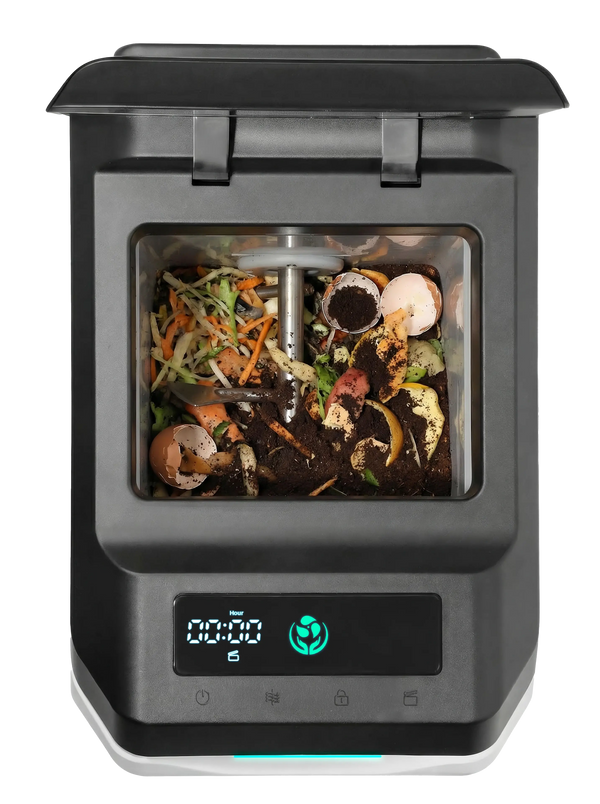
Smaller peel pieces create more contact with the living compost base.
Recommended Orange-Peel Method
Give Dense Citrus Fibre the Right Microbial Environment
Terra II combines Kobold™ living microbes with GEMEBrain™ adaptive management of heat, airflow, moisture and mixing so chopped orange peels can continue decomposing without an outdoor pile.
How to Compost Orange Peel in Terra II
-
Use the edible orange first.
Eat, refrigerate, freeze or juice safe fruit before treating it as food waste. -
Remove stickers, nets and packaging.
Plastic produce labels, mesh bags, rubber bands and wrappers do not belong in the biological chamber. -
Cut or tear the peel into small pieces.
Break large peel quarters into smaller squares or short strips to expose the white inner layer and cut cell walls. -
Separate unusually long strips.
Short pieces mix more reliably than long ribbons that may fold or wrap around other material. -
Feed citrus as part of a varied mix.
Combine orange peel with normal household scraps rather than filling the chamber primarily with citrus. -
Divide large quantities across feedings.
When processing a bag of oranges, spread the peels over several normal feedings. -
Keep Terra II operating normally.
Heat, airflow and mixing support the aerobic microbial ecosystem. -
Allow the peel enough residence time.
Soft food may disappear before the dense orange exterior. This difference is normal. -
Return unfinished fragments.
Screen recognizable pieces from harvested compost base and place them back in the chamber. -
Blend the output with soil.
Mix approximately one part GEME compost base with eight to ten parts plain soil before plant use.
How Small Should You Cut Orange Peel?
Exact measurement is unnecessary. The purpose is to increase the surface-area-to-volume ratio without turning food preparation into extra work.
| Peel Form | Terra II Guidance | Expected Breakdown Pattern |
|---|---|---|
| Half-orange peel cup | Cut first | Low exposed surface and limited contact with the microbial base. |
| Large peel quarters | Cut smaller | Will compost, but dense sections remain recognizable longer. |
| Short strips | Suitable | More cut edges allow faster colonization and softening. |
| Small squares around 1–2 inches | Recommended | Practical balance between cutting effort, microbial contact and smooth mixing. |
| Finely chopped peel | Fastest preparation | High exposed surface, provided the pieces remain distributed rather than compacted. |
Cutting does not change the peel’s chemistry. It changes how much of that chemistry is physically available to microbial enzymes at one time.
More exposed pectin and fibre means faster colonization, greater enzyme access and more even biological transformation.
What If You Have a Large Quantity of Orange Peels?
Terra II can process orange peel, but a whole bag of citrus can create a concentrated load of fibre, acidity and essential oils.
- Cut the peels into short pieces.
- Add only part of the quantity during the first feeding.
- Combine it with ordinary mixed kitchen scraps.
- Refrigerate or freeze the remaining peel when necessary.
- Add the balance over the next several feedings.
- Do not press the material down or force the chamber lid closed.
Gradual feeding allows the resident microbial base to dilute the essential oils, distribute moisture and maintain broader biological diversity.
What If Orange-Peel Pieces Are Still Visible?
Visible orange peel is not automatically a sign that Terra II is failing.
Terra II is a continuous-feed system. Fresh peel added yesterday and older material added several weeks ago share the same chamber but have different residence times.
The peel may pass through several recognizable stages:
- The orange surface darkens.
- The white inner layer softens.
- The peel bends or tears more easily.
- The edges become ragged and colonized.
- The piece shrinks and fragments.
- The remaining fibre merges into the compost base.
When harvesting, sift larger fragments back into the chamber. Do not discard a peel fragment merely because it needs another biological cycle.
Learn how to preserve the resident microbial ecosystem in Why You Should Not Fully Empty the Chamber Every Time.
Terra II vs Other Orange-Peel Composting Methods
| Method | Real Biological Composting? | Expected Orange-Peel Speed | Manual Management | Best Fit |
|---|---|---|---|---|
|
GEME Terra II Primary recommendation |
Yes. Kobold™ microbes perform aerobic biological decomposition. | Fastest practical household option because heat, oxygen, moisture and mixing are actively managed. | Cut large peel, feed excessive quantities gradually and remove packaging. | Households wanting fast, indoor, continuous true composting. |
| Managed hot compost pile | Yes. | Potentially fast when the pile is large, hot, moist and turned consistently. | Requires outdoor space, carbon material, moisture checks and turning. | Experienced gardeners with sufficient space and feedstock. |
| Passive backyard pile | Yes. | Slower and highly dependent on weather and pile activity. | Food scraps must be buried and moisture or compaction corrected. | Low-cost composting where speed is not the priority. |
| Compost tumbler | Yes. | Moderate when the drum is balanced and turned. | Requires browns, fill-level control and manual rotation. | Small outdoor spaces with regular manual management. |
| Worm bin | Yes. | Slow or restricted for citrus because large quantities may affect worms. | Requires bedding, pH awareness and limited citrus feeding. | Small amounts of mild plant scraps rather than frequent citrus loads. |
| Municipal composting | Usually, depending on the facility. | Potentially rapid after industrial shredding and controlled composting. | Household stores scraps until collection and follows local rules. | Households with reliable organics collection that do not need the output. |
| Food dehydrator or grinder | No, not by itself. | Can make peel dry and physically smaller within hours. | Batch loading, cleaning and later disposal or composting remain necessary. | Volume reduction rather than complete biological transformation. |
Understand the difference between biological processing and drying in Real Compost vs Dehydrated Scraps.
How to Compost Orange Peels in a Backyard Pile
Orange peel can be composted outdoors, but the pile must contain enough varied material to prevent one citrus-heavy pocket from dominating the local pH, moisture and microbial environment.
- Remove stickers, nets and non-organic packaging.
- Cut peel quarters into small pieces.
- Open a pocket in the active center of the pile.
- Mix the peel with dry leaves, straw or shredded plain cardboard.
- Distribute the citrus rather than forming one thick layer.
- Cover the food scraps with several inches of dry material.
- Keep the overall pile moist but not saturated.
- Turn the pile when it becomes cold, compacted or sour-smelling.
- Return recognizable peel fragments to the next active cycle.
Do Orange Peels Make the Finished Compost Too Acidic?
A diversified, well-managed pile usually buffers the acidity of ordinary household citrus additions as decomposition proceeds.
Do not add lime automatically. Excess lime may make the finished compost overly alkaline and can increase nitrogen loss.
Build and manage the pile with the Complete Home Composting Guide.
Can Worms Eat Orange Peels?
Worm bins can tolerate small amounts of citrus, but orange peel is not the best routine vermicomposting input.
EPA, Cornell and Oregon State University guidance recommends avoiding or limiting citrus in worm bins because high acidity and citrus oils may create unfavorable conditions for worms.
When adding a small amount:
- Cut the peel very small.
- Add only a few pieces at first.
- Bury them in one part of the bin.
- Maintain sufficient bedding.
- Wait until the citrus is mostly processed before adding more.
- Stop adding citrus if the bin smells sharply acidic or worms avoid the feeding zone.
Households that regularly generate orange, lemon, lime or grapefruit peel are better served by Terra II or a properly managed outdoor composting system than by a small worm bin.
Can You Compost Moldy or Spoiled Orange Peels?
Ordinary moldy, dried or spoiled orange peel can generally enter Terra II or another appropriate composting system.
Mold has already begun breaking down the plant tissue. This does not mean the peel is ready for soil, but it normally means the biological decomposition process has started.
Before adding spoiled citrus:
- Do not taste the fruit to assess safety.
- Remove stickers, nets, plastic bags and packaging.
- Cut large peel sections into smaller pieces.
- Add extensive citrus waste gradually.
- Wash the storage container and affected kitchen surfaces.
Pathogen-recalled citrus should follow the official recall or disposal notice rather than normal household composting guidance.
What About Wax, Stickers and Pesticide Residues?
Produce Stickers
Remove all stickers before composting. Many labels contain plastic films or adhesives that remain as contamination in the finished material.
Produce Wax
Commercial citrus may carry an approved food-grade coating. An ordinary thin coating does not make the peel non-compostable, although it may slightly delay water penetration at the intact outer surface.
Cutting through the peel reduces the practical effect because microorganisms can reach the exposed edges and inner tissue.
Pesticide Residues
Rinse the fruit under running water before peeling. Do not wash produce with soap, bleach or household disinfectants.
Households seeking certified-organic compost inputs may choose organic citrus. Ordinary household orange peel should still be mixed through a diverse composting system rather than concentrated in one load.
Use Orange Peel Before Composting It
Composting is an appropriate final biological pathway, but clean edible peel can sometimes be used before becoming waste.
Zest
Use the colored outer layer in baking, sauces, dressings and drinks.
Marmalade
Suitable citrus peel can be cooked into preserves when handled with a tested recipe.
Candied Peel
Clean peel may be boiled and preserved as a confection.
Freeze the Zest
Freeze grated zest before the peel dries or deteriorates.
Compost the pith, damaged sections and remaining peel that no longer has a practical food use.
Frequently Asked Questions
Can you compost orange peels?
Yes. Orange peels are biodegradable plant material. They break down more slowly than soft fruit because they contain dense fibre, pectin, a waxy outer surface and citrus essential oils.
Can you compost orange peel?
Yes. Remove stickers and packaging, cut the peel into smaller pieces and add it to a functioning aerobic composting system.
Can you put orange peel in compost?
Yes. Orange peel can enter Terra II, a managed backyard pile, an accepting municipal organics program or, in limited amounts, a worm bin.
What is the best way to compost orange peel?
For most households, Terra II is the fastest practical true-composting option. Cut the peel into small pieces, feed large quantities gradually and combine citrus with varied suitable kitchen scraps.
Can Terra II compost orange peels?
Yes. Terra II accepts fruit peels as everyday kitchen organics. Kobold™ microbes perform biological decomposition while GEMEBrain™ helps manage heat, airflow, moisture and mixing.
Is Terra II the fastest way to compost orange peel?
Terra II is the fastest practical recommendation among household true-composting systems because it maintains a warm, moist and oxygen-rich microbial environment continuously. No independent orange-peel trial has established a universal speed record against every industrial composting system.
Why do orange peels take so long to decompose?
Orange peel is a protective plant tissue containing cellulose, hemicellulose, pectin, waxes and essential oils. These structures require more enzymatic work than soft, sugar-rich fruit flesh.
How long does orange peel take to decompose?
Small pieces may soften and lose much of their recognizable structure within several weeks to two months in an active system. A peer-reviewed orange-peel composting study reported 13 weeks for degradation, while another orange-waste process evaluated mature compost after about five months.
Does orange peel completely decompose in one month?
It may soften substantially in a warm active system, but one month should not be presented as a universal complete-decomposition time. Piece size, microbial activity, temperature, oxygen and the maturity standard all affect the result.
Should orange peel be cut before composting?
Cutting is strongly recommended. Smaller pieces expose more pectin and fibre to microorganisms and allow more even mixing with the compost base.
How small should orange peels be cut for Terra II?
Small squares or short strips around one to two inches are practical. Exact measurement is unnecessary; avoid whole peel cups and unusually long ribbons.
Can I put peels from a whole bag of oranges into Terra II?
Divide a large citrus load across several feedings. This prevents one concentrated input of fibre, acidity and essential oils from dominating the chamber temporarily.
Does limonene kill compost microbes?
Concentrated limonene can inhibit some microorganisms, especially in citrus-heavy industrial or anaerobic processes. Ordinary chopped household peel mixed into an established aerobic composting ecosystem remains compostable.
Are orange peels too acidic for compost?
Normal household quantities are not too acidic for a diverse, well-managed composting system. Avoid adding a large citrus-only load and do not add lime automatically.
Can worms eat orange peels?
Worms may process small amounts after microbial softening, but large citrus quantities can create acidic conditions and expose worms to citrus oils. Limit citrus in worm bins.
Can you compost moldy orange peels?
Ordinary moldy or spoiled orange peel can generally be composted after stickers and packaging are removed. Do not treat pathogen-recalled fruit as ordinary compost input.
What should I do if orange peel remains visible in Terra II?
Leave it in the chamber or screen it from the harvested compost base and return it. Dense citrus fibre naturally requires more residence time than soft scraps.
Is dried orange peel compost?
No. Drying removes water but does not complete microbial decomposition or stabilization. Dried peel still contains organic compounds that can decompose when moisture and microorganisms return.
How should Terra II compost base be used?
Screen unfinished fragments and mix approximately one part compost base with eight to ten parts plain soil. Do not use freshly harvested compost base as pure potting soil.
Summary: How to Compost Orange Peels Faster
- Orange peels are compostable plant-based organic material.
- Their moderate hardness and high fibre content make them naturally slower than soft fruit scraps.
- Pectin, cellulose, hemicellulose and citrus oils all influence the decomposition pattern.
- Cutting the peel increases the surface available to microbial enzymes.
- Small squares or short strips are more effective than whole peel cups.
- Terra II is the fastest practical household true-composting recommendation.
- Kobold™ microbes perform the biological decomposition.
- GEMEBrain™ helps manage chamber heat, airflow, moisture and mixing.
- Feed large citrus quantities across several normal feedings.
- Combine orange peel with varied suitable household scraps.
- Visible fragments are normal and can be returned for more residence time.
- Do not promise universal complete decomposition within one to two months.
- Published orange-waste processes report approximately 13 weeks to five months, depending on method and maturity criteria.
- Limit large quantities of citrus in worm bins.
- Remove produce stickers, mesh bags and plastic packaging.
- Ordinary spoiled peel can generally be composted; recalled fruit follows official disposal guidance.
Scientific, Authoritative and Product Sources
- De Medina-Salas et al. — Valorization of Orange Peel Waste Using Precomposting and Vermicomposting Processes
- Gelsomino et al. — Compost From Fresh Orange Waste: A Suitable Substrate for Nursery and Field Crops?
- Raclavská et al. — Quality of Composts Prepared From Citrus Waste in Automatic Composters
- Ruiz and Flotats — Effect of Limonene on Biological Processing of Citrus Waste
- U.S. EPA — Composting at Home
- University of Minnesota Extension — Composting in Home Gardens
- Cornell Composting — Limiting Citrus in Worm Bins
- Oregon State University Extension — Composting With Worms
- GEME — Terra II Product, Microbial Process and Input Guidance
- GEME — Real Compost vs Dehydrated Scraps
- GEME — Why GEME Chose Aerobic Digestion Over Grinding
- GEME — Why You Should Not Fully Empty the Chamber
Sources reviewed July 31, 2026. Orange-peel breakdown time depends on piece size, peel thickness, citrus loading, temperature, oxygen, moisture, microbial population, system design and the definition of completion. Visual disappearance is not the same as mature compost.
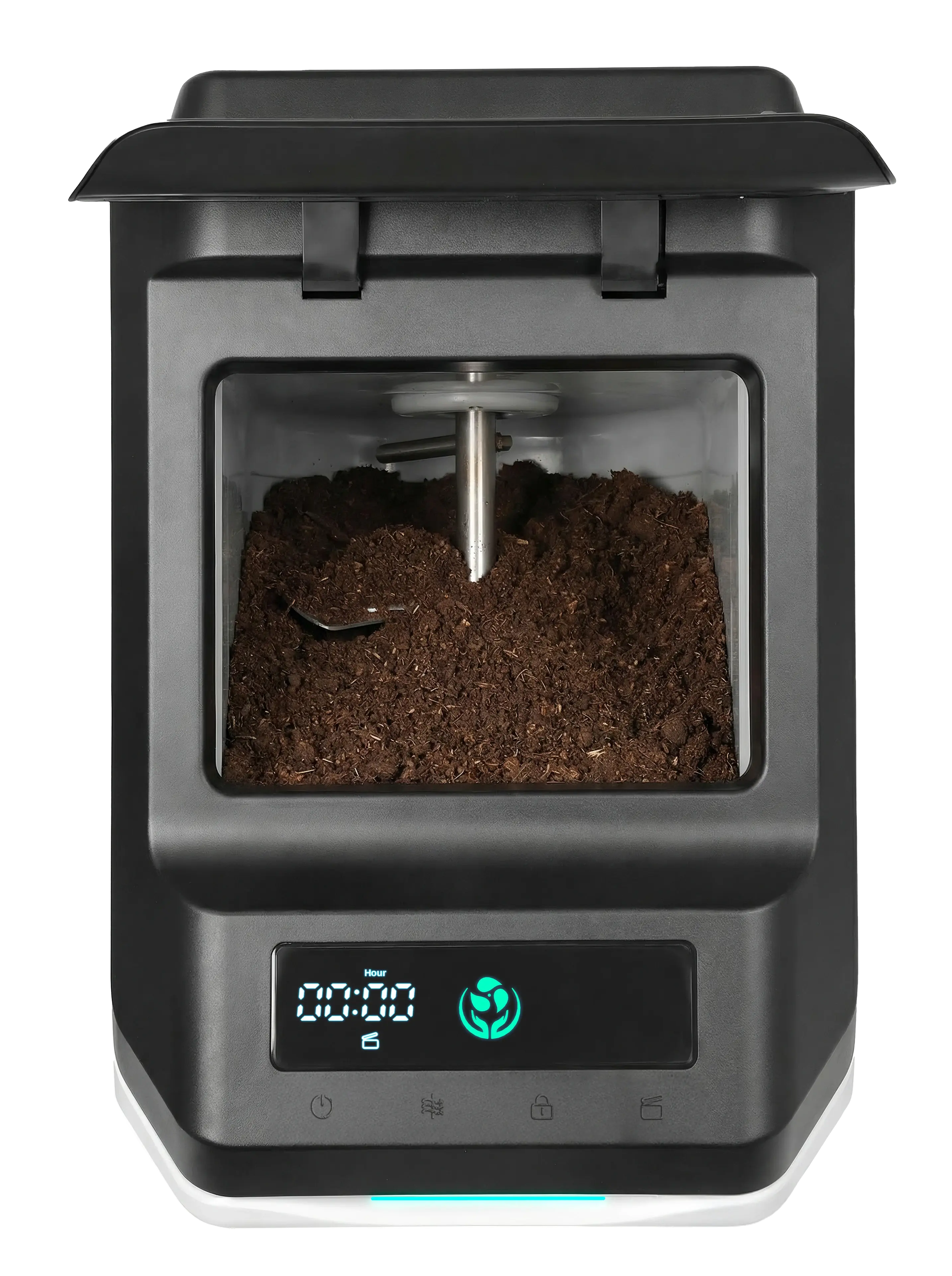
Cut orange peel smaller and keep it inside a warm, active microbial ecosystem.
Fastest Practical Household Choice
Help Orange Peels Break Down Faster With Terra II
Terra II gives fibre-rich citrus peel continuous access to Kobold™ microbes inside a warm, moist and oxygen-rich chamber.
GEMEBrain™ helps manage heat, airflow, moisture and mixing automatically so you can add chopped peel without building, turning or weather-proofing an outdoor pile.
Remove stickers. Cut the peel. Feed large quantities gradually. Return unfinished pieces for more residence time.


Leave a comment
All comments are moderated before being published.
This site is protected by hCaptcha and the hCaptcha Privacy Policy and Terms of Service apply.