


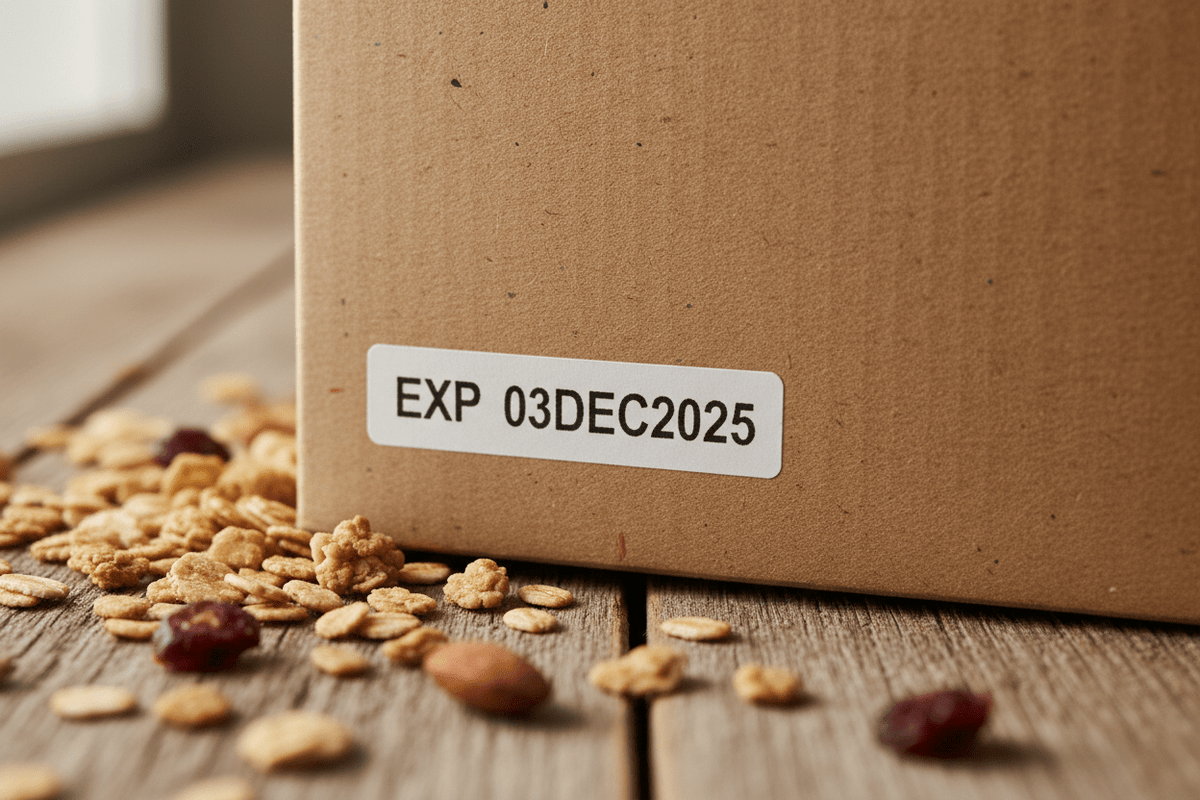
Cereal Storage, Expiration & Food Safety Guide
Cereal can pass its printed date and still be edible, but it can also go stale, turn rancid, absorb moisture, grow mold or become unsafe because of contamination or a recall.
For best quality, USDA guidance gives dry cereal approximately six to twelve months unopened and about three months after opening when stored in a cool, dry pantry.
The date alone cannot answer whether a specific box is safe. Package integrity, moisture, odor, flavor, insects, mold and active recall information matter more.
This guide focuses on dry, ready-to-eat breakfast cereal. Cooked oatmeal and cereal served with milk follow different storage rules.

Can Cereal Expire?
Cereal can become too stale, rancid, moldy, contaminated or insect-infested to eat, but it does not automatically become unsafe when the printed best-by date passes.
In the United States, a “Best if Used By” date generally identifies the period during which the manufacturer expects peak flavor and texture. Except for infant formula, USDA states that product dates are not automatic food-safety deadlines.
An unopened box stored in a dry pantry may remain acceptable after its date. An opened bag exposed to humid air may deteriorate before its date.
Never eat cereal that is recalled, visibly moldy, wet, webbed with insects, contaminated by rodents, or producing a strongly rancid, chemical or musty odor.
For a broader explanation of date labels and pantry organization, visit the Food Storage & Waste Reduction Hub.
Date, Quality and Safety Are Three Different Questions
Printed Date
Usually indicates the manufacturer’s expected peak-quality period.
Current Quality
Concerns texture, aroma, flavor, crispness and freshness.
Current Safety
Depends on contamination, moisture, mold, pests, packaging and recalls.
Stale cereal may be unpleasant but not dangerous. Normal-looking recalled cereal may be unsafe.
Table of Contents
- What Does “Expired Cereal” Mean?
- How Long Does Cereal Last?
- Can You Eat Expired Cereal?
- Five-Step Safety Check
- How to Tell If Cereal Is Bad
- Stale vs Rancid vs Unsafe
- Mold and Mycotoxin Risks
- Pantry Insects and Package Damage
- Real Cereal Recall Case
- How to Store Cereal Properly
- Cereal With Milk
- Can Expired Cereal Be Composted?
- Frequently Asked Questions
- Summary Checklist
- Authoritative Sources
- Related Guides
What Does “Expired Cereal” Actually Mean?
Consumers often use the word “expired” for any packaged food that has passed the date printed on the box. That wording can be misleading for dry breakfast cereal.
A cereal box may carry wording such as:
- Best if Used By.
- Best Before.
- Best By.
- Use By.
- Sell By.
In U.S. federal guidance, most dates on shelf-stable foods are voluntarily applied quality indicators. They help describe when flavor, texture and freshness are expected to be at their best.
They do not mean that every box becomes contaminated at midnight on the printed date.
International Labeling Note
Date-label terminology and legal meaning vary by country. Follow the local label, storage instructions and manufacturer guidance when they impose a stricter requirement.
How Long Does Cereal Last?
USDA gives the following pantry periods for best quality. These are guidance ranges rather than guarantees for every recipe, package and home environment.
| Cereal Condition | Best-Quality Guidance | What Usually Changes First | Important Boundary |
|---|---|---|---|
| Unopened ready-to-eat cereal | 6–12 months | Flavor and crispness gradually decline. | Assumes the inner package remains sealed, dry and undamaged. |
| Opened ready-to-eat cereal | About 3 months | Air and humidity cause staling and flavor loss. | Close the bag tightly or transfer cereal to an airtight container. |
| Granola or cereal with nuts and seeds | May decline sooner | Fats oxidize and develop rancid odors or flavors. | Follow the package guidance and discard when rancid. |
| Opened cereal in a humid kitchen | Shorter than normal | Loss of crispness, clumping and moisture absorption. | Visible mold or dampness requires disposal. |
| Cereal with milk added | 2-hour room limit | The milk becomes the main food-safety concern. | Use a 1-hour limit when the temperature exceeds 90°F / 32°C. |
| Recalled cereal | Do not eat | It may show no visible change. | Follow the recall notice regardless of date or appearance. |
The six-to-twelve-month period is not a promise that cereal will remain at peak quality for twelve months after its printed date. It is a general storage range that begins with the product’s normal shelf life and packaging conditions.
Can You Eat Expired Cereal?
Cereal that is past a quality date may still be edible when all of the following are true:
- The product is not included in a recall.
- The inner bag is sealed or has been stored airtight.
- The cereal remained dry.
- There is no mold, unusual clumping or dampness.
- There are no insects, larvae, webbing or rodent signs.
- The cereal does not smell rancid, musty, sour or chemical.
- The flavor has not become sharply bitter or paint-like.
A cereal that has merely lost some crunch may still be usable in baking, yogurt toppings, snack mixes or recipes where perfect crispness is not important.
Do not use tasting as the first safety test when the product is moldy, damp, insect-infested, recalled or otherwise suspicious.
Five-Step Expired-Cereal Check
-
Check recalls first.
Search the brand, product name, package size, lot code and best-by date when a recall has been announced. -
Inspect the package.
Look for tears, holes, broken seals, water staining, rodent damage or an inflated inner bag. -
Inspect the cereal.
Look for mold, unusual clumps, discoloration, larvae, beetles, moth webbing or damp particles. -
Smell without inhaling closely.
Rancid cereal may smell like old oil, crayons, paint, chemicals, cardboard or bitter nuts. -
Assess quality only after safety checks pass.
Slight staleness may be acceptable. Strong bitterness, rancidity or an abnormal aftertaste means discard.
How Can You Tell If Cereal Is Bad?
| Sign | Likely Meaning | Recommended Action |
|---|---|---|
| Soft or less crispy | The cereal has absorbed a small amount of humidity or lost freshness. | Quality issue Assess other signs before deciding. |
| Cardboard-like flavor | Oxidation and prolonged storage have reduced quality. | Usually discard It is no longer enjoyable. |
| Paint-like, chemical or bitter-nut odor | Fats may have become rancid. | Discard |
| Musty or earthy odor | Possible moisture damage or mold growth. | Discard entire package |
| Visible fuzzy growth | Mold contamination. | Discard entire package |
| Damp clumps | Water or high humidity entered the package. | Discard when moisture history is uncertain |
| Larvae, beetles or moths | Stored-product insect infestation. | Discard and inspect the pantry |
| Fine webbing | Possible pantry-moth activity. | Discard |
| Chewed box or bag | Possible rodent or insect access. | Discard safely |
| Active recall match | Product may contain a pathogen, allergen or foreign material. | Do not eat or donate |
Stale, Rancid and Unsafe Cereal Are Not the Same
Stale
The cereal has lost crispness or fresh flavor after exposure to air.
This is generally a quality problem when no moisture damage, mold or contamination is present.
Rancid
Oils in grains, nuts, seeds or added fats have oxidized.
The cereal may smell bitter, waxy, chemical, paint-like or like old nuts. Discard it.
Unsafe
The product may contain mold, pests, foreign material, an undeclared allergen or a disease-causing organism.
Unsafe cereal may look normal, particularly when the hazard is identified through a recall.
Why Moldy Cereal Should Be Discarded
Dry cereal normally has too little available moisture for active mold growth. Once humidity, a spill or a damaged package raises the moisture level, that protection can change.
FDA identifies grains as foods susceptible to molds that may produce mycotoxins. These naturally occurring toxins include aflatoxins, deoxynivalenol, fumonisins, ochratoxin A and others.
Not every visible mold produces a dangerous toxin, and consumers cannot determine the mold species or toxin level by looking at it.
Do Not Pick Out Only the Moldy Pieces
Cereal is a loose, porous food. Visible growth may not show the full area affected by moisture or fungal contamination. Discard the entire affected package.
Do not smell moldy cereal closely. Seal the package before disposal, clean the storage shelf and inspect nearby flour, grains, nuts and other dry goods.
What If Cereal Contains Pantry Bugs?
Breakfast cereals and other milled grain products can be affected by pantry moths, beetles and related stored-food insects.
Warning signs include:
- Small beetles moving through the cereal.
- Larvae or cast skins.
- Fine silk-like webbing.
- Particles joined together by webbing.
- Moths flying near pantry shelves.
- Tiny holes in the inner bag.
Discard the affected cereal, inspect nearby dry foods, vacuum shelf corners and wash storage containers before refilling them.
Do not pour a new box of cereal on top of old cereal. Mixing packages makes infestation harder to detect and removes useful lot-code traceability.
Real Case: Salmonella Linked to Shelf-Stable Cereal
In 2018, U.S. public-health authorities investigated a multistate outbreak of Salmonella Mbandaka linked to Kellogg’s Honey Smacks cereal.
| Outbreak Measure | CDC Final Report |
|---|---|
| Reported illnesses | 135 people. |
| States affected | 36 states. |
| Hospitalizations | 34 people. |
| Reported deaths | No deaths reported. |
| Public-health concern | The cereal had a long shelf life and could remain in homes after the recall. |
CDC advised consumers not to eat the recalled cereal, regardless of how it looked, smelled or tasted.
The case establishes an important principle:
A long shelf life describes storage stability. It does not cancel a microbiological recall.
Keep the original box, photograph the lot code or retain the label until the cereal is finished. A clear container may improve storage, but the product identity must not be lost.
How to Store Cereal So It Lasts Longer
-
Keep cereal cool and dry.
Store it away from the oven, dishwasher, kettle, sink and direct sunlight. -
Close the inner bag immediately.
Fold and clip the original liner or use a reliable resealable closure. -
Use an airtight container after opening.
This limits humidity, oxygen, odors and pest access. -
Keep the label and lot code.
Place the original inner bag inside the container, cut out the label, or photograph the product information. -
Do not mix old and new cereal.
Finish and clean the container before adding a fresh package. -
Use clean, dry utensils.
A wet spoon can introduce enough moisture to damage an otherwise dry product. -
Close the container before serving.
Do not leave an open box exposed throughout breakfast. -
Buy a package size your household can finish.
Larger boxes are not economical when half of the cereal becomes stale. -
Rotate older packages forward.
Use a first-in, first-out pantry system.
Pantry organization and “Eat First” routines are covered in the Food Storage & Waste Reduction Hub .
Cereal Changes Category After Milk Is Added
Dry cereal is shelf-stable. A bowl of cereal with dairy milk or another refrigerated beverage is perishable.
Do not leave cereal with milk at room temperature for more than:
Normal Conditions
2 Hours
Above 90°F / 32°C
1 Hour
Refrigerating an abandoned breakfast bowl later does not reset the food-safety clock.
Can Expired Cereal Be Composted?
Ordinary stale, crushed, flavorless or rancid cereal can be composted after all packaging is removed.
| Cereal Condition | Household Composting Guidance | Reason |
|---|---|---|
| Plain stale cereal | Compostable | It is dry grain-based organic material. |
| Sweetened cereal | Compost modestly | Sugar is biodegradable but exposed cereal can attract pests in an outdoor pile. |
| Granola with nuts or seeds | Compost modestly | Oil-rich ingredients may break down more slowly. |
| Cereal with a small amount of milk | Managed system preferred | Dairy can attract animals and create odor in an ordinary backyard pile. |
| Visibly moldy cereal | Do not treat as ordinary compost input | Grain molds may be associated with mycotoxins that a home system is not validated to destroy. |
| Recalled cereal | Follow the recall notice | The contaminant may require controlled disposal or return. |
| Plastic inner bag | Keep out | Conventional plastic does not become compost. |
| Cardboard cereal box | Recycle through the appropriate paper stream. | Recycling clean paperboard generally preserves more material value than composting it. |
Can Terra II Compost Cereal?
Yes. Terra II accepts grains and ordinary cereal as part of its normal kitchen-organic input range.
Kobold™ living microbes perform biological decomposition while GEMEBrain™ helps manage the chamber’s heat, airflow, moisture and mixing.
- Remove the plastic liner, box, clips and packaging.
- Add dry cereal in an ordinary household quantity.
- Distribute a large amount across more than one feeding.
- Combine it with varied kitchen scraps rather than feeding only dry grain.
- Do not pour a large bowl of excess milk into the chamber.
- Keep recalled and visibly moldy cereal outside the normal household compost pathway.
Review the broader household list in What Can You Compost at Home? and the liquid boundary in Electric Composter Salt, Oil and Free-Liquid Boundaries.

Process suitable cereal with the rest of your everyday kitchen organics.
Responsible Recovery After the Safety Check
Compost Ordinary Unwanted Cereal With Terra II
Terra II uses Kobold™ living microbes and GEMEBrain™ adaptive control to process cereal, grains and other suitable kitchen scraps inside a warm, moist and oxygen-rich chamber.
Add ordinary stale cereal without the packaging, combine it with varied food scraps and let the continuous biological process keep working.
Do not compost recalled food unless the responsible authority expressly identifies composting as an approved disposal route.
Frequently Asked Questions
Can cereal expire?
Cereal can lose quality, become rancid, absorb moisture, grow mold or become contaminated. Passing the printed best-by date alone does not automatically make dry cereal unsafe.
Does cereal expire?
It has a limited period of peak quality rather than one precise universal safety-expiration moment. Storage conditions and package integrity determine how it changes.
Does cereal go bad?
Yes. Cereal can become stale or rancid and can also be damaged by moisture, mold, insects, rodents or contamination associated with a recall.
Can you eat expired cereal?
Cereal past a quality date may still be edible if it has remained sealed or airtight, dry, pest-free, mold-free, normal-smelling and outside any active recall.
How long does unopened cereal last?
USDA gives dry cereal a general best-quality pantry period of approximately six to twelve months unopened.
How long does cereal last after opening?
USDA gives a general best-quality period of about three months after opening. Humidity, storage temperature and the cereal’s fat content may shorten that period.
Is cereal safe one year after the best-by date?
A date alone cannot establish safety. One year beyond the printed date is outside the normal peak-quality expectation for many products. Check the manufacturer’s guidance, package condition, storage history, recalls, mold, pests, odor and rancidity before deciding.
Is stale cereal dangerous?
Cereal that has only lost crispness is mainly experiencing a quality decline. Staleness caused by obvious moisture, however, may be accompanied by mold risk and should be treated more cautiously.
What does rancid cereal smell like?
Rancid cereal may smell bitter, waxy, chemical, paint-like, like crayons or like old nuts and cooking oil. Discard it rather than masking the flavor with milk or sugar.
Can cereal grow mold?
Yes. Dryness normally restricts mold growth, but humidity, water spills and damaged packaging can provide enough moisture for mold to develop.
Can you remove moldy cereal pieces and eat the rest?
No. Discard the entire affected package. Consumers cannot determine how far moisture, fungal growth or possible mycotoxin contamination has spread.
Can dry cereal contain Salmonella?
Contamination is possible. The 2018 Honey Smacks outbreak was linked to 135 reported illnesses and 34 hospitalizations. A recall must be followed even when cereal appears normal.
Should cereal be stored in the refrigerator?
Dry cereal normally belongs in a cool, dry pantry. Refrigeration is usually unnecessary and condensation can introduce moisture when a cold container is repeatedly opened in warm air.
Is an airtight container better than the cereal box?
An airtight container helps limit humidity, oxygen and pests. Keep the original label or photograph the lot code so you can still identify the product during a recall.
Can you leave cereal with milk out overnight?
No. Cereal with milk left at room temperature overnight should be discarded. The normal limit is two hours, or one hour above 90°F / 32°C.
Can expired cereal be composted?
Ordinary stale or rancid cereal can be composted after all packaging is removed. Keep recalled, moldy, rodent-contaminated or otherwise hazardous cereal outside the normal household compost pathway.
Can Terra II compost cereal?
Yes. Terra II accepts grains and cereal as part of a varied kitchen-organic mix. Remove all packaging and divide unusually large quantities across normal feedings.
Can cereal boxes go into Terra II?
Clean cereal boxes should normally enter the paper-recycling stream. Never place the plastic liner, clips or coated packaging inside Terra II.
Summary: Is Expired Cereal Safe?
- Cereal does not automatically become unsafe when its best-by date passes.
- USDA gives unopened cereal a best-quality pantry period of approximately six to twelve months.
- Opened cereal has a general best-quality period of about three months.
- The printed date, present quality and present safety are separate questions.
- Slightly stale cereal may still be usable when all safety checks pass.
- Discard cereal with rancid, chemical, bitter, musty or sour odors.
- Discard damp, clumped or visibly moldy cereal.
- Discard cereal containing pantry insects, larvae or webbing.
- Keep package and lot information until the cereal is finished.
- A recall overrides the best-by date and normal appearance.
- Cereal with milk should not remain at room temperature beyond two hours.
- Ordinary stale or rancid cereal can enter an appropriate composting system.
- Keep recalled and visibly moldy cereal out of ordinary household compost.
- Terra II can process suitable cereal and grains after all packaging is removed.
Authoritative and Product Sources
- USDA FSIS — How Long Can You Store Boxed Dated Foods?
- USDA FSIS — Food Product Dating
- FoodSafety.gov — FoodKeeper Storage Guidance
- FDA — How to Cut Food Waste and Maintain Food Safety
- FDA — Mycotoxins in Grains and Other Foods
- USDA FSIS — Molds on Food: Are They Dangerous?
- CDC — Final Honey Smacks Salmonella Outbreak Update
- FoodSafety.gov — Four Steps to Food Safety
- USDA AMS — Stored-Grain Insect Reference
- GEME — Terra II Product and Kitchen-Organic Input Guidance
- GEME — Salt, Oil and Free-Liquid Input Boundaries
Sources reviewed July 31, 2026. Shelf-life periods describe typical best-quality conditions rather than a guarantee of safety. Product formulation, package integrity, humidity, temperature, pests, contamination and recall status can change the decision.
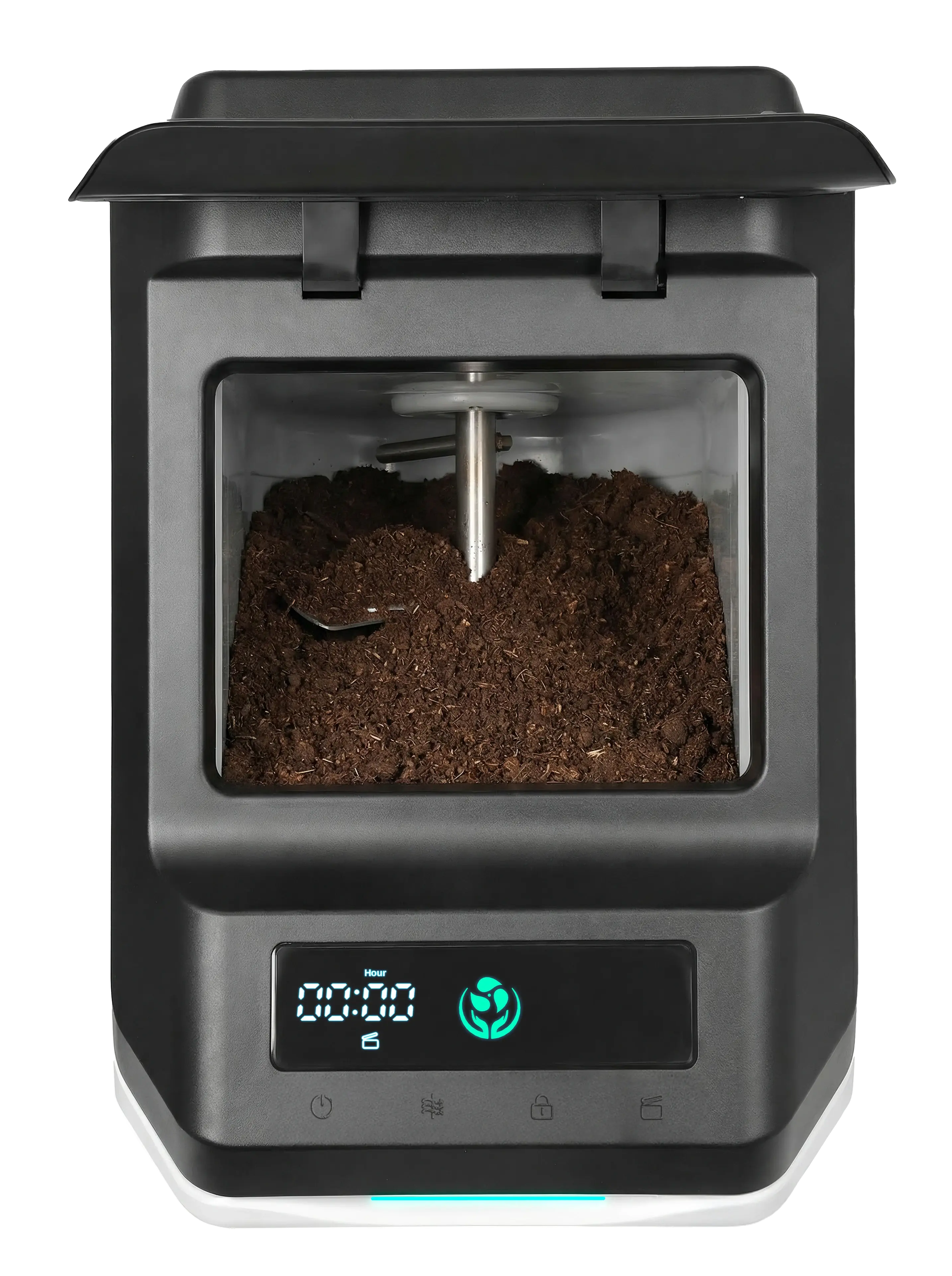
Suitable unwanted cereal can continue through a living microbial process.
Food Waste Does Not Have to End in the Trash
Turn Suitable Pantry Waste Into a Living Compost Base
Terra II supports continuous microbial processing of grains, cereal, fruit, vegetables, leftovers and other suitable kitchen organics.
Kobold™ microbes perform the biological breakdown while GEMEBrain™ helps regulate heat, airflow, moisture and mixing—without drying the food into flakes or requiring replacement odor filters.
Remove all packaging. Keep recalled, visibly moldy and officially contaminated food outside the normal household compost pathway.



Leave a comment
All comments are moderated before being published.
This site is protected by hCaptcha and the hCaptcha Privacy Policy and Terms of Service apply.