


Food Storage Guide
How to Store Onions: Fridge, Shelf Life, Cut Onions & Spoilage
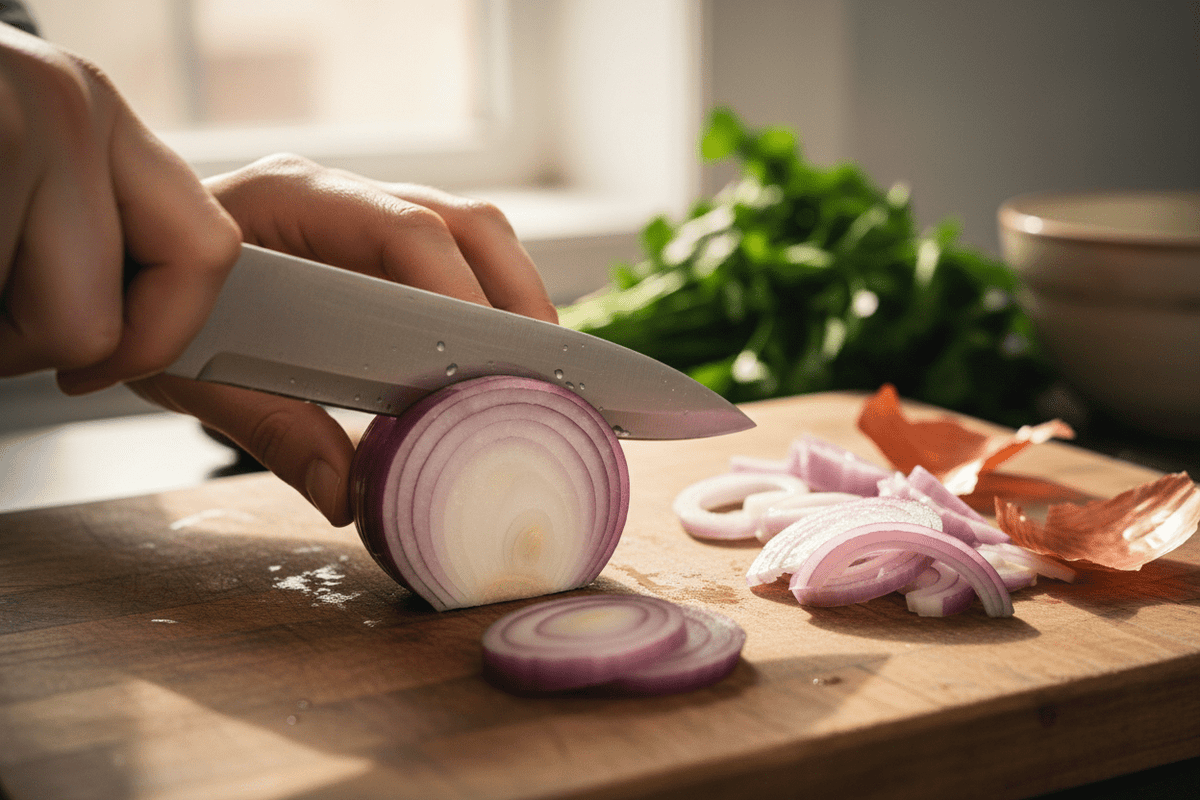
Should onions go in the fridge or pantry? How long do onions last once cut? And what should you do when one finally goes bad? This guide covers the entire onion journey from grocery bag to storage, cooking, freezing, spoilage, and composting.

That one detail changes how onions should be stored.
Quick Answer: How Should You Store Onions?
Whole, unpeeled dry onions are usually best stored in a cool, dry, dark, well-ventilated place. A pantry, ventilated cabinet, cellar-style storage area, mesh bag, or open produce basket can work well. Avoid sealed plastic bags because trapped moisture and poor airflow can shorten storage life.
Sweet and mild onions contain more water and usually have a shorter shelf life. Refrigeration can help extend their usable life, especially when they are kept dry.
Peeled, sliced, chopped, or halved onions belong in the refrigerator. Store cut onions in a clean sealed container at 40°F / 4°C or below and plan to use them within about 7 days.
Yes, onions can go bad, including in the fridge. Cold slows deterioration but does not stop it. Mold, slime, leaking moisture, extensive soft rot, or a strong rotten odor are signs that an onion has moved beyond normal aging.
This guide is part of the GEME Food Storage & Waste Reduction Hub, which connects food freshness, storage, freezing, waste prevention, and composting into one household system.
Table of Contents
- How to Store Whole Onions
- Should Onions Go in the Pantry or Fridge?
- Can Onions Go Bad?
- Can Onions Go Bad in the Fridge?
- How Long Do Onions Last?
- How to Preserve Cut Onions
- How to Tell If an Onion Is Bad
- Are Sprouted Onions Bad?
- Can You Freeze Onions?
- Are Leftover Cut Onions Dangerous?
- How to Prevent Onion Waste
- Can You Compost Bad Onions?
- Can Onions Go Into Terra II?
- FAQ
Onion Storage Is Simple Once You Stop Treating Every Onion the Same
Onions seem like one of the easiest foods to store. They sit in grocery stores at room temperature, they have a dry protective skin, and many households keep several on hand for weeks.
The confusion begins when different storage situations get mixed together.
A dry yellow onion with its papery skin intact is not the same storage problem as half a red onion left from taco night. A sweet onion has more moisture than a long-storage fall onion. A chopped onion exposed to air is not protected in the same way as a whole bulb.
That is why conflicting advice such as “never refrigerate onions” and “always keep onions in the fridge” can both sound convincing while being incomplete.
The better approach is to ask three questions:
- Is the onion whole or cut?
- Is it a dry storage onion or a high-moisture sweet onion?
- Are you trying to keep it for days, weeks, or longer?
This same principle applies across produce storage. Apples, bananas, berries, and onions respond differently to temperature, moisture, and airflow. Our guides to storing apples, making bananas last longer, storing blueberries, and storing strawberries all follow the same rule: match the storage environment to the biology of the food instead of treating the entire produce drawer as one category.

1. How to Store Whole Onions
For ordinary whole dry onions, the goal is not simply to make them cold. The goal is to keep them cool, dry, dark, and well ventilated.
Choose a Cool Location
A dry pantry, ventilated cabinet, basement storage area, or other relatively cool part of the kitchen can work well.
Avoid storing onions beside ovens, dishwashers, radiators, sunny windows, or other heat sources. Warm conditions accelerate moisture loss, sprouting, and general quality decline.
Keep Them Dry
Moisture is one of the biggest enemies of stored onions.
A whole storage onion is protected by its dry outer skin. When humidity remains high around the bulb, that protective environment becomes less effective and decay becomes more likely.
Do not wash whole onions before storing them. Brush away loose dirt if necessary and keep the bulb dry until you are ready to prepare it.
Give Onions Airflow
Mesh bags, open baskets, slatted containers, or other breathable storage systems work better than sealed plastic bags.
Air movement helps moisture escape from around the bulb. A tightly sealed bag does the opposite: humidity accumulates around the onions while fresh air cannot circulate.
The four-word onion rule: Cool. Dry. Dark. Ventilated.
Keep Onions Away From Potatoes
Potatoes and onions are commonly stored together because both seem like pantry vegetables, but this is not ideal.
Produce that releases moisture can make the local environment more humid. Onion-industry storage guidance specifically recommends keeping onions away from potatoes and other produce that adds moisture.
You do not need a different room for each vegetable. Simply avoid piling potatoes and onions together in the same closed basket or storage bin.
2. Should Onions Go in the Pantry or Fridge?
The answer depends on the onion.
| Type / Condition | Best Storage | Why |
|---|---|---|
| Whole dry yellow, red, or white onion | Cool, dry, dark, ventilated pantry | Dry storage varieties benefit from airflow and low humidity. |
| Whole sweet or mild onion | Refrigerator can help extend storage | Higher water content generally means shorter shelf life. |
| Whole peeled onion | Refrigerator | The protective dry skin has been removed. |
| Half onion | Sealed container in refrigerator | The exposed cut surface needs protected cold storage. |
| Sliced or chopped onion | Sealed container in refrigerator | More exposed surface area increases moisture loss and quality change. |
| Extra chopped onion you cannot use soon | Freezer | Freezing preserves cooking value before the onion deteriorates. |
The broader lesson is that the refrigerator is a tool, not a universal solution. The same is true across the Food Storage & Waste Reduction Hub: some foods benefit from immediate refrigeration, some need room-temperature ripening first, and some dry foods keep better when excess refrigerator humidity is avoided.
3. Can Onions Go Bad?
Yes. Onions eventually go bad.
The dry outer layers and relatively low moisture of storage varieties make onions more durable than many fresh vegetables, but they are still living plant tissue. They continue to lose moisture, respire, sprout, soften, and become vulnerable to microbial decay after harvest.
An onion does not suddenly switch from “good” to “bad” at a predetermined date. Quality usually declines gradually.
One onion may remain firm and usable while another from the same bag begins to soften because it was bruised during transport. This is why visual and physical inspection matters in addition to time.
Normal Aging Is Not Always Spoilage
Loose papery skin is normal.
A slightly dry outer layer may also be normal.
A small sprout does not automatically mean the bulb is rotten.
What matters is what you find beneath the outer layers. A firm interior is very different from a bulb that is wet, slimy, collapsing, extensively moldy, or strongly rotten-smelling.

4. Can Onions Go Bad in the Fridge?
Yes, onions can go bad in the fridge. Refrigeration slows many deterioration processes, but it does not make onions permanent.
This is especially important for cut onions. People sometimes assume that because a leftover onion is refrigerated, it can stay there indefinitely. It cannot.
Why Refrigerated Onions Still Spoil
Cold temperatures slow microbial growth and physiological changes, but several things can still happen:
- Cut surfaces gradually dry out.
- Moisture can collect inside a poorly managed container.
- The texture can soften.
- Odors become stronger as quality declines.
- Mold or rot can develop over time.
- The onion may absorb or transfer odors to nearby foods if it is not sealed.
Refrigerated foods also need good refrigerator management. Keep the refrigerator at approximately 40°F / 4°C or below, avoid overcrowding that prevents airflow, and keep cut foods covered.
If you are unsure whether deterioration is simple spoilage or part of a product recall or contamination incident, use the GEME Food Safety Guide. A food recall is fundamentally different from ordinary spoilage and should follow the official recall instructions rather than an ordinary household composting decision.
5. How Long Do Onions Last?
Searches for “how long do onions last” often produce wildly different answers because different sources are talking about different onions and different storage conditions.
Storage onions harvested in fall and winter are specifically suited to longer storage. Spring and summer onions generally contain more water and do not keep as long.
| Onion Condition | General Storage Guidance | Important Note |
|---|---|---|
| Whole spring / summer onion | Industry storage range approximately 30–60 days | Higher moisture means shorter storage potential. Household conditions may shorten this range. |
| Whole fall / winter storage onion | Industry storage range approximately 30–180 days | The longest ranges assume suitable storage and storage-oriented varieties. |
| Whole peeled onion | Refrigerate and use promptly | Loss of the dry outer skin changes the storage requirement. |
| Cut, sliced, or chopped onion | About 7 days; some guidance gives 7–10 days | Seal and refrigerate at 40°F / 4°C or below. |
| Frozen chopped onion | Longer-term preservation | Best for cooked dishes because freezing softens texture. |
The 30–60 and 30–180 day ranges are useful for understanding the biological difference between seasonal onion types. They should not be interpreted as a guarantee that an onion sitting above a warm household oven will remain perfect for six months.
Storage guidance works best when combined with inspection.
This same distinction between a useful time estimate and actual food condition appears throughout produce storage. For comparison, blueberries have a much shorter refrigerated life, while apples can remain useful substantially longer under proper refrigeration. See How Long Do Blueberries Last? and How Long Do Apples Last? for the corresponding storage logic.
6. How to Preserve Cut Onions
If your real question is “how to preserve cut onions,” the answer is much more straightforward than whole-onion storage.
1. Transfer the Onion to a Clean Container
Do not leave half an onion uncovered on a plate or loose in the refrigerator.
Place the half, slices, or chopped pieces in a clean sealed container or appropriate sealed food-storage packaging.
2. Refrigerate Promptly
Once the onion has been peeled and cut, put it into the refrigerator rather than returning it to dry pantry storage.
Keep the refrigerator at approximately 40°F / 4°C or below.
3. Label the Date
This simple habit solves one of the most common refrigerator problems: forgetting when something was opened or cut.
If you regularly meal-prep, write the date on the container. You no longer have to stand in front of the refrigerator five days later trying to remember whether the onion was cut yesterday or last weekend.
4. Plan to Use It Within About a Week
National Onion Association guidance says cut onions can be refrigerated in sealed containers for about 7 days, while some industry guidance gives a 7–10 day window.
For a simple household routine, treating 7 days as the planning target is easy to remember and encourages the onion to be used before quality deteriorates.
5. Freeze It Early If You Will Not Use It
Do not wait until day seven to decide that you have too much onion.
If you already know you will not cook with the remaining onion soon, chopping and freezing it while it is still in good condition preserves more value than waiting for visible spoilage.
Low-waste rule: Preserve food while it is still good. Composting is the backup for unavoidable waste, not the first destination for edible food.
7. How to Tell If an Onion Is Bad
Age alone does not tell you everything. Look at the condition of the onion.
| What You See | What It May Mean | Best Action |
|---|---|---|
| Dry papery outer skin | Normal protective onion skin | Peel normally and inspect the bulb underneath. |
| Firm bulb with minor surface dryness | Normal storage aging | Usually suitable to prepare after inspection. |
| Small green sprout | The onion has resumed growth | Inspect firmness and internal condition; prioritize use. |
| Extensive soft or mushy areas | Advanced tissue breakdown | Discard from the edible-food stream. |
| Wet or slimy surface | Advanced deterioration | Do not eat. |
| Extensive gray or black mold | Fungal deterioration | Do not treat as normal edible produce. |
| Strong rotten smell | Decay | Discard from the edible-food stream. |
The important distinction is between ordinary spoilage and invisible contamination. A rotten onion may show obvious sensory changes. A recalled onion contaminated with a pathogen may look completely normal.
For that reason, visible appearance should never override an official recall. The Food Safety Guide explains why recalled food should follow the regulator’s disposal instruction rather than automatically entering a household composter.
If you are dealing with ordinary moldy produce rather than a recall, our moldy grape storage and composting guide shows the same distinction between edible food, ordinary spoilage, and compostable organic waste.
8. Are Sprouted Onions Bad?
Sprouting and rotting are not the same process.
An onion is a living bulb. Under the right temperature and moisture conditions, it can begin producing green shoots.
A small sprout is therefore a sign that the onion is aging and resuming growth, but it does not automatically mean the entire bulb is rotten.
Inspect the onion itself. If the bulb remains firm and does not show extensive mold, slime, leakage, or rotten odor, sprouting alone is different from advanced spoilage.
However, a sprouted onion should move toward the front of your “use first” list. Its stored energy is now being used to support new growth, so storage quality will continue declining.
9. Can You Freeze Onions?
Yes. Freezing is one of the easiest ways to preserve surplus onion for cooking.
The main trade-off is texture.
Ice crystals damage plant cell structure during freezing, so thawed onion is softer than fresh onion. That makes frozen onion less attractive for raw salads, sandwiches, or garnishes, but the texture change matters far less in soups, sauces, curries, casseroles, stews, fried rice, and sautéed dishes.
How to Freeze Chopped Onion
- Peel the onion.
- Remove damaged areas.
- Chop or slice it into the size you usually cook with.
- Divide it into realistic recipe-size portions.
- Place portions in sealed freezer-safe packaging.
- Remove excess air where practical.
- Label the package with the date.
- Use directly in cooked dishes as needed.
You can also freeze onions together with other prepared vegetables when building meal kits for soups, stir-fries, or slow-cooker dishes.
The principle is the same as freezing overripe bananas or surplus berries: act before spoilage. See How to Make Bananas Last Longer and Best Way to Store Strawberries for other examples of using the freezer as a food-waste prevention tool.
10. Are Leftover Cut Onions Dangerous?
You may have seen social-media posts claiming that a cut onion becomes “poisonous” overnight or acts like a sponge that attracts dangerous bacteria from the air.
That is not a reason to throw away every leftover half onion.
Properly handled cut onions can be refrigerated in a sealed container and used within the recommended storage period.
The meaningful food-safety questions are much more ordinary:
- Was the onion handled with clean hands and utensils?
- Was it refrigerated promptly?
- Is the refrigerator cold enough?
- Was the onion protected in a clean sealed container?
- How long has it actually been stored?
- Does it now show obvious deterioration?
This is a useful example of why food-safety decisions should be based on storage conditions and authoritative guidance rather than viral household myths.
11. How to Prevent Onions From Becoming Food Waste
Good onion storage is not just about convenience. It is also a simple food-waste strategy.
Buying a large bag of onions at a lower price per pound does not save money if several bulbs repeatedly rot before the household can use them.
Buy the Quantity You Actually Cook
If your household uses one onion a week, buying an oversized bag may not be economical even when the unit price is lower.
Use the Softest or Oldest Onions First
Rotate onions just as you would pantry foods. Newly purchased onions go behind the older supply.
Separate Damaged Onions
A bruised or wet onion should not remain hidden in the middle of a large bag. Inspect stored onions periodically and remove bulbs showing deterioration.
Plan Meals Around Leftover Cut Onion
If you cut half an onion today, make tomorrow’s meal one that can use the other half.
Soup, curry, pasta sauce, stir-fry, omelets, tacos, fried rice, and roasted vegetables are all flexible destinations for leftover onion.
Freeze Before the Onion Becomes Questionable
Freezing turns a potential future waste item into a convenient prepared ingredient.
This follows the food hierarchy used throughout GEME’s How to Reduce Food Waste at Home guide:
The order matters. Composting is valuable, but feeding people is a better use for an edible onion.
12. Can You Compost Bad Onions?
Yes. Ordinary bad onions can generally be composted once they are no longer suitable for eating.
Onion skins, ends, soft onion pieces, spoiled onions, and ordinary moldy onions are biodegradable plant material.
However, the correct answer still depends on the composting system.
| Material | Typical Composting Direction | Preparation |
|---|---|---|
| Dry onion skins | Suitable organic material | Remove produce stickers or plastic. |
| Onion ends | Suitable organic material | Cut large dense pieces smaller where useful. |
| Soft or spoiled onion | Generally compostable | Mix with other materials rather than adding a large wet mass at once. |
| Ordinary moldy onion | Generally appropriate for a suitable managed composting pathway | Handle as spoiled food, not edible food. |
| Very large quantity of onions | Compost gradually | Avoid overwhelming a small pile or home system with one wet input. |
| Recalled or chemically contaminated onion | Do not default to household composting | Follow the official recall or disposal instruction. |
Can Onions Go in a Backyard Compost Pile?
Yes. Onion scraps are plant-based kitchen material and can decompose in an ordinary aerobic pile.
As with other food scraps, avoid dumping a large dense layer of wet onion into one spot. Chop large bulbs, mix them with varied material, and cover fresh food scraps with appropriate dry carbon material.
What About Worm Bins?
Worm bins deserve more restraint.
Onion and garlic are commonly treated as limited inputs in vermicomposting because large quantities can create conditions that are less suitable for the worms. A small amount mixed into varied feedstock is different from dumping several whole onions into a compact worm bin.
Our What Can You Compost at Home? guide compares ordinary piles, tumblers, worm bins, municipal systems, and managed microbial systems material by material.
If you want to understand what is actually happening after onion tissue enters an aerobic composting environment, continue to How Does Composting Work?, which explains the roles of microorganisms, oxygen, moisture, heat, carbon, and nitrogen.
13. Can You Put Bad Onions in GEME Terra II?
Yes. Ordinary onion scraps and ordinary spoiled onions are suitable kitchen-organic feedstock for GEME Terra II.
That includes:
- Onion skins
- Root and stem ends
- Raw onion pieces
- Cooked onion
- Soft onions
- Ordinary spoiled onions
- Ordinary moldy onion waste
Remove stickers, rubber bands, plastic bags, netting, twist ties, and other non-organic packaging before feeding.
If an entire bag of onions has spoiled, do not assume “organic” means the whole load should be added at once. Large single-material loads can temporarily alter moisture, acidity, structure, and microbial balance. Spread unusual quantities across multiple feedings and combine them with normal household food scraps.
The GEME FAQ confirms that ordinary spoiled or moldy food remains organic feedstock. For broader input boundaries, use the official GEME FAQ.
If you want to understand how Terra II differs from machines that mainly heat and dry food, read How Does a Real Electric Composter Work? The key distinction is that Terra II maintains an aerobic microbial environment rather than relying on a short dehydration batch.
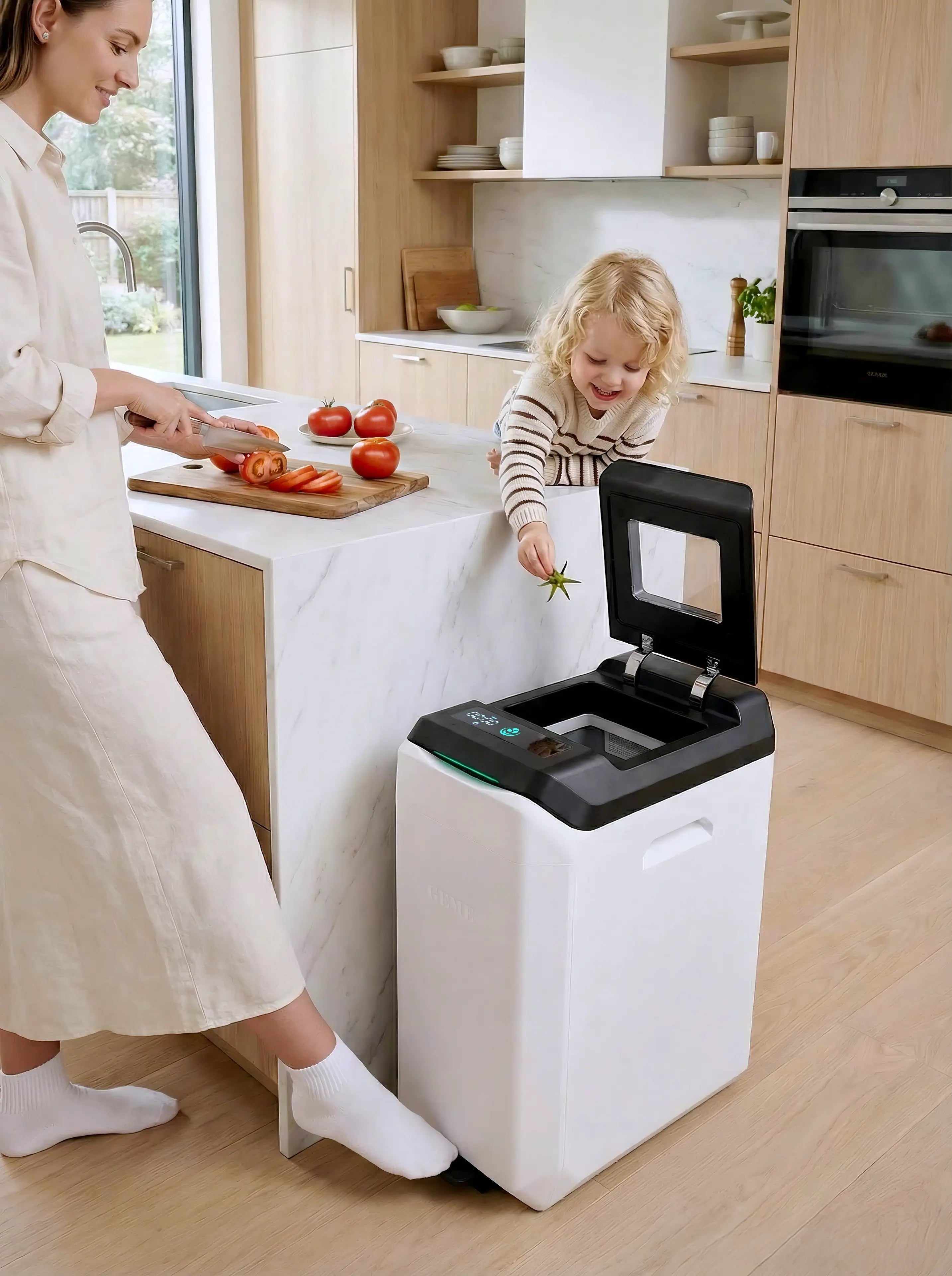
Keep edible onions edible, then return unavoidable scraps to the biological cycle.
The Kitchen-to-Soil Loop
What Happens After an Onion Is No Longer Food?
Terra II uses living microbes and a continuous aerobic process to handle suitable daily kitchen scraps. Onion peels and unavoidable spoiled pieces can stay in the organic cycle instead of becoming another wet item in the trash.
14. What Should You Do With Compost Made From Kitchen Scraps?
Composting is not complete simply because food scraps have disappeared.
The next step is returning the resulting organic material to soil appropriately.
GEME Terra II produces a moist, biologically active compost base rather than ordinary potting soil. Because Terra II is a continuous-flow system, the material you remove can contain particles with different residence times.
Screen out larger unfinished pieces and return them to the chamber when appropriate. For plant use, blend the compost base with soil rather than treating it as a pure growing medium.
For detailed ratios and plant-use guidance, continue to the Advanced GEME Compost Application Guide.
15. Frequently Asked Questions About Onion Storage
What is the best way to store onions?
Whole, unpeeled dry onions should generally be stored in a cool, dry, dark, well-ventilated place. Avoid sealed plastic bags and direct heat or sunlight. Sweet or high-moisture onions may benefit from refrigeration, while peeled and cut onions should be refrigerated.
Should you refrigerate whole onions?
Ordinary dry storage onions usually do not require refrigeration and often benefit from dry airflow. Sweet and mild onion varieties contain more water and can benefit from refrigeration when kept dry.
Can onions go bad?
Yes. Onions eventually lose moisture, soften, sprout, mold, or rot. Storage conditions and variety strongly influence how quickly this happens.
Can onions go bad in the fridge?
Yes. Refrigeration slows deterioration but does not stop it. Refrigerated onions can still soften, become wet or slimy, develop mold, or acquire a rotten odor.
How long do onions last?
It depends on the variety and storage environment. Onion-industry guidance lists approximately 30–60 days of storage potential for spring and summer onions and approximately 30–180 days for fall and winter storage onions under appropriate conditions. Actual household storage can be considerably shorter.
How long do cut onions last in the fridge?
Cut, sliced, or chopped onions should be stored in a sealed container at 40°F / 4°C or below. A simple household target is to use them within about 7 days, although some industry guidance gives a 7–10 day range.
How do you preserve half an onion?
Place the leftover half in a clean sealed container and refrigerate it promptly. Label the date and plan to use it within about one week. Freeze it if you already know it will not be used soon.
Can I store onions in a plastic bag?
Whole dry onions should not be stored in sealed plastic bags because the lack of airflow can shorten storage life. Cut onions are different: they should be protected in sealed refrigerated containers or appropriate food-storage packaging.
Why should onions not be stored with potatoes?
Onions benefit from a dry environment. Potatoes and other produce can add moisture to the immediate storage area, which can reduce onion storage quality. Separate ventilated storage is preferable.
Is a sprouted onion bad?
Sprouting alone does not mean the onion is rotten. Inspect the bulb for firmness, mold, slime, wet decay, or rotten odor and prioritize sprouted onions for earlier use.
Can you freeze raw onions?
Yes. Peel, chop, portion, and freeze raw onion for future cooking. Freezing softens the texture, so frozen onion is better suited to cooked dishes than raw salads.
Are leftover cut onions poisonous?
No. Properly handled cut onions are not automatically poisonous. Store them in a sealed container in the refrigerator and use them within the recommended storage period.
Can you compost onion skins?
Yes. Onion skins are organic plant material and are generally suitable for composting. Remove produce stickers and other non-organic material first.
Can you compost bad onions?
Yes. Ordinary spoiled onions can generally enter an appropriate composting system. Very large quantities should be added gradually. Recalled or chemically contaminated onions should instead follow the official disposal instructions.
Can moldy onions go in GEME Terra II?
Ordinary moldy or spoiled food is organic feedstock and can generally be processed in Terra II. Remove packaging and avoid adding unusually large single-material loads at once.
Authoritative Sources
- National Onion Association — Storage and Handling
- National Onion Association — How to Select, Prepare and Store Onions
- National Onion Association — Onion Storage FAQ
- National Onion Association — Cut Onion Myths
- Colorado State University Extension — Onion Selection, Handling and Storage
- GEME — Official Input and Composting FAQ
Guidance reviewed August 4, 2026. Shelf-life ranges are guidance rather than guarantees. Onion variety, temperature, humidity, ventilation, handling, bruising, and actual food condition can change the usable storage period.
Prevent Waste First
Keep Food Edible Longer. Compost What Is Truly Left.
Better onion storage buys time to cook, freeze, and use the food you already paid for. Terra II belongs at the end of that process — turning suitable unavoidable kitchen scraps into a living compost base for return to soil.
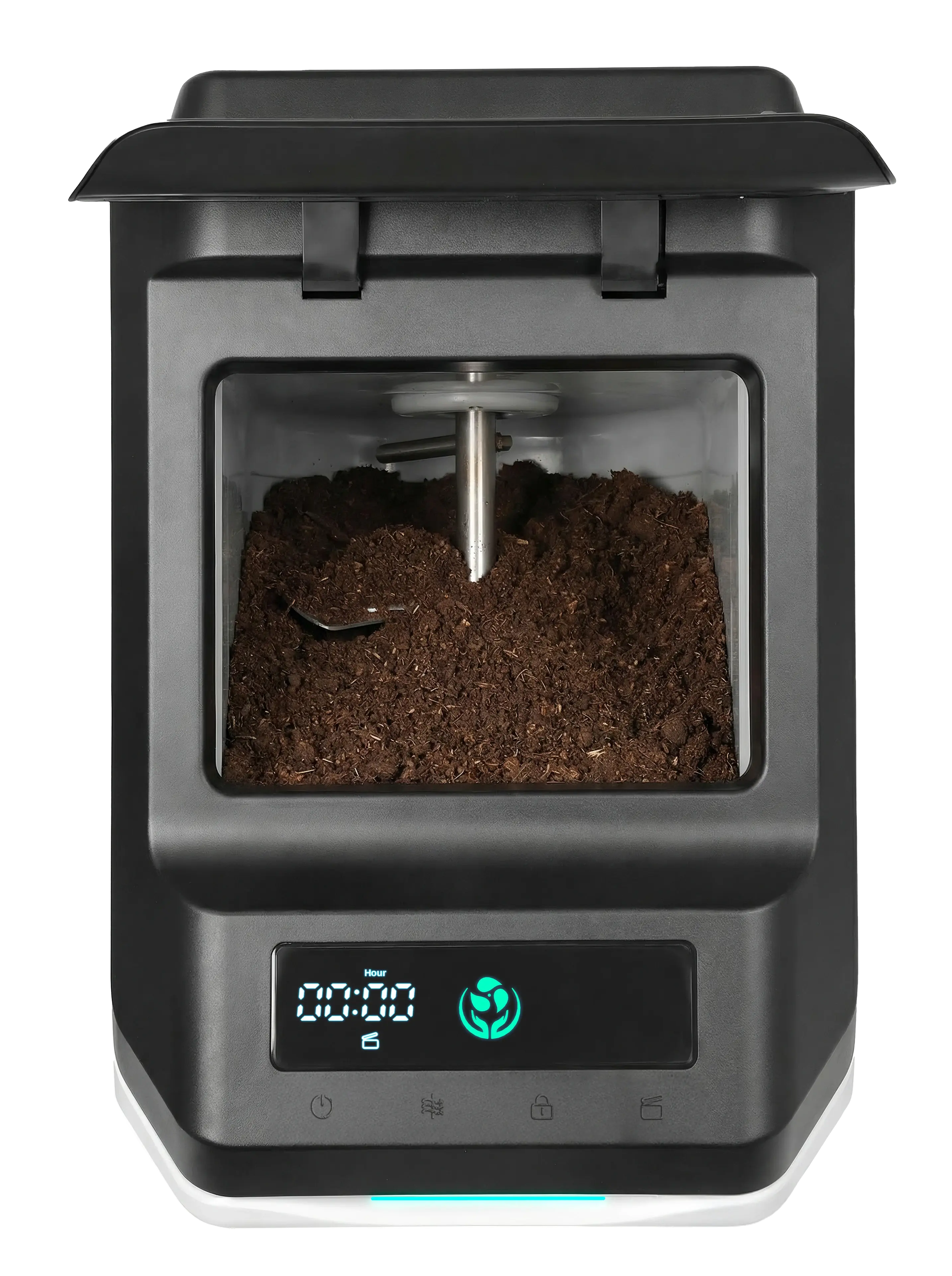
A better ending for unavoidable organic waste.


Leave a comment
All comments are moderated before being published.
This site is protected by hCaptcha and the hCaptcha Privacy Policy and Terms of Service apply.