


Food Storage & Safety Guide
Potatoes can keep for weeks when stored correctly, but light, warmth, moisture and age can trigger sprouting, greening and spoilage. Learn the best way to store potatoes, how to tell when they have gone bad, and when sprouts turn a storage problem into a food-safety concern.

Good storage delays sprouting and waste.
Photo by Ruben Valenzuela on Unsplash.
Quick Answer
How long do potatoes last? Whole raw potatoes can generally remain usable for several weeks when kept in a cool, dark, dry, well-ventilated location. Exact shelf life varies significantly with potato variety, temperature, light exposure, physical damage and storage conditions.
What is the best way to store potatoes? For ordinary household use, keep raw potatoes outside the refrigerator in a dark, cool pantry, cupboard, cellar-style area or ventilated container. Protect them from sunlight and heat, and do not seal them in airtight plastic.
Can potatoes go bad? Yes. Softness, wet rot, mold, leaking liquid, strong off odors, extensive shriveling, greening and heavy sprouting all indicate declining quality or safety.
Are sprouted potatoes safe to eat? Do not eat the sprouts themselves. A firm potato with only very small sprouts and no greening may sometimes be used after generously removing the sprouts, eyes and any green areas. However, green, old, shriveled or strongly sprouted potatoes should be discarded rather than eaten because sprouts and green areas can contain elevated concentrations of toxic glycoalkaloids.
Important: Potato Sprouts Are a Food-Safety Issue
Potato sprouts should not be eaten. Potatoes naturally contain glycoalkaloids, mainly α-solanine and α-chaconine. These compounds are concentrated particularly in sprouts, the “eyes,” the peel and areas exposed to light.
The German Federal Institute for Risk Assessment (BfR) advises consumers not to eat old, dried-out, green or strongly sprouting potatoes. Glycoalkaloid poisoning can cause nausea, stomach pain, vomiting and diarrhea; more serious effects are possible at higher exposures.
Cooking is not a reliable rescue strategy for heavily sprouted or green potatoes. Peeling and some cooking methods can reduce glycoalkaloid levels, but they do not justify eating a potato that authorities recommend discarding.
Read the BfR guidance on glycoalkaloids and sprouted potatoes →
Table of Contents
- How Long Do Potatoes Last?
- The Best Way to Store Potatoes
- Should Potatoes Go in the Fridge?
- Can Potatoes Go Bad?
- Can You Eat Potatoes With Sprouts?
- Why Sprouted Potatoes Can Be Dangerous
- What About Green Potatoes?
- Sprouted Potato Safety Decision Table
- How to Tell If Potatoes Are Bad
- How to Stop Potatoes Sprouting So Quickly
- How to Reduce Potato Waste
- Can You Compost Bad Potatoes?
- FAQ
Potatoes Last Longer Than Many Vegetables, Until Storage Conditions Work Against Them
Potatoes are unusually useful household staples. They are inexpensive, versatile and far less perishable than leafy greens or berries.
That durability sometimes creates a false sense that potatoes can simply be forgotten in the back of a cupboard until they are needed.
They cannot.
A potato tuber remains biologically active after harvest. Over time it loses water, consumes stored energy and responds to temperature and light. Under unsuitable conditions it can shrivel, soften, become green, develop sprouts or begin to rot.
Those changes are not all equal.
A slightly wrinkled potato represents declining quality. A tiny new sprout can indicate the beginning of dormancy loss. A heavily sprouted, green or bitter potato raises a different issue entirely: naturally occurring glycoalkaloids can reach concentrations that create a genuine food-safety concern.
That distinction is why potato storage belongs at the intersection of both our Food Storage & Waste Reduction Hub and the Food Safety Guide.
The goal is not merely to make potatoes last longer. It is to keep them edible long enough to use them, and recognize when food-waste prevention should stop because safety takes priority.

1. How Long Do Potatoes Last?
There is no single expiration date for a raw potato.
USDA consumer material describes potatoes stored in a cool, dark location as keeping for several weeks. In practice, the actual window depends heavily on potato variety, temperature, light, humidity, bruising and how long the potatoes had already been stored before purchase.
A fresh bag purchased shortly after harvest can behave very differently from potatoes that have already spent weeks in distribution and retail storage.
Practical Potato Storage Timeline
| Condition | Practical Expectation | What Matters Most |
|---|---|---|
| Whole raw potatoes, good storage | Generally several weeks | Cool temperature, darkness, dryness, airflow and intact skin. |
| Warm kitchen counter | Usually shorter | Warmth accelerates sprouting and quality loss. |
| Bright or sunny storage | Not recommended | Light can trigger greening and increased glycoalkaloid formation. |
| Bruised or damaged potato | Use first | Physical damage increases deterioration risk. |
| Strongly sprouting / green / shriveled potato | Do not extend storage | Move it out of the edible-food stream. |
Instead of writing a date on a bag and assuming every potato remains good until that date, periodically inspect the stored potatoes.
Remove damaged potatoes early and use potatoes showing the first normal signs of age before fresher potatoes.
This “use oldest first” principle is the same approach we recommend for other foods in the Food Storage & Waste Reduction Guide.
2. How to Store Potatoes: The Best Way to Make Them Last
For ordinary household storage, the simplest rule is:
Store potatoes somewhere cool, dark, dry and ventilated.
Keep Potatoes Away From Light
Darkness is particularly important.
Potatoes exposed to light can develop green areas. Light exposure also stimulates production of the glycoalkaloids α-solanine and α-chaconine.
A paper bag, cardboard box, ventilated basket inside a dark cupboard, or purpose-built potato storage container can all work better than an exposed bowl on a sunny kitchen counter.
Choose a Cool Location
Avoid placing potatoes beside ovens, radiators, dishwashers or other warm appliances.
Heat shortens dormancy and can encourage potatoes to sprout sooner.
Keep Them Dry
Do not wash potatoes before long-term storage.
Moisture on the surface can encourage deterioration. Brush away loose soil if necessary and wash potatoes when you are ready to prepare them.
Allow Airflow
Do not tightly seal whole potatoes in an airtight plastic bag.
Good air circulation helps prevent trapped condensation and humid microclimates around the tubers.
Inspect the Bag Regularly
One damaged potato hidden beneath several healthy potatoes can become soft or wet before you notice it.
Every few days or when you take potatoes out to cook, inspect the remaining supply and separate potatoes that need to be used first.
3. Should You Store Potatoes in the Fridge?
For ordinary raw household potatoes, FDA recommends storing them outside the refrigerator in a dark, cool location such as a pantry or closet.
There is an additional reason beyond texture or convenience.
Cold storage can increase the amount of reducing sugars in potatoes. When those potatoes are later fried, roasted or baked at high temperatures, more acrylamide may form.
Acrylamide is a process contaminant that forms naturally in certain carbohydrate-rich foods during high-temperature cooking.
FDA therefore recommends keeping ordinary potatoes outside the refrigerator, particularly when they will later be fried, roasted or baked.
Read FDA guidance on potato storage and acrylamide →
What About Professional or Long-Term Controlled Storage?
You may encounter extension literature describing much colder storage conditions for harvested potatoes.
That is not necessarily a contradiction. Commercial and horticultural long-term potato storage involves controlled temperature, humidity, curing, variety selection and intended end use.
For a household consumer asking where to keep a supermarket bag of potatoes, the easier recommendation remains: cool, dark, dry pantry-style storage away from the refrigerator and away from heat.
4. Can Potatoes Go Bad?
Yes. Potatoes can go bad.
Potatoes do not need a printed expiration date to deteriorate. They continue changing after harvest.
Normal aging may begin with mild water loss and wrinkling. As storage continues, potatoes may develop sprouts, soften significantly or begin to rot.
Quality Decline vs Safety Concern
It helps to distinguish an old potato from a potentially hazardous potato.
A slightly shriveled potato is mainly a quality problem.
A potato with extensive green areas or strong sprouting is different because these conditions are associated with elevated glycoalkaloids.
A wet, leaking, moldy or rotten potato is also no longer something to rescue simply because food waste feels undesirable.
The broader principle is the same one used in our Food Safety Guide: waste prevention is valuable, but it does not override a legitimate safety concern.
5. Can You Eat Potatoes With Sprouts?
This is where the answer needs more nuance than either “yes” or “no.”
Never eat the potato sprouts themselves.
University of Minnesota Extension specifically warns that potato sprouts can be toxic and should not be eaten.
For the potato underneath, the decision depends on how far sprouting and greening have progressed.
A Firm Potato With Only Tiny Sprouts
If the potato remains firm, is not extensively green, does not taste bitter and has only early small sprouts, some extension guidance allows the potato to be used after the sprouts and eyes are completely removed and any green areas are cut away generously.
Peeling adds another reduction step because glycoalkaloids are concentrated closer to the skin.
A Strongly Sprouted Potato
If the potato has long sprouts, many sprouts, extensive eyes, green areas, significant shriveling or a bitter taste, the safer response is simple:
Do not eat it.
BfR specifically advises that green and strongly germinating potatoes should not be consumed.

Safety Boundary
Small sprout + firm + no greening: remove sprouts and eyes generously, peel and inspect carefully.
Long or numerous sprouts: discard.
Extensive green color: discard.
Very old, shriveled or damaged potato: discard when condition is poor.
Bitter taste or burning sensation: stop eating the potato.
6. Why Can Sprouted Potatoes Be Dangerous?
Potatoes belong to the nightshade family and naturally produce defensive compounds known as glycoalkaloids.
The two most important potato glycoalkaloids are α-solanine and α-chaconine.
These compounds help the plant defend itself against insects and microorganisms. At sufficiently high doses, however, they can also cause toxic effects in people.
Where Are Potato Glycoalkaloids Concentrated?
They are not distributed evenly throughout a potato.
Authoritative risk assessments identify higher concentrations in:
- Sprouts
- Sprout buds or “eyes”
- Peel and tissue near the peel
- Green areas
- Potatoes exposed to light
- Damaged or aging tubers
This is why the question “can you eat sprouted potatoes?” cannot be answered by looking only at whether the potato is still firm.
Sprouting is biologically connected with changes in a tuber that can also affect natural toxin concentrations.
What Symptoms Can Glycoalkaloids Cause?
According to BfR, relatively mild poisoning can cause symptoms including:
- Nausea
- Stomach or abdominal pain
- Vomiting
- Diarrhea
- Sometimes fever
More severe poisoning can affect consciousness, brain function, breathing and the cardiovascular system, although severe documented cases are uncommon.
EFSA has also assessed glycoalkaloids as a potential public-health concern and identified gastrointestinal effects as key acute outcomes.
Read EFSA’s potato glycoalkaloid risk assessment summary →
7. Are Green Potatoes Safe to Eat?
Green areas on a potato are an important warning sign.
The BfR notes that green coloring indicates elevated glycoalkaloid content, while FDA material similarly identifies light exposure as a factor that can increase glycoalkaloid concentrations.
A Very Small Green Spot
If an otherwise fresh potato has only a limited green area, authoritative guidance recommends generously removing the green tissue and the eyes before preparation.
Extensive Greening
If a substantial portion of the potato has turned green, particularly when greening is combined with sprouting, aging or bitterness, discard the potato.
Do not try to “save” a heavily green potato by simply frying it longer or adding seasonings.
What If the Potato Tastes Bitter?
Do not continue eating it.
BfR specifically advises that potato dishes with a bitter taste should not be consumed because bitterness can be associated with elevated glycoalkaloid levels.
8. Is It Safe to Eat Sprouted Potatoes? A Practical Decision Table
| What You See | Safety Interpretation | Recommended Action |
|---|---|---|
| Firm potato, no sprouts, no green areas | Normal condition | Prepare normally. |
| Firm potato, one or two tiny sprouts, no greening | Early sprouting; glycoalkaloids concentrated around sprouts and eyes | Remove sprouts and eyes generously, peel and inspect before use. |
| Several long sprouts | Strong germination | Do not eat; discard from edible use. |
| Extensive green skin or flesh | Warning sign for elevated glycoalkaloids | Do not eat. |
| Green + strongly sprouted | High-concern condition | Discard. |
| Bitter taste or burning sensation | Possible elevated glycoalkaloids | Stop eating and discard. |
| Soft, wet, leaking or moldy | Spoilage / decay | Remove from edible use. |
Children deserve extra caution. BfR specifically recommends that small children eat potatoes peeled.
9. Does Cooking Destroy Solanine in Sprouted Potatoes?
Do not depend on ordinary cooking to make a heavily sprouted or green potato safe.
EFSA reports that preparation can reduce potato glycoalkaloid levels to varying degrees. Peeling can remove a substantial portion because many glycoalkaloids are concentrated near the outer tissue. Boiling and frying can also reduce levels.
But “reduces” does not mean “eliminates.”
This matters because a potato that begins with an unusually high concentration may still be inappropriate to eat after cooking.
The correct sequence is therefore:
- Inspect before cooking.
- Discard strongly sprouted, extensively green, old or highly damaged potatoes.
- For an otherwise good potato with minimal early sprouting, remove sprouts, eyes and green areas generously.
- Peel when appropriate.
- Never eat the sprouts themselves.
- Do not eat a potato dish that tastes unusually bitter.
Cooking should be part of normal preparation, not a rescue treatment for potatoes that already fall outside authoritative consumption guidance.
10. How to Tell If Potatoes Have Gone Bad
| Sign | What It Suggests | Action |
|---|---|---|
| Firm, dry, normal-colored potato | Normal | Use normally. |
| Mild wrinkling | Moisture loss / aging | Prioritize for use if otherwise normal. |
| Tiny early sprouts | Dormancy ending | Assess firmness and greening; remove sprouts generously if otherwise suitable. |
| Long or numerous sprouts | Strong germination | Do not eat. |
| Extensive green areas | Light exposure and potentially elevated glycoalkaloids | Do not eat. |
| Soft, collapsing potato | Advanced aging or rot | Discard from edible use. |
| Wet, leaking or slimy tissue | Decay | Discard. |
| Mold | Fungal spoilage | Discard the affected potato. |
| Bitter flavor | Possible glycoalkaloid warning | Stop eating. |
Ordinary mold and spoilage are different from an official food recall or known chemical contamination. If a specific potato product is recalled, the recall instructions take priority even if the potatoes look normal. Review the GEME Food Safety Guide for that boundary.
11. How to Keep Potatoes From Sprouting Too Quickly
You cannot keep a living potato dormant forever, but good storage can slow the process.
Keep Them in the Dark
This is one of the most important actions because light contributes to greening as well as quality changes.
Avoid Warm Storage
A cupboard above an oven or refrigerator may look convenient but can be warmer than the surrounding kitchen.
Choose a cooler cabinet or pantry area instead.
Do Not Trap Moisture
Use breathable storage rather than a sealed plastic bag.
Buy Realistic Quantities
A 10-pound bag is not economical if half of it sprouts before your household can use it.
Buy according to actual cooking frequency rather than unit price alone.
Rotate the Supply
Place newly purchased potatoes behind older potatoes and cook the older supply first.
Separate Damaged Potatoes
Bruised and injured tubers deteriorate faster. Use damaged potatoes promptly rather than storing them in the center of the bag.
This same “buy realistically → store correctly → use oldest first” system is central to How to Reduce Food Waste at Home.
12. Use Potatoes Before They Reach the Sprouting Stage
A successful food-storage system does not simply maximize the number of days something remains in the pantry.
It makes food visible enough that it actually gets eaten.
If potatoes are approaching the end of their best quality but remain safe, move them to the front of your meal plan.
Useful “use first” meals include:
- Mashed potatoes
- Potato soup
- Roasted potatoes
- Potato curry
- Hash
- Frittata or breakfast potatoes
- Shepherd’s pie topping
- Potato salad
The point is to use potatoes before their condition becomes questionable.
For comparison, different foods require very different storage approaches. Strawberries and blueberries are highly moisture-sensitive refrigerated fruits, while bananas depend heavily on ripening stage. See Best Way to Store Strawberries, How Long Do Blueberries Last? and How to Make Bananas Last Longer.
13. Can You Compost Bad or Sprouted Potatoes?
Once an ordinary potato is no longer suitable for eating, the next question is whether it can remain in the biological cycle rather than going to landfill.
Ordinary spoiled potatoes, potato peels and sprouted potatoes are organic plant material and can generally enter an appropriate composting system.
However, the method still matters.
Backyard Compost
Potato peels and ordinary spoiled potato pieces can be composted in a managed backyard pile.
Cut large whole potatoes into smaller pieces and bury food scraps beneath appropriate carbon-rich material to reduce pest attraction.
Be cautious with potatoes affected by serious plant disease. An ordinary home pile may not reliably destroy all plant pathogens.
The complete system-by-system material list is available in What Can You Compost at Home?.
Sprouted Potatoes
A sprouted potato is no longer a food-safety candidate once it becomes strongly germinated or green, but that does not automatically make it non-biodegradable.
Chopping the tuber before backyard composting also reduces the chance that intact eyes simply begin growing in the pile.
Recalled or Chemically Contaminated Potatoes
Do not automatically compost them.
If potatoes are involved in an official recall, pesticide incident or other identified contamination event, follow the official disposal instructions instead of routine household composting.
This is the same recall boundary explained in the Food Safety Guide.
14. Can Bad Potatoes Go Into GEME Terra II?
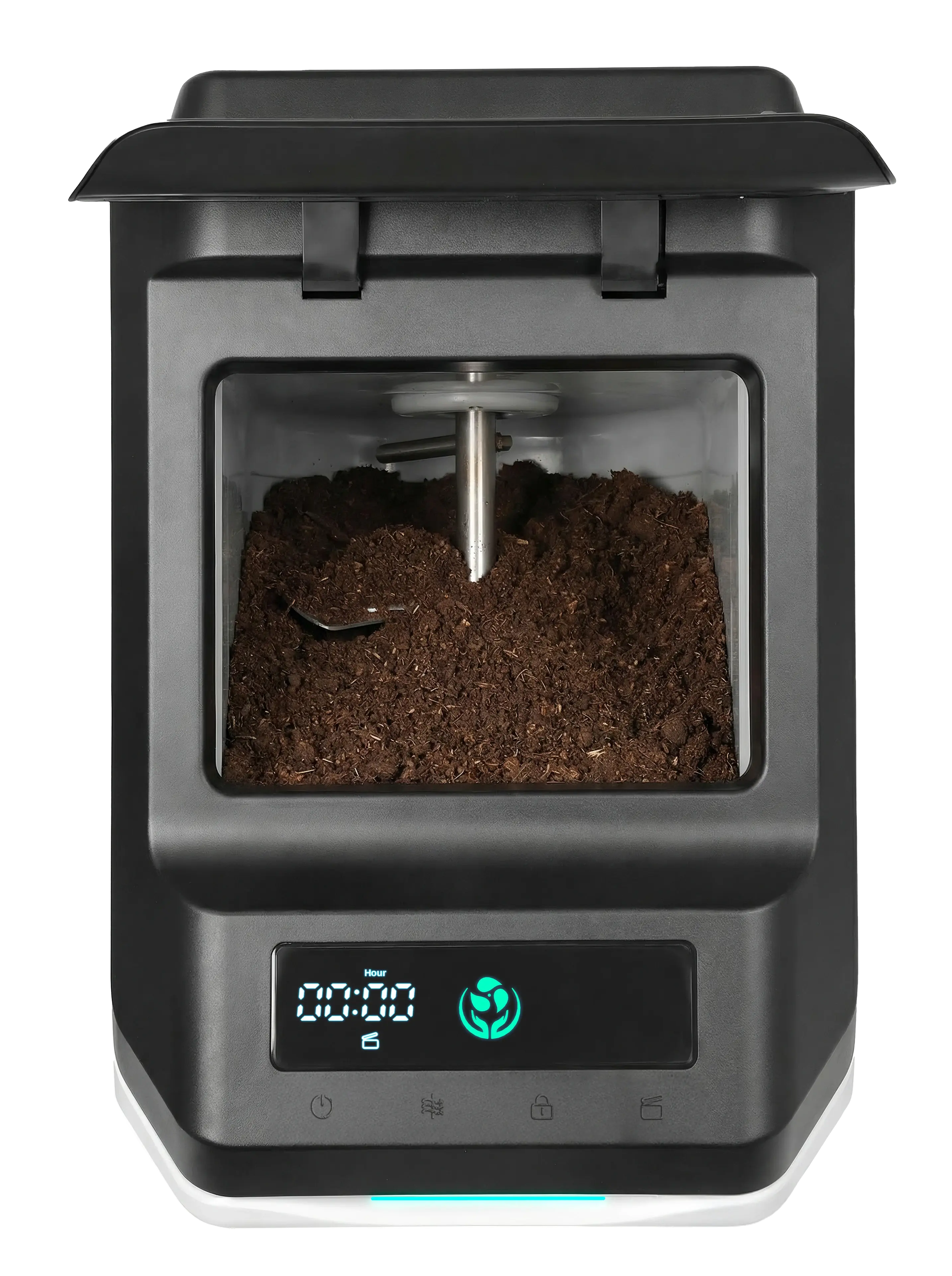
Ordinary potato scraps fit the normal kitchen-organic pathway in GEME Terra II.
Examples include:
- Potato peels
- Raw potato trimmings
- Cooked potato scraps
- Soft ordinary potatoes
- Ordinary spoiled potatoes
- Sprouted potatoes removed from edible use
Cut whole potatoes into smaller pieces before feeding and remove plastic packaging, produce labels and other non-organic materials.
If several pounds of potatoes have spoiled at once, spread the load across normal feedings rather than dumping one large mass of starch-rich material into the system at once.
GEME’s current FAQ confirms that ordinary spoiled or moldy foods can be processed as kitchen organics while non-organic, unsafe mechanical inputs and recalled or hazardous material remain outside normal use.

Compost what is genuinely left.
The Kitchen-to-Soil Loop
When a Potato Stops Being Food, Keep the Organic Material Moving
Terra II uses a continuous aerobic microbial process for suitable everyday kitchen organics. Potato peels and ordinary spoiled pieces can remain in a biological cycle instead of becoming another wet item in the trash.
15. What Happens to Potato Scraps During Composting?
Potatoes contain water, carbohydrates, minerals and other organic compounds that can be broken down biologically.
In aerobic composting, microorganisms use organic material as an energy and nutrient source. Oxygen, moisture, particle size and temperature affect how quickly the material changes.
Cutting a whole spoiled potato into smaller pieces exposes more surface area to microorganisms and generally makes it easier for the material to break down.
If you want the biology rather than just the input list, continue to How Does Composting Work?.
For GEME output, remember that Terra II is continuous-feed. The material harvested is a biologically active compost base rather than standardized potting soil. Larger unfinished fragments can be sifted and returned, and the output should be mixed with soil for plant use.
See the Advanced GEME Compost Application Guide for soil-use guidance.
16. Frequently Asked Questions About Potato Storage and Sprouts
How long do potatoes last?
Whole raw potatoes can generally keep for several weeks when stored in a cool, dark, dry and ventilated location. Actual shelf life varies substantially with variety, temperature, light exposure, damage and previous storage history.
What is the best way to store potatoes?
For ordinary household potatoes, use a cool, dark, dry and well-ventilated pantry or cupboard away from direct sunlight and heat. Avoid airtight plastic storage.
Can potatoes go bad?
Yes. Potatoes can become soft, shriveled, sprouted, green, moldy, wet or rotten. Heavy sprouting and extensive greening also raise a glycoalkaloid safety concern.
Should potatoes be stored in the refrigerator?
FDA recommends storing ordinary raw potatoes outside the refrigerator in a cool, dark location. Cold storage can increase reducing sugars and potentially increase acrylamide formation when the potatoes are later fried, roasted or baked.
Can you eat potatoes with sprouts?
Do not eat potato sprouts themselves. A firm, non-green potato with only very small early sprouts may sometimes be used after generously removing the sprouts, eyes and any green tissue. Strongly sprouted potatoes should not be eaten.
Can you eat sprouted potatoes?
The answer depends on the degree of sprouting. Minimal early sprouting in an otherwise firm, non-green potato may be manageable with generous trimming and peeling. Long, numerous or strong sprouts, especially together with greening or shriveling, are a reason to discard the potato.
Can you eat potatoes that have sprouted?
Do not treat all sprouting as equal. Never eat the sprouts. If the potato is strongly germinating, extensively green, old, shriveled or bitter, authoritative risk guidance recommends that it should not be consumed.
Is it safe to eat sprouted potatoes?
A slightly sprouted but otherwise firm and non-green potato may sometimes be used after the sprouts and eyes are generously removed. A heavily sprouted or green potato is not considered an appropriate food-salvage candidate because glycoalkaloid levels can be elevated.
Are potato sprouts poisonous?
Potato sprouts can contain high concentrations of glycoalkaloids such as α-solanine and α-chaconine. University of Minnesota Extension specifically advises that potato sprouts can be toxic and should not be eaten.
Why are green potatoes dangerous?
Greening indicates that the potato has been exposed to light, a condition associated with increased glycoalkaloid formation. Limited green tissue should be removed generously; extensively green potatoes should not be eaten.
Does peeling remove solanine?
Peeling can reduce glycoalkaloid content because much of it is concentrated in the peel and outer layers, but peeling is not a reliable way to rescue a strongly sprouted or extensively green potato.
Does cooking destroy solanine?
Some preparation and cooking methods reduce glycoalkaloid levels, but they do not guarantee elimination. Do not rely on cooking to make strongly sprouted, extensively green or bitter potatoes safe.
What happens if you eat too much solanine or potato glycoalkaloids?
Reported acute effects include nausea, abdominal pain, vomiting and diarrhea. Higher exposures can produce more serious neurological, respiratory or cardiovascular effects. If illness is suspected after eating green or strongly sprouted potatoes, seek appropriate medical advice.
Can you compost sprouted potatoes?
Ordinary non-recalled sprouted potatoes can generally enter an appropriate composting system once removed from edible use. Cut them into pieces for faster decomposition and remove non-organic packaging.
Can spoiled potatoes go in GEME Terra II?
Ordinary spoiled potatoes are kitchen organics and can generally be processed in Terra II. Cut large potatoes into smaller pieces and spread unusually large loads across normal feedings.
Authoritative Sources
- German Federal Institute for Risk Assessment (BfR) — Frequently Asked Questions About Solanine and Glycoalkaloids in Potatoes
- BfR — Green and Strongly Germinating Potatoes Should Be Sorted Out
- European Food Safety Authority — Glycoalkaloids in Potatoes: Public Health Risks Assessed
- U.S. FDA — Acrylamide and Diet, Food Storage, and Food Preparation
- U.S. FDA — Commodity-Specific Food Safety Guidelines for Potatoes
- USDA SNAP-Ed — Potatoes: Selection and Storage
- University of Minnesota Extension — Growing and Storing Potatoes
- GEME — Official Input and Composting FAQ
Sources reviewed August 2026. Potato safety should be based on actual condition, storage history and authoritative guidance rather than a single shelf-life number. Do not eat potato sprouts, extensively green potatoes, strongly sprouted potatoes or potato dishes with an unusually bitter taste.
Food Safety First
Do Not Eat a Dangerous Potato Just to Avoid Waste
The sustainable choice is to store potatoes correctly and eat them while they are still safe. Once a potato becomes strongly sprouted, extensively green or genuinely spoiled, food-safety boundaries come first. Suitable ordinary scraps can then move into an appropriate biological composting pathway.
In that order.


Leave a comment
All comments are moderated before being published.
This site is protected by hCaptcha and the hCaptcha Privacy Policy and Terms of Service apply.