


Kitchen Care · Trash Odor · Fly Prevention
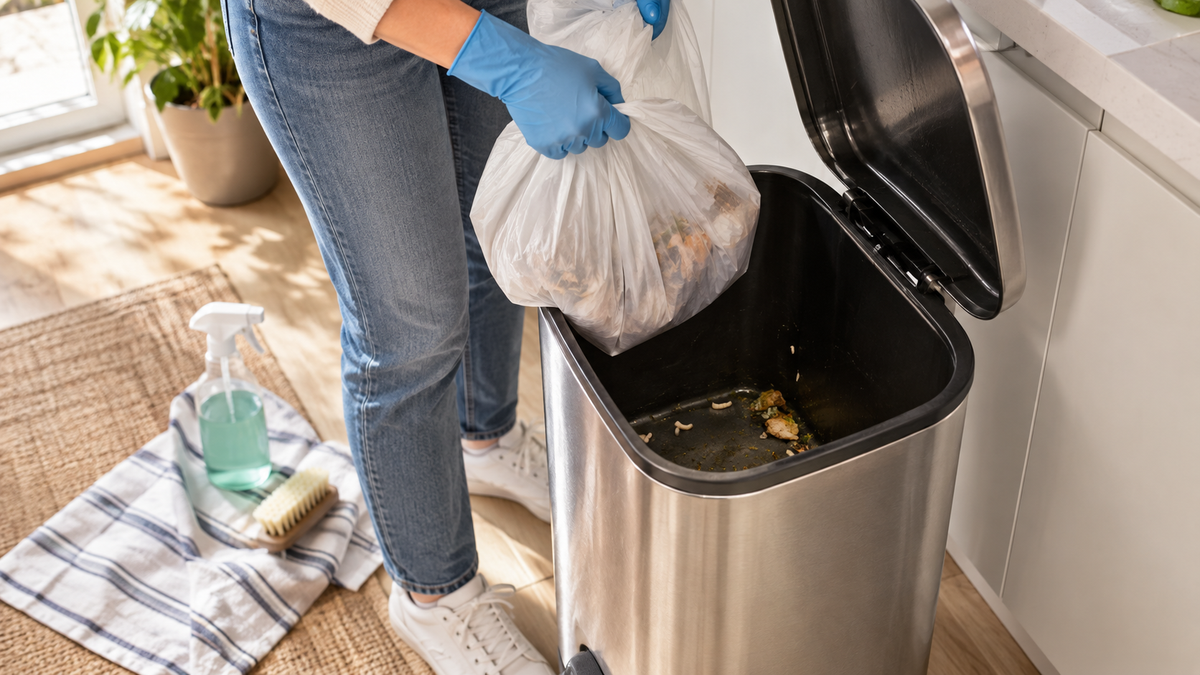
If you find maggots in your trash can, remove the infested waste first, clean away every trace of food residue and larvae, let the bin dry, and stop flies from reaching the next load of garbage.
Maggots are fly larvae. In a household trash can, they usually mean an adult fly found moist, decaying organic material where it could lay eggs. The visible larvae are therefore only one part of the problem: the food residue and fly access that created the breeding site must also be removed.
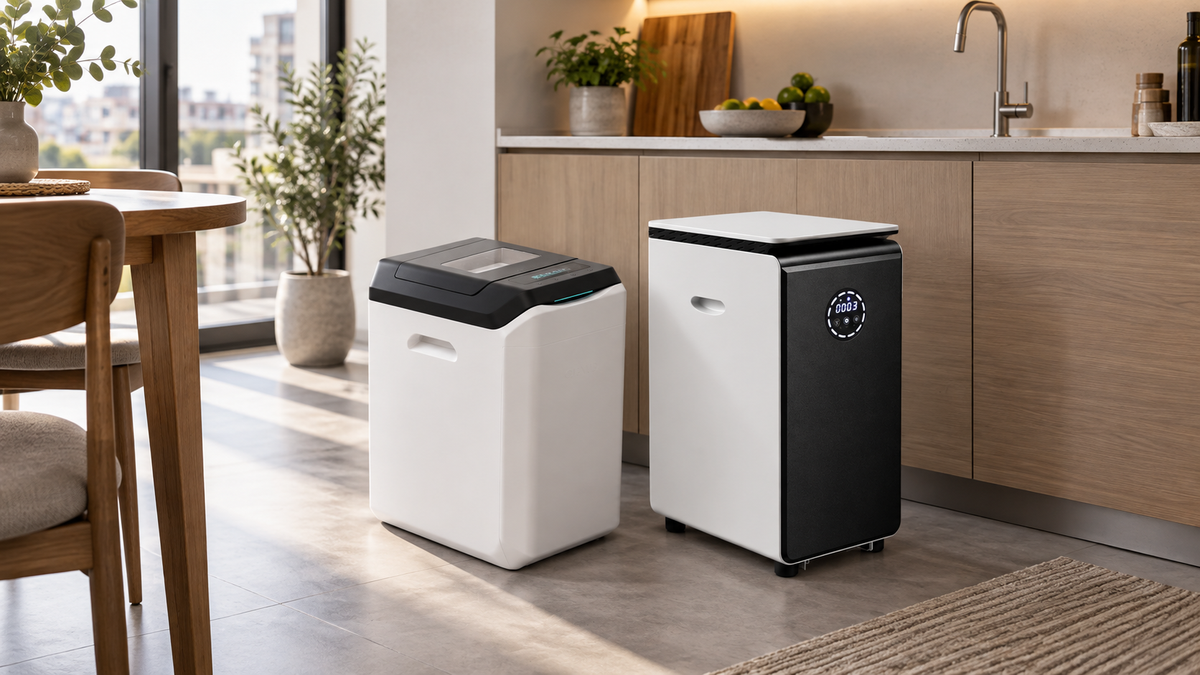
For kitchens that regularly throw food scraps into household garbage, prevention can also mean changing the food-waste workflow itself. GEME Terra 2 and GEME Pro let suitable kitchen scraps move directly into continuous microbial processing instead of sitting in the trash until collection day.

Quick Answer: How Do You Get Rid of Maggots in a Trash Can?
- Keep children and pets away while you clean the area.
- Put on gloves and seal the infested garbage in a durable trash bag.
- Move the waste out promptly according to your local collection rules.
- Remove remaining larvae and residue from the bottom, rim, lid, hinges, and nearby floor.
- Wash the trash can thoroughly with hot water and detergent suitable for the container.
- Rinse and let it dry completely before inserting a fresh bag.
- Find what attracted the flies and prevent wet food waste from accumulating again.
Do not simply kill the visible maggots and keep using the dirty bin. Long-term control depends on removing the breeding material and keeping the container clean, dry, and closed.
1. Why Are There Maggots in Your Trash Can?
Maggots are the larval stage of flies. Adult flies look for moist, decaying organic material that provides food for developing larvae. Household garbage containing food waste can provide exactly those conditions.
The University of Maryland Extension notes that egg-laying house flies seek warm, moist material with enough food for larval development. Utah State University Extension similarly identifies garbage and dumpsters as common breeding sites.
A trash can becomes especially attractive when several conditions overlap:
- food scraps remain in the bin for several days;
- liquid leaks from a bag;
- meat, fish, cooked leftovers, fruit, or other wet food begins to decay;
- food residue sticks underneath the lid or around the rim;
- the lid is left open or does not seal well;
- adult flies have easy access to the kitchen or outdoor garbage area;
- warm weather accelerates decomposition and fly development.
A small hidden leak can be enough. The bin does not need to look completely full for a breeding site to develop.
The larvae are the evidence, not the original cause. The most important question is: what moist organic material was available to the adult fly?
2. How to Remove Maggots From a Trash Can Immediately
Step 1: Isolate the Area
Keep children and pets away while you work. Wear disposable or washable gloves and avoid touching your face, food, or food-preparation surfaces during cleanup.
Step 2: Remove the Infested Garbage
Close or replace a leaking trash bag and move the infested waste out of the kitchen promptly. Follow local collection rules for disposal.
If the original bag is leaking, place it inside a second durable bag before carrying it through the home.
Step 3: Remove Loose Larvae and Debris
Collect visible larvae, food fragments, and residue from the bottom and sides of the trash can. Check underneath the rim, lid, hinge area, pedal mechanism, and the floor below the bin.
Maggots that have finished feeding may move away from the original waste before pupating, so also check nearby edges, cracks, and sheltered areas.
Step 4: Wash the Container
Wash the empty bin thoroughly with hot water and household detergent appropriate for the container. Mechanical cleaning matters because dried or greasy food deposits can remain even after the trash bag is gone.
What About Boiling Water?
Virginia Tech Extension notes that boiling water can kill maggots in garbage cans.
However, boiling water can cause severe burns and may deform some plastic bins. Use it only when the container is designed to tolerate that temperature, and you can handle the water safely. Physical removal followed by thorough hot-water-and-detergent cleaning is the safer default for many household bins.
Step 5: Dry the Bin Completely
Let the container drain and dry before fitting a clean liner. Removing moisture helps make the container less suitable for another generation of flies.
Step 6: Wash Your Hands and Clean Nearby Surfaces
After removing your gloves, wash your hands thoroughly. Clean any nearby surface that may have contacted leaking garbage or contaminated cleaning tools.
3. Clean More Than the Bottom of the Bin
One of the easiest mistakes is washing only the area where the maggots were visible.
Food residue can remain in places that are harder to see:
- under the lid;
- around the rim;
- inside bag-retaining rings;
- around a foot pedal or hinge;
- between an inner bucket and outer shell;
- on the wall behind the trash can;
- on the floor underneath it;
- inside the cabinet if the bin is built into cabinetry.
Clean those areas before returning the trash can to normal use.
House flies are associated with waste and can mechanically move microorganisms from contaminated material to other surfaces, which is another reason to keep garbage cleanup separate from food preparation. The University of Maryland Extension recommends prompt trash removal and keeping garbage cans as dry and clean as possible.
4. How to Prevent Maggots in Your Trash Can
Prevention is mainly about denying adult flies access to wet, decaying food.
Use a Tight-Fitting Lid
Keep the trash can closed between uses and repair or replace a lid that no longer seals properly. Both the University of Maryland and the Utah State Extension recommend tight-fitting garbage-can lids as part of fly control.
Do Not Let Food Waste Build Up for Too Long
During warm weather, shorten the time highly perishable food remains in household trash. Meat scraps, fish, wet leftovers, and leaking food can become attractive quickly.
Prevent Bag Leaks
Drain excess liquid from waste when appropriate and replace damaged bags. Clean spills immediately instead of allowing liquid to pool at the bottom of the can.
Rinse Food Containers Before Recycling
Trash is not the only source. Residue from meat trays, pet-food containers, beverage bottles, and other packaging can also attract flies.
Keep the Bin Dry Between Bags
If you wash the bin, allow it to dry before installing a new liner. A permanently wet container is easier for fly larvae to use than a clean, dry one.
Keep Adult Flies Out
Maintain window and door screens and close obvious entry gaps where practical. Adult control helps, but removing breeding material remains the most important step.
6. How GEME Changes the Food-Waste Routine
The Strongest Prevention Step: Stop Storing So Much Food in the Trash
A household trash can does not process food. It stores it until collection.
GEME changes that workflow. Suitable kitchen scraps can move directly from meal preparation into a continuously active microbial system instead of remaining in a garbage bag where they can leak, decay, smell, and become accessible to flies.
This is the most relevant GEME advantage for a household that has experienced maggots.
The appliance is not an insecticide and does not guarantee that flies can never enter a kitchen. Instead, it removes a major category of moist organic material from the ordinary trash pathway.
For a deeper explanation, read what a GEME Composter actually does.
Continuous Feeding Means Less Scrap Storage
Food waste appears throughout the day: vegetable ends during lunch preparation, peels at breakfast, leftovers after dinner.
Batch-based disposal habits often create a temporary bowl or trash bag of scraps waiting for later. GEME uses an established microbial bed, allowing appropriate scraps to be added throughout the day within the model's feeding guidance.
That means suitable food can enter the processing system when it is generated rather than spending several days in the kitchen trash.
An Enclosed Microbial System, Not a Garbage Storage Bin
GEME Terra 2 and GEME Pro use Kobold™ living microbes inside managed aerobic chambers. Food is biologically processed instead of simply waiting behind a lid for collection day.
If you want to understand the biological difference, continue to how a real electric composter works.
Built-In Odor Management Without Routine Carbon-Filter Replacement
Both GEME models use permanent odor-treatment technology and do not require routine activated-carbon filter replacement.
That matters because reducing food waste in the trash should not simply replace one recurring kitchen maintenance task with another.
For a detailed odor comparison, see our electric composter odor-control guide.
Do Not Pour an Infested Trash Can Into GEME
GEME should be used prospectively for fresh, suitable kitchen scraps, not as a disposal container for an already infested garbage bag. Remove infested trash through the normal waste route, clean the garbage can, and then keep future suitable food scraps out of the trash by feeding them into GEME according to product guidance.
7. Terra 2 or GEME Pro for Keeping Food Scraps Out of the Trash?
Choose based on how much food waste your household generates, not on the number of maggots you saw.
| Feature | GEME Terra 2 | GEME Pro |
|---|---|---|
| Chamber volume | 14 L | 19 L |
| Daily processing capacity | Up to 2 kg/day | Up to 5 kg/day |
| Typical household fit | 1–3 people | 4+ people or heavier cooking |
| Feeding style | Continuous | Continuous |
| Best fit | Everyday kitchen scraps from smaller homes and apartments | Large families, frequent cooking, and heavier daily food-scrap volume |
| Routine activated-carbon filter replacement | Not required | Not required |
Terra 2: Everyday Food-Waste Diversion
Terra 2 is designed around the normal food-scrap volume of a 1–3 person household. Its 14 L microbial chamber supports up to 2 kg of suitable food scraps per day.
For a smaller kitchen, the main value is simple: peels, cores, coffee grounds, preparation scraps, and suitable leftovers can move into a continuous processing routine instead of accumulating in the trash.
GEME Pro: More Headroom for Family Cooking
GEME Pro increases the chamber to 19 L and supports up to 5 kg of suitable food scraps per day.
That extra capacity becomes especially useful in homes where several meals are cooked each day, and the trash otherwise receives a constant stream of wet organic material.
Compare both systems in the Terra 2 vs GEME Pro comparison.
8. Which Food Scraps Can You Keep Out of the Trash?
A composter is most useful when the household knows what should move into it and what should remain in another waste stream.
GEME is designed for a broad range of ordinary kitchen organics. Packaging, plastics, glass, metal, cleaning chemicals, and other non-food waste do not belong in the microbial chamber.
Before building a new kitchen routine, use our complete guide to what you can compost at home.
If you are new to composting entirely, start with the complete home composting guide.
9. What Should You Not Do When You Find Maggots?
| Action | Better Approach |
|---|---|
| Kill the visible maggots but leave the garbage | Remove the breeding material and clean the container. |
| Spray chemicals into a dirty bin and stop there | Sanitation and source removal are the foundation of control. |
| Mix household cleaning chemicals | Use cleaning products only according to their labels and never mix incompatible chemicals. |
| Pour boiling water into any plastic trash can | Use boiling water only if the material is heat-safe, and you can handle it without a scalding risk. |
| Transfer an infested trash bag into GEME | Dispose of the existing infestation normally. Use GEME for suitable fresh scraps going forward. |
| Add insecticide, bleach, or pest-control liquid to GEME | Keep household pest chemicals out of the living microbial bed. |
| Ignore larvae appearing elsewhere in the house | Look for another breeding source or hidden dead animal if appropriate. |
Stop Letting Food Scraps Wait for Trash Day
Maggots are a cleanup problem today. The more useful long-term change is reducing how much wet organic material sits in the household garbage tomorrow.
Move suitable daily scraps into continuous microbial processing with Terra 2, or choose GEME Pro when a larger household needs substantially more processing capacity.
10. Frequently Asked Questions
Why do I have maggots in my trash can?
Maggots are fly larvae. Adult flies can lay eggs in moist, decaying organic material such as food waste. Leaking garbage, warm temperatures, an open lid, and food residue around the bin can create suitable breeding conditions.
What kills maggots in a garbage can?
Removing the infested waste and physically cleaning away larvae is the most important first step. Virginia Tech Extension notes that boiling water can kill maggots, but very hot water can deform some plastics and cause serious burns. For many household bins, thorough removal followed by hot water and detergent is a safer routine.
Do I need bleach to get rid of maggots?
No. The main control step is removing the breeding material and cleaning the bin thoroughly. If you choose to use a disinfecting product afterward, follow its label exactly and never mix household cleaning chemicals.
Will maggots turn into flies?
Yes. Maggots are the larval stage of flies. After feeding, the larvae move toward a suitable place to pupate, and adults later emerge.
How do I stop maggots from coming back?
Keep the trash can clean, dry, and closed with a tight-fitting lid. Remove food waste promptly, prevent bag leaks, clean spills, and reduce the amount of wet organic material that sits in the trash between collections.
Can I put maggots from my trash can into GEME?
Do not use GEME as a disposal route for an already infested trash bag or contaminated garbage. Remove and dispose of the existing infestation normally. GEME is better used to keep future suitable kitchen scraps out of the trash before the waste becomes a fly-breeding source.
Can GEME prevent maggots in my trash can?
GEME cannot guarantee that flies or maggots will never occur in a household. Its practical advantage is reducing the amount of suitable food waste stored in ordinary trash by moving those scraps into an enclosed, continuously active microbial processing system.
Which GEME model is better for food-heavy trash?
Terra 2 is designed primarily for 1–3 person households and supports up to 2 kg of suitable food scraps per day. GEME Pro provides a 19 L chamber and up to 5 kg/day for larger households and heavier cooking routines.



Leave a comment
All comments are moderated before being published.
This site is protected by hCaptcha and the hCaptcha Privacy Policy and Terms of Service apply.