


New York City · Composting Laws · Updated 2026
Composting in New York City is no longer just a good environmental habit; it is a citywide separation requirement. The good news? Once you know which scraps go where, how your building handles collection, and when to set out your bin, the routine can be surprisingly manageable.

Quick answer
What are the NYC compost rules in 2026?
All NYC residents must separate food scraps, food-soiled paper, and yard waste from ordinary trash. DSNY provides free curbside compost pickup once a week, on the same day as recycling. Food waste goes in a clearly labeled, securely lidded compost bin no larger than 55 gallons. Owners and managers of buildings with four or more apartments must provide designated storage with labeled compost bins. Fines for separating compost incorrectly began April 1, 2025, and the rule remains in effect in 2026.
Use the current DSNY curbside composting page for updates specific to your property.
1. Is Composting Mandatory in NYC in 2026?
Yes. New York City's curbside composting program is available citywide, and separating compostable material from trash is mandatory for residents. The citywide compliance grace period ended on April 1, 2025. That means the legal obligation exists even when inspections and ticketing fluctuate.
The gap between the rule and its enforcement helps explain why some New Yorkers are still confused. A 2026 Independent Budget Office analysis found that organics accounted for roughly 36% of NYC's residential waste stream, yet organics collection represented only 2.4% of residential waste collected in 2025. It also documented considerably fewer compost-related fines in early 2026 than in the initial April 2025 enforcement period.
New to the process? Learn how composting works and why different systems need different conditions.
The practical takeaway: do not base your household routine on whether fines seem common. Separate correctly now, make sure your building has a workable system in place, and use a drop-off option when it makes sense.
2. What Can You Compost Under NYC Compost Rules?
NYC's curbside program accepts a wider range of materials than many backyard compost piles. This is one of the most helpful details to keep in mind before sorting your first bag of scraps.
For a material-by-material comparison, see what you can compost at home. Home-pile recommendations differ from DSNY's curbside list below.
Accepted in NYC curbside compost
- Food scraps: fruit and vegetable peels, eggshells, coffee grounds, tea bags, bread, rice, pasta, leftovers, and spoiled food.
- Animal products: meat, fish, shells, bones, dairy, and cooked foods.
- Food-soiled paper: greasy, uncoated pizza boxes, uncoated paper plates, and napkins.
- Yard and plant waste: leaves, grass clippings, small branches, flowers, and houseplants.
- Certified or labeled compostable products: accepted by DSNY's curbside program, but do not assume other compost systems accept them.
Keep these out
Do not mix in plastic wrappers, noncompostable packaging, metal, glass, cartons, clean paper or cardboard, pet waste, diapers, medical waste, or hygiene products. The city also advises against using black plastic bags as compost bin liners.
A detail that causes mistakes
Accepted by DSNY does not mean accepted by every composting method. A greasy pizza box may belong in a NYC curbside compost bin but should not automatically go into a home electric composter. Smart Bins, community drop-off sites, and indoor processors each have their own input rules.
3. NYC Compost Rules at a Glance: Four Different Paths
Think of NYC composting as four connected decisions: what goes to the curb, what goes to public drop-off sites, what a building manager must provide, and what can be handled inside your home.
| NYC Curbside Collection | Smart Bins & Drop-Off Sites | Apartment Buildings | GEME Indoor Processing |
|---|---|---|---|
|
Schedule: Once a week, with recycling. Bin: Labeled, secure lid, 55 gal or smaller. |
Smart Bins: Open 24/7, accessed with the NYC Compost app. Community sites: Hours vary. |
4+ units: Owner or manager must provide designated storage and clearly labeled compost bins. | Continuous use: GEME Terra 2 and GEME Pro process approved food scraps indoors using microbial activity. |
| Accepts: All food scraps, including meat, bones and dairy; food-soiled paper; yard waste. |
Smart Bins: All food scraps, food-soiled paper and plant waste. Most community sites: No meat, fish, bones, dairy, fats, oils or prepared foods. |
Management: Keep storage and signage usable; communicate sorting instructions; arrange correct setout. | Common inputs: Vegetable scraps, grains, coffee grounds, leftovers, meat, dairy and small bones within product guidance. |
| Not accepted: Trash, wrappers, metal, glass and regular plastics. | Check first: A green community site may have stricter rules than an orange Smart Bin. | If it fails: Ask management for a solution, request DSNY training or submit a report through 311. | Avoid: Packaging, plastics, metals, large dense bones and excessive oils. Follow the actual product manual. |
The first three columns summarize DSNY rules and facilities. The fourth is product-specific advice, not a municipal compliance exemption.

4. How to Compost in NYC With Curbside Collection
For most households, the easiest approach is simple: collect scraps in your kitchen, transfer them to a properly labeled building or curbside compost bin, and put the bin out on the correct collection day.
Separate indoors
Use a small lidded container for food scraps and food-soiled paper. Drain excess liquid and empty it regularly.
Use the right bin
Transfer scraps into a clearly labeled compost bin, 55 gallons or less, with a secure lid. A DSNY brown bin is optional for compost.
Set out on schedule
Place the bin out the evening before your recycling day, observing DSNY setout time rules and holiday changes.
Which bags and bins are allowed?
You may line your compost bin with clear plastic, paper, or compostable bags. You can also use small bags to gather food scraps inside the larger bin. Close or tie liners before setting the bin out. Black plastic bags are not permitted as compost liners. A properly labeled non-DSNY bin is fine as long as it is no larger than 55 gallons and its lid secures tightly.
Important 2026 distinction: Properties with 1–9 residential units now have an official NYC Bin requirement for non-recyclable trash. That is a separate containerization rule. An official NYC Bin is not mandatory for compost collection, according to DSNY.
What time can you put compost at the curb?
For collection in a secure-lid bin, the normal evening setout window begins after 6:00 PM, with material placed out by midnight. Extra yard waste in permitted clear or paper bags follows the bagged setout window beginning after 8:00 PM. Certain qualifying larger buildings may have approved alternative setout times; check your building's DSNY instructions.
Food scraps and yard waste can share an approved, securely lidded compost container. For extra-loose yard waste, follow DSNY's specific bag-and-branch-bundling guidance rather than leaving mixed food waste in an exposed bag.
What about leaves from a hired landscaper?
Residential yard waste produced by the homeowner or resident may be eligible for DSNY pickup. Yard waste produced by a commercial landscaper or contractor must be handled by that provider and taken to an appropriate permitted facility. Do not assume your hired gardening crew can leave its waste for residential curbside pickup.
5. Smart Composting Bins vs. Community Drop-Off Sites
NYC's drop-off network is useful when carrying scraps to a building bin is difficult, you have extra material, or you want another convenient place to dispose of food scraps. But not all drop-off sites accept the same things.
Smart Composting Bins: The flexible 24/7 choice
NYC Smart Composting Bins are located across the five boroughs. They are accessible 24 hours a day, seven days a week, and can be found and unlocked with the free NYC Compost app. Like curbside compost, they accept all food scraps, including meat, bones, dairy, cooked foods, greasy uncoated paper plates and pizza boxes, plus houseplants and flowers.
Community food scrap drop-off: Check the accepted list
Community gardens, parks, schools and nonprofits may operate food-scrap sites with limited hours. Many accept fruit and vegetable scraps, eggshells, coffee grounds, tea bags, bread, rice, pasta and plant waste. Most do not accept meat, fish, bones, dairy, oil, fat or prepared food.
On the official DSNY drop-off finder, orange markers indicate Smart Bins and green markers indicate community food-scrap sites. Check the site's hours and accepted materials before visiting.
6. NYC Compost Rules for Apartment Buildings and Renters
Apartment living changes the logistics, not the obligation to separate organics. Even if you never personally take a bin to the curb, your scraps still need a correct route from your kitchen to DSNY collection or another appropriate outlet.
For practical storage and method choices for small homes, explore our guide to composting in an apartment.
What is required for buildings with four or more units?
DSNY requires owners or property managers of residential buildings with 4+ units to provide a designated compost storage area with clearly labeled bins. The practical system should be accessible to residents and supported by usable instructions, enough container capacity, and a plan for weekly curbside setout.
That four-unit threshold is different from the nine-unit boundary in the compost-fine schedule. In other words, a building may face a storage obligation because it has four units, while its separation-violation fine tier is determined by whether it has eight or fewer units or nine or more.
What if your landlord or building does not provide bins?
- Ask the superintendent or property manager where the designated compost area is and who handles weekly setout.
- Share DSNY's official curbside composting FAQ and signage guidance.
- Request a DSNY training, presentation, or site visit if residents and staff need help establishing a routine.
- If compostable waste is being mixed with trash and the problem continues, contact NYC311. For NYCHA buildings, DSNY advises residents to contact their building super.
A nearby Smart Bin can make life easier, but it is still worth resolving recurring building-management problems rather than treating an unreliable system as normal.
7. How Much Are NYC Composting Fines in 2026?
Fines for improperly separating compostable materials are based on building size and repeat violations. DSNY lists the following amounts for compost separation violations:
| Building size | First offense | Second offense | Third and later offenses |
|---|---|---|---|
| 1–8 residential units | $25 | $50 | $100 |
| 9+ residential units | $100 | $200 | $300 |
These amounts apply to compost separation violations. An incorrect setout or broken/unsecured bins can trigger various violations and fines. Source: DSNY Collection Laws for Residents.
Are NYC compost fines actively enforced?
The mandate remains in force, but actual enforcement has varied. The NYC Independent Budget Office reported 4,259 organics-related summonses during roughly three weeks of full enforcement in April 2025, compared with 415 in January and February 2026 combined. That is about 237 per day versus 7 per day. The report characterizes early-2026 ticketing as a partial resumption rather than a return to the original intensity.
Do not interpret a low ticket rate as permission to stop separating compost. Enforcement policy and inspection activity may change, while the separation requirement remains in place.
8. Where Indoor Composting Fits: GEME Terra 2 vs. GEME Pro
City collection solves what happens after your scraps leave the apartment. For many New Yorkers, the harder part is the daily journey from a small kitchen to a shared building bin, especially when space, odors or a trip downstairs make that journey inconvenient.
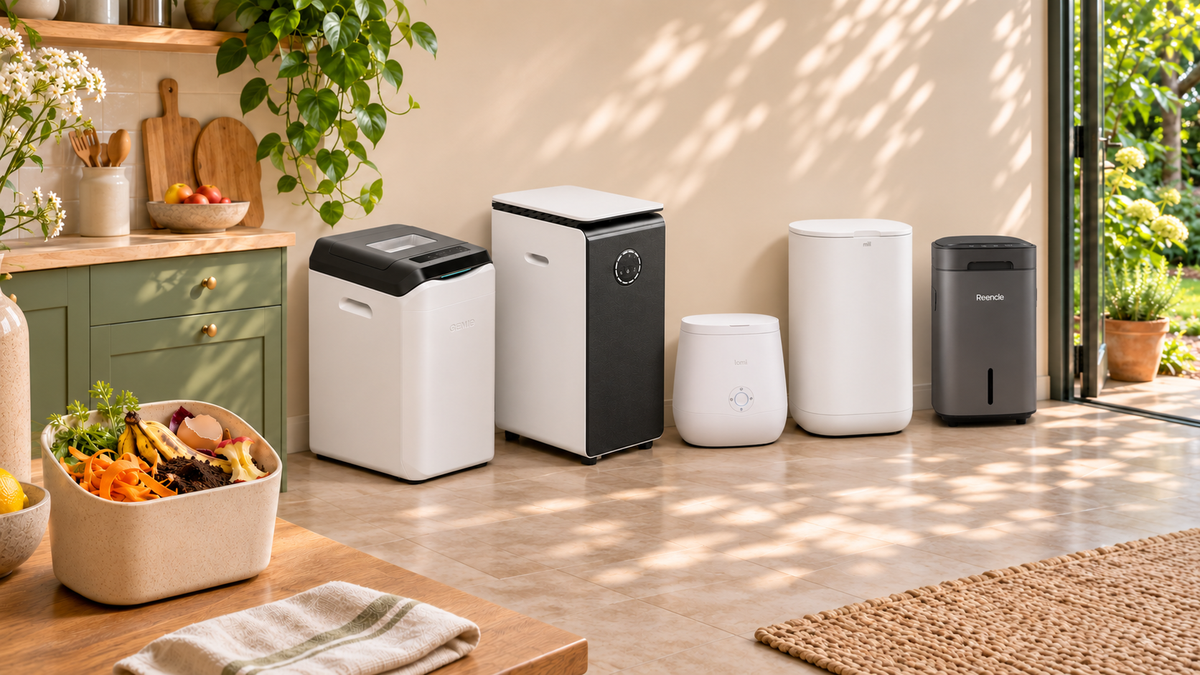
An indoor processor can make that daily routine easier. GEME Terra 2 and GEME Pro use GEME Kobold microorganisms in a continuously aerated chamber to biologically break down approved food scraps. GEMEBrain supports adaptive operation on the GEME Terra 2. The resulting material is a moist, biologically active compost base, rather than simply heat-dried food scraps. Depending on the material's maturity, it may require additional curing or appropriate mixing into soil before plant use.
For more detail on the process and household fit, read what a GEME composter is and how it works.
| Feature | GEME Terra 2 | GEME Pro |
|---|---|---|
| Suggested household | 1–3 people | 4+ people, or heavier daily scraps |
| Processing capacity | Up to 2 kg/day | Up to 5 kg/day |
| Chamber size | 14 L | 19 L |
| Height | 56.6 cm | 66.5 cm |
| Typical harvest/clean interval | About every 3–6 months, depending on use | About every 6–12 months, depending on use |
| Best fit | Compact kitchen bin zone | Dedicated floor space, larger household |
Specifications and usage recommendations are from GEME's official model comparison. Processing amounts describe rated capacity, not a guaranteed rate for every food type.
What food can go into GEME?
Everyday vegetable scraps, fruit peels, coffee grounds, grains, cooked leftovers, meat, dairy and small bones are within GEME's stated food-input range. Avoid plastics, metal, packaging, large dense bones and excessive oils. Unlike NYC curbside bins, GEME should not be treated as a catch-all for greasy pizza boxes, bag liners or all certified compostable packaging. Check the latest GEME input guidance before adding non-food items.

Before using the output with plants, review the GEME compost application guide for screening, soil mixing and appropriate use.
Does GEME replace DSNY compost collection?
No. GEME is an optional indoor food-scrap management tool, not an exemption from NYC compost rules. You still need to separate and properly dispose of organics you do not process indoors, such as larger quantities of yard waste or food-soiled paper, and follow applicable building and setout requirements.
9. A Simple NYC Compost Checklist for Every Week
Whether you live in a Manhattan studio, a Brooklyn walk-up or a Queens house, this workflow covers the essentials without turning composting into a second job.
Your weekly routine
- Check your collection day. NYC compost is usually picked up on recycling day; watch for DSNY holiday updates.
- Separate at the source. Put food scraps and food-soiled paper somewhere other than the regular trash.
- Choose the correct destination. Use a compliant building/curbside bin, a Smart Composting Bin, or an appropriately limited community site.
- Control moisture. Drain excess liquid, secure lids and tie approved liners as directed.
- Confirm building access. Know where the shared compost bin lives and who sets it out.
- Keep the indoor option separate. If using GEME, add only product-approved inputs; use municipal collection for everything else.
The best system is the one that is legally correct and easy enough to repeat. Solve the building's collection workflow first; then choose whether indoor processing would make your kitchen routine more comfortable.
Frequently Asked Questions About NYC Compost Rules
Is composting mandatory in New York City in 2026?
Yes. All NYC residents must separate food scraps, food-soiled paper and yard waste from regular trash. The mandate applies citywide. Property owners can be fined for violations.
Can you put meat, bones and dairy in an NYC compost bin?
Yes. NYC curbside compost and Smart Composting Bins accept meat, bones, dairy and prepared foods. Most community drop-off sites have stricter restrictions, so confirm before arriving.
Do I have to buy an official NYC brown compost bin?
No. DSNY allows a clearly labeled bin of 55 gallons or less with a secure lid. The official NYC Bin requirement for the ordinary trash of buildings with 1–9 units is a separate rule.
When is compost picked up in NYC?
DSNY provides weekly curbside compost collection on the same day as recycling. Your address and holiday schedules determine the exact date.
Are NYC Smart Composting Bins free and available 24/7?
Yes. DSNY describes Smart Bins as free drop-off options accessible 24/7 through the NYC Compost app. Availability of individual bins should be checked in the app.
What if my apartment building has no compost bins?
Ask management or your super for the designated storage area. For buildings with four or more units, DSNY requires clearly labeled compost bins and designated storage. You may request DSNY training or report continued noncompliance through 311.
Can I compost at home instead of using DSNY?
Indoor composting can handle some food scraps, but it does not cancel the legal duty to properly separate and dispose of remaining organic waste. Your building must still follow applicable storage and collection requirements.
Make NYC Composting Easier at the Kitchen Level
Get your building's DSNY workflow right first. Then, if you want to process part of your food waste indoors before it ever reaches the communal bin, compare the compact GEME Terra 2 with the higher-capacity GEME Pro.
Official Sources & Further Reading
City requirements and fine amounts were checked against municipal guidance. Enforcement statistics come from NYC's Independent Budget Office; product specifications come from GEME. Rules, enforcement practices and collection schedules may change after this article's review date.
- NYC Department of Sanitation — Curbside Composting (mandatory separation, accepted materials, bins, weekly pickup)
- DSNY — Collection Laws for Residents (violation amounts, building thresholds, setout)
- DSNY — Curbside Composting FAQ (liners, building concerns, commercial landscapers, processing destinations)
- DSNY — Food Scrap Drop-Off (Smart Bins and community-site accepted materials)
- NYC311 — Curbside Composting (official resident guidance)
- NYC311 — Residential Waste Containerization (trash-bin versus compost-bin rules)
- NYC Independent Budget Office — Curbside Composting: Current Trends (April 2026) (collection and enforcement data)
- GEME — Official Product Comparison (GEME Terra 2 and GEME Pro capacity and dimensions)
- GEME — Product FAQ (supported inputs and usage guidance)


Leave a comment
All comments are moderated before being published.
This site is protected by hCaptcha and the hCaptcha Privacy Policy and Terms of Service apply.