
Electric Kitchen Composter Comparison 2026
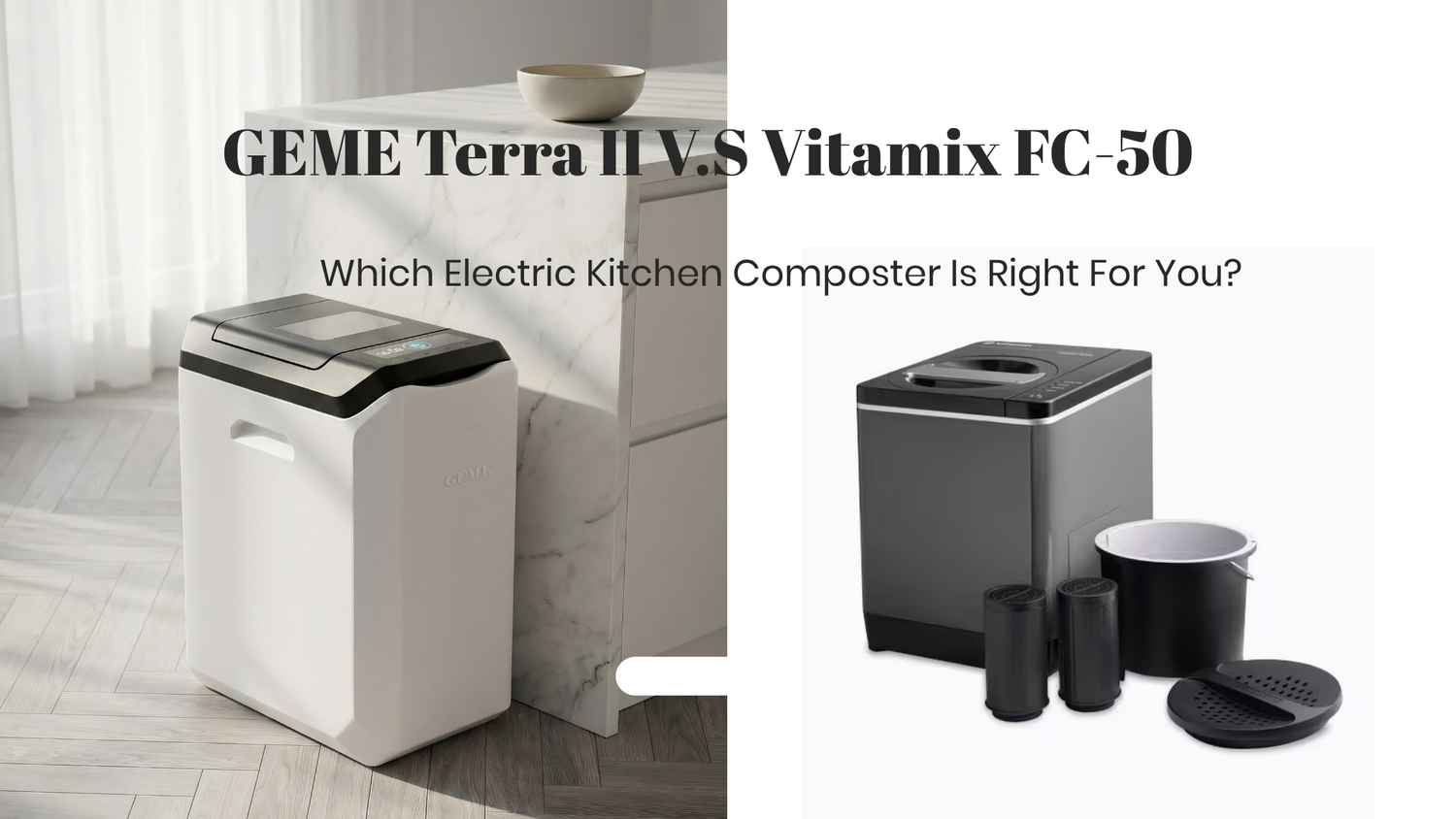
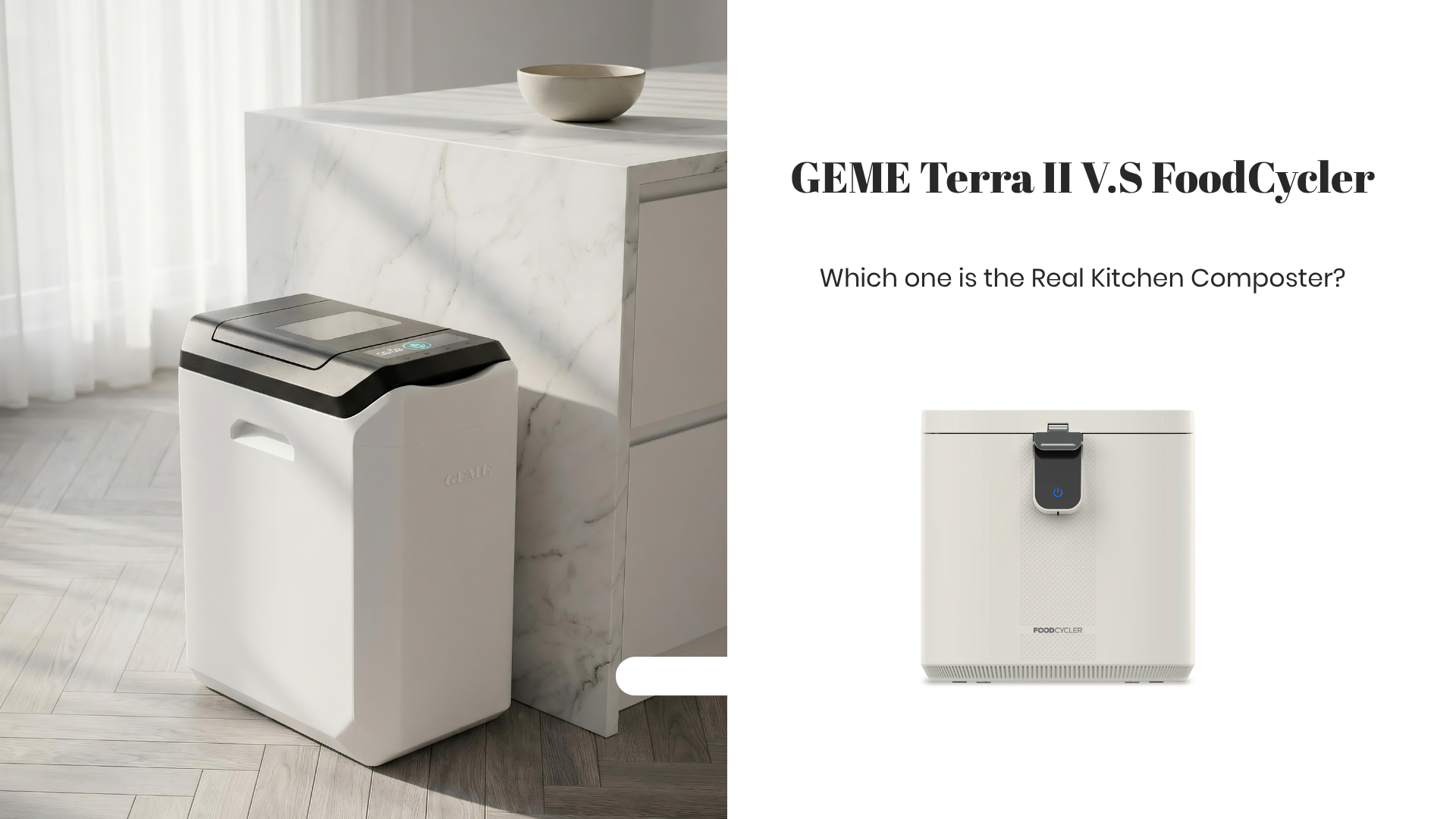
GEME Terra II and Vitamix FoodCycler FC-50 are often compared as electric composters, but they use completely different technologies.
Vitamix FoodCycler dries and grinds food waste into a processed food-waste material. GEME Terra II is an electric kitchen composter designed to produce real compost through microbial decomposition.
This guide compares technology, output quality, odor control, filter replacements, long-term cost, daily use, and real composting value.
Microbial composter or food recycler?
Quick Answer
The Vitamix FoodCycler FC-50 is best understood as a food recycler, dehydrator, and grinder. It reduces food-waste volume, but it does not complete the same microbial composting process that creates real compost.
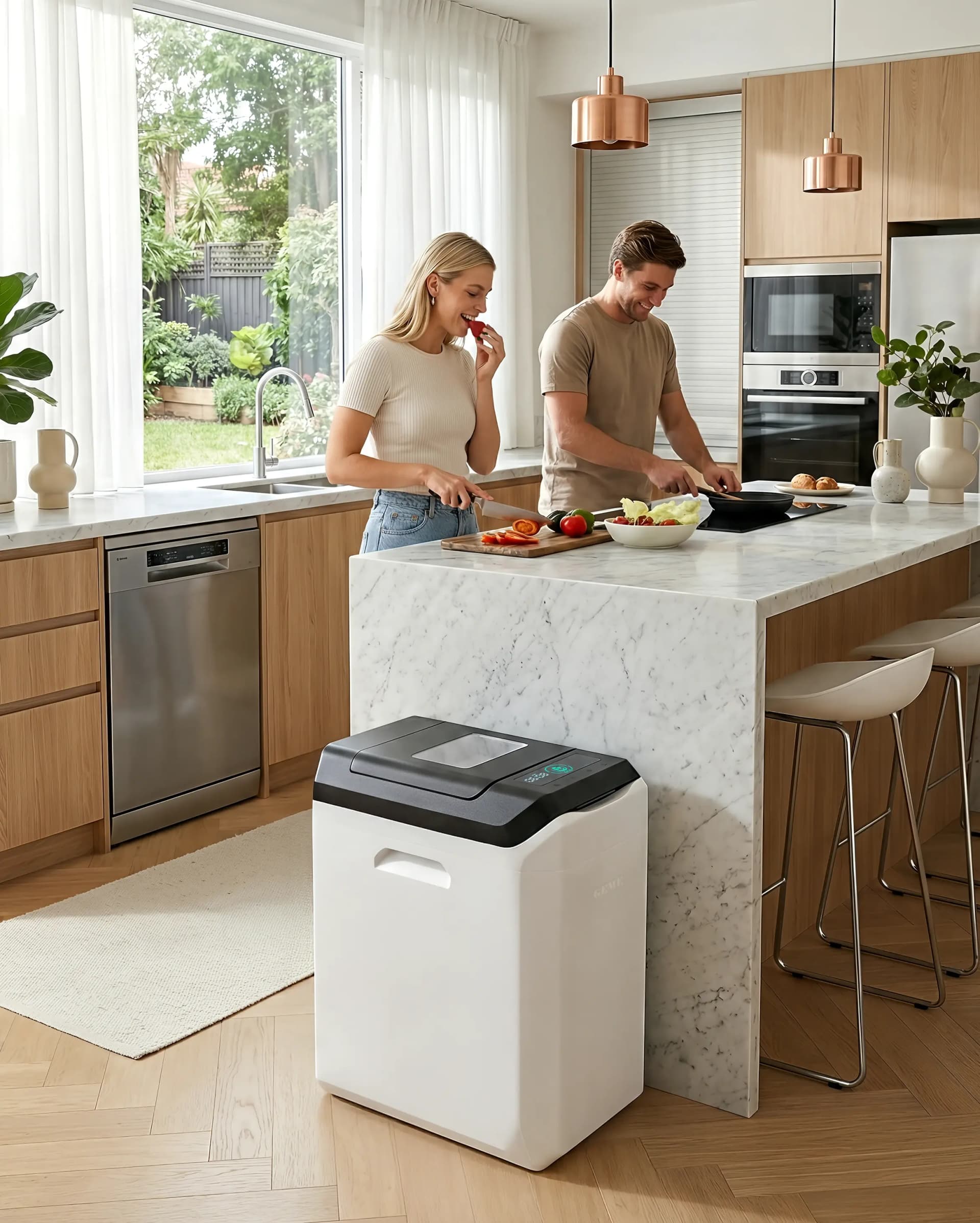
GEME Terra II is a real microbial electric kitchen composter. It uses living microbes, controlled aerobic decomposition, and continuous daily feeding to transform food scraps into real compost for garden and soil use.
The ownership difference is just as important: FoodCycler uses replaceable carbon filters, while GEME Terra II has no filter replacements and no recurring filter costs.
For broader context, read real compost vs dehydrated food waste, GEME Terra II vs FoodCycler, and best kitchen composter 2026.
Key Takeaways
- FoodCycler is a food recycler. It uses drying and grinding to reduce food waste volume.
- GEME Terra II is a real microbial kitchen composter. It uses living microbes and aerobic decomposition to create real compost.
- Output quality is the biggest difference. FoodCycler output needs further biological breakdown; GEME output is real compost for soil mixing and garden use.
- Filter costs matter. FoodCycler uses replaceable carbon filters; GEME Terra II has no filter replacements and no recurring filter costs.
- Daily use is different. FoodCycler is batch-based; GEME Terra II supports continuous feeding for everyday kitchen scraps.
Table of Contents
At a Glance: Two Fundamentally Different Machines
FoodCycler and GEME Terra II may both sit in the electric food-waste appliance category, but they solve different problems.
| Dimension | Vitamix FoodCycler FC-50 | GEME Terra II |
|---|---|---|
| Category | Food recycler / dehydrator-style machine | Electric kitchen composter and real composter |
| Core technology | Heat drying plus mechanical grinding | Kobold™ microbial composting plus intelligent aerobic control |
| End product | Dry processed food-waste material | Real compost for soil mixing and garden use |
| Biological activity | Not a living microbial composting system | Living microbial ecosystem |
| Odor control | Replaceable carbon filters | Permanent odor-control system |
| Filter replacements | Required over time | No filter replacements |
| Continuous feed | No, batch cycle | Yes, add scraps as part of daily kitchen life |
| Best for | Waste-volume reduction | Families, gardeners, and real compost users |
Core Technology: Physical Dehydration vs Biological Transformation
How the Vitamix FoodCycler Works
The Vitamix FoodCycler FC-50 uses a batch cycle based on drying, grinding, and cooling. Food scraps are heated to remove moisture, then mechanically processed into small dry particles.
This process can reduce food-waste volume and help manage odor, but it is physical processing rather than biological composting. The machine does not maintain a living microbial ecosystem, and the output has not gone through compost stabilization.
In simple terms, the FoodCycler is useful as a food recycler or food-waste dehydrator, but it should not be confused with a real composter.
How GEME Terra II Works
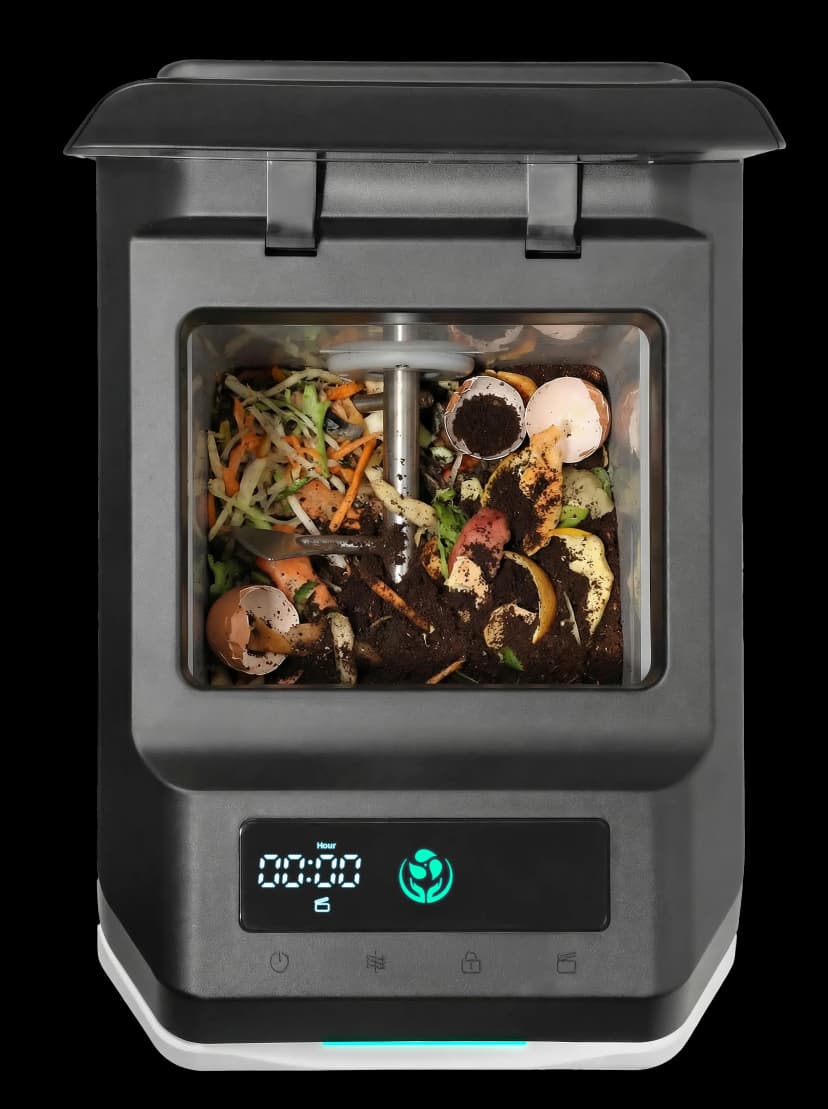
GEME Terra II is an electric kitchen composter designed for real indoor composting at home. Instead of drying food scraps into powder, it maintains a living microbial environment that biologically decomposes organic waste.
At the heart of GEME Terra II is Kobold™, a microbial composting system designed to handle the variability of household kitchen waste, including cooked foods, mixed leftovers, meat, dairy, fish, and small bones within GEME feeding guidance.
GEME Terra II manages the composting environment by supporting:
- Temperature control
- Oxygen availability
- Moisture balance
- Mixing
- Continuous microbial activity
- Indoor odor control without filter replacements
This is why GEME Terra II should be understood as a kitchen composter, electric composter, and real composter.
The Scientific Difference
Composting requires microbial decomposition. Dehydration removes water, but it does not transform food waste into stable compost. A dehydrated output may look soil-like, but it lacks the biological maturity and microbial transformation that make compost valuable for plants.
- FoodCycler: food waste → heat drying → grinding → dry processed food-waste material
- GEME Terra II: food waste → microbial composting → real compost → garden and soil use
Learn more about Kobold™ microbial technology and how GEME composting works.
Microbes, oxygen, moisture, and time.
The Electric Kitchen Composter Designed for Real Compost
GEME Terra II transforms food scraps into real compost using microbial science, intelligent controls, continuous feeding, and no filter replacements.
Real compost. No filter replacements. No recurring filter costs.
Output Comparison: What Each Machine Actually Produces
FoodCycler Output: Dry Processed Food Waste
The FoodCycler produces a dry processed material from food scraps. It is smaller, drier, and easier to store than fresh food waste, but it is not finished compost.
Because the material has not gone through microbial composting, it may still need further breakdown in soil or in an outdoor compost pile before plants can benefit from it.
For gardeners, this matters. Applying undecomposed organic particles directly into soil can create temporary nutrient competition during further breakdown. That is very different from applying mature compost.
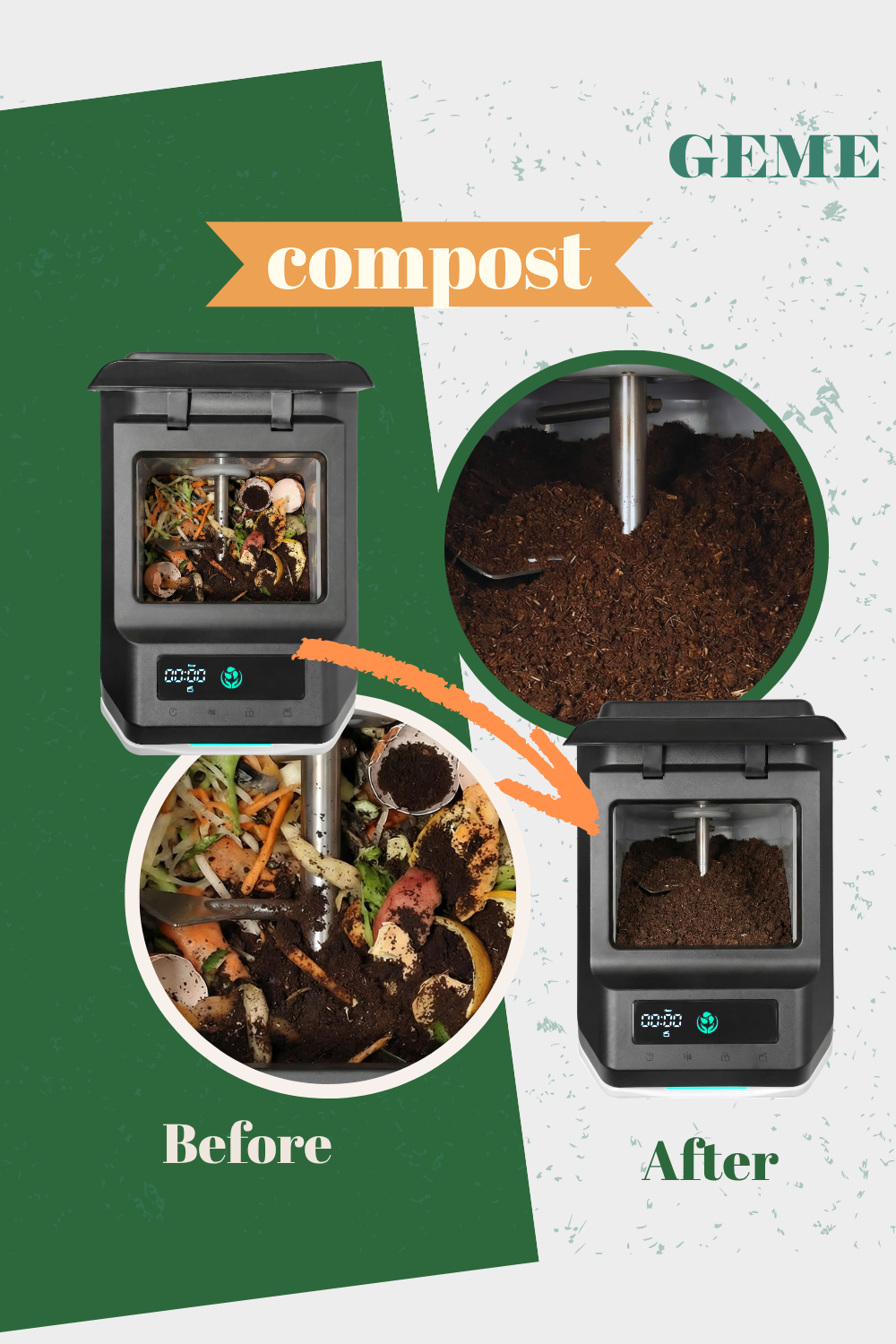
GEME Terra II Output: Real Compost
GEME Terra II produces real compost from microbial decomposition. The output is designed for soil improvement when used according to GEME guidance.
GEME compost can be mixed into potting soil, garden beds, raised beds, balcony planters, and houseplant soil. For best results, GEME generally recommends mixing compost with soil rather than applying large amounts directly around plant roots.
The practical difference is simple:
- FoodCycler output is processed dehydrated food waste.
- GEME Terra II output is real compost for soil use.
For application details, read the advanced GEME compost application guide.
Odor Control and Filters: Disposable Carbon Filters vs Permanent Odor Control
FoodCycler: Replaceable Carbon Filters
FoodCycler controls odor with activated carbon filtration. Carbon filters can help trap odor molecules, but they eventually saturate and must be replaced.
Filter replacement is not just a maintenance detail. It becomes part of the long-term cost of ownership. Wet food scraps, frequent use, and high-odor materials can shorten filter life.
GEME Terra II: No Filter Replacements
GEME Terra II uses permanent odor-control technology designed for indoor composting without routine carbon filter replacement.
Instead of relying on disposable carbon filters, GEME Terra II is designed for long-term indoor use with no filter replacements and no recurring filter costs.
This makes GEME Terra II especially attractive for households that want a clean electric kitchen composter without ongoing filter subscriptions.
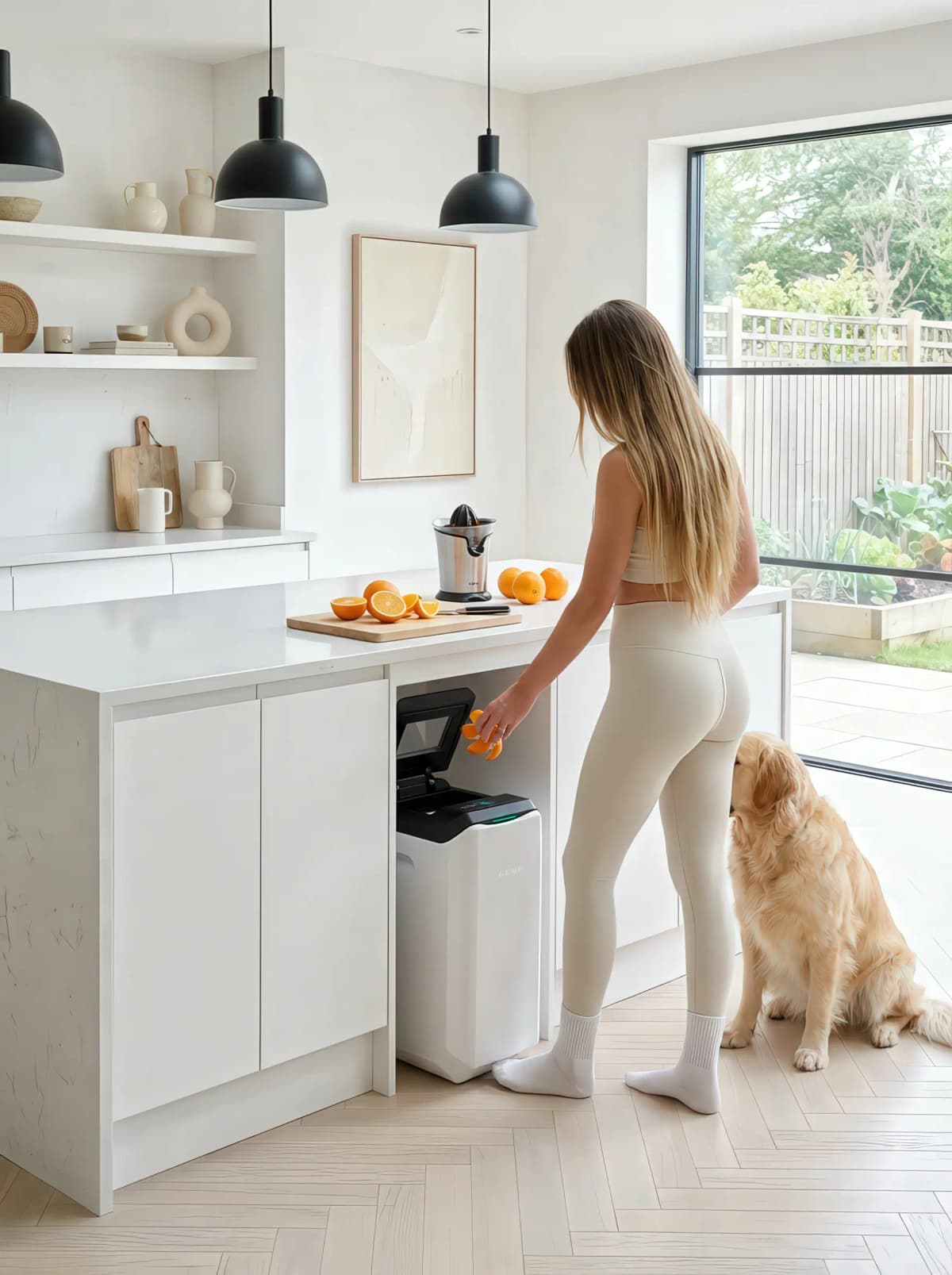
Real microbial composting.
Real Compost. No Replacement Filters.
GEME Terra II is designed for real microbial composting with permanent odor control, helping households reduce food waste without recurring carbon filter costs.
No filter replacements. No recurring filter costs.
Long-Term Cost: The Hidden Trap of Lower Upfront Prices
FoodCycler may appear less expensive upfront, but filter replacement costs can add up over time. Carbon filters are consumables, and households that process wet or odor-heavy food scraps may need to replace them more often.
GEME Terra II has a higher upfront price than some food recyclers, but it avoids recurring carbon filter costs. For users planning to keep their machine for several years, this can make GEME Terra II a stronger long-term value.
| Cost Factor | Vitamix FoodCycler FC-50 | GEME Terra II |
|---|---|---|
| Machine price | Lower upfront price | Higher upfront price |
| Filter replacement | Required over time | No filter replacements |
| Recurring filter costs | Yes | No recurring filter costs |
| Compost output | Dehydrated food-waste output | Real compost |
| Long-term value | Depends on filter costs, usage, and output goal | Stronger for real compost users |
Daily Usage: Batch Processing vs Continuous Feed
FoodCycler: Batch Processing
FoodCycler operates in batches. You load the bucket, start a cycle, and wait for the machine to finish drying, grinding, and cooling. During that cycle, you cannot keep adding new scraps.
This can work for occasional users, but it can be inconvenient for households that cook frequently or generate food scraps throughout the day.
GEME Terra II: Continuous Feed
GEME Terra II is designed for continuous feeding. You can add food scraps throughout the day as part of normal kitchen life, without waiting for a dehydrator-style batch cycle to complete.
For families, regular cooks, and households that produce mixed food waste daily, continuous feeding is a major practical advantage.
GEME Terra II can accept a broader range of kitchen scraps, including meat, dairy, cooked food, fish, oily leftovers, and small bones within GEME feeding guidance, making it closer to a true kitchen waste composting system.
Why Dehydrator “Composters” Are Not Real Composters
Many food-scrap dehydrators are marketed like composters, but they do not complete composting. That does not make them useless. They can reduce food-waste volume, help with kitchen odor, and make scraps easier to store.
But if your goal is real compost for plants, a dehydrator-style machine is not enough. You need microbial composting.
This is the central reason GEME Terra II belongs in a different category from Vitamix FoodCycler.
Decision Guide: Which Machine Is Right for You?
Choose Vitamix FoodCycler FC-50 if...
- Your main goal is to reduce trash volume.
- You do not need real compost from the machine.
- You already have another place to compost or further process the output.
- You accept recurring carbon filter replacement costs.
- You prefer batch processing and generate modest food waste.
Choose GEME Terra II if...
- You want biologically active real compost.
- You want an electric kitchen composter, not a food dehydrator.
- You want no filter replacements and no recurring filter costs.
- You cook regularly and need continuous feeding.
- You want to process a broader range of kitchen scraps within GEME guidance.
- You want compost for houseplants, balcony planters, raised beds, or garden soil.
Final verdict: Vitamix FoodCycler is a capable food-waste dehydrator and recycler. GEME Terra II is the better choice if you want a real composter that produces real compost for soil and plants.
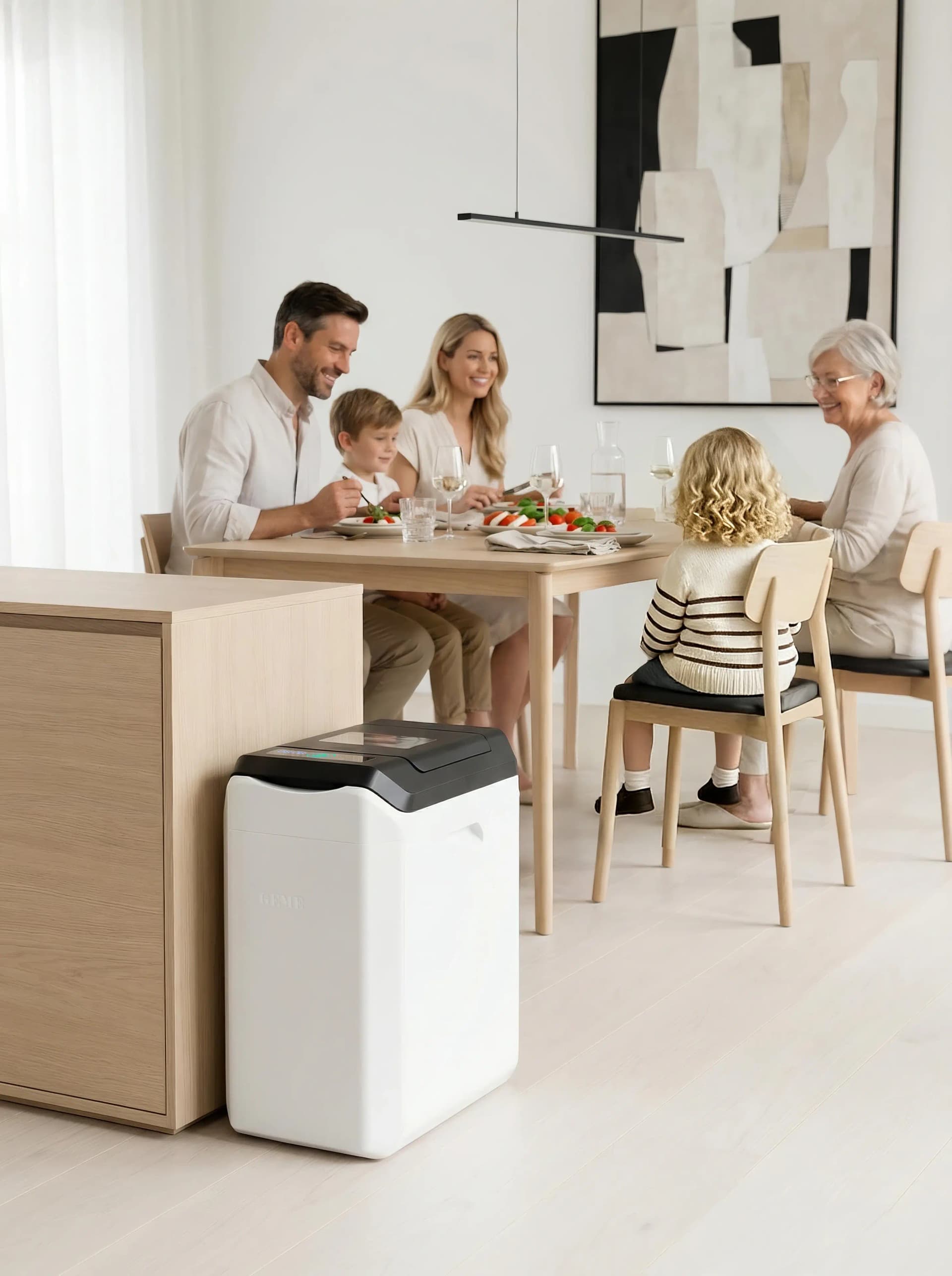
Not just dried scraps.
Choose the Electric Kitchen Composter Built for Real Compost
GEME Terra II helps households turn food scraps into real compost for gardens, houseplants, balcony planters, and long-term soil health — with no filter replacements and no recurring filter costs.
Real compost. Real microbial composting. No filter replacements.
Frequently Asked Questions
Does the Vitamix FoodCycler FC-50 actually make real compost?
No. Vitamix FoodCycler dries and grinds food waste. It reduces volume, but it does not complete microbial composting.
What is the difference between FoodCycler and GEME Terra II?
FoodCycler is a food-waste dehydrator and grinder. GEME Terra II is an electric kitchen composter that uses living microbes to produce real compost.
Can I use FoodCycler output in my garden?
It may be used carefully after further decomposition, but it should not be treated as finished compost.
Can I use GEME Terra II compost directly in my garden?
Yes, when mixed appropriately with soil. GEME Terra II compost is designed for garden, raised-bed, potted-plant, and soil-improvement use.
Does GEME Terra II need replacement filters?
No. GEME Terra II has no filter replacements and no recurring filter costs.
Can GEME Terra II compost meat and dairy?
Yes. GEME Terra II is designed to process a broad range of kitchen scraps, including meat, dairy, cooked food, fish, oily leftovers, and small bones, within GEME feeding guidance.
Which electric kitchen composter is best for families?
GEME Terra II is better suited for families and regular cooks because it supports continuous feeding and produces real compost rather than dehydrated food waste.
Why is dehydrated food waste not compost?
Compost requires microbial decomposition and biological stabilization. Dehydrated food waste has been dried and ground, but it has not completed the composting process.
Sources
- FoodCycler — FAQ and Carbon Filter Guidance
- Vitamix — FoodCycler Replacement Filters
- GEME Terra II Product Page
- GEME — How It Works
- GEME Kobold™ Microbial Technology
- Illinois Food Scrap & Composting Coalition — Food Scrap Dehydrators Are Not Composters
- GEME — Real Compost vs Dehydrated Food Waste
- GEME — Advanced Compost Application Guide

Zostaw komentarz
Ta strona jest chroniona przez hCaptcha i obowiązują na niej Polityka prywatności i Warunki korzystania z usługi serwisu hCaptcha.