
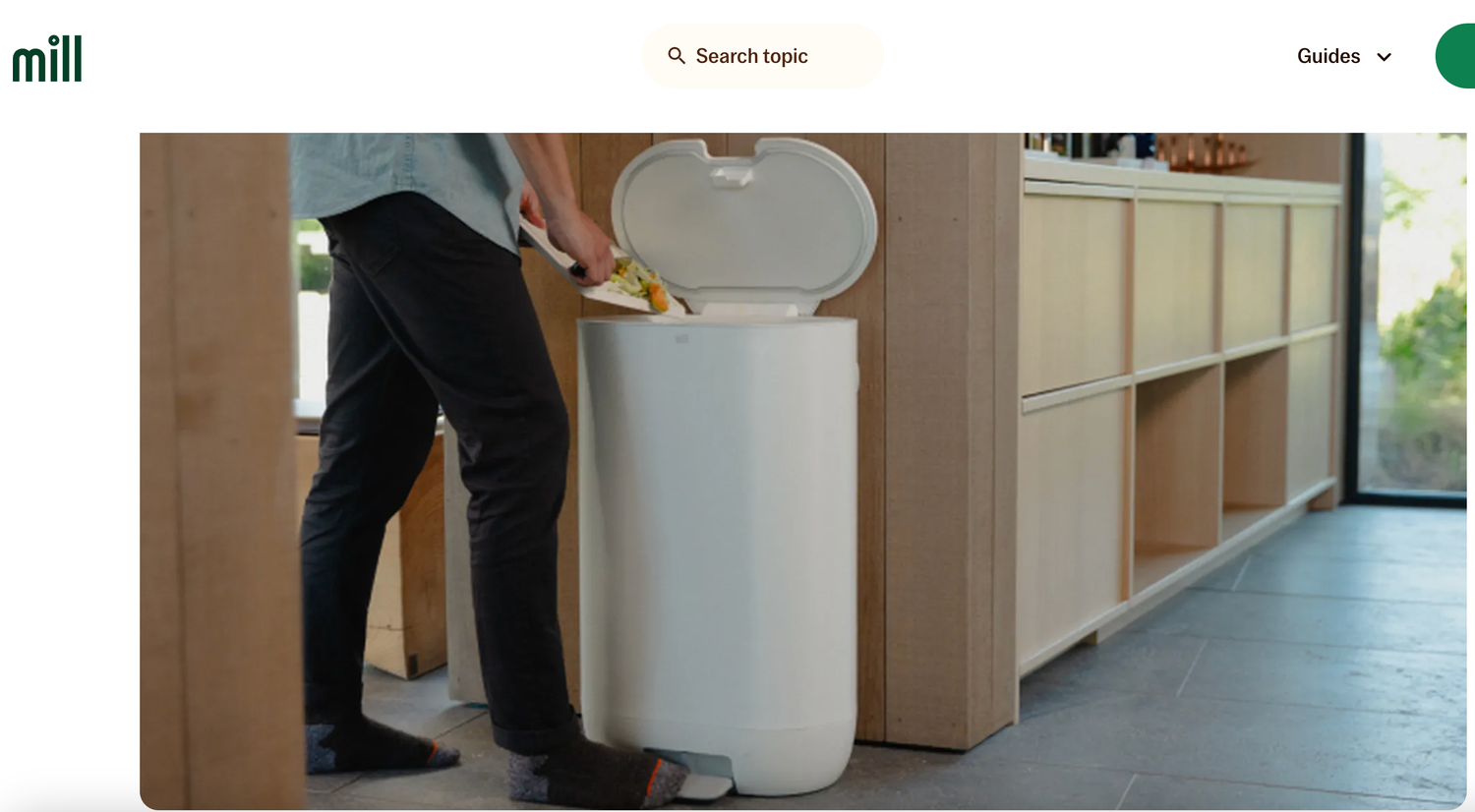
GEME vs Mill 2026
Compare compost output, daily capacity, recurring costs, and ownership style before choosing your kitchen composter.
GEME Terra II is built around real microbial composting. Mill is built around drying and grinding food scraps into Food Grounds. Both reduce food waste friction, but they do not create the same output.
Real compost vs Food Grounds. Ownership vs service ecosystem. Daily feed vs bucket cycle.
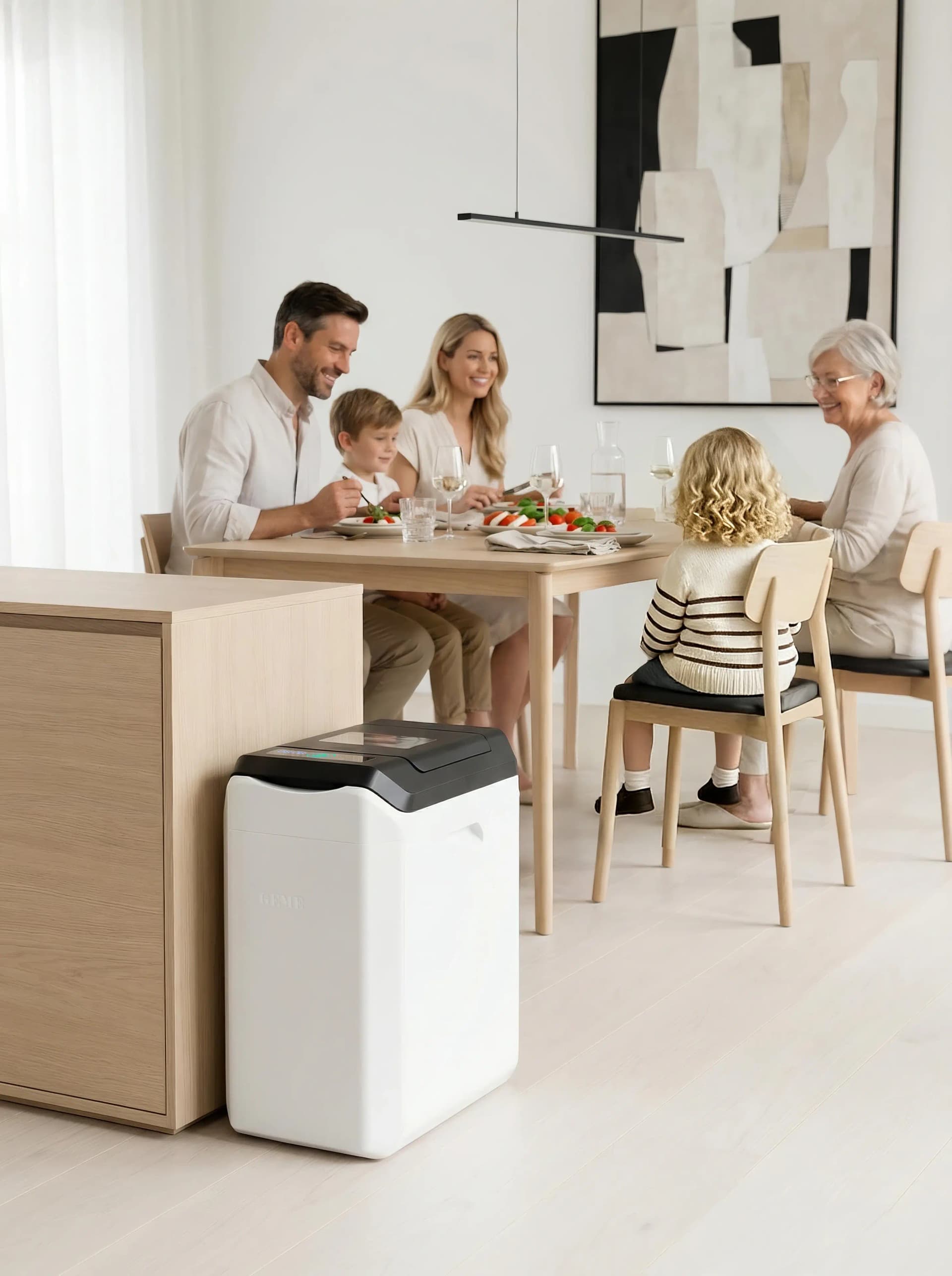
Compost output, cost, and capacity.
Quick Answer
Choose GEME Terra II if you want a continuous real microbial composter with daily feeding, real compost for soil blending, no filter replacements, and zero recurring filter costs.
Choose Mill if you prefer a food recycler that dries and grinds scraps into Food Grounds for cleaner storage, pickup, or further processing. Mill’s own support materials state that Food Grounds are not compost.
For deeper context, read real compost vs dehydrated food waste, electric compost bin filter costs, and how to use GEME compost safely.
Key Takeaways
- Mill Food Grounds are not compost. They are dried and ground food waste that may need further handling.
- GEME Terra II is built around real microbial composting. It supports a biological waste-to-soil routine at home.
- The capacity models are different. GEME Terra II is designed for continuous daily feeding, while Mill uses a bucket-style dry-and-grind model.
- Recurring costs matter. Mill users may need carbon filter replacements or optional service choices; GEME Terra II has no filter replacements and zero recurring filter costs.
- The right choice depends on your goal. Choose GEME for real composting at home; choose Mill for dried Food Grounds and a service-style food recycling path.
Jump To
The 90-Second Truth
1. Mill Food Grounds Are Not Compost
Mill dries and grinds scraps into Food Grounds. Mill’s own support language states that Food Grounds are not compost. That distinction matters if your goal is soil use at home.
2. Capacity Models Are Different
GEME Terra II is built around daily throughput and continuous use. Mill is built around a bucket model that fills over time and processes food waste into dried grounds.
3. Ownership Cost Goes Beyond the Purchase Price
Mill may involve carbon filter replacements, rental options, and optional pickup services depending on how you use it. GEME Terra II is designed around one-time ownership with no filter replacements and zero recurring filter costs.
For a broader cost view, see electric compost bin filter costs.
Quick Verdict
| Feature | GEME Terra II | Mill Food Recycler |
|---|---|---|
| Processing model | Continuous real microbial composting | Drying and grinding |
| Capacity model | Published daily throughput model | Bucket volume and fill-time model |
| Output | Real compost for soil blending | Dried Food Grounds, not compost |
| Filter model | No filter replacements | Carbon filter replacement may apply |
| Subscription / service | No subscription required | Rental and pickup options may apply |
| Best for | Ownership, daily cooking, and a real compost routine | Food-waste drying, storage, pickup, or further processing |
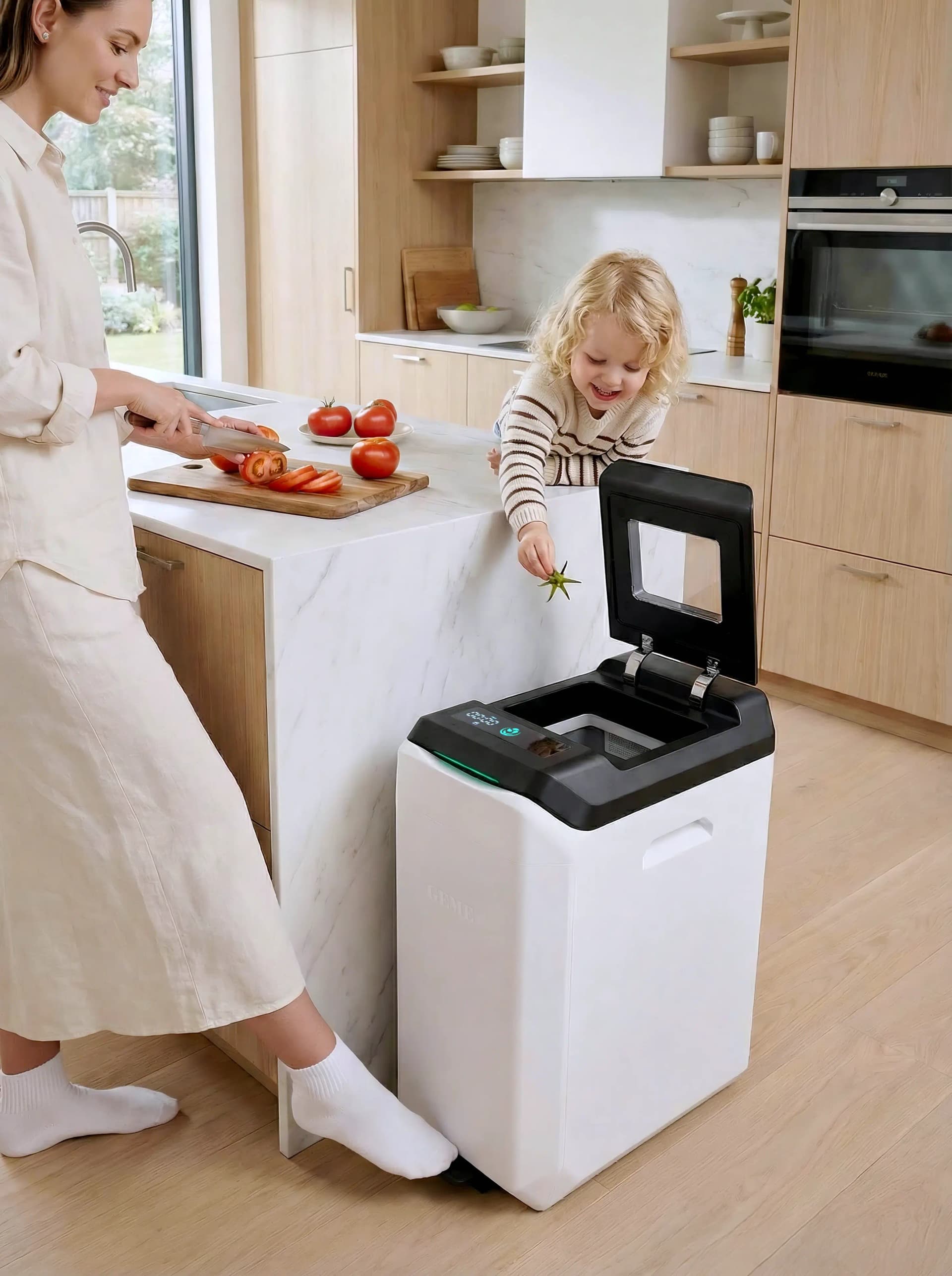
Compost daily with less upkeep.
Meet Terra II
A real microbial kitchen composter built for real compost, daily scraps, no filter replacements, and long-term ownership.
Built for real compost at home.
What This Comparison Is, and Isn’t
- It is a buyer-first comparison based on published specifications and official support statements.
- It is focused on practical ownership: capacity model, output, recurring costs, and daily routine.
- It is not a sponsored lab test.
- It is not a claim that every household needs the same type of kitchen composter.
Capacity Model: Daily Throughput vs Bucket Cycles
GEME Terra II Capacity
GEME Terra II uses a continuous biological composting workflow. Food waste can be added during everyday kitchen use, making the model easier to understand for households that cook frequently.
- Continuous feed, daily operation
- Built for households that cook frequently
- Designed for fewer interruptions between meals
- Output intended for soil blending after composting guidance
Mill Capacity
Mill uses a bucket-style system. Its capacity is usually understood through bucket volume, fill time, and dry-and-grind cycles rather than continuous daily food-waste throughput.
- Bucket-style collection
- Designed to fill over time
- Dried and ground Food Grounds output
- Better suited to users who prefer storage, pickup, or later processing
Capacity Verdict
If you think in terms of daily food-waste habits, GEME Terra II’s continuous model is easier to match to household cooking. If you prefer accumulating scraps and using a service-style system, Mill may feel more familiar.
Output Reality: Compost vs Food Grounds
| Output Question | GEME Terra II | Mill Food Recycler |
|---|---|---|
| What comes out? | Real compost for soil blending | Dried Food Grounds |
| Is it compost? | Designed for real microbial composting | Mill states that Food Grounds are not compost |
| Typical user path | Harvest and mix with soil according to guidance | Store, send back, add to another composting path, or process further |
| Best for | Waste-to-soil habit at home | Cleaner storage and food-waste reduction |
What Does Mill Produce?
Mill produces dried and ground food waste called Food Grounds. This can reduce odor, moisture, and trash volume, but Mill’s own support materials distinguish Food Grounds from compost.
What Does GEME Terra II Produce?
GEME Terra II is designed to create real compost through microbial processing. For garden or planter use, the output should be blended with soil according to guidance rather than applied as a pure layer.
Soil Use Tip: Like garden compost, screen out large unfinished pieces and let them continue composting. Blend compost with soil before planting.
For practical soil-use ratios, follow the advanced GEME compost application guide.
Recurring Costs and Total Cost of Ownership
Mill Ongoing Costs
Depending on how Mill is used, ongoing costs may include carbon filter replacements, rental options, and optional pickup services. These can make the total cost different from the upfront device price alone.
- Carbon filter replacements may apply.
- Rental plans may apply to some users.
- Optional pickup service may apply.
- Total cost depends on plan, use, and service choices.
GEME Terra II Ongoing Costs
GEME Terra II is designed around one-time ownership, no filter replacements, and zero recurring filter costs.
- One-time device purchase
- No filter replacements
- No required subscription
- No mandatory recurring pickup service
For a wider category comparison, read electric compost bin filter costs.
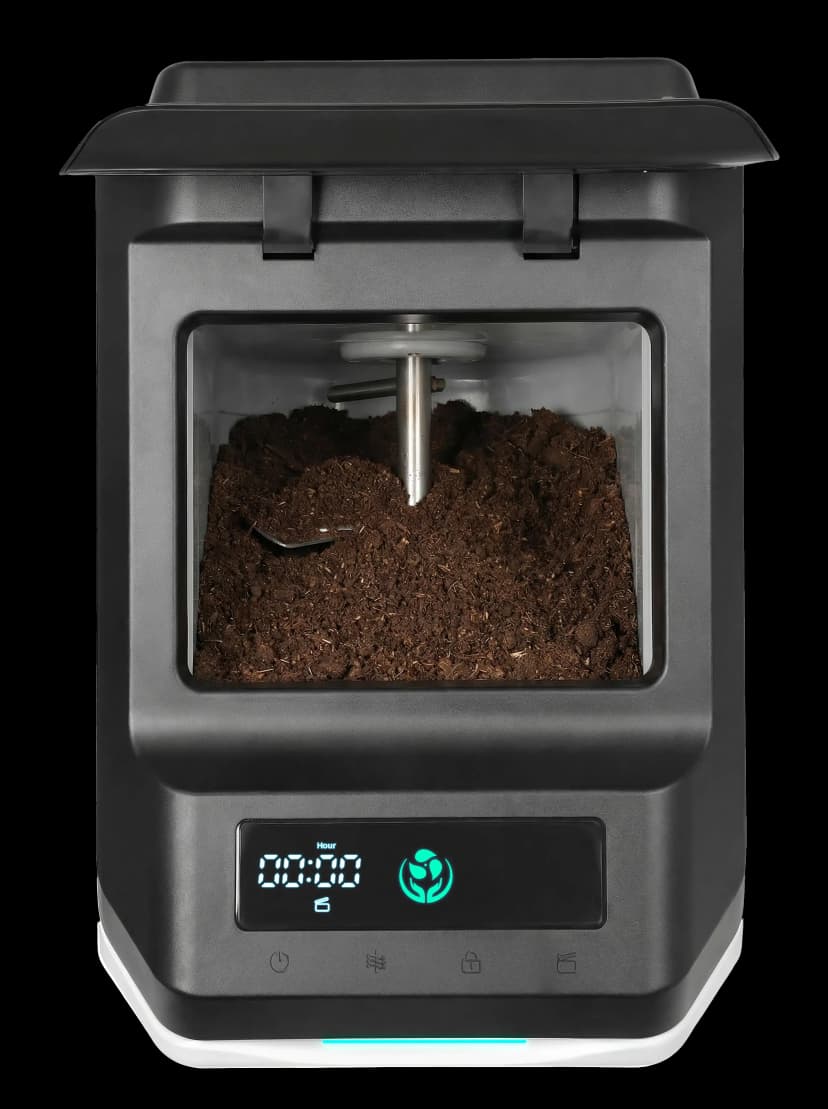
Not dried Food Grounds.
Choose Real Compost
Turn daily kitchen scraps into real compost for soil blending with a continuous microbial composter built for everyday kitchens.
Terra II for everyday homes. GEME Pro for larger routines.
Which One Fits Your Kitchen?
Choose GEME Terra II if...
- You want real microbial composting.
- You cook often and generate daily scraps.
- You prefer continuous feeding.
- You want no filter replacements.
- You want a one-time ownership model.
- You plan to use compost in the soil after proper blending.
Choose Mill if...
- You want dried Food Grounds.
- You like the bucket model.
- You are comfortable with carbon filter replacements or service fees.
- You prefer storage, pickup, or later processing.
- Your priority is food-waste volume and odor reduction, not immediate composting at home.
Practical Decision Rules
1. The Output Truth Rule
If you specifically want compost, Mill’s own support language matters: Food Grounds are not compost. If you want a composting routine at home, GEME Terra II is the more direct fit.
2. The Fees Tolerance Rule
If recurring costs annoy you, look beyond the device price. Filters, rental plans, and pickup services can change the total cost of ownership.
3. The Capacity Model Rule
GEME Terra II is built around continuous daily feeding. Mill is built around a bucket model and dry-and-grind processing. Choose the model that matches how your household actually cooks.
FAQ
Is GEME Terra II better than Mill?
GEME Terra II is usually a better fit if you want continuous real microbial composting, real compost for soil blending, no filter replacements, and a one-time ownership model. Mill may be a better fit if you want dried Food Grounds and a service-style food recycling ecosystem.
Does Mill make compost?
Mill states that Food Grounds are not compost. They are dried and ground food waste that may be stored, picked up, added to another composting path, or processed further.
Does GEME Terra II make real compost?
Yes. GEME Terra II is designed around real microbial composting and produces real compost that can be blended with soil according to use guidance.
Does GEME Terra II require filter replacements?
No. GEME Terra II has no filter replacements and zero recurring filter costs.
What are Mill’s ongoing costs?
Depending on the user’s plan and service choices, Mill may involve carbon filter replacements, rental fees, and optional pickup services. Check Mill’s official support pages before purchase because pricing and terms can change.
Which one is better for daily cooking in households?
GEME Terra II is generally the stronger fit for daily cooking households that want continuous feeding and a home composting routine. Mill may fit users who prefer drying scraps into Food Grounds for storage, pickup, or later processing.
Verified Sources
Pricing, plans, filter terms, pickup options, and support language may change. Always check official pages before purchase.
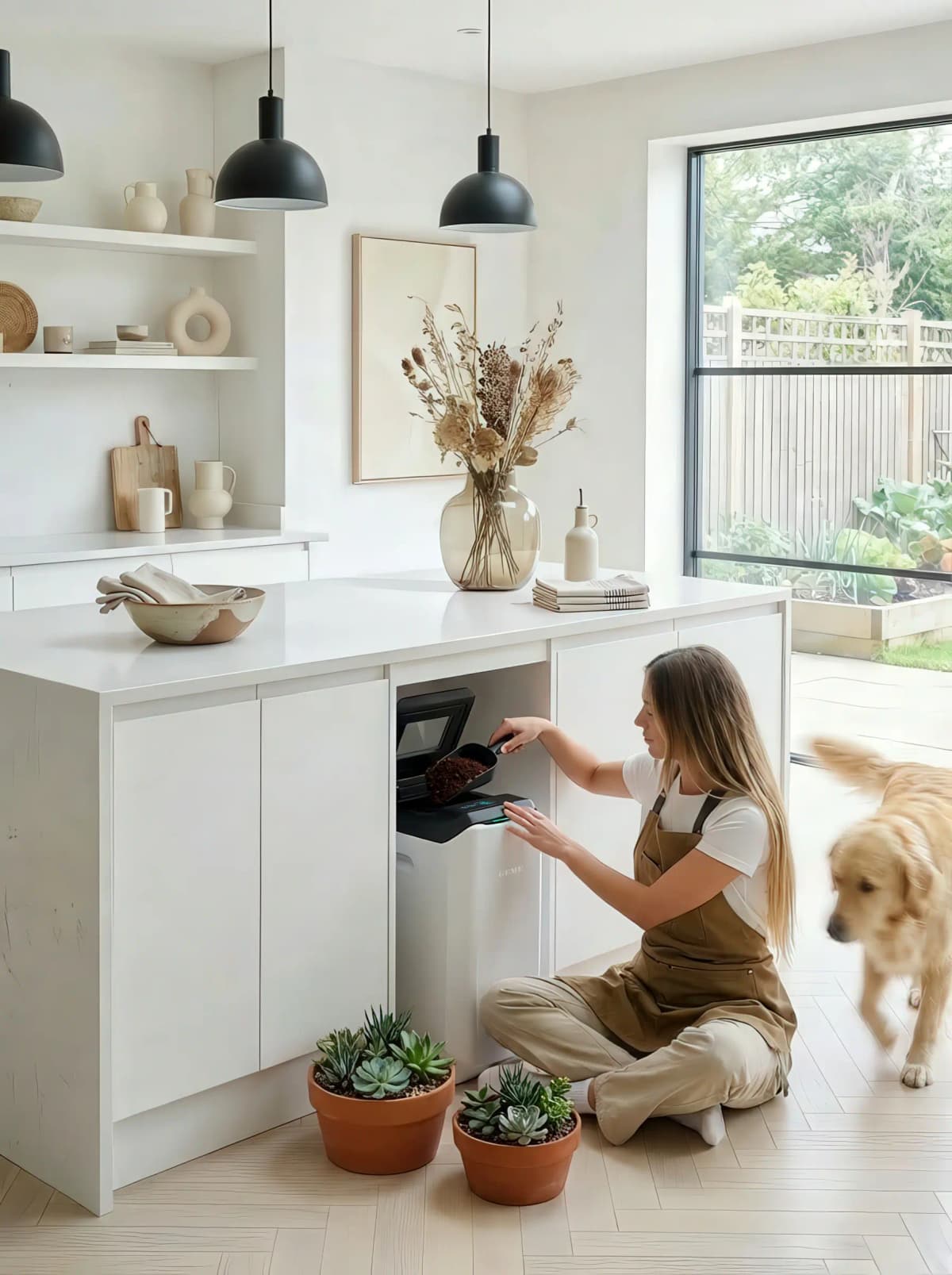
Scraps become soil.
Start Composting
Make food scraps useful again with a continuous real microbial composter built for daily kitchens.
Real compost. No filter replacements.

Zostaw komentarz
Ta strona jest chroniona przez hCaptcha i obowiązują na niej Polityka prywatności i Warunki korzystania z usługi serwisu hCaptcha.