
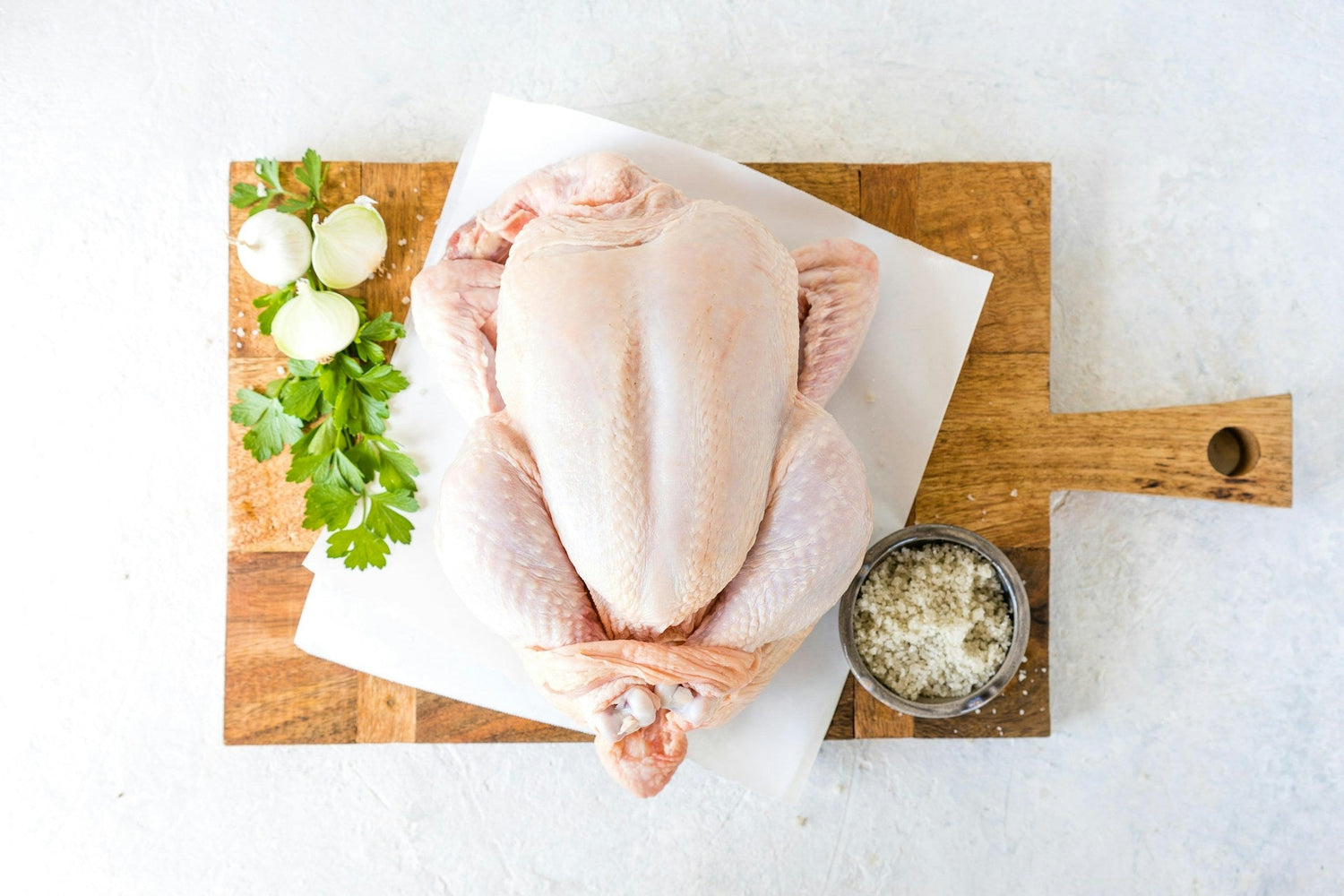
Chicken Storage, Food Safety & Food Waste Guide
Raw chicken can stay in the fridge for 1–2 days. Cooked chicken usually lasts 3–4 days when stored at 40°F / 4°C or below.
Chicken is one of the foods where guessing is not worth it. If timing, temperature, smell, color, or texture gives you doubt, treat it as a food-safety risk rather than trying to rescue it.
Simple rule: raw chicken 1–2 days, cooked chicken 3–4 days, reheat leftovers to 165°F, and do not taste-test questionable chicken.

Raw: 1–2 days. Cooked: 3–4 days.
Quick Answer
Raw chicken can stay in the fridge for 1–2 days. This includes whole chicken, chicken breasts, thighs, drumsticks, wings, ground chicken, and thawed raw chicken.
Cooked chicken can stay in the fridge for 3–4 days. This includes roasted chicken, grilled chicken, rotisserie chicken, chicken casseroles, shredded chicken, and chicken leftovers.
Store chicken at 40°F / 4°C or below. Refrigerate cooked chicken within 2 hours, or within 1 hour if the food has been exposed to temperatures above 90°F / 32°C. Reheat cooked leftovers to 165°F / 74°C.
For related reading, see how long pizza lasts in the fridge, how long ground beef stays in the fridge, and how to avoid leftover food poisoning.
Key Takeaways
- Raw chicken: 1–2 days in the fridge at 40°F / 4°C or below.
- Cooked chicken: 3–4 days in the fridge when stored properly.
- Thawed raw chicken: usually 1–2 days after refrigerator thawing.
- Rotisserie chicken: eat or refrigerate within 2 hours, then use within 3–4 days.
- Reheating: heat cooked chicken leftovers to 165°F / 74°C.
- Raw chicken safety: keep it sealed and on the bottom shelf to prevent juices from dripping onto ready-to-eat foods.
- Do not wash raw chicken: washing can spread germs around the sink and countertop.
- Spoilage signs: sour smell, slimy texture, gray/green discoloration, leaking package, or bloated packaging.
- When in doubt: discard questionable chicken. Do not taste-test it.
- Chicken waste: handle unsafe chicken as a food-safety issue; appropriate scraps may be processed through GEME only according to product guidance.
Chicken Storage at a Glance
| Chicken Type | Fridge Life at 40°F / 4°C or Below | Freezer Quality Guide |
|---|---|---|
| Raw whole chicken | 1–2 days. | Best quality up to about 1 year. |
| Raw chicken pieces | 1–2 days. | Best quality up to about 9 months. |
| Ground chicken | 1–2 days. | Best quality about 3–4 months. |
| Cooked chicken | 3–4 days. | Best quality for about 3–4 months, depending on the dish. |
| Rotisserie chicken | 3–4 days after prompt refrigeration. | Best quality for about 4 months. |
| Chicken casserole or cooked chicken dish | 3–4 days. | Best quality about 4–6 months for many cooked poultry dishes. |
Freezer storage times are mostly about quality. Food kept continuously frozen at 0°F / -18°C remains safe longer, but texture and flavor decline over time.
Table of Contents
- How Long Can Raw Chicken Stay in the Fridge?
- How Long Can Cooked Chicken Stay in the Fridge?
- How Long Can Thawed Chicken Stay in the Fridge?
- How to Tell If Chicken Is Bad
- How to Store Chicken Safely
- When to Freeze Chicken
- What to Do With Chicken That Is No Longer Safe to Eat
- How GEME Terra II Handles Appropriate Chicken Scraps
- FAQ
- Summary
- Sources
- Related Articles
How Long Can Raw Chicken Stay in the Fridge?
Raw chicken can stay in the fridge for 1–2 days at 40°F / 4°C or below. This applies to whole chicken, chicken pieces, ground chicken, and raw chicken that has been thawed in the refrigerator.
The short window exists because raw poultry can carry foodborne germs and because refrigeration slows bacterial growth without stopping it completely. A use-by date or store label does not replace safe handling at home.
Practical rule: if you are not going to cook raw chicken within 1–2 days, freeze it while it is still fresh.
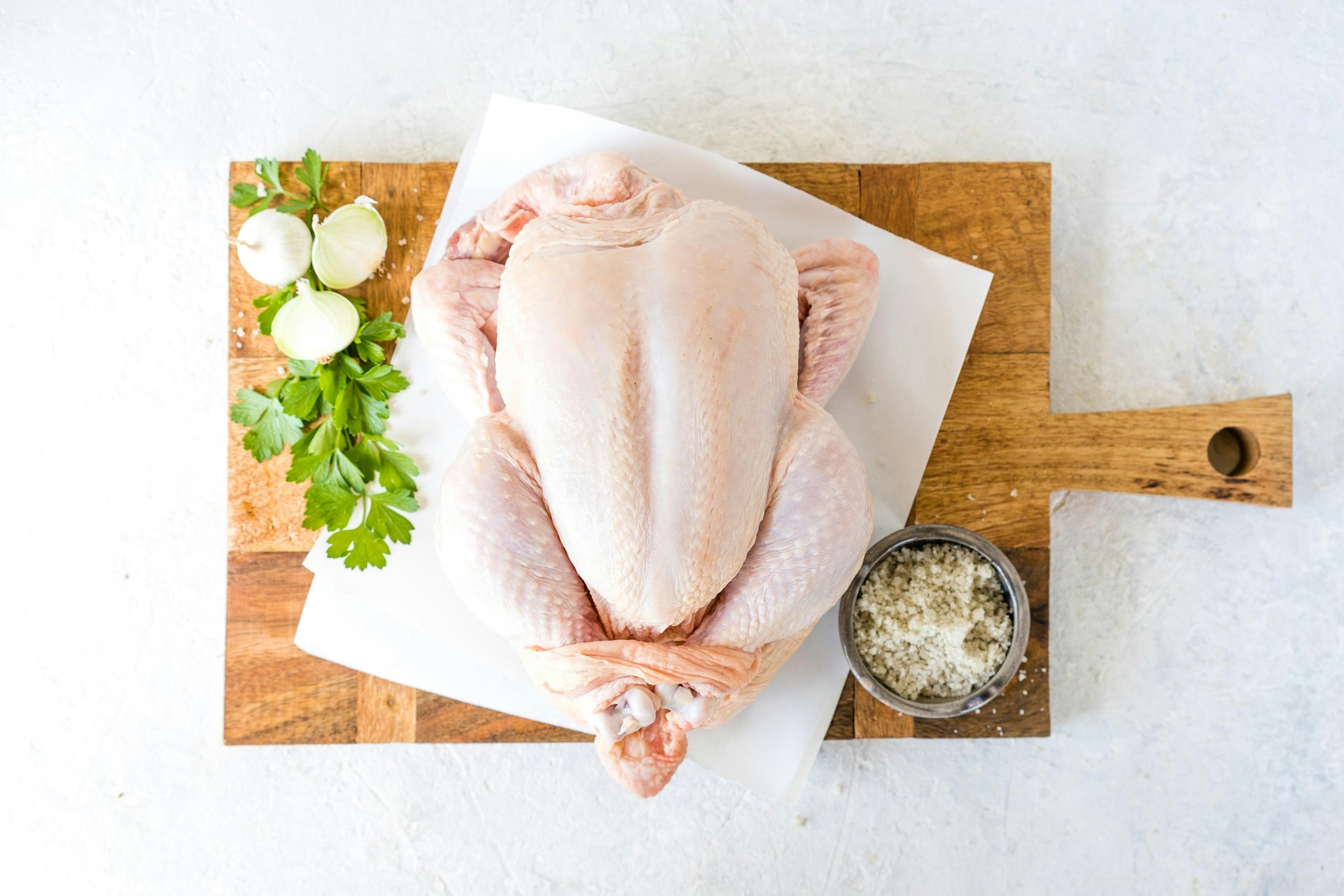
How Long Can Cooked Chicken Stay in the Fridge?
Cooked chicken can stay in the fridge for 3–4 days when refrigerated promptly and stored properly. This includes roasted chicken, grilled chicken, chicken soup pieces, shredded chicken, rotisserie chicken, fried chicken, and cooked chicken dishes.
Cooked chicken should be refrigerated within 2 hours after cooking or serving. If it has been exposed to temperatures above 90°F / 32°C, refrigerate within 1 hour.
Reheating Cooked Chicken
Reheat cooked chicken leftovers to an internal temperature of 165°F / 74°C. Use a food thermometer when possible, especially for thick pieces, casseroles, and leftovers reheated in the microwave.
About the “7-Day” Claim
Some local or institutional guidance may use longer limits under controlled conditions, but for consumer-facing household guidance, the safer and clearer rule is 3–4 days for cooked chicken leftovers.
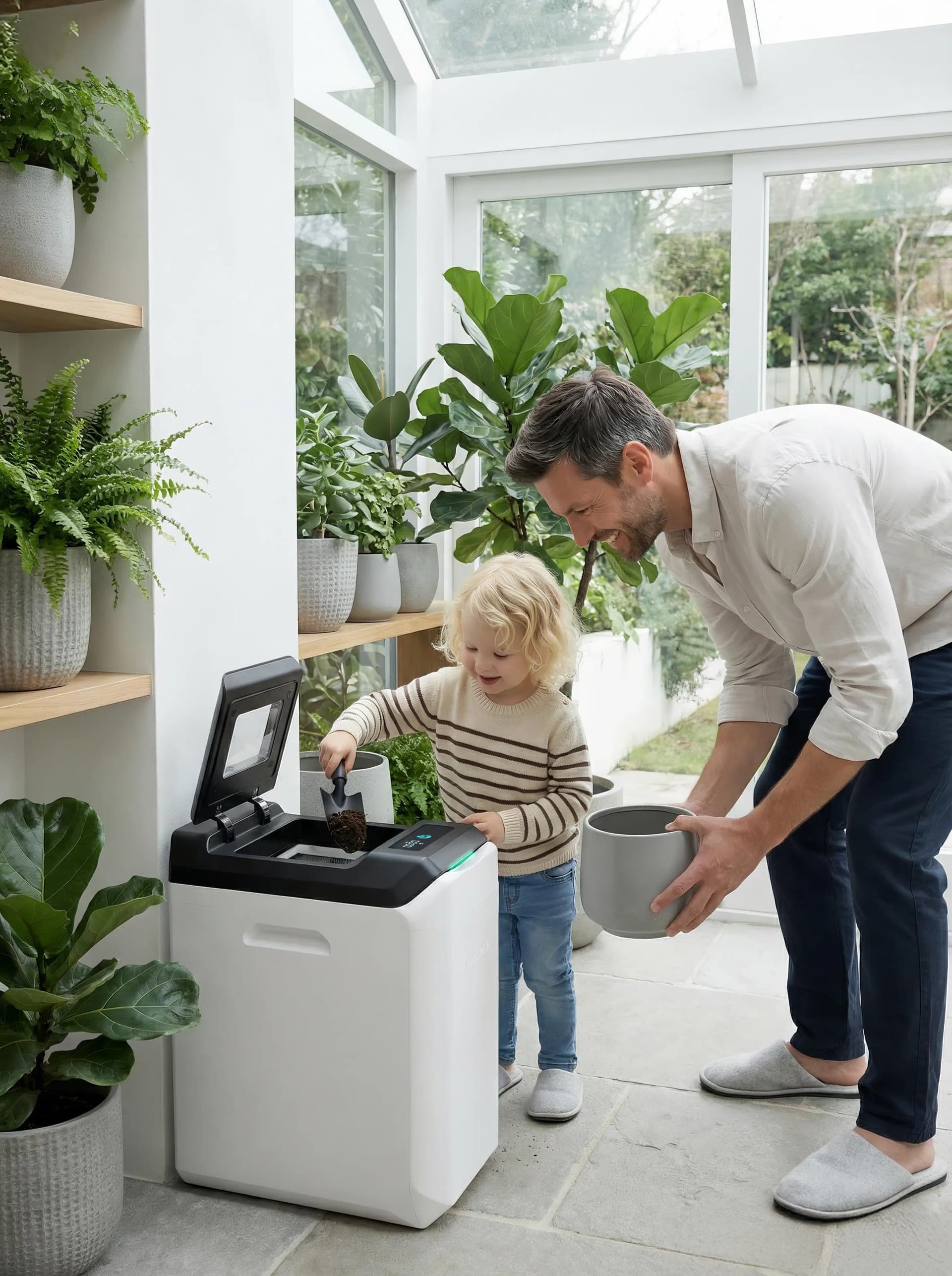
Handle unsafe chicken as waste, not as food.
GEME Helps Appropriate Kitchen Scraps Return to the Soil Cycle
If the chicken is no longer safe to eat, do not try to rescue it. Dispose of it safely. GEME Terra II supports real microbial composting for appropriate kitchen scraps according to product guidance, with no drying and no replacement odor filters.
Real microbial composting. No filter replacements. Compost for soil blending.
How Long Can Thawed Chicken Stay in the Fridge?
Chicken thawed in the refrigerator should usually be cooked within the same 1–2 day raw poultry window. Keep it sealed and cold while it thaws, and place it on the bottom shelf to prevent juices from dripping onto other foods.
Safe Thawing Methods
- Refrigerator thawing: best for safety and quality, but slow.
- Cold water thawing: faster; keep chicken sealed and change water every 30 minutes; cook promptly after thawing.
- Microwave thawing: fastest; cook immediately after thawing because parts may warm unevenly.
Do not thaw chicken on the counter. Room-temperature thawing can let the outer surface enter the danger zone while the center is still frozen.
How to Tell If Chicken Is Bad
Time and temperature matter most. Spoilage signs can help, but they are not perfect. Some harmful bacteria do not always create an obvious smell, slime, or discoloration. Do not rely on your senses to stretch chicken beyond safe storage limits.
| Check | Fresh / Acceptable | Warning Sign |
|---|---|---|
| Smell | Mild or nearly neutral. | Sour, sulfur-like, rotten, rancid, or strongly “off.” |
| Texture | Moist but not slippery; firm enough to hold shape. | Slimy, sticky, tacky, mushy, or unusually soft. |
| Color | Raw chicken is typically pinkish; cooked chicken is white or lightly browned depending on preparation. | Gray, green, or dull yellow patches on the meat, mold, or unusual discoloration. |
| Package | Cold, sealed, no leaks, no swelling. | Bloated package, leaking juices, broken seal, or strong odor when opened. |
| Timing | Raw 1–2 days; cooked 3–4 days. | Beyond the safe window, unknown storage time, or left out too long. |
The safest rule is still the simplest: when in doubt, throw it out. Do not rinse, smell repeatedly, taste, or cook questionable chicken to “make it safe.”
How to Store Chicken Safely
Storing Raw Chicken
- Keep it cold: refrigerate raw chicken immediately after purchase.
- Use the bottom shelf: store raw chicken below ready-to-eat foods to prevent dripping juices.
- Seal it: keep chicken in its package or place it inside a leak-proof container or bag.
- Do not wash it: raw chicken does not need washing before cooking; splashing water can spread germs.
- Cook or freeze within 1–2 days: do not wait for visible spoilage signs.
Storing Cooked Chicken
- Refrigerate promptly: within 2 hours, or within 1 hour if above 90°F / 32°C.
- Use shallow containers: shallow storage helps food cool faster.
- Cover or seal: airtight containers reduce drying and contamination.
- Label the date: make the 3–4 day window easy to track.
- Reheat once when practical: repeatedly cooling and reheating leftovers can reduce quality and increase handling risk.
Cross-Contamination Reminder
Keep raw chicken and its juices away from salads, fruit, cooked foods, bread, and anything that will not be cooked again. Use separate cutting boards and wash hands, knives, boards, and counters after raw chicken contact.
When to Freeze Chicken
Freeze raw chicken if you cannot cook it within 1–2 days. Freeze cooked chicken if you cannot eat it within 3–4 days.
Freezing Tips
- Freeze while the chicken is still fresh, not when it is already questionable.
- Use freezer-safe bags, wrap, or containers to reduce freezer burn.
- Remove excess air where possible.
- Label packages with the date and chicken type.
- Freeze in portions you will actually use.
- Thaw safely in the refrigerator, cold water, or microwave — not on the counter.
Freezing does not fix spoiled chicken. If chicken smells bad, feels slimy, leaks, or has sat out too long before freezing, discard it rather than freezing the problem for later.
What to Do With Chicken That Is No Longer Safe to Eat
If the chicken is outside the safe window or shows spoilage signs, do not cook it for people or pets. Treat it as unsafe food waste.
Safe Handling Before Disposal
- Wear gloves if the package is leaking or the smell is strong.
- Keep it away from countertops, cutting boards, and ready-to-eat foods.
- Do not rinse spoiled chicken in the sink.
- Seal it in a bag if sending it to the trash or municipal organics collection.
- Wash hands and clean any surfaces that have touched raw or spoiled chicken.
Can You Compost Bad Chicken Outdoors?
For most home backyard compost piles, meat and spoiled chicken are not recommended. Meat can attract pests, create odor, and may not be processed safely in passive piles that do not reach and maintain high temperatures.
Use municipal organics programs only if your local rules accept meat and poultry waste. If they do not, follow local trash guidance.
How GEME Terra II Handles Appropriate Chicken Scraps
GEME Terra II is designed for real microbial composting in a warm, moist, oxygen-rich chamber. It uses Kobold™ living microbes and adaptive control to process appropriate kitchen scraps without drying them into flakes.
Chicken waste is different from vegetable scraps. It can carry food-safety risks and should be handled carefully. GEME’s product guidance allows many complex kitchen scraps, including meat and dairy, but that does not mean users should overload the machine with spoiled raw chicken or treat composting as a food-safety shortcut.
Safe GEME Chicken-Scrap Rules
- Do not eat chicken that is outside the safe storage window.
- Remove all packaging, plastic wrap, foam tray, absorbent pad, clips, labels, and ties.
- Add chicken scraps in modest amounts rather than overloading the chamber.
- Avoid large bones, large frozen blocks, and excessive liquid oil or sauce.
- Wash hands and clean surfaces after handling raw or spoiled chicken.
- Screen larger unfinished pieces back into the chamber when harvesting.
- Use output as compost base for soil blending, not as pure potting soil or direct root contact.
Chicken Waste Options Compared
| Method | Best Use | Main Caution |
|---|---|---|
| Trash / landfill | Last resort when no accepted organics pathway exists. | Food waste in landfills contributes to methane emissions. |
| Backyard compost pile | Usually best for plant scraps, not meat. | Chicken can attract pests and create odor in unmanaged piles. |
| Municipal organics program | Good option if local rules accept meat and poultry. | Rules vary by city and hauler. |
| GEME Terra II | Appropriate kitchen scraps and many complex leftovers according to product guidance. | Avoid packaging, overloads, large bones, and excess liquid oil; use output as a compost base for soil blending. |
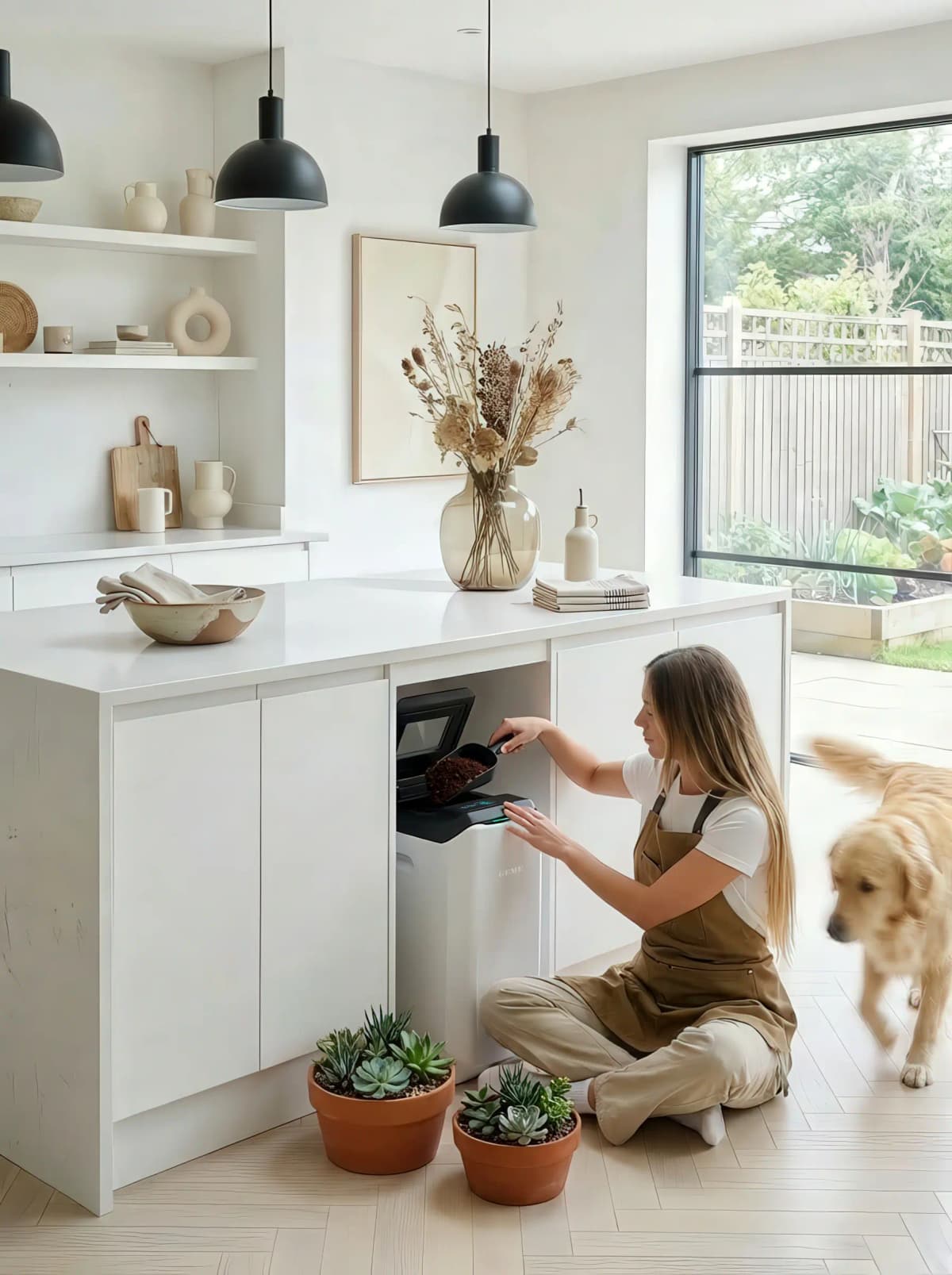
Store chicken safely. Compost appropriate scraps responsibly.
Build a Safer, Cleaner Food-Waste Routine
GEME Terra II and GEME Pro use real microbial composting for appropriate kitchen scraps. Keep unsafe food out of your meals, keep packaging out of the chamber, and mix compost output with soil before plant use.
Terra II for everyday homes. GEME Pro for larger routines.
Final Takeaway: Chicken Safety Is Not a Guessing Game
Raw chicken belongs in the fridge for only 1–2 days. Cooked chicken belongs in the fridge for 3–4 days. Those two rules solve most household chicken-storage confusion.
If chicken smells sour, feels slimy, looks discolored, has leaking or bloated packaging, or has been stored beyond the safe window, do not try to rescue it. Discard it safely.
Better still, prevent waste first: buy what you can cook, freeze what you cannot use in time, label leftovers, and use an accepted organics pathway such as GEME for appropriate scraps when food becomes waste.
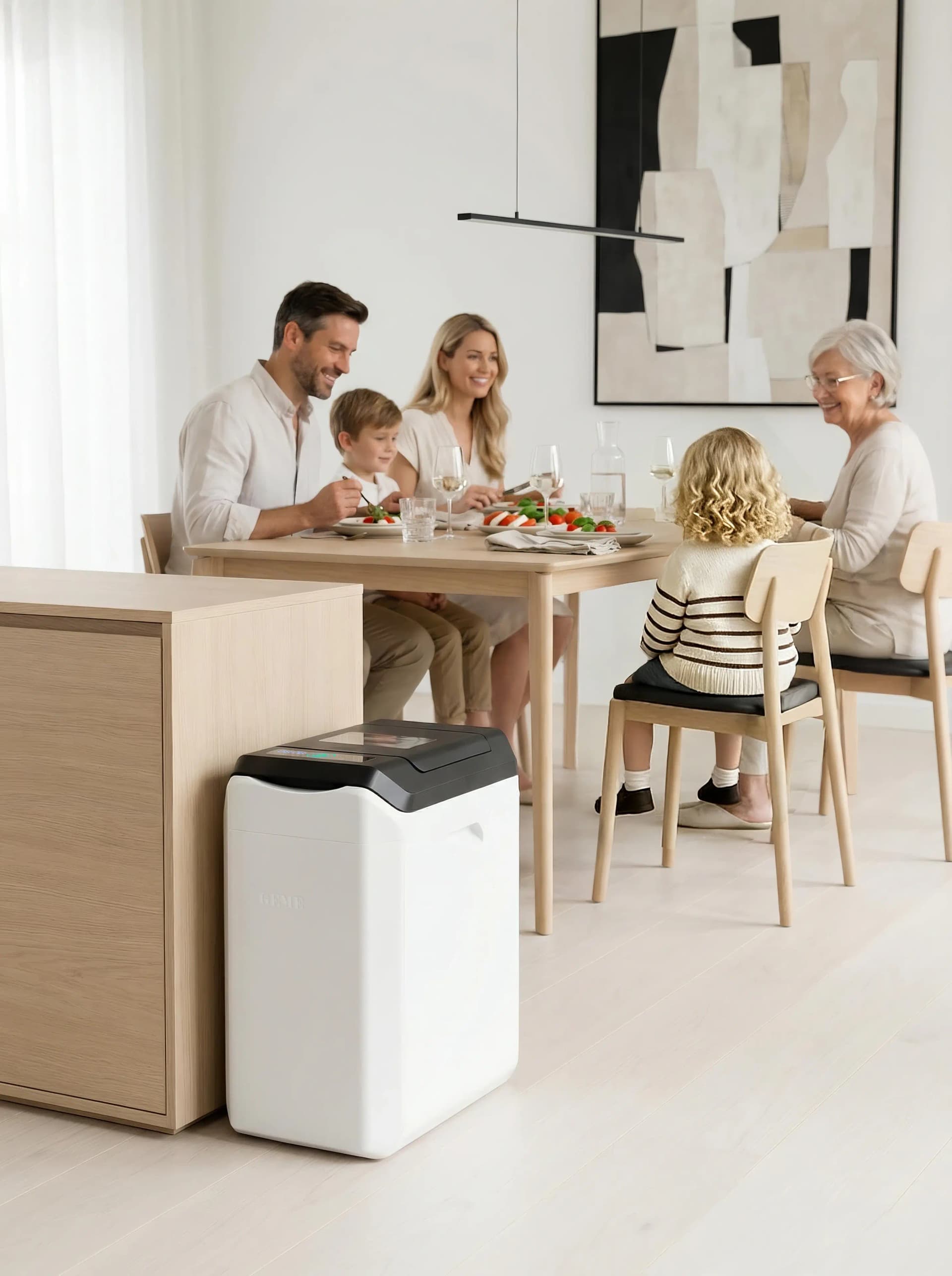
Store safely, freeze early, and compost appropriate scraps.
Turn Appropriate Kitchen Scraps Into Compost Base With GEME
GEME Terra II and GEME Pro help households turn appropriate kitchen scraps into compost for soil blending, with real microbial composting, no filter replacements, and zero recurring filter costs.
Food safety first. Soil returns second. Feed the earth.
Frequently Asked Questions
How long can raw chicken stay in the fridge?
Raw chicken can stay in the fridge for 1–2 days at 40°F / 4°C or below.
How long can cooked chicken stay in the fridge?
Cooked chicken can stay in the fridge for 3–4 days when refrigerated promptly and stored properly.
Can I eat raw chicken that has been in the fridge for 5 days?
No. Five days is too long for raw chicken in the fridge. Discard it safely.
Can I eat cooked chicken after 5 days?
It is not recommended for household leftovers. Use cooked chicken within 3–4 days.
How long can thawed chicken stay in the fridge?
Chicken thawed in the refrigerator should usually be cooked within 1–2 days.
How can I tell if chicken is bad?
Warning signs include sour or rotten smell, slimy or sticky texture, gray or green discoloration, mold, leaking package, bloated packaging, or storage beyond the safe time window.
Should I wash raw chicken before cooking?
No. Raw chicken does not need washing before cooking. Washing can spread germs around your sink, counters, and nearby surfaces.
What temperature should chicken be cooked or reheated to?
Chicken should be cooked or reheated to an internal temperature of 165°F / 74°C.
Can I freeze chicken instead of refrigerating it?
Yes. Freeze raw chicken if you will not cook it within 1–2 days. Freeze cooked chicken if you will not eat it within 3–4 days.
Can I put chicken scraps in GEME Terra II?
Appropriate chicken scraps may be processed through GEME Terra II according to product guidance. Remove packaging, avoid excess liquid oil or large bones, add modest amounts, and mix the compost output with soil before plant use.
Can I compost spoiled raw chicken in a backyard pile?
For most home backyard compost piles, no. Spoiled chicken can attract pests, smell bad, and may not be safely processed in passive piles. Use accepted municipal organics guidance, trash guidance, or an enclosed system that specifically allows appropriate meat scraps.
Summary
- Raw chicken: 1–2 days in the fridge at 40°F / 4°C or below.
- Cooked chicken: 3–4 days in the fridge when stored properly.
- Thawed chicken: cook within 1–2 days after refrigerator thawing.
- Reheating: heat cooked chicken leftovers to 165°F / 74°C.
- Storage: keep raw chicken sealed, cold, and on the bottom shelf.
- Do not wash raw chicken: washing can spread germs.
- Spoilage: discard chicken with sour odor, slime, discoloration, leaks, bloating, mold, or unsafe timing.
- Freezing: freeze before the safe fridge window ends, not after the chicken becomes questionable.
- Disposal: unsafe chicken is waste, not food. Handle it carefully and clean surfaces afterward.
- GEME Terra II: appropriate chicken scraps can be processed according to product guidance; output should be screened and mixed with soil before plant use.
Sources
- USDA FSIS — Chicken From Farm to Table
- USDA FSIS — Leftovers and Food Safety
- USDA FSIS — Refrigeration and Food Safety
- FoodSafety.gov — Cold Food Storage Charts
- CDC — Chicken and Food Poisoning
- U.S. EPA — Quantifying Methane Emissions From Landfilled Food Waste
- U.S. EPA — Composting at Home
- GEME — Terra II Product Page
- GEME — How Real Microbial Composting Works
- GEME — Advanced Compost Application Guide

Zostaw komentarz
Ta strona jest chroniona przez hCaptcha i obowiązują na niej Polityka prywatności i Warunki korzystania z usługi serwisu hCaptcha.