
Food Waste Reduction Guide
Reducing food waste at home is one of the simplest ways to save money, reduce landfill pressure, and turn unavoidable food scraps into something useful.
Most households do not waste food because they do not care. Food gets wasted because daily life is busy: groceries are forgotten, leftovers hide in the fridge, portions are too large, and cooking scraps often have nowhere better to go than the trash.
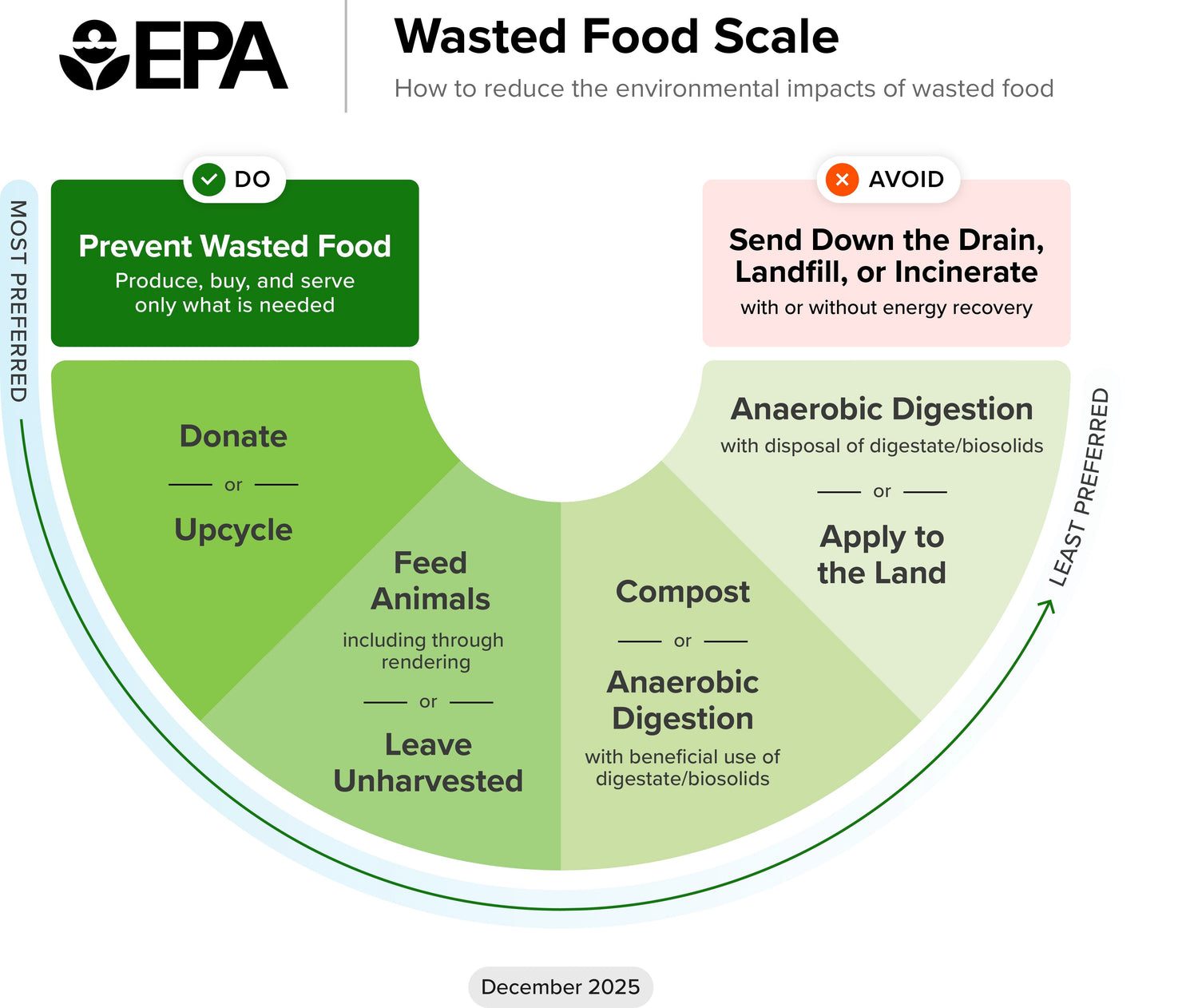
Prevent first. Save what you can. Compost what remains.
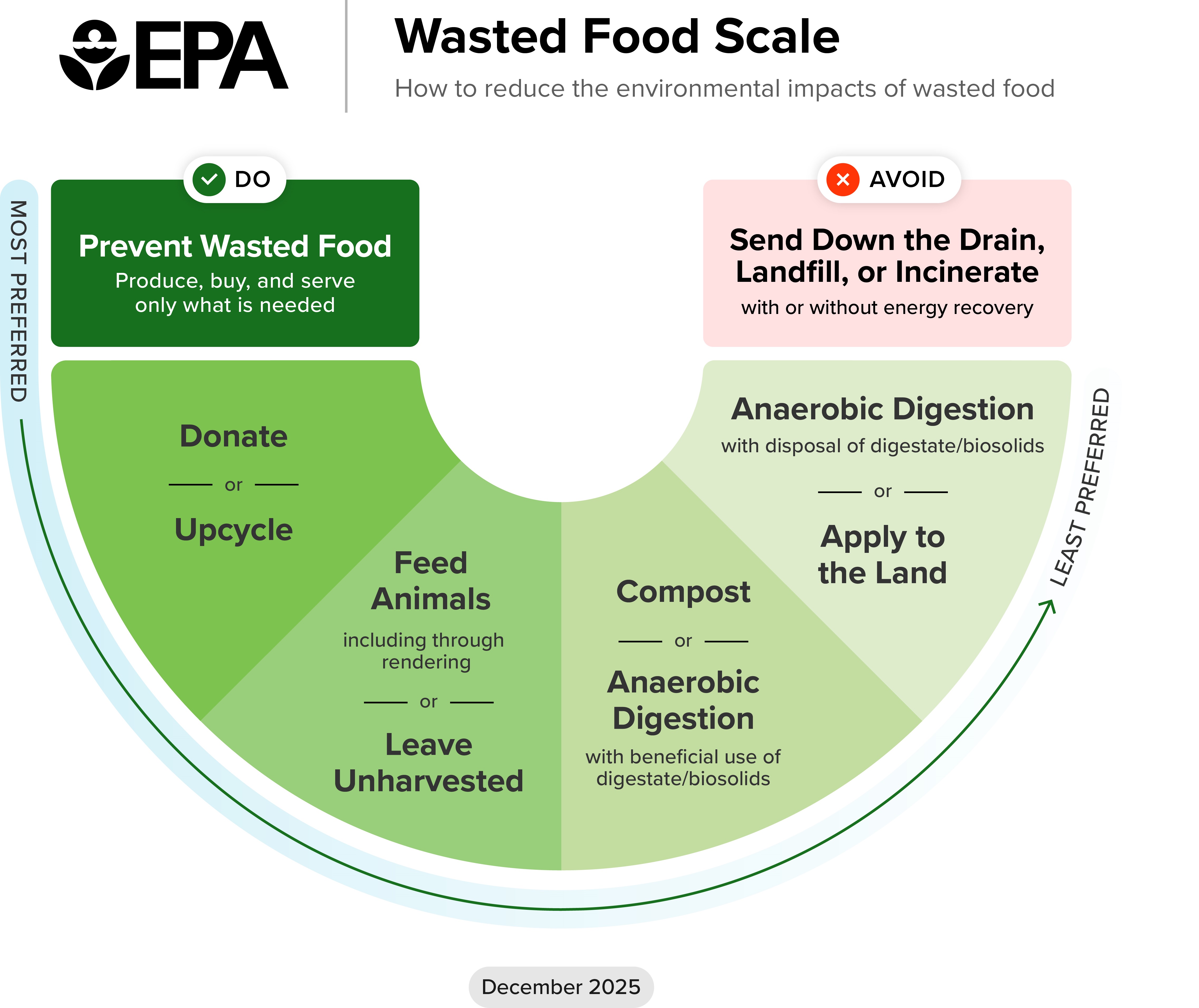
Plan, store, save, freeze, compost.
Quick Answer
To reduce food waste at home, start with prevention: check what you already have, plan meals around foods that will expire first, store produce correctly, freeze food before it spoils, serve smaller portions, and build a simple leftover routine.
For unavoidable scraps such as peels, coffee grounds, eggshells, fruit cores, and small leftovers, composting is the final step. GEME Terra II supports real microbial composting indoors, with continuous feeding, no filter replacements, and compost output designed for soil blending.
For related context, read real compost vs dehydrated food waste, best kitchen composter 2026, and how to use GEME compost safely.
Key Takeaways
- Prevention comes first. The best food waste strategy is to avoid wasting edible food in the first place.
- Food waste is more than food. Wasted food also wastes the water, energy, labor, packaging, and transport used to produce it.
- Landfill food waste is a climate issue. Organic waste can break down without oxygen in landfills and contribute to methane emissions.
- Small systems work. An “eat first” shelf, freezer routine, leftover night, and weekly food waste log can reduce waste quickly.
- Composting is the final step. It should handle unavoidable scraps, not replace smarter buying and storage.
- Not every electric composter makes compost. Some machines mainly dry and grind food waste; real composting is biological.
- GEME Terra II supports real microbial composting. It creates compost for soil blending, with no filter replacements and zero recurring filter costs.
Table of Contents
Why Food Waste Matters
Food waste is not just a kitchen problem. It is a household budget problem, a resource problem, a landfill problem, and a climate problem.
When food is thrown away, the loss includes more than the food itself. It also includes the water, energy, land, labor, packaging, refrigeration, and transport used to grow, process, ship, store, and cook it.
When food scraps end up in landfills, they can break down under low-oxygen conditions and contribute to methane emissions. That is why better food waste management has become part of household sustainability.
At home, the most common causes of food waste are usually ordinary habits:
- Buying more than the household can eat
- Letting produce spoil before use
- Cooking portions that are too large
- Forgetting leftovers
- Misunderstanding date labels
- Throwing unavoidable scraps into the trash
The good news is that most of these problems can be reduced with simple systems.
15 Easy Ways to Reduce Food Waste at Home
1. Take Inventory Before Shopping
Before buying groceries, check the refrigerator, freezer, pantry, and fruit bowl. A two-minute inventory helps prevent duplicate purchases and forgotten ingredients.
2. Plan Meals Around What Will Expire First
Build weekly meals around the most perishable foods first: leafy greens, berries, fresh herbs, opened dairy, cooked leftovers, and meat.
3. Use an “Eat First” Box
Place foods that should be eaten soon in one visible container or shelf area. This reduces the chance that leftovers and older produce get buried.
4. Store Produce Correctly
Different foods need different storage. Some produce lasts longer in the refrigerator, while other items are better at room temperature. Use airtight containers, breathable bags, or paper towels for leafy greens when appropriate.
5. Freeze Before Food Goes Bad
If you will not eat bread, cooked rice, soup, meat, berries, bananas, or leftovers in time, freeze them before they spoil.
6. Cook Flexible Meals
Soups, stir-fries, omelets, fried rice, pasta, grain bowls, and tacos are excellent ways to use small amounts of vegetables, proteins, herbs, and sauces.
7. Understand Date Labels
Many date labels relate to quality rather than safety. Learn how labels are used in your region, and combine label reading with safe storage, appearance, smell, and food safety judgment.
8. Serve Smaller Portions First
Start with smaller servings and let people take seconds. Food left in the pan is easier to store than food scraped from plates.
9. Save Vegetable Scraps for Stock
Onion skins, carrot ends, celery leaves, herb stems, mushroom pieces, and leek tops can be frozen and later simmered into stock.
10. Buy Imperfect Produce
Imperfect fruits and vegetables are often just as useful as perfect-looking ones. Choosing them can help reduce upstream food waste.
11. Use the Whole Ingredient
Broccoli stems, beet greens, carrot tops, citrus zest, stale bread, and herb stems can often become part of another dish instead of going straight into the bin.
12. Build a Leftover Routine
Create a weekly leftover meal. Treat it as a planned meal, not a backup plan. This turns leftovers into an asset instead of a source of guilt.
13. Track What You Throw Away
For one week, write down what you discard. Patterns become obvious: too much salad, too many bananas, forgotten leftovers, or oversized portions.
14. Share or Donate Before Food Spoils
Unopened shelf-stable food may be suitable for donation. Extra garden produce, unopened pantry items, or surplus packaged food can often be shared locally.
15. Compost Unavoidable Scraps
Even careful households create peels, coffee grounds, eggshells, cores, and occasional spoiled food. Composting helps keep unavoidable organic waste out of the landfill pathway and returns organic matter to the soil.
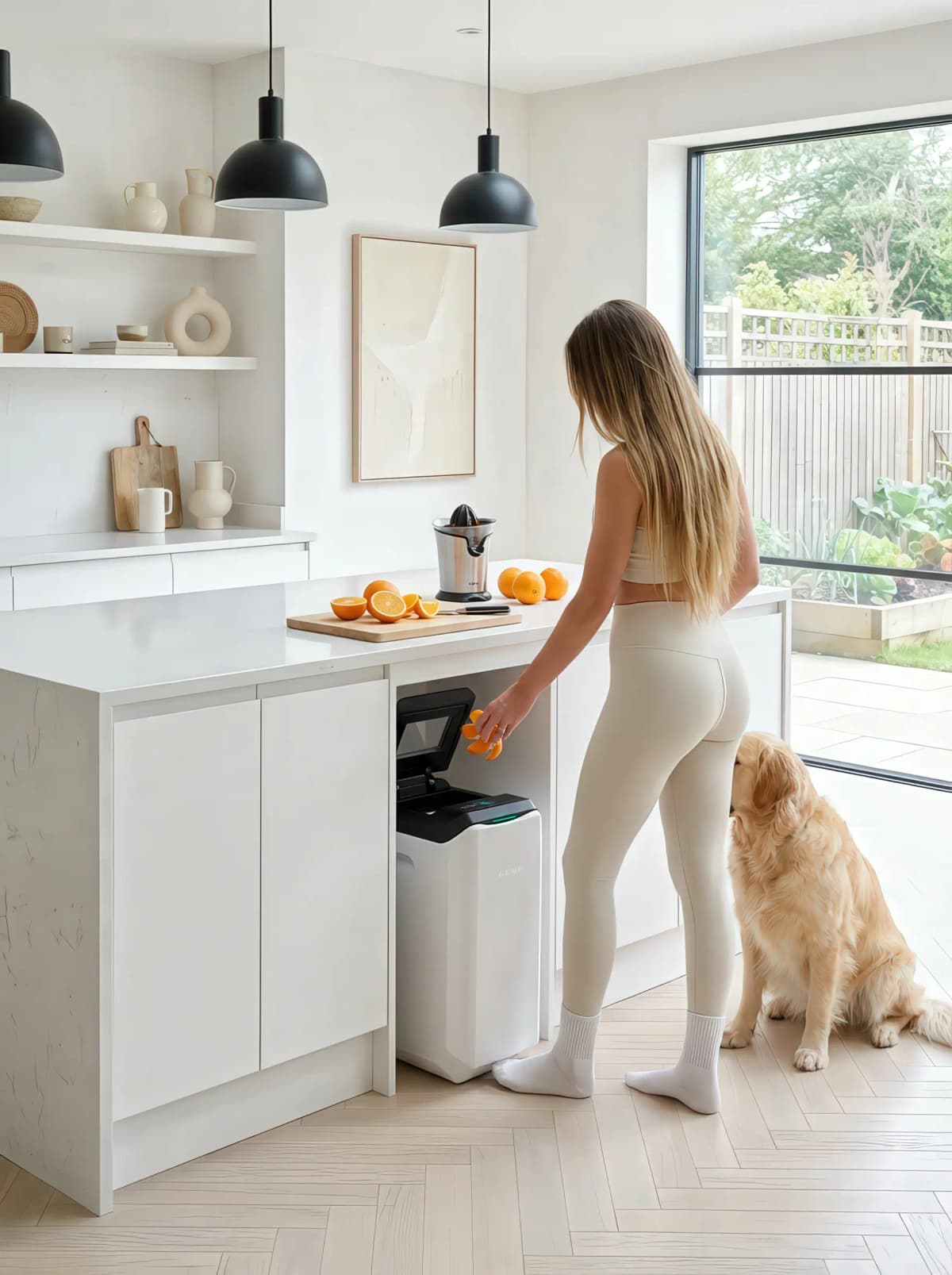
Real microbial composting for everyday scraps.
Turn Unavoidable Food Scraps Into Compost
GEME Terra II supports real microbial composting indoors, with continuous feeding, no filter replacements, and compost output for soil blending.
Real composter. Real microbial composting. No filter replacements.
Food Waste Management at Home: What to Do After Prevention
The best way to reduce food waste is always through prevention. But even a careful household still creates unavoidable organic waste.
Common unavoidable scraps include:
- Fruit and vegetable peels
- Coffee grounds
- Tea leaves
- Eggshells
- Fruit cores
- Wilted herbs
- Small spoiled leftovers
- Food prep trimmings
The question is what happens next.
If scraps go into the trash, they usually enter the landfill pathway. If they are composted properly, they can become part of a soil-building cycle instead.
Why Composting Matters
Composting is not just waste disposal. It is biological recycling.
In aerobic composting, microorganisms break down organic matter in the presence of oxygen. When managed well, the result is compost that can support soil structure and plant growth after proper soil blending.
Good composting helps:
- Keep unavoidable organic waste out of the trash
- Return organic matter to the soil
- Support soil structure
- Reduce dependence on landfill disposal
- Create a more complete household food loop
Important distinction: composting is not a license to waste edible food. It is the final step for scraps that cannot be prevented, saved, shared, or eaten.
The Apartment Composting Challenge
Traditional composting works well for many gardeners, but not every household has a backyard, balcony, garden bed, or time to manage a compost pile.
Apartment dwellers and small-space households often face practical barriers:
- Limited outdoor space
- Concerns about odor
- Fruit flies or insects
- Slow decomposition
- Difficulty turning or aerating compost
- Uncertainty about when compost is ready
- No easy place to finish pre-compost or dried food waste
This is why many people search for an indoor composter, electric composter, or kitchen composter. But the category can be confusing.
Key distinction: a food waste dehydrator makes scraps smaller and drier. A real microbial composter supports biological decomposition.
GEME Terra II: A Real Kitchen Composter for Food Waste Management
GEME Terra II is designed for households that want to reduce food waste without managing an outdoor compost pile.
Instead of only drying or grinding food scraps, GEME Terra II uses a living microbial system called Kobold™ to support aerobic decomposition inside the machine.
The system is designed to support the conditions microbes need:
- Temperature balance
- Moisture balance
- Oxygen availability
- Airflow
- Mixing
- Continuous feeding according to product guidance
This turns food waste management into a simpler kitchen habit: add appropriate scraps, close the lid, and let the microbial system keep working.
Learn more about how GEME composting works and Kobold™ microbial technology.
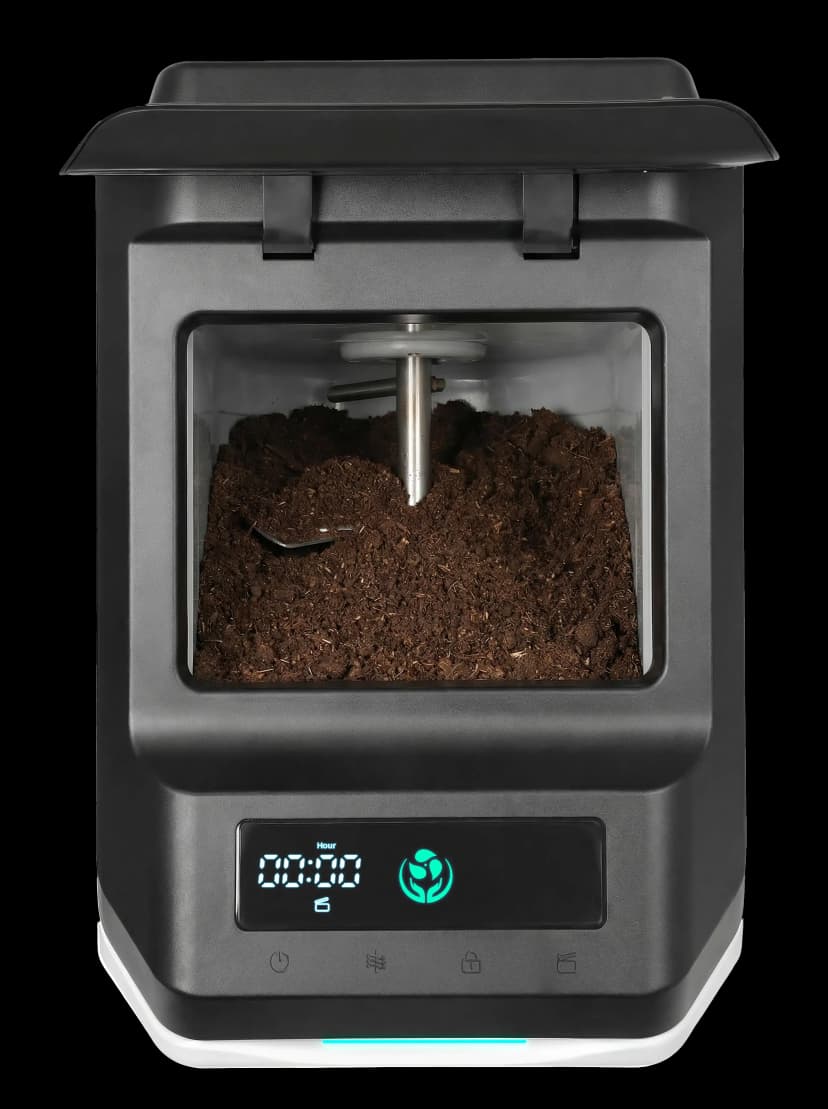
Screen, mix, and use responsibly.
Reduce First. Compost What Remains.
GEME Terra II supports real microbial composting for unavoidable kitchen scraps — with no filter replacements and compost output for soil blending.
Terra II for everyday homes. GEME Pro for larger routines.
GEME Terra II vs Food Waste Dehydrators
Not every electric food waste appliance solves the same problem.
Food waste dehydrators are useful if your main goal is volume reduction. They can make scraps smaller, drier, and easier to store. But if your goal is real composting, drying and grinding stop short of the biological process.
GEME Terra II is designed to support the biological part of the process by maintaining an active microbial environment inside the machine.
| Feature | Typical Food Waste Dehydrator | GEME Terra II |
|---|---|---|
| Core process | Drying and grinding | Aerobic microbial composting |
| Primary output | Dried food particles | Compost base for soil blending |
| Biological composting? | Usually no | Yes, designed around living microbes |
| Soil-use reality | Further decomposition may be needed | Screen and mix with soil before plant use |
| Daily workflow | Often batch-cycle dependent | Continuous feeding according to product guidance |
| Routine filter costs | Often recurring | No filter replacements |
| Best for | Reducing trash volume and moisture | Reducing food waste and creating compost for soil blending |
A Simple Weekly Food Waste Routine
Food waste reduction works best when it becomes a routine rather than a one-time project.
| Day | Action | Why It Helps |
|---|---|---|
| Before shopping | Check fridge, freezer, pantry, and fruit bowl | Prevents duplicate buying |
| After shopping | Move fragile foods into visible storage | Makes food easier to use before it spoils |
| Midweek | Cook a flexible leftover meal | Turns small leftovers into a planned meal |
| Before weekend | Freeze anything that will not be eaten in time | Extends usable life |
| Every day | Compost unavoidable scraps | Keeps organic waste out of the trash pathway |
GEME Terra II does not replace meal planning, smart shopping, or proper storage. It solves the final part of the household system: what to do with organic scraps that cannot be eaten.
Final Takeaway: Reduce First, Compost What Remains
The best food waste strategy is not simply buying a composter.
The best strategy is:
- Buy more carefully.
- Store food better.
- Use leftovers intentionally.
- Freeze food before it spoils.
- Compost unavoidable scraps.
When used this way, kitchen composting becomes the final step in a complete household food waste management system.
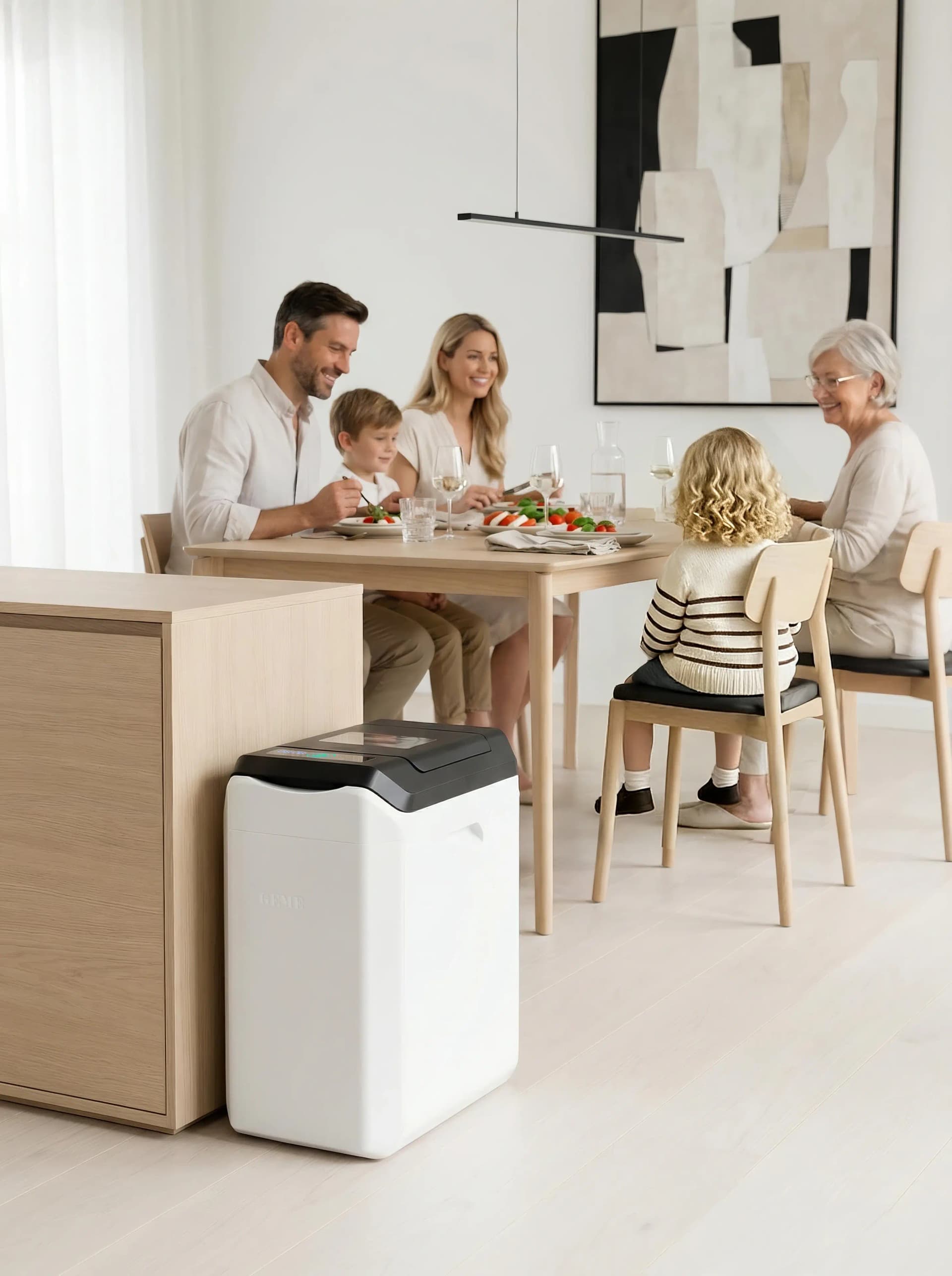
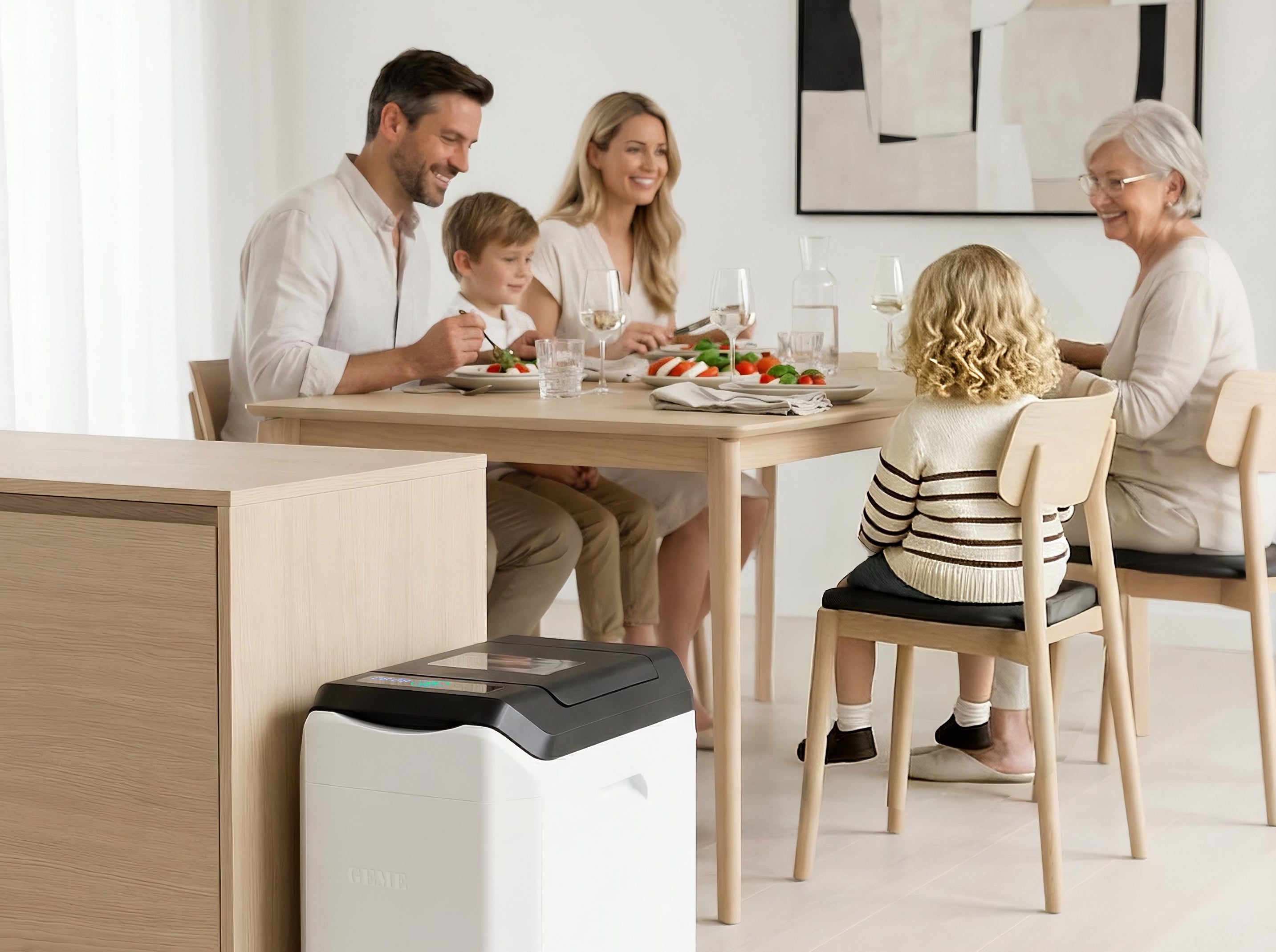
Feed the earth with real microbial composting.
Ready to Reduce Food Waste at Home?
Start with smarter food habits, then turn unavoidable scraps into compost for soil blending with GEME Terra II.
Terra II for everyday homes. GEME Pro for larger routines.
Frequently Asked Questions
What is the easiest way to reduce food waste at home?
The easiest way is to combine meal planning, proper food storage, freezing food before it spoils, and using leftovers intentionally. Composting unavoidable scraps is the final step.
Why is reducing food waste important?
Reducing food waste saves money, conserves the resources used to produce food, lowers landfill use, and helps reduce the climate impact of wasted food.
What foods are most commonly wasted at home?
Fresh produce, bread, leftovers, dairy products, herbs, and prepared meals are often wasted because they spoil quickly or become hidden in the refrigerator.
Can composting eliminate food waste?
No. Composting is not a replacement for prevention. It is a solution for unavoidable organic scraps that remain after good food management practices.
What is the best way to manage food scraps in an apartment?
Apartment users can use community composting, pickup programs, freezer storage, vermicomposting, Bokashi with a finishing plan, or an indoor microbial composter such as GEME Terra II.
Does an electric composter make real compost?
Some do, and some do not. Many machines mainly dry and grind food waste, while microbial composters such as GEME Terra II support biological decomposition and create compost for soil blending.
Can I put all food scraps into a kitchen composter?
Every composter has its own feed guidelines. Most kitchen composters can process fruit and vegetable scraps, coffee grounds, and many cooked foods, but users should follow the manufacturer’s recommendations for meat, dairy, bones, oil, salt, and liquid-heavy foods.
Can I use GEME compost in my garden?
Yes, but it should be mixed with soil before plant use. A practical starting point is to blend compost with soil, screen large unfinished pieces, and avoid placing concentrated compost directly against roots or stems.
Sources and Further Reading
- U.S. EPA — Reducing Wasted Food at Home
- U.S. EPA — Composting and Food Waste
- USDA — Food Waste FAQs
- European Commission — Food Waste
- GEME — Terra II Product Page
- GEME — How Real Microbial Composting Works
- GEME — Kobold™ Microbial Technology
- GEME — Verification and Boundaries
- GEME — Advanced Compost Application Guide

Zostaw komentarz
Ta strona jest chroniona przez hCaptcha i obowiązują na niej Polityka prywatności i Warunki korzystania z usługi serwisu hCaptcha.