

Indoor Compost Odor Guide
Indoor compost does not have to smell. Most odor problems come from excess moisture, too little carbon, poor airflow, or scraps sitting too long.

Compost without the stink.
Quick Answer
To reduce odor in indoor composting, keep scraps cool, add dry carbon-rich “browns” after wet food waste, empty the bin frequently, avoid meat, dairy, oil, and saucy leftovers, and clean the container before residue builds up. Most indoor compost smells happen when food scraps become too wet and lose oxygen.
New to composting? Start with our home composting guide for beginners. If odor is your biggest concern, compare long-term maintenance in our electric composter filter cost guide.
Key Takeaways
- Bad compost smell usually means an imbalance. Too much moisture or too little oxygen is the most common cause.
- Browns are your odor-control tool. Shredded paper, cardboard, dry leaves, and paper filters absorb moisture and improve airflow.
- Freezing scraps stops odor completely. This works well for apartment users who drop off food scraps weekly.
- Some foods are risky indoors. Meat, dairy, oils, and saucy cooked foods create more odor and pest pressure.
- Cleaning matters. Residue in lids, handles, and corners can smell even after the bin is emptied.
- Microbial kitchen composters reduce manual odor work. GEME Terra II is designed for continuous daily use with no routine odor filter replacement.
Table of Contents
- Why Indoor Compost Smells
- Indoor Compost Odor: Do and Don’t
- Choose the Right Indoor Bin
- Master the Green-Brown Balance
- What to Compost Indoors
- Daily Odor-Control Routine
- Clean Your Bin Properly
- Manual Bin vs Electric Options
- How GEME Helps Control Odor
- Troubleshooting
- Quick Reference Summary
- FAQ
- References
The Smell That Stops Composting Dreams
Many people want to compost at home, but one fear stops them: smell. A small indoor collection bin starts with banana peels and coffee grounds, then suddenly the kitchen feels sour, damp, or rotten.
The good news is simple: indoor compost odor is usually preventable. A well-managed compost system should smell earthy, not offensive. When odor appears, it usually means the system is too wet, too warm, too nitrogen-heavy, or sitting too long.
If you are trying to build a complete low-waste kitchen routine, this guide pairs well with our article on how to reduce food waste at home.
Simple rule: Odor is not a sign that composting failed. It is a signal that moisture, oxygen, timing, or material balance needs fixing.
1. Why Does Indoor Compost Smell?
Indoor compost smells when food scraps start decomposing without enough oxygen. That usually happens in a small wet bin where fruit peels, coffee grounds, cooked leftovers, or other “greens” sit too long without dry carbon-rich material.
The Three Main Culprits
| Culprit | Why It Causes Smells | Fast Fix |
|---|---|---|
| Moisture | Wet scraps reduce airflow and create anaerobic odor. | Add shredded paper, cardboard, or dry leaves. |
| Time | Scraps left too long decompose further and smell stronger. | Empty more often or freeze scraps. |
| Temperature | Warm conditions speed decomposition. | Store the bin in a cooler place. |
What Your Nose Is Telling You
| Smell | Likely Cause | What to Do |
|---|---|---|
| Ammonia | Too many greens and not enough carbon. | Add browns immediately and mix. |
| Musty | Too much moisture or poor airflow. | Add dry browns and empty sooner. |
| Rotten egg/sulfur | Anaerobic conditions. | Mix, add dry material, and reduce wet scraps. |
2. Indoor Compost Odor: Do and Don’t
Do
- Add browns after wet scraps.
- Keep the bin cool and sealed.
- Empty before scraps become soupy.
- Freeze scraps if pickup is delayed.
- Clean lid creases and bucket corners.
Don’t
- Do not add meat, dairy, or greasy foods to a small indoor bin.
- Do not let wet scraps sit uncovered.
- Do not rely on baking soda alone.
- Do not forget the paper/cardboard layer.
- Do not keep the bin near heat.
3. Choose the Right Indoor Compost Bin
A basic indoor bin is usually a collection container, not a full composting system. That means odor control depends heavily on your habits.
What to Look For
- A tight-fitting lid: helps prevent odor escape and fruit flies.
- Right size: large enough for your household, small enough to empty often.
- Easy cleaning: smooth surfaces and removable parts reduce residue buildup.
- Optional carbon filter: useful, but remember that filters may need routine replacement.
The Freezer Hack
If odor keeps returning, freeze your food scraps. Freezing stops decomposition almost completely, which means no smell and fewer fruit flies. This is especially useful if you use a community drop-off or city food-scrap program.
For apartment-specific composting choices, read our guide to the best indoor composter for apartments.
4. Master the Green-Brown Balance
The most important odor-control habit is adding browns. In composting language, “greens” are nitrogen-rich wet materials, while “browns” are dry carbon-rich materials that absorb moisture and improve airflow.
| Type | Examples | Odor-Control Role |
|---|---|---|
| Greens | Fruit scraps, vegetable scraps, coffee grounds, tea leaves | Feed microbes, but can smell if too wet or unbalanced. |
| Browns | Shredded paper, cardboard, dry leaves, paper filters | Absorb moisture, add structure, and reduce odor. |
A practical indoor rule is 2–3 parts browns to 1 part greens by volume. If your bin smells, add more browns first.
Coffee grounds are a common indoor “green.” Learn how to handle them safely in our guide on how to compost coffee grounds.
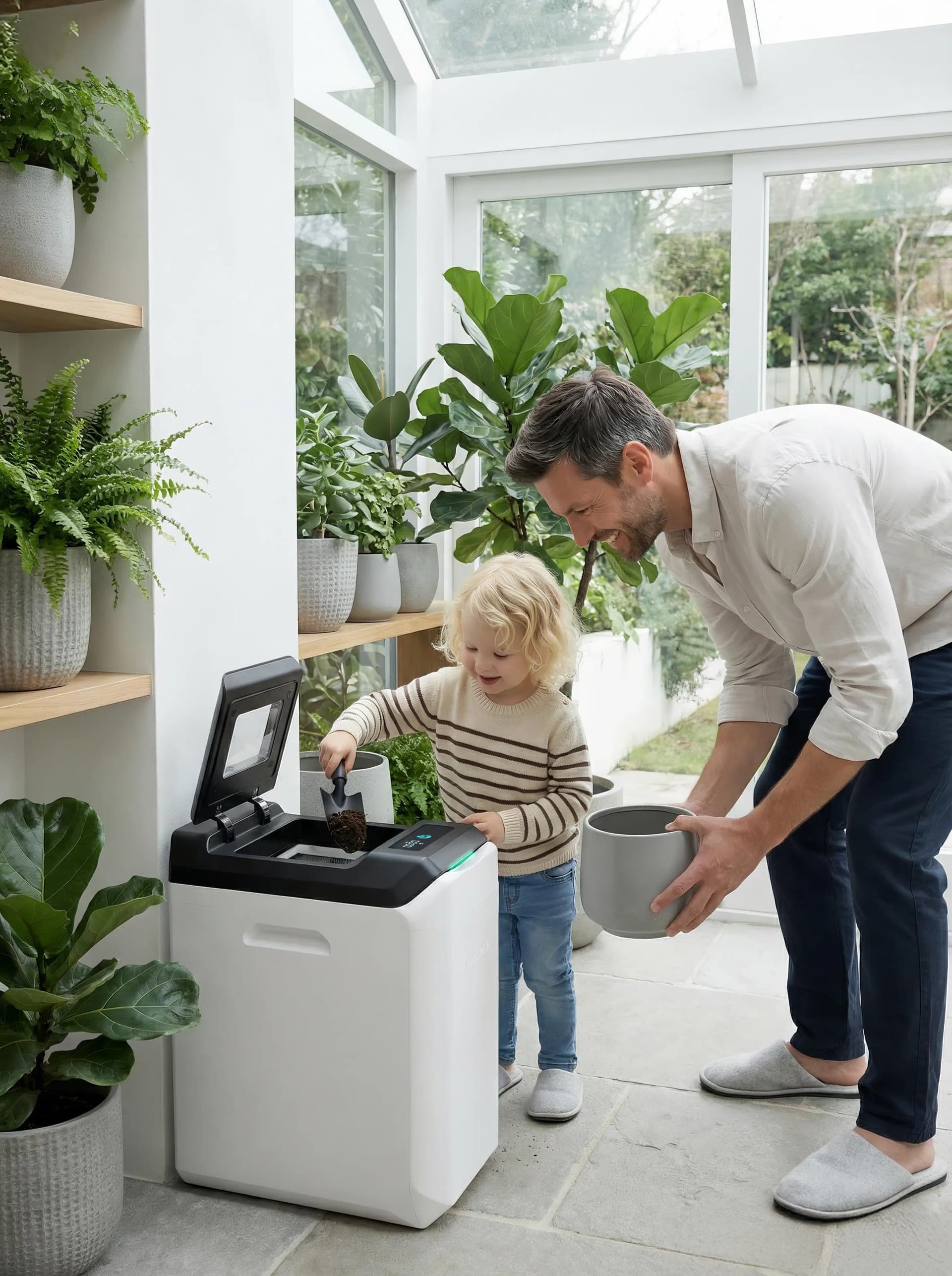
Compost daily without bin babysitting.
Compost With Less Odor
GEME Terra II helps keep daily scraps moving in a controlled microbial system, reducing the need for freezer storage, filter swaps, and constant bin cleaning.
Designed for low-maintenance indoor composting.
5. What to Put In and What to Avoid
Indoor compost odor control starts with what you add. A small indoor collection bin is not the place for every food waste item.
Safer Indoor Compost Items
| Item | Odor Note |
|---|---|
| Fruit and vegetable scraps | Cover with browns, especially wet fruit scraps. |
| Coffee grounds and filters | Grounds are greens; paper filters are browns. |
| Tea leaves | Remove staples and non-compostable bags. |
| Crushed eggshells | Low odor; crush for faster integration. See how to compost eggshells. |
| Shredded paper and cardboard | Useful browns for moisture control. |
Avoid These in Small Indoor Bins
| Problem Item | Why It Smells |
|---|---|
| Meat, fish, poultry | Rot quickly and attracts pests. |
| Dairy products | High fat and protein can create a strong odor. |
| Oils and greasy foods | Can become rancid and slow the process. |
| Saucy cooked leftovers | Usually too wet and often oily or salty. |
6. The Daily Routine That Reduces Odor
The Layer-Cap-Cool Method
- Layer: After adding wet scraps, cover them with dry browns.
- Cap: Close the lid tightly so fruit flies and odors stay contained.
- Cool: Keep the bin away from heat, sun, stove, and radiators.
Empty Before Odor Builds
- In warm weather, empty every 1–2 days if scraps are wet.
- In cooler conditions, empty at least weekly.
- If pickup is delayed, freeze scraps instead of letting them sit.
If you are trying to reduce waste more broadly, combine odor control with smarter kitchen planning from our zero-waste home kitchen composter guide.
7. Clean Your Bin Properly
Even if you empty the bin, tiny food residues can stay in corners, lid seams, handle joints, or filter slots. Those residues become the smell.
Weekly Cleaning Routine
- Empty the bin.
- Rinse with warm water.
- Wash with mild dish soap.
- Use baking soda paste on stubborn odor spots.
- Rinse well.
- Air-dry fully before using again.
Monthly Deep Clean
Clean lid creases, handle joints, and filter slots. If your bin uses replaceable carbon filters, follow the manufacturer’s replacement schedule.
8. Manual Bin vs Electric Options
Manual composting can work very well, but it asks for consistent habits. Electric food-waste machines reduce some manual work, but the technology matters.
| Method | Odor Management | Effort | Output |
|---|---|---|---|
| Basic indoor collection bin | Manual browns, cleaning, emptying, or freezing | Daily to weekly | Collected scraps for outdoor compost or pickup |
| Dehydrator-style food recycler | Often relies on replaceable odor filters | Batch cycles | Dried, ground food-waste residue |
| Microbial kitchen composter | Controlled airflow, moisture, microbes, and odor path | Lower daily management | Compost-like organic material for soil blending |
For a deeper comparison of dehydrator-style machines and microbial composting, see GEME vs Lomi and Does Lomi really compost?.
9. How GEME Helps Control Odor
GEME Terra II is not designed as a simple drying machine. It is a microbial kitchen composter built for daily food-waste processing, continuous feeding, and compost-like output for soil blending.
Why It Helps with Odor
- Continuous operation: add scraps without waiting for a batch cycle.
- Microbial composting: scraps are processed in a controlled biological environment.
- Moisture and airflow management: help reduce the wet, oxygen-poor conditions that cause odor.
- No routine odor filter replacement: avoids the recurring filter habit common in many odor-control systems.
For soil use, GEME output should be treated as compost base, not pure potting soil. Learn safe application in our advanced GEME compost application guide.
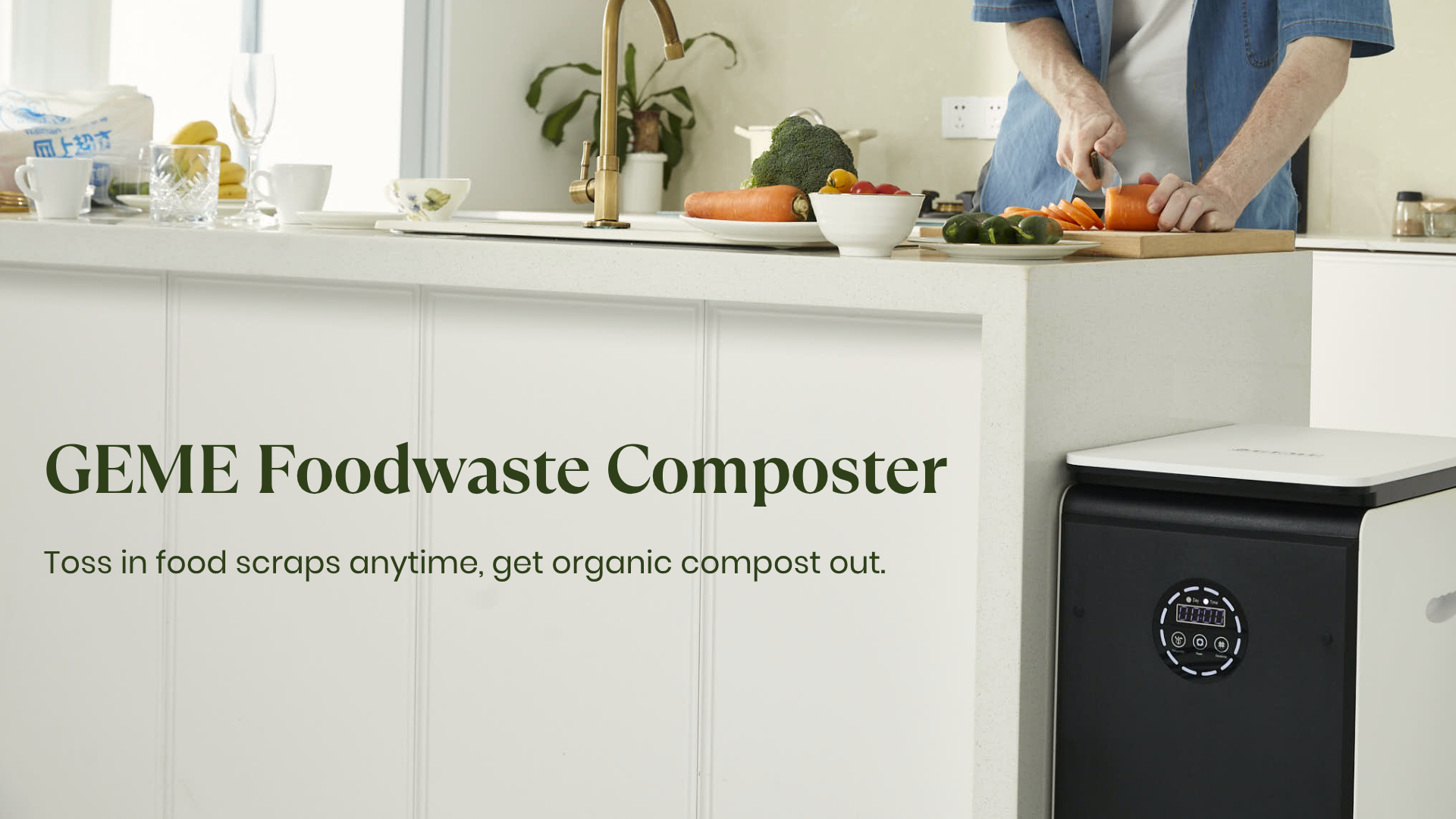
More capacity for busy kitchens.
Need More Capacity?
GEME Pro fits larger households, plant shops, and heavier food-scrap routines where odor control and capacity matter together.
Built for heavier daily composting.
10. Troubleshooting Common Odor Problems
| Problem | Likely Cause | Solution |
|---|---|---|
| Sour, rotten smell | Too wet or anaerobic | Add browns, mix, and empty sooner. |
| Ammonia odor | Too many greens | Add carbon-rich browns immediately. |
| Fruit flies | Exposed fruit scraps or loose lid | Cover scraps with browns, check the seal, or freeze fruit scraps first. |
| Smell returns after cleaning | Residue in lid or creases | Deep clean with a toothbrush and baking soda paste. |
| Bin smells fine when closed but bad when opened | Scraps are ageing or too wet | Empty sooner, add browns, or switch to freezer storage. |
Quick Reference Summary
| Main odor cause | Too much moisture and too little oxygen. |
| Fastest fix | Add dry browns and empty the bin sooner. |
| Best apartment hack | Freeze scraps until pickup or drop-off. |
| Foods to avoid indoors | Meat, dairy, oils, greasy foods, and saucy leftovers. |
| GEME benefit | Continuous microbial composting with no routine odor filter replacement. |
11. Frequently Asked Questions
How do I compost indoors without smell?
Add dry browns after wet scraps, keep the bin cool, close the lid tightly, empty often, avoid meat and dairy, and clean the bin regularly.
Why does my indoor compost bin smell bad?
The most common causes are excess moisture, too many greens, too little airflow, warm storage, or food scraps sitting too long.
What are browns in indoor composting?
Browns are dry, carbon-rich materials such as shredded paper, cardboard, dry leaves, and plain paper filters. They absorb moisture and reduce odor.
Can I compost citrus peels indoors?
Yes, in small amounts. Citrus peels are wet and can smell if overused, so add extra browns and empty the bin regularly.
Should I use baking soda for compost smell?
Baking soda can reduce odor temporarily, but it does not fix the cause. If the bin smells, add browns, improve airflow, and empty sooner.
Does freezing food scraps prevent odor?
Yes. Freezing stops decomposition, so it is one of the easiest ways to prevent smell and fruit flies before pickup or drop-off.
Are electric composters worth it for odor control?
They can be, depending on the technology and your routine. Dehydrator-style machines reduce volume, while microbial kitchen composters are designed for biological processing and compost-oriented output.
Does GEME Terra II require routine odor filter replacement?
GEME Terra II is designed with no routine odor filter replacement, which helps reduce long-term upkeep compared with filter-replacement systems.
Can GEME Terra II handle coffee grounds and filters?
Used coffee grounds can be added as part of a mixed food-scrap routine. Plain paper filters may support carbon balance when used according to product guidance.
How should I use GEME compost output?
Treat it as a compost base. Screen large unfinished pieces, blend finished material with soil, and avoid using it as pure potting soil.
Conclusion: You Can Compost Without the Stink
Indoor composting does not have to make your kitchen smell. Most odor problems come from a few fixable issues: too much moisture, too many greens, not enough browns, warm storage, or scraps sitting too long.
If you want the lowest-cost route, use a tight-lidded bin, keep browns nearby, empty often, and freeze scraps when needed. If you want a lower-maintenance route, a microbial kitchen composter can reduce the daily work of managing odor.
The right system is the one you can keep using. Composting only helps if it fits real life.
Final rule: A fresh-smelling kitchen starts with dry browns, frequent emptying, and a composting system that matches your routine.
References
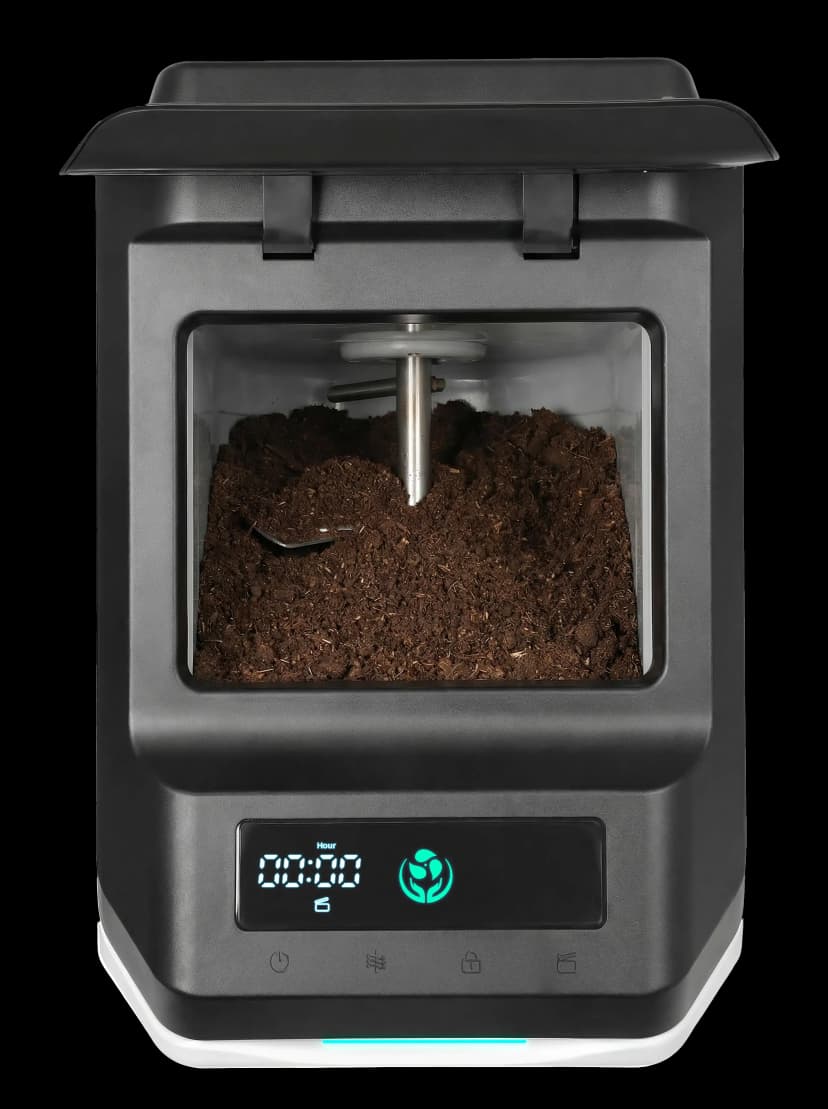
Compost with less odor works.
Start Low-Odor Composting
Turn daily scraps into compost base without building your routine around freezing, bin washing, or replacement odor filters.
Built for daily kitchen composting.

Zostaw komentarz
Ta strona jest chroniona przez hCaptcha i obowiązują na niej Polityka prywatności i Warunki korzystania z usługi serwisu hCaptcha.