


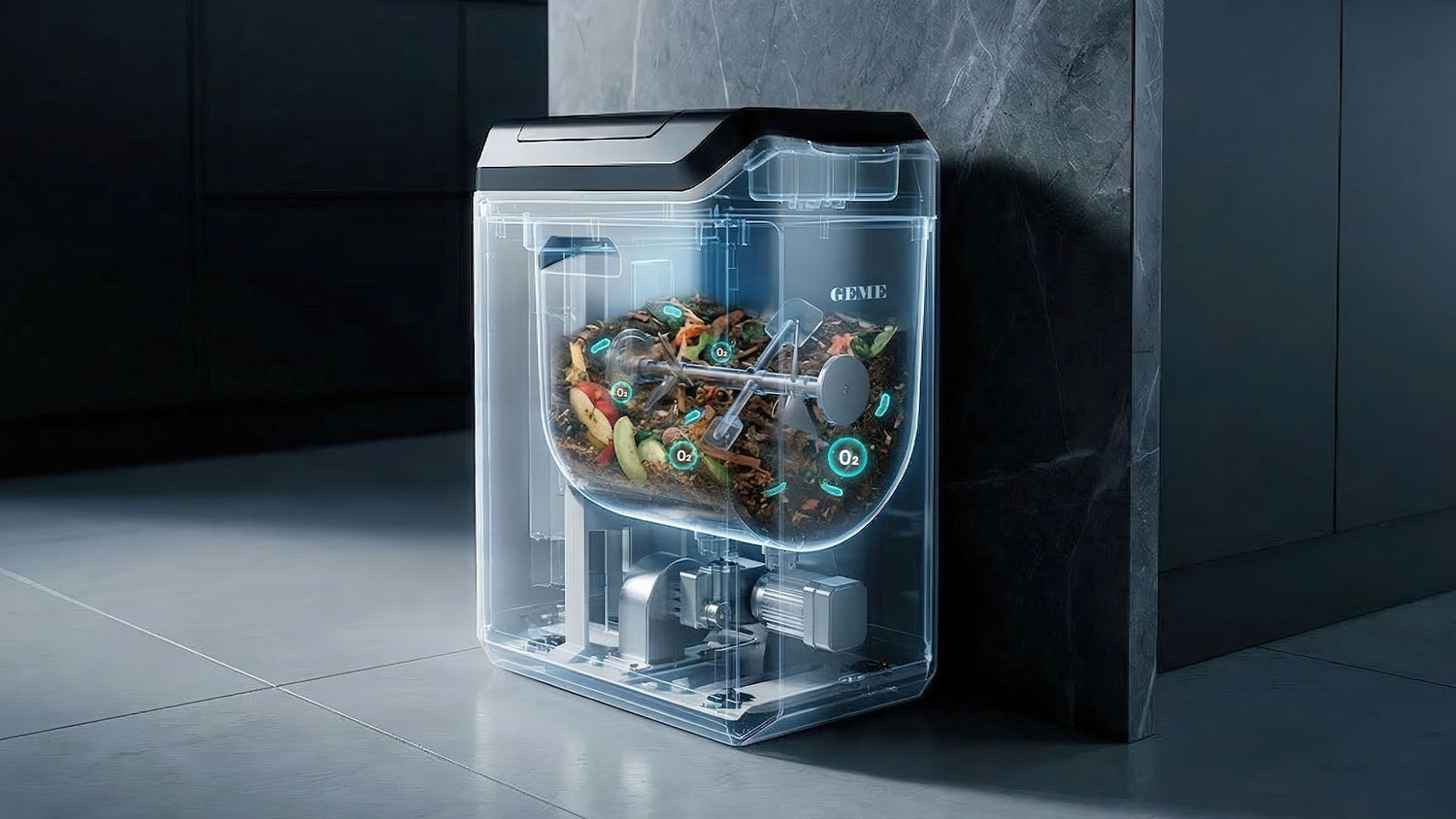
Przewodnik inżynieryjny: obudowa, stabilność, wibracje i rzeczywiste warunki w kuchni
Lekki gadżet blatu łatwo podnieść. Ciągły tlenowy system bioprocesowania ma inne zadanie: musi zachować stabilność, podczas gdy przepływ powietrza, wilgotność, temperatura i mieszanie współpracują wewnątrz komory każdego dnia.
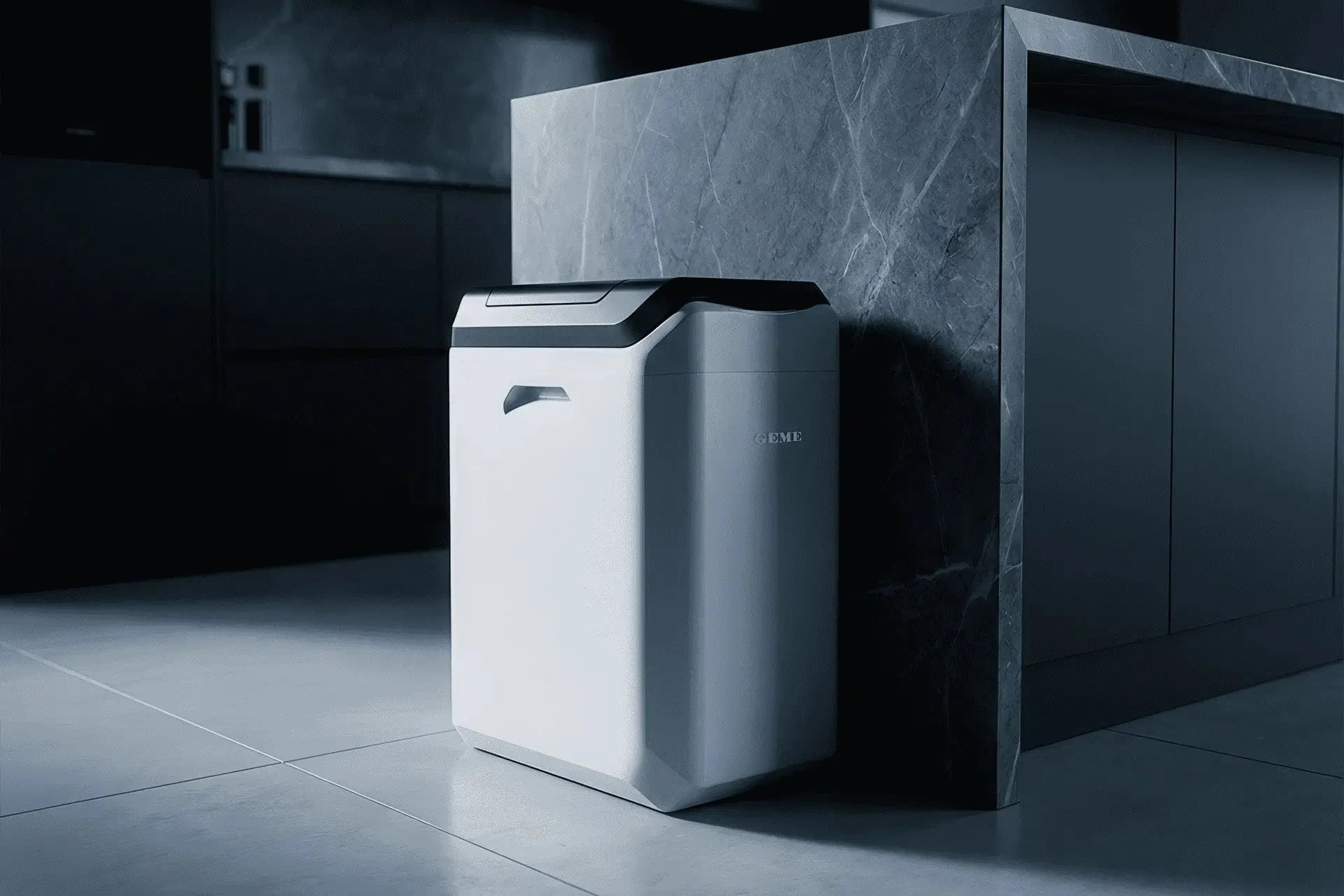
Masa obudowy GEME nie służy do tworzenia wrażenia „premium”. Chodzi o stabilność, zachowanie wibracji, zapas wydajności, ochronę przepływu powietrza i spokojniejszą codzienną pracę w kuchni.
Prosta zasada: oceniaj obudowę po tym, co kontroluje, a nie po tym, czy wydaje się lekka w salonie.
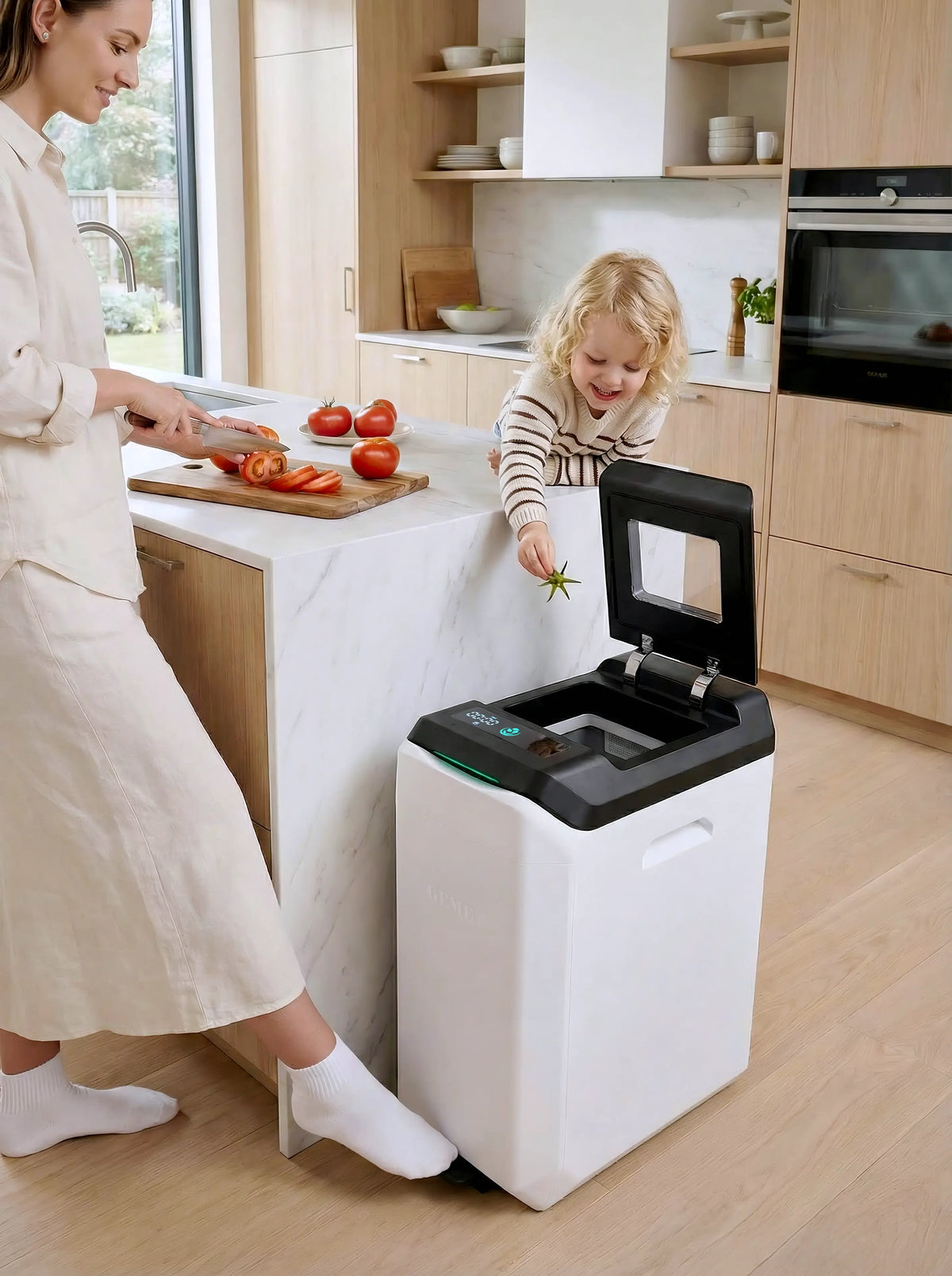
Stabilność, wibracje, przepływ powietrza i obciążenie idą w parze.
Krótka odpowiedź
GEME jest celowo bardziej masywny niż wiele lekkich komposterów blatu, ponieważ jest zbudowany jako ciągły tlenowy system bioprocesowania, a nie krótocyklowy odwadniacz. Jego konstrukcja musi wspierać komorę, oś mieszania, drogę przepływu powietrza, biologiczny substrat i codzienne obciążenia mieszanymi odpadami spożywczymi.
Ciężar nie oznacza automatycznie mniejszej głośności, a lekkość nie oznacza automatycznie lepszej jakości. Pytanie inżynieryjne jest bardziej konkretne: czy obudowa pomaga maszynie zachować stabilność, kontrolować wibracje, chronić przepływ powietrza, tolerować rzeczywiste obciążenia i pasować do codziennej rutyny użytkownika w kuchni?
Terra II to zwinny model do użytku domowego, podczas gdy GEME Pro to większy model z większym zapasem wydajności. Najlepszy wybór zależy od codziennej ilości odpadów spożywczych, wielkości gospodarstwa domowego, warunków instalacji i oczekiwań dotyczących konserwacji, a nie tylko od wagi.
Czytaj dalej: Cicha skrzynia biegów GEME Terra II, dlaczego niska moc średnia ma większe znaczenie oraz dlaczego „komposter blatu” może być mylną etykietą.
Spis treści
- Blok Q&A
- Prawda w 90 sekund
- Sprawdzenie dopasowania do kuchni
- Szybka decyzja
- Dlaczego projekt obudowy ma znaczenie
- Szczegółowe spojrzenie na Terra II
- Szczegółowe spojrzenie na GEME Pro
- Niewidoczna praca vs zapas wydajności
- Praktyczne zasady decyzyjne
- Lista kontrolna do skopiowania
- FAQ
- Podsumowanie
- Źródła
- Powiązane artykuły
1. Blok Q&A
Dlaczego GEME jest cięższe niż wiele komposterów blatu?
Ponieważ GEME jest zbudowane jako ciągły tlenowy system bioprocesowania z komorą, osią mieszania, drogą przepływu powietrza i konstrukcją mającą zachować stabilność pod codziennym obciążeniem biologicznym. Nie jest zaprojektowane jako lekki odwadniacz wsadowy.
Czy większa waga automatycznie oznacza mniejszą głośność?
Nie. Masa obudowy może pomóc w stabilności i zachowaniu wibracji, ale odczuwalna cicha wciąż zależy od instalacji, sztywności podłogi, odstępu od ścian, akustyki pomieszczenia, sprzężenia powierzchniowego i tego, co maszyna przetwarza.
Czy Terra II jest zbudowana tak samo jak GEME Pro?
Dzielą tę samą logikę biologiczną, ale są pozycjonowane inaczej. Terra II to zwinny model do użytku domowego. GEME Pro to większy model z większym zapasem wydajności do intensywniejszych rutyn.
Czy chodzi o „premium ciężar”, czy o rzeczywistą inżynierię?
Rzeczywistą inżynierię. Odpowiednie pytanie brzmi nie „Czy jest ciężkie?”, ale „Co ta konstrukcja robi dla stabilności, zachowania wibracji, przepływu powietrza i zapasu wydajności w prawdziwej kuchni?”
Czy powinienem wybierać tylko na podstawie wagi?
Nie. Wybieraj na podstawie codziennej pojemności, wielkości gospodarstwa domowego, układu kuchni, wrażliwości na wibracje, oczekiwań dotyczących konserwacji i tego, czy potrzebujesz domowego dopasowania Terra II, czy większego zapasu wydajności GEME Pro.
2. Prawda w 90 sekund
Lekkie urządzenie blatu sprawia wrażenie łatwego do przenoszenia. Ciągły tlenowy bioprocesor ma inne zadanie. Musi zachować stabilność, podczas gdy przepływ powietrza, temperatura, wilgotność, obciążenie spożywcze i mieszanie współpracują dzień po dniu.
Celem obudowy GEME nie jest sprawianie wrażenia przy podnoszeniu. Celem jest dobre zachowanie, gdy biologia, obciążenie i ruch mechaniczny zachodzą wewnątrz maszyny.
Kiedy przestaniesz oceniać tę kategorię jak mały gadżet blatu, pytanie inżynieryjne się zmienia. Zamiast pytać „Dlaczego nie jest lżejsze?”, lepszym pytaniem staje się „Co ta rama musi kontrolować?”
Odpowiedzią są stabilność, zachowanie komory, wyrównanie mieszania, ochrona przepływu powietrza, zachowanie wibracji i codzienne odczucie użytkownika, że maszyna jest stabilna, a nie kapryśna.
3. Sprawdzenie dopasowania do kuchni
P1. Ilu osób gotuje w Twoim gospodarstwie?
- 1–3 osoby, zwykłe codzienne resztki → prawdopodobnie pasuje Terra II.
- 4+ osoby, biuro, użytkowanie jak w kawiarni lub intensywniejsze dni przygotowań → prawdopodobnie pasuje GEME Pro.
P2. Jaki jest Twój typowy schemat resztek?
- Stałe codzienne resztki z umiarkowanymi szczytami → Terra II.
- Częste duże obciążenia lub potrzeba większego zapasu wydajności → GEME Pro.
P3. Co ma większe znaczenie w Twojej przestrzeni?
- Wrażliwość na wibracje w mieszkaniu i kompaktowe dopasowanie domowe → Terra II.
- Większa przepustowość i dłuższy zapas wydajności → GEME Pro.
- Jeszcze niepewny → użyj praktycznych zasad decyzyjnych poniżej.
Wniosek w jednym zdaniu: wybieraj według codziennej pojemności, kontekstu podłogi i pomieszczenia oraz zapasu wydajności — a nie według emocjonalnego skrótu „lekki” lub „ciężki”.
4. Szybka decyzja
Wybierz Terra II, jeśli...
- Jesteś mniejszym gospodarstwem domowym lub codzienną kuchnią domową.
- Twoje codzienne resztki mieszczą się w domowej ramie Terra II.
- Chcesz modelu bardziej zorientowanego na mieszkanie.
- Twoim głównym celem jest stabilne przetwarzanie codzienne bez nadmiarowego zakupu zapasu wydajności.
Wybierz GEME Pro, jeśli...
- Twoja kuchnia działa jak system o większym obciążeniu.
- Twoje codzienne resztki są większe lub mniej przewidywalne.
- Chcesz większego zapasu przepustowości.
- Więcej zależy Ci na zapasie wydajności niż na mniejszej ogólnej ramie.
To nie jest „mały dobry, duży zły” ani „ciężki dobry, lekki zły”. To inżynieria dopasowania.
5. Dlaczego projekt obudowy ma znaczenie
Bioprocesor nie jest odwadniaczem wsadowym
Proces GEME jest zbudowany wokół tlenowej aktywności biologicznej, a nie tylko ogrzewania i suszenia. Obudowa dla żywego procesu rozwiązuje inny problem niż obudowa zbudowana głównie do ogrzewania, mielenia, suszenia i zatrzymywania.
Konstrukcja nie tylko trzyma resztki. Wspiera kontrolowany przepływ powietrza, delikatne mieszanie, stabilność substratu i okno wilgotności, które utrzymuje aktywny proces biologiczny, zamiast wysuszać materiał.
Odczuwalny hałas to wynik systemu
Odczuwalna cicha nie jest tylko specyfikacją silnika. Użytkownik słyszy połączony wynik zachowania układu napędowego, wibracji obudowy, sprzężenia z podłogą lub szafką, akustyki pomieszczenia, warunków obciążenia, dźwięku tła i sprzężenia powierzchniowego.
To samo urządzenie może wydawać się spokojniejsze na sztywnej podłodze z odpowiednim odstępem i bardziej zauważalne w rezonującym rogu, na pustej podłodze lub podczas cięższego i mokrzejszego obciążenia.
Zapas wydajności zmienia codzienną tarć
Urządzenie, które jest „wystarczające na papierze”, może nadal sprawiać wrażenie zbyt małego, jeśli Twoje skoki ilości odpadów są nieregularne, często powstają wodniste odpady lub w gospodarstwie domowym zdarzają się dni przeciążeniowe. Terra II i GEME Pro należy rozumieć jako urządzenia o różnych zakresach eksploatacji, a nie tylko różnej wadze.
6. Szczegółowe spojrzenie na Terra II
Terra II to zwinny model do użytku domowego. Jego zadaniem jest zapewnienie zwykłym domom stabilnej codziennej rutyny kompostowania bez zbędnego, zbyt mocnego sprzętu.
Jego konstrukcja nie stara się zniknąć jako lekki przedmiot na blat. Star się zachowywać jak stabilne urządzenie kuchenne, które wspiera ciągłe przetwarzanie tlenowe.
Czego wymaga konstrukcja Terra II, aby zachować kontrolę
- Stabilność komory podczas codziennego użytku.
- Wyrównanie osi obrotowej przy mieszanym obciążeniu odpadami spożywczymi.
- Zachowanie podczas faz pracy.
- Ochrona drogi przepływu powietrza i czułość na wolne miejsce z tyłu.
- Stabilność wilgoci i podłoża w żywym procesie.
- Odczucie użytkownika, że urządzenie jest stabilne, a nie kapryśne.
Terra II ma mniejszy zakres, ale wciąż jest prawdziwym urządzeniem do przetwarzania. Dlatego nie należy go oceniać według tych samych oczekiwań projektowych co lekkiego urządzenia do suszenia na blat.
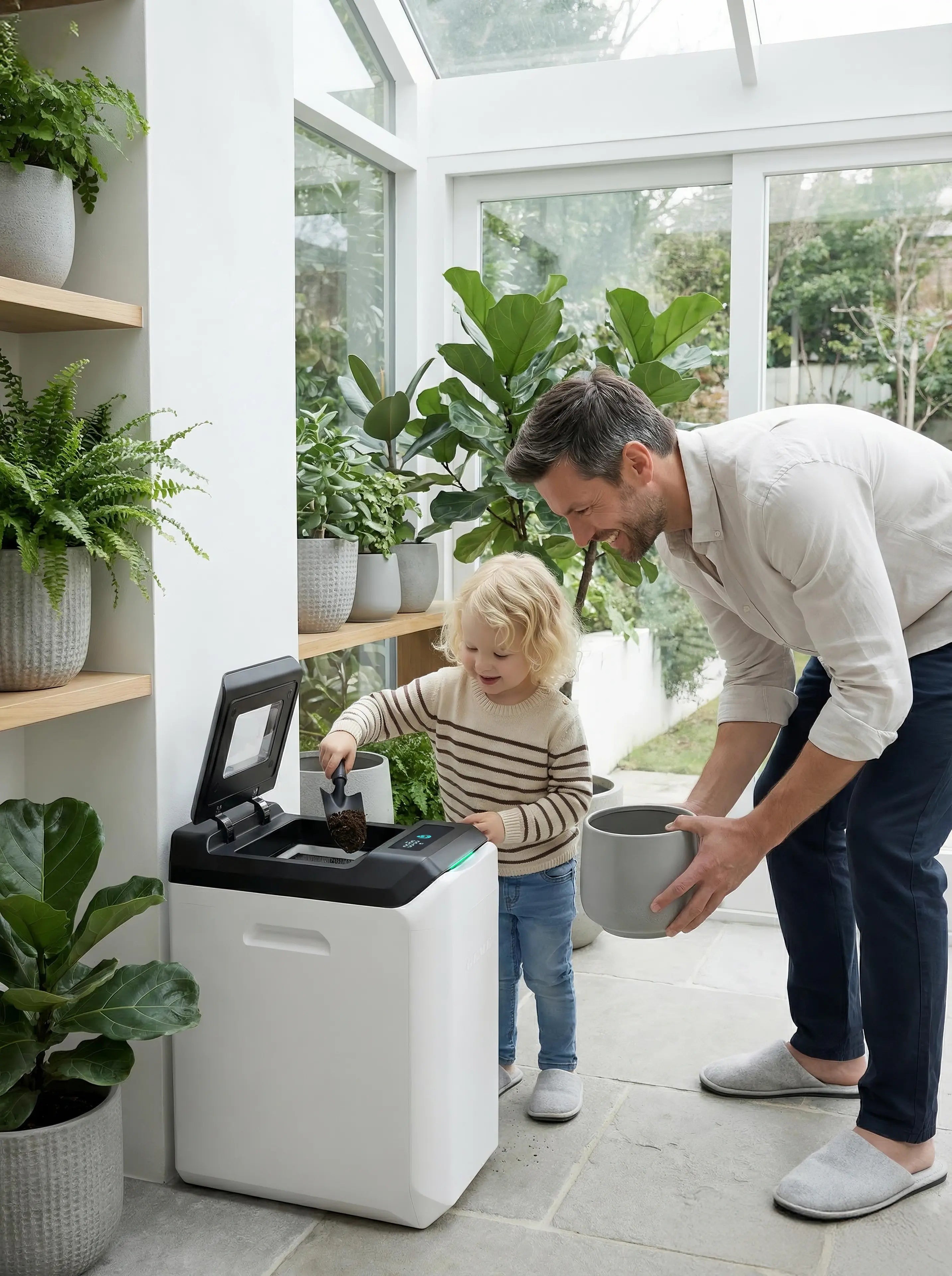
Terra II jest zbudowane do rzeczywistego bio-przetwarzania w kuchni, a nie do robienia wrażenia na blacie.
Poznaj GEME Terra II
Terra II obsługuje rzeczywiste kompostowanie mikrobiologiczne odpowiednich odpadów kuchennych, z ciągłym dozowaniem, bez suszenia, bez wymiany filtrów zapachowych i konstrukcją zaprojektowaną do stabilnego codziennego użytku domowego.
Dopasowanie do domu. Stabilna konstrukcja. Rzeczywiste kompostowanie mikrobiologiczne.
7. Szczegółowe spojrzenie na GEME Pro
GEME Pro nie jest „tym samym, tylko większym” w powierzchowny sposób. To model z większym zapasem. Jego większa pojemność i mocniejsze przeznaczenie mają sens, gdy sama kuchnia zachowuje się jak środowisko o większym obciążeniu.
Nie oznacza to, że każdy powinien wybierać Pro. Zbyt duży rozmiar może być równie nieracjonalny jak zbyt mały. Jeśli Twoja kuchnia to stabilna rutyna małego gospodarstwa domowego, Terra II jest bardziej racjonalna. Jeśli Twoja kuchnia obejmuje gotowanie partiami, częste przyjęcia, odpady biurowe lub użytkowanie jak w kawiarni, Pro daje większy zapas.
Pro ma sens, gdy zapas rozwiązuje rzeczywisty problem
- Więcej osób generuje odpady spożywcze codziennie.
- Obciążenia są bardziej mokre, cięższe lub bardziej nieregularne.
- Dni przeciążeniowe są powszechne.
- Przerwy serwisowe i zapas przepustowości mają większe znaczenie niż kompaktowość.
- Chcesz systemu, który wydaje się mniej obciążony przy intensywniejszych rutynach.
Terra II do codziennych domów. GEME Pro do intensywniejszych rutyn.
Wybierz konstrukcję pasującą do Twojej kuchni
GEME Terra II i GEME Pro mają tę samą rzeczywistą logikę kompostowania mikrobiologicznego, ale są zbudowane do różnych zakresów obciążenia. Odpowiedni wybór zaczyna się od Twoich codziennych resztek, miejsca w kuchni i potrzeb zapasu.
Stabilna codzienna rutyna wygrywa z uprzedzeniem do wagi z salonu.
9. Praktyczne zasady decyzyjne
Wybieraj według zachowania kuchni, a nie instynktu z salonu.
- Wybierz Terra II, jeśli Twoje gospodarstwo domowe jest niewielkie, a codzienne resztki mieszczą się w codziennym zakresie domowym.
- Wybierz GEME Pro, jeśli Twoje gospodarstwo domowe jest większe, obciążenia są mniej przewidywalne lub chcesz większej przepustowości i zapasu serwisowego.
- Nie wybieraj wyłącznie na podstawie wagi. Waga ma znaczenie tylko wtedy, gdy przekłada się na stabilność, kontrolę rezonansu i dopasowanie do obciążenia.
- Nie zakładaj, że opisane parametry hałasu będą odczuwane identycznie w każdym pomieszczeniu. Akustyka pomieszczenia i warunki instalacji zmieniają odczuwany dźwięk.
- Nie myl „łatwiejszego do przenoszenia” z „lepszym pod ciągłym obciążeniem biologicznym”.
- Nie myl „większego” z „lepszym”. Większy jest lepszy tylko wtedy, gdy kuchnia potrzebuje zapasu.
10. Lista kontrolna do skopiowania/wklejenia
- Mieszkam w mieszkaniu i odczuwam wibracje tak samo mocno jak pojemność.
- Rozumiem, że odczuwana cichość zależy od warunków pomieszczenia, a nie tylko od jednej oficjalnej liczby.
- Chcę ciągłego tlenowego bio-przetwarzania, a nie lekkiego suszenia partiami.
- Rozumiem, że Terra II to model podstawowy do użytku domowego, a GEME Pro to większy model z zapasem.
- Wybiorę na podstawie codziennej pojemności, układu kuchni i oczekiwań serwisowych.
- Nie wybiorę wyłącznie na podstawie wagi.
- Nie założę, że lżejszy jest zawsze lepszy lub cięższy jest zawsze lepszy.
Często zadawane pytania
Dlaczego GEME jest cięższe niż typowy gadżet kompostujący na blat?
Ponieważ GEME jest zbudowane jako ciągły tlenowy system bio-przetwarzania, a nie lekki susznik partiami. Konstrukcja zapewnia stabilność, ochronę przepływu powietrza i mieszanie pod codziennym obciążeniem biologicznym.
Czy cięższy komposter oznacza, że jest zawsze cichszy?
Nie. Masa konstrukcji może pomóc w stabilności i zachowaniu wibracji, ale odczuwana cichość wciąż zależy od rodzaju podłogi, odległości od ściany, echa w pomieszczeniu, stanu obciążenia i powierzchni instalacji.
Czy GEME Terra II to urządzenie na blat?
Terra II należy rozumieć jako urządzenie do strefy koszy kuchennych, a nie lekki gadżet na blat. Jest zaprojektowane do rzeczywistych codziennych rutyn kompostowania, a nie do dekoracyjnego umieszczenia na blacie.
Dlaczego instalacja ma znaczenie dla hałasu i odczuć?
Wibracje przenoszone przez konstrukcję zmieniają się wraz z podłogą, poziomowaniem, wolnym miejscem z tyłu, rezonansem szafek i pobliskimi powierzchniami. Stabilna, wypoziomowana instalacja z odpowiednim wolnym miejscem pomaga urządzeniu działać zgodnie z przeznaczeniem.
Czy powinienem kupić GEME Pro tylko dlatego, że jest większy?
Nie. Kup Pro, gdy zachowanie Twojej kuchni wymaga zapasu. Jeśli Twoje gospodarstwo domowe mieści się w codziennym zakresie Terra II, zbyt duży rozmiar może dodać zajętości bez rozwiązywania rzeczywistego problemu.
Czy ten artykuł twierdzi, że cięższy jest zawsze lepszy?
Nie. Mówi, że masa i konstrukcja powinny pasować do zadania eksploatacyjnego. Żywy system przetwarzania i lekki gadżet partiami rozwiązują inne problemy.
Z czym powinienem porównać najpierw: wagę, hałas, czy pojemność?
Zacznij od codziennej pojemności i środowiska kuchni. Następnie odczytaj wagę i hałas jako część tego pełnego obrazu, a nie jako odizolowane parametry marketingowe.
Jaka jest najprostsza zasada decyzyjna?
Wybierz Terra II, gdy Twoja codzienna rutyna domowa mieści się w mniejszym, zwinnym zakresie. Wybierz GEME Pro, gdy rzeczywiste użytkowanie wymaga większego zapasu. Nie wybieraj wyłącznie na podstawie wagi.
Podsumowanie
- GEME jest zbudowane do ciągłego tlenowego przetwarzania biologicznego. To inne zadanie niż lekkie suszenie partiami.
- Masa konstrukcji wspiera rzeczywistą funkcję inżynieryjną. Pomaga w stabilności, zachowaniu wibracji, stabilności komory, ochronie przepływu powietrza i tolerancji codziennego obciążenia.
- Cięższy nie jest automatycznie cichszy. Odczuwany hałas zależy od instalacji, pomieszczenia, powierzchni i stanu obciążenia.
- Lżejszy nie jest automatycznie lepszy. Łatwość podnoszenia nie jest tym samym co stabilność pod obciążeniem biologicznym.
- Terra II to zwinny model do użytku domowego. Pasuje do zwykłych kuchni domowych i rutyn zorientowanych na mieszkania.
- GEME Pro to model z zapasem. Pasuje do większych lub mniej przewidywalnych wzorców odpadów spożywczych.
- Ukryta praca ma znaczenie. Odpowiednia konstrukcja i pojemność zmniejszają codzienne tarcie.
- Najważniejszy wniosek: wybieraj według zachowania kuchni, obciążenia i kontekstu instalacji — a nie wyłącznie na podstawie wagi.
Źródła
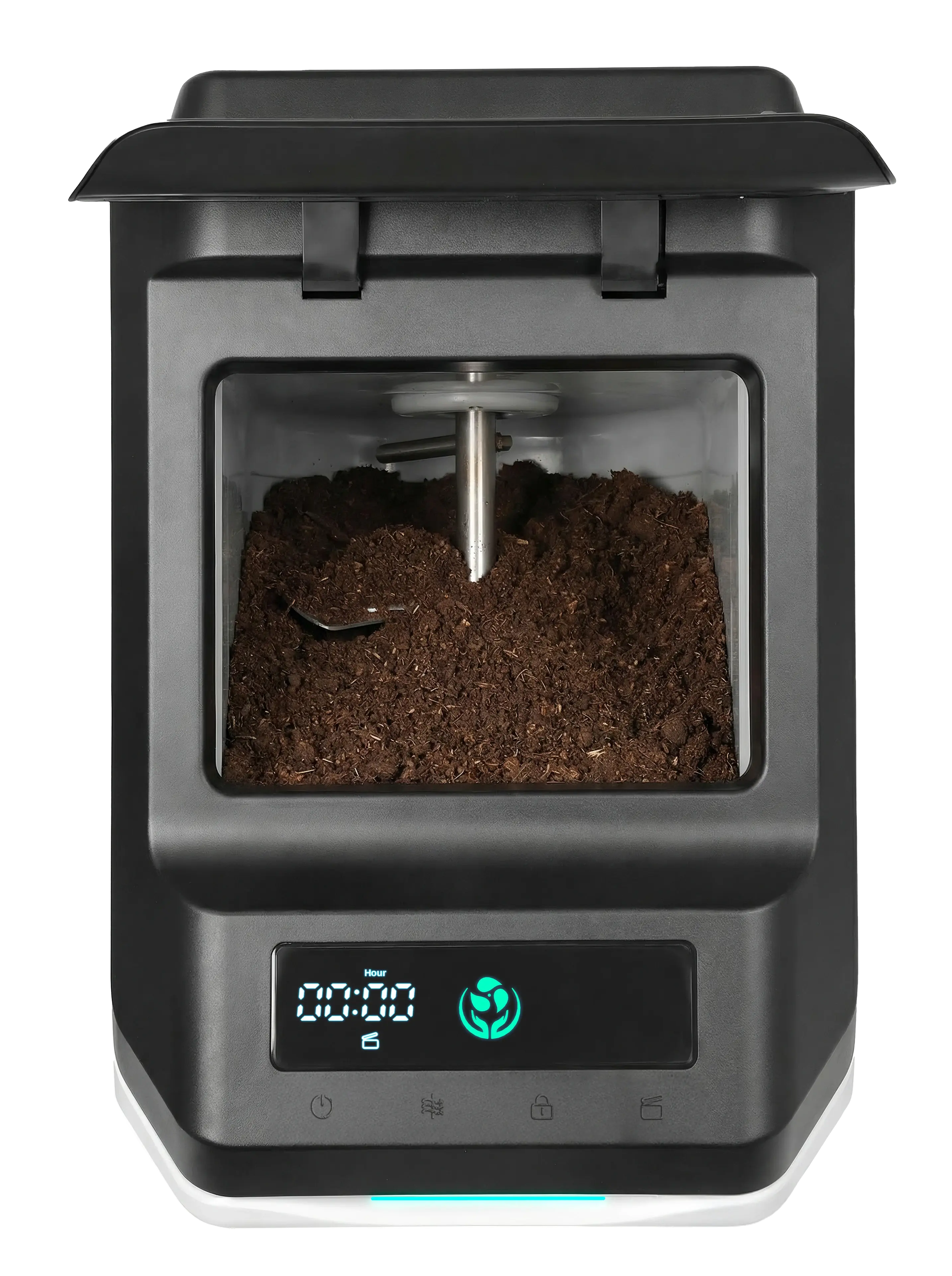
Stabilność, biologia i codzienna użyteczność idą w parze.
Wybierz komposter kuchenny na podstawie rzeczywistych potrzeb, a nie wagi
GEME Terra II i GEME Pro zostały zaprojektowane do rzeczywistego kompostowania mikrobiologicznego, ciągłego codziennego dozoru, bez rutynowej wymiany filtrów zapachowych i produkcji kompostu bazowego do mieszania z glebą. Wybierz model dopasowany do ilości odpadów w Twoim gospodarstwie i warunków panujących w kuchni.
Terra II do codziennego użytku. GEME Pro do intensywniejszych potrzeb.

Zostaw komentarz
Wszystkie komentarze są moderowane przed opublikowaniem.
Ta strona jest chroniona przez hCaptcha i obowiązują na niej Polityka prywatności i Warunki korzystania z usługi serwisu hCaptcha.