


Fridge Organization · Food Storage · Food Waste Prevention
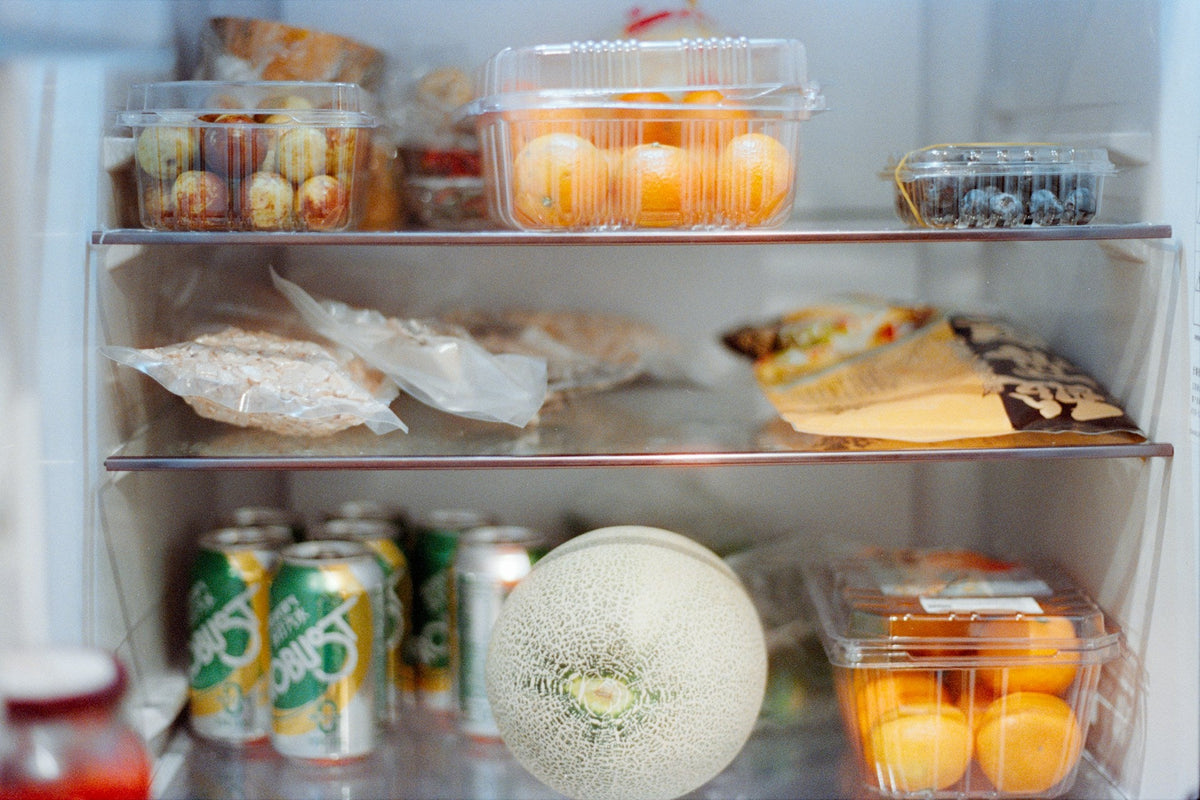
A low-waste refrigerator is not simply a tidy refrigerator. It is organized so that safe food stays cold, older food stays visible, raw food cannot contaminate ready-to-eat food, and anything that needs to be eaten soon is difficult to forget.
The simplest system is: keep the fridge at 40°F / 4°C or below, create one visible “Eat First” zone, rotate older food forward, label leftovers, store raw meat safely at the bottom, and freeze food before its usable refrigerator window closes.
The result is less mystery at the back of the fridge, fewer duplicated groceries, fewer forgotten leftovers, and fewer perfectly edible foods becoming waste.
Then, after prevention has done its job, suitable unavoidable scraps can enter a composting system such as GEME Terra 2 or GEME Pro instead of ordinary trash.

Quick Answer: How Should You Organize a Fridge to Reduce Food Waste?
- Keep it at 40°F / 4°C or below. Use an appliance thermometer instead of assuming the control dial is accurate.
- Create an Eat First zone at eye level. Put ripe produce, opened packages and leftovers that need attention there.
- Rotate older food forward. Place new groceries behind the same older items.
- Keep ready-to-eat food visible. Do not bury leftovers behind large containers.
- Store raw meat, poultry and seafood sealed at the bottom. Prevent leaking juices from reaching foods that will not be cooked again.
- Use crisper drawers intentionally. If humidity controls are available, vegetables generally benefit from higher humidity and many fruits from lower humidity.
- Do not use the door for highly perishable food. Door temperatures fluctuate more when the refrigerator is opened.
- Label leftovers and opened foods. Use the original cooking or opening date.
- Do not overpack the refrigerator. Cold air needs room to circulate.
- Freeze early. If you know you will not eat something in time, freeze it before it becomes questionable.
1. What Should a Low-Waste Fridge Actually Do?
A beautifully arranged refrigerator can still waste food if the oldest yogurt is hidden behind six new ones.
A useful fridge organization system has five jobs:
- keep perishable foods safely cold;
- prevent raw-food cross-contamination;
- keep older and urgent foods visible;
- make inventory easy to understand before shopping;
- and create a clear path from “use soon” to “freeze now.”
The objective is not matching containers. The objective is getting food eaten.
For the bigger storage framework, start with the Food Storage Guide.
2. Set the Refrigerator Temperature Before Organizing Anything
Organization cannot compensate for unsafe refrigeration.
FDA and USDA guidance is to maintain the refrigerator at 40°F / 4°C or below.
Use an appliance thermometer to verify the actual temperature.
Do Not Pack the Fridge So Tightly That Air Cannot Move
Cold air needs room to circulate around food.
A refrigerator that looks maximally “full” may actually be less effective if containers block vents and restrict airflow.
Keep spills cleaned up promptly, especially leaks from raw meat, poultry or seafood.
3. How to Organize Your Fridge by Zone
The exact temperature pattern varies by refrigerator model, so do not assume every top shelf or every lower shelf has an identical temperature.
Instead, organize primarily around food safety, visibility and the specialized compartments your refrigerator provides.
| Fridge Area | Good Use | Why |
|---|---|---|
| Eye-level shelf | Eat First foods, leftovers, opened products and foods for the next meal | Maximum visibility reduces forgetting. |
| Upper / middle shelves | Ready-to-eat foods, prepared foods, covered leftovers and opened dairy where appropriate | Keeps cooked and ready-to-eat foods separated from raw-meat leakage risks. |
| Lowest shelf | Raw meat, poultry and seafood in sealed leak-resistant containers | Helps prevent raw juices from dripping onto ready-to-eat food. |
| Crisper drawer: higher humidity | Many vegetables and leafy greens | Higher humidity can reduce moisture loss where the drawer supports adjustment. |
| Crisper drawer: lower humidity | Many fruits | Many fruits benefit from lower humidity than leafy vegetables. |
| Door | Condiments and less temperature-sensitive items | Door temperatures fluctuate more when the fridge opens. |
Where Should Eggs Go?
Keep eggs in their carton on an interior refrigerator shelf rather than in the door, where temperature fluctuates more.
See the complete guide: Do Eggs Expire?
4. Create an “Eat First” Zone
This is the single most useful visual change you can make.
An Eat First area gives food that should be consumed soon an obvious home instead of letting it disappear throughout the refrigerator.
What Goes in the Eat First Zone?
- leftovers from yesterday or the day before;
- ripe fruit;
- cut produce;
- opened dairy;
- opened jars with shorter post-opening windows;
- food near the end of its safe refrigerator window;
- ingredients already assigned to the next meal.
Put this zone at eye level, not in a bottom drawer where urgency disappears from view.
The container does not need to be fancy. A tray, shallow bin or designated shelf section works.
Do Not Turn Eat First Into a Graveyard
An Eat First box only works if someone checks it.
Look at it:
- before making a shopping list;
- before cooking dinner;
- before ordering takeout;
- and before putting new groceries away.
5. Use FIFO, But Prioritize What Will Actually Spoil First
FIFO means First In, First Out.
For two identical cartons of milk, yogurt cups, jars or packaged foods, this is straightforward:
older package in front → newer package behind.
But household food does not always age in perfect purchase order.
A newly purchased bruised peach may need to be eaten before an older apple. An opened package may need attention before an unopened package bought earlier.
Use FIFO for identical items. Use “Eat First” for foods whose actual condition, opening date, ripeness or safe storage window makes them more urgent.
When New Groceries Arrive
Do not simply push everything already in the refrigerator toward the back.
- remove the existing version of the product;
- inspect it;
- put the older usable product in front;
- place the new product behind it;
- move anything urgent into Eat First.
6. Use Food Date Labels Correctly
Fridge organization only works if you understand what the dates on packages actually mean.
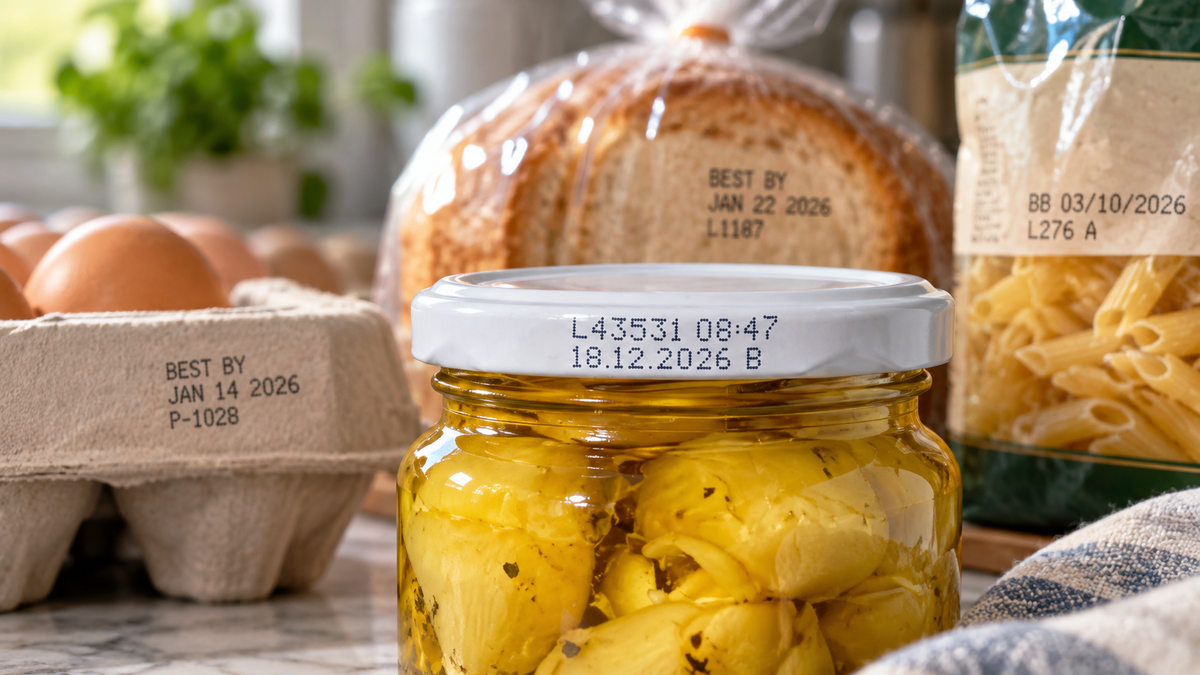
Best By, Sell By and Use By are not interchangeable terms.
A Best By date may primarily describe expected quality, while a Sell By date is often intended for retail inventory management. Product-specific safe storage windows can be more important than either date once food is in your refrigerator.
That means you should not automatically move every food into the trash, or into the compost bin, the morning after a printed quality date passes.
Before discarding a dated food, ask:
- What type of date is printed?
- Has the package been opened?
- How long has the food been refrigerated?
- Was it continuously kept cold?
- Does the product have a shorter food-safety window?
For the full explanation, read Food Expiration Dates: Best By, Sell By, and Use By.
Date labels should help you prioritize food, not cause edible food to be discarded automatically.
7. How to Organize Leftovers So They Actually Get Eaten
Leftovers are one of the easiest foods to waste because they stop looking like an ingredient and become an anonymous container.
Label the Original Date
Write the cooking or purchase date on the container.
Do not repeatedly reset the clock because you reheated the food.
Use Shallow Containers
Divide large quantities of leftovers into shallow containers so they cool more quickly and are easier to portion.
Keep Leftovers Together
Use one defined shelf or one part of the Eat First zone instead of scattering leftovers throughout the refrigerator.
Store Real Portions
A giant container often gets reheated repeatedly or ignored.
Smaller meal-size portions make it easier to:
- take one lunch;
- freeze excess;
- see how much remains;
- and avoid warming food unnecessarily.
For poultry-specific timing, use How Long Can Chicken Stay in the Fridge?.
8. How to Organize Produce Without Forgetting It
Crisper drawers are useful, but they can also become the place where vegetables disappear.
Do Not Mix “Long-Life” and “Urgent” Produce Blindly
Separate:
- firm produce that can wait;
- ripe produce that needs to be used soon;
- damaged produce that should be inspected and prioritized.
Move Ripe Produce Into Eat First
Once fruit or vegetables become urgent, visibility can be more important than keeping every item in its original drawer.
Inspect Produce Regularly
One moldy or leaking item can create moisture and deterioration around neighboring produce.
For a practical fruit-storage example, see How Long Do Apples Last in the Fridge?.
9. What Should You Do Every Time You Bring Groceries Home?
The 5-Minute Grocery Reset
- Look before adding. Check whether the same food is already open.
- Rotate older food forward. New identical items go behind.
- Move urgent items to Eat First. Do this before they become invisible again.
- Separate raw food safely. Keep raw meat and poultry sealed and below ready-to-eat food.
- Decide what should be frozen now. If your meal plan has already changed, do not wait several days before freezing surplus.
This prevents one of the most common forms of household waste: buying a fresh version of something that was already sitting unseen in the refrigerator.
The broader shopping and meal-planning strategy is covered in How to Reduce Food Waste at Home.
10. The 10-Minute Weekly Fridge Reset
Pick one repeatable day, ideally before the main grocery shop.
- Check the thermometer. Make sure the fridge is still holding 40°F / 4°C or below.
- Scan Eat First. Decide what will be eaten today or tomorrow.
- Review leftovers. Freeze what can still be safely frozen before it gets forgotten.
- Check opened packages. Look for opening dates and package instructions.
- Check date labels intelligently. Do not confuse Best By or Sell By with an automatic expiration deadline.
- Inspect produce. Separate damaged or ripe items from long-storage produce.
- Rotate duplicates. Older products move forward.
- Wipe spills. Especially drips around raw foods.
- Remove food that is no longer safe. Do not keep questionable food simply because you feel guilty about wasting it.
- Build the next shopping list from what remains.
A fridge inventory does not need an app. A weekly 10-minute reset plus one visible Eat First area solves much of the problem.
11. Fridge Organization Mistakes That Create Food Waste
Putting New Food in Front
Older duplicates disappear and eventually get thrown away.
Hiding Leftovers at the Back
If a leftover requires a fridge excavation to find, it probably will not be eaten.
Treating Best By as an Automatic Expiration Date
Quality labels can cause edible food to be discarded unnecessarily when their meaning is misunderstood.
Using Opaque Containers Without Labels
Unknown food becomes low-priority food.
Keeping Raw Meat Above Ready-to-Eat Food
Leaks can create a cross-contamination risk.
Keeping Highly Perishable Food in the Door
The door experiences greater temperature fluctuation.
Overpacking Every Shelf
Food becomes invisible and cold-air circulation is reduced.
Waiting Too Long to Freeze Food
Freezing is a preservation decision, not a rescue operation for food that is already questionable.
12. Where Does GEME Fit Into a Low-Waste Fridge?
At the end, not the beginning.
The best household sequence is:
Buy realistically → store correctly → keep food visible → understand date labels → eat older food first → repurpose → freeze → compost suitable unavoidable scraps.
Good fridge organization reduces avoidable waste, but no kitchen eliminates organic scraps entirely.
You will still have:
- fruit peels and cores;
- vegetable trimmings;
- coffee grounds;
- eggshells;
- inedible preparation scraps;
- and occasional suitable food that can no longer be used.
The Fridge Prevents Waste. GEME Handles What Remains.
GEME Terra 2 and GEME Pro use an active microbial ecosystem rather than simply drying food waste into smaller material.
Suitable scraps enter a warm, oxygen-rich microbial chamber where airflow, moisture-related conditions, heat and mixing are managed for continuous biological processing.
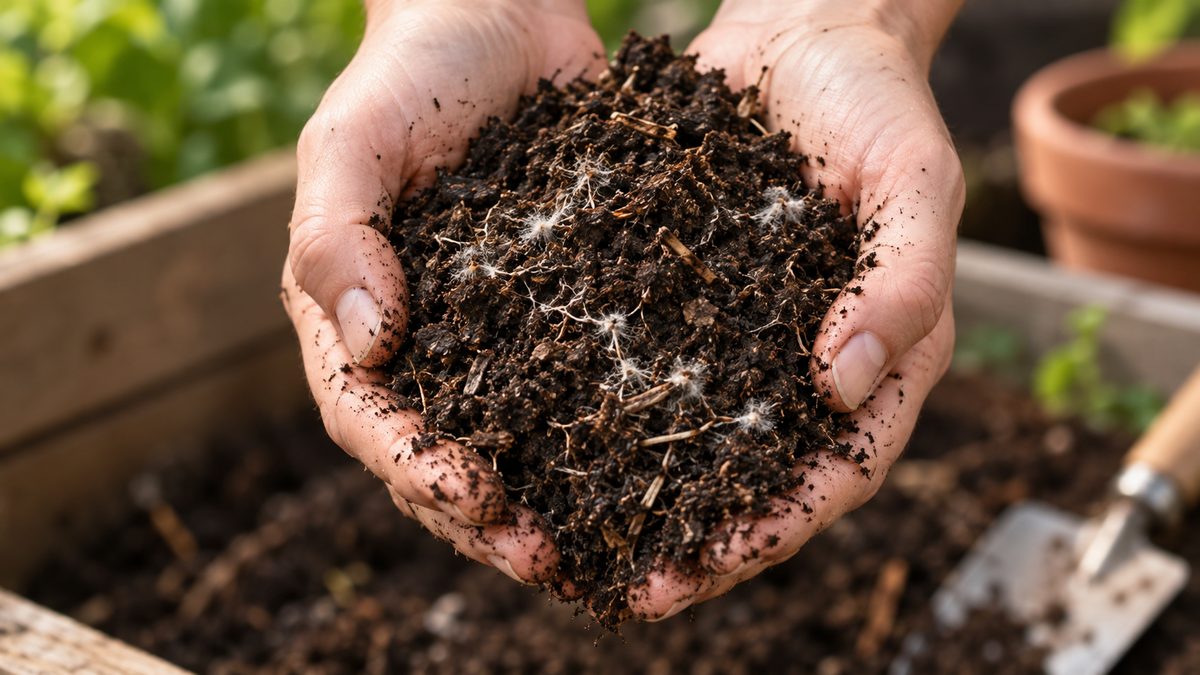
The result is moist Compost Base for responsible soil integration rather than simply dried food flakes.
Choose Terra 2 for Everyday Household Volume
Terra 2 has a 14 L microbial chamber and supports up to approximately 2 kg of suitable food scraps per day, making it the primary fit for 1–3 person households.
Choose GEME Pro for a Larger Kitchen Routine
GEME Pro increases the microbial chamber to 19 L and supports up to approximately 5 kg/day for larger families and heavier daily cooking.
That makes the complete household system: store food better, understand its usable life, waste less, and biologically process the unavoidable remainder.
A Better Fridge Makes Composting the Last Step, not the Default
Keep edible food visible and safe for as long as possible. Use an Eat First zone, rotate older products forward, understand package dates, label leftovers and freeze food before it is forgotten.
Then let GEME Terra 2 or GEME Pro handle suitable unavoidable kitchen scraps through continuous microbial composting.
Frequently Asked Questions
What is the best way to organize a fridge to reduce food waste?
Create a visible Eat First zone, rotate older duplicate products forward, keep leftovers together and labeled, store raw meat safely below ready-to-eat foods, inspect produce regularly, understand package date labels, and freeze food before its usable refrigerator window closes.
What is an Eat First fridge box?
An Eat First box or shelf is a designated refrigerator area for food that should be consumed soon, such as leftovers, ripe produce, opened packages and ingredients nearing the end of their practical storage window.
Where should the Eat First zone go?
Place it in a highly visible area, ideally around eye level. The goal is to make urgent food obvious whenever someone opens the refrigerator.
What does FIFO mean in a fridge?
FIFO means First In, First Out. For identical foods, put older items in front and new replacements behind them. Foods that are opened, damaged, ripe or more urgent should move into the Eat First zone even if they were purchased later.
What is the difference between Best By and Use By?
In the United States, many Best By dates primarily indicate expected quality rather than an automatic safety deadline. Use By can also be quality-based for many foods, although important product-specific exceptions exist. Always consider the food type, storage history and applicable safe storage window.
Should I throw food away when the Best By date passes?
Not automatically. A Best By date is often a quality indicator. Consider the actual date type, whether the package has been opened, storage conditions, the product's safe refrigerator window and any signs of spoilage before deciding whether food needs to be discarded.
Where should raw meat be stored in the refrigerator?
Raw meat, poultry and seafood should be sealed or placed in leak-resistant containers and stored below ready-to-eat foods so leaking juices cannot contaminate other food.
Should eggs go in the refrigerator door?
Keep eggs in their carton on an interior refrigerator shelf. Door compartments experience greater temperature fluctuation when the refrigerator is opened.
What should be stored in the refrigerator door?
The door is better suited to condiments and other less temperature-sensitive foods. Avoid using it for highly perishable foods that benefit from more stable interior refrigerator temperatures.
How full should a refrigerator be?
A refrigerator can be well stocked, but it should not be packed so tightly that cold air cannot circulate or air vents become blocked.
How should leftovers be organized?
Store leftovers in shallow covered containers, label the original cooking date and keep them together in a visible section. Freeze portions early if they will not be eaten within their safe refrigerator window.
How often should I organize my fridge?
Do a quick check whenever groceries arrive and perform a more complete fridge reset about once a week. Review leftovers, Eat First foods, produce, duplicate products and anything that should be frozen.
Does organizing your fridge really reduce food waste?
Yes. Better visibility, date awareness and food rotation reduce the chance that edible food is forgotten until it spoils.
Should I compost food just because a date passed?
No. First identify what the printed date means and whether the food is still safe and usable. Composting should come after prevention and safe food use, not automatically when a quality date passes.
Can spoiled refrigerator food go into GEME?
Suitable organic material may be processed according to GEME's material guidance, but food safety still comes first. Do not taste questionable food, and do not use composting as a substitute for recall, contamination or hazardous-waste instructions.
Sources
- U.S. FDA — Safe Food Handling
- U.S. FDA — Are You Storing Food Safely?
- USDA FSIS — Refrigeration and Food Safety
- U.S. EPA — Food: Too Good to Waste Toolkit
- FoodSafety.gov — Cold Food Storage Chart
- GEME — Food Expiration Dates: Best By, Sell By, and Use By
- GEME — Food Storage Guide
- GEME — How to Reduce Food Waste at Home


Zostaw komentarz
Wszystkie komentarze są moderowane przed opublikowaniem.
Ta strona jest chroniona przez hCaptcha i obowiązują na niej Polityka prywatności i Warunki korzystania z usługi serwisu hCaptcha.