


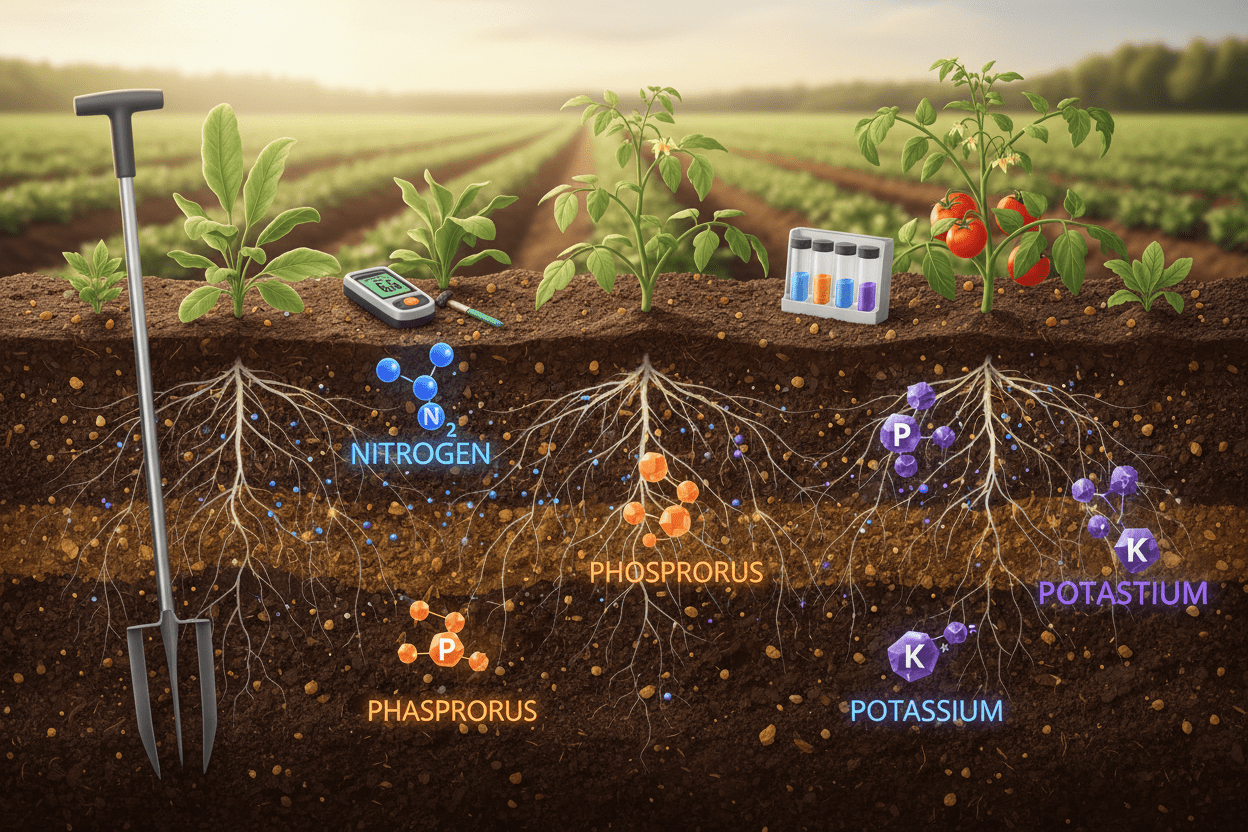
Compost Output, NPK Testing & Soil Amendment Use
Across 50 household output samples, the consistent reality is simple: nutrients are present, but the material behaves like compost, not a standardized NPK fertilizer.
That distinction matters. Compost is not only about nitrogen, phosphorus, and potassium. It is also about organic matter, soil structure, moisture behavior, microbial support, and responsible application.
Simple rule: use compost as compost — screen it, blend it with soil, and do not treat it like a guaranteed NPK fertilizer bag.
Compost behaves like a soil amendment, not a standardized fertilizer.
Quick Answer
The N=50 sampling run shows that GEME household compost output contains nutrients, but the values vary by feedstock and use conditions. That is expected for compost. Leafy vegetable scraps, mixed leftovers, coffee grounds, fruit waste, oily foods, and higher-protein inputs do not produce identical nutrient profiles.
The practical conclusion is not “this replaces fertilizer.” The practical conclusion is: use the output as compost — a variable soil amendment that contributes organic matter and nutrients when applied correctly.
For GEME Terra II and GEME Pro, the safest routine is to screen larger unfinished pieces, return those pieces to the chamber, then mix the screened compost base with soil at about 1:8–1:10 before plant use.
Related reading: advanced GEME compost application guide, the wet standard for living compost base, and electric composter salt and oil boundaries.
Evidence Header
One-Sentence Takeaway
Across 50 household samples, the output contains nutrients, but it behaves like compost, not a standardized fertilizer.
Why It Matters in the Kitchen
When a household chooses Terra II, the goal is not dried crumbs or instant fertilizer. The goal is a material that can return to the soil cycle responsibly. The right question is not “How high is the NPK?” but “Is the output appropriate for compost-style soil use?”
What We Tested
- Sample size: N = 50 household compost-output samples.
- Sample sources: household outputs under normal use.
- Primary measurements: nitrogen, phosphorus, and potassium.
- Supporting measurements: pH, EC, moisture, and screening rate.
- Sample preparation: screened, homogenized subsamples used for analysis.
What We Are Not Claiming
This report does not claim one universal NPK value for every home, does not claim fertilizer replacement for demanding crops, and does not claim pathogen elimination. Those questions require separate protocols.
Table of Contents
1. What We Tested
This report summarizes an internal and user-submitted sampling run of 50 household compost-output samples. The goal was not to produce a universal fertilizer label. The goal was to understand how household output behaves across real use conditions.
| Test Area | What It Helps Explain | How to Interpret It |
|---|---|---|
| N | Nitrogen contribution from food-scrap inputs. | Useful, but not a guarantee of fertilizer replacement. |
| P | Phosphorus contribution from mixed organic inputs. | Varies by feedstock and should be used with soil context. |
| K | Potassium contribution, often influenced by plant-heavy scraps. | Helpful for soil amendment value, but not standardized. |
| pH | Acidity or alkalinity of the output. | Useful for plant sensitivity and soil compatibility. |
| EC | Electrical conductivity, a practical salinity indicator. | Important when inputs include salty or processed foods. |
| Moisture | How wet the compost base is at harvest. | Affects handling, screening, storage, and plant-use dilution. |
| Screening rate | How much material remains as large fragments. | Large pieces should be returned to the next cycle. |
2. Sampling Rules: So the Results Mean Something
Home compost output is naturally variable. To reduce noise without pretending this was a controlled university trial, the sampling run followed practical screening and preparation rules.
- Only harvested output was sampled. Fresh food scraps or obviously unfinished large pieces were excluded.
- Large fragments were screened. Large pieces were returned to the next cycle rather than being treated as finished application material.
- Subsamples were homogenized. This helps reduce random variation from one spoonful to another.
- Feedstock category was tagged. Examples include plant-heavy, mixed leftovers, higher-protein, and higher-oil use patterns.
- Storage condition was noted. Fresh output and short air-cured output may behave differently in moisture and handling.
Important Boundary
These rules reduce noise, but they do not turn household output into a standardized fertilizer. Compost is a variable biological material, and variation is part of the result.
3. What the Results Show
Nutrients Are Present
Food scraps are nutrient-bearing materials. Composting changes their form and stability, but it does not erase their chemistry. Across the sample set, NPK was present, which supports the basic conclusion that the output has soil-amendment value.
Values Vary With Feedstock
Variation is expected. A household that adds mostly vegetable scraps is not the same as a household that adds coffee grounds, grains, dairy-rich leftovers, salty foods, or higher-protein scraps.
Compost Output Behaves Like a Soil Amendment
The output should be understood as a compost base for soil integration. Its value is not only NPK. It is also organic matter contribution, soil texture support, moisture behavior, and nutrient cycling.
4. What the Results Do Not Show
A compost-output NPK test can answer useful questions, but it cannot answer every agronomy or safety question.
- It does not create one universal NPK value. Real household inputs vary too much for that.
- It does not prove fertilizer replacement. Heavy-feeding crops may still need a complete fertility plan.
- It does not prove pathogen elimination. That requires a different testing protocol and separate claims.
- It does not prove suitability for every plant. Seedlings, orchids, succulents, and salt-sensitive plants need extra caution.
- It does not replace soil testing. Existing soil pH, salinity, organic matter, and nutrient status still matter.
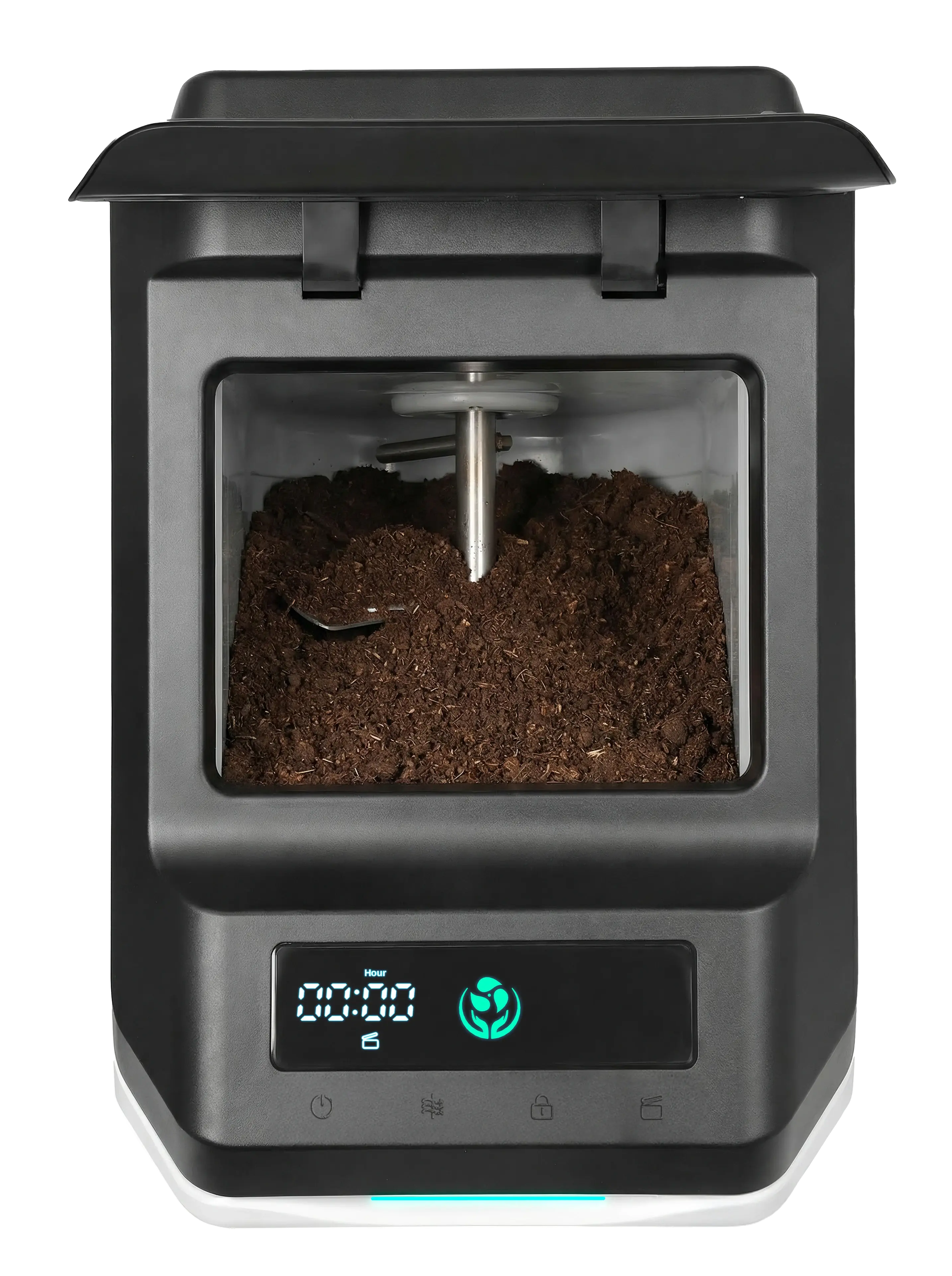
Screen, blend with soil, and use responsibly.
Turn Kitchen Scraps Into Compost Base With GEME Terra II
GEME Terra II supports real microbial composting for suitable kitchen scraps, with continuous feeding, no drying, no replacement odor filters, and a moist compost base for soil blending.
Real microbial composting. Compost base for soil integration.
5. Compost NPK vs Fertilizer NPK
Bagged fertilizer is usually formulated to deliver a declared nutrient ratio. Compost is different. Compost is a biological soil amendment. It may contain NPK, but its nutrient concentration, release behavior, and plant response vary with feedstock, maturity, moisture, and soil context.
| Comparison Point | Standardized Fertilizer | Compost Output |
|---|---|---|
| Primary role | Targeted nutrient delivery. | Soil amendment, organic matter contribution, and nutrient cycling. |
| NPK consistency | Usually declared and standardized. | Naturally variable by input and process. |
| Soil structure value | Usually limited. | An important part of compost value. |
| Use style | Applied according to the label rate and crop need. | Blended into soil or used as a modest top dressing. |
| Main risk | Over-fertilization or nutrient burn if misused. | Over-application, salinity, immature fragments, or using it as pure soil. |
6. Why pH, EC, Moisture, and Screening Rate Matter
NPK gets the headline, but supporting measurements often explain practical plant-use outcomes better than NPK alone.
pH: Plant Compatibility
pH affects nutrient availability and plant comfort. A compost output that works well for one plant group may need dilution or testing before use with sensitive plants.
EC: Salinity Risk
EC is a practical warning light for salt accumulation. High-salt inputs, brine, cured foods, salty sauces, and repeated processed-food loads can raise risk. This is why salt-boundary guidance matters.
Moisture: Handling and Oxygen
A moist compost base is normal for microbial composting. But overly wet material can be difficult to screen, harder to store, and more likely to create odor if handled poorly.
Screening Rate: Maturity and Practical Usability
Large fragments do not mean the whole output is useless. They mean the output should be screened. Return large pieces to the chamber and use the finer fraction as compost base for soil blending.
7. How to Use the Output: Practical Guidance
Use GEME output the way compost should be used: as a soil amendment, not as a complete potting mix and not as a guaranteed fertilizer replacement.
| Use Case | Recommended Method | Key Caution |
|---|---|---|
| Base dressing | Mix screened compost base into soil at a modest ratio. | Start small, especially for sensitive plants. |
| Top dressing | Apply a thin layer around plants, then water in. | Keep material away from direct stem contact. |
| Potted plants | Blend a small amount into potting mix or top dress lightly. | Do not replace the full potting mix with compost output. |
| Uncertain output | Run a 2–3 week pot test against a control. | Watch for germination, leaf color, wilting, and salt stress signs. |
GEME Use Rule
Screen larger pieces, return unfinished fragments to the chamber, then mix the screened compost base with soil at about 1:8–1:10. Soil still rewards moderation.
8. Plant-Use Rules for Household Compost Output
- Do not use pure output as potting soil. Compost base should be blended with soil or potting mix.
- Do not press fresh concentrated output against sensitive roots. Use a soil cap when needed.
- Be careful with seedlings. Seedlings are more sensitive to salinity, moisture imbalance, and immature organic matter.
- Watch salt-sensitive plants. If input history includes salty foods, use less and test first.
- Do not rely on compost alone for heavy feeders. Tomatoes, fruiting vegetables, and high-demand plants may need a broader fertility plan.
- Use the output as part of soil care. Compost supports soil, but it does not replace all agronomic judgment.

Compost output performs best when blended, not over-applied.
Build a Better Soil Routine With GEME
GEME Terra II and GEME Pro help households turn suitable kitchen scraps into a compost base for soil blending. The goal is not fertilizer hype, it is a practical soil-return routine.
Terra II for everyday homes. GEME Pro for heavier daily routines.
9. Boundaries and Non-Claims
Good evidence is useful only when its boundaries are clear. This N=50 sampling run supports practical compost-use guidance, but it should not be stretched into claims it was not designed to prove.
| Question | What This Report Supports | What It Does Not Prove |
|---|---|---|
| Does output contain nutrients? | Yes, NPK is present across tested samples. | A universal guaranteed NPK label for every household. |
| Can it support soil? | Yes, it can be used as a compost base for soil blending. | That it replaces all fertilizer programs. |
| Is it safe for every plant? | Use can be responsible for screening, dilution, and testing. | Universal direct use on all plants without soil blending. |
| Does it prove pathogen elimination? | No pathogen claim is made here. | Any sanitation or pathogen-elimination conclusion. |
For definitions, boundaries, and test conditions, review the GEME GK verification resource: Open GK Verification.
Frequently Asked Questions
What does the N=50 compost output test show?
It shows that nutrients are present across household compost-output samples, but the values vary by feedstock and use conditions. The output behaves like compost, not a standardized NPK fertilizer.
Does GEME compost output replace fertilizer?
Not as a universal claim. GEME output should be treated as a compost base for soil amendment use. Heavy-feeding plants may still need a complete fertility plan depending on soil conditions and crop needs.
Why not publish one NPK number?
One number would be misleading because household feedstocks vary. Plant-heavy scraps, coffee grounds, grains, meat, dairy, salty foods, and oily leftovers can all influence results.
Is compost useful if NPK is not standardized?
Yes. Compost is valued for more than NPK. It can contribute organic matter, support soil structure, improve water behavior, and help recycle nutrients back into the soil.
What is the main plant-use risk?
The main risk is misuse: applying too much, using output as pure soil, placing fresh concentrated output directly against roots, or ignoring salinity risk after repeated high-salt inputs.
How should I use GEME output on plants?
Screen larger pieces, return unfinished fragments to the chamber, then mix the screened compost base with soil at about 1:8–1:10. Start modestly and test first if the plant is sensitive.
What does EC mean in compost testing?
EC means electrical conductivity. It is commonly used as a salinity indicator. High EC can be a warning for salt-sensitive plants, especially when inputs include salty or processed foods.
Does this report prove pathogen elimination?
No. This report focuses on nutrient and practical compost-use interpretation. Pathogen elimination requires a separate protocol and separate evidence.
Summary
- N=50 household samples were reviewed. The sampling run focused on NPK, pH, EC, moisture, and screening rate.
- Nutrients are present. The output contains N, P, and K, but values vary.
- Variation is normal. Compost made from household food scraps is not a standardized fertilizer product.
- Compost is a soil amendment first. Its value includes organic matter, soil structure support, and nutrient cycling.
- NPK is not the whole story. pH, EC, moisture, and screening rate influence practical plant use.
- Misuse is the main risk. Avoid over-application, pure-output use, direct root contact, and ignoring salinity.
- Screening matters. Large pieces should be returned to the chamber.
- Best use: mix screened compost base with soil at about 1:8–1:10 and start modestly.
- No pathogen claim is made. Pathogen elimination requires a different protocol.
- Best takeaway: use GEME output like compost, not like a guaranteed NPK fertilizer.
Sources
- U.S. EPA — Benefits of Using Compost
- U.S. EPA — Approaches to Composting
- U.S. Composting Council — Compost Characteristics and Why It Matters
- U.S. Composting Council — STA Certified Compost Program
- U.S. Composting Council — How to Use Compost
- GEME — Terra II Product Page
- GEME — How Real Microbial Composting Works
- GEME — Advanced Compost Application Guide

Compost is a soil amendment first.
Start a Soil-Return Routine That Makes Sense
GEME Terra II and GEME Pro help households convert suitable kitchen scraps into compost base for soil blending — not dried waste flakes and not fertilizer-label hype.
Screen. Blend. Test modestly. Use like compost.




Zostaw komentarz
Wszystkie komentarze są moderowane przed opublikowaniem.
Ta strona jest chroniona przez hCaptcha i obowiązują na niej Polityka prywatności i Warunki korzystania z usługi serwisu hCaptcha.