


Indoor composting · Electric kitchen composter · 2026
The best indoor composter should do more than make food scraps disappear. It should fit the rhythm of a real kitchen and give those scraps a meaningful next chapter.
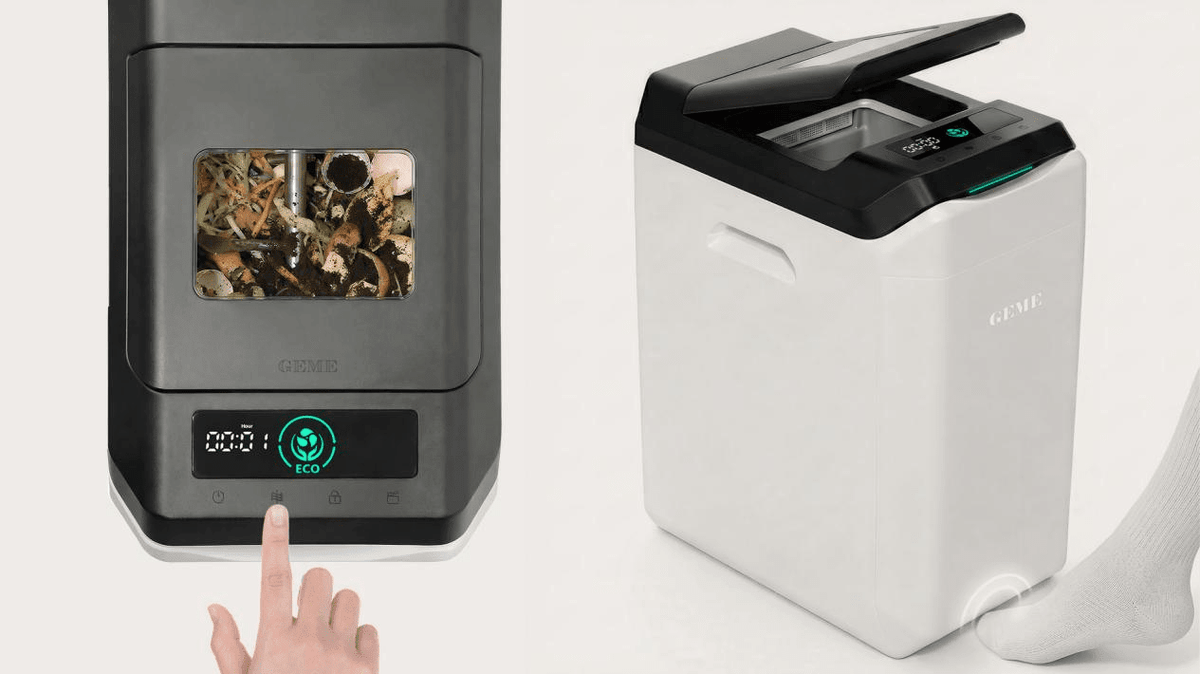
That is why GEME Terra 2 is our pick for everyday indoor composting: it keeps a living microbial bed working inside a floor-standing appliance, accepts suitable scraps throughout the day, and creates Compost Base for your soil.
Here is how this electric kitchen composter works, what to look for before buying, and why the distinction between drying and biological processing matters.
By Matthew Moore · Updated November 6, 2026

Quick Answer: What Is the Best Indoor Kitchen Composter?
For many one- to three-person households looking for an indoor composter with continuous microbial processing, GEME Terra 2 is our choice. Its 14 L chamber supports daily food-scrap inputs of up to 2 kg and produces moist Compost Base for soil blending. It also avoids routine replacement of activated-carbon odor filters.
If your household regularly produces more scraps, GEME Pro provides a larger-capacity option. For a closer look at ownership considerations, read GEME Terra 2 pros and cons before you buy.
In This Guide
What Should an Indoor Composter Actually Do?
A good indoor composting solution should make everyday food scraps easier to manage and give you a clear idea of what happens to them next. That sounds obvious, yet the products grouped under “electric composter” can work in fundamentally different ways.
Some appliances mainly heat, dry and grind scraps into smaller, drier material. That can help reduce the volume of food waste, but drying alone is not biological composting. A microbial kitchen composter supports microorganisms as they break down organic material. The process and the output deserve more attention than how quickly a bucket appears empty.
GEME Terra 2 is designed around the second approach. If you want to turn food scraps into a resource for soil, the biology is not an optional extra; it is the reason to choose the machine. Read more about microbial composting vs dehydrated food scraps.
How to Choose the Best Kitchen Composter for Your Home
The best kitchen composter is the one that fits both your food-waste routine and your plans for the output. Before choosing a machine, look at these five details:
- Processing method: Does it support microbial decomposition, or does it primarily dry and grind food waste?
- Daily routine: Can you add suitable scraps as you cook, and how is the machine maintained?
- Capacity: Compare the daily quantity your household generates with the manufacturer’s actual input guidance.
- Output: Understand what the machine produces and how to use that material in soil or another pathway.
- Ownership: Check the floor or counter space required, odor control, filters, consumables and current purchase price.
For households prioritizing a living microbial system, Terra 2 brings these pieces together particularly well. For a broader comparison of different machines and methods, see our best kitchen composters buying guide.
| Consideration | GEME Terra 2 | Dry-and-grind food recyclers |
|---|---|---|
| Main process | Continuous aerobic microbial decomposition | Typically heat, dry and grind food scraps |
| Output | Moist, biologically active Compost Base | Dry processed food material |
| Everyday use | Add suitable scraps during an ongoing process | Often organized around processing cycles; rules vary by model |
| Odor filters | No routine replacement activated-carbon odor filters | Some models use replacement or refillable carbon filters |
| Where it fits | Floor-standing indoor kitchen system | Some models are compact enough for a counter |
Machine design, filter schedules and feeding instructions vary by brand and model.
How the GEME Terra 2 Electric Composter Works
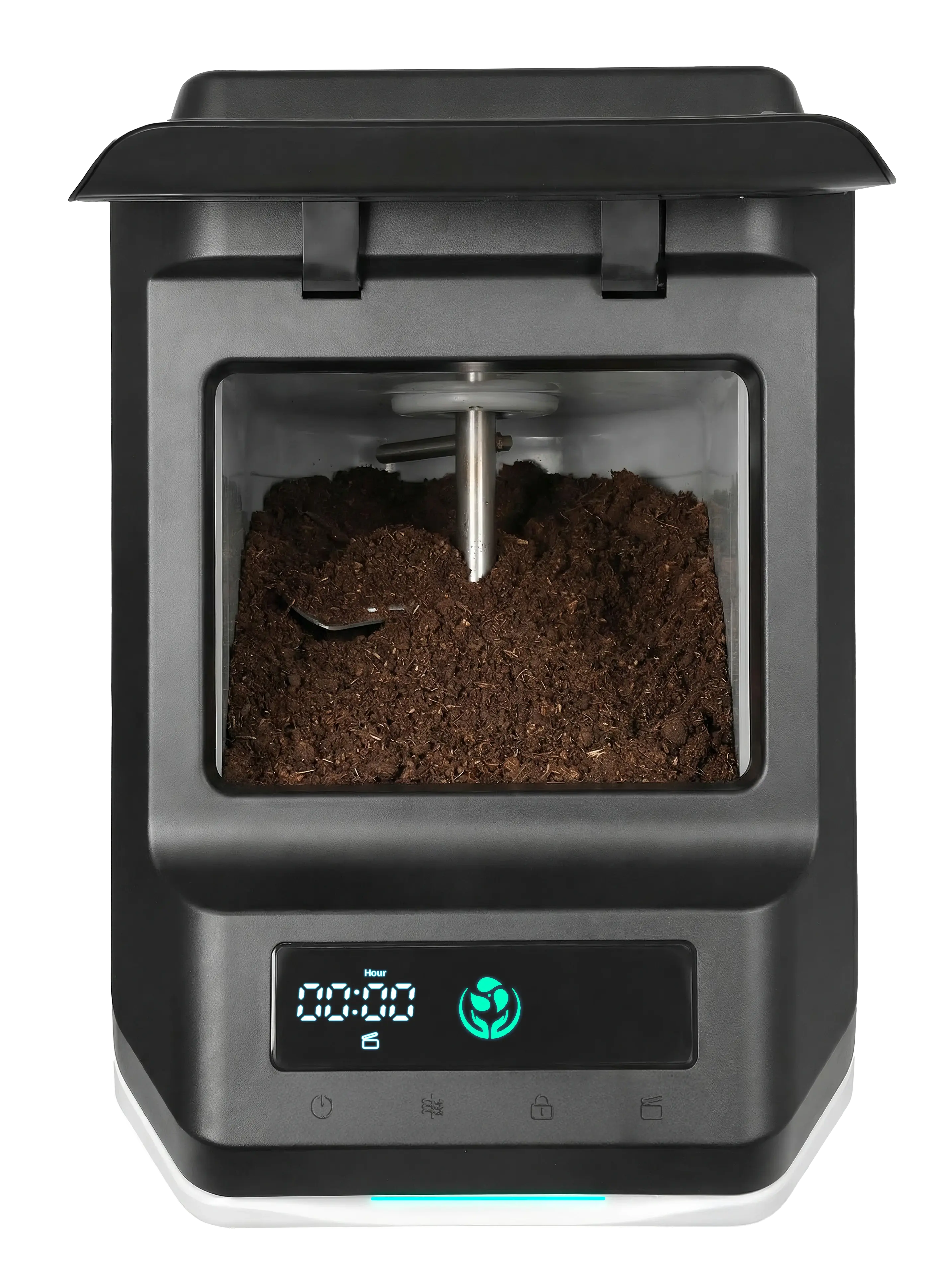
Inside Terra 2 is a 14 L chamber that houses an active bed of GEME Kobold microorganisms. Suitable scraps join that bed, where microbes biologically break down organic material. Airflow, warmth, moisture, and mixing help support the process, while GEMEBrain supports the system’s operation.
Think of it as a kitchen composting solution built around everyday life. Vegetable peels after breakfast, coffee grounds at lunch and suitable dinner leftovers can all join the established bed. There is no need to start a new drying batch after every meal.
Many everyday scraps may show visible breakdown in approximately 6–8 hours, depending on the food and conditions. Microbial processing continues over time: a visible change in a few hours does not mean every piece has become mature compost in that period.
For the science and operating overview, visit how GEME works.
A Kitchen Composter That Fits Daily Cooking
Real kitchen scraps do not arrive on a schedule. GEME Terra 2 is designed for a continuous routine: open the lid, add suitable scraps within the feeding guidance, and let the existing microbial bed keep working. The mixing mechanism stops when the lid opens for safety; the microbial environment remains in place.
How much food waste can Terra 2 handle?
Terra 2 is recommended for typical one- to three-person households and up to 2 kg of suitable food scraps per day. Divide larger quantities into additions of no more than 1 kg at a time. The 14 L chamber refers to the space inside the machine; it is not the same as the daily input limit.
What can go in?
Suitable household scraps can include fruit and vegetable trimmings, coffee grounds, cooked leftovers, and modest quantities of meat and dairy under GEME feeding guidance. Cut long, fibrous, or bulky scraps into smaller pieces and incorporate wet foods into a balanced routine. Keep packaging, glass, metal, large hard bones and whole hard pits out.
Check the current GEME feeding and care FAQ for specific ingredients. For a busier household with consistently heavier loads, GEME Pro provides a 19 L chamber and a higher daily input allowance.
From Kitchen Scraps to GEME Compost Base
One of our favorite things about Terra 2 is that the kitchen-to-garden connection is built into its purpose. Rather than stopping at dry particles, the microbial system produces a moist, biologically active Compost Base that gives food scraps a place in your soil routine.
When it is time to harvest, screen larger unfinished pieces back into the chamber. GEME’s guidance describes blending approximately one part Compost Base with eight parts plain soil, or allowing additional maturation before planting. The GEME Compost Base application guide explains how to prepare it for use in planters, raised beds, and garden soil.
Is GEME Terra 2 a Good Indoor Composter for Apartments?
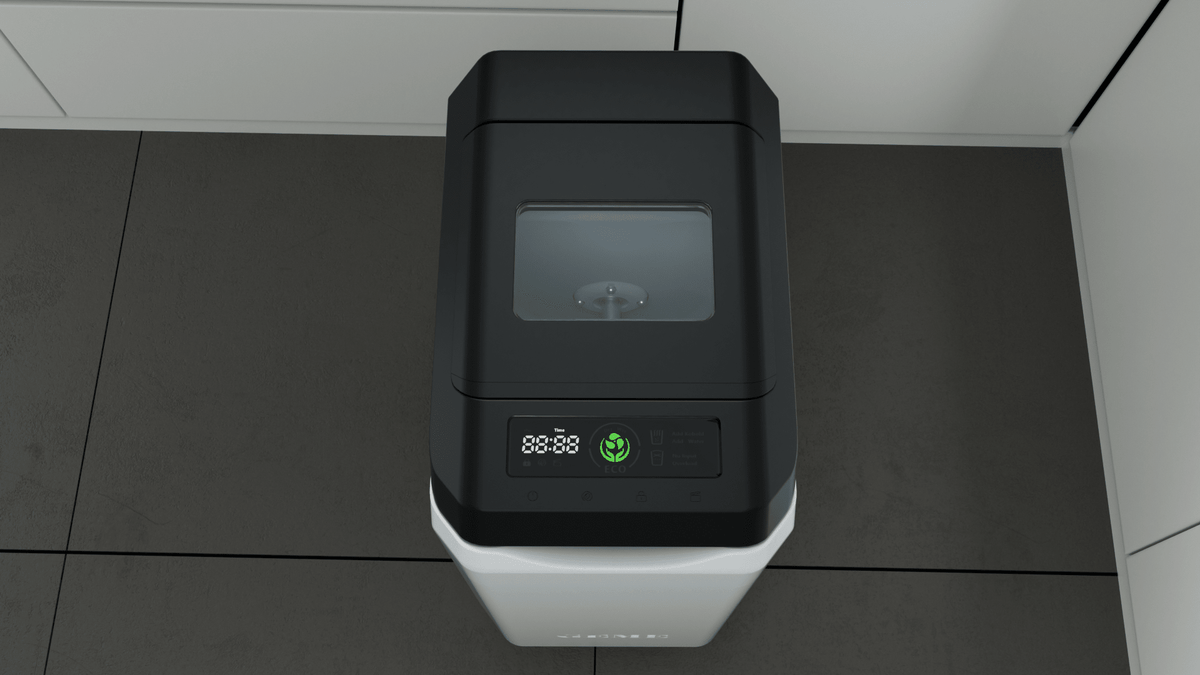
Yes, if your space has a suitable place for a floor-standing appliance. Terra 2 is an indoor kitchen composter for people who want to process scraps at home without relying on a garden pile. Its enclosed processing system and permanent odor treatment are designed for indoor use.
Place it on a stable, level floor, allow room for ventilation and opening the lid, and follow the installation guidance. Its approximate dimensions are 29.7 × 43.7 × 56.6 cm (11.7 × 17.2 × 22.3 inches). A good kitchen setup makes it easy to add scraps while leaving cupboards and walkways comfortable to use.
For renters, balcony gardeners and people with houseplants, an indoor composter can make a soil-return routine possible even without an outdoor compost heap. Terra 2 brings that routine into the place where the scraps are created.
Odor Control and the Cost of Owning an Electric Kitchen Composter
A machine’s price is only part of the buying decision. Some indoor food recyclers use carbon filters or refillable odor media that need periodic replacement. Terra 2 uses a permanent odor-treatment system and requires no routine replacement activated-carbon odor filters, one less repeat purchase and one less maintenance item to track.
GEME Kobold microbial supplies are separate from odor filters; check what is included with your package and the current product guidance. For an item-by-item comparison, see our electric compost bin filter-cost guide.
Prices and regional offers can change. See the current GEME Terra 2 price and offers before buying.
Who Should Choose GEME Terra 2?
Our recommendation is Terra 2 for households that want genuine microbial food-scrap processing inside the home. It is especially compelling if you cook regularly, prefer an ongoing routine, want Compost Base for soil and would rather avoid routine odor-filter purchases.
- Apartment residents: a floor-standing indoor system with a defined soil-use pathway.
- Everyday cooks: a continuous bed for suitable scraps generated across meals.
- Plant lovers and gardeners: Compost Base for blending into a soil routine.
- One- to three-person households: a 14 L chamber and suitable daily input up to 2 kg.
If your main priority is comparing multiple brands, start with the best kitchen composter comparison. If you want to assess Terra 2’s fit in more detail, see our dedicated GEME Terra 2 pros and cons guide. Looking at a particular alternative? Explore GEME Terra 2 vs FoodCycler Eco 3.
Frequently Asked Questions
What is the best indoor composter for a kitchen?
For one- to three-person households that want continuous microbial food-scrap processing, GEME Terra 2 is our pick. It has a 14 L chamber, supports daily inputs of up to 2 kg, and produces Compost Base for soil blending.
What makes an electric kitchen composter different from a food recycler?
GEME Terra 2 maintains a microbial bed for aerobic biological decomposition. Some food recyclers primarily heat, dry and grind food scraps to reduce their volume; their dry output has a different pathway.
Can I use GEME Terra 2 in an apartment?
Yes. GEME Terra 2 is a floor-standing indoor composter. Give it a stable, level position with room for the lid and ventilation, and follow the product setup guidance.
Does GEME Terra 2 produce compost?
GEME Terra 2 biologically processes suitable food scraps into moist, active Compost Base. Screen out unfinished pieces and blend the harvested material with soil according to GEME guidance.
How fast does GEME Terra 2 break down food scraps?
Many everyday scraps may show visible breakdown in approximately 6–8 hours. Processing depends on the input and conditions; visible breakdown does not mean all material becomes mature compost within that period.
Can GEME Terra 2 process meat and dairy?
Suitable everyday food scraps include meat and dairy, per GEME feeding guidance. Avoid large hard bones, hard pits, packaging and other prohibited materials, and keep each addition at or below 1 kg.
Does GEME Terra 2 require replacement odor filters?
GEME Terra 2 does not require routine replacement of activated-carbon odor filters. Check current package and GEME Kobold supply guidance separately.
How much food can GEME Terra 2 process each day?
The product guidance supports up to 2 kg of suitable food scraps per day, divided into additions of no more than 1 kg each. Chamber volume and daily input weight are different measurements.
What is the difference between GEME Terra 2 and GEME Pro?
GEME Terra 2 has a 14 L chamber and is recommended for typical one- to three-person households and suitable loads up to 2 kg/day. GEME Pro has a 19 L chamber and supports heavier suitable loads up to 5 kg/day.
How do I use GEME Compost Base?
Screen out larger unfinished pieces and return them to the chamber. GEME guidance describes mixing approximately one part Compost Base with eight parts soil, or allowing further maturation before planting.
Product Guidance and Further Reading
Make Room for Real Indoor Composting
Bring everyday kitchen scraps into a living microbial system and make them part of your soil routine with GEME Terra 2.
Explore GEME Terra 2


Leave a comment
All comments are moderated before being published.
This site is protected by hCaptcha and the hCaptcha Privacy Policy and Terms of Service apply.