
Best Kitchen Composter 2026
The best kitchen composter is not simply the machine that dries food waste fastest. A better choice should support real biological breakdown, fit daily kitchen routines, reduce recurring maintenance friction, and give clear soil-use guidance.
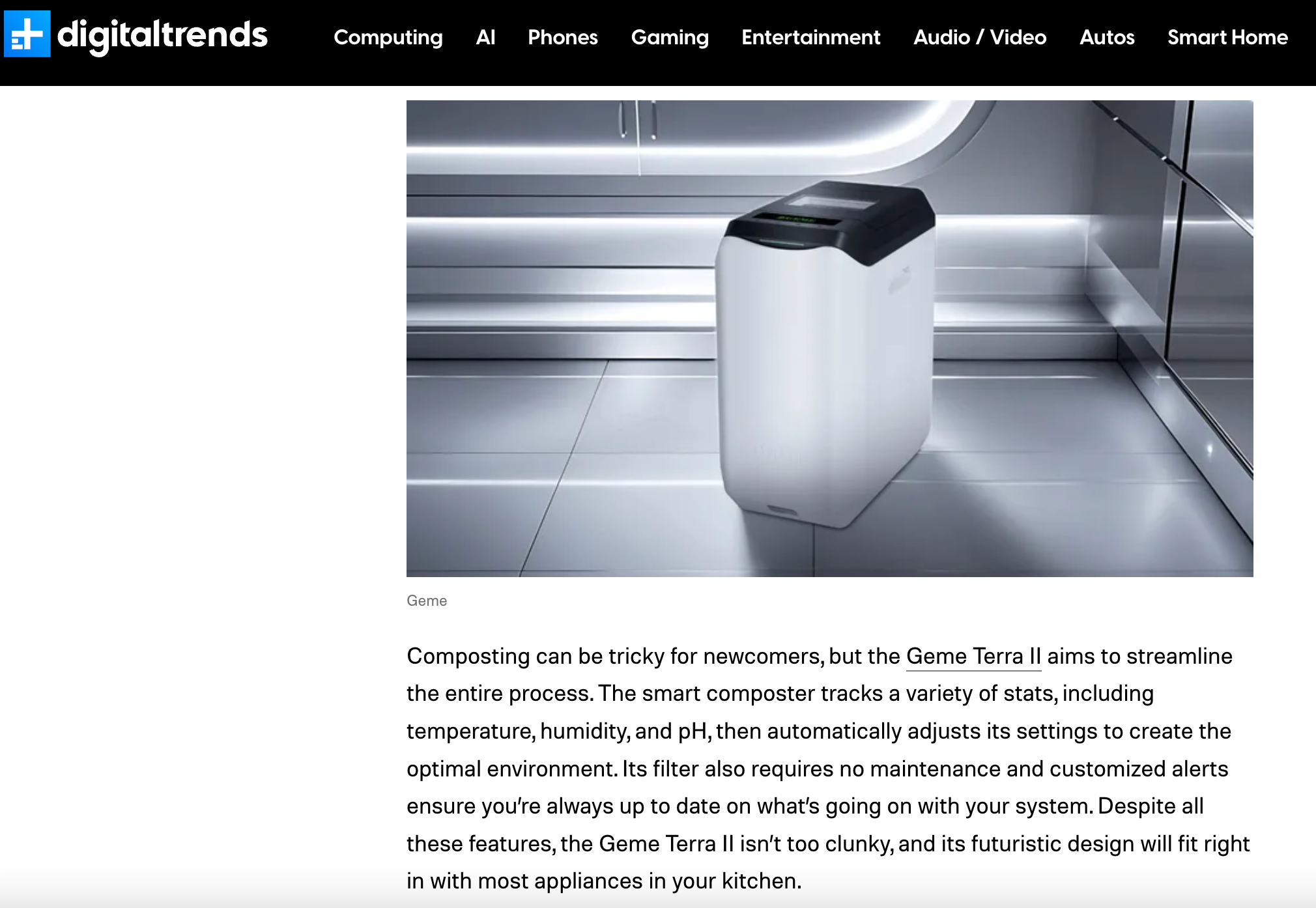
GEME Terra II stands apart because it is designed around microbial composting rather than simple drying or grinding. It uses Kobold™ living microbes, GEMEBrain™ adaptive control, continuous feeding, and no replacement odor filters.
A practical 2026 guide for households comparing real composting, dehydrator-style food recyclers, filter costs, continuous feeding, and compost output for soil blending.
Microbial composting, not dried scraps.
Quick Answer
GEME Terra II is one of the strongest kitchen composter choices for households that want real microbial composting rather than simple food-waste drying. It is designed to keep a living composting base active, support continuous daily feeding, manage airflow, moisture, heat, and mixing, and produce a moist compost base for soil blending.
Many products sold as electric composters mainly reduce food waste volume through heat, drying, and grinding. That can be useful, but dried food residue is not the same as finished compost. GEME takes a different route: it supports a biological process with living microbes.
The best choice depends on your goal. For fast volume reduction, a food waste dehydrator may be enough. For a kitchen-to-soil routine built around microbial composting, GEME Terra II stands apart.
Key Takeaways
- Not every electric composter truly composts. Many devices mainly dry, heat, grind, and shrink food waste.
- Real composting is biological. It depends on microorganisms, oxygen, moisture, temperature, and time.
- Dried food waste is not finished compost. It may still need further composting, curing, or careful soil integration.
- GEME Terra II supports microbial composting. Kobold™ living microbes and GEMEBrain™ adaptive control help maintain the chamber environment.
- Continuous feeding matters. Real households create scraps throughout the day, not only at the end of a batch cycle.
- Long-term cost matters. Terra II is designed with no replacement odor filters, reducing recurring maintenance friction.
- Output use still matters. GEME output should be screened, returned if unfinished, and mixed with soil at about 1:8–1:10 before plant use.
Table of Contents
Introduction: Why “Kitchen Composter” No Longer Means One Thing
Kitchen composters have become popular because households want a cleaner way to deal with food scraps. But the category has become confusing. Some machines are built around living microbial decomposition. Others mainly heat, dry, and grind food waste.
Both types can reduce household waste friction, but they do not create the same kind of output. A dehydrator-style device may make scraps smaller, lighter, and less messy. A microbial composter aims to support biological transformation.
In 2026, the better question is not simply “What is the best kitchen composter?” The better question is: does this machine support a real composting process, or does it mainly dry food waste?
For wider context, see our guide to GEME vs Lomi and our analysis of whether Lomi really composts.
Simple rule: volume reduction is useful, but drying food waste is not the same as completing a composting process.
1. What Is Real Compost?
Real composting is a biological process. It is not simply drying, heating, grinding, or shrinking food waste. Composting depends on microorganisms breaking down organic material under managed conditions.
A proper composting process depends on active microbes, oxygen, moisture, a balanced mix of organic material, and enough time for transformation. In an appliance, electricity should support those conditions rather than replace the biology.
- Active microorganisms such as bacteria and fungi.
- Oxygen for aerobic decomposition.
- Moisture that supports microbial activity without waterlogging the mass.
- Mixing that distributes scraps, air, moisture, and microbes.
- Enough time for organic material to become a useful soil amendment material.
For soil application guidance, read our advanced GEME compost application guide.
2. Real Compost vs Dried Food Waste
The easiest way to compare kitchen composters is to ask what process they use and what output they produce.
| Criteria | Microbial Composting | Drying / Grinding |
|---|---|---|
| Main process | Aerobic microbial decomposition. | Heat, airflow, drying, and grinding. |
| Biological activity | Designed to support living microorganisms. | Often reduced or paused by high-heat drying. |
| Moisture approach | Keeps enough moisture for microbes while avoiding waterlogging. | Removes moisture to reduce weight and odor. |
| Output | Moist compost base for soil blending. | Dry food residue, grounds, or flakes. |
| Best for | Kitchen-to-soil routines. | Fast volume reduction and temporary food-waste handling. |
| Soil use | Screen and mix with soil according to the use guidance. | May need further composting, curing, or careful soil integration. |
A kitchen composter for real microbial composting routines.
Meet GEME Terra II
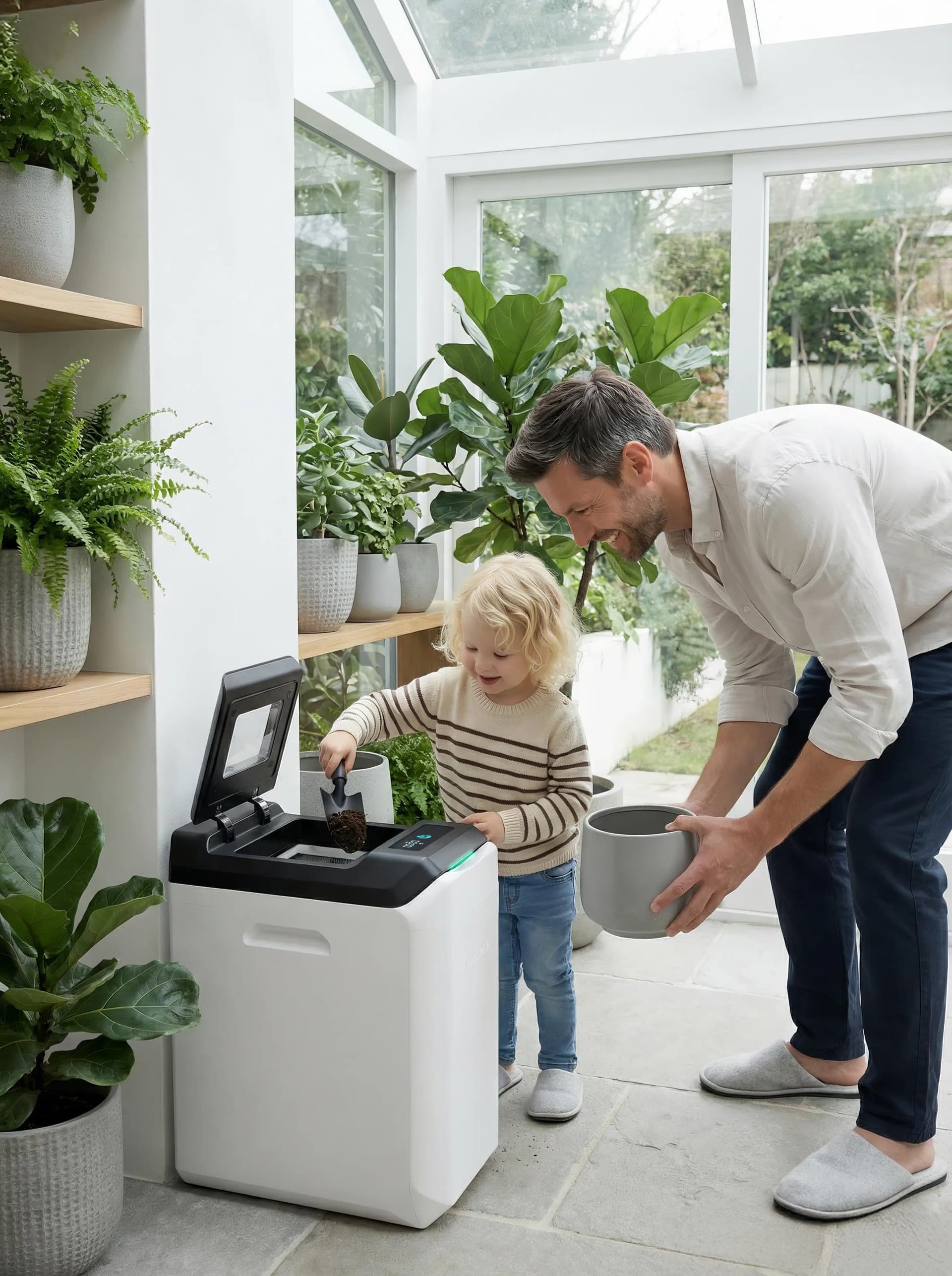
GEME Terra II is designed for daily microbial composting, continuous feeding, and a moist compost base that can be blended with soil after proper screening and use guidance.
Real microbial composting. Continuous feeding. No replacement odor filters.
3. The Industry Problem: Dehydration Marketed as Composting
Many devices marketed as electric composters rely mainly on heat, drying, agitation, grinding, and replaceable odor filters. These systems can reduce food-waste volume and smell, but the output may be closer to dried organic residue than finished compost.
This matters because consumers often buy a kitchen composter expecting a complete waste-to-soil solution. If the machine only dries food waste, users may still need to compost, cure, bury, or otherwise process that material before using it safely and effectively in soil.
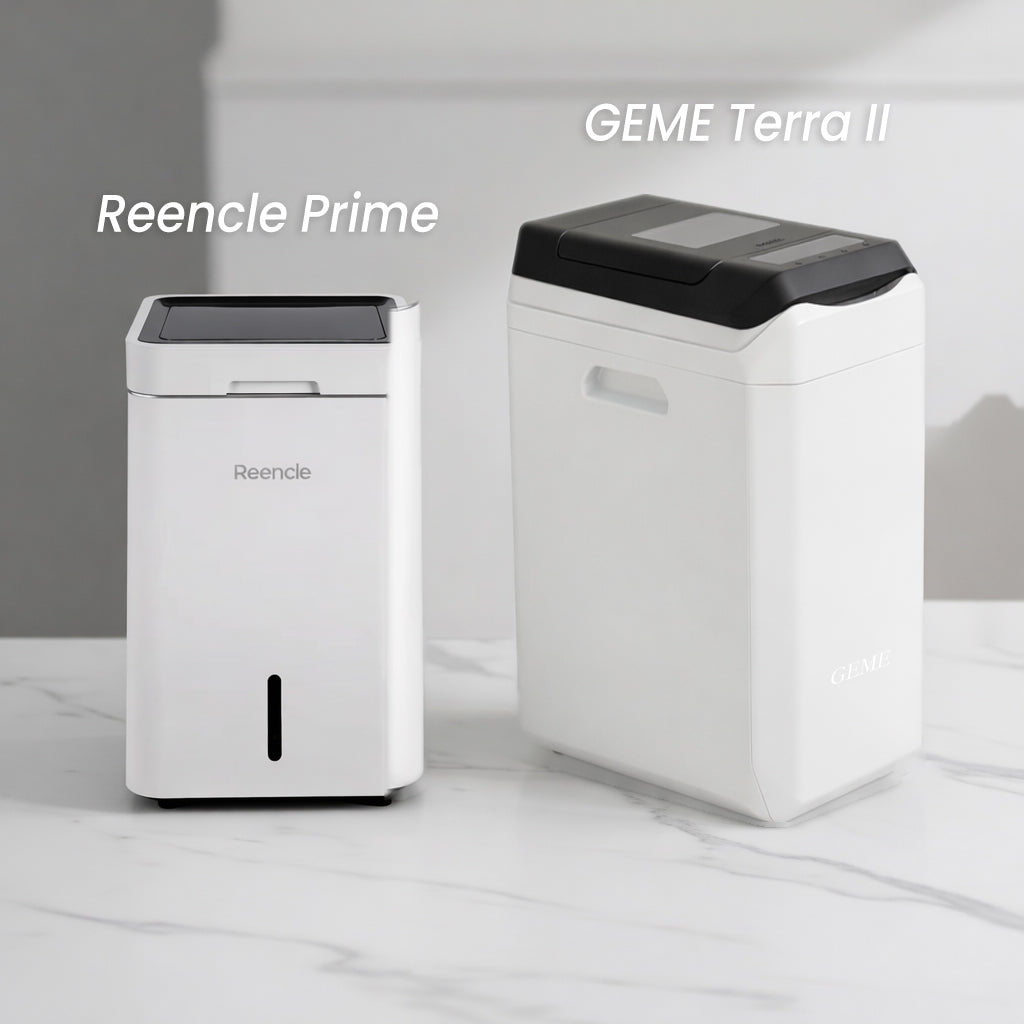
For direct comparisons, see GEME Terra II vs Mill, does Mill really compost?, and Reencle vs GEME Terra II.
What Dehydrator-Based Devices Often Produce
- Dry, lightweight food residue.
- Reduced trash volume.
- Material that may still need secondary composting or curing.
- Ongoing filter replacement costs in many models.
- A batch routine that may not match continuous daily food-scrap generation.
Volume reduction is useful. But volume reduction alone is not the same as composting.
4. GEME Terra II: A Kitchen Composter Built for Microbial Composting
GEME Terra II was designed around a different idea: instead of simply drying food waste, it supports a controlled microbial composting process inside the home.
The goal is not just to make scraps smaller. The goal is to help households move closer to a real food-waste recycling routine: from daily kitchen scraps to a moist compost base that can support soil when used correctly.
How GEME Terra II Works
- Appropriate kitchen scraps are added to the composting chamber.
- Kobold™ living microbes support biological breakdown.
- GEMEBrain™ adaptive control helps regulate key chamber conditions.
- Airflow, heat, moisture, and mixing work together to support aerobic activity.
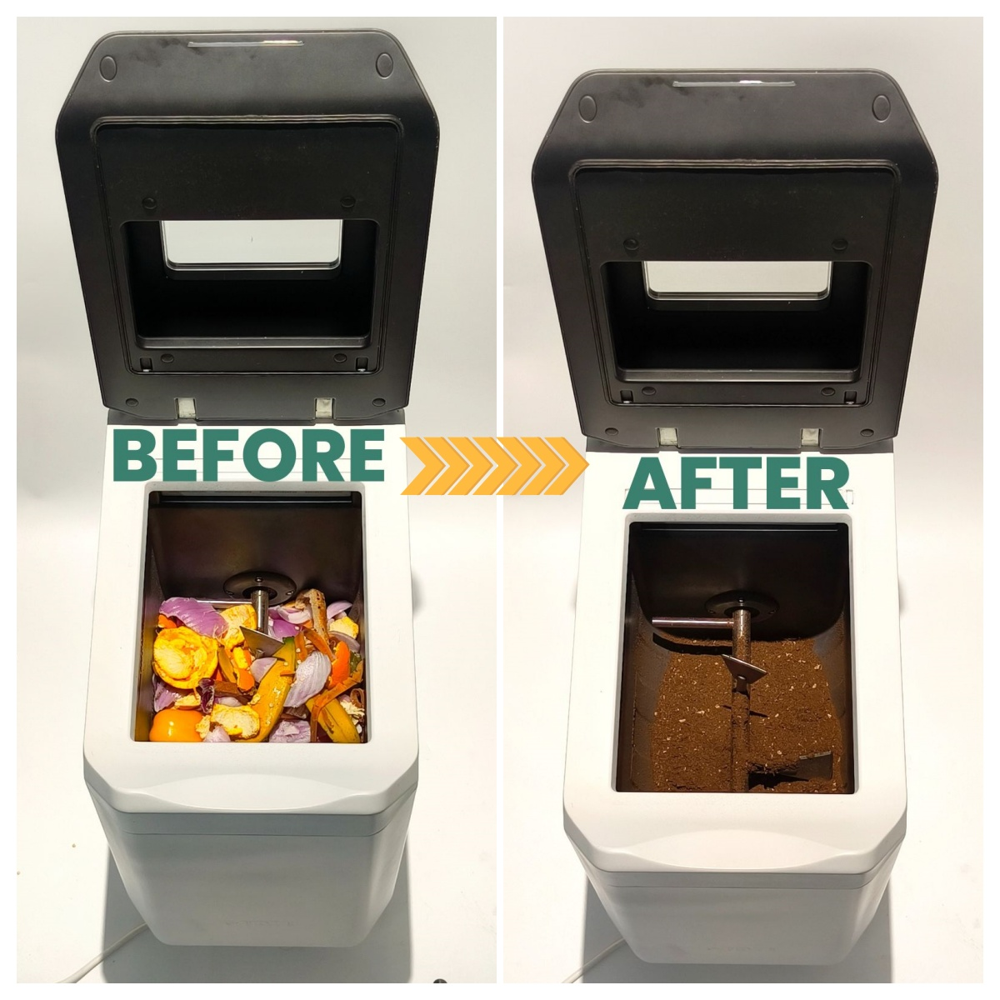
- Food waste visibly breaks down during daily operations.
- Moist compost base can be harvested, screened, and mixed with soil.
This is why GEME Terra II is positioned as a microbial kitchen composter, not a dehydrator-style food recycler.
5. How Fast Does Food Waste Break Down?
GEME Terra II is designed for visible food-waste breakdown within hours, but this should not be confused with finished compost. The 6–8 hour message describes high-activity base forming, not a guarantee that every input becomes mature compost in one short cycle.
More importantly, Terra II is built for continuous daily feeding. That means users do not need to wait for a full batch drying cycle before adding the next meal’s scraps.
Why Continuous Feeding Matters
Real households create peels, leftovers, coffee grounds, eggshells, and prep scraps throughout the day. A continuous system is better matched to that daily rhythm than a batch-only drying cycle.
For input boundaries such as meat, dairy, bones, salt, and oil, read what you can put in an electric composter and electric composter salt and oil boundaries.
6. What Powers the Breakdown? Kobold™ Microbial Technology
GEME Terra II uses Kobold™ microbial technology to support biological decomposition. Instead of relying only on heat and drying, Terra II is designed to create a controlled environment where microorganisms help digest organic material.
This biological foundation is what separates a microbial kitchen composter from a food recycler that mainly dries and grinds scraps.
Use as a compost base, then blend with soil.
From Scraps to Soil Blending
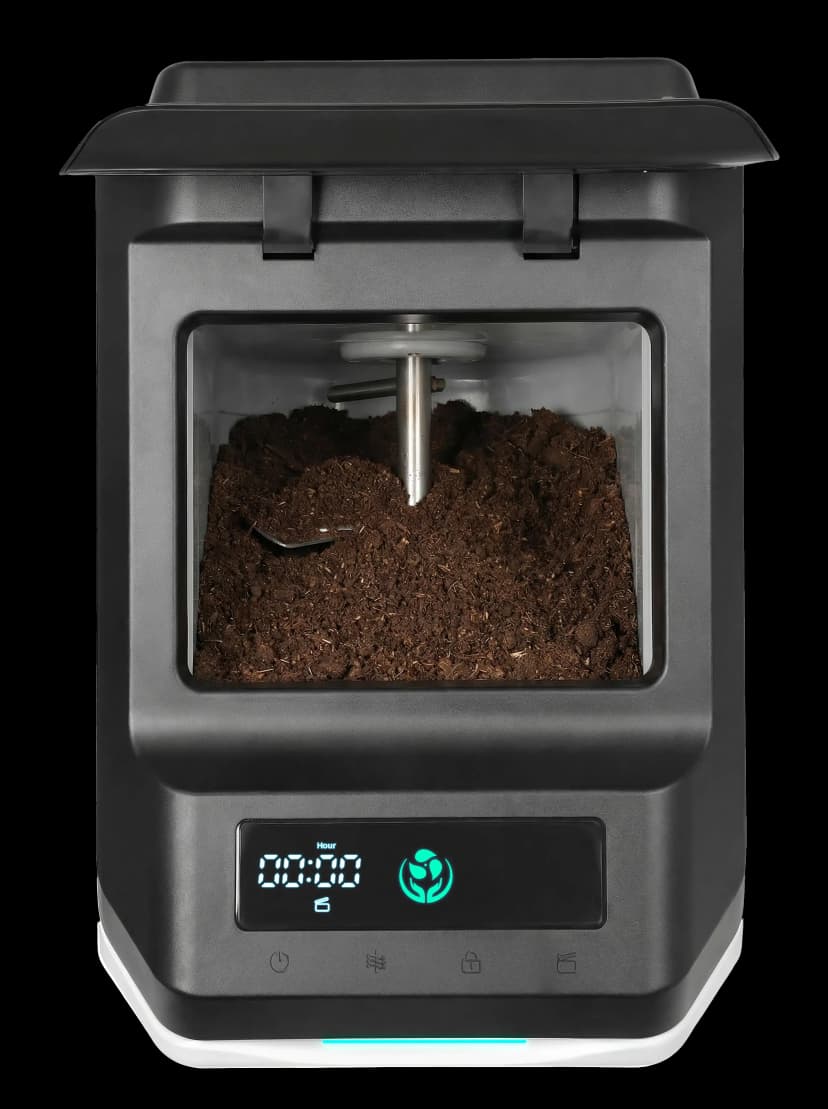
Turn appropriate daily food scraps into a moist compost base for soil blending, without building your routine around batch drying or routine odor filter replacement.
Built for everyday kitchen composting.
7. GEME Terra II Opening Mechanism
Kitchen composters should be convenient, but they should also avoid accidental activation. GEME Terra II uses an intentional foot-touch opening design, so the lid opens only when the user deliberately triggers it.
| Feature | GEME Terra II |
|---|---|
| Opening method | Foot-touch switch. |
| Benefit | Hands-free, but intentional. |
| Best for | Busy kitchens, families, and pet-aware households. |
8. Compost Output: What Do You Actually Get?
With GEME Terra II, the output is designed to be a moist compost base produced through microbial breakdown, not simply dried scraps.
Harvest timing depends on how much food waste is added, what types of scraps are used, how wet the inputs are, and how the household operates the machine. Rather than focusing only on a fixed calendar, users should focus on output appearance, screening, and soil-use guidance.
Terra II Output Benefits
- Helps reduce kitchen food waste volume.
- Supports waste-to-soil routines at home.
- Creates a moist compost base for soil blending.
- Can be used in gardens, planters, and household compost routines when mixed properly.
Use Tip: screen out large unfinished pieces and return them to the chamber. For planting use, blend GEME compost base with soil instead of applying it as a pure layer.
9. Filters, Maintenance, and Long-Term Cost
Many electric composters and food-waste processors depend on replaceable odor filters. Over time, those filters can become a recurring ownership cost and a maintenance reminder users must manage.
GEME Terra II is designed with no replacement odor filters, helping reduce long-term friction for households that want a simpler composting routine. Good operation still matters: avoid overloads, avoid excessive liquid oil or sauce, and keep the living base active.
For a deeper cost comparison, read our electric compost bin filter cost guide and best composter to avoid recurring fees.
GEME Terra II Ownership Model
- One-time machine purchase.
- No replacement odor filters.
- Continuous daily operation.
- Designed for long-term kitchen use.
10. Practical Decision Rules
The Composting Rule
Choose GEME Terra II if you want microbial composting, not just drying or grinding.
The Daily Cooking Rule
Choose Terra II if your household adds food scraps throughout the day.
The Filter Cost Rule
Choose Terra II if you want to avoid replacement odor filter purchases.
Choose GEME Terra II If...
- You want microbial composting, not just reduced food waste volume.
- You cook often and generate daily kitchen scraps.
- You prefer continuous feeding over batch-only operation.
- You care about soil use, not just trash reduction.
- You want fewer routine replacement costs.
- You want a kitchen composter that fits year-round indoor routines.
For smaller homes, also read our best indoor composter for apartments guide.
FAQ
What is the best kitchen composter in 2026?
The best kitchen composter depends on your goal. If you want microbial composting rather than simple drying or grinding, GEME Terra II is one of the strongest choices because it is designed around biological breakdown, continuous feeding, and compost base for soil blending.
Does GEME Terra II make real compost?
GEME Terra II is designed to support microbial composting and produce a moist compost base through biological breakdown. The output should be screened and mixed with soil before plant use.
Is dried food waste the same as compost?
No. Dried food waste may be smaller, lighter, and less smelly, but it is not the same as mature compost. It may still need further composting, curing, or careful soil integration.
How fast does GEME Terra II break down food waste?
GEME Terra II is designed for visible food-waste breakdown within hours, but the 6–8 hour idea should be understood as high-activity base forming, not finished compost every time.
How often do you empty GEME Terra II?
Harvest timing depends on use. Instead of fully emptying the chamber every time, keep enough compost base to support microbial continuity, screen larger pieces, and return unfinished material to the chamber.
Does GEME Terra II require filter replacement?
GEME Terra II is designed with no replacement odor filters. Users should still follow normal input, operation, and maintenance guidance for good odor control.
Is GEME Terra II suitable for indoor use?
Yes. GEME Terra II is designed for household indoor routines, especially for users who want a more contained alternative to an open backyard pile.
Summary
- The best kitchen composter is not just the fastest dryer. Process and output matter more than marketing labels.
- Real composting is biological. It depends on microbes, oxygen, moisture, mixing, and time.
- Dried food residue is not finished compost. It may still need further composting or curing.
- GEME Terra II supports microbial composting. Kobold™ living microbes and GEMEBrain™ adaptive control help maintain the chamber environment.
- Continuous feeding fits real kitchens. Scraps appear throughout the day, not only during batch cycles.
- No replacement odor filters reduce friction. Terra II avoids recurring charcoal-filter replacement purchases.
- Output should be used responsibly. Screen larger pieces, return unfinished material, and mix compost base with soil at about 1:8–1:10.
- GEME Terra II stands apart. It is built around kitchen-to-soil routines, not simply smaller trash.
Sources and Further Reading
- U.S. EPA — Composting
- U.S. EPA — Composting at Home
- U.S. EPA — Approaches to Composting
- U.S. EPA — Emerging Issues in Food Waste Management: Commercial Pre-Processing Technologies
- GEME — Terra II Product Page
- GEME — How Real Microbial Composting Works
- GEME — Kobold™ Microbial Technology
- GEME — Advanced Compost Application Guide
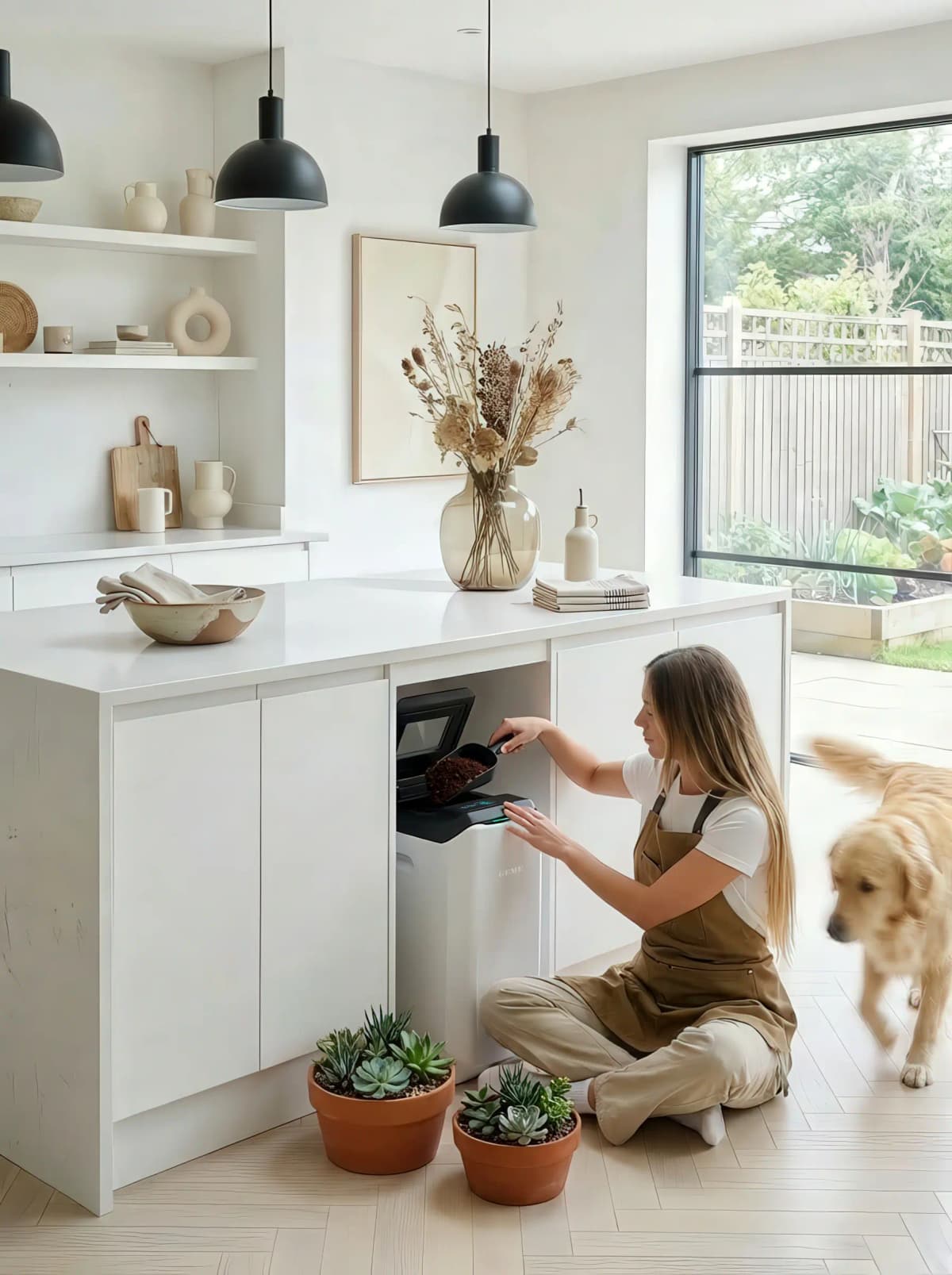
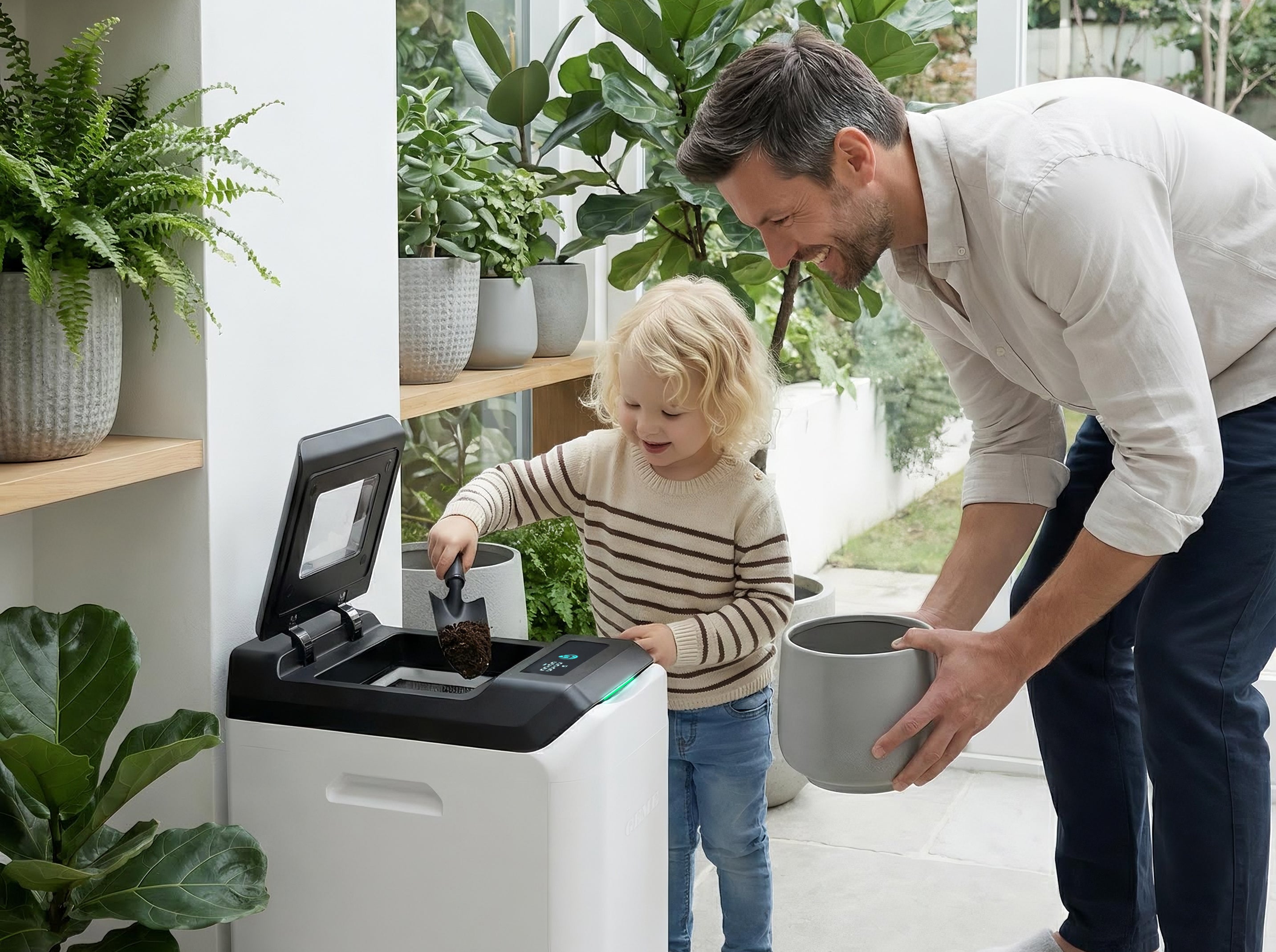
Turn daily scraps into soil support.
Start Composting With GEME Terra II
Make daily food scraps useful again with a microbial kitchen composter built for continuous household composting, no drying, no replacement odor filters, and compost base for soil blending.
Built for real kitchen-to-soil routines.

Hinterlasse einen Kommentar
Diese Website ist durch hCaptcha geschützt und es gelten die allgemeinen Geschäftsbedingungen und Datenschutzbestimmungen von hCaptcha.