
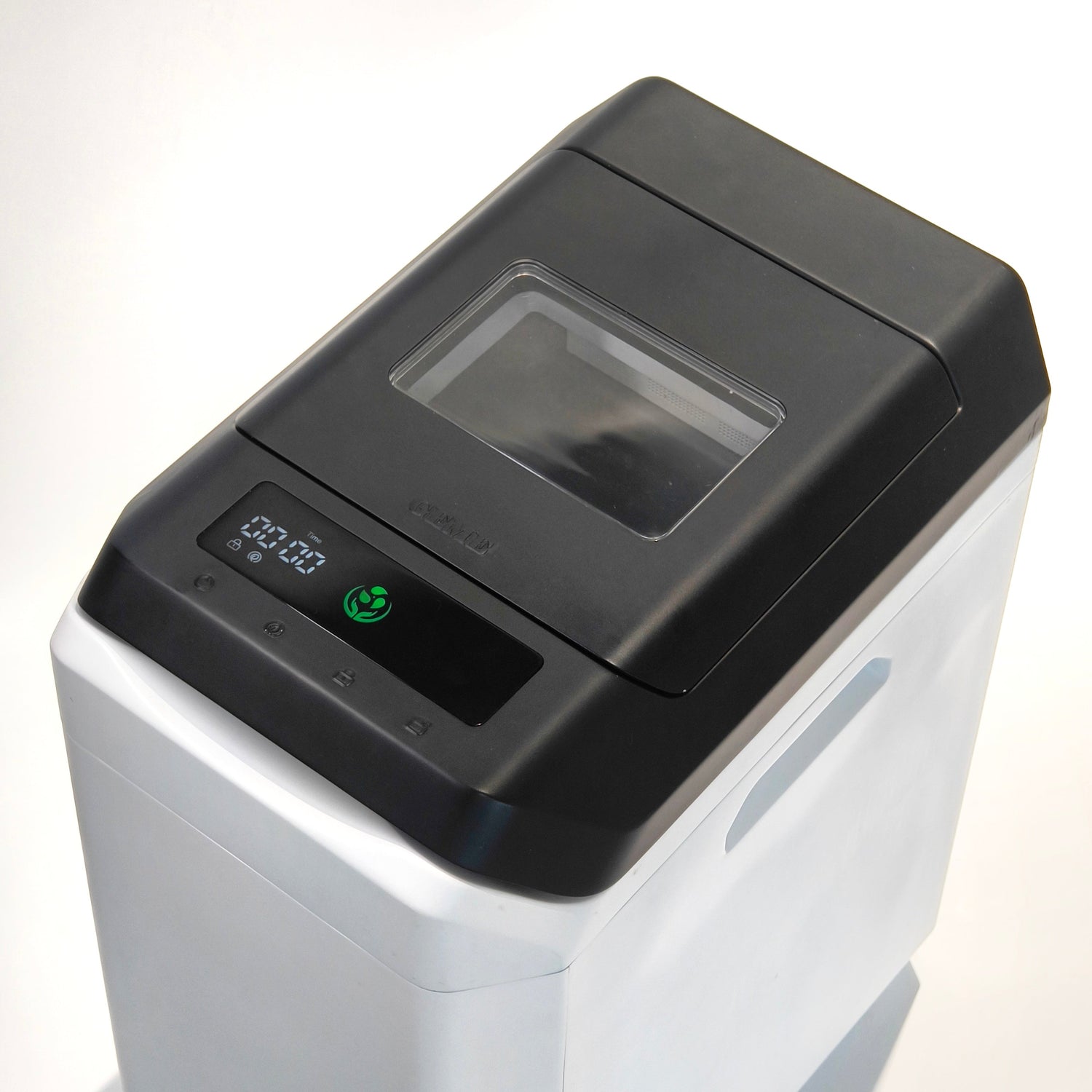
Lomi vs GEME Terra II
Lomi can help reduce food-waste volume, but its process and output are not the same as microbial kitchen composting. Here is how Lomi compares with GEME Terra II if your goal is a kitchen-to-soil routine.
This guide compares process, output, soil use, maintenance, filters, and daily workflow without treating all electric food-waste machines as the same category.
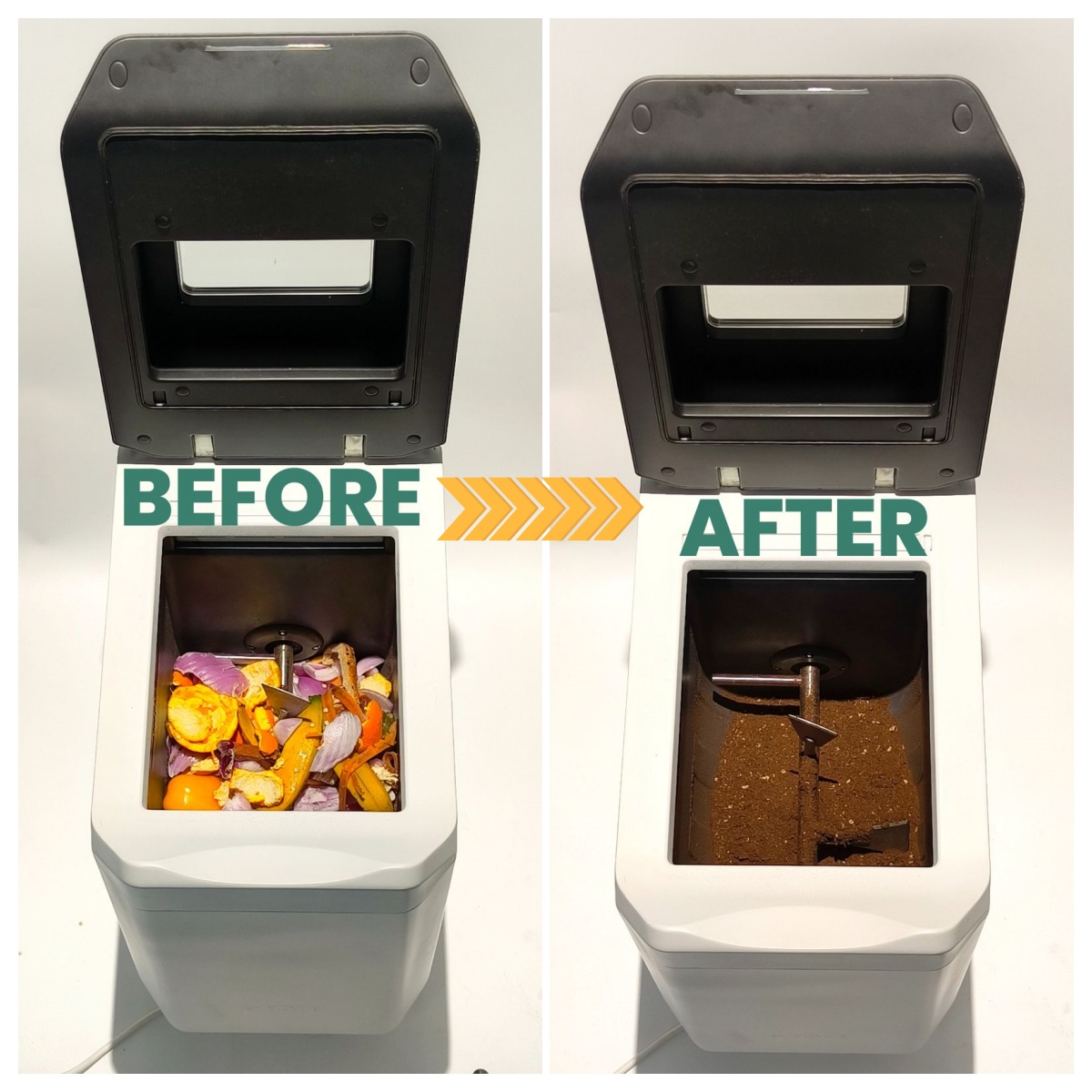
Food recycler or microbial composter?
Quick Answer
If by “compost” you mean mature, biologically transformed compost ready to behave like a soil amendment, Lomi is better understood as a food recycler than a full composting system. It can reduce moisture, odor, and volume, but its output may still need further composting or careful soil-use guidance.
GEME Terra II is different because it is designed as a microbial kitchen composter. It supports biological breakdown, continuous feeding, and compost-like organic material that should be used as compost base for soil blending.
For related comparisons, read GEME vs Lomi, real compost vs dehydrated food waste, and our best kitchen composters in 2026 guide.
Key Takeaways
- Lomi is useful for food-waste reduction. It can make scraps drier, smaller, and easier to manage indoors.
- Lomi is better framed as a food recycler. Its output should not automatically be treated as mature compost.
- Composting is biological. A compost-oriented system should support microorganisms, oxygen, moisture, temperature, and time.
- GEME Terra II is designed for microbial kitchen composting. It supports continuous daily feeding and compost-like output for soil blending.
- Soil use still needs guidance. GEME output should be treated as compost base, screened when needed, and blended with soil before plant use.
Table of Contents
Who This Guide Is For
This guide is for buyers who are trying to understand whether Lomi is a composter, a food recycler, or something in between.
- Apartment dwellers comparing electric food-waste appliances.
- Zero-waste families trying to reduce kitchen scraps.
- Gardeners who care about soil-use quality.
- People comparing Lomi, GEME, Mill, and Reencle.
- Buyers searching for the best kitchen composter in 2026.
If you are comparing several options, start with the Top 5 Kitchen Composters in 2026. If you mainly want apartment-specific advice, read best indoor composter for apartments.
What Is the Lomi “Composter”?
Lomi is best understood as a countertop food recycler. Its value is convenience: it helps reduce the smell, moisture, and volume of kitchen scraps so food waste becomes easier to manage indoors.
That process can be useful. It can help users avoid wet trash, reduce food-waste odor, and store scraps more cleanly before final disposal, soil use, or further composting.
The important distinction is this: food recycling and composting are not the same process. A food recycler may produce dry, soil-like material, but appearance alone does not prove compost maturity.
What Compost Really Means
Composting is a biological process. It depends on microorganisms, oxygen, moisture, temperature, organic matter, and enough time for food waste to become more stable.
This is why a dry, crumbly output is not automatically compost. A machine can reduce volume quickly without completing a composting process.
| Question | Food Recycler | Microbial Kitchen Composter |
|---|---|---|
| Main goal | Reduce moisture, odor, and volume | Support biological breakdown |
| Typical output | Dry grounds or processed food residue | Compost-like organic material or compost base |
| Soil use | May need further composting or product-specific guidance | Blend with soil according to compost-use guidance |
| Best for | Cleaner waste handling and volume reduction | Kitchen-to-soil routines |
For more detail, see real compost vs dehydrated food waste.
Why Lomi Output Is Not Finished Compost
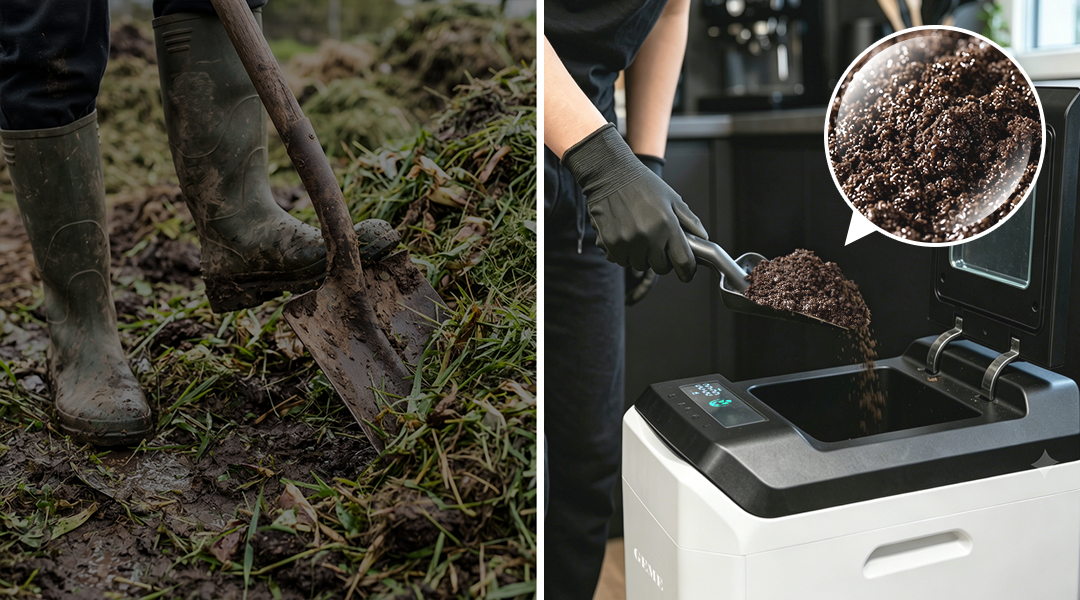
Lomi can create a dry, soil-like material. That does not automatically mean the material is finished compost.
Finished compost is biologically transformed, more stable, and should be used according to soil amendment guidance. Dehydrated or processed food waste may still need time in soil, a compost pile, or another biological system before it behaves like mature compost.
The real question is not whether Lomi reduces food waste volume. It can. The better question is whether it completes composting on its own. For buyers seeking compost-oriented output, that distinction matters.
| Feature | Lomi | GEME Terra II |
|---|---|---|
| Core process | Food recycling workflow: drying, heating, and grinding may be involved | Microbial kitchen composting |
| Output | Dry or processed organic material | Compost-like organic material for soil blending |
| Soil readiness | Use cautiously and follow Lomi guidance | Treat as compost base and blend with soil according to guidance |
| Best use case | Reducing food-waste volume and odor | Daily kitchen-to-soil composting routine |
GEME Terra II: Microbial Kitchen Composting
GEME Terra II is designed for people who want to compost food scraps indoors without treating dehydration as the same thing as composting.
Instead of relying only on drying or grinding, GEME Terra II uses Kobold™ microbial technology to support biological breakdown under controlled indoor conditions.
The system is designed to manage the conditions that matter in composting:
- Temperature
- Moisture balance
- Oxygen availability
- Mixing
- Continuous microbial activity
This is why GEME Terra II is better understood as a microbial kitchen composter, while Lomi is better understood as a food recycler for reducing and processing scraps.
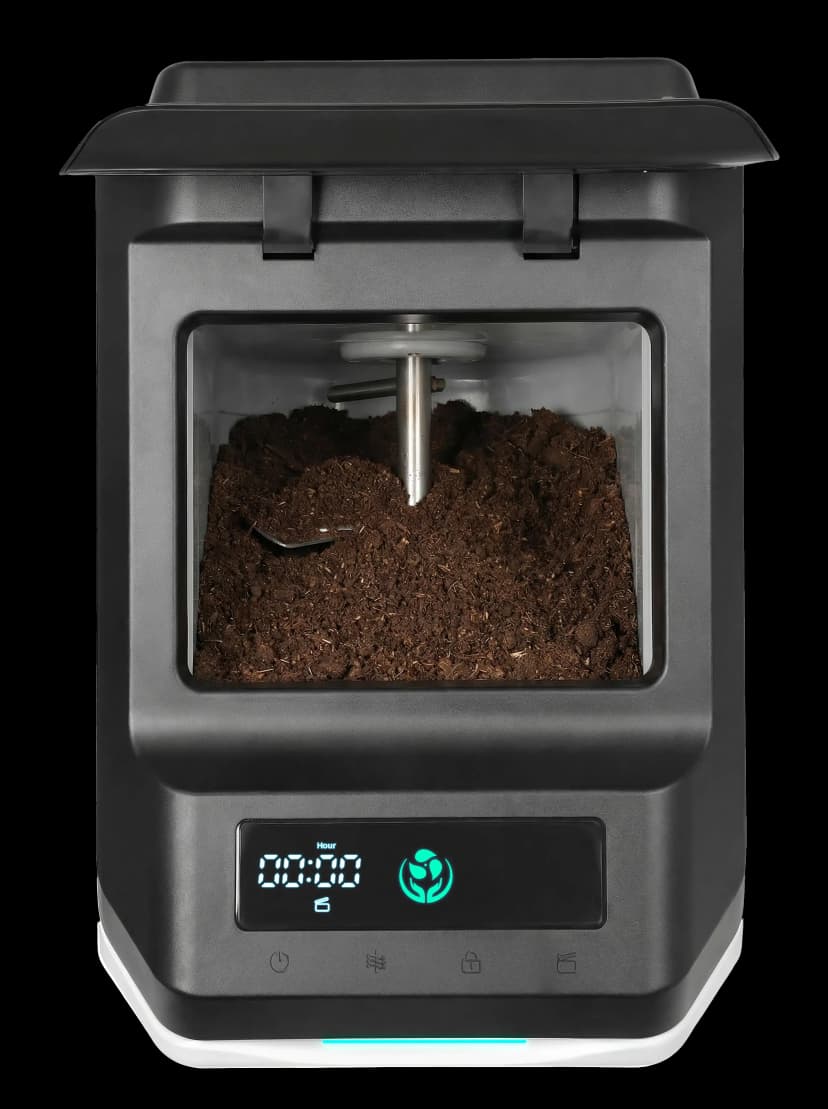
Use with soil, not as a pure potting mix.
Choose Microbial Composting
GEME Terra II supports daily food-scrap composting through a microbial process, continuous feeding, and no routine odor filter replacement.
Built for kitchen-to-soil routines.
Lomi Output vs GEME Terra II Output
The biggest difference between Lomi and GEME Terra II is not only what happens inside the machine. It is what the output means after the machine is done.
Lomi output may look dry, fine, and soil-like, but it should be understood through the lens of food recycling and product-specific use guidance.
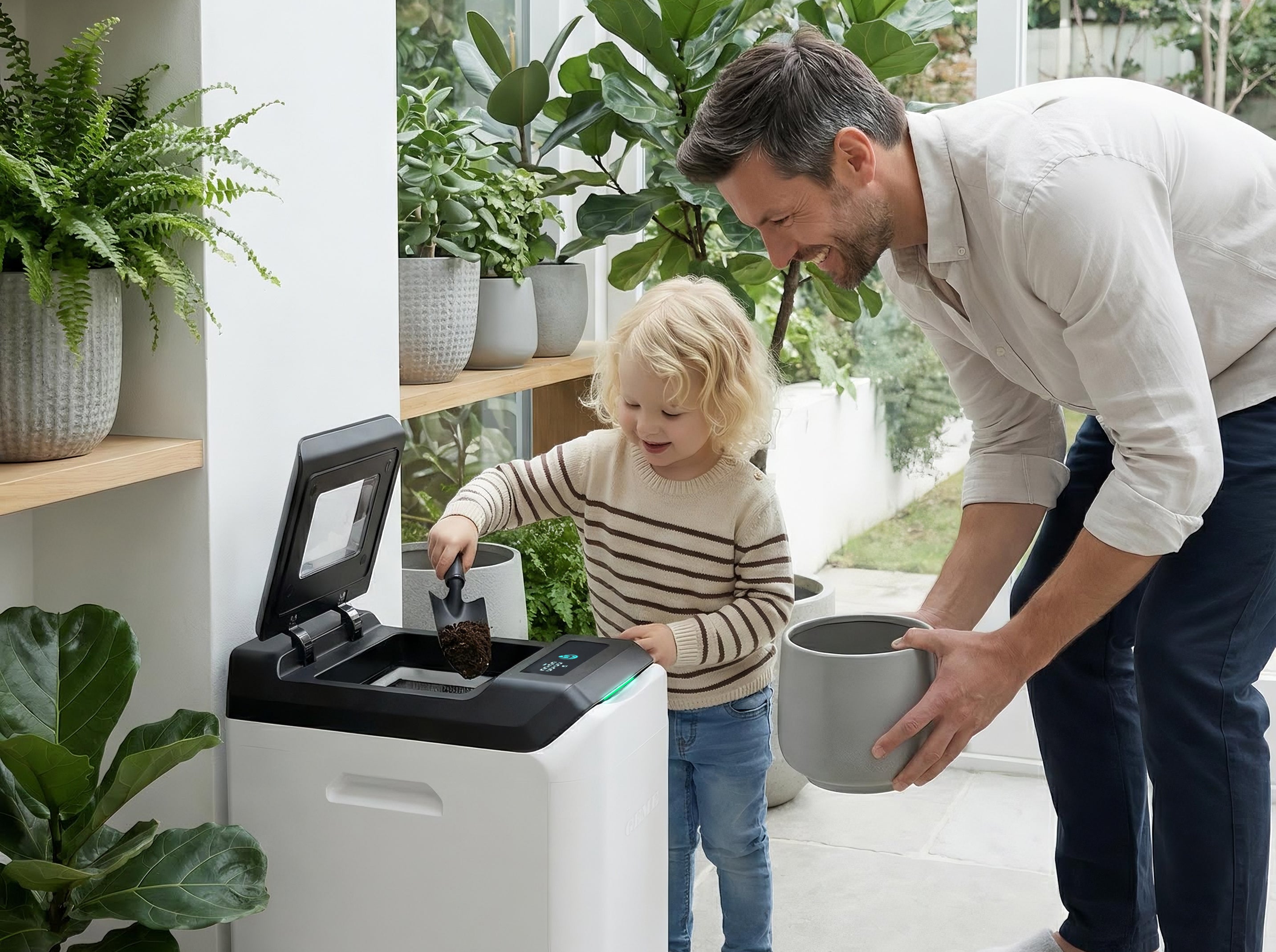
GEME Terra II output is produced through a microbial composting process and should be treated as compost base: screen large unfinished pieces when needed, blend with soil, and avoid using it as pure potting soil.
| Output Question | Lomi | GEME Terra II |
|---|---|---|
| Does it look soil-like? | It may, depending on the cycle and inputs | Compost-like output from microbial processing |
| Is it mature compost? | Do not assume; follow Lomi guidance | Treat as compost base and blend with soil |
| Does it need further handling? | May need further composting or careful application | Screen large pieces and use according to soil guidance |
| Best use | Food-waste volume reduction or pre-processing | Home composting and soil blending routine |
Key Differences: Lomi vs GEME Terra II
1. Process: Food Recycling vs Microbial Composting
Lomi is best framed as a food recycler for reducing and processing scraps. GEME Terra II is designed to support microbial composting under controlled indoor conditions.
2. Output: Processed Material vs Compost Base
Lomi output should be used according to Lomi’s own guidance. GEME Terra II output should be treated as a compost base and blended with soil before plant use.
3. Ownership Cost: Consumables and Filters
Some food recyclers rely on consumables or filter replacement. GEME Terra II is designed with no routine odor filter replacement.
4. Daily Workflow: Cycles vs Continuous Feeding
Lomi works through cycles. GEME Terra II is designed for continuous feeding, allowing households to add scraps as part of daily kitchen life.
5. Best Use Case
Lomi is useful for people who mainly want less wet trash and easier food-waste handling. GEME Terra II is stronger for households that want microbial composting, soil-use value, and lower routine filter maintenance.
| Category | Lomi | GEME Terra II |
|---|---|---|
| Core category | Food recycler | Microbial kitchen composter |
| Main benefit | Waste reduction and cleaner handling | Microbial composting and soil-blending output |
| Output framing | Processed organic material | Compost-like organic material / compost base |
| Routine odor filter replacement | Check model and consumable guidance | No routine odor filter replacement |
| Best for | Reducing food-waste volume | Daily kitchen-to-soil composting |
Common Mistakes When Comparing Lomi and GEME
- Mistake 1: assuming anything soil-colored is finished compost.
- Mistake 2: treating volume reduction as the same thing as microbial decomposition.
- Mistake 3: ignoring long-term consumable and filter costs.
- Mistake 4: choosing only by appliance size instead of daily food-waste volume and output use.
- Mistake 5: forgetting that gardeners usually need safe soil-use guidance, not just smaller trash.

Not just scraps drying.
Stop Guessing. Start Composting.
If you want a compost-oriented kitchen routine, choose a microbial system designed to keep food scraps in a biological process.
Built for daily kitchen-to-soil routines.
Which One Should You Choose?
Choose Lomi if...
- You mainly want to reduce the smell and volume.
- You want a compact food recycler workflow.
- You do not need a compost base from the machine itself.
- You are comfortable following Lomi’s output-use guidance.
Choose GEME Terra II if...
- You want microbial kitchen composting indoors.
- You want compost-like output for soil blending.
- You want continuous feeding rather than batch-only waste processing.
- You prefer no routine odor filter replacement.
- You are comparing the best kitchen composter for long-term daily use.
TL;DR
Lomi is a convenient food recycler for reducing the smell, moisture, and volume of food scraps. That is useful, but it is not the same as finishing a composting process.
GEME Terra II uses microbial composting to support a kitchen-to-soil routine. Its output should be treated as compost base and blended with soil according to guidance.
Choose Lomi for compact food-waste reduction. Choose GEME Terra II if your goal is microbial kitchen composting and soil-use value.
Frequently Asked Questions
Does the Lomi composter really compost?
Lomi is better understood as a food recycler than as a full composting system. It can reduce food waste's moisture, smell, and volume, but users should not assume its output is mature compost.
Is Lomi still useful?
Yes. Lomi can be useful for reducing food-waste volume, odor, and trash frequency. It simply serves a different role than a microbial kitchen composter.
What is the difference between Lomi and GEME Terra II?
Lomi focuses on food recycling and volume reduction. GEME Terra II is designed to support microbial composting and create compost-like organic material for soil blending.
Can Lomi output go into soil?
Follow Lomi’s own output-use guidance. In general, processed food-waste output should not be treated as mature compost unless the product guidance and soil conditions support that use.
Does GEME Terra II require filter replacements?
GEME Terra II is designed with no routine odor filter replacement.
Which is better for apartment composting?
If your goal is odor reduction and volume reduction, Lomi may help. If your goal is microbial composting indoors and a compost base for soil blending, GEME Terra II is the stronger fit.
Sources
Built for everyday kitchens.
Ready for Kitchen Composting?
Turn daily food scraps into compost-like organic material for soil blending with a microbial kitchen composter designed for continuous indoor use.
Built for daily kitchen-to-soil routines.

Hinterlasse einen Kommentar
Diese Website ist durch hCaptcha geschützt und es gelten die allgemeinen Geschäftsbedingungen und Datenschutzbestimmungen von hCaptcha.