
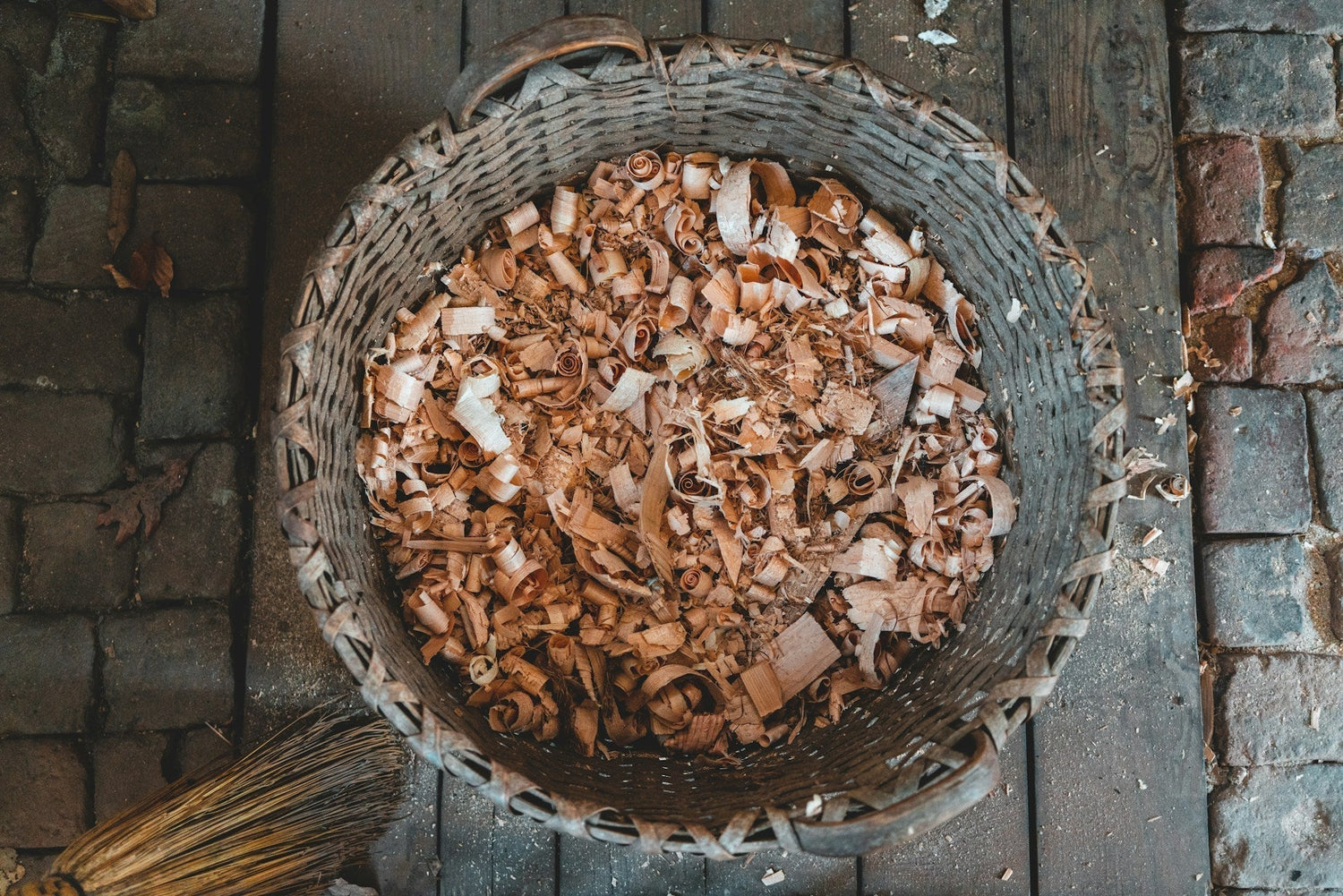
Indoor Composting Method Comparison
GEME Composter and DIY Bokashi both help households manage food scraps indoors, but they do not work the same way, and they do not end in the same place.
Bokashi is an anaerobic fermentation bucket that creates acidic pre-compost. GEME supports real microbial composting in an electric kitchen composter and produces compost for soil blending.
The biggest difference is not what goes in. It is what must happen after.
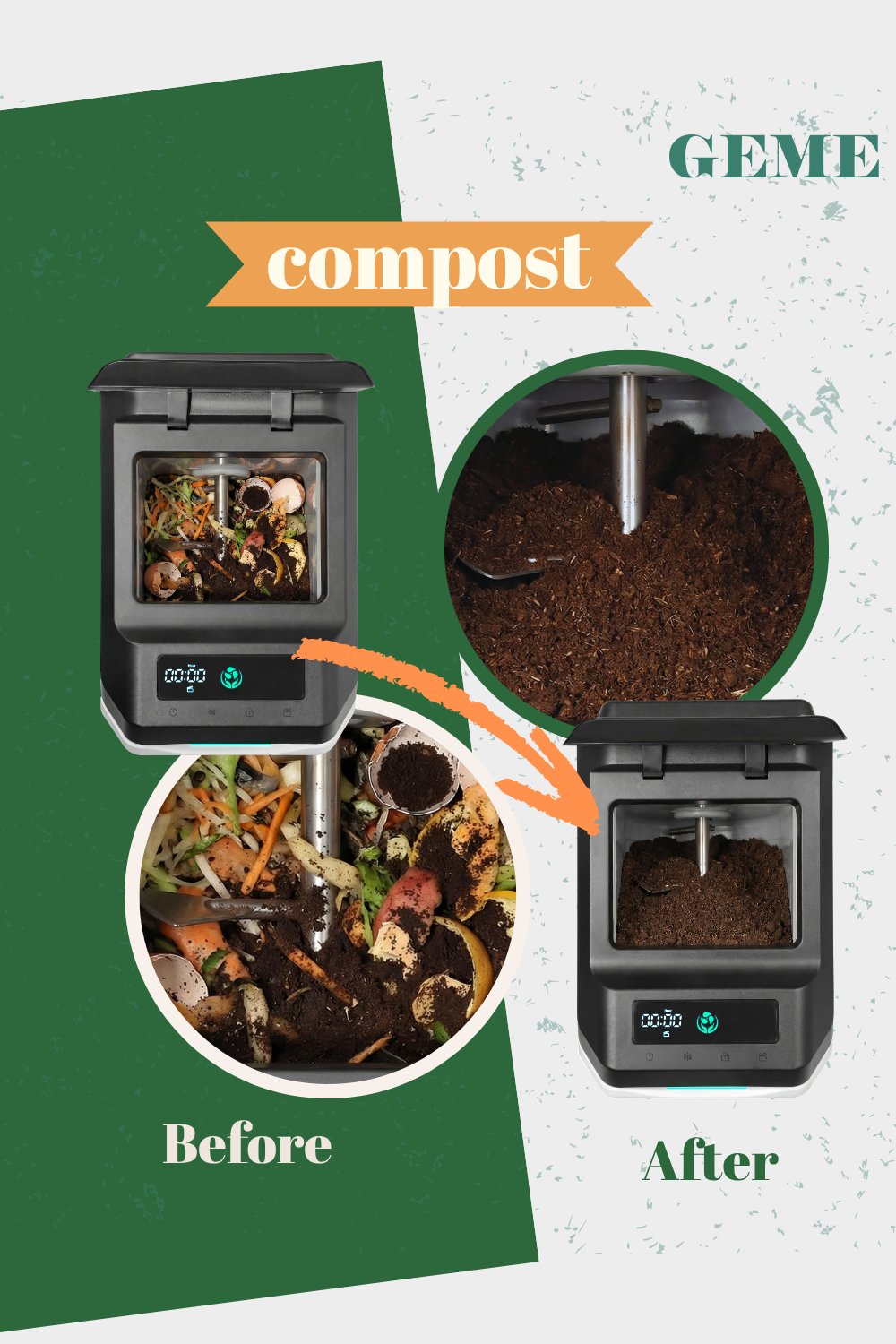
Real composting vs fermented pre-compost.
Quick Answer
Choose DIY Bokashi if you want the lowest upfront cost, enjoy a hands-on fermentation process, and have access to soil, a garden bed, a soil factory, or another composting system to finish the material.
Choose GEME Composter if you want real microbial composting indoors, continuous daily feeding, no Bokashi bran routine, no burial trench, no filter replacements, and compost output designed for soil blending.
For related context, read real compost vs dehydrated food waste, how to use GEME compost safely, and compost pile vs electric composter.
Key Takeaways
- Bokashi is fermentation, not finished composting. It creates fermented pre-compost that must be buried in soil or finished in another composting system.
- GEME supports real microbial composting indoors. It uses living microbes, airflow, moisture balance, and mixing to support aerobic decomposition.
- Bokashi has a lower upfront cost. But it requires Bokashi bran and a second finishing step.
- GEME has lower manual finishing friction. There is no burial trench, soil factory, or outdoor compost pile required to complete a Bokashi-style second step.
- Both can handle more than vegetable peels. Food boundaries still matter, especially for free liquids, large bones, excess oil, and non-organic materials.
- GEME compost should still be used responsibly. Screen large unfinished pieces and blend compost with soil before plant use.
- Maintenance differs. Bokashi needs layering, pressing, sealing, draining, bran, and finishing; GEME needs normal compost-base care and product-guided feeding.
Table of Contents
Comparison Snapshot: GEME Composter vs DIY Bokashi
| Feature | GEME Composter | DIY Bokashi |
|---|---|---|
| Indoor method | Electric real microbial composting | Anaerobic fermentation bucket |
| Output | Compost for soil blending | Acidic pre-compost that needs soil or another composting system |
| Needs burial / finishing step? | No Bokashi-style burial step required | Yes; bury or finish in compost/soil |
| Daily workflow | Continuous feeding according to product guidance | Batch fermentation |
| Manual steps | Add scraps, maintain compost base, harvest and blend with soil | Layer bran, press, seal, drain liquid, ferment, then bury or finish |
| Recurring consumables | No filter replacements; no Bokashi bran routine | Bokashi bran or DIY inoculant required |
| Apartment fit | Good fit when you want an indoor food-to-soil routine | Good for fermentation; harder if you lack soil or finishing space |
What Is GEME Composter?
GEME Composter is an electric kitchen composter designed to support real microbial composting indoors. Instead of only drying or grinding scraps, GEME uses living microbes and an aerobic composting environment to break down food waste biologically.
Inside the system, Kobold™ microbes work with airflow, moisture balance, temperature support, and mixing. The goal is to keep the composting environment active without requiring the user to build an outdoor compost pile.
The output should be treated as compost for soil blending. It is not pure potting soil and should not be placed directly against roots or stems in concentrated form.
Why GEME Fits Modern Indoor Composting
- Real microbial composting: supports a biological composting process, not heat-only waste reduction.
- Continuous operation: add food scraps as they appear according to product guidance.
- No Bokashi-style burial step: the core composting process happens inside the machine.
- No filter replacements: GEME is not built around recurring carbon-filter swaps.
- Apartment-friendly workflow: helpful for households without outdoor compost piles.
- Soil-use guidance: blend finished compost with soil and screen large unfinished pieces.
Learn more about how GEME composting works and GEME verification and boundaries.
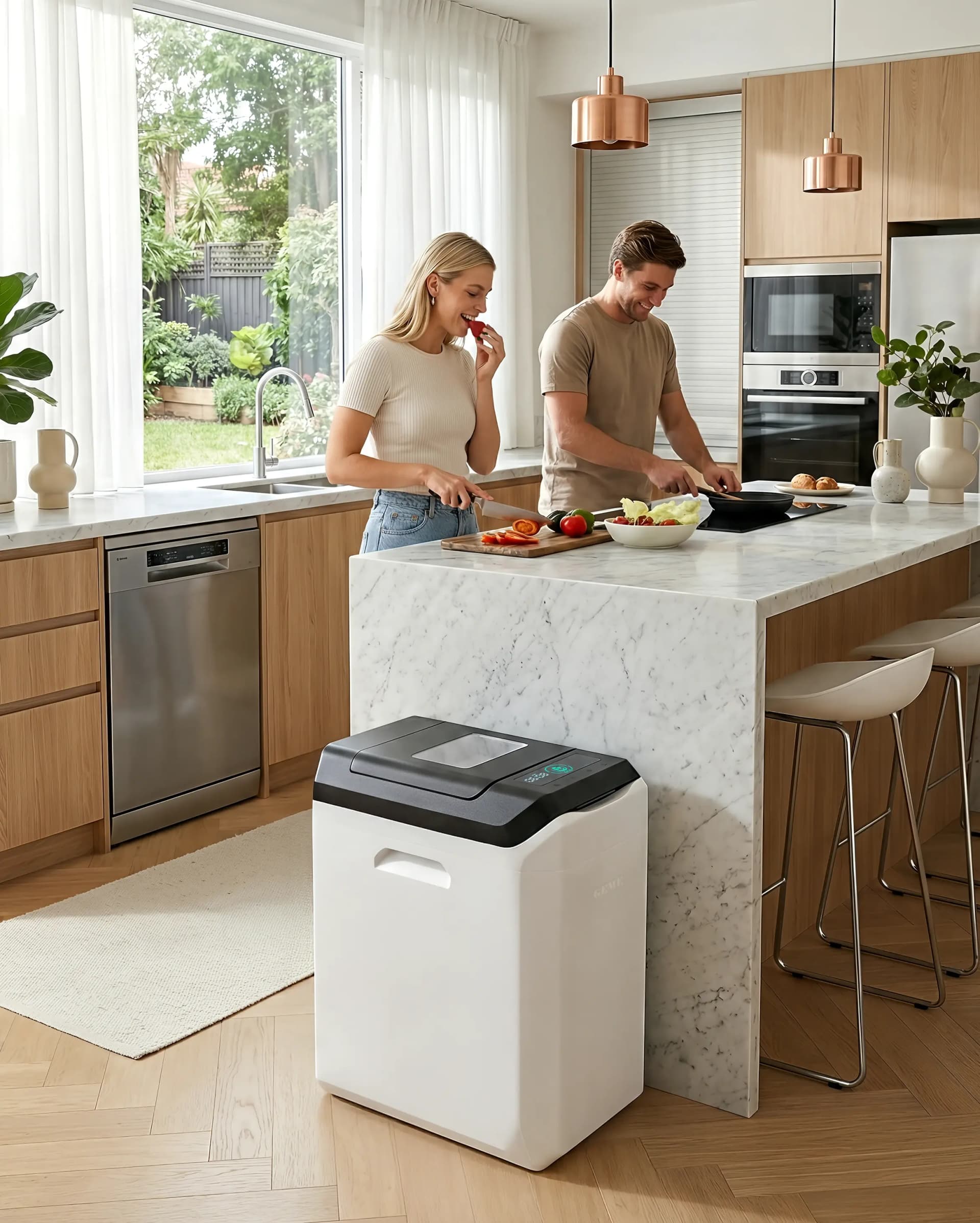
Real microbial composting indoors.
Indoor Composting Without Bokashi’s Second Step
GEME Terra II supports real microbial composting with continuous feeding, no filter replacements, and compost output for soil blending.
Real composter. Real microbial composting. No filter replacements.
What Is DIY Bokashi?
DIY Bokashi is an indoor food-waste fermentation system. It uses a sealed bucket and an inoculated bran mixture to ferment scraps in an oxygen-limited environment.
Bokashi is useful, especially for people who want to divert cooked food, meat, dairy, and mixed scraps from the trash. But it is better understood as a pre-composting method rather than a complete composting process inside the bucket.
A typical Bokashi routine looks like this:
- Add food scraps to the bucket.
- Sprinkle Bokashi bran.
- Press out air pockets.
- Seal the lid tightly.
- Drain liquid regularly.
- Allow fermentation to complete.
- Bury the fermented material or add it to another composting system.
Why People Like Bokashi
- Low upfront cost
- Small bucket footprint
- Works indoors as a sealed fermentation system
- Can process many cooked foods, meat, and dairy
- Educational and hands-on for gardeners
Why Some People Stop Using Bokashi
- Requires Bokashi bran or DIY inoculant
- Requires draining leachate
- Requires pressing and sealing
- Produces pre-compost, not finished compost
- Needs soil, a soil factory, a garden bed, or a compost pile for finishing
- Can become messy or unpleasant if liquid and air exposure are not managed
Real Compost vs Pre-Compost
This is the biggest difference between GEME Composter and DIY Bokashi.
Bokashi ferments food scraps. GEME supports aerobic microbial composting. Both involve microbes, but the process and output are different.
| Question | GEME Composter | DIY Bokashi |
|---|---|---|
| Primary process | Aerobic microbial decomposition | Anaerobic fermentation |
| Output | Compost for soil blending | Fermented pre-compost |
| Needs soil to finish? | No Bokashi-style finishing step; still blend compost with soil for plant use | Yes, soil or another composting system is needed |
| Can it be used pure? | No; blend with soil and avoid direct root contact | No; it is acidic pre-compost and should not be surface-applied as mulch |
| Best mental model | Food scraps → microbial composting → compost for soil blending | Food scraps → fermentation → pre-compost → soil/compost pile → compost |
Simple distinction: Bokashi changes food scraps into a fermented input for a second step. GEME is designed to run the microbial composting step inside the machine.
Speed: How Long Until Usable Compost?
Speed depends on what you mean by “done.” Bokashi can ferment quickly, but fermentation is not the same as finished compost. GEME can show visible breakdown during operation, but compost should still be used responsibly and blended with soil.
DIY Bokashi Timeline
- Fill the bucket with scraps and bran.
- Let the sealed bucket ferment after filling.
- Drain liquid as needed.
- Move the fermented pre-compost into soil, a soil factory, or a compost pile.
- Wait for soil organisms and compost biology to finish decomposition.
In practice, Bokashi often feels fast in the bucket but incomplete as a total food-to-soil system unless you already have a finishing location.
GEME Composter Timeline
GEME works as a continuous microbial composting system. Instead of waiting for a sealed bucket to finish and then finding a burial site, you add scraps into an active composting environment and harvest compost when appropriate.
- No Bokashi fermentation bucket cycle
- No burial trench
- No outdoor compost pile required for finishing
- No bucket of acidic pre-compost to store
- Compost output should still be screened and mixed with soil before plant use
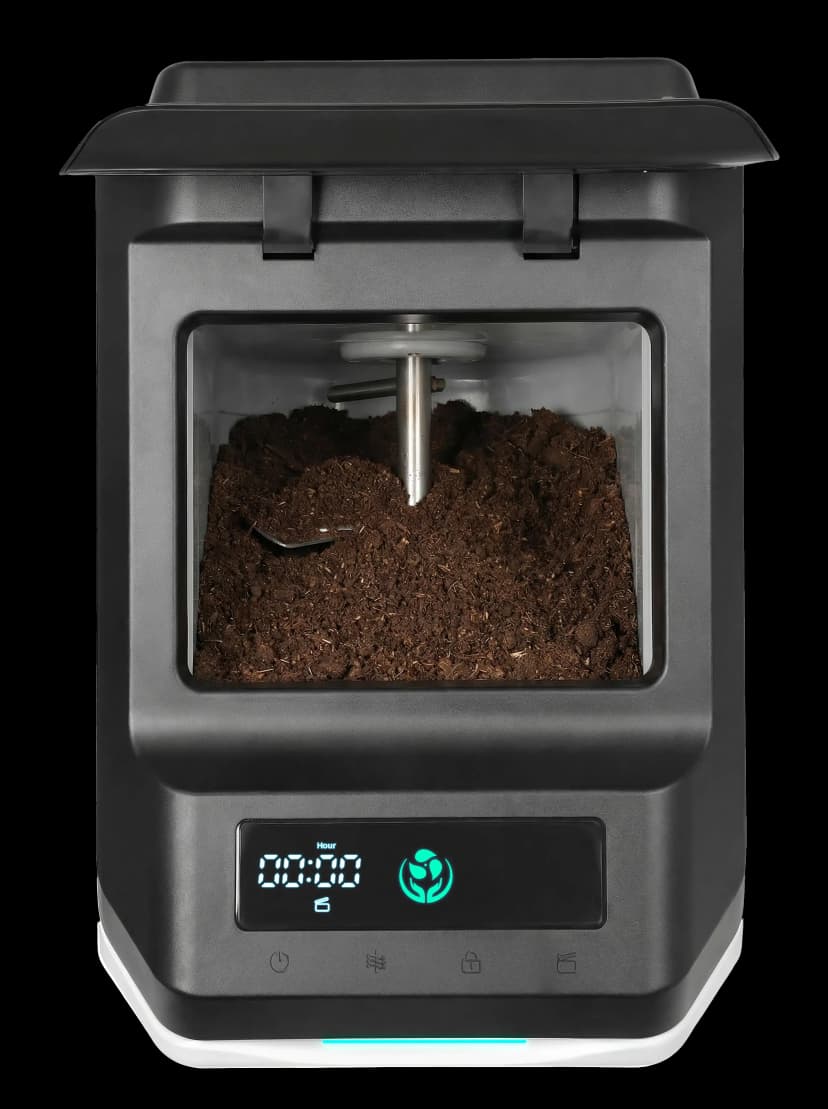
Screen, mix, and use responsibly.
Skip the Bokashi Burial Step
GEME Terra II supports real microbial composting indoors, so you can build a daily food-to-soil routine without managing fermented pre-compost buckets.
Terra II for everyday homes. GEME Pro for larger routines.
What Can You Put In?
Input flexibility is one reason people compare the GEME Composter and DIY Bokashi. Both are more flexible than many traditional indoor compost bins, especially for cooked food and mixed leftovers.
But input flexibility does not mean unlimited loading. Large bones, excess oil, free liquids, packaging, plastics, metals, and very salty or wet loads still need boundaries.
| Material | GEME Composter | DIY Bokashi |
|---|---|---|
| Fruit and vegetable scraps | Yes | Yes |
| Cooked leftovers | Yes, according to guidance | Yes, with enough bran and liquid control |
| Meat and dairy | Allowed according to product guidance | Often suitable for Bokashi fermentation |
| Small bones | Small soft bones may process slowly; large hard bones not recommended | Small bones may ferment but still need soil finishing |
| Oil and fatty foods | Use modest amounts; drain free oil | Use modest amounts; avoid excess liquid and grease |
| Soup, brine, free liquids | Drain first; do not use as a liquid disposal system | Avoid excess liquid; drain leachate regularly |
| Plastic, metal, packaging | No | No |
For a deeper input guide, read what can go into an electric composter and salt and oil boundaries for electric composters.
Ongoing Costs: Bokashi Bran vs Electric Composter Upkeep
Bokashi is usually cheaper to start. A bucket and bran cost far less than an electric composter. But Bokashi relies on recurring inoculant and a finishing system.
GEME has a higher upfront cost, but it avoids Bokashi bran, routine carbon-filter swaps, and the need to maintain a separate burial or soil-factory finishing step.
| Cost Factor | GEME Composter | DIY Bokashi |
|---|---|---|
| Upfront cost | Higher | Lower |
| Routine consumables | No filter replacements; no Bokashi bran routine | Bokashi bran or DIY inoculant |
| Electricity | Yes | No electricity required |
| Finishing setup | No Bokashi-style soil finishing system required | Soil, garden bed, compost pile, or soil factory required |
| Best cost fit | Convenience and lower manual finishing friction | Lowest upfront budget and hands-on composting |
Space and Setup
GEME Composter Space Needs
GEME is a floor-standing electric kitchen composter. It needs a dedicated floor spot, similar to a compact kitchen bin or appliance.
Setup is straightforward: place the machine, add the microbial starter according to product instructions, and begin feeding food scraps within the recommended boundaries.
DIY Bokashi Space Needs
Bokashi buckets are physically smaller and can fit under a sink, in a pantry, or on a balcony. But the bucket is only the first part of the system.
After fermentation, you still need a finishing location:
- Outdoor soil
- A garden bed
- A planter or soil factory
- A community garden
- A traditional compost pile or bin
For apartment dwellers, the second location is often the real limitation.
Odor and Mess
GEME Composter Odor Control
GEME uses aerobic microbial processing and a no-replacement-filter odor-control approach. Good use habits still matter: avoid excess liquid, drain free oils and soups, follow product guidance, and keep the composting mass aerobic.
Bokashi Odor Control
Well-managed Bokashi usually smells sour, fermented, or pickled rather than rotten. That said, it requires user discipline.
- Use enough bran.
- Press down scraps to remove air pockets.
- Keep the lid sealed.
- Drain leachate regularly.
- Avoid adding free liquids.
- Do not leave pre-compost exposed.
Bokashi is mechanically simple but more hands-on. GEME is more appliance-like and better suited for households that want fewer fermentation chores.
Who Should Choose Each Method?
| If You Want... | Best Choice |
|---|---|
| Lowest upfront cost | DIY Bokashi |
| Hands-on composting hobby | DIY Bokashi |
| A bucket system with no electricity | DIY Bokashi |
| Real microbial composting indoors | GEME Composter |
| No Bokashi-style burial or soil-factory step | GEME Composter |
| No filter replacements | GEME Composter |
| A continuous food-to-soil routine for a modern kitchen | GEME Composter |
| Apartment composting without a yard | GEME Composter, unless you have a reliable Bokashi finishing plan |
Final rule: choose Bokashi if you enjoy fermentation and have a finishing plan. Choose GEME if you want an indoor microbial composting system that avoids the Bokashi second step.
Apartment Living Changes the Equation
For people with gardens, both systems can work well. Bokashi can be inexpensive, educational, and useful when you can bury the pre-compost or add it to an active compost system.
For people living in apartments, condos, or homes without accessible soil, the hard part of Bokashi is not always fermentation. It is what happens after fermentation.
- Where do you bury the pre-compost?
- Where do you store fermented material in winter?
- How do you finish decomposition without a yard?
- Can you manage a soil factory without odor, pests, or space issues?
GEME is designed for households that want the composting process to fit inside daily home life rather than depend on outdoor finishing space.
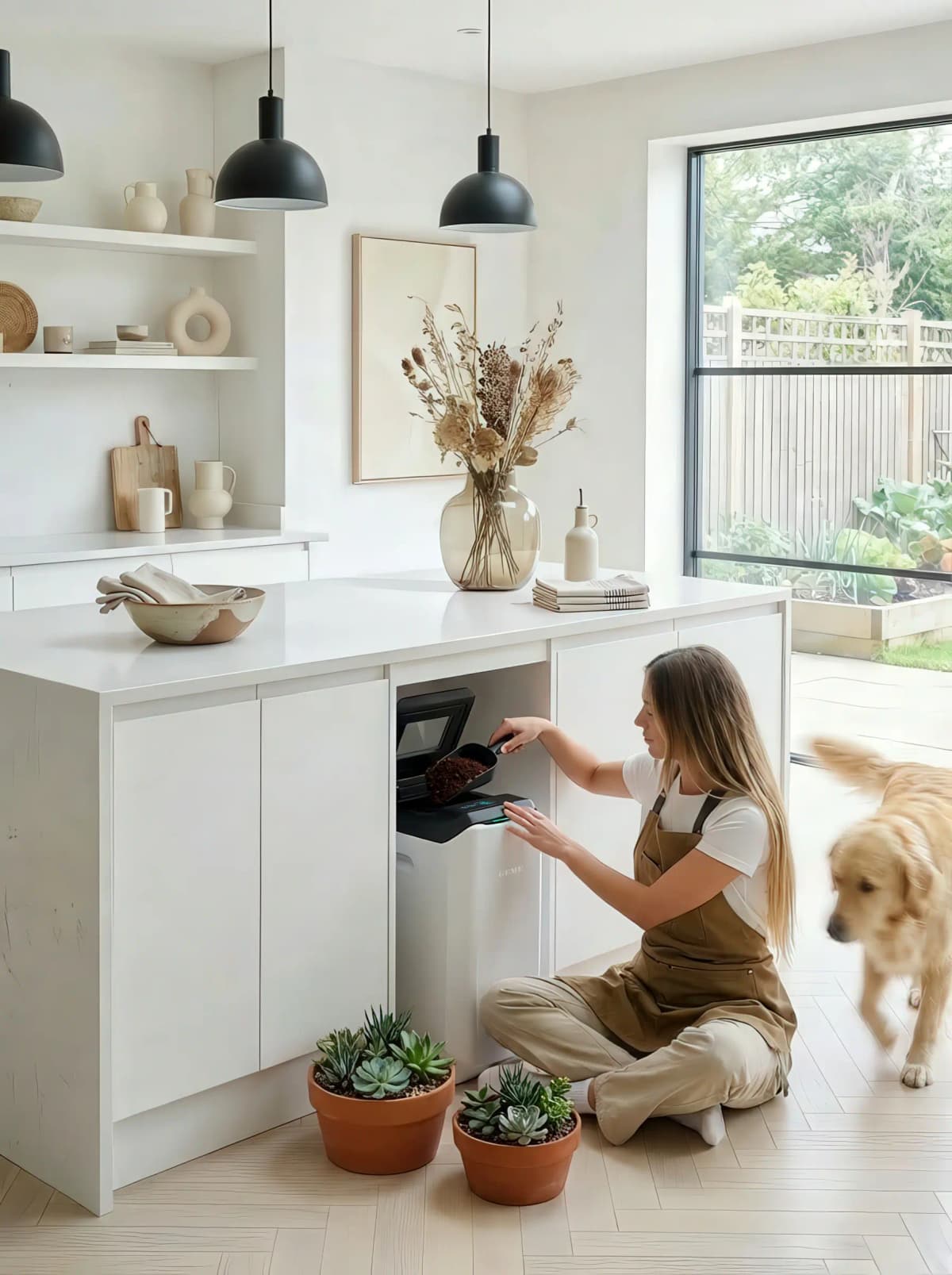
Indoor microbial composting without pre-compost buckets.
Build a Real Indoor Composting Routine
GEME Terra II supports real microbial composting for everyday food scraps, with continuous feeding, no filter replacements, and compost for soil blending.
Terra II for everyday homes. GEME Pro for larger routines.
Frequently Asked Questions
What is the difference between Bokashi and composting?
Bokashi is an anaerobic fermentation process that produces fermented pre-compost. Composting is the biological decomposition that produces compost after organic matter is stabilized by microbial activity.
Does Bokashi make real compost?
Not inside the bucket. Bokashi produces pre-compost that needs soil or another composting system to complete decomposition.
Can you use Bokashi in an apartment?
Yes, but you still need a plan for the fermented pre-compost. Apartment users usually need access to outdoor soil, a community garden, a compost pile, or a soil factory.
Is GEME easier than Bokashi?
For households that want a lower-maintenance indoor routine, GEME is usually easier because it avoids Bokashi bran layering, bucket draining, and the separate burial or finishing step.
Does Bokashi need outdoor soil?
Usually yes, unless you have another finishing system such as a compost pile, soil factory, or community composting option. The fermented material is not finished compost when it leaves the bucket.
Does GEME require replacement filters?
No. GEME Terra II has no replacement odor filters, and GEME Pro also has no filter replacements.
Can I use GEME compost directly on plants?
It is better to blend GEME compost with soil before plant use. Screen out large unfinished pieces, return them for continued composting, and avoid placing concentrated compost directly against roots or stems.
Which indoor composting method is best for beginners?
Choose Bokashi if you enjoy hands-on fermentation and have a clear finishing plan. Choose GEME if you want a more appliance-like indoor composting routine with fewer manual finishing steps.
Sources and Further Reading
- Washington State University Extension — Bokashi Composting
- Arizona Department of Environmental Quality — Bokashi Compost Guide
- University of Minnesota Extension — Composting in Home Gardens
- GEME — Terra II Product Page
- GEME — How Real Microbial Composting Works
- GEME — Verification and Boundaries
- GEME — Advanced Compost Application Guide


Hinterlasse einen Kommentar
Diese Website ist durch hCaptcha geschützt und es gelten die allgemeinen Geschäftsbedingungen und Datenschutzbestimmungen von hCaptcha.