
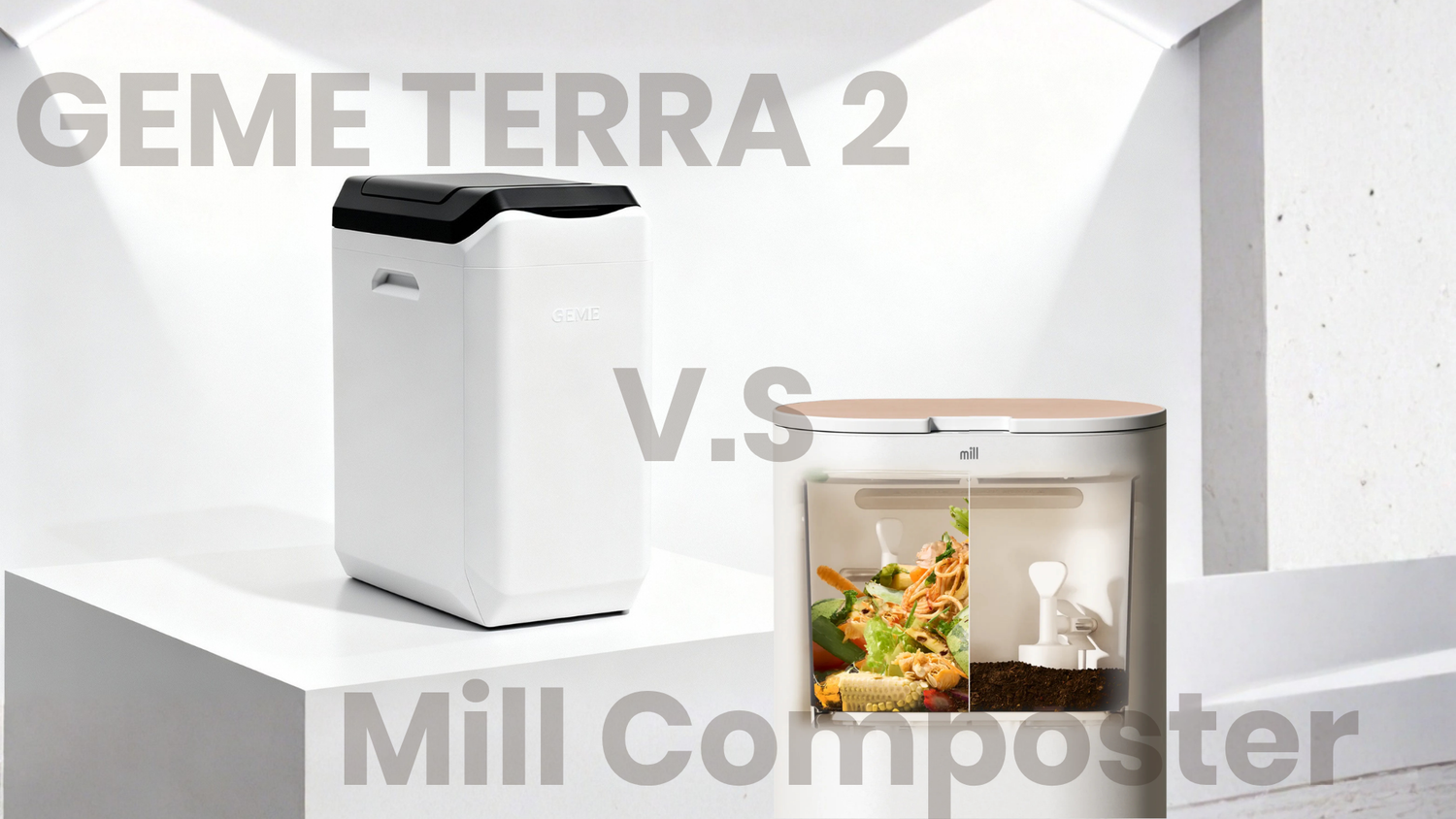
Food Recycler vs Real Kitchen Composter
Mill and GEME Terra II are both food-waste solutions, but they are not the same kind of machine.
Mill is an electric food recycler that dries and grinds scraps into Food Grounds. GEME Terra II is an electric kitchen composter that uses living microbes to create real compost.
Food Grounds reduce waste volume. Real compost returns organic matter to soil.

Food Grounds are not the same as real compost.
Quick Answer
Mill is best understood as an electric food recycler. It dries and grinds food scraps into Food Grounds, a dry, shelf-stable material that can be used in gardens, added to compost systems, given to chickens, or handled through Mill’s optional pickup model.
GEME Terra II is a real microbial electric kitchen composter. It uses living microbes, controlled aerobic decomposition, and continuous daily feeding to transform food scraps into biologically active, real compost.
If your goal is waste-volume reduction, Mill can make sense. If your goal is real compost for soil, gardens, houseplants, and a complete food-to-soil loop at home, GEME Terra II belongs in a different category.
For more context, read does Mill really compost?, real compost vs dehydrated food waste, and best kitchen composter 2026.
Key Takeaways
- Mill is a food recycler. It dries and grinds scraps into Food Grounds.
- Food Grounds are not finished compost. They can become useful through further handling, but they are not the same as biologically active compost.
- GEME Terra II is a real microbial kitchen composter. It uses living microbes and aerobic decomposition to produce real compost.
- GEME has no filter replacements. It avoids routine carbon filter swaps and has zero recurring filter costs.
- The real decision is output. Choose Mill for clean food-waste reduction; choose GEME Terra II for real compost at home.
Table of Contents
Food Recycler vs Real Composter
Before comparing Mill and GEME Terra II, it is important to define the category.
A food recycler reduces food-waste volume through drying, grinding, storage, or external processing. It can make scraps cleaner, lighter, and easier to store, but it does not automatically create finished compost.
A real composter uses living microorganisms to biologically transform food waste into real compost that can support soil and plants.
- Food Recycler: reduces food-waste volume.
- Electric Kitchen Composter: processes kitchen scraps indoors.
- Real Composter: creates biologically active compost.
- Real Compost: supports soil improvement and plant growth when used correctly.
This distinction matters because Mill and GEME Terra II solve food waste in very different ways.
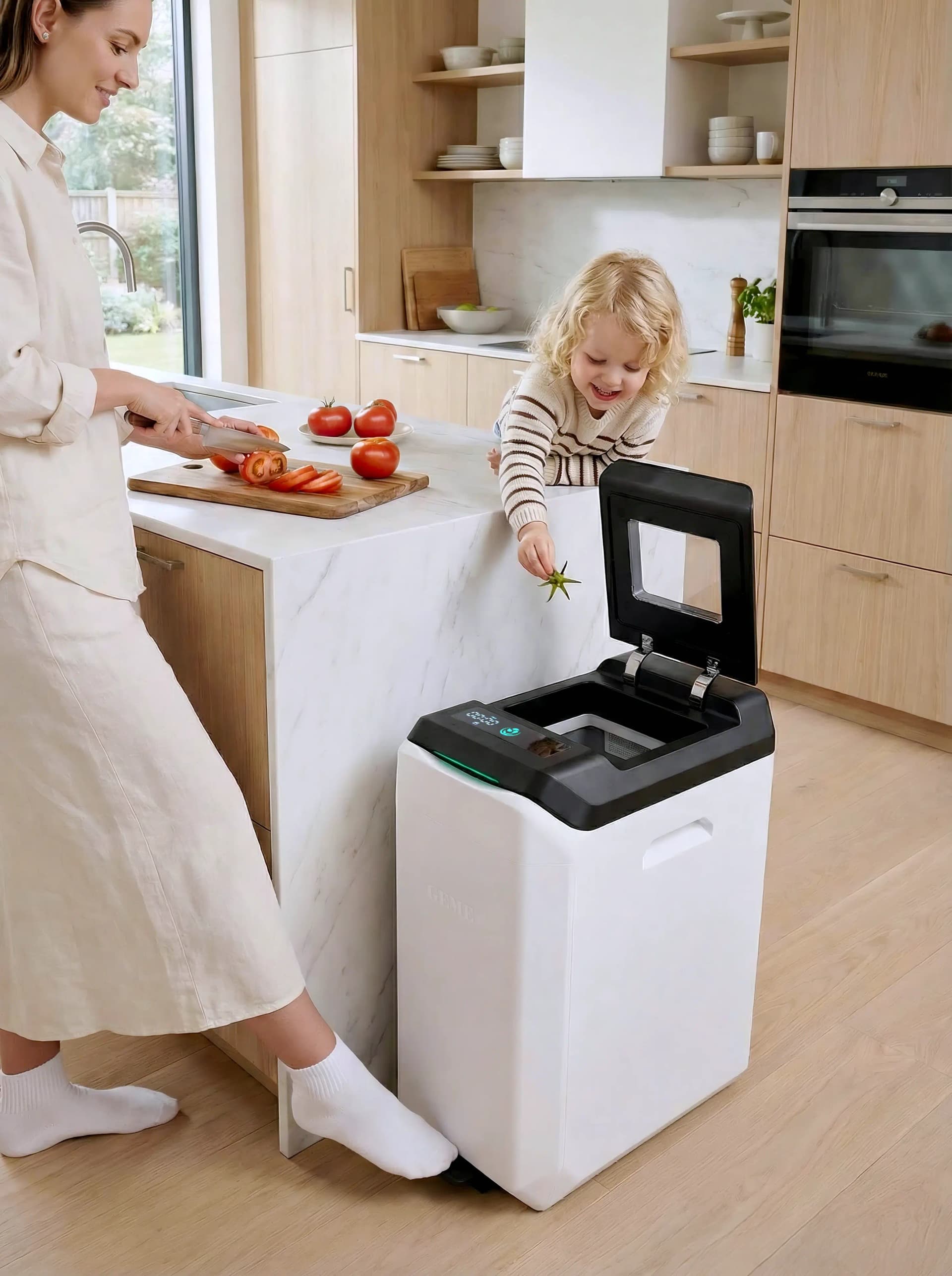
Not dehydrated Food Grounds.
The Electric Kitchen Composter Designed for Real Compost
GEME Terra II transforms food scraps into biologically active real compost with microbial science, permanent odor control, continuous feeding, and zero recurring filter costs.
Real compost. No filter replacements. Zero recurring filter costs.
Mill vs GEME Terra II Hardware Comparison
Design and Footprint
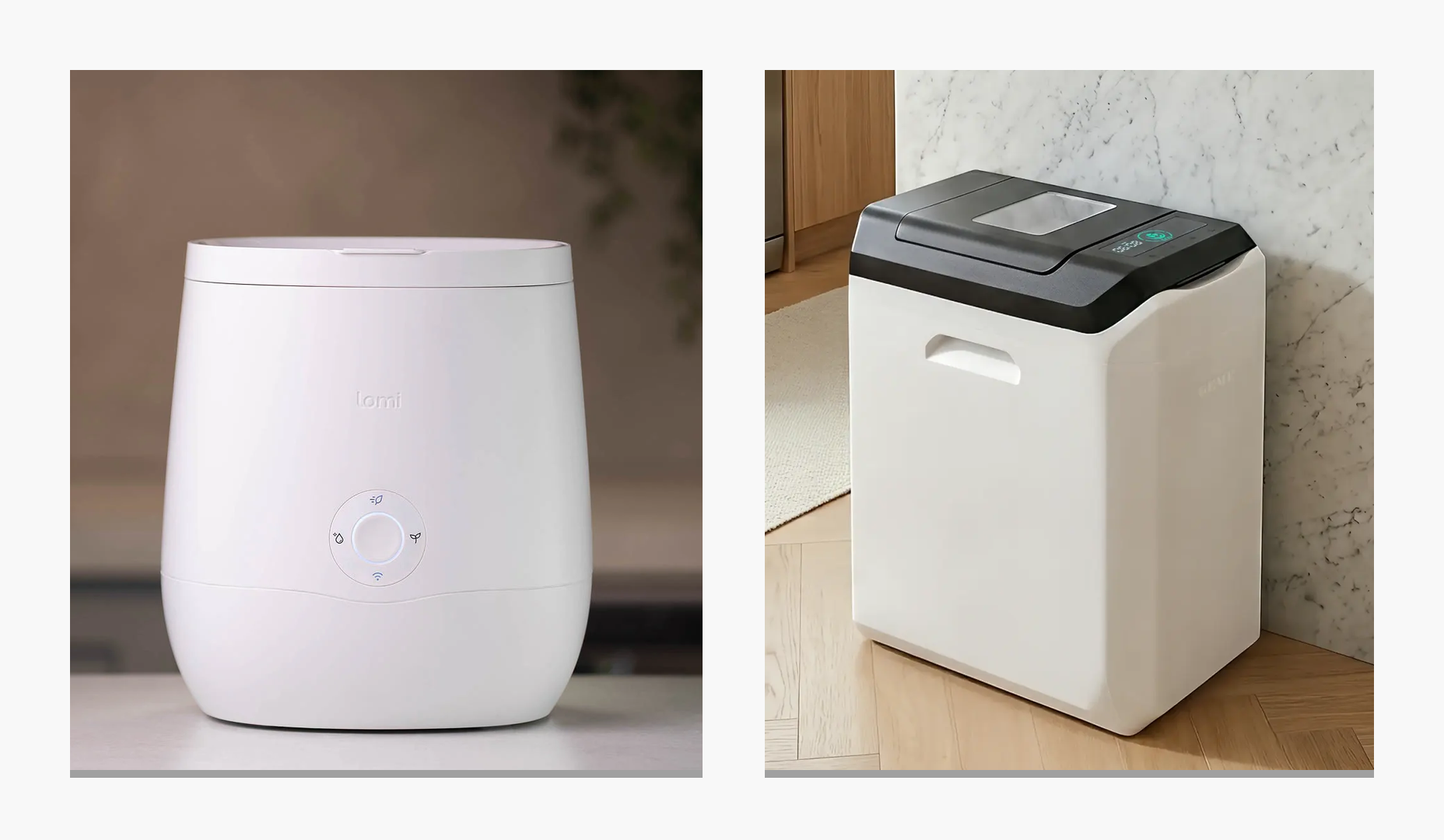
Mill looks like a sleek, modern kitchen trash can. It is a floor-standing appliance with a large bucket and a polished smart-bin experience.
GEME Terra II is also floor-standing, but it is designed more like a compact biological processing unit. Its chamber is built for continuous microbial composting rather than dry-and-grind food recycling.
- Mill: smart food-waste bin and food recycler.
- GEME Terra II: electric kitchen composter and real composter.
Daily Loading
Mill allows users to place food scraps into a bucket and run a dry-and-grind process on a schedule. It is convenient for storing scraps and reducing their volume.
GEME Terra II is designed for continuous feed. Users can add scraps throughout the day, and the microbial system keeps working in the background.
Cleaning and Maintenance
Mill has removable parts and a grinding system designed for food-waste reduction. Users still need to decide what to do with the Food Grounds after the machine processes them.
GEME Terra II uses slow mixing rather than grinder blades. When enough compost accumulates, users harvest it from the chamber and mix it with soil for plants, raised beds, or garden use.
Hardware Verdict
Mill wins if you want a polished smart-bin experience for food-waste reduction. GEME Terra II wins if you want a lower-friction electric kitchen composter designed to create real compost at home.
Core Technology: Drying and Grinding vs Real Composting
If you remember only one thing from this comparison, let it be this:
Mill creates Food Grounds. GEME Terra II creates real compost.
Mill itself describes the machine as a food recycler. Its Food Grounds are dried and ground food scraps, not finished compost.
GEME Terra II, by contrast, is designed around microbial decomposition. It creates the conditions that allow living microorganisms to transform food waste into biologically active, real compost.
How Mill Works
Mill uses three main steps:
- Heat removes moisture from food scraps.
- Grinding reduces the dried material into small particles.
- The machine stores the resulting Food Grounds.
The process is effective for reducing waste volume and making scraps easier to store. However, because the output is dried and ground food material, it is not the same as biologically active compost.
How GEME Terra II Works
GEME Terra II uses living microorganisms rather than dehydration as the core process.
At the center of the system is Kobold™, a microbial ecosystem designed to digest a wide variety of household food waste under controlled aerobic conditions.
The machine continuously manages:
- Temperature
- Moisture
- Airflow
- Mixing
- Microbial activity
This creates an environment similar to aerobic composting, scaled for home kitchens. Instead of simply shrinking food waste, GEME Terra II biologically transforms it.
| Feature | Mill Food Recycler | GEME Terra II |
|---|---|---|
| Technology | Drying and grinding | Microbial composting and intelligent environmental control |
| Produces real compost? | No | Yes |
| Continuous feed | Stores scraps and runs dry-and-grind processing | Yes, continuous daily feeding |
| Microbial activity | Not a living composting ecosystem | Living microbial ecosystem |
| Food-scrap handling | Broad food-scrap acceptance; output still needs a destination | Broad household food-waste routine within GEME guidance |
Learn more about Kobold™ microbial technology and how GEME composting works.

Microbes, oxygen, moisture, and time.
Choose Real Microbial Composting
GEME Terra II uses living microbes and intelligent environmental control to transform food scraps into biologically active real compost, not dehydrated food particles.
Real compost. No filter replacements. Zero recurring filter costs.
What Each Machine Produces
Mill Output: Food Grounds
Mill produces a dry material it calls Food Grounds.
These grounds are made from dehydrated and ground food scraps. They are cleaner and easier to store than fresh food waste, but they are not finished compost.
Mill describes several possible pathways for Food Grounds:
- Adding them to the garden soil carefully.
- Adding them to outdoor compost systems or curbside compost where available.
- Using them for backyard chickens where appropriate.
- Using Mill’s optional pickup model to send grounds to farm partners.
The important point is that Food Grounds still need a destination. They are a processed food-waste resource, not the same as biologically active real compost.
GEME Terra II Output: Real Compost
GEME Terra II creates biologically active real compost through microbial decomposition.
The output is a dark, earthy compost material containing active microorganisms and biologically processed organic matter that can continue integrating into soil ecosystems.
Users commonly use GEME compost for:
- Houseplants
- Raised beds
- Balcony planters
- Vegetable gardens
- Garden soil improvement
- Potting soil mixes
Like most compost products, GEME compost performs best when mixed with soil rather than placed directly against roots in large quantities.
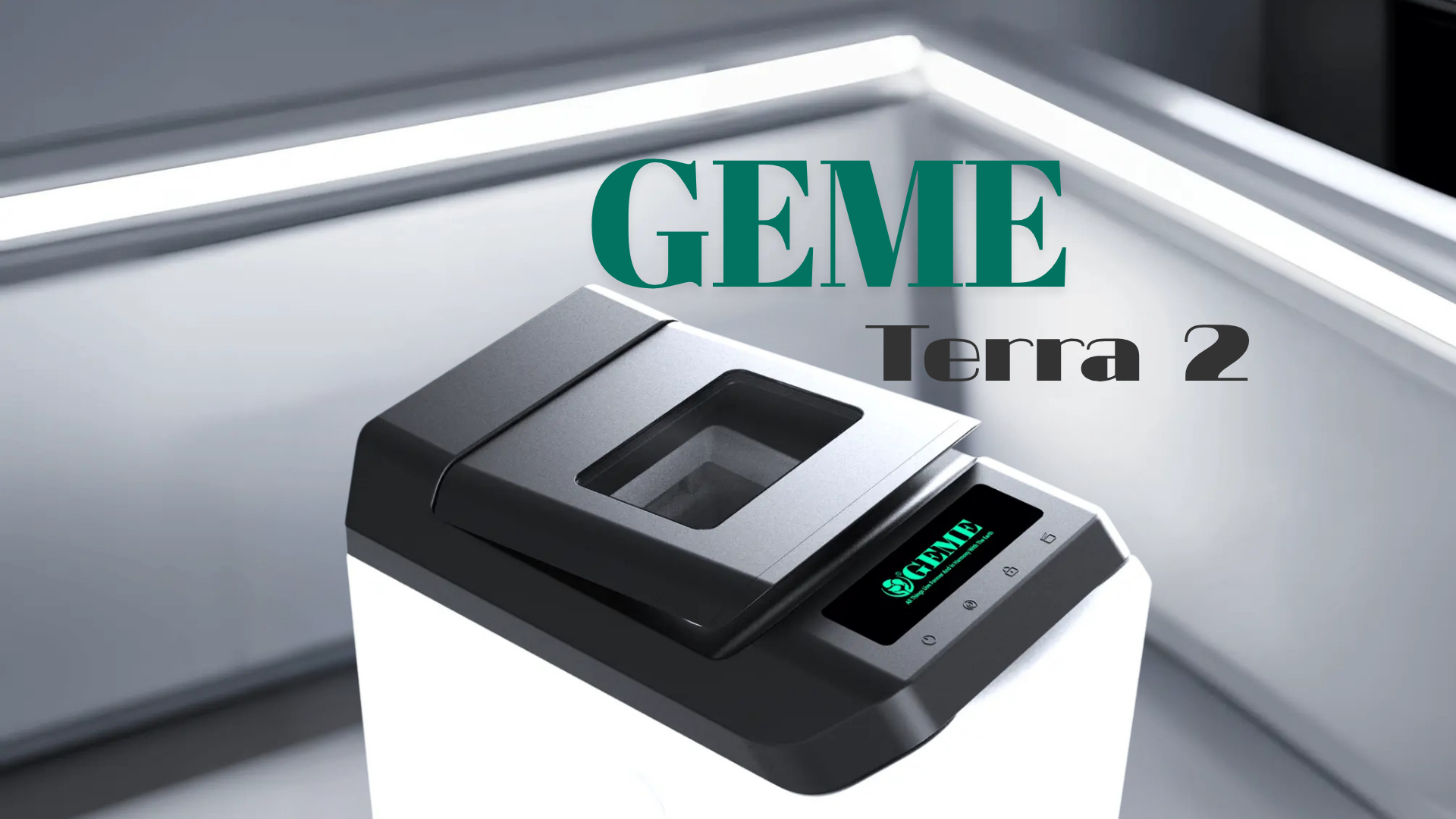
The Practical Difference
- Mill: food waste → drying → grinding → Food Grounds.
- GEME Terra II: food waste → microbial composting → real compost.
Both machines reduce food waste. Only one completes the biological transformation that turns food scraps into a useful soil amendment inside the home.
If your goal is simply to make food waste smaller, Mill does that well. If your goal is to create compost that can nourish plants and improve soil health, GEME Terra II belongs in a completely different category.
Mill vs GEME Terra II Cost Breakdown
The upfront price does not tell the full story. Mill and GEME Terra II have very different long-term ownership models.
Mill can be purchased as an appliance, and users may also choose optional services depending on how they want to handle Food Grounds. GEME Terra II is designed as a buy-once, use-daily electric kitchen composter with no recurring filter replacement model.
Ongoing Cost
The clearest difference is what happens after purchase. Mill users still need to decide where Food Grounds go. GEME users harvest compost and mix it into soil.
| Cost Factor | Mill Food Recycler | GEME Terra II |
|---|---|---|
| Upfront price | Check the current Mill pricing and model | Check current GEME pricing and launch offer |
| Subscription or pickup model | Optional pickup / external handling may apply depending on the use case | No mail-back or pickup service required |
| Filter replacement | Check current Mill support and filter guidance | No filter replacements |
| Recurring filter costs | Model-dependent | Zero recurring filter costs |
| Output destination | Food Grounds still need a destination | Compost can be mixed into soil at home |
| Long-term ownership value | Strong for food-waste reduction | Strong for real compost users |
The takeaway is simple: Mill may work well as a premium food recycler, but GEME Terra II is designed for users who want real compost without mail-back services, filter replacement routines, or a Food Grounds disposal question.
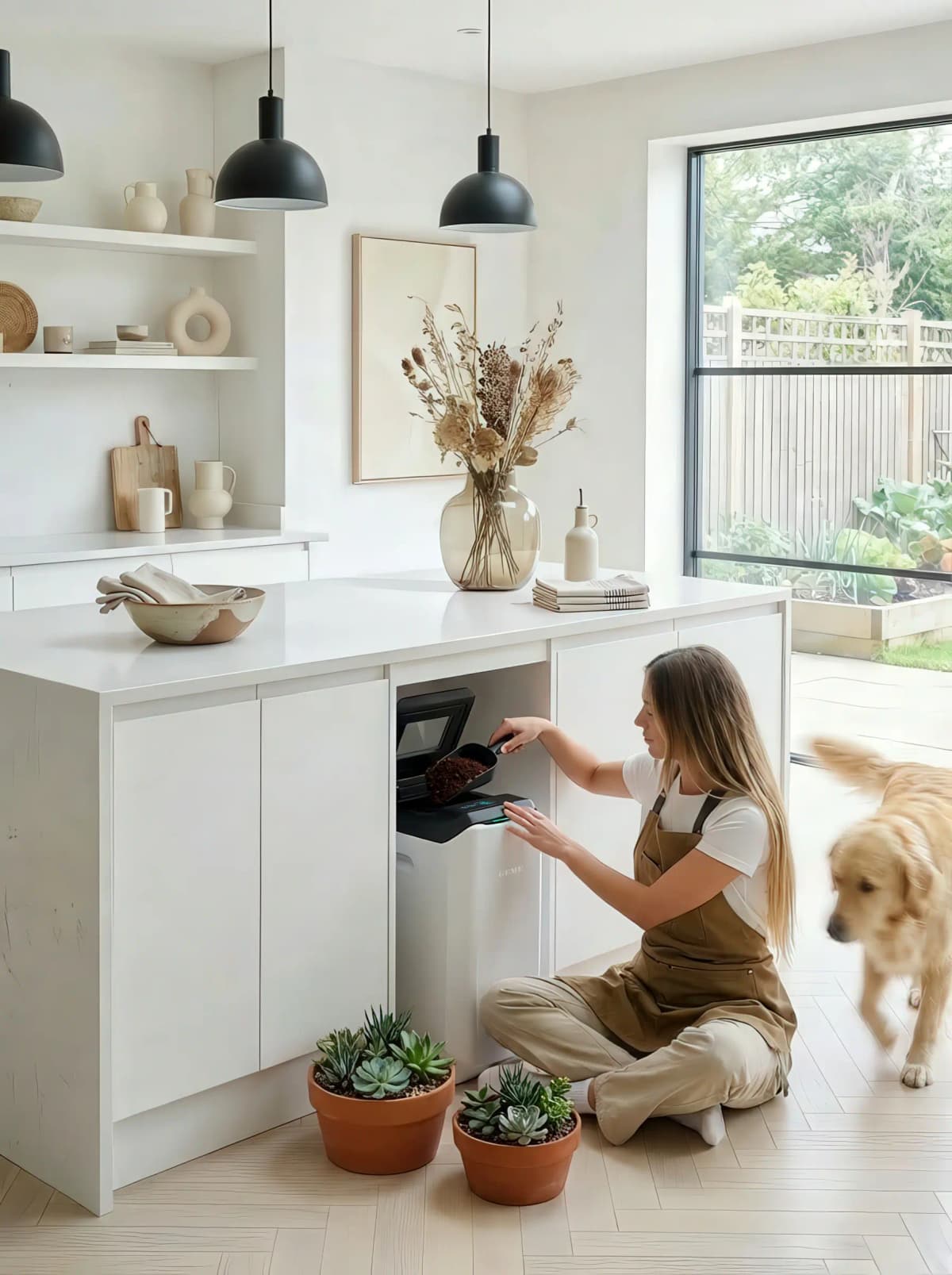
Real compost at home.
No Mail-Back Required. No Filter Trap.
GEME Terra II turns kitchen scraps into real compost at home without mail-back services, subscription-style pickup routines, or recurring carbon filter purchases.
Real compost. No filter replacements. Zero recurring filter costs.
Performance and User Experience
Mill: Strong Smart-Bin Experience
Mill’s biggest strength is convenience as a food-waste storage and reduction system. It has a large bucket, a polished design, and a workflow that feels familiar to households used to a kitchen trash can.
For users who want to reduce food-waste volume and do not need finished compost at home, Mill can be a thoughtful appliance.
However, the experience depends on the user’s willingness to manage Food Grounds afterwards. They may be used carefully, sent through optional pickup, added to compost, or further processed.
GEME Terra II: Real Composting at Home
GEME Terra II is designed for people who want the food-to-soil loop to happen at home.
The daily workflow is simple:
- Add kitchen scraps throughout the day.
- Let the microbial system work continuously.
- Harvest compost when enough material accumulates.
- Mix the compost into soil for plants, raised beds, or garden use.
There is no mail-back requirement, no need to find an external place for Food Grounds, and no recurring filter replacement routine.
Input Flexibility
Mill can accept many common food scraps. GEME Terra II is also designed to process mixed household food waste biologically, including food types that are difficult for worm bins and traditional indoor compost systems.
- Cooked leftovers
- Meat scraps
- Dairy
- Fish
- Rice and pasta
- Vegetable and fruit scraps
- Small bones within GEME guidance
User Experience Verdict
Choose Mill if you want a premium smart food-waste bin and are comfortable with Food Grounds requiring further handling. Choose GEME Terra II if you want a self-contained electric kitchen composter that creates real compost at home with no recurring filter trap.
Environmental Impact: Where Does the Food Actually Go?
Both Mill and GEME Terra II aim to reduce the environmental impact of food waste, but they do so in fundamentally different ways.
Mill’s Approach
Mill reduces the weight and volume of food waste by turning it into dry Food Grounds. This can lower trash volume, make scraps easier to store, and reduce odors in the kitchen.
However, the Food Grounds still need a destination:
- Optional pickup or farm pathways
- Outdoor compost systems
- Further decomposition in soil
- Curbside organics collection where available
The environmental outcome therefore depends on what happens after dehydration.
GEME Terra II’s Approach
GEME Terra II closes the food-to-soil loop at home.
The machine transforms kitchen scraps into biologically active, real compost that can return organic matter to soil.
Food scraps → microbial composting → real compost → soil → plants
This approach keeps nutrients local and allows households to participate directly in the circular economy without relying on external waste streams.
For families, it can also become an educational experience. Children can see that food waste is not simply garbage — it can become new life in the garden.
Final Verdict: Which One Should You Buy?
Mill and GEME Terra II are both impressive products, but they solve different problems.
| If You Want... | Best Choice |
|---|---|
| A premium food recycling system | Mill |
| A smart kitchen waste-bin experience | Mill |
| Real compost for plants and gardens | GEME Terra II |
| A real electric kitchen composter | GEME Terra II |
| No filter replacements and zero recurring filter costs | GEME Terra II |
| A complete food-to-soil solution at home | GEME Terra II |
If your goal is simply to reduce food-waste volume, Mill is an elegant and thoughtfully designed food recycler.
If your goal is to create real compost and return nutrients to the soil, GEME Terra II belongs in a different category.
GEME Terra II is not just a food recycler. It is an electric kitchen composter and one of the few real composters designed specifically for everyday households.
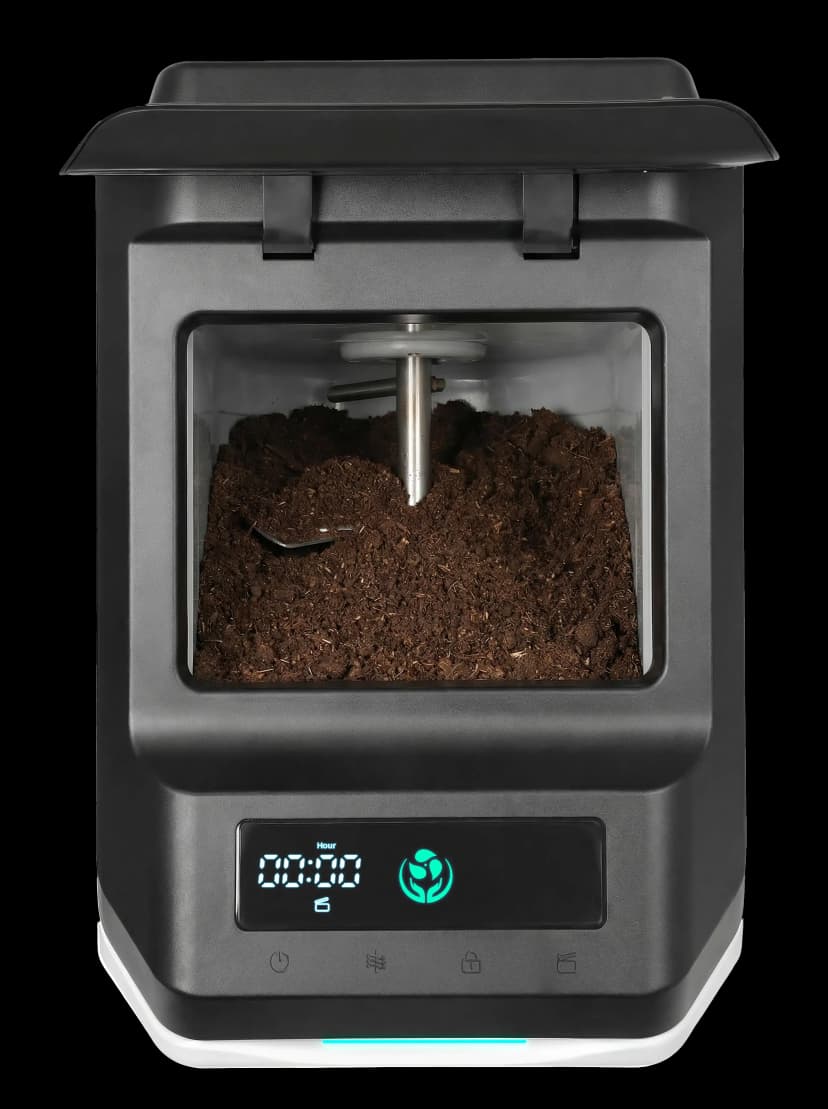
Built for gardens, houseplants, and healthier soil.
Turn Food Scraps Into Real Compost
Discover the electric kitchen composter designed to transform everyday food scraps into biologically active, real compost for gardens, houseplants, and healthier soil.
Real compost. Real microbial composting. No filter replacements.
Frequently Asked Questions
Does Mill make real compost?
No. Mill produces dehydrated Food Grounds, not finished biologically active compost. Food Grounds may become useful through further handling, but they are not the same as real compost from microbial decomposition.
What is the difference between Mill and GEME Terra II?
Mill is a food recycler that dries and grinds food waste. GEME Terra II is an electric kitchen composter that uses living microbes to produce real compost.
Why are Food Grounds not compost?
Food Grounds have not completed microbial decomposition and are not biologically stabilized compost. Compost is created when microbes digest organic matter over time.
Which composter has no subscription fees?
GEME Terra II does not require mail-back services, pickup programs, or recurring carbon filter purchases to create real compost at home.
Which composter has no filter replacements?
GEME Terra II has no filter replacements and zero recurring filter costs.
Can GEME Terra II compost meat and dairy?
Yes. GEME Terra II is designed to process meat, dairy, fish, cooked food, oily leftovers, and other mixed household scraps within GEME feeding guidance.
Can Mill handle meat and dairy?
Mill accepts many common food scraps, including meat and dairy. The key difference is not input alone — it is output. Mill creates Food Grounds, while GEME Terra II creates real compost.
What is the best electric kitchen composter in 2026?
For households seeking real compost rather than dehydrated food waste, GEME Terra II is one of the strongest electric kitchen composter options available in 2026.
Sources
- Mill — Food Recycler
- Mill Support — What Are Food Grounds? Are They Compost?
- Mill Support — How Is Mill Different From Home Composting Devices?
- Illinois Food Scrap & Composting Coalition — Food Scrap Dehydrators Are Not Composters
- GEME — How Composting Technology Works
- GEME — Kobold™ Microbial Technology
- GEME Terra II Product Page

Hinterlasse einen Kommentar
Diese Website ist durch hCaptcha geschützt und es gelten die allgemeinen Geschäftsbedingungen und Datenschutzbestimmungen von hCaptcha.