
Amazon Electric Composter Buyer's Guide
Amazon listings can make every electric composter look similar. In reality, these machines work in very different ways.
Some mainly dry and grind food scraps. Some use service-style food recycling. Some use microbes to support real composting. This guide compares GEME Pro, Lomi, Reencle, Mill, and FoodCycler by compost output, capacity, filter costs, daily use, and long-term ownership fit.
The best choice is not only the one with the best listing. It is the one that fits your kitchen, your food waste, and your soil-use goals.
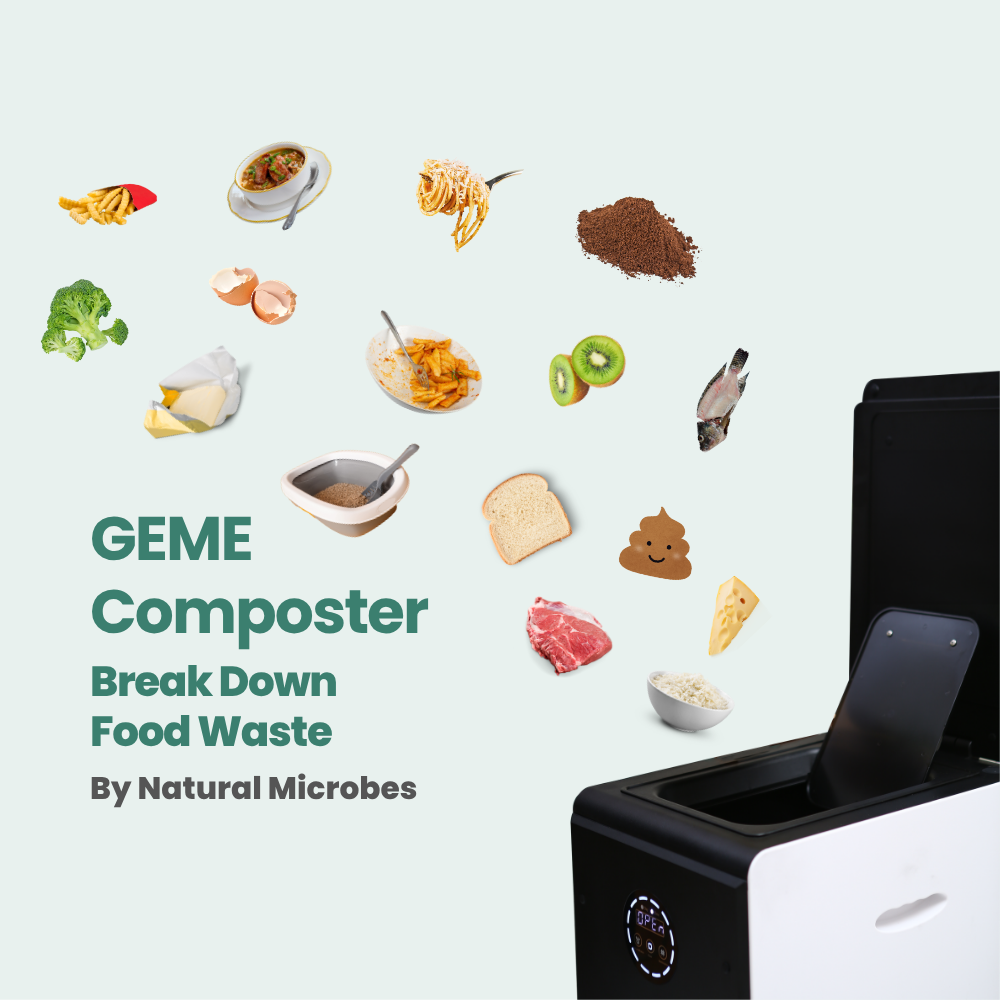
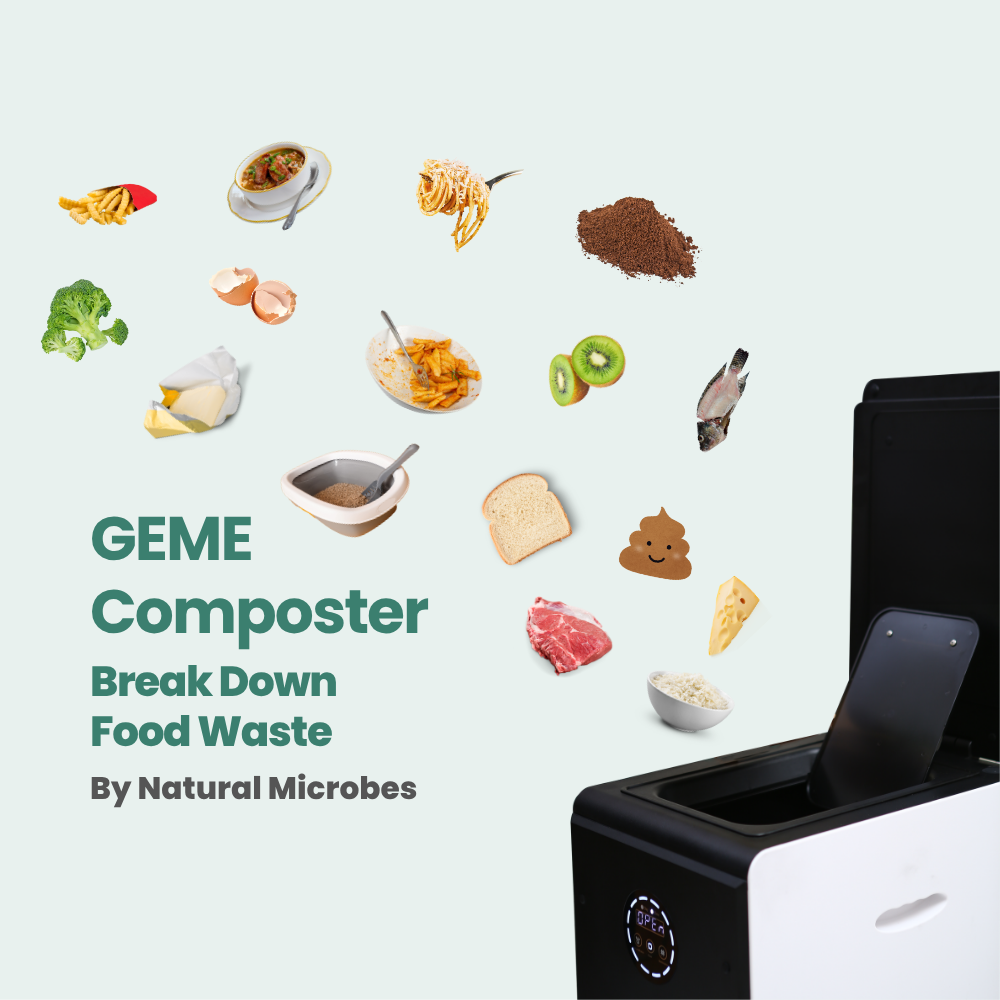
Real compost, filters, capacity, and upkeep.
Quick Answer
For households that want a larger-capacity electric composter with real microbial composting and no routine filter replacements, GEME Pro is the strongest fit in this comparison.
Lomi and FoodCycler are better understood as food-waste reduction machines that dry and grind scraps. Mill is a premium food recycler that creates Food Grounds rather than finished compost. Reencle is a credible microbial composter in a more compact format, but replacement filter costs should be considered.
For related context, read real compost vs dehydrated food waste, best composter to avoid recurring fees, and best kitchen composter verdict 2026.
Key Takeaways
- Do not compare electric composters by Amazon price alone. Check output type, filter replacement, capacity, and daily workflow.
- GEME Pro is the real-compost pick for larger daily routines. It supports real microbial composting and real compost for soil blending.
- Lomi and FoodCycler are mainly food-waste reducers. They can reduce volume and mess, but their output usually needs further decomposition before soil use.
- Mill creates Food Grounds, not finished compost. It may be useful for food-waste storage and service pathways.
- Reencle is closer to real composting than to dehydrator-style systems. It uses microbes, but replacement filters and compost-base care remain part of ownership.
- Recurring filter costs matter. GEME Pro has no filter replacements and zero recurring filter costs.
- Compost still needs responsible use. Screen large unfinished pieces and blend compost with soil before plant use.
Table of Contents
How to Judge an Electric Composter on Amazon
Amazon makes comparison easy at the listing level, but it can hide the most important category differences.
Before buying, compare five things:
- Composting method: microbial composting or heat-and-grind reduction?
- Output type: real compost for soil blending, compost-like material, Food Grounds, or dry particles?
- Capacity: does it fit a real daily cooking routine?
- Filter model: no replacement filters or recurring carbon-filter replacement?
- Workflow: continuous feeding or batch cycles?
Buyer rule: if your goal is real compost, do not buy based only on how fast a machine makes food waste smaller.
1. GEME Pro: Best for Real Compost and Larger Daily Routines
GEME Pro is the strongest fit in this list for households that want real microbial composting instead of dried food-waste particles.
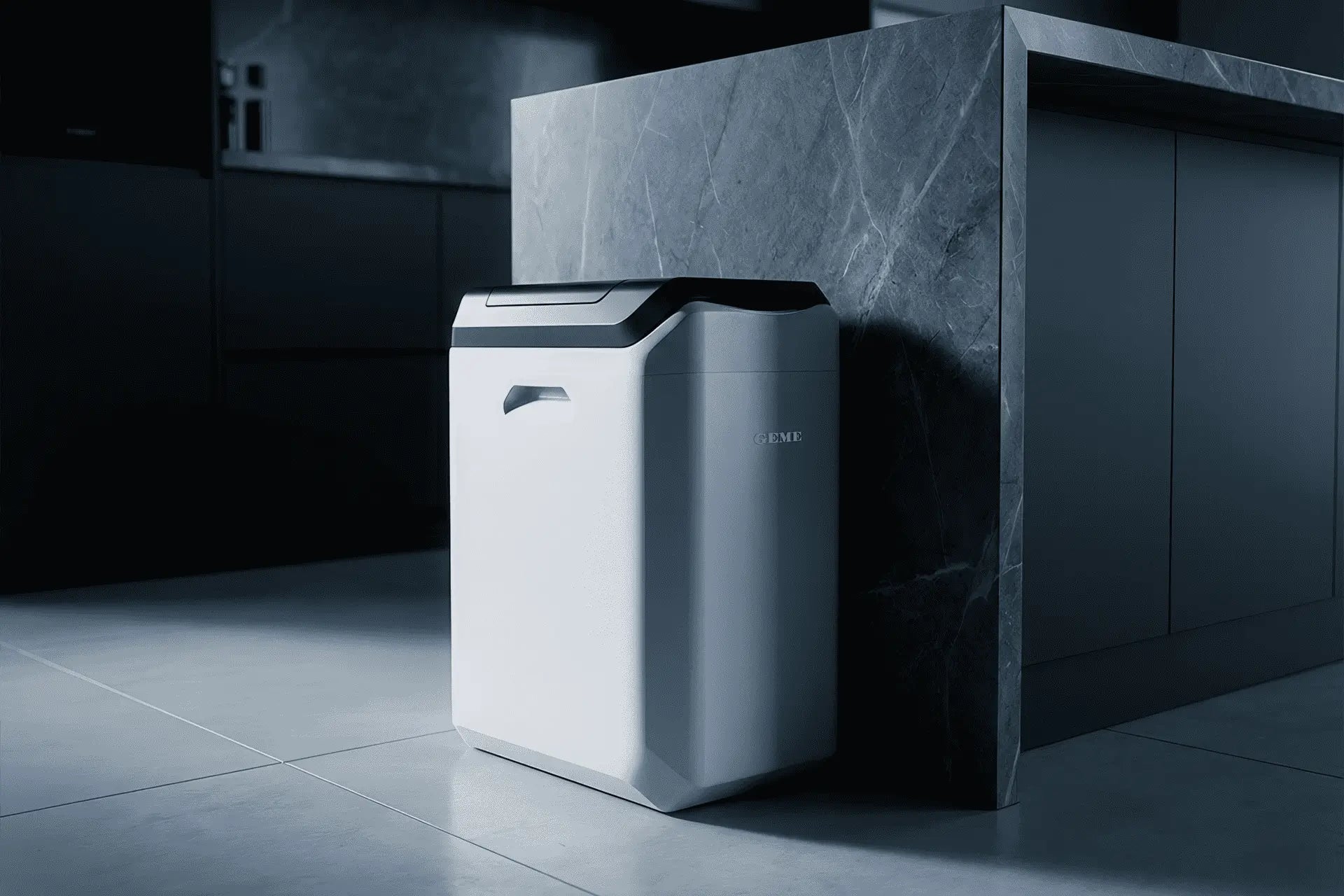
It is a larger-capacity, floor-standing electric kitchen composter built around aerobic microbial decomposition. It uses the Kobold™ microbial system to help food scraps break down inside an active composting environment.
GEME Pro is not designed around routine carbon-filter replacement. That matters because filter replacement can become one of the most overlooked ownership costs in this category.
| Best for | Larger households, daily cooks, gardeners, and users who want real compost for soil blending |
| Core process | Real aerobic microbial composting |
| Chamber class | 19L class |
| Output | Real compost for soil blending |
| Filter model | No filter replacements |
| Best ownership advantage | Zero recurring filter costs and larger real-composting capacity |
What to Consider
GEME Pro is larger than many countertop units. That is a strength for capacity, but buyers should plan a floor-standing spot similar to where they would place a kitchen bin or home appliance.
For compost use, blend GEME compost with soil before plant use, screen out large unfinished pieces, and avoid placing concentrated compost directly against roots or stems.
Larger-capacity real microbial composting.
Choose Real Compost, Not Just Dry Food Waste
GEME Pro supports real microbial composting, continuous daily feeding, real compost for soil blending, no filter replacements, and zero recurring filter costs.
Real composter. Real microbial composting. No filter replacements.
2. Lomi: Best for Countertop Food-Waste Reduction
Lomi is one of the best-known countertop food recyclers. It is a good fit for users who mainly want to reduce food-waste volume, odor, and mess indoors.
The key distinction is output. Lomi-style systems are better understood as food-waste reducers than as real microbial composters. Their output may look soil-like, but it usually benefits from further decomposition before serious soil use.
Buyers should also check current filter refill requirements. Lomi’s official filter guidance includes periodic filter replacement based on time or cycles.
| Best for | Small kitchens and users focused on food-waste reduction |
| Core process | Drying and grinding |
| Output | Reduced dry organic material |
| Filter model | Filter refills may apply |
3. Reencle: Best Compact Microbial Option
Reencle is a closer comparison to GEME than to dehydrator-style machines because it uses microbial processing. It supports continuous feeding and is designed for indoor food-waste composting.
Its main advantages are compactness and microbial processing. The tradeoff is that filter replacement and compost-base maintenance remain part of ownership.
Reencle output may also benefit from curing, screening, or cautious blending depending on feedstock, moisture, maturity, and plant sensitivity.
| Best for | Users who want microbial processing in a compact appliance format |
| Core process | Microbial food-waste processing |
| Output | Microbially processed compost material; curing or screening may help |
| Filter model | Replaceable carbon filter path; mesh filter maintenance may apply |
4. Mill Food Recycler: Best for Premium Food-Waste Storage and Service Pathways
Mill is a premium food recycler, not a real compost machine. It dries and grinds food scraps into Food Grounds.
Mill can be very useful for reducing wet food-waste mess, odor, and storage friction. But Food Grounds are not finished compost. They may need another pathway, such as further composting, careful garden handling, municipal processing, or a service model where available.
Mill’s ownership model may also include carbon filter replacement and optional service-related choices, so buyers should check current terms before purchase.
| Best for | Users who want cleaner storage, Food Grounds, and service-style food recycling |
| Core process | Drying and grinding |
| Output | Food Grounds, not finished compost |
| Filter model | Carbon filter replacement may apply |
5. FoodCycler Eco 5: Best Budget-Oriented Food Recycler
FoodCycler is one of the long-running names in the electric food recycling category. Like other dehydrator-style systems, it uses heat and grinding to reduce food scraps into dry material.
It can be useful for households that want a simple way to reduce food waste bulk, but it should not be treated as a machine that creates finished compost inside the appliance.
FoodCycler Eco 5 also uses carbon filtration, so buyers should factor carbon refills into long-term ownership.
| Best for | Budget-oriented buyers who mainly want food-waste volume reduction |
| Core process | Heat and grinding |
| Output | Dry food particles |
| Filter model | Carbon refill may apply |
Real microbial composting at home.
Built for Real Compost, Not Just Volume Reduction
GEME Pro supports a real microbial composting routine for busy kitchens, with no filter replacements and real compost for soil blending.
GEME Pro for larger routines. Terra II for newer, everyday home composting.
Top 5 Electric Composters on Amazon: Comparison Table
Availability, pricing, bundles, and listings can change on Amazon. Use this table as a category comparison, then check the current product page before purchase.
| Feature | GEME Pro | Lomi | Reencle | Mill | FoodCycler Eco 5 |
|---|---|---|---|---|---|
| Core method | Real microbial composting | Drying and grinding | Microbial processing | Drying and grinding | Heat and grinding |
| Output | Real compost for soil blending | Reduced dry organic material | Microbially processed compost material | Food Grounds | Dry food particles |
| Finished compost immediately? | Use as compost for soil blending; screen unfinished pieces | No; further decomposition may be needed | Curing or screening may help | No | No |
| Continuous feeding | Yes, according to guidance | Cycle-based | Yes | Collection and processing workflow | Cycle-based |
| Routine filter replacement | No filter replacements | Filter refills may apply | Carbon filter replacement may apply | Carbon filter replacement may apply | Carbon refill may apply |
| Best fit | Real compost and larger daily cooking routines | Countertop food-waste reduction | Compact microbial processing | Food-waste storage and service pathways | Budget-oriented food-waste reduction |
Long-Term Ownership Cost: Filters, Refills, and Service Models
The checkout price is only part of the ownership story. Filters, refills, subscriptions, pickup services, and output-handling requirements can change the real cost over several years.
| Product | Recurring Filter Exposure | Subscription / Service Exposure | Ownership Note |
|---|---|---|---|
| GEME Pro | No filter replacements | No mandatory subscription to operate | Cleaner recurring-filter profile |
| Lomi | Filter refills may apply | Membership or refill options may apply | Check current refill terms before purchase |
| Reencle | Carbon filter replacement may apply | No mandatory subscription, but accessories may recur | Microbial, but not filter-free ownership |
| Mill | Carbon filter replacement may apply | Service or pickup options may apply by region and plan | Useful food recycling, but not finished compost |
| FoodCycler Eco 5 | Carbon refill may apply | No mandatory service path | Budget-friendly reduction, but recurring carbon remains |
For a deeper breakdown, read the electric composter filter costs comparison.
Final Verdict: Which Electric Composter Should You Buy?
The right electric composter depends on what you are actually trying to solve.
| If You Want... | Best Fit |
|---|---|
| Real microbial composting and larger daily capacity | GEME Pro |
| A newer GEME model for everyday home composting | GEME Terra II |
| Countertop food-waste reduction | Lomi |
| Compact microbial processing | Reencle |
| Premium food recycling and Food Grounds | Mill |
| Budget-oriented dry food-waste reduction | FoodCycler Eco 5 |
Final rule: choose a food recycler if your main goal is smaller, drier food waste. Choose GEME Pro if your main goal is real microbial composting, larger daily use, no filter replacements, and compost for soil blending.
Larger capacity, lower recurring filter upkeep.
Turn Daily Food Scraps Into Real Compost
GEME Pro supports real microbial composting for larger daily routines — with continuous feeding, no filter replacements, and real compost for soil blending.
GEME Pro for larger routines. Terra II for newer, everyday home composting.
Frequently Asked Questions
What is the best electric composter on Amazon?
It depends on your goal. For real microbial composting, larger daily use, no filter replacements, and compost for soil blending, GEME Pro is the strongest fit in this comparison. For simple food-waste volume reduction, Lomi or FoodCycler may be enough.
Which electric composter makes real compost?
GEME Pro is designed for real microbial composting and real compost for soil blending. Reencle also uses microbial processing. Lomi, Mill, and FoodCycler are better understood as food-waste reducers or food recyclers rather than full composting systems.
Is Lomi real composting?
Lomi mainly dries and grinds food scraps. Its output can be useful, but it should not be treated the same as mature compost without further decomposition or soil-use guidance.
Does Mill produce compost?
No. Mill produces Food Grounds. Mill’s own support materials distinguish Food Grounds from compost, so users who want compost need another composting or processing pathway.
Does Reencle require replacement filters?
Reencle has a replaceable carbon filter path, and replacement filter products are listed by Reencle. Buyers should check current filter terms before purchase.
Does GEME Pro require replacement filters?
No. GEME Pro has no filter replacements and zero recurring filter costs.
Can I use GEME compost directly on plants?
It is better to blend GEME compost with soil before plant use. Screen large unfinished pieces, return them for continued composting, and avoid placing concentrated compost directly against roots or stems.
Should I buy from Amazon or the official store?
Amazon can be useful for checking reviews, delivery options, and availability. The official GEME store is better for current product details, direct support, and Shopify product pages. Always check the latest price, shipping, warranty, and return terms before purchase.
Sources and Further Reading
- Amazon — GEME Pro Electric Composter Listing
- GEME — GEME Pro Product Page
- GEME — How Real Microbial Composting Works
- GEME — Verification and Boundaries
- Lomi — Filter Refills
- Mill Support — What Are Food Grounds?
- Mill Support — Carbon Filter Replacement
- Reencle — Electric Composter Product Page
- Reencle — Carbon Filter for Reencle Prime
- Vitamix FoodCycler — Eco 5 Carbon Refill
- U.S. EPA — Composting at Home
- Illinois Food Scrap & Composting Coalition — Food Scrap Dehydrators Are Not Composters

Hinterlasse einen Kommentar
Diese Website ist durch hCaptcha geschützt und es gelten die allgemeinen Geschäftsbedingungen und Datenschutzbestimmungen von hCaptcha.