
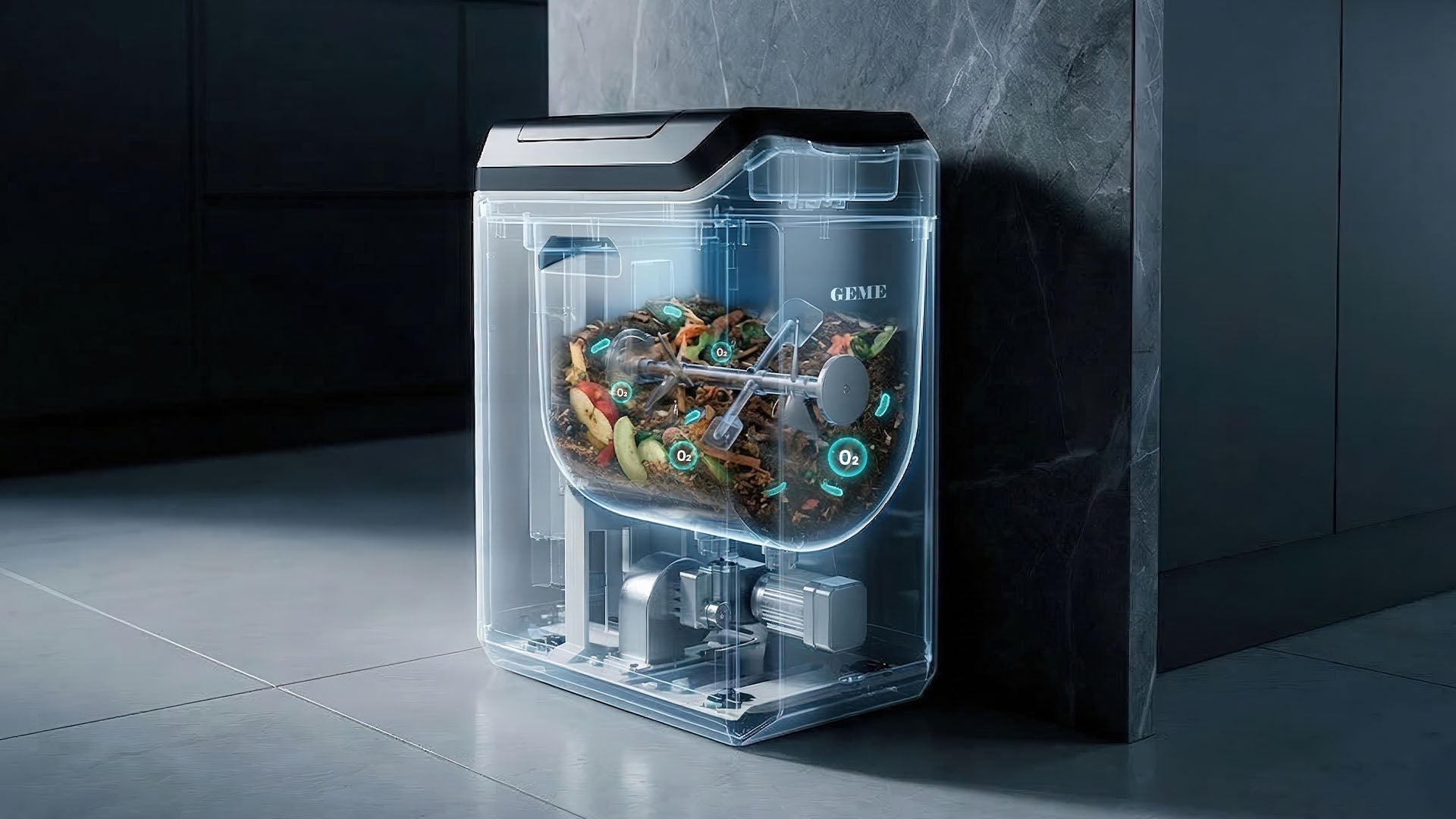
Why the GEME Chassis Is Intentionally Heavier Than a Typical Countertop Appliance
GEME Terra II and GEME Pro are not designed like lightweight countertop dehydrator gadgets. They are continuous aerobic bio-processing systems that need stability, chamber composure, vibration cont...
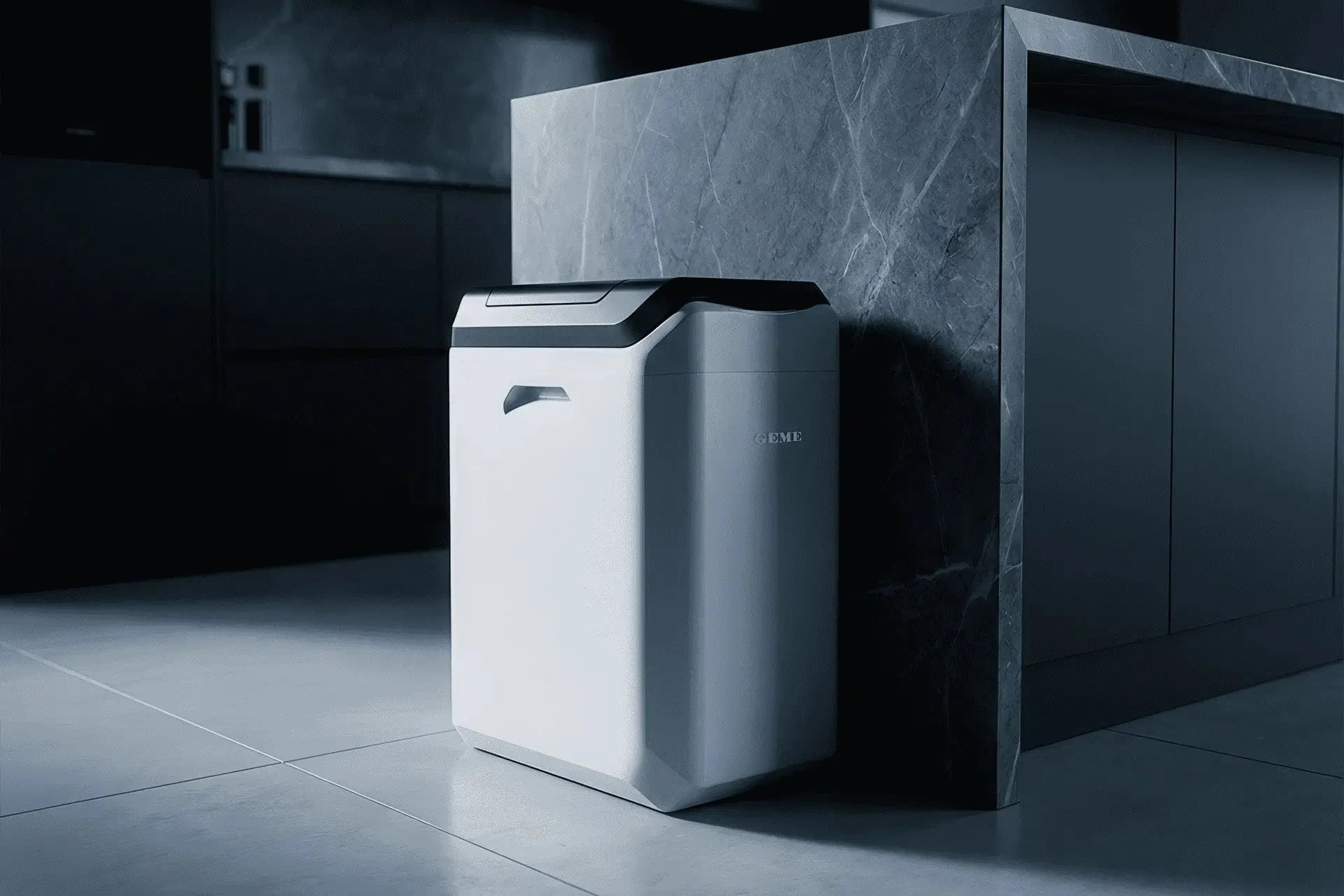
Why Low Average Power Matters More Than Dramatic Peak Wattage
Peak wattage is emotionally loud, but average power tells a better ownership story. This guide explains why GEME’s energy use should be read as a dynamic operating profile, not one fixed number: Te...

How We Write an Engineering Claim Without Turning It Into Ad Copy
Good engineering writing should be understandable, defensible, and useful. This guide explains GEME’s claim-writing method: start with the customer-facing result, explain the mechanism in plain lan...
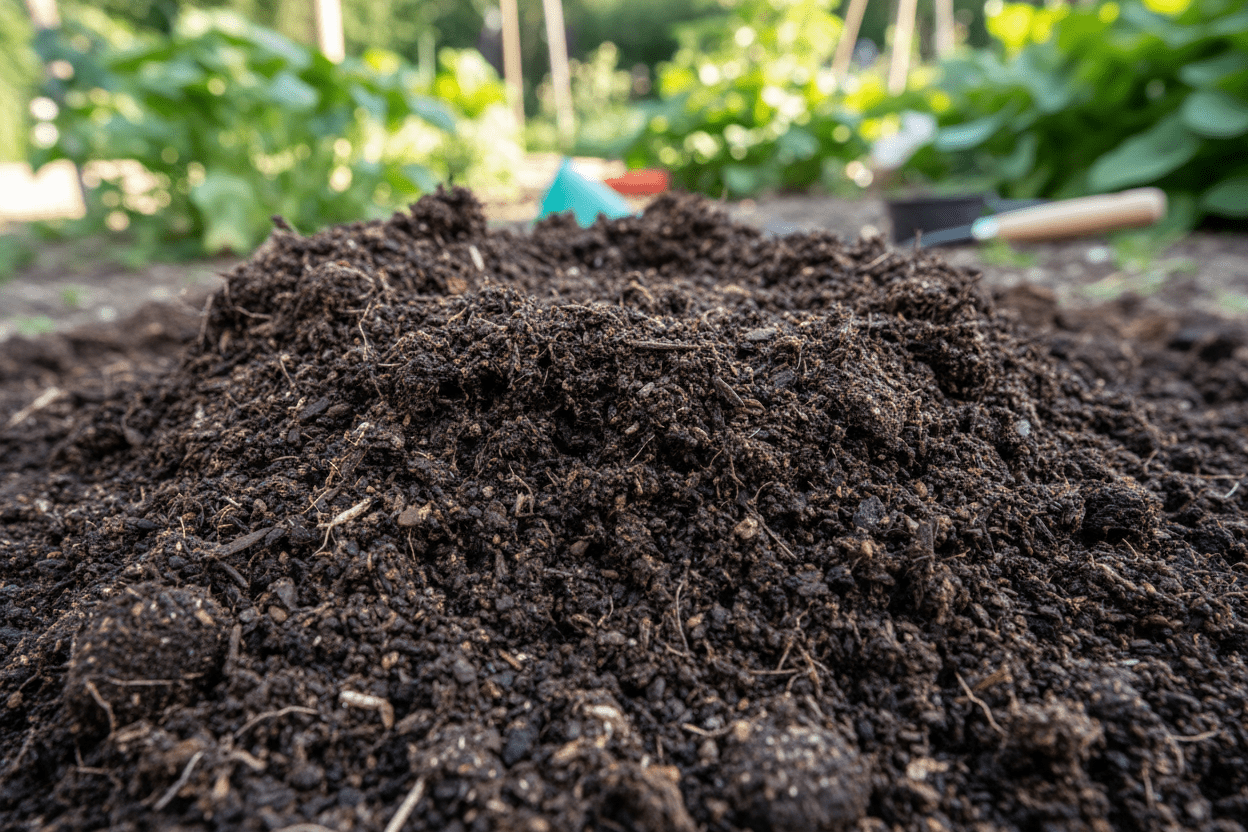
The “Wet Standard”: What Living Compost Base Should Actually Feel Like
GEME output should not be judged by how dry it looks. A real microbial composter is designed to maintain a moist, soil-like compost base, not dehydrated chips. This guide explains the “wet standard...
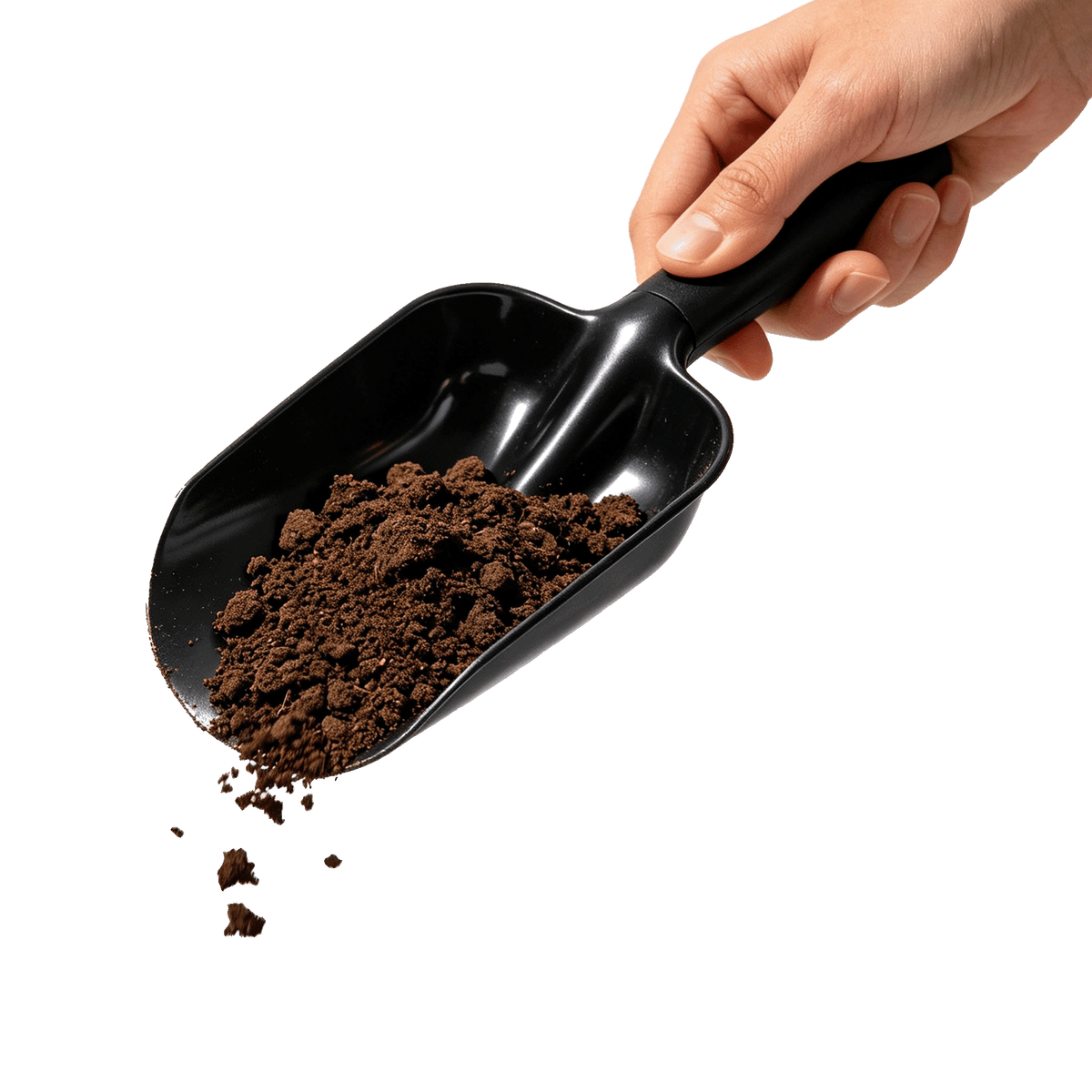
Why you should not fully empty the GEME Composter chamber every time?
Do not fully empty the GEME composter chamber every time you harvest. The remaining compost base works like a living starter bed that helps preserve microbial continuity for the next round of food ...
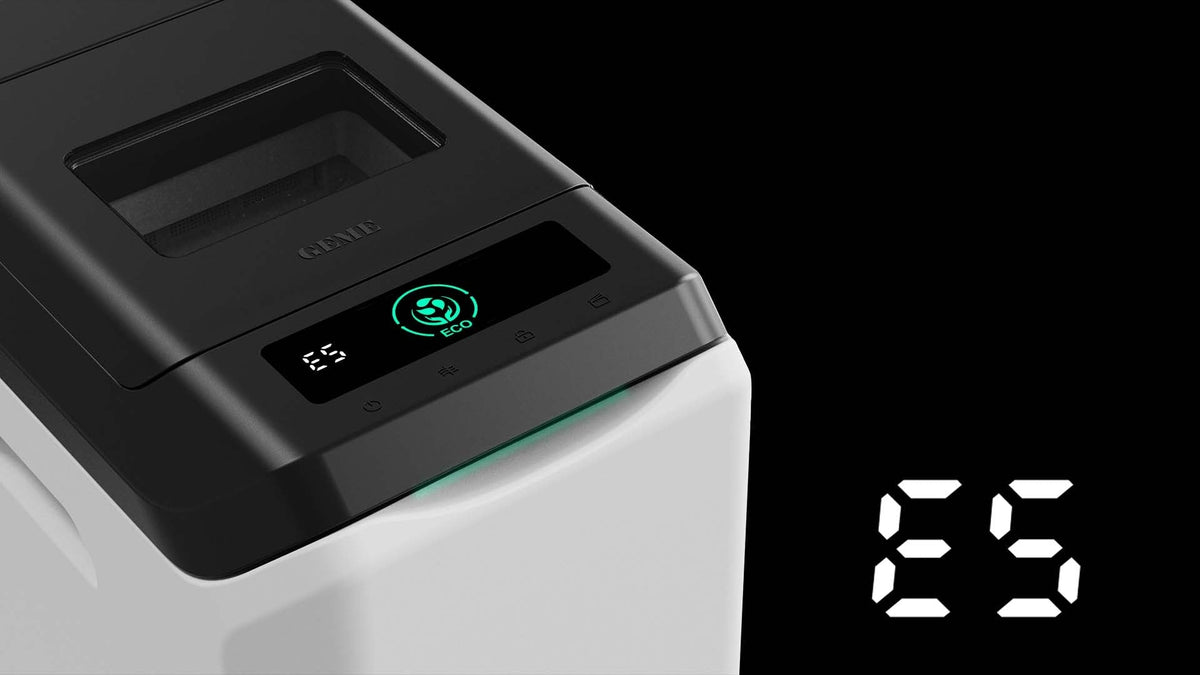
What an E5 fault means in GEME Terra 2 and what it does not
E5 on GEME Terra II means “Lid Not Closed.” It is best understood as a lid-state and safety-state reminder, not automatic proof that the motor, heating system, composting system, or whole machine h...
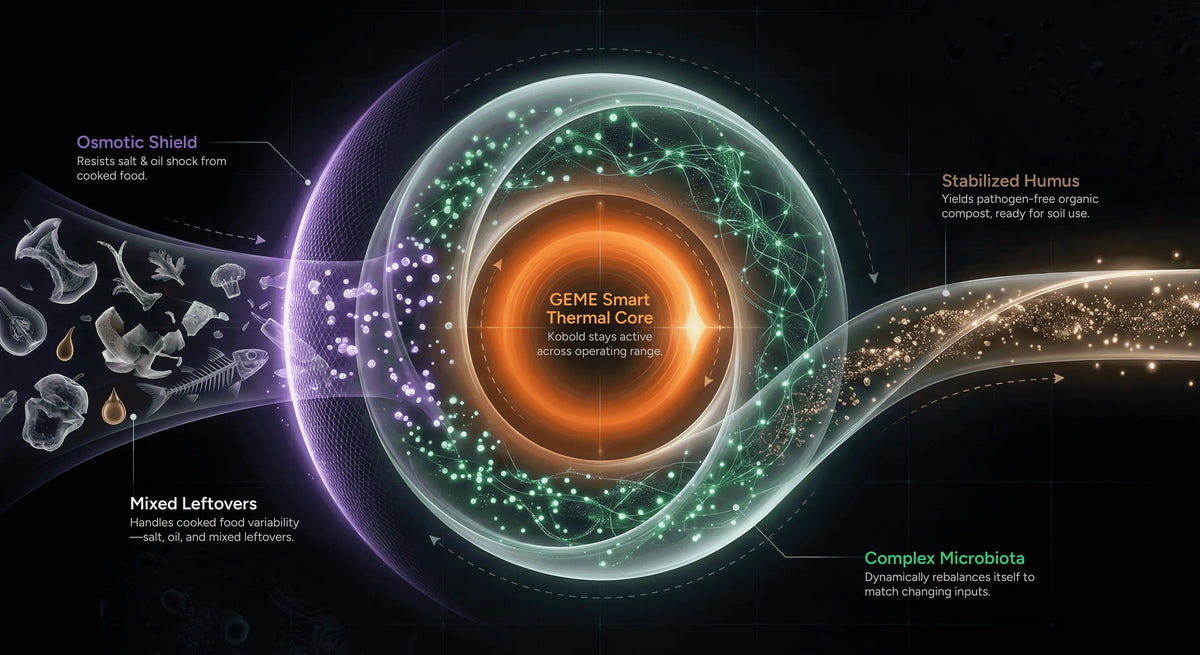
Permanent Odor Control: Catalyst Path vs Disposable Carbon
A practical guide to GEME odor control, explaining why permanent catalyst-based deodorization can reduce daily maintenance compared with disposable carbon filters.