

GEME Composter Review · Terra 2 · GEME Pro · Cost & Ownership
Is the GEME Composter worth it? For households that want continuous indoor microbial composting, generate food scraps regularly, value odor management and want a genuine soil-return pathway, the case can be strong. GEME is not the cheapest composting method, but price alone does not capture what the appliance replaces in a daily kitchen routine.
This guide compares GEME Terra 2 and GEME Pro on purchase price, electricity, household capacity, recurring ownership costs, maintenance, space, Compost Base and independent review evidence. Terra 2 is evaluated alongside Compost Magazine's hands-on testing, while the GEME Pro discussion also incorporates The Compost Culture's earlier hands-on experience with GEME's continuous microbial system.
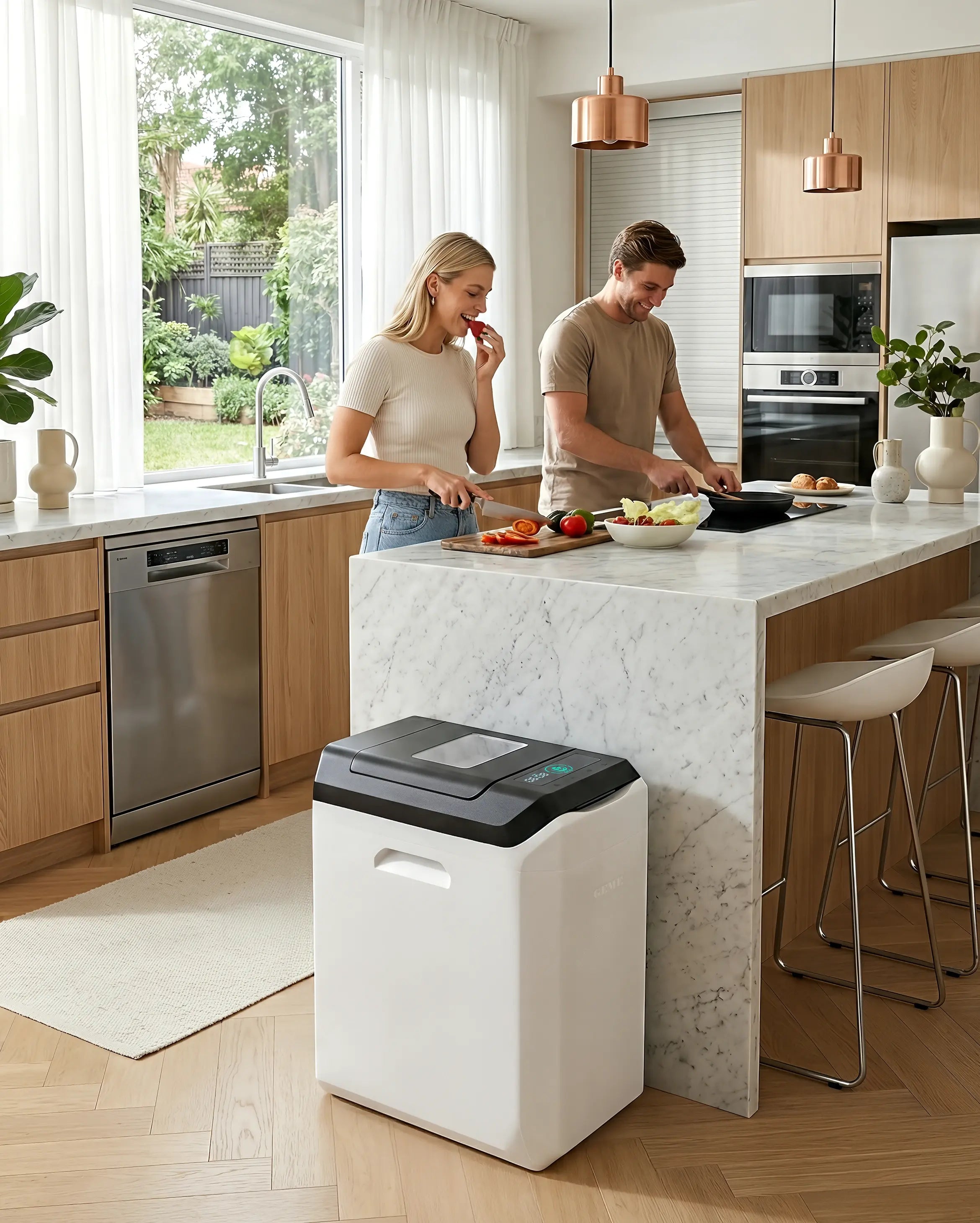
Quick Answer: Is the GEME Composter Worth It?
GEME Terra 2 is worth considering for a typical 1–3 person household that regularly generates kitchen scraps and wants a continuous microbial indoor composter rather than a batch food dehydrator.
GEME Pro is worth considering for larger 4+ person households, heavy cooks and users who need substantially more daily processing capacity and a larger resident microbial bed.
The most useful question is therefore not:
“Is GEME expensive?”
It is:
“Does GEME solve enough recurring problems in my household to justify buying an appliance?”
If you are new to the product family, first read What Is a GEME Composter? How Terra 2 and GEME Pro Actually Work.
If you are still comparing the category, start with the Best Composter Hub or the GEME Compare Hub.
Table of Contents
- What Are You Actually Paying For?
- How Much Does a GEME Composter Cost?
- What Does Long-Term Ownership Cost?
- How Much Electricity Do Terra 2 and GEME Pro Use?
- Is GEME Terra 2 Worth It? Compost Magazine Review
- What Did Compost Magazine Not Like?
- Is GEME Pro Worth It? The Compost Culture Review
- Important Review Timing and Product Boundary
- Terra 2 vs GEME Pro: Which Gives Better Value?
- Do Filter and Consumable Costs Change the Equation?
- Does Compost Base Add Real Value?
- How Much Is Daily Convenience Worth?
- When Is a GEME Composter Not Worth It?
- When Is a GEME Composter Worth It?
- Final GEME Composter Worth-It Verdict
- FAQ
What Are You Actually Paying For With a GEME Composter?
A GEME Composter does not primarily compete with a $30 plastic compost bucket.
It combines several household functions:
- enclosed food-waste handling;
- continuous microbial processing;
- controlled airflow;
- managed environmental warmth;
- automatic mixing;
- odor treatment;
- substantial food-waste volume reduction;
- and production of moist Compost Base for a soil-return pathway.
Whether that bundle is valuable depends heavily on what you would otherwise do.
For the process distinction, read Real Microbial Compost vs Dehydrated Food Scraps.
How Much Does a GEME Composter Cost?
Current U.S. pricing can change with configurations and promotions, so always check the live product page before purchasing.
As of this review update:
14 L chamber · up to approximately 2 kg/day · primarily 1–3 people.
19 L chamber · up to approximately 5 kg/day · primarily 4+ people.
Neither GEME model is designed to win a “cheapest composter” contest.
If your only objective is to spend the least possible money, a simple backyard pile, DIY bin, or vermicomposting system is usually the more rational starting point.
The purchasing case for GEME depends on convenience, capacity, indoor operation, biological processing, automation and how much you value a continuous kitchen-to-soil routine.
What Does a GEME Composter Cost to Own Over Several Years?
Upfront price is only one part of the GEME Composter cost.
A better ownership formula is:
Purchase price + electricity + required consumables + maintenance/service + your own time = real ownership cost
| Ownership Factor | Terra 2 / GEME Pro |
|---|---|
| Electricity |
Terra 2: average 60 W, peak 360 W, approximately 1.5 kWh/day — about $100.41/year at the June 2026 U.S. residential average electricity rate. GEME Pro: average 60 W, peak 500 W, approximately 1.85 kWh/day — about $123.84/year at the same rate. Actual consumption can vary with input type and environmental humidity. |
| Routine disposable odor filters | No routine activated-carbon filter replacement schedule. |
| Mandatory monthly subscription | None for ordinary ownership. |
| Kobold microbial support | The microbial bed is designed to remain active and reproduce. Optional support products are available when additional biological or material support is appropriate. |
| Maintenance | Periodic inspection, cleaning of relevant air paths or residue and harvesting according to system condition and usage. |
For a dedicated cost comparison, read Electric Composter Filter and Long-Term Ownership Costs.
For electricity specifically, see Electric Composter Electricity Cost: Daily and Annual Use.
How Much Electricity Do GEME Terra 2 and GEME Pro Use?
Electricity is a genuine ownership expense, but the useful comparison is actual energy use, not peak wattage by itself.
Peak power: 360 W
Average daily energy: approximately 1.5 kWh/day
Peak power: 500 W
Average daily energy: approximately 1.85 kWh/day
Actual energy consumption can vary with input type and environmental humidity.
Using the U.S. Energy Information Administration June 2026 residential average electricity price of 18.34¢/kWh:
GEME Pro works out to approximately $10.33/month at the same rate.
The difference between Terra 2 and Pro is therefore only about $23.43 per year at this electricity price, despite Pro's much higher rated food-processing capacity.
Why This Differs From Earlier Terra 2 Review Numbers
Some earlier third-party material referenced a lower Terra 2 normal-use energy estimate available at the time of review.
This article uses GEME's current operating specification instead: approximately 1.5 kWh/day for Terra 2 and approximately 1.85 kWh/day for GEME Pro.
That current product specification should be used for present-day ownership calculations.
How Does GEME Compare With Reencle, Mill and Lomi?
The comparison requires an important distinction: GEME and Reencle maintain continuously active microbial systems, while Mill and Lomi use different drying, grinding or batch-processing workflows.
| System | Energy Reference | Approx. Annual U.S. Electricity Cost* | Operating Context |
|---|---|---|---|
| GEME Terra 2 | ~1.5 kWh/day Average 60 W · Peak 360 W |
~$100.41/year | Continuous microbial composter · up to ~2 kg/day |
| GEME Pro | ~1.85 kWh/day Average 60 W · Peak 500 W |
~$123.84/year | Continuous microbial composter · up to ~5 kg/day |
| Reencle Prime | 1.25 kWh/day | ~$83.68/year | Continuous microbial system · 0.7 kg/day recommended, 1 kg/day max |
| Reencle Gravity / Gravity Pro | 1.13 kWh/day | ~$75.64/year | Continuous microbial system · 1 kg/day recommended, 1.5 kg/day max |
| Mill | ~0.7 kWh/day typical | ~$46.86/year | Dry-and-grind food recycler · actual use varies with load and cycle behavior |
| Lomi 3 Express | ~1.0 kWh/cycle | ~$66.94/year if run once daily | Batch food recycler · annual cost depends on cycle frequency |
| Lomi 3 Grow | ~1.1 kWh/cycle | ~$73.64/year if run once daily | Longer batch mode · annual cost depends on cycle frequency |
*Annual estimates use $0.1834/kWh. GEME actual energy consumption can vary with input type and environmental humidity. Lomi annual values assume one cycle every day solely for comparison.
Does GEME Have the Lowest Electricity Bill?
No. Electricity alone is not GEME's strongest ownership argument.
Terra 2's approximately 1.5 kWh/day is higher than the published daily electricity figures for Reencle Prime, Reencle Gravity and Mill. GEME Pro's approximately 1.85 kWh/day is higher again.
But the machines are not performing identical jobs, and household capacity matters.
What About Electricity Relative to Rated Capacity?
This is a capacity-normalization calculation, not a claim that each kilogram physically consumes exactly that amount of electricity. Real households rarely run at maximum rated throughput every day.
It does, however, show why daily electricity should not be judged independently of the amount of food a system is designed to handle.
Electricity verdict:
GEME is not positioned as the lowest-energy appliance in the category. Its value comes from combining continuous microbial processing, substantial daily capacity, indoor automation, no routine activated-carbon filter replacement and a defined Compost Base soil-return pathway.
For the dedicated six-machine electricity comparison, read Electric Composter Electricity Cost: Calculate Daily and Annual Use.
Is GEME Terra 2 Worth It? What Compost Magazine's Review Adds
For Terra 2, buyers do not have to rely only on manufacturer specifications.
Compost Magazine tested GEME Terra II over several weeks and displayed a 4.4/5 rating.
The review matters because the tester did not feed the machine only idealized chopped vegetables.
The test included:
- ordinary mixed kitchen waste;
- cooked vegetables;
- meat;
- thick sauces;
- a whole apple;
- paper towels;
- sweetcorn;
- and small bones.
The review reported that ordinary mixed food waste often became difficult to distinguish from the existing composting bed within hours.
It also documented important exceptions:
- a whole apple remained visible much longer;
- paper towels took days;
- small bones remained visible for several days.
Real microbial decomposition does not mean every food has the same residence time.
Independent Review · Compost Magazine
What Strengthens the Terra 2 Value Case
- Rapid visible breakdown of ordinary mixed kitchen scraps.
- Successful handling of meat and difficult wet foods.
- Continuous-feed microbial processing rather than a dry-and-grind batch cycle.
- Sensor-based adjustment of the composting environment.
- No routine activated-carbon odor-filter replacement.
- Biologically processed Compost Base rather than dry dehydrated flakes.
Read the GEME summary and response to the Compost Magazine Terra 2 review, or read the original independent review.
What Did Compost Magazine Not Like About GEME Terra 2?
A useful answer to “Is GEME Terra 2 worth it?” should include the reasons a buyer might decide it is not the right fit.
1. Upfront Price
Terra 2 is expensive compared with a worm bin, cardboard-box system or simple backyard pile.
This remains the biggest economic barrier.
2. Electricity Use
Terra 2 uses electricity to maintain a controlled indoor biological environment.
Under the current GEME operating reference, Terra 2 averages approximately 1.5 kWh/day, with approximately 60 W average power and 360 W peak power.
At the June 2026 U.S. residential average electricity rate, this works out to about $8.37/month or $100.41/year.
A passive outdoor pile or worm system can operate with essentially no direct electricity, so GEME does not beat passive composting on power cost.
Against powered kitchen systems, the comparison depends on process, capacity and usage frequency, not electricity alone.
3. Physical Size
Terra 2 is not a small countertop appliance.
Its footprint is approximately 297 × 437 mm with a closed height of approximately 566 mm, so buyers need a practical floor-standing location and lid clearance.
4. Noise Depends on the Test Environment
Noise perception depends on room acoustics, operating stage, load, vibration and flooring.
Buyers who are particularly noise-sensitive should treat any laboratory or third-party sound reading as a test-condition reference rather than a guarantee for every kitchen.
5. Fresh Compost Base Still Needs Responsible Handling
GEME's harvested material is a Compost Base, not a promise that every fresh input has an identical residence time or that the output should replace potting soil 1:1.
Screen larger unfinished material, return it to the active chamber and normally blend finer Compost Base with plain soil at approximately 1:8.

GEME Terra 2 Review Verdict
Terra 2 Makes the Strongest Case for Smaller Households That Want Real Microbial Processing
Terra 2 is most compelling for a 1–3 person household that cooks regularly, does not want to manage an outdoor pile and values continuous indoor microbial composting.
- 14 L chamber
- up to approximately 2 kg/day
- continuous feeding
- approximately 1.5 kWh/day average energy use
- no routine activated-carbon filter replacement
- independent Compost Magazine hands-on testing
Is GEME Pro Worth It? What The Compost Culture Review Tells Us
The GEME Pro value case is different from Terra 2 because Pro is built around substantially greater capacity.
Its current 19 L chamber and up-to-approximately-5-kg/day positioning target larger households, heavy daily cooks and users who need significantly more active-bed capacity.
Its current electricity reference is approximately 1.85 kWh/day, with approximately 60 W average power and 500 W peak power.
At the June 2026 U.S. average electricity rate, that equals approximately $10.33/month or $123.84/year.
That is only about $23.43 more per year than Terra 2 at the same electricity price while increasing rated daily processing capacity from approximately 2 kg to approximately 5 kg.
For independent experience with the GEME system, The Compost Culture published a hands-on GEME electric kitchen composter review.
Hands-On GEME Review · The Compost Culture
What Strengthens the GEME Pro Value Case
- Microbe-based processing rather than heat-only dehydration.
- Continuous feeding instead of waiting for isolated processing batches.
- Household-appliance style operation available throughout the day.
- No routine activated-carbon filter replacement.
- A pathway from food waste toward soil use.
- Much higher present-day rated capacity than Terra 2.
Read The Compost Culture's original GEME review and then compare it with the current GEME Pro Review 2026.
GEME Pro does not need to beat a backyard compost pile on price. Its value comes from solving higher-volume household food waste where backyard composting is inconvenient, seasonal, undersized or unrealistic.
Important: The Compost Culture Review Predates Today's Terra 2 and GEME Pro Lineup
The Compost Culture article remains useful evidence, but it needs a clear time boundary.
It was published before the current Terra 2 / GEME Pro product structure and current throughput positioning.
This article therefore uses The Compost Culture review for observations about:
- the continuous microbial GEME concept;
- daily feeding behavior;
- ease of use;
- filter ownership;
- and the practicality of indoor composting.
It does not use that older article as the source for today's GEME Pro 19 L chamber, approximately 5 kg/day capacity, current electricity figures, dimensions, pricing or maintenance guidance.
Those current values should come from current GEME specifications.
GEME Pro · High-Capacity Choice
GEME Pro Is Worth Considering When Terra 2 Is Simply Too Small
For a 4+ person household, frequent cooking or consistently heavy food-waste loads, paying more for additional active-bed capacity can make more sense than repeatedly pushing a smaller machine to its intended boundary.
GEME Terra 2 vs GEME Pro: Which One Gives Better Value?
For most buyers, the answer depends on whether you are paying for capacity you will actually use.
| Value Question | Terra 2 | GEME Pro |
|---|---|---|
| Best household fit | Approximately 1–3 people | Approximately 4+ people |
| Chamber | 14 L | 19 L |
| Daily capacity | Up to ~2 kg/day | Up to ~5 kg/day |
| Average power | ~60 W | ~60 W |
| Peak power | 360 W | 500 W |
| Average daily energy | ~1.5 kWh/day | ~1.85 kWh/day |
| Approx. annual electricity* | ~$100.41 | ~$123.84 |
| Current U.S. price reference | Approximately $699 | From approximately $899 |
| Best value when... | You need normal household capacity without paying for unnecessary size | Your household regularly needs substantially more daily processing headroom |
*Using $0.1834/kWh. Actual GEME energy consumption varies with input type and environmental humidity.
A one-person household buying GEME Pro “just in case” is not necessarily getting more value.
A five-person household repeatedly pushing Terra 2 toward its limits is also not saving money intelligently.
Capacity matching is part of ownership value.
Do Filter and Consumable Costs Make GEME More Worth It?
They can, especially when ownership is evaluated over several years rather than only at checkout.
Current Terra 2 and GEME Pro do not rely on a routine schedule of disposable activated-carbon odor-filter replacement.
That removes one recurring ownership category found in many powered food-waste appliances.
However, “no routine replacement odor filter” does not mean:
- the appliance consumes no electricity;
- nothing can ever require service;
- no optional support product can ever be useful;
- or ownership is literally cost-free after purchase.
GEME Terra 2 and GEME Pro do not rely on routine disposable activated-carbon odor-filter replacement as part of normal ownership.
Does GEME Compost Base Make the Higher Purchase Price More Worth It?
Only if you actually value the output.
Someone who only wants food waste to disappear from the kitchen but has no interest in a soil-return pathway may place little value on Compost Base.
A gardener, houseplant owner or household trying to build a kitchen-to-soil loop may value it much more.
GEME's current output guidance is:
- harvest when appropriate;
- screen larger unfinished pieces;
- return unfinished organic pieces to the active chamber;
- blend finer Compost Base with plain soil at approximately 1:8;
- allow further maturation where a more mature material is preferred.
If you do not have a garden, see What to Do With Compost If You Have No Garden.
How Much Is GEME's Daily Convenience Worth?
This is the hardest part of the calculation because convenience has no universal dollar value.
Consider the household routine without GEME:
- scrape food into trash;
- store organics in a freezer or caddy;
- carry scraps outside;
- manage a compost pile;
- turn material;
- balance greens and browns;
- manage pests;
- or wait for municipal pickup.
Now compare that with a continuous indoor workflow:
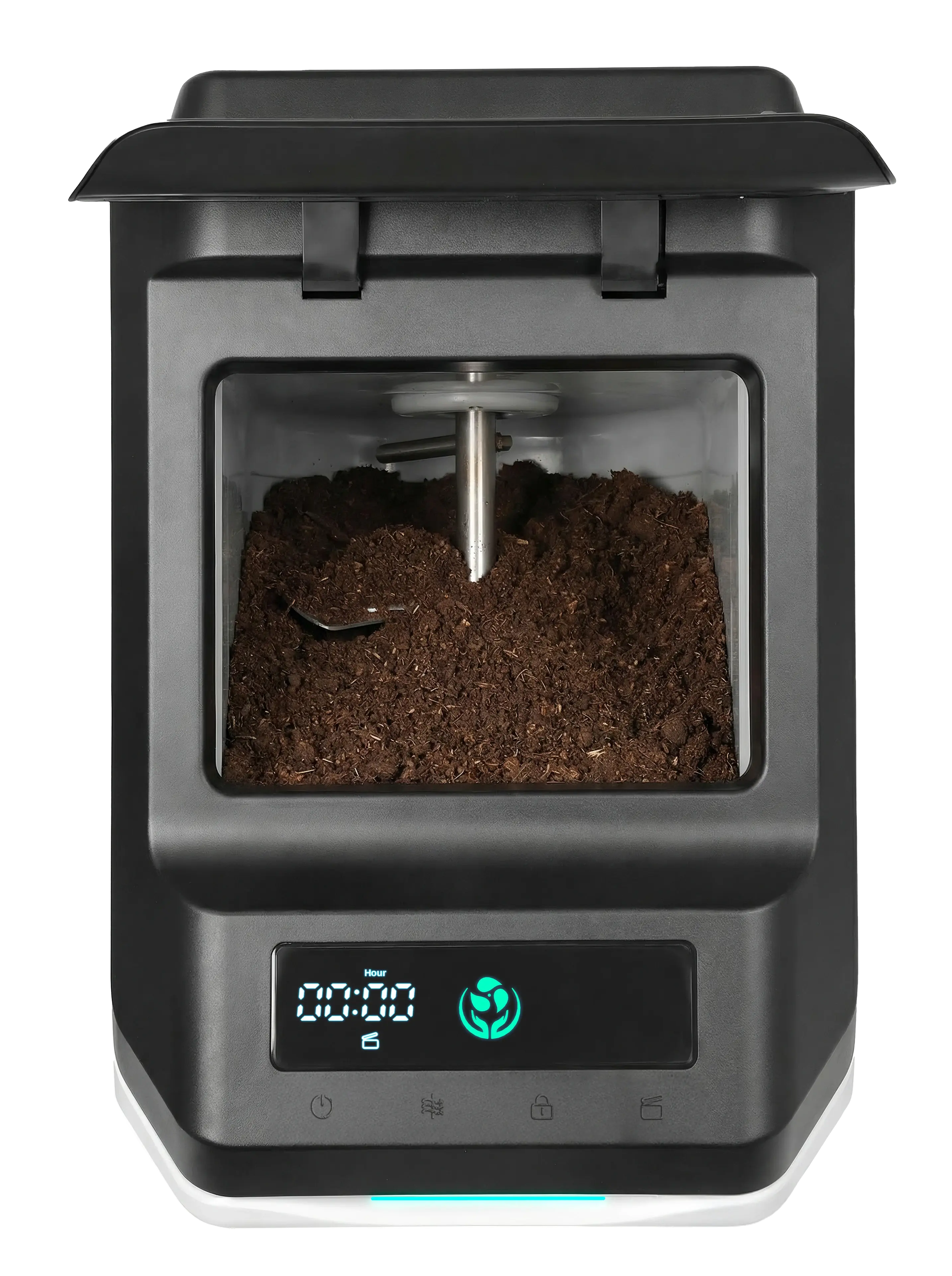
open → add suitable food scraps → close → let the resident microbial system continue
For busy households, that behavioral simplicity can be one of the strongest reasons GEME is worth the money.
When Is a GEME Composter Not Worth It?
When Is a GEME Composter Worth It?
Final Verdict: Is the GEME Composter Worth the Money?
For households whose actual food-waste problem matches what GEME is designed to solve, yes.
The strongest case is not:
“GEME is cheaper than every other composting method.”
It is not.
The stronger case is:
GEME combines indoor containment, continuous feeding, microbial decomposition, automated environmental control, odor treatment and a soil-return pathway in one household appliance.
For a 1–3 person household, Terra 2 is usually the more rational GEME purchase because you are not paying for capacity you are unlikely to use.
For a 4+ person household or a home that produces substantially heavier food-waste loads, GEME Pro can be the better-value purchase because the larger 19 L bin and up-to-5-kg/day capacity better match the workload.
Electricity should be included rather than hidden. At the June 2026 U.S. residential average electricity rate:
- Terra 2: approximately $100.41/year at ~1.5 kWh/day;
- GEME Pro: approximately $123.84/year at ~1.85 kWh/day.
The approximately $23.43 annual electricity difference between the two is relatively small compared with Pro's increase in rated daily processing capacity from approximately 2 kg to approximately 5 kg.
That is ultimately the right way to evaluate “worth it”:
not simply by purchase price or electricity consumption, but by whether the capacity, workflow and biological output match the household that is buying it.
GEME Composter Worth-It Decision
Choose the Capacity You Will Actually Use
Start with Terra 2 for a typical 1–3 person household. Move to GEME Pro when household size, cooking frequency or daily food-waste load genuinely requires the larger 19 L system.
GEME Composter Worth-It FAQ
Is the GEME Composter worth it?
GEME can be worth it for households that generate food scraps regularly, want continuous indoor microbial composting, value odor management and have a practical use for Compost Base. It is less compelling when inexpensive backyard composting or convenient municipal organics collection already solves the problem.
Is GEME Terra 2 worth it?
Terra 2 is particularly well matched to 1–3 person households that want continuous microbial composting with up to approximately 2 kg/day of capacity without paying for the larger Pro system.
Is GEME Pro worth it?
GEME Pro is particularly compelling for 4+ person households, heavy daily cooks and users who need more capacity than Terra 2. Its 19 L chamber supports up to approximately 5 kg of suitable food waste per day.
How much electricity does GEME Terra 2 use?
Terra 2 has an average power reference of approximately 60 W, peak power of 360 W and average daily energy use of approximately 1.5 kWh. Actual consumption can vary with input type and environmental humidity.
How much does GEME Terra 2 cost in electricity per year?
At an electricity rate of $0.1834/kWh, approximately 1.5 kWh/day works out to about $8.37 per month or $100.41 per year.
How much electricity does GEME Pro use?
GEME Pro has an average power reference of approximately 60 W, peak power of 500 W and average daily energy use of approximately 1.85 kWh. Actual consumption can vary with input type and environmental humidity.
How much does GEME Pro cost in electricity per year?
At $0.1834/kWh, approximately 1.85 kWh/day works out to about $10.33 per month or $123.84 per year.
Is Terra 2 cheaper to run than Reencle, Mill or Lomi?
Not on absolute electricity consumption in every comparison. Terra 2's approximately 1.5 kWh/day is higher than Reencle Prime's 1.25 kWh/day and Mill's typical approximately 0.7 kWh/day. Lomi reports energy per batch cycle, so its annual consumption depends on cycle frequency. The systems also differ substantially in process, rated capacity, filters and output.
Does GEME require replacement odor filters?
Current GEME Terra 2 and GEME Pro do not have a routine disposable activated-carbon odor-filter replacement schedule.
Does GEME require a subscription?
No mandatory monthly subscription is required for normal GEME ownership. Optional Kobold support products may be used when appropriate.
Which is better value, GEME Terra 2 or GEME Pro?
Terra 2 is generally better matched to a 1–3 person household. GEME Pro can provide stronger value for 4+ people or heavier daily food-waste loads because its 19 L chamber and up-to-5-kg/day capacity provide substantially more processing headroom for only a modest increase in annual electricity cost.
Is GEME worth it for an apartment?
It can be, especially when outdoor composting is impractical, and the household generates food scraps regularly. Terra 2 is generally the more relevant model for smaller households, but buyers should measure floor area and lid-opening clearance first.
Does GEME make finished compost?
GEME uses microbial decomposition and produces biologically active Compost Base. Because the system is continuously fed, material can have different residence times. Larger unfinished pieces should be screened and returned to the chamber, while finer Compost Base should normally be mixed with plain soil at approximately one part Compost Base to eight parts soil.
What is the biggest reason to buy a GEME Composter?
The strongest reason is the combination of continuous daily feeding, microbial processing, indoor odor management, substantial household capacity and a defined soil-return pathway in one appliance.
Sources and GEME Composter Review References
- Compost Magazine — GEME Terra II Hands-On Review
- The Compost Culture — GEME Electric Kitchen Composter Review
- GEME — Compost Magazine Terra 2 Review Summary and Response
- GEME — GEME Pro Review 2026
- GEME — Terra 2 Current Product Specifications
- GEME — GEME Pro Current Product Specifications
- GEME — Electric Composter Electricity Cost
- GEME — Electric Composter Cost of Ownership
- U.S. Energy Information Administration — Residential Electricity Price
- Reencle — Model Energy and Capacity Specifications
- Mill — Typical Electricity Use
- Lomi — Lomi 3 Energy Specifications
Sources and current product information reviewed September 17, 2026. Prices, electricity rates and configurations can change. GEME's current operating references used in this article are approximately 60 W average / 360 W peak / 1.5 kWh/day for Terra 2 and approximately 60 W average / 500 W peak / 1.85 kWh/day for GEME Pro. Actual GEME energy use can vary with input type and environmental humidity. Annual electricity estimates use $0.1834/kWh. Earlier third-party review material may contain energy references available at the time of testing; current GEME specifications are used for present-day ownership calculations.


Hinterlasse einen Kommentar
Alle Kommentare werden vor der Veröffentlichung geprüft.
Diese Website ist durch hCaptcha geschützt und es gelten die allgemeinen Geschäftsbedingungen und Datenschutzbestimmungen von hCaptcha.