
Leftover Pizza, Food Safety & Food Waste Guide
Leftover pizza lasts 3 to 4 days in the fridge when it is refrigerated within 2 hours and kept at 40°F / 4°C or below.
That rule applies whether the pizza came from delivery, a restaurant, your oven, or a cooked frozen pizza. The bigger safety question is not the brand or crust style. It depends on whether the pizza was cooled, stored, and reheated correctly.
Simple rule: refrigerate within 2 hours, eat within 3–4 days, reheat to 165°F, and discard pizza that sat out overnight.
3–4 days if refrigerated promptly and kept cold.
Quick Answer
Pizza is good for 3–4 days in the fridge if it was refrigerated within 2 hours of cooking, delivery, or serving. Store it in an airtight container or tightly wrapped package, and keep the refrigerator at 40°F / 4°C or below.
If pizza was left out for more than 2 hours, or more than 1 hour in very hot conditions above 90°F / 32°C, discard it. If you reheat leftover pizza, heat it thoroughly to an internal temperature of 165°F / 74°C.
For related reading, see how to avoid leftover food poisoning, how long chicken lasts in the fridge, and how to reduce food waste at home.
Key Takeaways
- Fridge life: leftover pizza is generally safe for 3–4 days when refrigerated properly.
- Temperature: keep leftovers at 40°F / 4°C or below.
- Two-hour rule: refrigerate pizza within 2 hours of cooking, delivery, or serving.
- Hot weather rule: if the environment is above 90°F / 32°C, refrigerate within 1 hour.
- Overnight pizza: pizza left out overnight should be discarded, not tasted.
- Reheating: reheat leftovers to 165°F / 74°C before eating.
- Freezing: frozen leftovers keep their best quality for about 3–4 months, although quality may decline over time.
- Pizza waste: if pizza is no longer safe to eat, do not rescue it for food. Appropriate scraps may be processed through GEME according to product guidance.
Pizza Storage at a Glance
| Question | Safe Answer |
|---|---|
| How long does pizza last in the fridge? | 3–4 days if refrigerated promptly and stored at 40°F / 4°C or below. |
| How long can pizza sit out? | Up to 2 hours; only 1 hour if above 90°F / 32°C. |
| Can I eat pizza left out overnight? | No. Discard it. |
| Best fridge storage? | Airtight container or tightly wrapped slices on a stable refrigerator shelf. |
| Can I keep pizza in the box? | It may be convenient in the short term, but airtight storage is better for quality and protection. |
| Reheat temperature? | 165°F / 74°C internal temperature. |
| Can I freeze leftover pizza? | Yes. Frozen leftovers keep their best quality for about 3–4 months. |
| What if pizza is spoiled? | Do not eat it. Dispose of it safely or process suitable scraps through GEME according to product guidance. |
Table of Contents
- How Long Is Pizza Good for in the Fridge?
- The Two-Hour Rule That Changes Everything
- Does Pizza Type Change the Timeline?
- Day-by-Day Leftover Pizza Guide
- How to Store Pizza in the Fridge
- How to Tell When Pizza Has Gone Bad
- Reheating Pizza Safely
- Can You Freeze Leftover Pizza?
- What to Do With Pizza Waste
- How GEME Terra II Handles Appropriate Pizza Scraps
- FAQ
- Summary
- Sources
- Related Articles
How Long Is Pizza Good for in the Fridge?
Leftover pizza is good for 3 to 4 days in the refrigerator when stored properly. This is the standard leftover safety window for cooked perishable food.
The countdown starts when the pizza enters the leftover zone, not when you suddenly remember it. Time spent sitting at room temperature matters. If the pizza stayed out too long before refrigeration, the 3–4 day fridge window no longer protects it.
Food safety rule: properly refrigerated pizza can last 3–4 days. Pizza left out overnight should be discarded.
The Two-Hour Rule That Changes Everything
Perishable food should be refrigerated within 2 hours. Pizza contains cooked grain, sauce, cheese, and often meat or vegetables, so it should be treated as perishable leftovers.
When food sits in the temperature danger zone between 40°F and 140°F, bacteria can multiply quickly. Refrigeration slows bacterial growth, but it does not reverse unsafe time spent at room temperature.
| Scenario | Food Safety Window | What to Do |
|---|---|---|
| Pizza served at room temperature | Refrigerate within 2 hours. | Store promptly in airtight containers or wraps. |
| Pizza on a hot day above 90°F / 32°C | Refrigerate within 1 hour. | Do not leave it out for grazing. |
| Pizza left out overnight | Unsafe. | Discard. Do not taste-test it. |
Does Pizza Type Change the Timeline?
For simple home food safety, the best rule is still 3–4 days for properly refrigerated leftover pizza. Toppings may affect texture, moisture, and quality, but they should not be used as an excuse to stretch pizza beyond the official leftover window.
| Pizza Type | Safe Fridge Rule | Quality Notes |
|---|---|---|
| Cheese pizza | 3–4 days when stored properly. | Crust may dry out before the safety window ends. |
| Pepperoni or sausage pizza | 3–4 days when stored properly. | Meat toppings can lose quality and become greasy or dry. |
| Chicken pizza | 3–4 days when stored properly. | Treat poultry toppings seriously; reheat thoroughly to 165°F. |
| Vegetable pizza | 3–4 days when stored properly. | High-moisture vegetables may make the crust soggy faster. |
| Seafood pizza | Use extra caution; do not exceed leftover safety guidance. | Quality can decline quickly; eat sooner when possible. |
The safest habit is simple: label the storage date, eat leftovers within 3–4 days, and freeze if you know you will not finish them in time.
Day-by-Day Leftover Pizza Guide
| Day | Safety Status | What to Expect |
|---|---|---|
| Day 1 | Within a safe window if stored correctly. | Best leftover quality. |
| Day 2 | Within a safe window if stored correctly. | Still usually good after proper reheating. |
| Day 3 | Still within the official 3–4 day window. | Quality may decline; check carefully and reheat fully. |
| Day 4 | Last day of the typical safe window. | Eat only if it was stored properly and shows no spoilage signs. |
| Day 5+ | Not recommended. | Discard for food safety. Do not rely on smell alone. |
How to Store Pizza in the Fridge
Proper storage protects both safety and quality. Your goal is to cool the pizza promptly, limit air exposure, and keep the slices cold.
Best Storage Method
- Refrigerate promptly: do not let pizza sit out beyond the 2-hour safety window.
- Use shallow storage: place slices in a shallow airtight container or wrap slices tightly.
- Separate layers: use parchment paper between slices if stacking.
- Store cold: keep pizza on a stable fridge shelf, not in the warmest door area.
- Date it: label the container so the 3–4 day window is clear.
Is the Pizza Box OK?
A cardboard box is not ideal for multi-day storage. It does not seal well, can absorb moisture and odors, and can make slices dry or soggy. Airtight containers or tight wrapping are better.
How to Tell When Pizza Has Gone Bad
Spoilage signs matter, but they are not perfect. Some harmful bacteria do not always change the smell, taste, or appearance of food. That is why timing still matters.
| Sign | What It Suggests | What to Do |
|---|---|---|
| Mold | Visible fungal growth and possible spread beyond what you see. | Discard the pizza. Do not cut around mold. |
| Sour, rancid, or rotten smell | Spoilage or fat breakdown. | Discard. |
| Slimy toppings | Texture change often linked with spoilage. | Discard. |
| Unusual discoloration | Possible spoilage, oxidation, or mold growth. | Discard if uncertain. |
| Very dry crust only | Quality loss, not automatically unsafe. | Only eat if still within the safe time window and stored correctly. |
When timing and signs disagree, trust the safety window. A day-6 slice that “looks fine” is still not worth the risk.
Reheating Pizza Safely
If the pizza is still within the safe storage window, reheat it thoroughly to an internal temperature of 165°F / 74°C. A food thermometer is the most reliable way to check.
| Method | Quality Result | Safety Note |
|---|---|---|
| Oven | Good for crisp crust and even heating. | Heat until the internal temperature reaches 165°F. |
| Skillet | Good crust texture; useful for one or two slices. | Cover briefly to help toppings heat through. |
| Air fryer | Fast and crisp. | Check carefully to avoid a hot crust with cold toppings. |
| Microwave | Fast, but can make the crust soft. | Rotate and heat evenly; check that the center is hot. |
Can You Freeze Leftover Pizza?
Yes. Freezing is a good option if you know you will not eat the pizza within 3–4 days. For best quality, wrap slices well, protect them from freezer burn, and use them within about 3–4 months.
- Cool and refrigerate or freeze within the safe time window.
- Wrap individual slices tightly.
- Place wrapped slices in a freezer-safe bag or container.
- Label with the date.
- Reheat thoroughly to 165°F before eating.
What to Do With Pizza Waste
If pizza is outside the safe eating window, do not taste it to “check.” Treat it as waste. The best first step is prevention: buy or cook the right amount, refrigerate leftovers promptly, freeze slices you cannot finish, and label storage dates.
When pizza waste does happen, the landfill is the least helpful path. Food waste in landfills decomposes under low-oxygen conditions and contributes to methane emissions. Composting and other organics-management pathways are better ways to keep food scraps out of landfills.
Can You Compost Pizza Outdoors?
A simple backyard compost pile is usually not the best place for cheesy, oily, meat-topped pizza. Dairy, meat, grease, and cooked foods can attract pests and create odor in unmanaged piles.
If you use a municipal organics program, follow the local rules. Some programs accept pizza and food-soiled paper; others do not.
How GEME Terra II Handles Appropriate Pizza Scraps
GEME Terra II is designed for real microbial composting in a warm, moist, oxygen-rich chamber. It uses Kobold™ living microbes and adaptive control to process appropriate kitchen scraps without drying them into flakes.
Pizza scraps can be challenging for ordinary compost piles because they combine bread, cheese, sauce, oil, salt, and sometimes meat. GEME’s official product guidance allows complex kitchen bio-waste such as leftovers, meat, dairy, oily leftovers, and small bones, but users should still follow practical boundaries.
Safe GEME Pizza-Scrap Rules
- Do not eat pizza that is outside the safe window.
- Remove all packaging, cardboard, plastic, foil, stickers, and paper liners.
- Add pizza scraps in modest amounts instead of dumping a whole oily box at once.
- Avoid large volumes of liquid oil or greasy sauces.
- Cut or tear large crust pieces smaller to help with mixing.
- Screen larger unfinished pieces back into the chamber when harvesting.
- Use output as compost base for soil blending, not as pure potting soil.
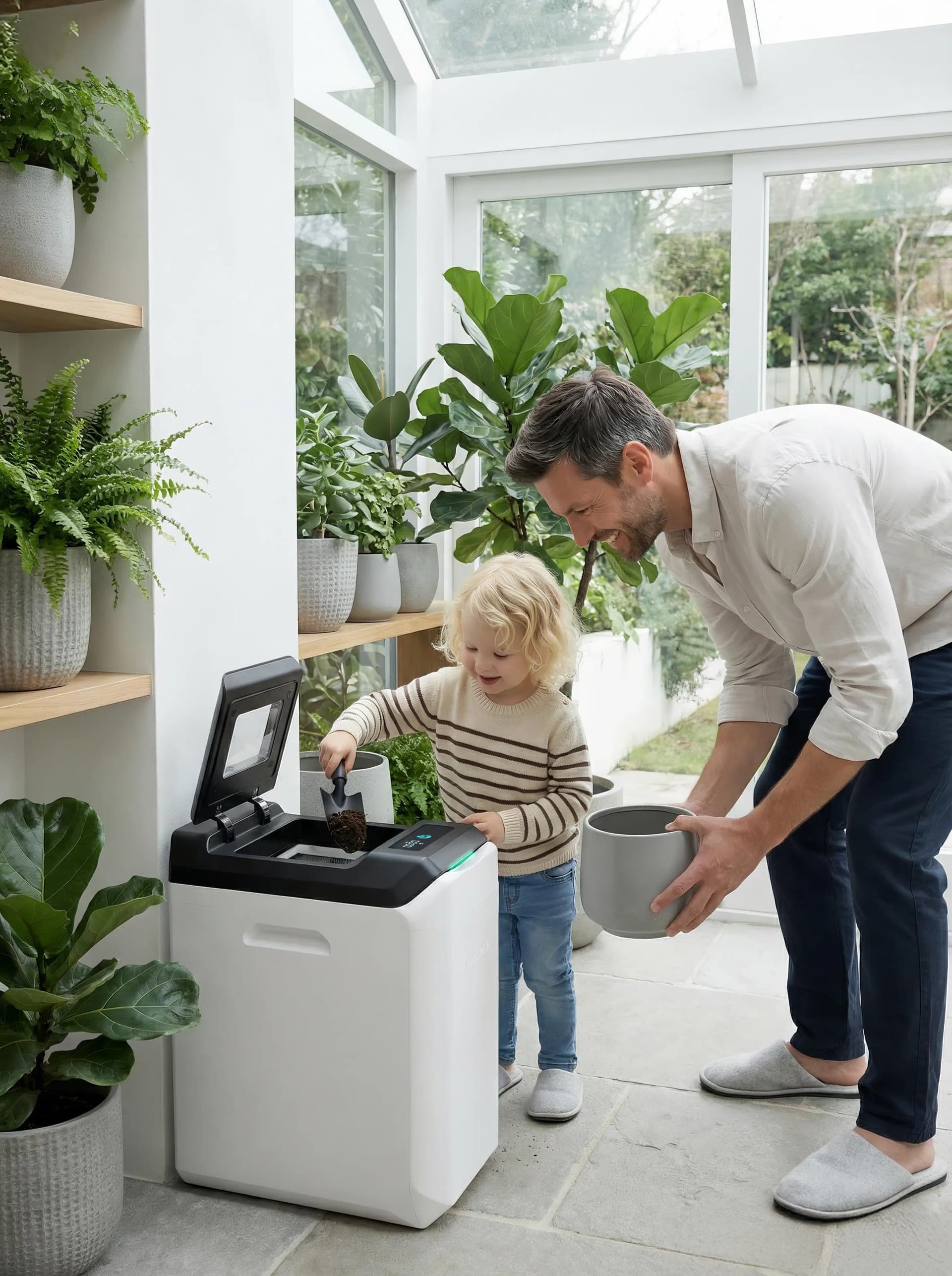
GEME helps appropriate scraps return to the soil cycle.
Turn Appropriate Pizza Scraps Into Compost Base With GEME
GEME Terra II supports real microbial composting for appropriate kitchen scraps, including many leftovers that are difficult for open backyard piles. No drying. No replacement odor filters. Compost output should be screened and mixed with soil.
Real microbial composting. No filter replacements. Compost for soil blending.
Pizza Waste Options Compared
| Method | Best Use | Main Caution |
|---|---|---|
| Trash / landfill | Last resort when no organics option is available. | Food waste in landfills contributes to methane emissions. |
| Backyard compost pile | Plain crust or small food scraps in well-managed systems. | Cheese, meat, oils, and cooked foods can attract pests and cause odor. |
| Municipal organics program | When local rules accept pizza and food-soiled paper. | Rules vary by city and hauler. |
| GEME Terra II | Appropriate kitchen scraps and many complex leftovers. | Avoid packaging, excess liquid oil, and overloading; use output as a compost base for soil blending. |
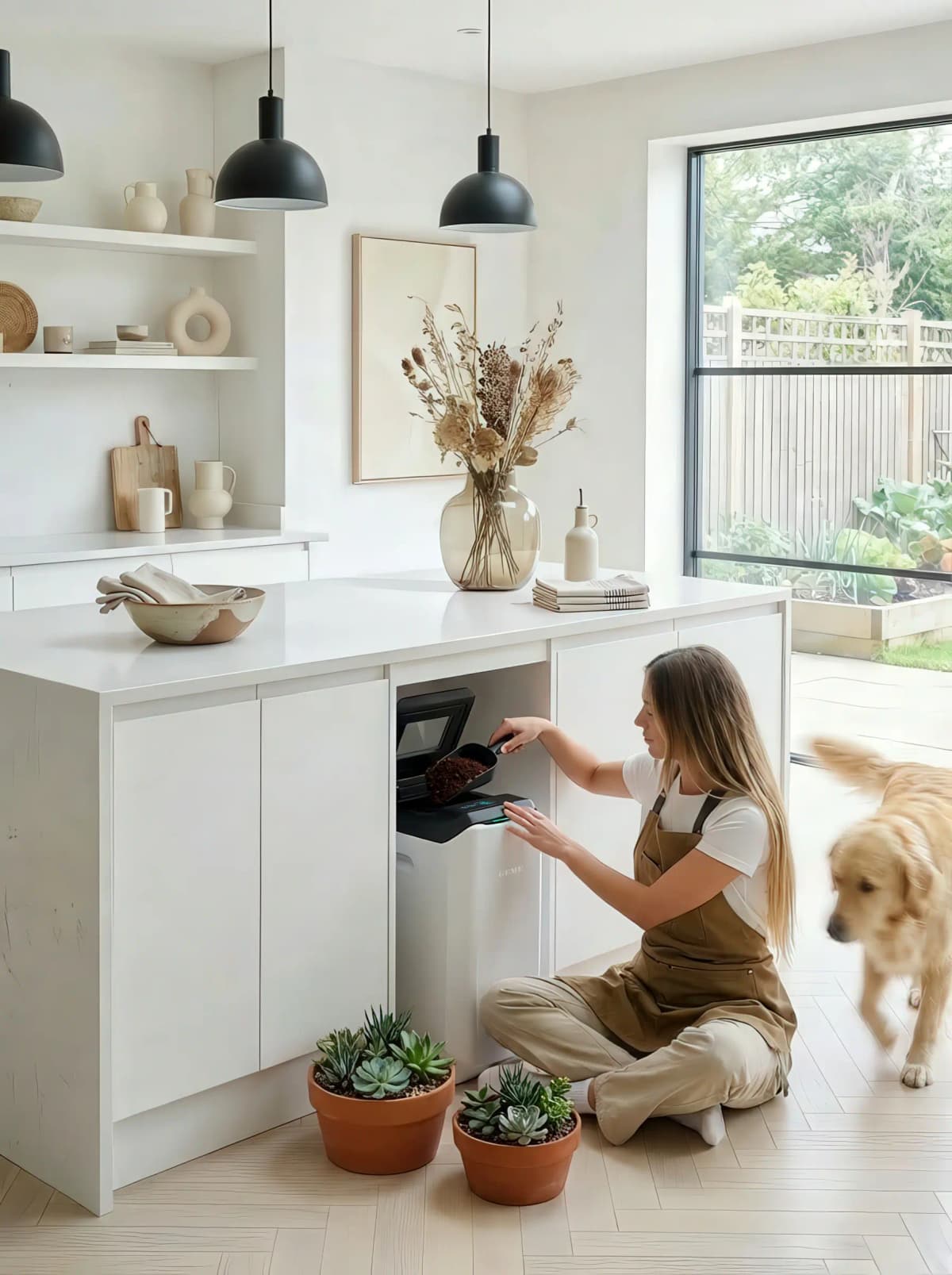
Keep appropriate scraps out of the landfill and return them to the soil.
Handle Food Waste Without Drying It Into Flakes
GEME Terra II and GEME Pro use real microbial composting for appropriate kitchen scraps. Add suitable leftovers, keep packaging out, screen larger pieces, and mix output with soil before plant use.
Terra II for everyday homes. GEME Pro for larger routines.
Final Takeaway: Know the Window, Then Waste Less
Leftover pizza is simple once you know the rules: refrigerate within 2 hours, keep it at 40°F or below, eat it within 3–4 days, and reheat it to 165°F.
If pizza sat out overnight or passed the safe fridge window, do not taste it or try to rescue it as food. Discard it safely.
Better still, prevent waste first: store pizza correctly, freeze what you cannot eat, and use a responsible organics pathway such as GEME for appropriate scraps when leftovers become waste.
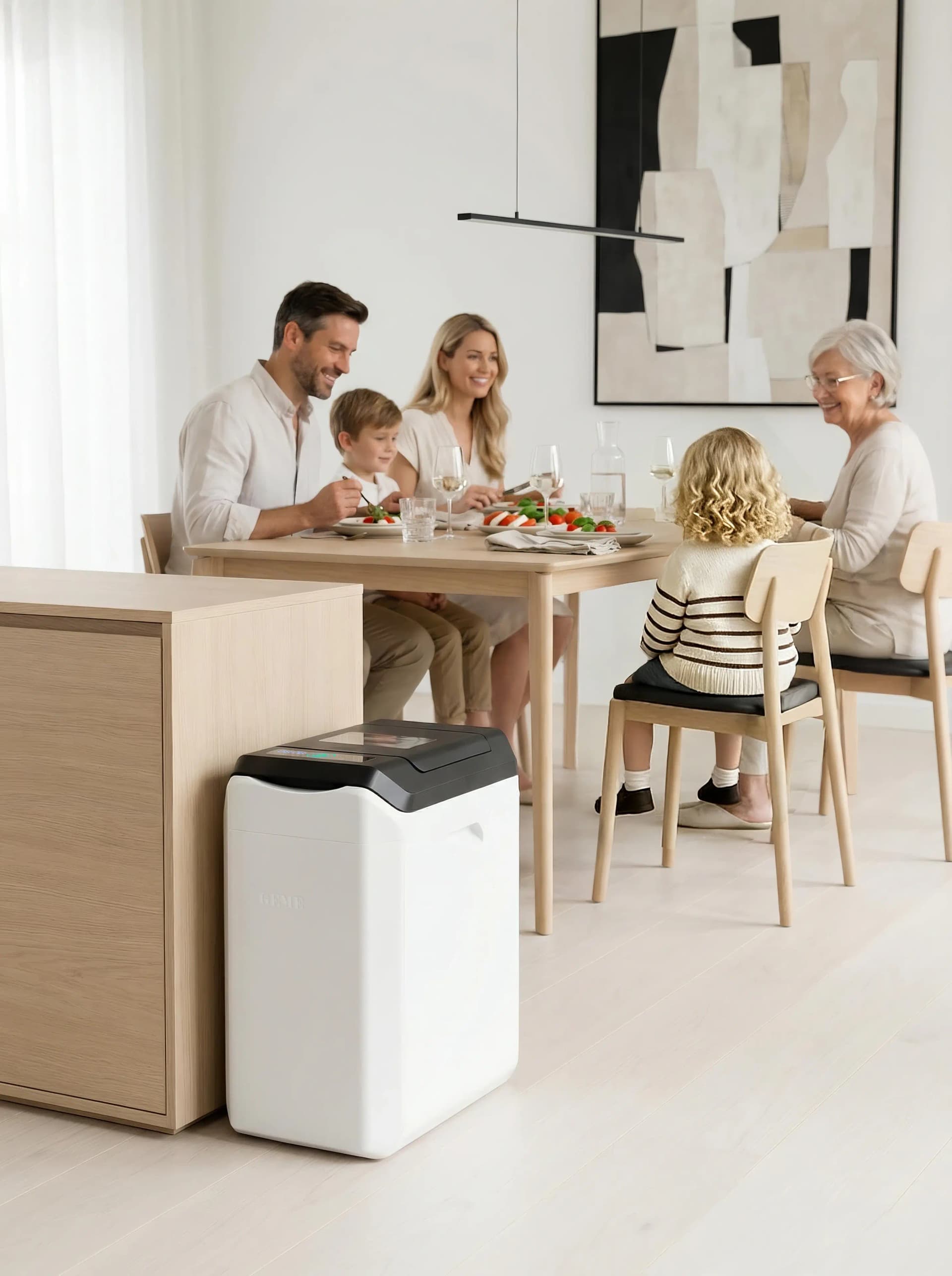
Store safely. Compost appropriately.
Build a Cleaner Food-Waste Routine With GEME
GEME Terra II and GEME Pro help households turn appropriate kitchen scraps into compost for soil blending, with real microbial composting, no filter replacements, and zero recurring filter costs.
Store safely. Compost responsibly. Feed the earth.
Frequently Asked Questions
How long does pizza last in the fridge?
Pizza lasts 3–4 days in the fridge if it was refrigerated within 2 hours and stored at 40°F / 4°C or below.
How long is pizza good for if left out?
Pizza should not sit out for more than 2 hours. If the temperature is above 90°F / 32°C, the safe window is 1 hour.
Can I eat pizza left out overnight?
No. Pizza left out overnight should be discarded, even if it looks and smells normal.
Can I eat 5-day-old pizza from the fridge?
It is not recommended. Official leftover guidance is 3–4 days in the refrigerator. After that, the risk of foodborne illness increases.
Does meat pizza last less time than cheese pizza?
For safety, use the same 3–4 day leftover rule and reheat thoroughly. Meat toppings may lose quality faster and should be handled carefully.
What temperature should I reheat pizza to?
Reheat leftover pizza to an internal temperature of 165°F / 74°C.
Can I freeze leftover pizza?
Yes. Freeze leftover pizza if you cannot eat it within 3–4 days. For best quality, use frozen leftovers within about 3–4 months.
How do I know if pizza has gone bad?
Discard pizza with mold, sour smell, slimy toppings, unusual discoloration, or any pizza that is outside the safe storage window.
Can I put leftover pizza in GEME Terra II?
Appropriate pizza scraps can be processed through GEME Terra II according to product guidance. Remove all packaging, avoid excess liquid oil, add modest amounts, and mix the compost output with soil before plant use.
Can I compost moldy pizza?
Do not eat moldy pizza. For disposal, use an accepted organics pathway or GEME only if the material fits product guidance. Remove packaging and avoid handling in a way that spreads mold or mess.
Summary
- Fridge rule: leftover pizza lasts 3–4 days when refrigerated properly.
- Temperature rule: keep leftovers at 40°F / 4°C or below.
- Room-temperature rule: refrigerate within 2 hours, or within 1 hour above 90°F / 32°C.
- Overnight rule: pizza left out overnight should be discarded.
- Day 5+: not recommended, even if the pizza looks fine.
- Reheating: heat leftovers to 165°F / 74°C.
- Freezing: freeze leftovers you cannot eat in time; quality is best within about 3–4 months.
- Storage: airtight containers or tight wrapping are better than cardboard boxes.
- Waste: appropriate pizza scraps can be composted through GEME according to product guidance.
- GEME output: screen larger pieces and mix compost base with soil before plant use.
Sources
- USDA FSIS — Leftovers and Food Safety
- USDA FSIS — Danger Zone 40°F–140°F
- FoodSafety.gov — Leftovers: The Gift That Keeps on Giving
- U.S. EPA — Wasted Food Scale
- U.S. EPA — Quantifying Methane Emissions From Landfilled Food Waste
- GEME — Terra II Product Page
- GEME — How Real Microbial Composting Works
- GEME — Advanced Compost Application Guide

Dejar un comentario
Este sitio está protegido por hCaptcha y se aplican la Política de privacidad de hCaptcha y los Términos del servicio.