
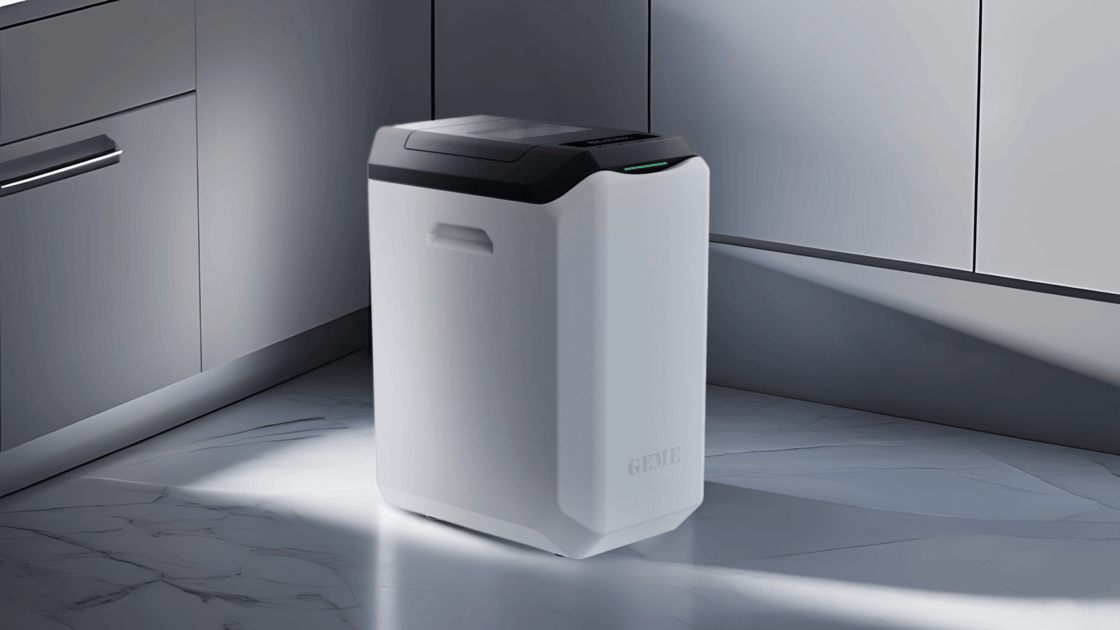
Food Waste, Home Composting & GEME Guide
Food waste is not only a trash problem. It is a resource problem, a landfill problem, and a daily household habit problem.
GEME helps households turn appropriate kitchen scraps into compost output for soil blending through real microbial composting, not simple drying, not disposable filter subscriptions, and not another complicated backyard pile.
Simple idea: waste less food first, then compost suitable scraps better.
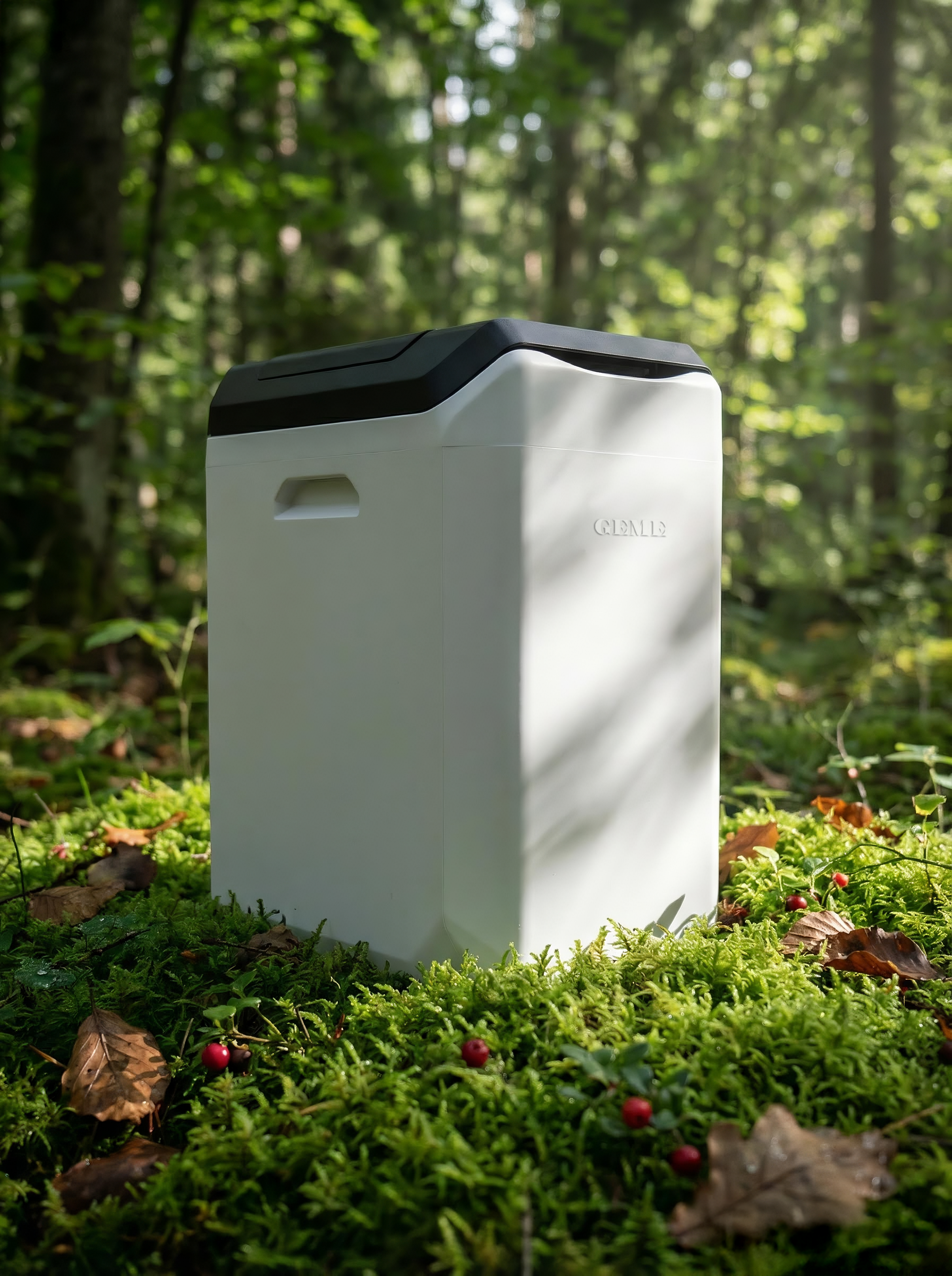
Reduce landfill waste and return suitable scraps to the soil cycle.
Quick Answer
GEME helps reduce food waste at home by making real microbial composting easier to fit into everyday kitchen life. Instead of sending suitable scraps to landfill, users can process appropriate food waste in an enclosed microbial system and later use the compost output as a soil-blending material.
The five practical reasons are simple: landfill diversion, soil return, daily convenience, lower recurring filter burden, and a more circular household routine.
GEME is not a license to waste food. The best routine is still to plan meals, store food well, eat what you can, share what is still edible, and compost suitable scraps only when food becomes waste.
Related reading: how to reduce food waste at home, what is an electric composter, and advanced GEME compost application guide.
Key Takeaways
- Food waste is a household issue. A large share of global food waste happens after food reaches consumers.
- Landfill is the wrong ending for food scraps. Food waste in landfills can generate methane under low-oxygen conditions.
- Composting is biological. Real composting depends on microorganisms, oxygen, moisture, and time.
- GEME supports microbial composting. Terra II uses Kobold™ living microbes and adaptive control to create a moist compost base.
- The output is not potting soil. Screen larger pieces and mix GEME output with soil at about 1:8–1:10 before plant use.
- No replacement odor filters. Terra II is designed without recurring charcoal-filter replacements.
- Convenience matters. Composting only works when it fits real daily routines.
- Prevention comes first. Store food better, eat leftovers safely, freeze early, share edible surplus, and compost suitable scraps last.
Table of Contents
- Why Food Waste Needs a Better Home Solution
- Reason 1: Keep Suitable Food Scraps Out of the Landfill
- Reason 2: Create Compost Output for Soil Blending
- Reason 3: Make Composting Fit Daily Kitchen Life
- Reason 4: Avoid Recurring Odor-Filter Costs
- Reason 5: Build a Circular Household Routine
- What Can Go Into GEME?
- How to Use GEME Compost Output
- Which GEME Model Should You Choose?
- FAQ
- Summary
- Sources
- Related Articles
Why Food Waste Needs a Better Home Solution
Food waste feels small when it is just one banana peel, one plate of leftovers, or one forgotten box in the fridge. But at the household scale, these small moments add up.
The real solution starts before composting: buy thoughtfully, store food correctly, eat leftovers safely, freeze what you cannot finish, and share edible surplus when possible. Composting is what happens after prevention and reuse have done their job.
Best practice: reduce avoidable food waste first, then compost the suitable scraps that remain.
GEME fits into this last step: it helps households manage suitable food scraps in a cleaner, more contained, more consistent way.
Reason 1: Keep Suitable Food Scraps Out of the Landfill
When food scraps go to landfills, they are buried in low-oxygen conditions. That is very different from aerobic composting, where microorganisms break down organic material with oxygen.
At home, you cannot solve the entire global food waste problem alone. But you can change the ending for your own suitable kitchen scraps: fruit peels, vegetable trimmings, coffee grounds, eggshells, stale bread, plate scrapings, and other appropriate food waste according to product guidance.
Important Boundary
Composting is not a substitute for food safety. If food is no longer safe to eat, do not taste it or try to rescue it. Treat it as waste and handle it responsibly.
Reason 2: Create Compost Output for Soil Blending
Composting is valuable because it returns organic matter toward the soil cycle. Instead of treating food scraps as trash, composting helps turn them into a soil-supporting material.
GEME Terra II produces a moist compost base. This output should be treated as concentrated compost material for soil blending, not as pure potting soil. For responsible plant use, screen larger pieces and mix the compost base with soil.
Why Soil Blending Matters
- It dilutes concentrated organic material.
- It reduces direct root contact with fresh output.
- It helps unfinished pieces continue breaking down safely.
- It makes the output easier to use in garden beds, pots, and outdoor soil.
- It supports a more controlled transition from kitchen scraps to plant-supporting soil amendment.
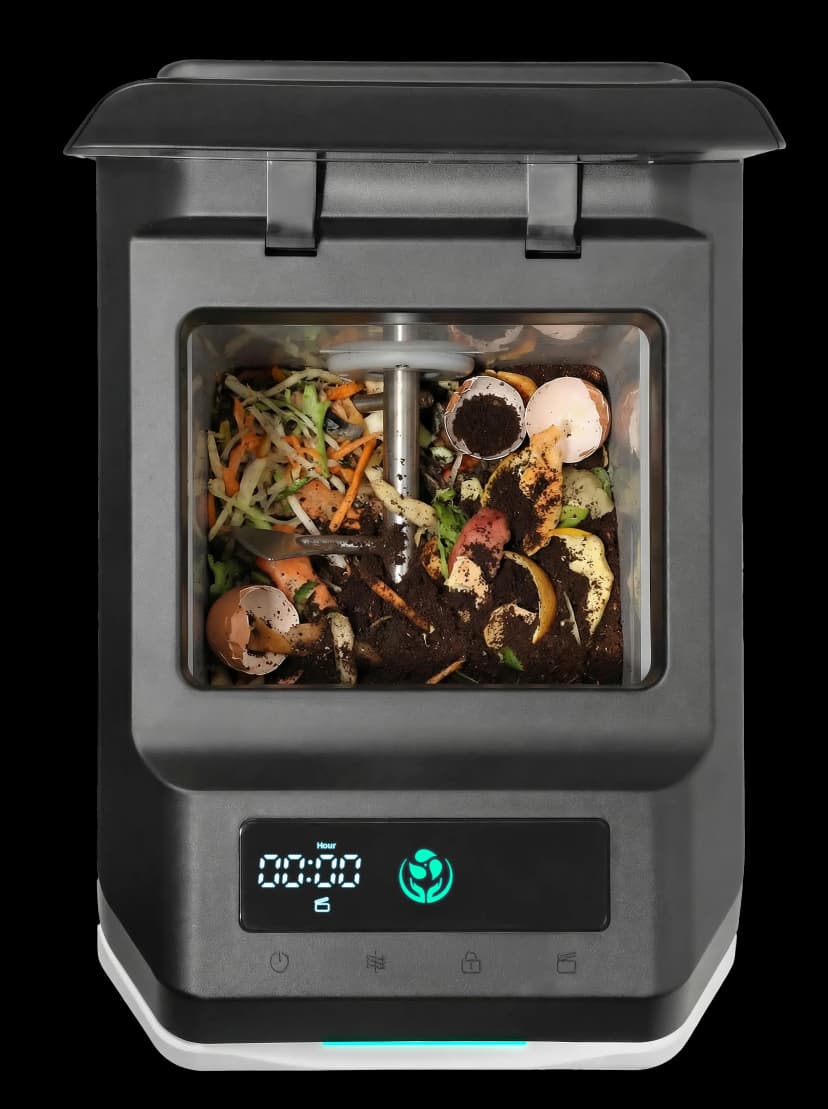
Start with what your household already throws away.
Turn Suitable Food Scraps Into Compost Base With GEME Terra II
GEME Terra II supports real microbial composting with Kobold™ living microbes, adaptive control, continuous feeding, no drying, and no replacement odor filters. Screen the output and mix it with soil before plant use.
Real microbial composting. No drying. No replacement odor filters.
Reason 3: Make Composting Fit Daily Kitchen Life
Traditional composting can work beautifully, but many households struggle with space, weather, pests, turning, odor, and the mental load of managing a pile. Composting only succeeds when it becomes a habit people can actually keep.
GEME is designed to make composting feel closer to a daily food-waste routine: add suitable scraps, let the microbial system work, and harvest compost base when needed. The system is enclosed, powered, and built for households that want a cleaner alternative to a backyard pile.
| Composting Challenge | Why It Stops People | How GEME Helps |
|---|---|---|
| No yard | Outdoor piles are not realistic for many homes. | An enclosed appliance supports indoor food-scrap processing. |
| Pest worries | Open food scraps can attract insects and animals. | A closed chamber keeps suitable scraps contained during normal use. |
| Turning and monitoring | Manual pile management takes time and confidence. | Mixing, airflow, moisture, and temperature are supported by the appliance. |
| Daily friction | If composting feels hard, the habit breaks. | Continuous feeding makes suitable scrap handling easier to repeat. |
Reason 4: Avoid Recurring Odor-Filter Costs
Many kitchen food-waste devices depend on replaceable charcoal filters or recurring consumables. That creates two problems: ongoing cost and one more thing users have to remember.
GEME Terra II is designed with no replacement odor filters. That does not mean users can ignore good operation. It means odor control is built into the appliance design rather than relying on a recurring filter subscription.
What Still Matters for Odor Control
- Add suitable scraps according to product guidance.
- Avoid dumping excessive liquid oil, sauce, or very wet loads.
- Do not overload the chamber.
- Keep the living base active rather than fully emptying it every time.
- Screen larger unfinished pieces and return them to the chamber.
- Follow maintenance and cleaning guidance when needed.
Reason 5: Build a Circular Household Routine
The strongest benefit of composting is not only what happens inside the appliance. It is what happens to the household routine around it.
When food scraps stop feeling like invisible trash, families become more aware of what they buy, what they forget, what they overcook, and what they can save next time. Composting becomes a feedback loop for better food habits.
A Better Food-Waste Order
- Plan better.
- Store food correctly.
- Eat leftovers safely.
- Freeze early.
- Share edible surplus.
- Compost suitable scraps.
What Can Go Into GEME?
GEME is designed for appropriate kitchen scraps, but good input choices still matter. A real composter is a biological system, not a magic disposal hole.
| Input Type | General Guidance | Practical Tip |
|---|---|---|
| Fruit and vegetable scraps | Usually suitable. | Cut large pieces smaller; avoid huge wet fruit loads all at once. |
| Coffee grounds and tea leaves | Usually suitable. | Remove synthetic tea bags, staples, strings, and labels. |
| Eggshells | Suitable, but slow to disappear visually. | Crush shells to speed integration; screen larger pieces back if needed. |
| Cooked leftovers | Use according to GEME product guidance. | Avoid overloading with very oily, salty, saucy, or wet foods. |
| Packaging and plastics | Do not add. | Remove stickers, twist ties, plastic wrap, coated paper, and labels. |
How to Use GEME Compost Output
GEME output should be used as a compost base for soil blending. This is an important distinction. Do not use pure output as potting soil, and do not place fresh concentrated output directly around sensitive roots.
Screen, Return, Mix, Cap
- Screen: remove large unfinished pieces.
- Return: put larger pieces back into the chamber so they continue breaking down.
- Mix: blend screened output with soil at about 1:8–1:10.
- Cap: cover the mixture with plain soil when using near plants.
Which GEME Model Should You Choose?
GEME Terra II and GEME Pro share the same core idea: real microbial composting for appropriate kitchen scraps. The best choice depends on your household routine and food-waste volume.
| Model | Best For | Core Benefit |
|---|---|---|
| GEME Terra II | Everyday home food-waste routines. | Compact, continuous-feed microbial composting with no replacement odor filters. |
| GEME Pro | Larger households or heavier daily routines. | More headroom for bigger food-waste patterns. |
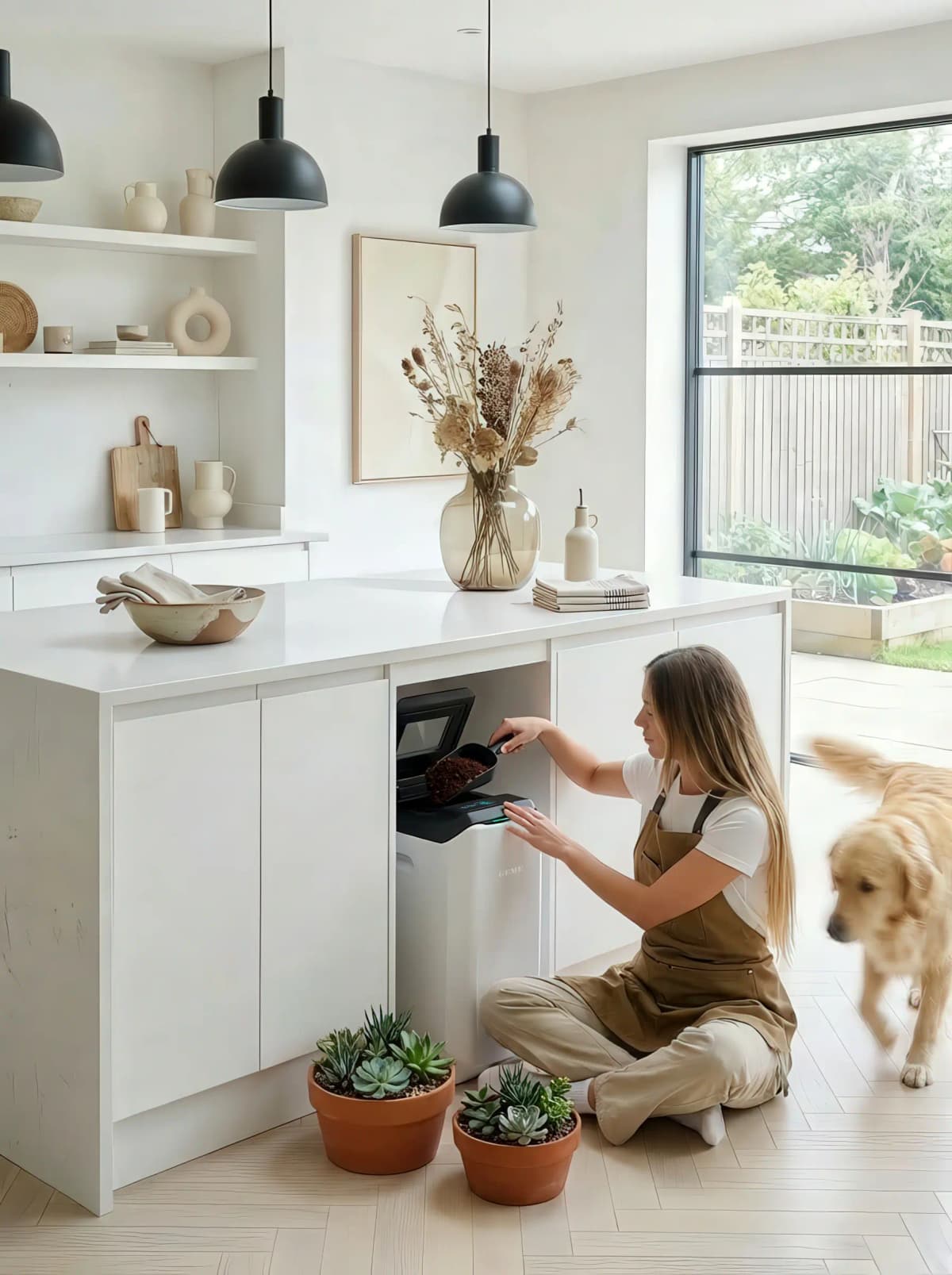
A cleaner home routine for suitable kitchen waste.
Build a Food-Waste Routine That Actually Lasts
GEME Terra II and GEME Pro help households process appropriate kitchen scraps through real microbial composting. Add suitable scraps, maintain the living base, screen the output, and mix the compost base with soil.
Terra II for everyday homes. GEME Pro for larger routines.
Final Takeaway: Food Waste Can Have a Better Ending
The best food-waste solution is not one single appliance. It is a better routine: buy better, store better, eat what you can, freeze early, share edible surplus, and compost the suitable scraps that remain.
GEME makes the composting part easier by bringing real microbial composting into a contained home appliance. Instead of sending suitable scraps to the landfill, you can return them to the soil cycle.
That is the real reason GEME matters: it turns food-waste action from an occasional good intention into a daily household habit.
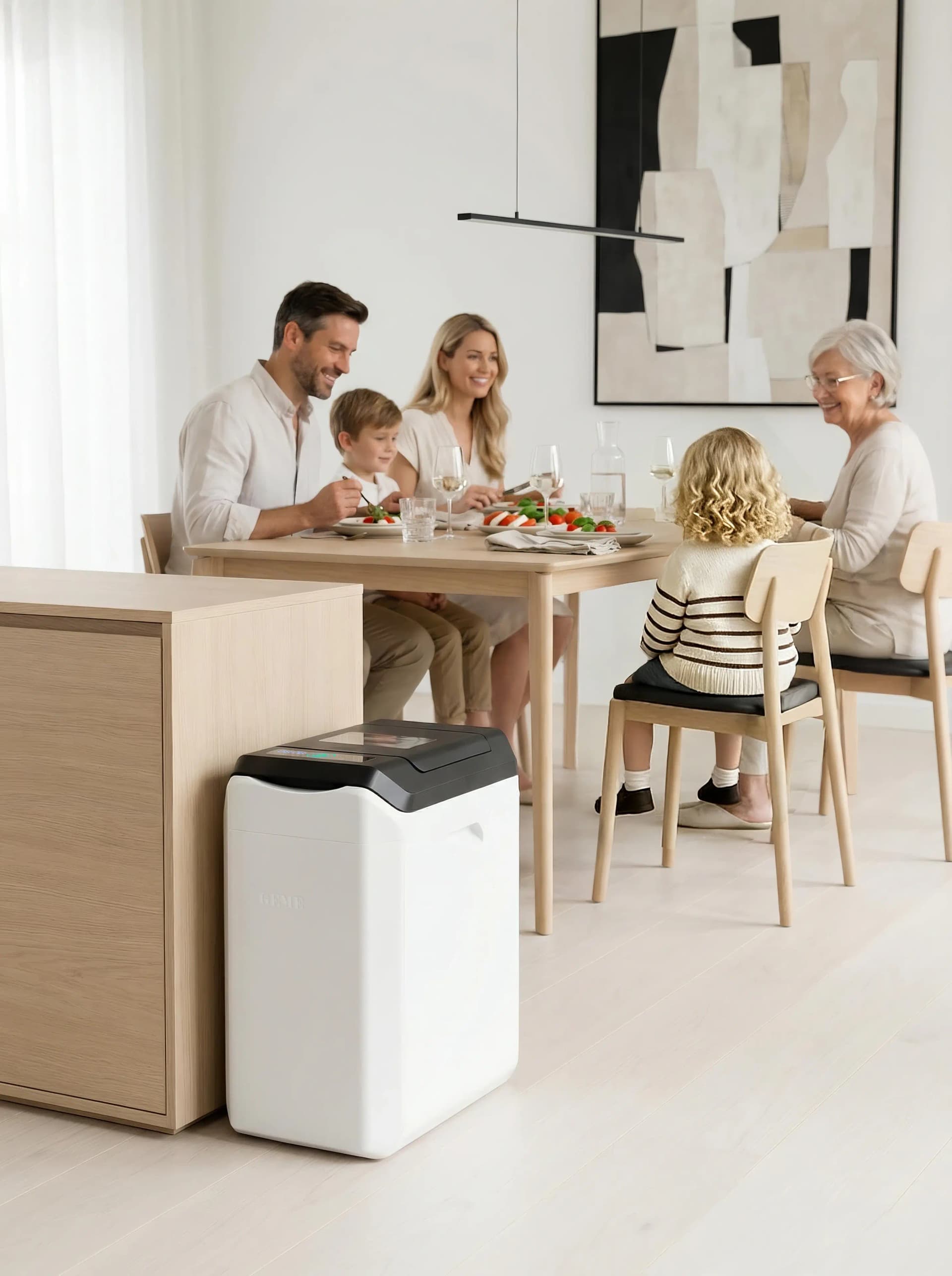
Waste less, compost suitable scraps, and close the loop at home.
Start Composting Food Waste at Home With GEME
GEME Terra II and GEME Pro help households turn appropriate kitchen scraps into compost for soil blending, with living microbes, continuous feeding, no drying, no replacement odor filters, and zero recurring filter costs.
Waste less. Compost better. Feed the earth.
Frequently Asked Questions
How does GEME help reduce food waste?
GEME helps households process appropriate kitchen scraps through real microbial composting instead of sending all scraps to the landfill. It supports the composting stage of a better food-waste routine.
Is GEME a food waste dehydrator?
No. GEME Terra II is designed around living microbes, oxygen, moisture, mixing, and adaptive control. It produces a moist compost base for soil blending, not dried waste flakes.
Can GEME compost all food waste?
GEME is designed for appropriate kitchen scraps according to product guidance. Users should remove packaging, avoid overloads, avoid excessive liquid oil or sauce, and follow the product instructions for complex leftovers.
Can GEME output be used directly on plants?
Do not use pure GEME output directly around roots. Screen larger pieces and mix the compost base with soil at about 1:8–1:10 before plant use.
Does GEME require replacement odor filters?
GEME Terra II is designed with no replacement odor filters, which helps avoid recurring charcoal-filter costs. Users should still follow normal operation and maintenance guidance.
Is composting better than throwing food waste away?
Composting suitable food scraps is generally a better end-of-life pathway than landfilling because it keeps organic material in the soil cycle. However, edible food should be eaten, shared, or preserved before it becomes waste.
What should I do before composting food?
Prevent waste first: plan meals, store food correctly, eat leftovers safely, freeze early, and share edible surplus. Compost suitable scraps only when food is no longer useful as food.
Which GEME model is best for everyday homes?
GEME Terra II is the newer, compact, real microbial kitchen composter for everyday household routines. GEME Pro is better for larger households or heavier food-waste routines.
Summary
- Food waste is a global and household problem. Small daily scraps add up.
- Prevention comes first. Buy better, store better, eat leftovers safely, freeze early, and share edible food.
- Composting is the next step. Suitable scraps can be returned to the soil cycle instead of landfill.
- GEME supports real microbial composting. Terra II uses living microbes and adaptive control.
- GEME does not simply dry scraps. The output is a moist compost base for soil blending.
- Use output responsibly. Screen larger pieces and mix with soil at about 1:8–1:10.
- Convenience matters. Composting becomes powerful only when it becomes a repeatable daily habit.
- No replacement odor filters. Terra II avoids recurring charcoal-filter replacement costs.
- Terra II fits everyday homes. GEME Pro gives more headroom for larger routines.
- Best reason to choose GEME: it helps make food-waste action practical, visible, and repeatable.
Sources
- UNEP — World Squanders Over 1 Billion Meals a Day
- UNEP — Food Waste Index Report 2024
- U.S. EPA — Wasted Food Scale
- U.S. EPA — Quantifying Methane Emissions From Landfilled Food Waste
- U.S. EPA — Composting at Home
- U.S. EPA — Composting
- GEME — Terra II Product Page
- GEME — How Real Microbial Composting Works
- GEME — Advanced Compost Application Guide


Dejar un comentario
Este sitio está protegido por hCaptcha y se aplican la Política de privacidad de hCaptcha y los Términos del servicio.