



Guía de ingeniería: control de olores, filtros y mantenimiento a largo plazo
El control de olores es una de las mayores diferencias ocultas de propiedad entre los compostadores de cocina. Algunos sistemas dependen de filtros de carbón desechables. GEME está diseñado en torno a una vía catalítica de oxidación por iones metálicos sin sustitución periódica de los filtros de olores.
El beneficio práctico es sencillo: menos consumibles recurrentes, menos recordatorios de mantenimiento y menos fricción diaria para los hogares que desean que el compostaje se adapte a la vida normal en la cocina.
Regla sencilla: el control de olores debe proteger la rutina de la cocina, no convertirse en otra tarea recurrente.

Diseñado para un mantenimiento recurrente menor.
Respuesta rápida
GEME utiliza una vía de control de olores basada en catalizadores en lugar de un modelo de propiedad de filtros de carbón desechables periódicos. En GEME Terra II, el método oficial de purificación es la oxidación por iones metálicos, y el producto se presenta sin filtros de olores de sustitución y con cero costes recurrentes de purificación.
Los filtros de carbón desechables pueden ayudar a atrapar los olores, pero con el tiempo se convierten en un consumible: los usuarios tienen que recordarlos, comprarlos, sustituirlos y volver a pagarlos. La orientación de ingeniería de GEME elimina ese ciclo rutinario de sustitución de filtros de la propiedad normal.
Eso no significa que la física de los olores desaparezca. Las cargas muy húmedas, el exceso de líquido, las sobrecargas o el mal equilibrio de la cámara aún pueden crear olores más fuertes cuando la tapa está abierta. La diferencia es que el sistema de GEME está diseñado para gestionar los olores en segundo plano durante el uso normal sin convertir los filtros en una tarea recurrente del hogar.
Lecturas relacionadas: costes de filtros para contenedores de compostaje eléctricos, mejor compostador para evitar costes recurrentes y cómo reducir los olores en el compostaje en interiores.
Índice
Por qué es importante el control de olores en los compostadores de cocina
Los compostadores de cocina están cerca de las personas. Se encuentran en cocinas, áreas de servicio, apartamentos, garajes, despensas o pequeños espacios interiores. Eso significa que el control de olores no es una característica menor. Determina si el aparato se convierte en un hábito diario o en una máquina que la gente deja de usar.
En esta categoría, el control de olores a menudo se describe como si fuera solo un problema de olor. En realidad, también es un problema de mantenimiento, un problema de costes recurrentes y un problema de experiencia del usuario.
La verdadera pregunta: ¿el sistema de control de olores apoya discretamente el uso diario o crea otra rutina de sustitución y limpieza?
Para los compradores que comparan sistemas, por eso importan los modelos de filtros. Una máquina puede parecer sencilla el primer día, pero puede volverse más exigente una vez que comienzan la sustitución de filtros, la compra de recargas, el envío, el almacenamiento y los rituales de limpieza.
La vía de filtros de carbón desechables
Muchos aparatos domésticos para residuos de alimentos utilizan filtros de carbón activado o carbón para ayudar a reducir los olores. La idea básica es familiar: el aire pasa a través del medio de carbón y los compuestos de olor quedan atrapados o adsorbidos por ese medio.
La fortaleza de este enfoque es la sencillez a nivel de ingeniería. La debilidad es que el medio de carbón puede convertirse en un consumible. A medida que se satura o pierde eficacia, los usuarios pueden necesitar sustituir los filtros, comprar recargas o suscribirse a paquetes de sustitución.
Lo que el carbón desechable suele significar para la propiedad
- Los usuarios deben recordar los intervalos de sustitución.
- El rendimiento de los filtros puede disminuir con el tiempo.
- Los paquetes de sustitución crean un coste recurrente.
- El envío, los impuestos y la configuración de la suscripción pueden cambiar el coste real.
- Los filtros olvidados pueden hacer que el aparato se sienta peor incluso si la máquina en sí sigue funcionando.
- Los filtros agotados se convierten en otro flujo de residuos.
El carbón desechable puede ser un método válido de control de olores, pero no está exento de mantenimiento. Para los compradores a largo plazo, la comparación correcta no es solo el precio de la máquina. Es el precio de la máquina más el coste de los filtros, la frecuencia de sustitución y la inconveniencia de tener consumibles a mano.
La vía catalítica de GEME: oxidación por iones metálicos
GEME Terra II se presenta en torno a una arquitectura de control de olores diferente. Su página oficial del producto describe la vía de purificación como oxidación por iones metálicos y destaca la ausencia de filtros de olores de sustitución y cero costes recurrentes de purificación.
Para los usuarios, la ingeniería importa porque elimina una tarea rutinaria. En lugar de pedir a los hogares que compren y sustituyan filtros de carbón desechables, GEME mantiene la gestión de olores dentro del diseño del sistema durante la operación normal.
Beneficio para el usuario
La vía catalítica no es una característica que los usuarios deban gestionar todos los días. Su valor es que los usuarios pueden centrarse en el manejo de los restos de comida y la producción de compost, no en los calendarios de filtros.
Esta es también la razón por la que la historia de los olores de GEME debe enmarcarse como menor fricción diaria, no como magia. Un compostador microbiano real aún tiene límites de humedad, flujo de aire y equilibrio de carga. La diferencia es que el control de olores normal no depende de un ciclo recurrente de sustitución de filtros de carbón.

Sin sustitución periódica de filtros de olores.
Conoce GEME Terra II
Terra II está construido para el compostaje microbiano diario con alimentación continua, sin secado, sin filtros de olores de sustitución y producción de compost para mezclar con la tierra.
Diseñado para una menor fricción diaria en la gestión de olores.
Vía catalítica frente a filtros de carbón desechables
La diferencia es más fácil de ver cuando comparas el modelo de propiedad, no solo la afirmación de control de olores.
| Punto de comparación | Vía de filtros de carbón desechables | Vía catalítica de GEME |
|---|---|---|
| Lógica principal | Los compuestos de olor quedan atrapados por medios de carbón o carbón vegetal reemplazables. | La gestión de olores se basa en la oxidación por iones metálicos y la lógica de flujo de aire a nivel del sistema. |
| Consumibles periódicos | Pueden ser necesarios filtros de sustitución o recargas. | Sin sustitución periódica de filtros de olores. |
| Coste a largo plazo | Los costes de los filtros pueden acumularse durante meses y años. | No hay ninguna categoría de compra recurrente de filtros de purificación en la propiedad normal. |
| Carga de recordatorios para el usuario | Los usuarios pueden necesitar controlar el momento de reemplazo. | No se necesita un calendario de filtros para el control rutinario de olores. |
| Modo de fallo | Los filtros olvidados o saturados pueden reducir el rendimiento percibido del control de olores. | El rendimiento depende más del equilibrio del sistema, el flujo de aire, la humedad y el uso correcto. |
| Mejor ajuste para el usuario | Usuarios que aceptan los consumibles recurrentes como parte de la propiedad. | Usuarios que desean menos tareas recurrentes y un mantenimiento predecible a largo plazo. |
Por qué GEME se siente más sencillo en el uso diario
Sin ciclo rutinario de reemplazo de filtros
La primera diferencia del uso diario es psicológica tanto como técnica. Con los sistemas de carbón desechables, los usuarios saben que se acerca el momento de reemplazo. Con GEME, el control de olores no se basa en cambios rutinarios de filtros de carbón.
Sin mentalidad de suscripción de filtros
Los paquetes de filtros recurrentes hacen que una máquina se sienta más como un electrodoméstico de suscripción. GEME evita ese patrón de propiedad para el control de olores, lo que hace que la estructura de costos a largo plazo sea más fácil de entender.
Operación continua en lugar de supervisión por lotes
El flujo de trabajo de GEME está diseñado para la alimentación continua y la actividad microbiana constante. Los usuarios no necesitan pensar en cada momento de desperdicio de comida como un ciclo de secado separado que debe iniciarse, finalizarse, enfriarse, vaciarse y limpiarse.
Cuidado ocasional, no restablecimiento después de cada uso
GEME aún necesita un cuidado sensato, pero el modelo de propiedad no está destinado a ser un ritual de limpieza después de cada uso. El cuidado normal se entiende mejor como basado en condiciones: mantener la cámara equilibrada, evitar sobrecargas, vigilar la humedad y seguir las pautas de recuperación cuando sea necesario.
Por qué la ingeniería aún importa
Los usuarios no deberían necesitar entender cada detalle de ingeniería para usar un compostador de cocina. Pero la ingeniería explica por qué algunas máquinas exigen más trabajo rutinario que otras.
- El control de olores basado en catalizadores reduce la dependencia de medios filtrantes desechables.
- El flujo de aire continuo ayuda a gestionar el olor a nivel del sistema en lugar de solo atrapar los gases de escape al final.
- La gestión de la humedad importa porque las cargas muy húmedas pueden reducir la disponibilidad de oxígeno.
- La lógica de recuperación importa porque un sistema biológico necesita reequilibrarse, no solo más material de filtro.
- La alimentación continua hace que el electrodoméstico sea más fácil de integrar en las rutinas reales de la cocina.
La historia técnica respalda la promesa al usuario: el control de olores debe permanecer en segundo plano, para que el usuario tenga menos tareas rutinarias.
Límites de olores: Lo que “Sin filtros rutinarios” no significa
“Sin reemplazo rutinario de filtros de olores” no significa que todas las cargas de comida posibles se comportarán igual. El olor se ve afectado por la humedad, el oxígeno, el tamaño de las partículas, el volumen de la carga, el tipo de comida y el equilibrio microbiano.
Condiciones límite que pueden aumentar el olor
- Verter cargas de comida muy húmedas, como sopas o restos acuosos.
- Añadir exceso de aceite, salsa o grasa líquida.
- Sobrecargar la cámara más allá de las pautas normales.
- Dejar que el material se vuelva lodoso, pegajoso o compactado.
- Abrir la tapa durante una fase temporal de olores intensos.
- Ignorar las pautas de recuperación cuando la cámara está desequilibrada.
La expectativa correcta no es “desaparición mágica del olor.” La expectativa correcta es un manejo de olores con menos interrupciones bajo un uso normal, con pasos prácticos de recuperación cuando el sistema se lleva fuera de su zona de confort.
La misma lógica de control de olores de bajo mantenimiento.
¿Necesitas más capacidad?
GEME Pro lleva la misma lógica de propiedad sin filtros rutinarios a hogares más grandes, tiendas de plantas y rutinas diarias de desperdicio de comida más pesadas.
Diseñado para rutinas diarias más pesadas.
Reglas de decisión prácticas
Trata a GEME como de bajo mantenimiento, no como sin pensar. El objetivo es menos tareas recurrentes, no permiso para ignorar los límites de los desperdicios de comida.
Elige GEME si...
- Quieres cero reemplazo rutinario de filtros de olores.
- No te gustan los consumibles recurrentes.
- Prefieres la alimentación continua sobre el tiempo por lotes.
- Quieres una rutina diaria de desperdicio de comida de menor fricción.
- Valoras un mantenimiento predecible a largo plazo.
Lee los límites si...
- A menudo desechas sopas o alimentos acuosos.
- Tus restos son pesados en aceite, salsa o grasa líquida.
- Esperas que cada carga huela idéntica.
- Quieres una promesa sin pensar en lugar de un sistema de bajo mantenimiento.
- No quieres seguir los pasos de recuperación cuando la cámara está demasiado húmeda.
Buenas reglas de operación
- Mantén la máquina funcionando durante el uso normal.
- Añade restos adecuados según las pautas del producto.
- Evita el exceso de líquido, aceite, salsa y sobrecargas muy húmedas.
- Pausa la nueva entrada si la cámara se vuelve demasiado húmeda.
- Deja que el sistema se reequilibre antes de juzgar el rendimiento del olor.
- Usa las funciones de recuperación o secado según las pautas.
- Escala a través del soporte si el olor persiste después de los pasos normales de recuperación.
Preguntas frecuentes
¿GEME requiere reemplazo de filtros de olores?
No. GEME Terra II y GEME Pro están diseñados sin reemplazo rutinario de filtros de olores, lo que ayuda a reducir el costo de mantenimiento recurrente.
¿Cuál es la ruta de control de olores de GEME?
El enfoque de purificación oficial de GEME Terra II se describe como Oxidación de Iones Metálicos. Este artículo enmarca eso como una ruta de control de olores basada en catalizadores en comparación con los sistemas de filtros de carbón desechables.
¿Los filtros de carbón desechables son malos?
No necesariamente. Los filtros de carbón pueden ayudar a gestionar el olor. La compensación es que pueden convertirse en consumibles recurrentes que los usuarios necesitan reemplazar, reordenar, almacenar y pagar con el tiempo.
¿El no reemplazo rutinario de filtros significa que nunca puede haber olor?
No. Las cargas muy húmedas, el exceso de aceite, la sobrecarga o el mal equilibrio de la cámara pueden aumentar temporalmente el olor, especialmente cuando la tapa está abierta. El no reemplazo rutinario de filtros significa que el control de olores no depende de los cambios regulares de filtros de carbón.
¿Necesito limpiar GEME después de cada uso?
No. GEME se entiende mejor como un sistema de cuidado ocasional, basado en condiciones en lugar de un electrodoméstico de limpieza después de cada uso. Los usuarios aún deben seguir las pautas del producto y los pasos de recuperación cuando la cámara está desequilibrada.
¿Por qué la operación continua importa para el control de olores?
La operación continua apoya un entorno microbiano más estable y reduce la necesidad de gestionar cada carga de desperdicio de comida como un ciclo de lote separado. Eso puede hacer que el uso diario se sienta más fácil y menos interruptivo.
¿Qué debo hacer si GEME huele más fuerte de lo normal?
Primero verifica si la cámara está demasiado húmeda, sobrecargada o empacada con restos de alto olor. Pausa la nueva entrada, mantén el sistema funcionando y sigue las pautas oficiales de recuperación. Si el olor persiste, contacta al soporte.
¿Cuál es la mayor ventaja de la experiencia del usuario del control de olores de GEME?
Menor fricción recurrente: sin reemplazo rutinario de filtros de olores, menos consumibles, menos supervisión por lotes y una rutina diaria de compostaje más predecible.
Resumen
- El control de olores es un problema de propiedad a largo plazo. Afecta el mantenimiento, el costo y la experiencia diaria del usuario.
- Los filtros de carbón desechables pueden funcionar. Pero crean un ciclo de reemplazo y un costo recurrente de consumibles.
- GEME usa una ruta de catalizador. Terra II se posiciona alrededor de la Oxidación de Iones Metálicos y sin filtros de olores de reemplazo.
- El no reemplazo rutinario de filtros de olores importa. Elimina una tarea que muchos usuarios olvidan hasta que el rendimiento del olor cae.
- La operación continua importa. GEME está diseñado para la alimentación diaria en lugar de la supervisión por lotes.
- Los límites de olores aún importan. El exceso de humedad, aceite, salsa, sobrecargas y mal equilibrio de la cámara pueden aumentar el olor temporalmente.
- El bajo mantenimiento es la afirmación correcta. GEME reduce la fricción recurrente; no hace desaparecer la biología del compost.
- Regla de compra correcta: compara el modelo de propiedad completo, no solo el precio de la máquina.
Fuentes
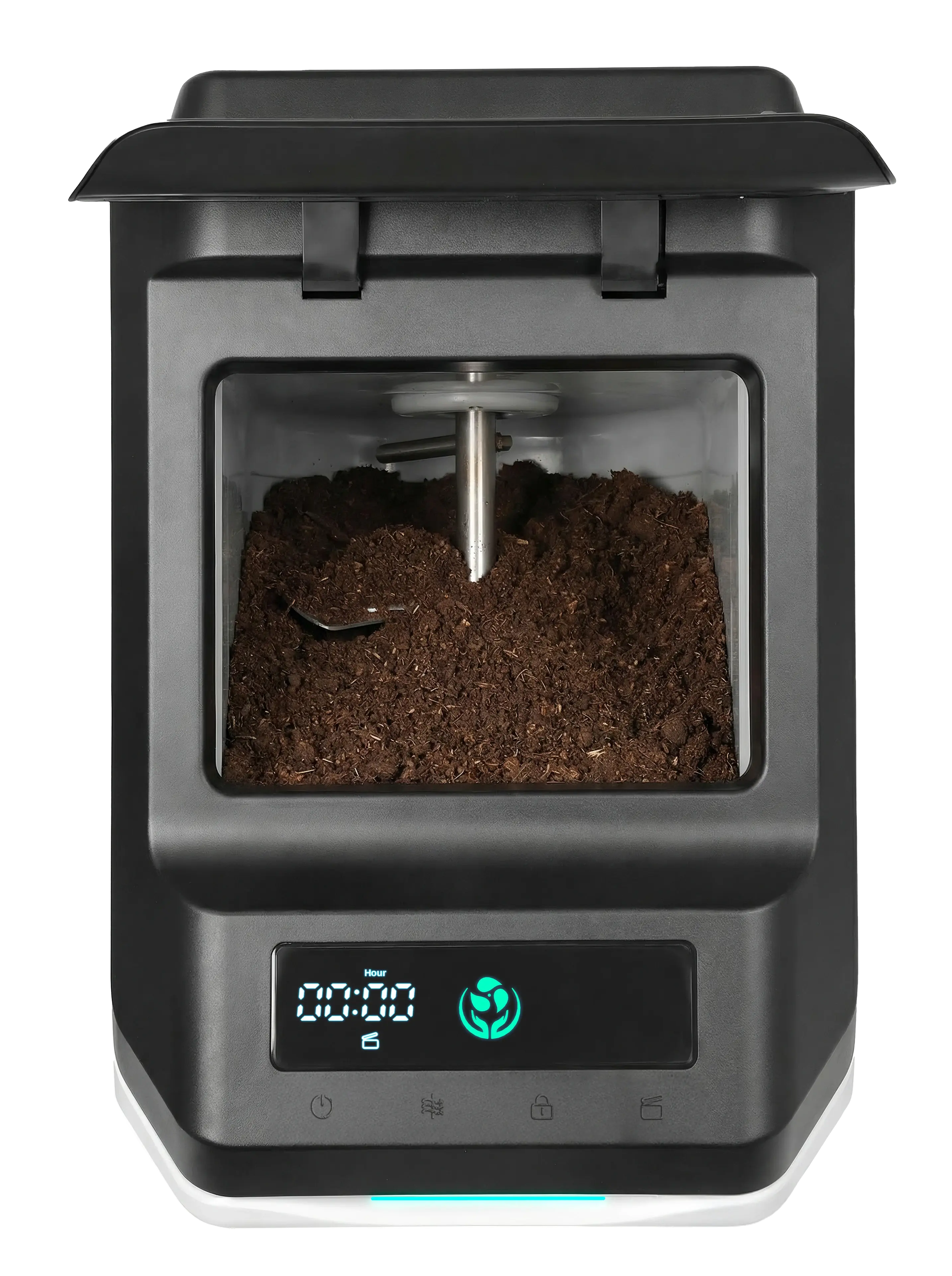
Composta a diario sin cambios rutinarios de filtros de olores.
Composta con menos complicaciones para controlar los olores
GEME Terra II y GEME Pro están diseñados para el compostaje microbiano real, el uso diario continuo y sin reemplazo rutinario de filtros de olores.
Sin reemplazo rutinario de filtros de olores. Sin cargos recurrentes por filtros de purificación.


Dejar un comentario
Todos los comentarios se revisan antes de su publicación.
Este sitio está protegido por hCaptcha y se aplican la Política de privacidad de hCaptcha y los Términos del servicio.