
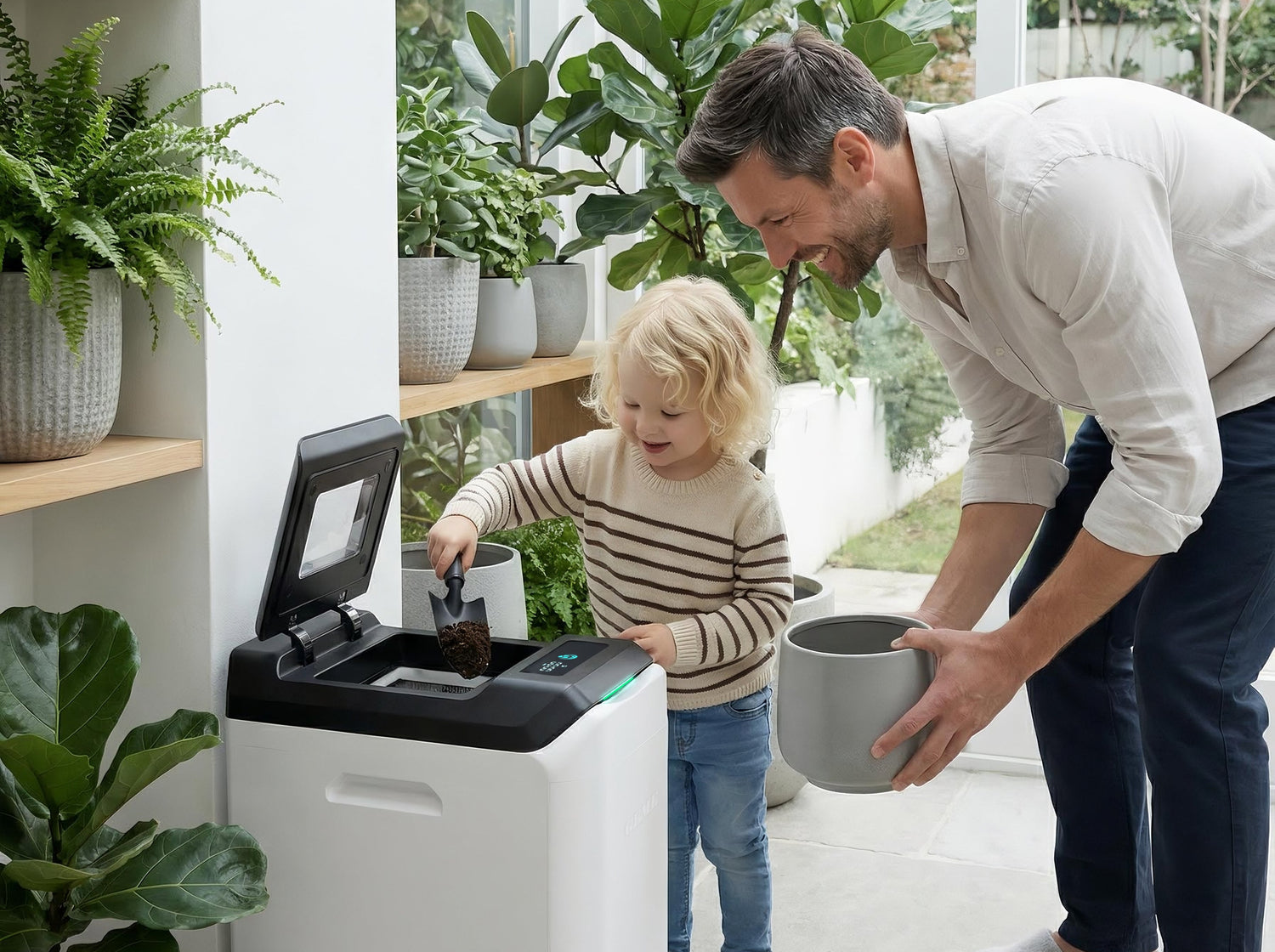
2026 Kitchen Composter Guide
Compare GEME Terra II, GEME Pro, Lomi, Mill, and Reencle by composting method, output quality, daily use, odor control, filter costs, and long-term value.
This guide separates microbial kitchen composters from dehydrator-style food recyclers, so you can choose the right system for your home, apartment, garden, or food-waste routine.
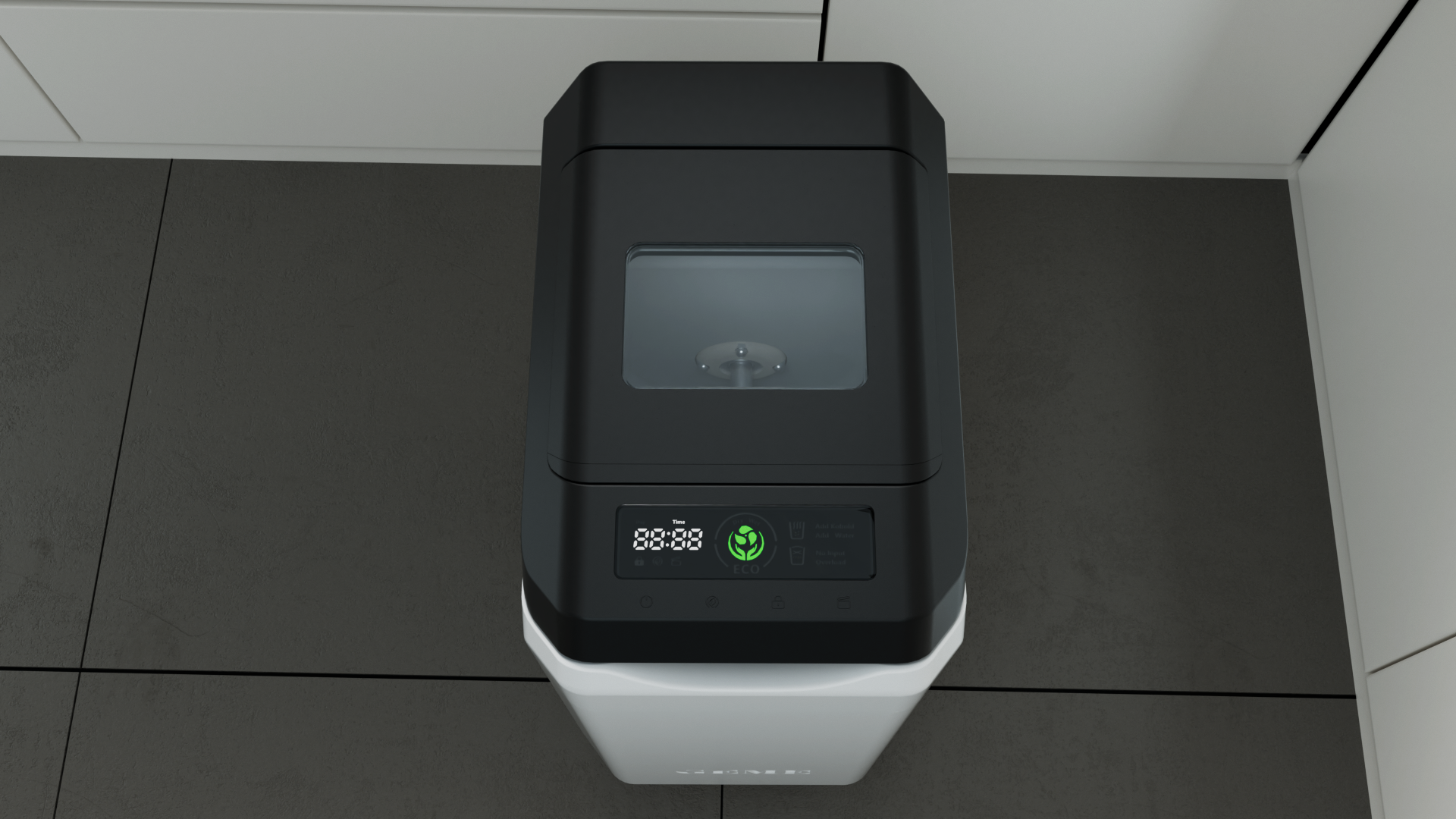
Composting, food recycling, and long-term cost.
Quick Answer
The best kitchen composter for most households in 2026 is GEME Terra II if your goal is daily microbial composting and compost-oriented output for soil blending. It is designed for continuous food-scrap processing, visible breakdown, and no routine odor filter replacement.
If you need a larger chamber for heavier daily food waste, GEME Pro is the better high-capacity choice. If your main goal is fast food-waste volume reduction rather than compost-oriented output, Lomi or Mill may still make sense as food recyclers. Reencle is the closest microbial alternative, but buyers should compare capacity, output handling, and maintenance carefully.
For deeper context, read our guides to real compost vs dehydrated food waste, electric composter filter costs, and how to use GEME compost output safely.
Key Takeaways
- Not every electric composter makes compost. Many machines mainly dry, heat, grind, or store food waste.
- Microbial composting and food recycling are different. Both can reduce waste, but the output and soil-use paths are not the same.
- GEME Terra II is the best overall pick. It fits households that want daily microbial kitchen composting and no routine odor filter replacement.
- GEME Pro is best for larger households. Choose it when the daily food-waste volume is heavier.
- Lomi and Mill are better framed as food recyclers. They can reduce volume, but output may need further composting before soil use.
- Reencle is the closest microbial competitor. Compare capacity, maintenance, output maturity, and filter model before buying.
Table of Contents
- Who This Guide Is For
- Top Kitchen Composters at a Glance
- How We Evaluated
- Real Composting vs Food Recycling
- 1. GEME Terra II — Best Overall
- 2. GEME Pro — Best for Larger Households
- 3. Lomi — Best for Volume Reduction
- 4. Mill — Best Food Recycler Workflow
- 5. Reencle — Best Microbial Alternative
- Which One Should You Choose?
- FAQ
- Sources
Who This Guide Is For
This guide is for anyone comparing kitchen composters, electric food recyclers, and indoor food-waste systems in 2026. It is especially useful if you want to understand what kind of output each product creates and whether that output fits your home or garden.
- Apartment dwellers comparing indoor composting options.
- Families trying to reduce daily food waste at home.
- Gardeners who want a compost base for soil blending.
- Buyers comparing GEME, Lomi, Mill, and Reencle.
- Anyone trying to avoid hidden filter costs, subscriptions, or routine consumables.
If you are new to composting, start with our beginner's guide to composting at home. If you live in a small space, also read the best indoor composter for apartments.
At a Glance: Top Kitchen Composters Compared
The best choice depends on whether you want compost-oriented output, high capacity, a simple food-recycling workflow, or the lowest-maintenance daily routine.
| Rank | Product | Best For | Core Method | Output Path | Verdict |
|---|---|---|---|---|---|
| 1 | GEME Terra II | Best overall | Microbial kitchen composting | Compost base for soil blending | Best daily household pick |
| 2 | GEME Pro | Larger households | Microbial kitchen composting | Compost base for soil blending | Best high-capacity option |
| 3 | Lomi | Fast volume reduction | Food recycling/drying workflow | May need further composting before soil use | Best compact food recycler |
| 4 | Mill | Food-scrap storage and reduction | Dry and grind food recycling | Grounds for later use or collection pathway | Best food recycler ecosystem |
| 5 | Reencle | Microbial alternative | Microorganism-based processing | May benefit from curing depending on use | Closest microbial competitor |
How We Evaluated the Best Kitchen Composters
We evaluated each product using practical daily-use criteria, not only marketing language. The best kitchen composter should fit how real households cook, clean, store scraps, and use the final output.
- Composting method: Does the product support microbial decomposition, or does it mainly dry and grind scraps?
- Output quality: Is the result compost base, pre-compost, dry grounds, or dehydrated residue?
- Daily usability: Can users add scraps continuously, or must they wait for batch cycles?
- Odor control: Does the system manage odor through process design, filters, or both?
- Maintenance: Are there routine filters, refills, subscriptions, or consumables?
- Apartment suitability: Does it work for indoor kitchens and smaller living spaces?
- Long-term value: Does the product remain practical after several years of use?
If maintenance cost is a key buying factor, read our dedicated electric composter filter cost comparison.
Real Composting vs Food Recycling
The biggest confusion in this category is the word “composter.” Some products support microbial composting. Others are better described as food recyclers because they dry, grind, store, or reduce food scraps.
Both approaches can be useful. But if your goal is soil use, you need to understand whether the output is a compost base, dry food residue, grounds, or material that needs further composting.
| Question | Microbial Kitchen Composter | Food Recycler / Dehydrator |
|---|---|---|
| Main process | Microbial breakdown with controlled conditions | Drying, grinding, heating, or storage |
| Typical output | Compost-like organic material or compost base | Dry residue, grounds, or reduced food waste |
| Soil use | Blend with soil according to guidance | May need further composting or program-specific handling |
| Best for | Kitchen-to-soil routines | Volume reduction and cleaner waste handling |
For a deeper explanation, read real compost vs dehydrated food waste.
1. GEME Terra II: Best Kitchen Composter Overall
Best for: Most households that want daily microbial kitchen composting, compost-oriented output, and no routine odor filter replacement.
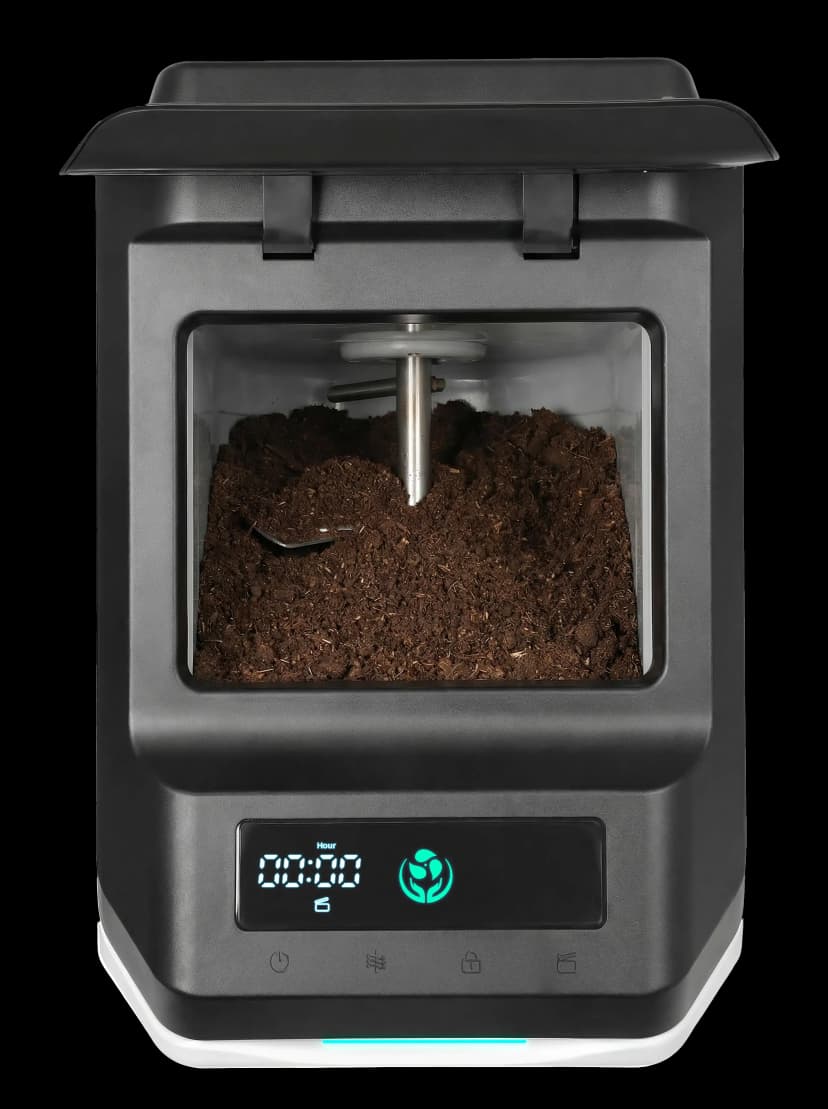
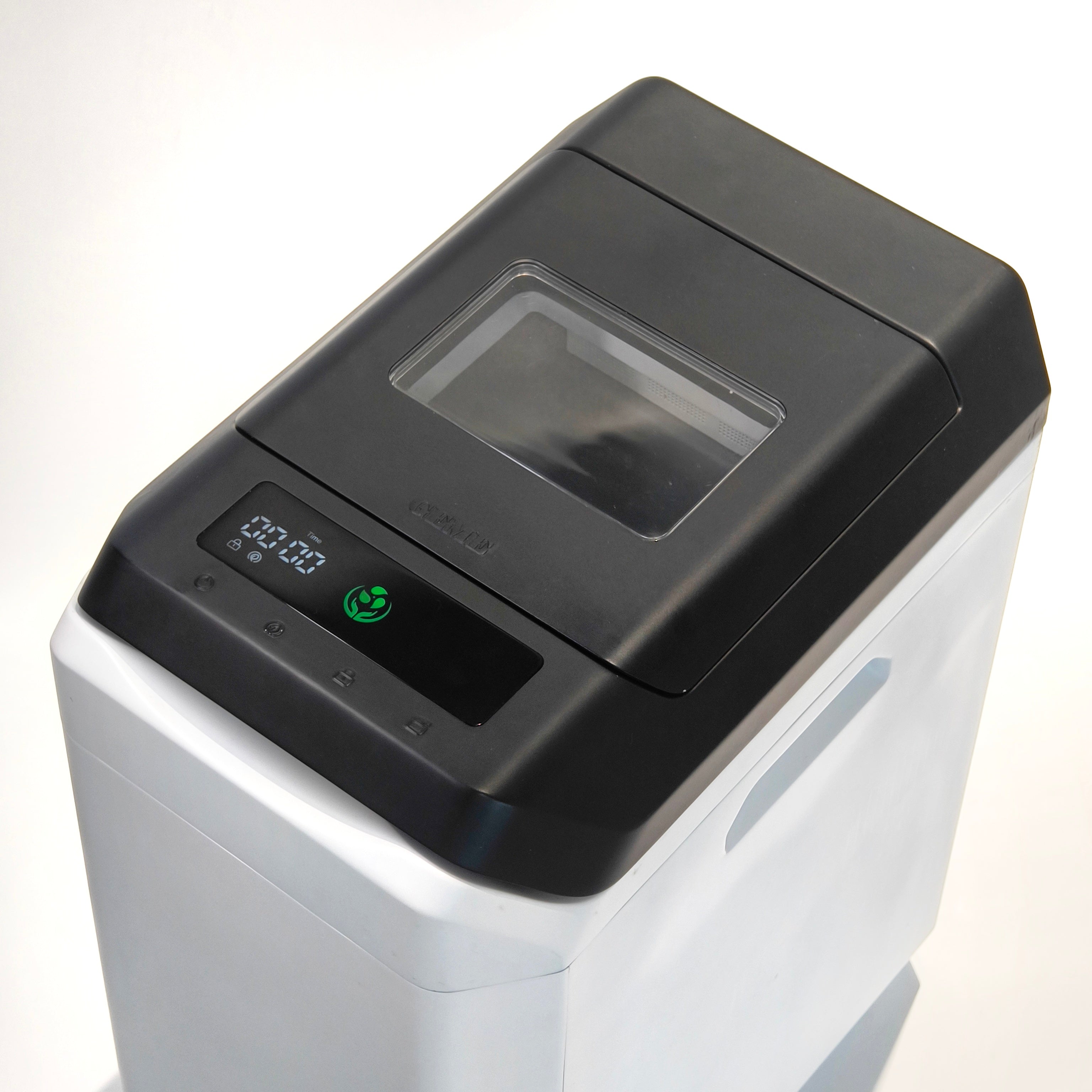
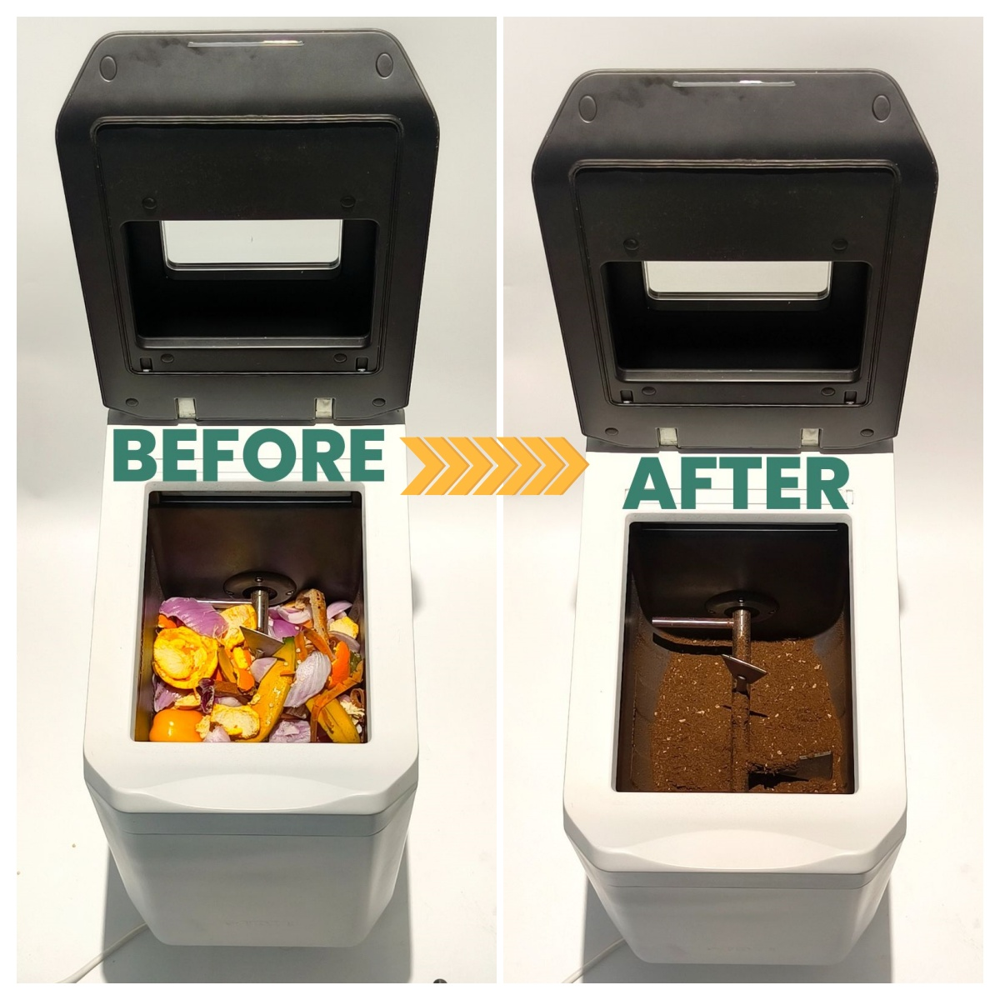
GEME Terra II ranks as the best overall kitchen composter because it is designed around microbial breakdown rather than simple drying and grinding. It supports continuous daily feeding and produces compost-like organic material that should be used as a compost base for soil blending.
Unlike food recyclers that mainly reduce volume, Terra II is positioned for households that want a kitchen-to-soil routine. It is especially relevant for families, apartment users, and gardeners who want a more direct way to keep food scraps in the organic cycle.
Why Terra II Stands Out
- Microbial kitchen composting approach
- Continuous daily feeding
- Visible breakdown designed around everyday scraps
- No routine odor filter replacement
- Compost base for soil blending
- Strong fit for apartments and daily cooking households
For a direct competitor comparison, read GEME vs Lomi, GEME vs Mill, and GEME vs Reencle.
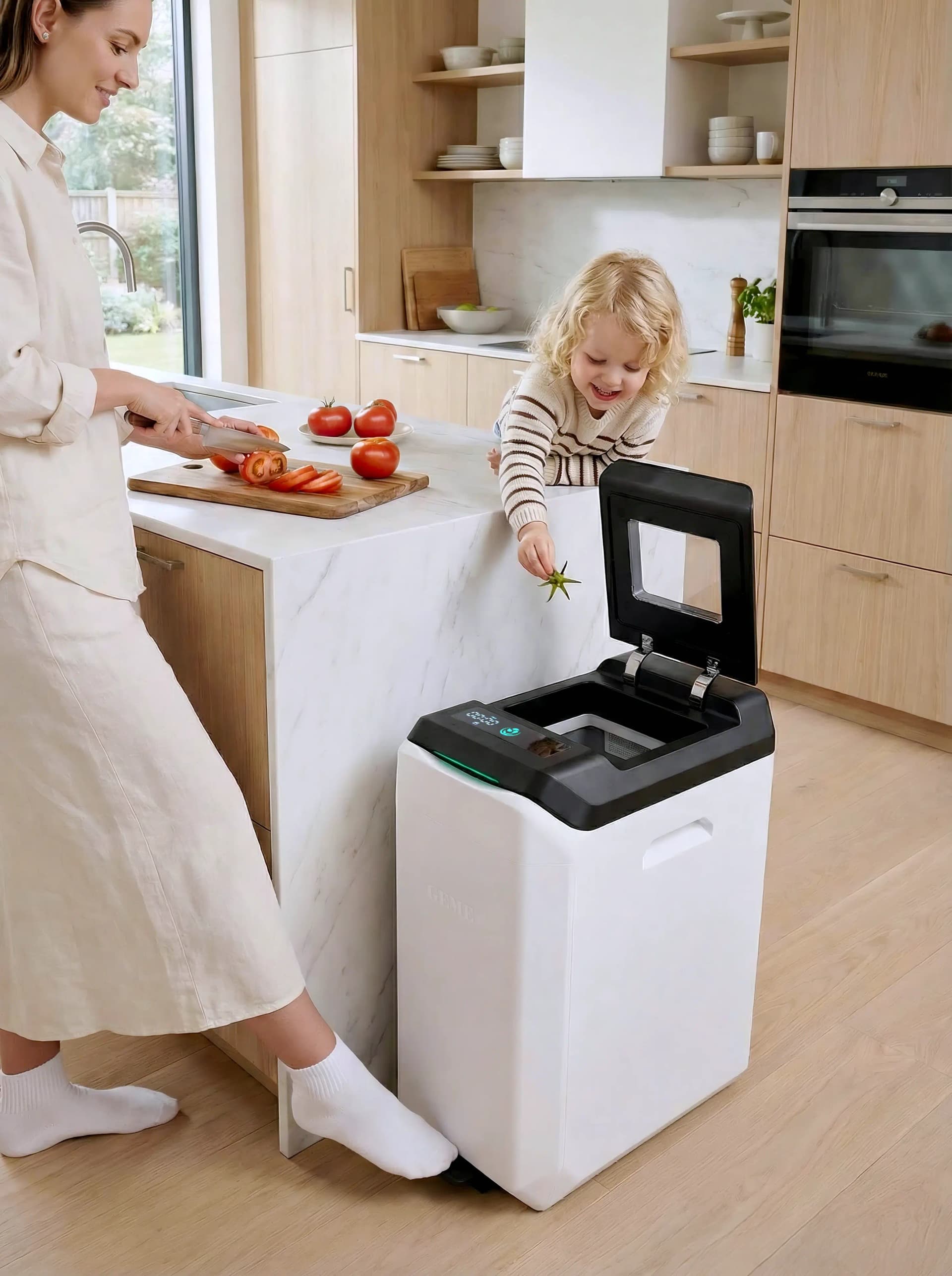
Built for daily microbial composting.
Meet Terra II
Turn everyday food scraps into a compost base for soil blending, without building your routine around batch drying or routine odor filter replacement.
Built for kitchen-to-soil routines.
2. GEME Pro: Best for Larger Households and Heavy Daily Food Waste
Best for: Larger families, heavier food-scrap routines, and households that want more composting capacity.
GEME Pro is the better choice when food-waste volume is the main challenge. It uses the same compost-oriented brand logic as GEME Terra II but is better suited to households with more daily scraps.
If your kitchen regularly produces vegetable trimmings, coffee grounds, fruit peels, cooked leftovers, and family meal-prep scraps, a higher-capacity system can reduce how often you need to manage the chamber.
Why GEME Pro Stands Out
- Larger capacity for heavier routines
- Microbial kitchen composting approach
- No routine odor filter replacement
- Good fit for families and frequent cooking
- Compost base for soil blending
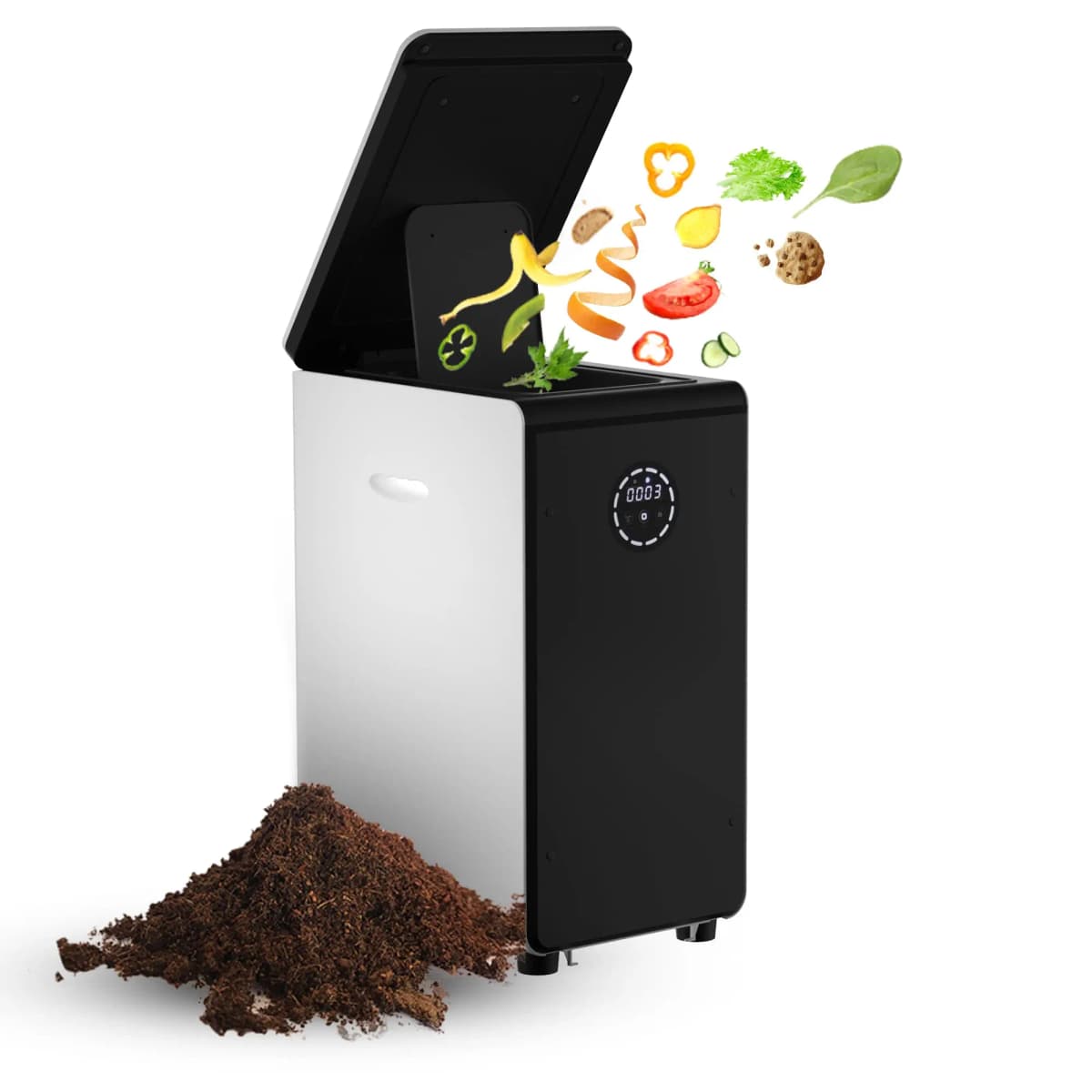
Built for bigger food-scrap routines.
Need More Capacity?
GEME Pro fits larger households and heavier daily food-waste routines where capacity matters as much as compost quality.
Built for heavier daily composting.
3. Lomi: Best for Food-Waste Volume Reduction
Best for: Users who want a compact food recycler that reduces food-waste volume quickly.
Lomi is one of the most recognizable food-waste appliances in the category. It is convenient, compact, and designed to make kitchen scraps easier to manage.
The key buyer distinction is output expectation. Lomi can reduce the volume of scraps, but users should not automatically treat its output as mature compost without following product guidance and soil-use precautions.
Pros
- Compact and easy to use
- Good for waste volume reduction
- Useful for apartment users who mainly want less trash
- Well-known consumer brand
Cons
- Better framed as a food recycler than a full composting system
- Output may need further composting or careful soil-use guidance
- Consumables may apply depending on usage
For a direct comparison, read GEME vs Lomi and does Lomi really compost?.
4. Mill Food Recycler: Best Food Recycler Workflow
Best for: Users who want a clean food-scrap reduction and storage workflow.
Mill is best understood as a premium food recycler rather than a traditional composter. Its system dries and grinds scraps into grounds, helping reduce household food-waste volume and odor.
Mill may be appealing if your priority is a polished user experience and a food-scrap management system. If your priority is producing compost base at home for your own soil routine, compare carefully before choosing.
Pros
- Premium user experience
- Large food-scrap holding workflow
- Good at reducing food-waste volume
- Strong design and app-connected ecosystem
Cons
- Dry and grind approach, not traditional finished composting
- May depend on the program or service model
- Less direct for gardeners who want compost output at home
For a direct comparison, read GEME vs Mill Food Recycler and does Mill really compost?.
5. Reencle: Best Microbial Alternative
Best for: Buyers who want a microbial food-waste system and produce a light to moderate amount of daily scraps.
Reencle is one of the closest alternatives to GEME because it also uses a microorganism-based approach. It is more compost-oriented than simple dehydrator-style food recyclers.
The main questions for buyers are daily input capacity, output curing expectations, filter replacement, and whether the system fits your household’s actual cooking volume.
Pros
- Microorganism-based food-waste processing
- Continuous feeding workflow
- Suitable for indoor kitchen use
- Closer to composting than simple drying machines
Cons
- Daily capacity may be lower than GEME Terra II
- Output may benefit from curing, depending on soil-use expectations
- The filter and maintenance model should be checked before purchase
For the full comparison, read GEME Terra II vs Reencle Prime.
Overall Comparison
The table below summarizes how each product fits different buyer priorities.
| Category | GEME Terra II | GEME Pro | Lomi | Mill | Reencle |
|---|---|---|---|---|---|
| Best use case | Best overall | Larger households | Volume reduction | Food recycling workflow | Microbial alternative |
| Compost-oriented output | Strong | Strong | Limited | Limited | Moderate to strong, depending on curing |
| Apartment fit | Strong | Moderate to strong | Strong | Moderate to strong | Strong |
| Routine filter replacement | No routine odor filter replacement | No routine odor filter replacement | May apply | Check the service model | Filter maintenance may apply |
Which Kitchen Composter Should You Choose?
Choose GEME Terra II if:
- You want the best overall balance of composting method, daily use, and maintenance.
- You want microbial kitchen composting rather than simple food-waste drying.
- You live in an apartment or an urban home.
- You want no routine odor filter replacement.
- You want a compost base for soil blending.
Choose GEME Pro if:
- You have a larger household.
- You cook often and produce more daily scraps.
- You want a larger-capacity microbial kitchen composter.
Choose Lomi if:
- Your main goal is compact food-waste volume reduction.
- You are comfortable treating the output as material that may need further composting or careful use.
Choose Mill if:
- You prefer a premium food recycling ecosystem.
- You want dry grounds or a cleaner food-scrap management workflow.
Choose Reencle if:
- You want a microbial alternative.
- Your household has light to moderate daily food waste.
- You are comfortable reviewing curing and filter-maintenance guidance.
TL;DR
If your goal is simply to reduce the volume of food waste, a compact food recycler such as Lomi or Mill can help.
If your goal is compost-oriented output for a kitchen-to-soil routine, choose a microbial kitchen composter rather than a system that mainly dries and grinds scraps.
Overall, GEME Terra II offers the best balance of microbial composting, daily usability, apartment fit, and lower routine maintenance for most households in 2026.
Frequently Asked Questions
What is the best kitchen composter in 2026?
For most households, GEME Terra II is the best overall kitchen composter because it combines microbial kitchen composting, continuous daily use, compost base output, and no routine odor filter replacement.
Do electric composters actually make compost?
Not all of them. Some electric composters support microbial decomposition, while many appliances mainly dry, grind, or reduce food waste. Always check how the product works and how the output should be used.
Is GEME Terra II better than Lomi?
If your goal is compost-oriented output and microbial kitchen composting, GEME Terra II is the stronger choice. If your goal is compact volume reduction, Lomi may still be useful as a food recycler.
Which kitchen composter is best for apartments?
Apartment users generally benefit from an indoor, odor-controlled, lower-maintenance system. GEME Terra II is a strong fit because it is designed for indoor kitchen use and continuous daily feeding.
Do I need to replace filters regularly?
Some food recyclers and composters use replaceable filters. GEME Terra II and GEME Pro are designed with no routine odor filter replacement.
Can I compost meat, dairy, bones, salt, or oil?
Input boundaries vary by product. Follow each manufacturer’s guidance. For GEME-related input boundaries, read what you can put in an electric composter and salt and oil boundaries for electric composters.
What should I consider before buying a kitchen composter?
Compare composting method, output use, capacity, odor control, filter costs, consumables, cleaning, apartment fit, and whether the system supports your actual daily food-waste routine.
Sources
- U.S. EPA — Composting at Home
- U.S. EPA — Reducing Wasted Food at Home
- Lomi — Official Food Recycler Information
- Mill — Official Food Recycler Information
- Mill Support — Dry & Grind Cycle
- Reencle Help Center — What Is Reencle?
- GEME Terra II Product Page
- How GEME Composting Works
- GEME Kobold™ Microbial Technology
Keep food waste in the loop.
Start Microbial Kitchen Composting
Make daily food scraps useful again with a kitchen composter built for continuous microbial processing and a compost base for soil blending.
Built for kitchen-to-soil routines.

Laat een reactie achter
Deze site wordt beschermd door hCaptcha en het privacybeleid en de servicevoorwaarden van hCaptcha zijn van toepassing.