
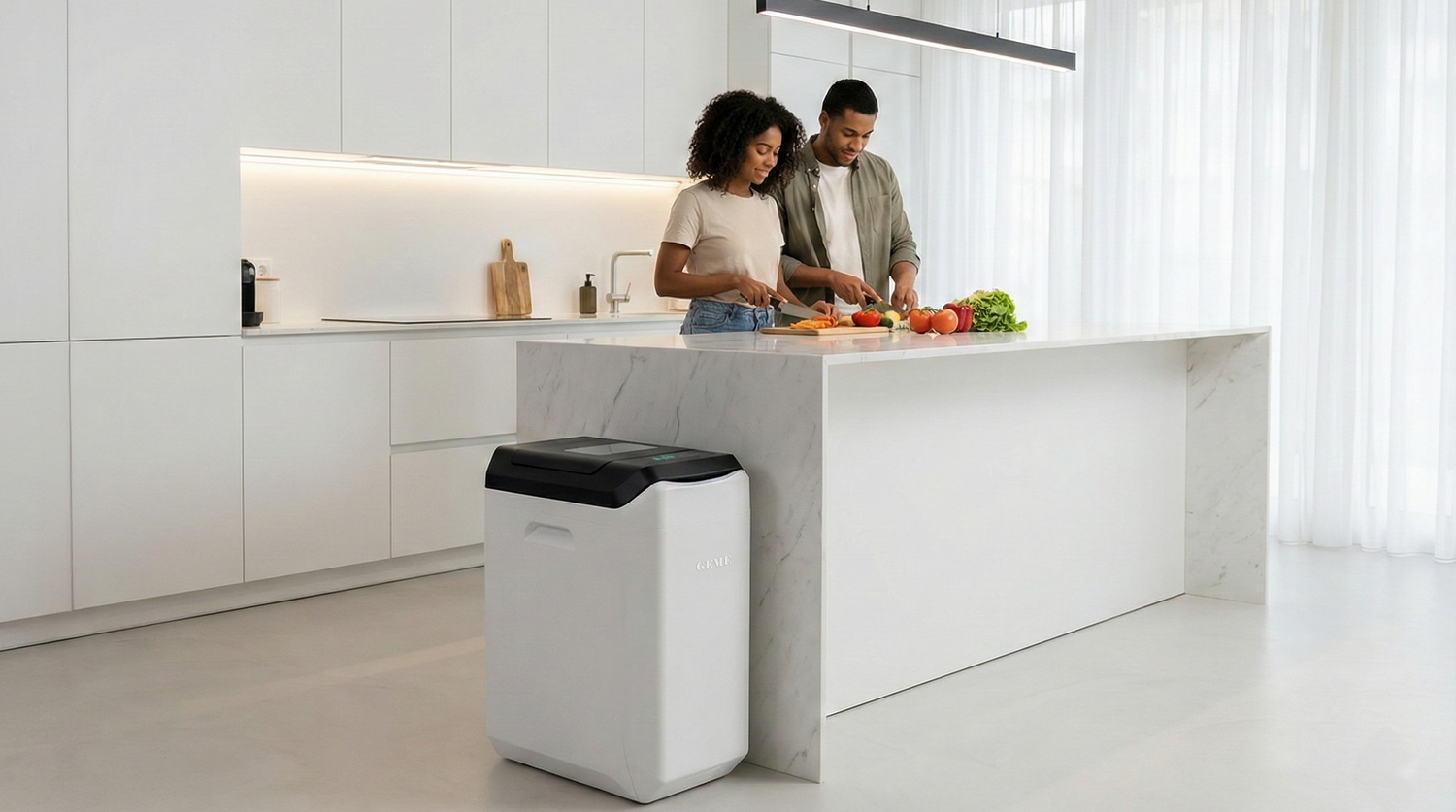
Best Kitchen Composter Verdict 2026
What is the best kitchen composter in 2026? The answer depends on one simple question:
Do you want to reduce food waste volume, or do you want to make real compost?
Many popular kitchen composters, including Lomi and Mill, are better described as food recyclers or dehydrators. They dry and grind food scraps into a soil-like material, but they do not complete the biological composting process.
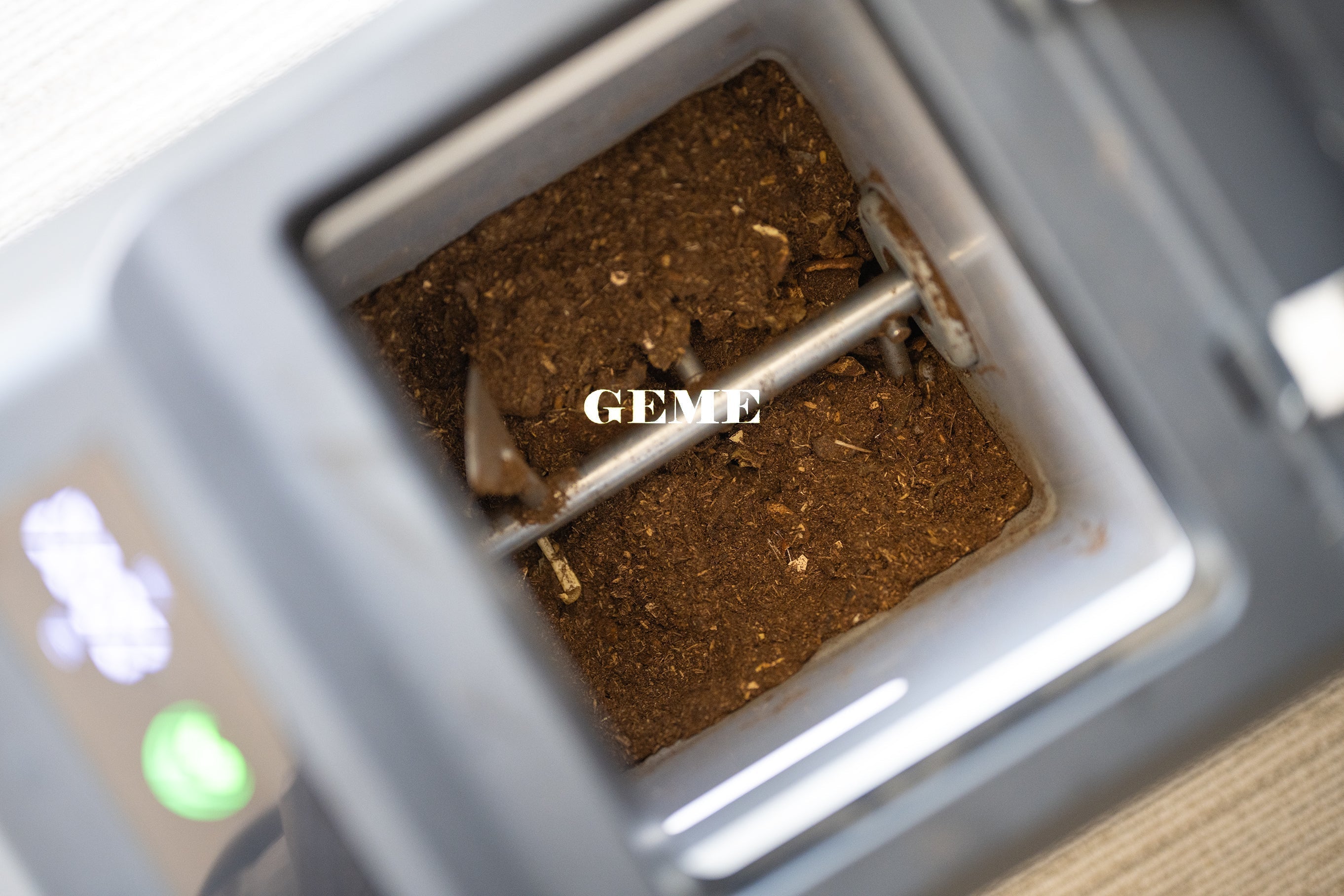
GEME Terra II takes a different approach. It uses living microbes, continuous aerobic composting, and permanent odor-control technology to turn kitchen scraps into real compost without routine filter replacements, subscriptions, or refill pods.
Real compost. Real microbial composting. No filter replacements. Zero recurring filter costs.

Real compost output, filter costs, ownership friction, and daily use.
Quick Answer
The best kitchen composter for households that want real compost is GEME Terra II. It uses living microbes and continuous aerobic composting to produce real compost, instead of simply drying and grinding food scraps.
Lomi and Mill are strong food-waste reduction appliances, but they are better understood as dehydrator-style food recyclers. Reencle uses microbes, but it still has filter costs, and its output often benefits from curing or output management.
Our verdict: GEME Terra II is the strongest choice in this comparison for real compost, continuous feed, no filter replacements, and zero recurring filter costs.
For deeper context, read Best Kitchen Composter 2026, real compost vs dehydrated food waste, and electric compost bin filter costs.
Key Takeaways
- Best overall for real compost: GEME Terra II.
- Best for simple countertop waste reduction: Lomi.
- Best for food recycling workflow: Mill.
- Best entry-level microbial option: Reencle.
- Best long-term ownership advantage: GEME Terra II, because it has no filter replacements and zero recurring filter costs.
Table of Contents
Best Kitchen Composter Verdict Table
| Category | Winner | Why |
|---|---|---|
| Best real compost | GEME Terra II | Uses living microbes to produce biologically active real compost instead of dried food scraps. |
| Lowest long-term ownership friction | GEME Terra II | No filter replacements, zero recurring filter costs, no refill pods, and no mandatory subscription model. |
| Best food recycler | Mill | Strong food-waste storage and recycling workflow, but the output is Food Grounds rather than finished compost. |
| Best countertop dehydrator | Lomi | Compact countertop design for reducing food-waste volume, but not a real microbial composter. |
| Best entry-level microbial composter | Reencle | Uses microbes and continuous feed, but has filter costs, and output often benefits from curing or careful output management. |
Composting vs Dehydrating: What Really Happens to Your Scraps?
Before choosing the best kitchen composter, it is important to understand the difference between real composting and dehydrating food waste.
Real composting is biological. Microorganisms break down organic matter under the right oxygen, moisture, and temperature conditions. The result is compost that supports soil health.
Dehydrating is mechanical. Heat, airflow, and grinding remove water and reduce volume. The output may look soil-like, but it is usually dried food waste, not finished compost.
| Feature | Dehydrator-Style Machines | Real Microbial Composters |
|---|---|---|
| Method | Heat, drying, grinding | Living microbes, oxygen, moisture, and temperature control |
| Output | Dried food particles or Food Grounds | Biologically active real compost |
| Needs further processing? | Usually yes | No outdoor compost pile required; mix compost with soil before planting |
| Typical products | Lomi, Mill | GEME Terra II, GEME Pro |
| Best for | Waste-volume reduction | Food-to-soil composting |
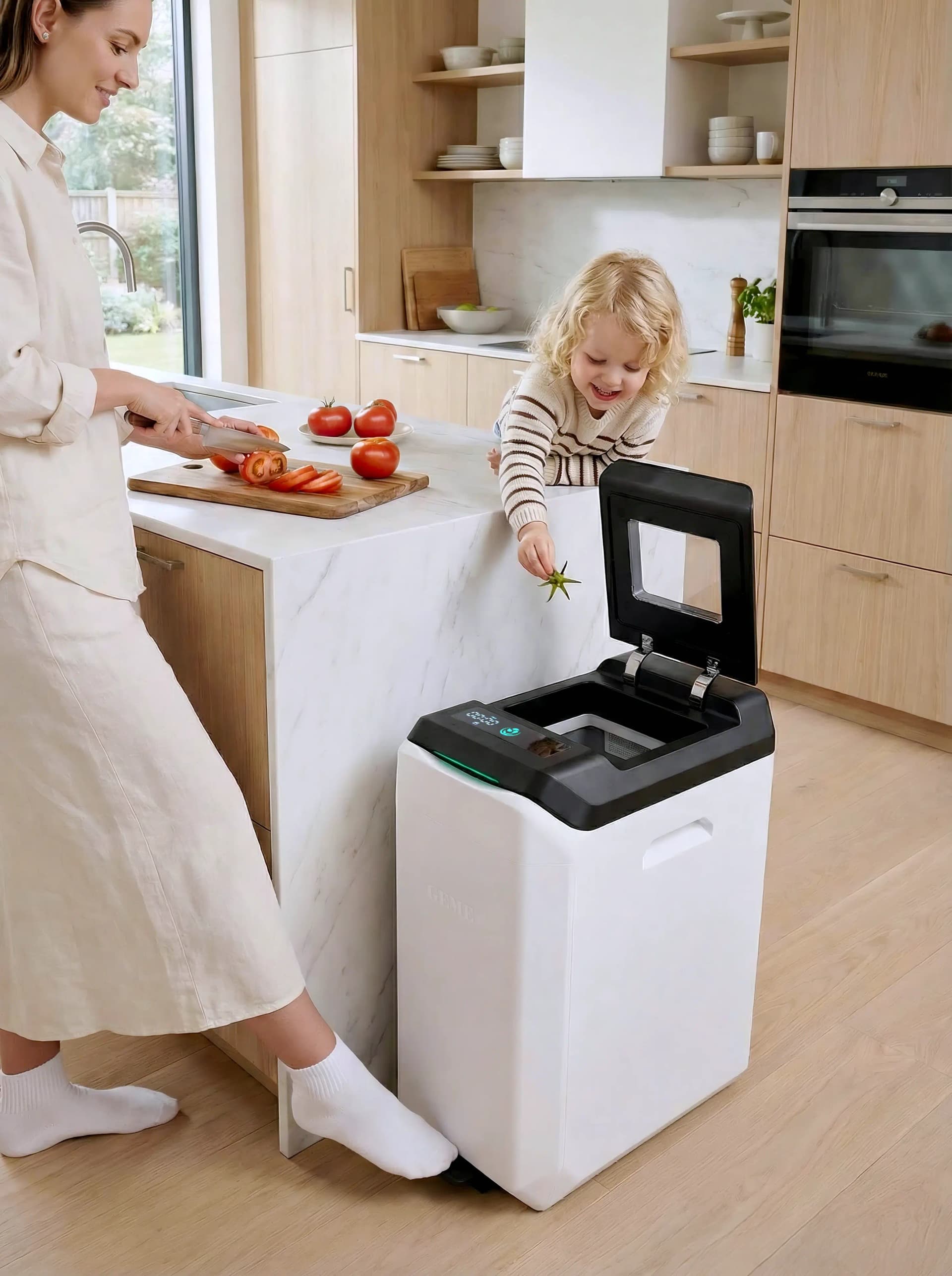
Not dehydrated food waste.
Choose the Kitchen Composter That Makes Real Compost
GEME Terra II uses living microbes and continuous aerobic composting to transform food scraps into real compost without routine filter costs.
Real compost. No filter replacements. Zero recurring filter costs.
GEME Terra II vs Lomi vs Mill vs Reencle
The leading kitchen composters in 2026 fall into three broad categories:
- GEME Terra II: real microbial composting with no filter replacements.
- Lomi and Mill: dehydrator-style food recyclers that reduce volume but do not complete composting.
- Reencle: microbial composting with recurring filter costs and output that often benefits from curing.
| Feature | GEME Terra II | Lomi | Mill | Reencle |
|---|---|---|---|---|
| Technology | Microbial composting + intelligent control | Heat + grinding | Drying + grinding | Microbial processing |
| Produces real compost? | Yes | No | No | Microbial output; curing or output management often helps |
| Output | Biologically active real compost | Dry organic matter / dehydrated food waste | Food Grounds | Compost-like microbial output |
| Continuous feed | Yes | No, batch cycle | Food recycling workflow | Yes |
| Odor-control model | Permanent odor-control technology | Replaceable carbon filters | Filter or model-dependent odor-control path | Replaceable filters |
| Filter replacements | No filter replacements | Yes | Model-dependent | Yes |
| Best for | Real compost and low ownership friction | Countertop waste reduction | Food recycling workflows | Entry-level microbial composting |
Long-Term Cost Comparison
Upfront price is only part of the story. The real cost of a kitchen composter includes filters, refill pods, starter cultures, subscription plans, and the time required to manage the output.
That is where GEME Terra II stands out. Its ownership model is simpler: buy once, compost continuously, and avoid routine filter replacement.
| Cost Factor | GEME Terra II | Lomi | Mill | Reencle |
|---|---|---|---|---|
| Upfront price | Check current launch pricing | Check current retail pricing | Check the current purchase or plan model | Check current retail pricing |
| Filter replacements | No filter replacements | Carbon filters / consumables | Model-dependent | Replacement filters |
| Subscription required? | No | Optional or product-dependent | Food recycling workflow may involve service options | No required mail-back model, but consumables exist |
| Output handling | Use compost at home by mixing it with soil | May need further decomposition or careful soil use | Food Grounds still need a destination | Curing or soil finishing may help |
| Long-term ownership friction | Low | Medium | Medium to high, depending on workflow | Medium |
The verdict: GEME Terra II is the strongest choice for households that want a real kitchen composter with no filter replacements, zero recurring filter costs, no mandatory subscriptions, and real compost output.
Maintenance and Filter Costs
One of the biggest differences between kitchen composters is what happens after you buy them.
Some machines require:
- Replacement carbon filters
- Refill pods or additives
- Subscription plans
- External recycling programs
- Additional compost curing or soil finishing
GEME Terra II was designed to reduce long-term friction. Under normal household operation, there are no filter replacements, zero recurring filter costs, no mandatory subscriptions, and no refill pods.
| Maintenance Item | GEME Terra II | Lomi | Mill | Reencle |
|---|---|---|---|---|
| Routine filter replacement | No | Yes | Model-dependent | Yes |
| Subscription | No mandatory subscription | Optional or product-dependent | Workflow-dependent | No required mail-back subscription |
| Refill pods | No | Optional or product-dependent | No typical refill-pod workflow | No typical refill-pod workflow |
| Needs outdoor composting? | No outdoor compost pile required | Often recommended for finished composting | Food Grounds need a destination | Curing can be beneficial |
Which Kitchen Composter Produces the Best Compost?
The answer depends on how you define compost.
If your definition is simply reducing food-waste volume, then almost any food recycler can work.
If your definition is creating biologically active material that can be returned to the soil, the field becomes much narrower.
| Product | Produces Real Compost? | How to Use the Output |
|---|---|---|
| GEME Terra II | Yes | Harvest and mix with soil before planting. |
| Lomi | No | Often requires further decomposition or careful soil use. |
| Mill | No | Produces Food Grounds that still need a destination. |
| Reencle | Microbial output | Additional curing or careful soil blending can improve results. |
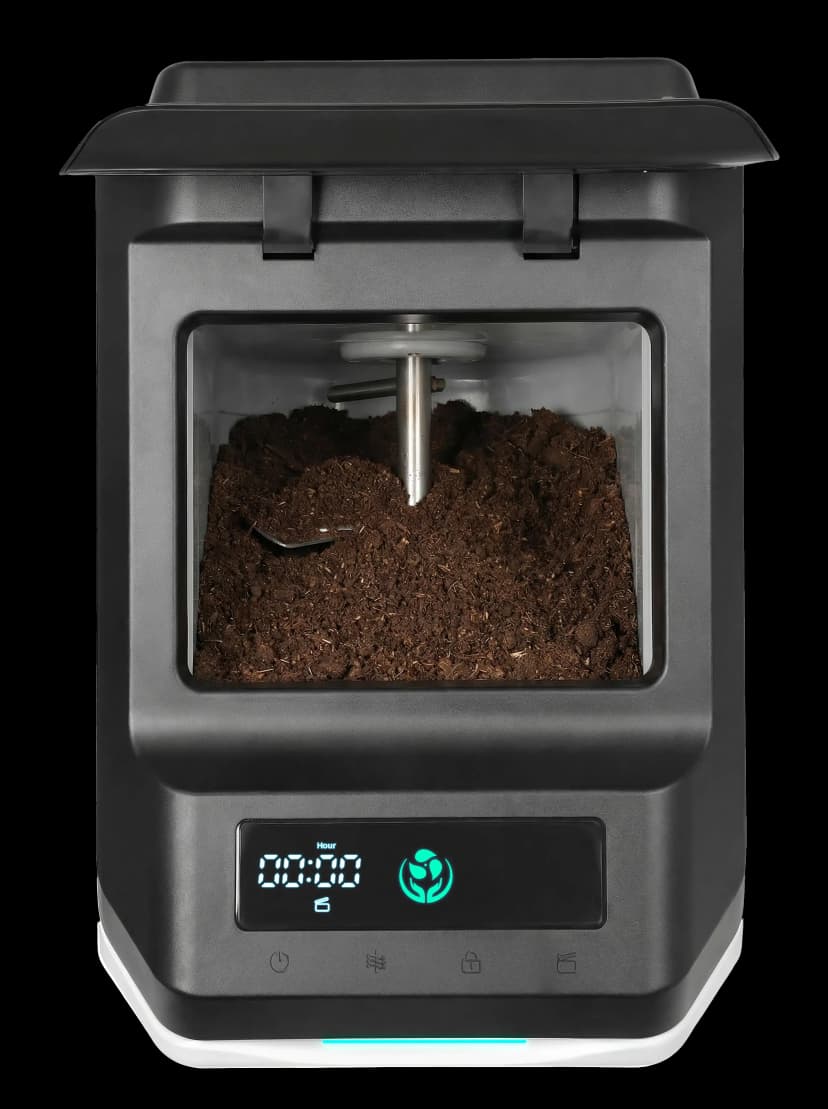
Built for a real food-to-soil loop.
The Best Kitchen Composter for Real Compost
Turn food scraps into biologically active compost without routine filter replacements or subscriptions.
Real compost. Real microbial composting. No filter replacements.
Why GEME Terra II Wins Our Verdict
After comparing technology, ownership friction, maintenance requirements, and output quality, our conclusion is straightforward.
GEME Terra II is the best kitchen composter for households that want real compost rather than simply smaller food waste.
Why We Chose GEME Terra II
- Produces biologically active real compost.
- Uses real microbial composting rather than dry-and-grind processing.
- No filter replacements.
- Zero recurring filter costs.
- No mandatory subscription model.
- Continuous-feed operation.
- Broad food acceptance within GEME guidance.
- Designed around long-term ownership rather than consumables.
If your primary goal is simply reducing food-waste volume, Lomi and Mill remain useful food recyclers.
If your goal is to create real compost at home, GEME Terra II is our top recommendation for 2026.
Frequently Asked Questions
What is the best kitchen composter in 2026?
For households that want real compost and low long-term ownership friction, our top recommendation is GEME Terra II.
Does GEME Terra II make real compost?
Yes. GEME Terra II uses living microorganisms to biologically transform food scraps into real compost that can be mixed with soil.
Does GEME Terra II require filter replacement?
No. GEME Terra II has no filter replacements and zero recurring filter costs under normal household use.
Which kitchen composter has the lowest ownership friction?
Among the products compared, GEME Terra II has one of the lowest long-term ownership-friction profiles because it avoids subscriptions, refill pods, and routine filter replacements.
Is Lomi a real composter?
Lomi is best described as a food-waste dehydrator and grinder. It reduces food-waste volume but does not complete biological composting inside the machine.
Does Mill make real compost?
Mill primarily produces Food Grounds designed for food recycling workflows rather than finished compost.
Can Reencle make compost?
Reencle uses microbial processing and can produce compost-like output, although additional curing or careful output management can be beneficial.

Laat een reactie achter
Deze site wordt beschermd door hCaptcha en het privacybeleid en de servicevoorwaarden van hCaptcha zijn van toepassing.