
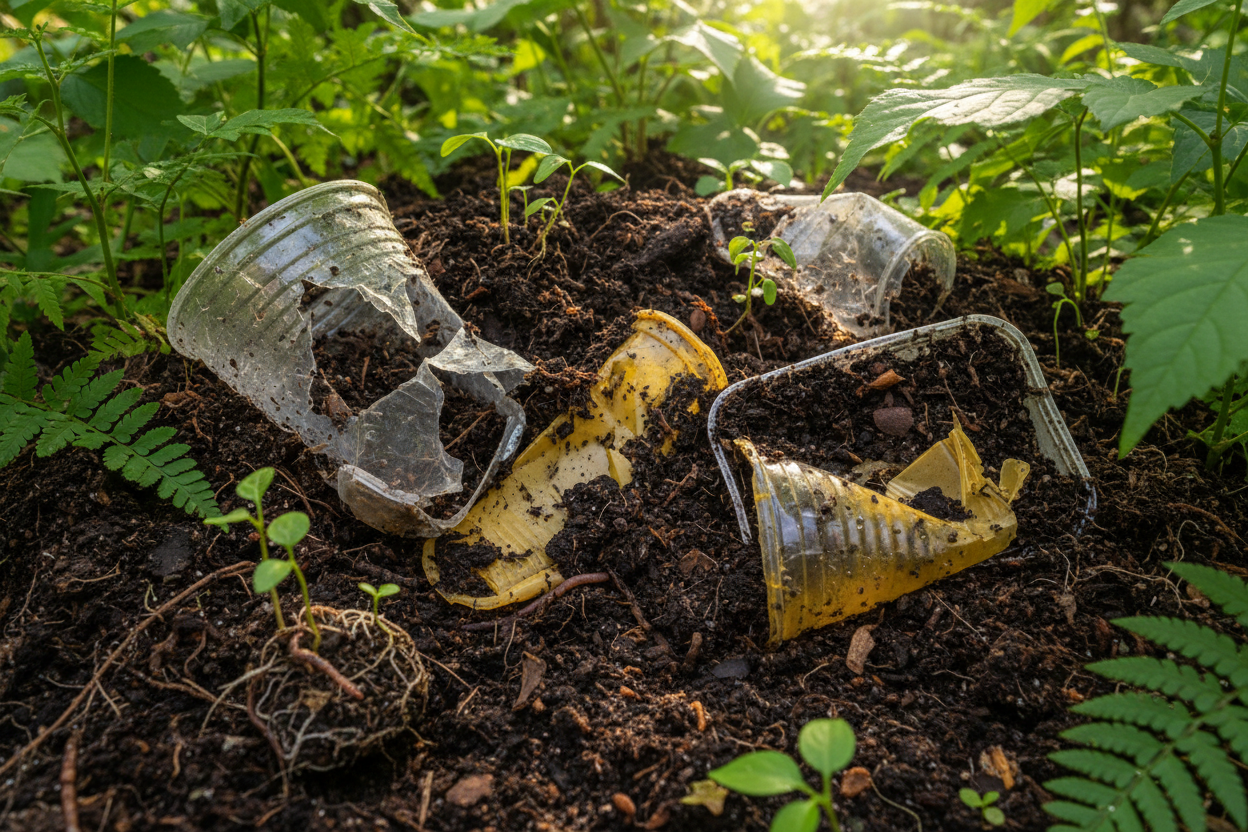
GEME Composting Boundary Guide
No. Do not put conventional plastic in a GEME composter. Plastic bags, wrappers, produce stickers, twist ties, synthetic fibers, plastic-coated paper, packaging film, and ordinary food containers should be removed before composting.
“Biodegradable,” “biobased,” and “compostable” labels can be confusing. Many compostable plastics are designed for industrial composting facilities, not home composting systems or kitchen composters.
Simple rule: if it is plastic, packaging, film, sticker, synthetic, or unclear, keep it out.
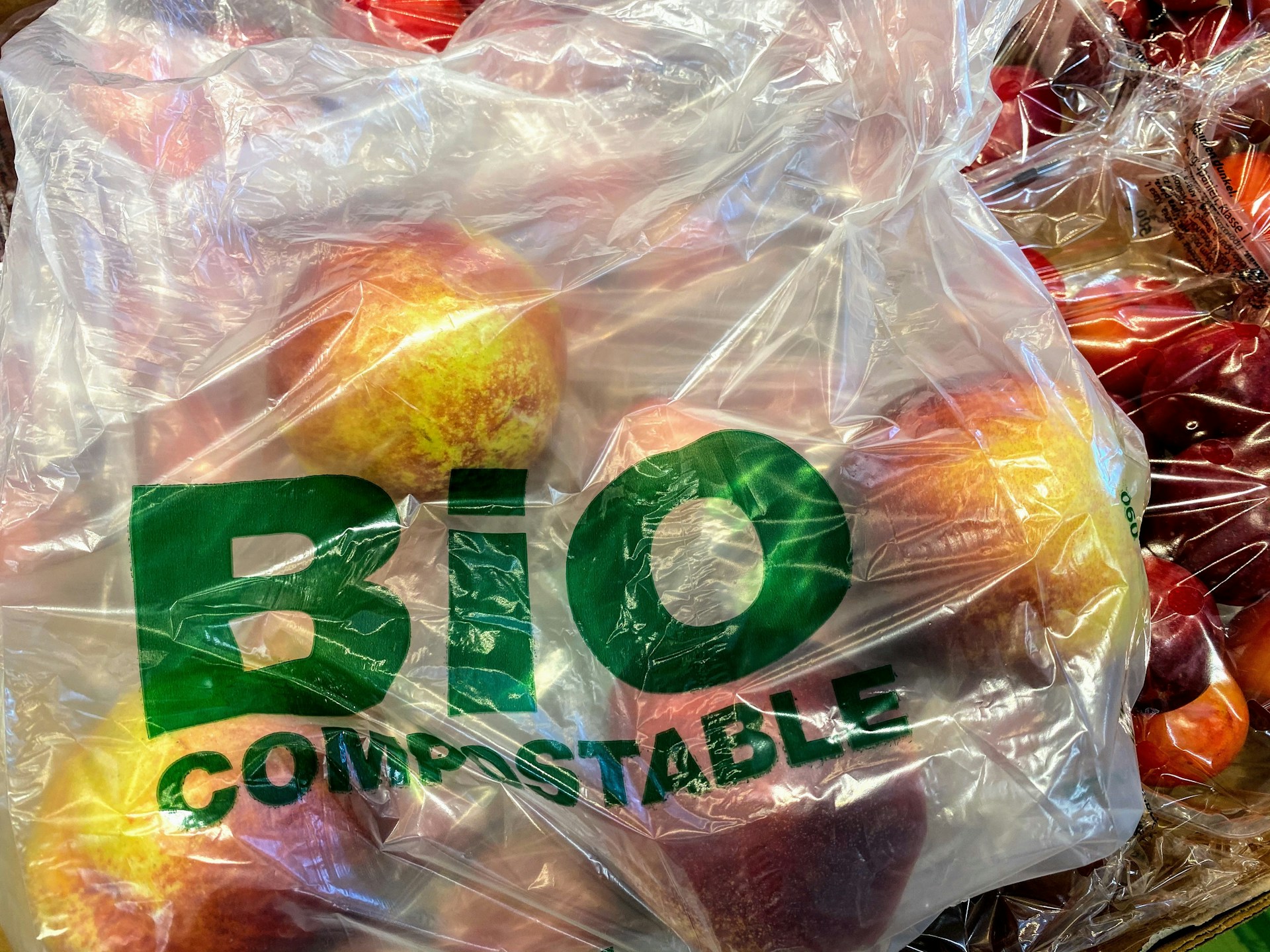
Food scraps in. Plastic out.
Quick Answer
No, you should not put plastic in a GEME composter. GEME is designed for appropriate organic kitchen scraps and selected natural, uncoated paper-based materials in small amounts. Plastic is not food waste, and it can contaminate compost output, leave fragments, or interfere with clean soil use.
This includes conventional plastic, “biodegradable” plastic, “oxo-degradable” plastic, plastic film, plastic bags, produce stickers, plastic-coated paper, synthetic tea bags, and most compostable foodservice ware. If a material leaves fragments after processing, treat it as contamination and keep it out of future batches.
For related context, read complete composting material list, what can you put in an electric composter?, and how to use compost correctly.
Key Takeaways
- Conventional plastic: never put it in GEME.
- Biodegradable plastic: not enough. “Biodegradable” does not mean suitable for composting.
- Biobased plastic: not enough. Plant-based plastic can still behave like ordinary plastic.
- Oxo-degradable plastic: not recommended; fragmentation is not composting.
- Compostable plastic: usually designed for industrial composting unless clearly labeled for home composting and accepted by the relevant system.
- Compostable bags and foodservice ware: do not add them to GEME as a normal practice.
- Produce stickers: always remove before composting fruit or vegetable scraps.
- Paper materials: only small amounts of uncoated, non-glossy, shredded paper-based material should be considered.
- GEME output: keep it clean by preventing plastic contamination before it enters the chamber.
Table of Contents
- Why Plastic Does Not Belong in GEME
- Biodegradable vs Compostable: The Difference
- What ASTM D6400 and EN 13432 Actually Mean
- Can Certified Compostable Plastic Go in GEME?
- What You Can Add Instead
- What Not to Add
- Simple Decision Tree
- What If Plastic Accidentally Went In?
- How to Keep GEME Compost Output Clean
- FAQ
- Summary
- Sources
- Related Articles
Why Plastic Does Not Belong in GEME
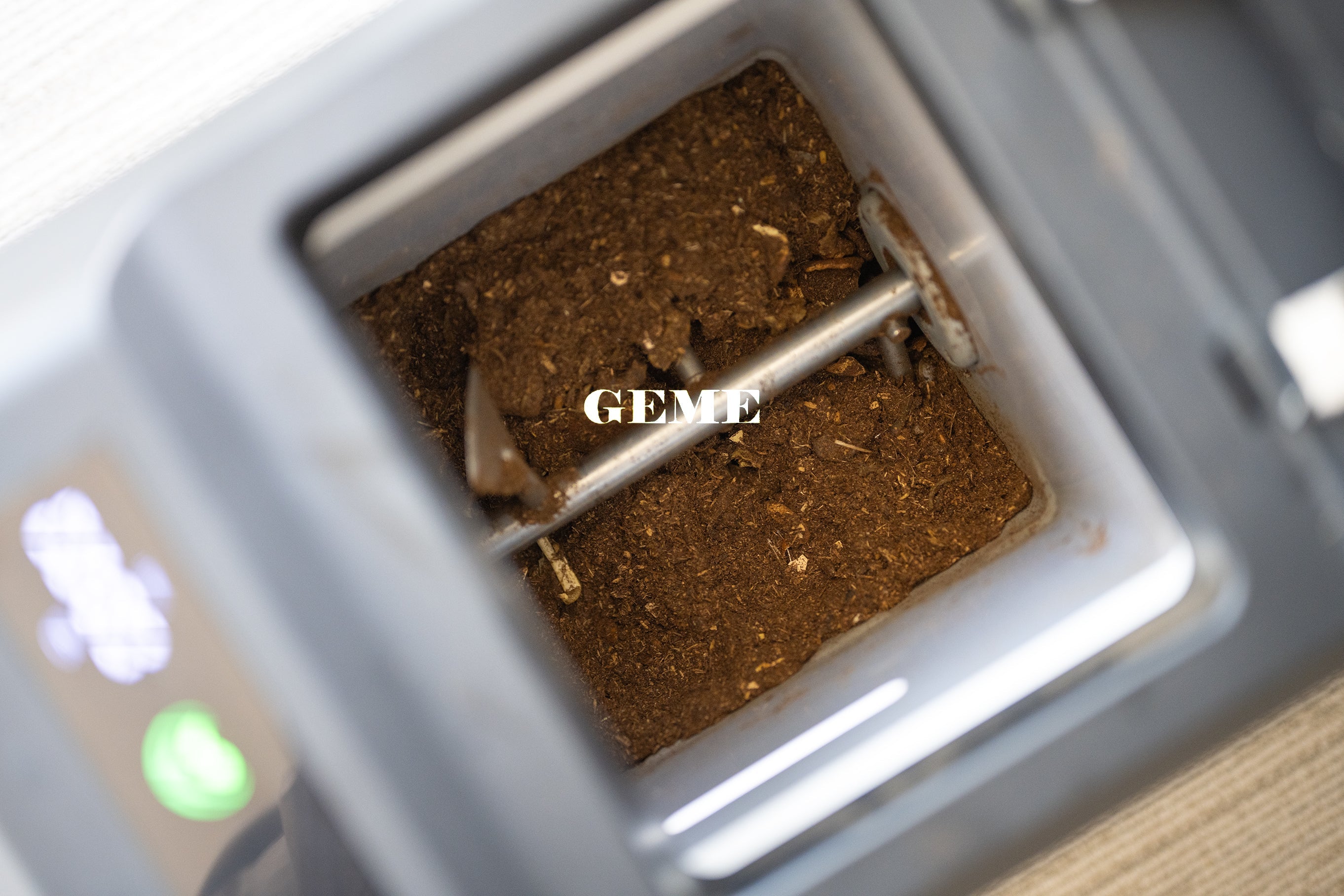
GEME is built around real microbial composting for appropriate organic kitchen waste. Plastic is not an organic food scrap. It does not become compost in the same way fruit peels, vegetable scraps, coffee grounds, grains, and other food materials do.
The problem is not only whether plastic breaks down. The bigger problem is compost quality. Plastic fragments, labels, coatings, synthetic fibers, and unknown additives can contaminate the compost output and make it less suitable for soil blending.
Simple rule: if you would not want it scattered through your garden soil, do not put it into your composter.
Biodegradable vs Compostable: The Difference
Two words cause most confusion: biodegradable and compostable. They do not mean the same thing.
| Label | What It Usually Means | GEME Guidance |
|---|---|---|
| Biodegradable | May break down under certain conditions over time, often without clear compost-quality requirements. | Do not add based on this label alone. |
| Biobased | Made partly or fully from plant-based feedstocks but may still behave like plastic. | Do not add based on this label alone. |
| Compostable | Designed to break down into compost-like material under defined composting conditions. | Do not add unless the item is clearly approved for home composting and compatible with product guidance. |
| Industrial compostable | Designed for commercial facilities with controlled heat, moisture, oxygen, and residence time. | Do not add to GEME as a normal home-composting material. |
| Oxo-degradable | May fragment into smaller pieces under certain conditions. | Do not add. Fragmentation is not composting. |
For practical household use, the safest GEME rule is simple: compost food scraps and approved natural materials, not plastic labels.
What ASTM D6400 and EN 13432 Actually Mean
Compostable plastic standards are important, but they are often misunderstood. They do not mean “safe for every home composter.” They define performance under specific testing conditions.
ASTM D6400
ASTM D6400 is a specification for plastics and products designed to be composted in municipal or industrial aerobic composting facilities. That means the intended environment is a controlled composting facility, not automatically every kitchen composter or backyard pile.
EN 13432
EN 13432 is used for packaging recoverable through composting and biodegradation. Testing includes biodegradation, disintegration, toxic substances, and ecotoxicity effects. These tests are built around controlled composting conditions and compost-quality requirements.
The Practical Meaning for GEME Users
A compostable logo does not automatically mean the item belongs in GEME. If the item requires industrial composting conditions, it should go to an appropriate facility that accepts it, not into your GEME chamber.
Can Certified Compostable Plastic Go in GEME?
As a normal household rule, do not put certified compostable plastic, compostable bags, or compostable foodservice ware into GEME. Most of these materials are designed for commercial or industrial composting facilities, and they may not fully disintegrate in a home kitchen system.
Even if a material is marketed as compostable, the key questions are:
- Is it certified for home composting, not only industrial composting?
- Does the local composting facility accept this exact item?
- Does GEME product guidance specifically accept this material?
- Will it leave visible fragments in the compost output?
- Will the output still be suitable for soil blending?
If any answer is unclear, keep it out. A clean composting routine is better than hoping a plastic-like item will disappear.
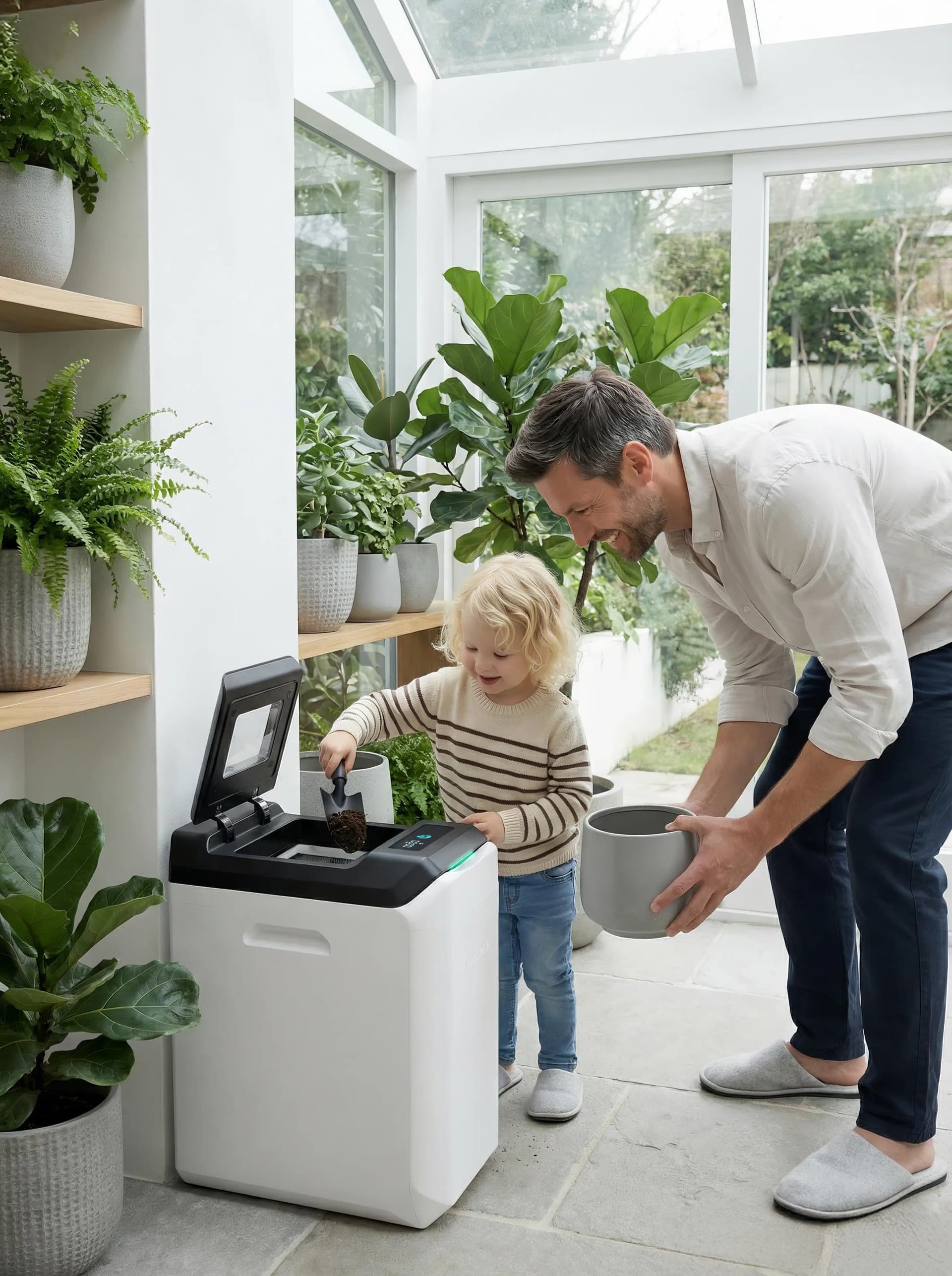
Add food scraps. Keep plastics out.
Compost Food Scraps, Not Plastic
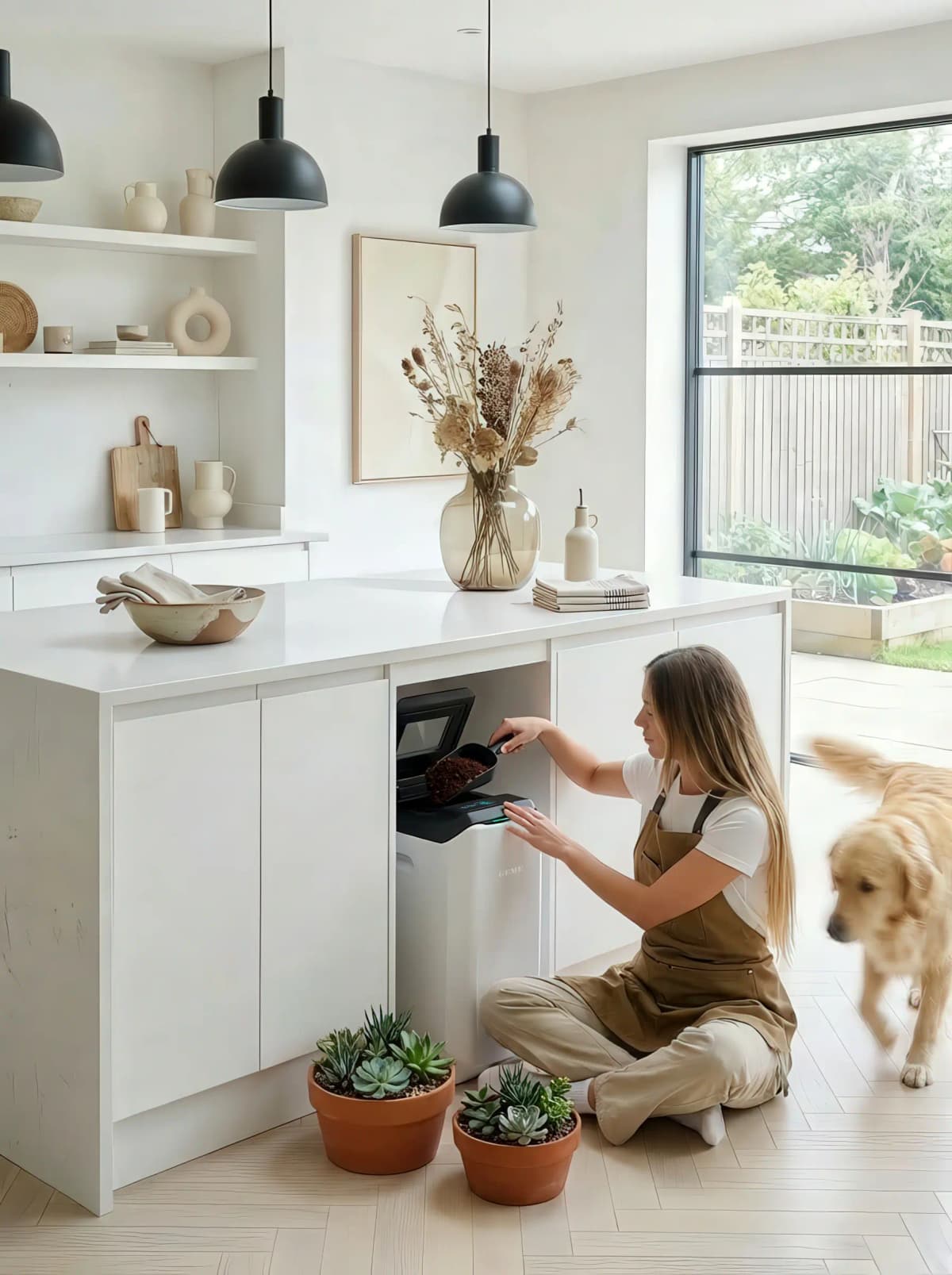
GEME Terra II supports real microbial composting for appropriate kitchen scraps, with no drying, no replacement odor filters, and compost output for soil blending. For the cleanest output, remove packaging, stickers, plastic labels, and synthetic materials before adding food waste.
Real microbial composting. No filter replacements. Compost for soil blending.
What You Can Add Instead
GEME is designed for appropriate organic kitchen waste. When in doubt, choose real food scraps and natural, uncoated, non-synthetic materials rather than packaging.
| Material | GEME Guidance | Preparation Tip |
|---|---|---|
| Fruit and vegetable scraps | Generally suitable. | Remove stickers and cut large pieces smaller. |
| Coffee grounds and paper filters | Generally suitable. | Avoid plastic-lined or synthetic filters. |
| Eggshells | Generally suitable. | Crush for better distribution. |
| Uncoated paper towel | Small amounts only. | Shred or tear into small pieces. |
| Uncoated cardboard | Small amounts only. | Remove tape, labels, glue-heavy areas, and glossy coating. |
| Natural plant fibers | Only if clean and untreated. | Avoid synthetic blends and long, stringy pieces. |
What Not to Add
The following items should be treated as a contamination risk, not compost material:
- Plastic bags, wrappers, packaging film, and cling wrap.
- Produce stickers, barcode labels, and price labels.
- Plastic fruit nets, synthetic mesh, and twist ties.
- Plastic-coated cups, plates, bowls, and takeaway containers.
- Compostable foodservice ware and compostable bags unless specifically accepted by a suitable composting facility.
- Items labeled only “biodegradable.”
- Items labeled “oxo-degradable” or “photo-degradable.”
- Synthetic tea bags, nylon tea bags, or tea bags with staples.
- Glossy paper, wax-coated paper, laminated paper, and receipt paper.
- Rubber bands, gloves, wipes, sponges, dryer lint, and synthetic cloth.
- Any item that leaves visible plastic-like fragments after processing.
The cleanest compost begins before the scraps enter the machine: unpack food, remove stickers, discard plastic separately, and add only the organic portion.
Simple Decision Tree
Use this quick decision tree before adding any questionable item to GEME:
1. Is it real food waste or a natural organic material?
Yes → continue. No → keep it out.
2. Does it include plastic, coating, film, glue, synthetic fiber, sticker, staple, or label?
Yes → remove those parts first or keep the whole item out.
3. Is it only labeled “biodegradable”?
Yes → keep it out.
4. Is it certified industrial compostable?
Send it to a facility that accepts it. Do not add it to GEME as a normal practice.
5. Are you unsure?
Keep it out. Preventing contamination is easier than removing fragments later.
What If Plastic Accidentally Went In?
A small accidental piece does not mean the entire machine is ruined, but you should remove the plastic as soon as it is safe and practical.
- Stop adding more scraps temporarily if you see visible plastic fragments.
- Remove large plastic pieces with a scoop or tool when the chamber is safe to access.
- Screen the output before soil use.
- Discard contaminated fragments with household trash according to local rules.
- Return unfinished organic pieces to the chamber if they are not contaminated.
- Do not use visibly contaminated compost output around plants.
- Check future scraps carefully for stickers, packaging, and hidden plastic parts.
If plastic wraps around moving parts or you suspect a jam, follow the product manual and contact support rather than forcing the mechanism.
How to Keep GEME Compost Output Clean
GEME compost output is meant for soil blending. Keeping plastic out helps protect the quality of that output and makes garden use easier.
Before Adding Food Scraps
- Remove produce stickers from fruit and vegetables.
- Remove plastic packaging, twist ties, labels, and clips.
- Check tea bags for staples, plastic mesh, or synthetic fibers.
- Avoid glossy, waxed, laminated, or plastic-coated paper.
- Cut large scraps smaller to help microbial access.
Before Using Output in Soil
- Harvest mature-looking compost base when needed.
- Screen larger pieces and return unfinished organic material to the chamber.
- Discard plastic-like fragments instead of returning them.
- Mix compost output with soil before plant use.
- Start with modest applications and observe plant response.
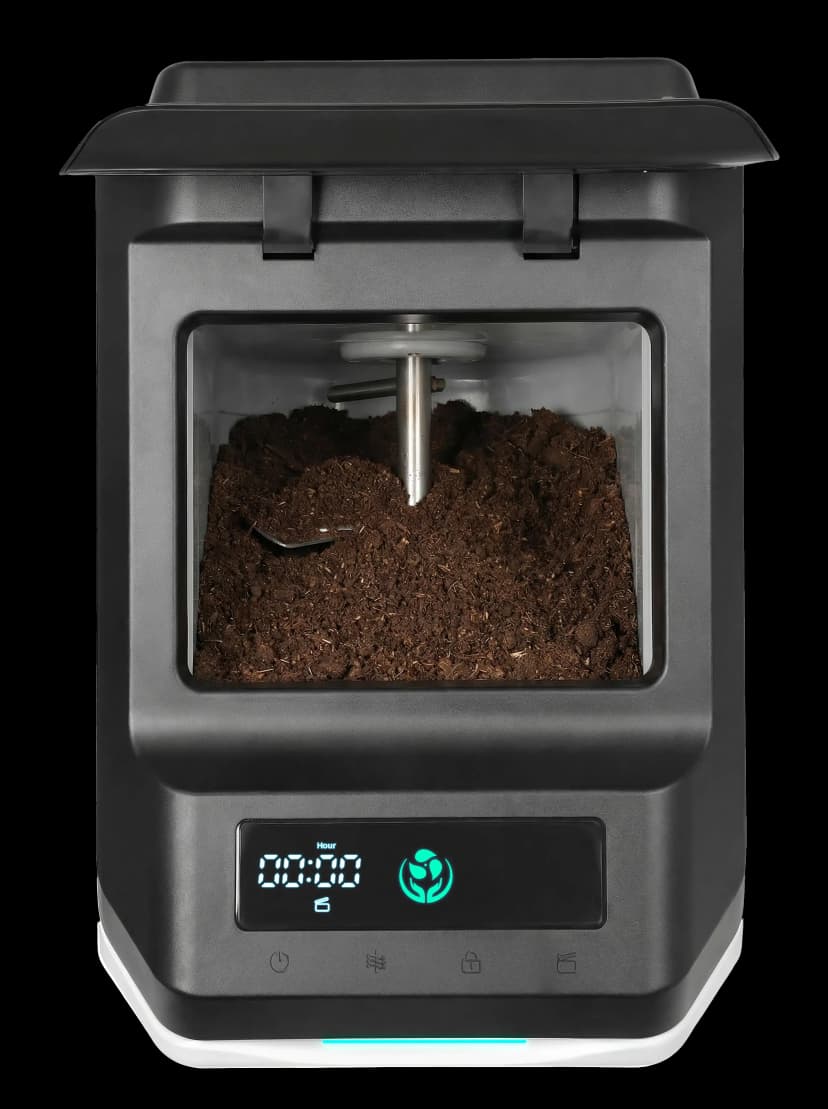
Remove plastic before composting.
Real Composting Starts With the Right Inputs
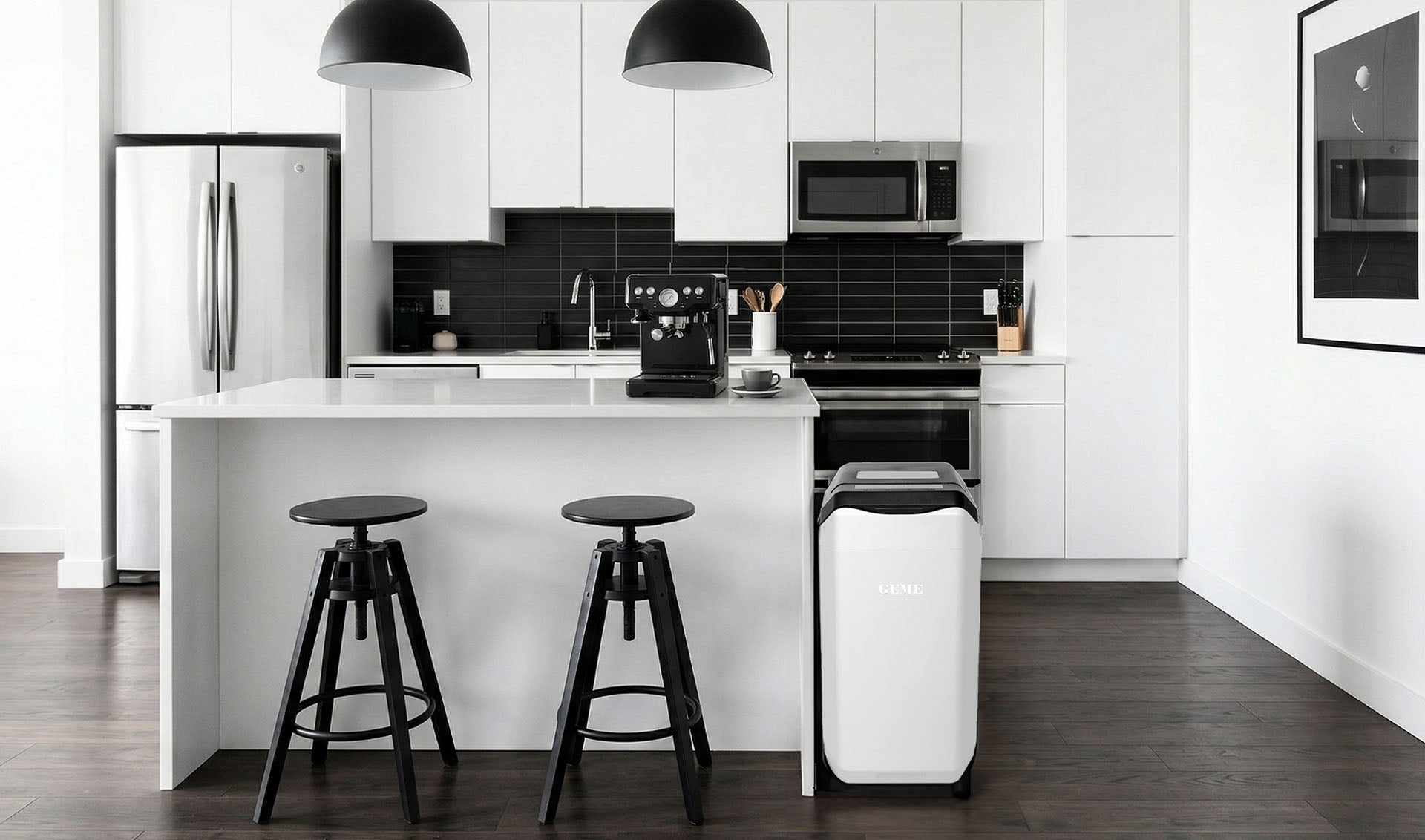
GEME Terra II and GEME Pro help households process appropriate food scraps through real microbial composting. Keep plastic, synthetic materials, produce stickers, and packaging out so the compost output stays suitable for soil blending.
Terra II for everyday homes. GEME Pro for larger routines.
Methods and Boundaries
This guidance is based on a conservative contamination-control principle: GEME should receive appropriate organic kitchen scraps, not ambiguous packaging materials. Compostability certifications are tied to defined conditions, and real-world systems vary in temperature, oxygen, moisture, residence time, and mixing behavior.
Disintegration matters. If a plastic-like item leaves fragments, those fragments compromise compost output quality. That is why the safest user-facing rule is to keep plastics out before they enter the chamber.
Methods and boundaries → Open GK Verification
Final Takeaway: Do Not Put Plastic in GEME
The honest answer is simple: do not put plastic in GEME. Conventional plastic, biodegradable plastic, oxo-degradable plastic, compostable bags, and compostable foodservice ware should be kept out unless a specific item is clearly approved by both its home-composting label and GEME product guidance.
Composting works best when the input is clean. Food scraps, coffee grounds, crushed eggshells, and small amounts of suitable uncoated paper-based material are very different from plastic packaging.
Clean inputs protect compost output. Plastic prevention is easier than plastic removal.
Real microbial composting for modern homes.
Build a Cleaner Composting Routine With GEME
GEME Terra II and GEME Pro help households turn appropriate food scraps into compost for soil blending, with real microbial composting, no filter replacements, and zero recurring filter costs.
Terra II for everyday homes. GEME Pro for larger routines.
Frequently Asked Questions
Can I put plastic in GEME composter?
No. Conventional plastic should not go into GEME. Plastic can leave fragments, contaminate compost output, and interfere with clean soil blending.
Can I put biodegradable plastic in GEME?
No. “Biodegradable” is not the same as compostable, and it does not mean the material is suitable for GEME or for home composting.
Can I put compostable plastic bags in GEME?
Do not add compostable plastic bags as a normal practice. Many compostable bags are designed for industrial composting facilities, not home kitchen composting systems.
Can I put compostable cups, plates, or forks in GEME?
No. Compostable foodservice ware should not be added to GEME unless specific product guidance says otherwise. Send it to an industrial composting facility only if that facility accepts it.
Can I put paper towels in GEME?
Small amounts of uncoated paper towel with food residue may be acceptable when torn into small pieces. Avoid plastic-coated, chemical-heavy, glossy, or synthetic wipes.
Should I remove produce stickers before composting?
Yes. Always remove produce stickers, labels, twist ties, plastic clips, and packaging before adding fruit or vegetable scraps.
What happens if plastic fragments remain in the output?
Screen the output and discard plastic-like fragments. Do not use visibly contaminated compost output around plants, and stop adding that material in the future.
What can I put in GEME instead?
Add appropriate kitchen scraps such as fruit and vegetable scraps, coffee grounds, grains, leftovers, crushed eggshells, and small amounts of suitable uncoated paper-based material. Remove all plastic and packaging first.
Summary
- Plastic in GEME: no. Keep plastic out.
- Biodegradable plastic: not enough; do not add based on that label alone.
- Biobased plastic: plant-based does not automatically mean compostable.
- Industrial compostable plastic: designed for facilities, not automatically for home kitchen systems.
- Compostable bags and foodservice ware: not recommended for GEME as a normal practice.
- Produce stickers: always remove.
- Paper towels: only small amounts of uncoated paper-based material, torn small.
- Clean output: screen large pieces, discard plastic fragments, and mix compost output with soil before plant use.
- GEME Terra II: supports real microbial composting for appropriate kitchen scraps, with no filter replacements and compost output for soil blending.
Sources
- U.S. EPA — Frequently Asked Questions About Plastic Recycling and Composting
- ASTM International — ASTM D6400
- TÜV SÜD — EN 13432 Biodegradable Packaging Certification
- U.S. Federal Trade Commission — Green Guides
- U.S. EPA — Composting at Home
- GEME — Terra II Product Page
- GEME — How Real Microbial Composting Works
- GEME — GK Verification

Laat een reactie achter
Deze site wordt beschermd door hCaptcha en het privacybeleid en de servicevoorwaarden van hCaptcha zijn van toepassing.