
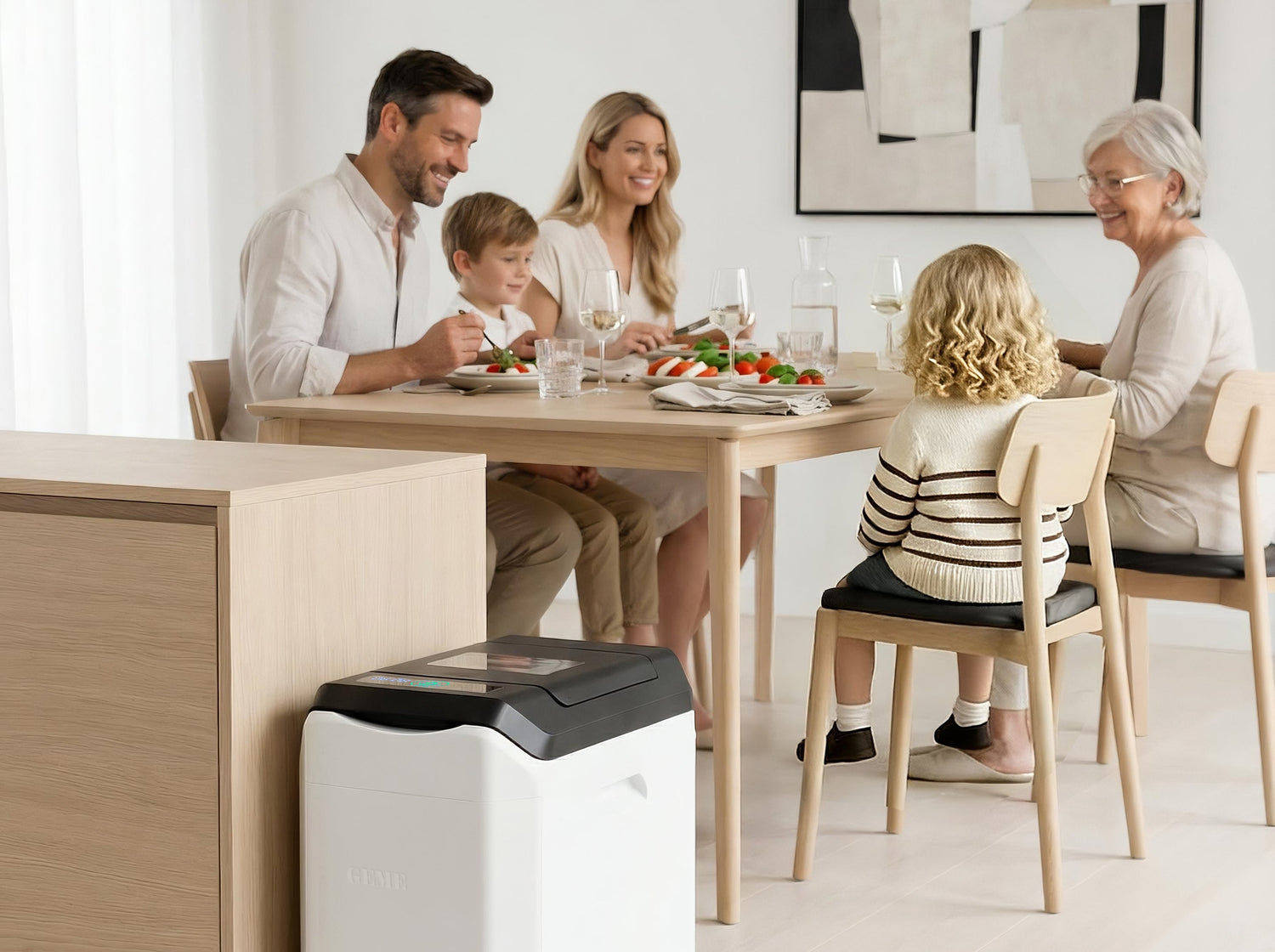
Apartment Composting Guide 2026
Apartment composting is possible, but it needs a different playbook from backyard composting. The key is reducing odor risk, limiting insect access, and choosing a system that fits daily kitchen life.
This guide compares countertop scrap bins, freezer storage, worm bins, food recyclers, and microbial kitchen composters so you can choose the right indoor method for your home.
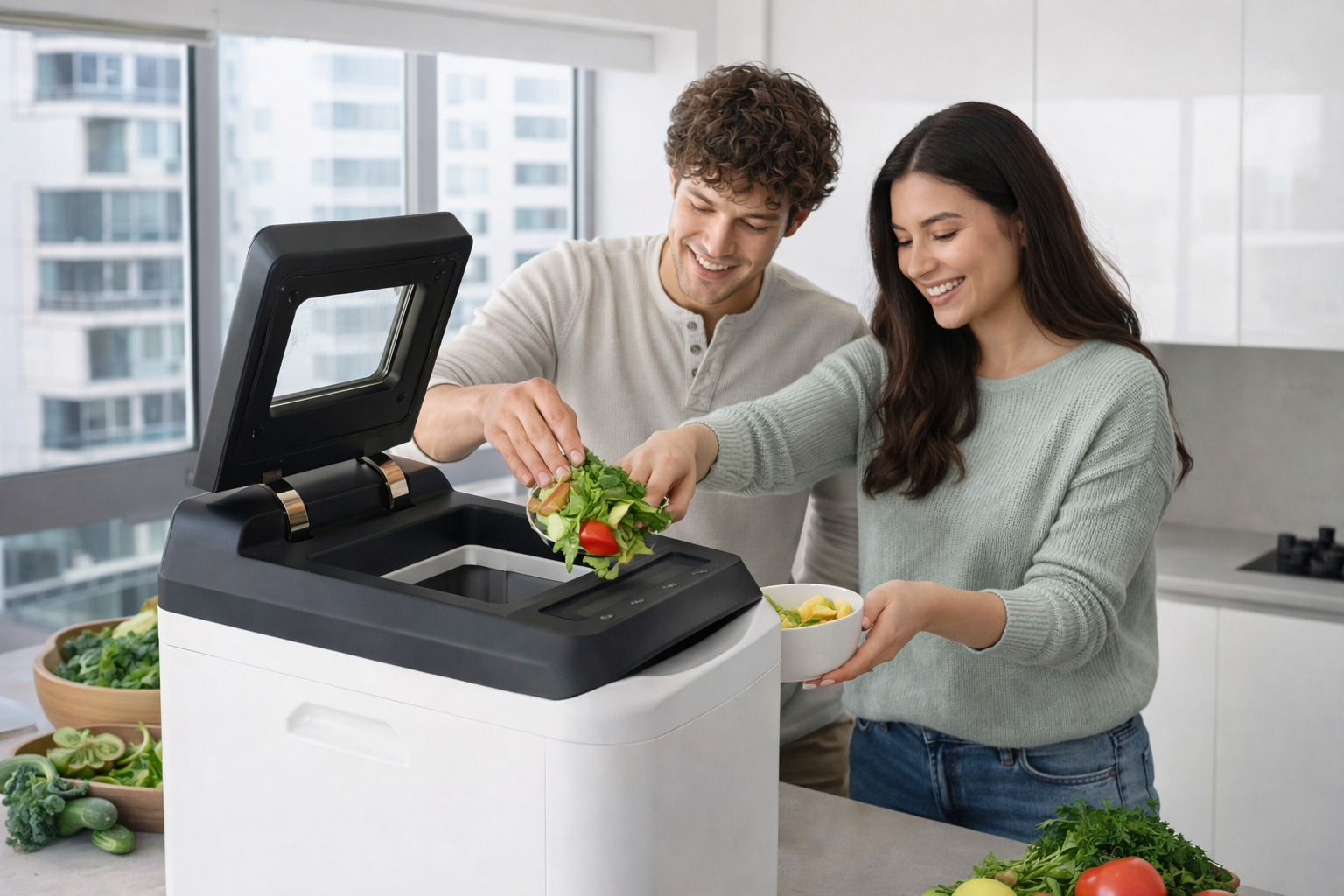
Less odor risk, fewer exposed scraps.
Quick Answer
The best way to compost in an apartment is to avoid open, unmanaged food-scrap storage. Use a closed system that limits insect access, manages moisture, and fits your daily kitchen routine.
Traditional indoor bins, freezer storage, and worm bins can work for some users, but they require discipline and space. A microbial kitchen composter such as GEME Terra II is a stronger fit when you want a controlled indoor routine with continuous feeding and compost-like output for soil blending.
For broader context, read our best indoor composter for apartments, beginner's guide to composting at home, and real compost vs dehydrated food waste.
Key Takeaways
- Apartment composting fails when scraps stay exposed. Open bins and wet scraps can increase odor and insect risk indoors.
- Freezing scraps is storage, not composting. It can delay odor, but it does not complete the composting process.
- Food recyclers can reduce volume. Drying and grinding may help manage waste, but output may still need further composting or careful use.
- Microbial kitchen composters are better for kitchen-to-soil routines. They support biological breakdown in a controlled indoor system.
- GEME Terra II output should be used as a compost base. Screen large, unfinished pieces and blend with soil before plant use.
Table of Contents
- The Apartment Composting Reality
- Problem 1: Indoor Composting Odor
- Problem 2: Fruit Flies and Gnats
- Problem 3: Turning and Monitoring
- Apartment Composting Options Compared
- Why Apartments Need a Closed System
- Why GEME Terra II Works for Apartments
- Food Recyclers vs Composters
- GEME Terra II vs Mill vs Lomi
- Which Apartment Method Should You Choose?
- FAQ
- Sources
- Related Articles
The Apartment Composting Reality No One Talks About
Search for “apartment composting,” and you will find plenty of cheerful advice: use a countertop bin, start a worm box, freeze scraps, or try a balcony compost pile.
Some of those methods can work for committed users. But they are not realistic for every apartment, especially small homes with limited ventilation, no balcony, shared building rules, or children and pets.
Apartment composting usually fails for three reasons: odor becomes noticeable, insects appear quickly, and the process requires more monitoring than busy households can maintain.
- Odor becomes noticeable in a small space.
- Fruit flies or gnats may appear around exposed scraps.
- The process requires more moisture and airflow control than many users expect.
- Outdoor methods do not translate cleanly into kitchens.
The problem is not that apartment dwellers are lazy. The problem is that traditional composting was designed around outdoor air, soil contact, space, and time. For a broader method overview, see our how to compost at home guide.
Problem 1: Indoor Composting Odor
Why Traditional Compost Can Smell Indoors
Composting depends on oxygen, moisture balance, and microbial activity. When a small indoor bin becomes too wet, too compact, or poorly aerated, odor risk increases.
Common indoor compost odors can include sour fermentation smells, wet trash odors, and unpleasant notes from protein-rich scraps. In a backyard, some odor may dissipate. In an apartment kitchen, it lingers.
- Sour fermentation smells from wet scraps.
- Wet trash odors from trapped moisture.
- Ammonia-like smells from too much nitrogen-rich material.
- Musty smells from poor airflow.
If odor is your main concern, read how to reduce indoor compost odor.
Problem 2: Fruit Flies, Gnats, and Unwanted Guests
Food scraps attract insects because they offer moisture, sugar, fermentation, and soft organic matter. Fruit peels and sweet scraps are especially risky if they sit exposed.
Freezing scraps can delay the problem, but it does not solve the problem of composting. The moment frozen scraps thaw, odor and insect risks can return if the material is not moved into a managed system.
- Fruit flies around fruit peels and soft scraps.
- Fungus gnats around moist organic matter.
- Larvae risk if scraps sit too long.
- Higher risk when scraps are wet, sweet, or uncovered.
For fruit-heavy kitchens, better storage also helps. See how to make bananas last longer and how long apples last in the fridge.
Problem 3: Turning, Balancing, and Constant Monitoring
Composting is a biological process, not just a storage habit. Traditional composting requires greens, browns, oxygen, moisture, and time.
That can be satisfying in a garden. It is harder in a small apartment, where there is less room for trial and error.
- Balancing greens and browns.
- Maintaining oxygen flow.
- Managing moisture.
- Turning or aerating.
- Waiting weeks or months.
- Finding a place to use or finish the compost.
Most “how to compost at home” guides quietly assume you have outdoor space, airflow, and room for mistakes. Many apartments have none of those.
Apartment Composting Options Compared
There is no single apartment composting method that fits everyone. The right choice depends on your space, smell tolerance, garden access, building rules, and whether you want compost output or only waste reduction.
| Method | Best For | Apartment Limitation | Compost Output? |
|---|---|---|---|
| Countertop scrap bin | Short-term collection | Can smell if scraps sit too long | No, it only stores scraps |
| Freezer storage | Odor-free holding before drop-off | Uses freezer space and still needs final disposal | No, it only delays breakdown |
| Worm bin | Committed users who like hands-on systems | Needs careful moisture, food, and temperature control | Yes, if managed well |
| Food recycler | Reducing volume and wet trash | Output may need further composting or program-specific handling | Not necessarily |
| Microbial kitchen composter | Indoor kitchen-to-soil routine | Requires upfront machine cost and proper output use | Compost-like output / compost base |
Why Apartment Composting Needs a Closed, Controlled System
For composting to work in an apartment, it has to behave less like a backyard pile and more like a reliable kitchen appliance.
A successful apartment composting system should limit odor risk, reduce insect access, lower manual monitoring, and fit naturally into meal prep and cleanup.
- Control odor risk at the source.
- Limit insect access to food scraps.
- Reduce the need for manual turning or balancing.
- Fit into daily kitchen routines.
- Produce usable compost base or a clear next step for output.
This is why modern microbial kitchen composters are different from open bins, balcony piles, and simple scrap containers.
Why GEME Terra II Works for Apartments
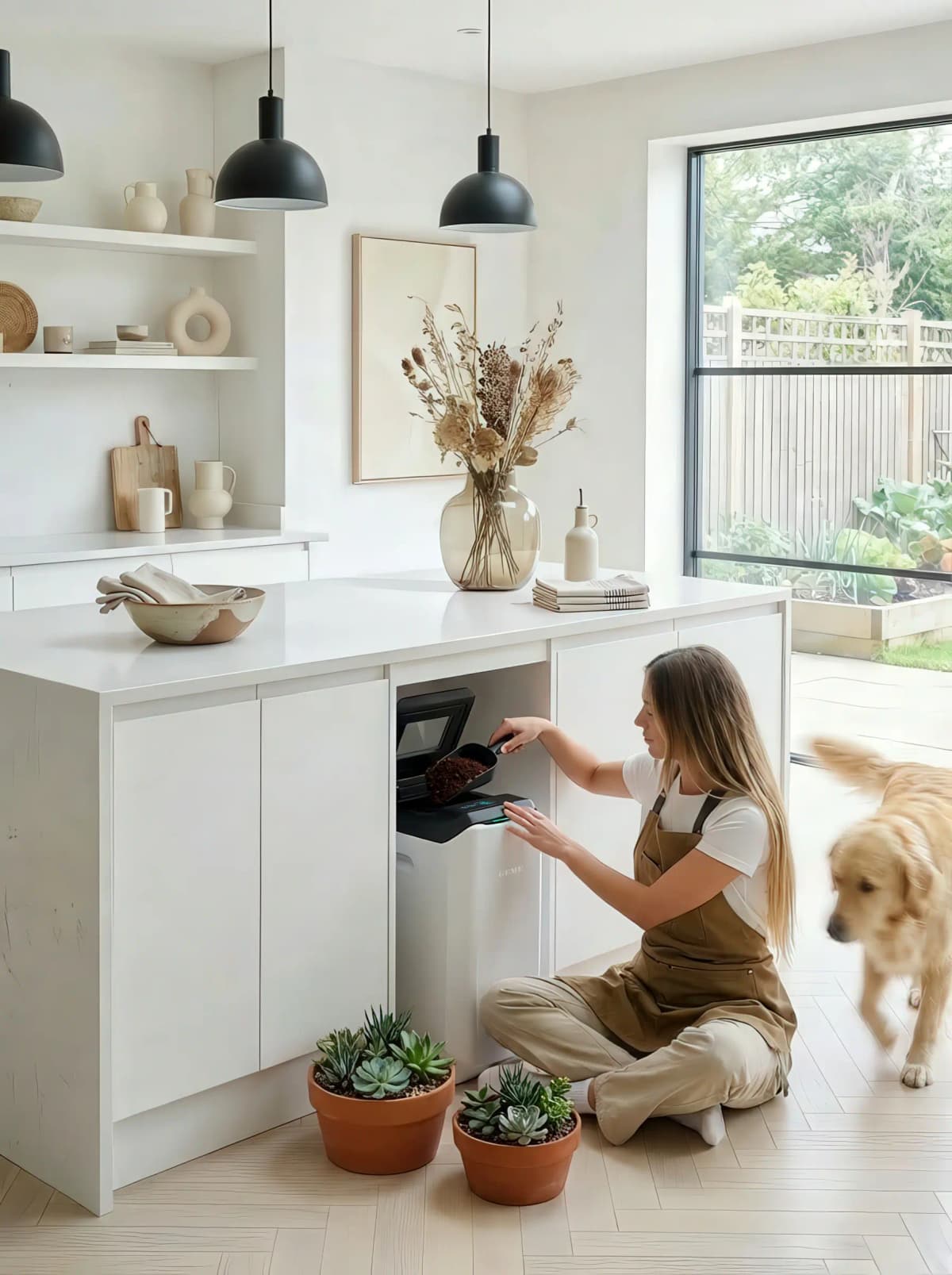
GEME Terra II is designed for households that want to compost indoors without turning the kitchen into a science project.
Instead of leaving food scraps exposed, GEME Terra II uses a closed microbial composting system. Inside the chamber, Kobold™ microbes support biological breakdown under controlled aerobic conditions.
The system is designed to manage the conditions that matter in composting:
- Temperature
- Oxygen availability
- Moisture balance
- Mixing
- Continuous microbial activity
Apartment dwellers can add scraps as part of daily life, close the lid, and let the system keep working. For input boundaries, see what you can put in an electric composter and salt and oil boundaries for electric composters.
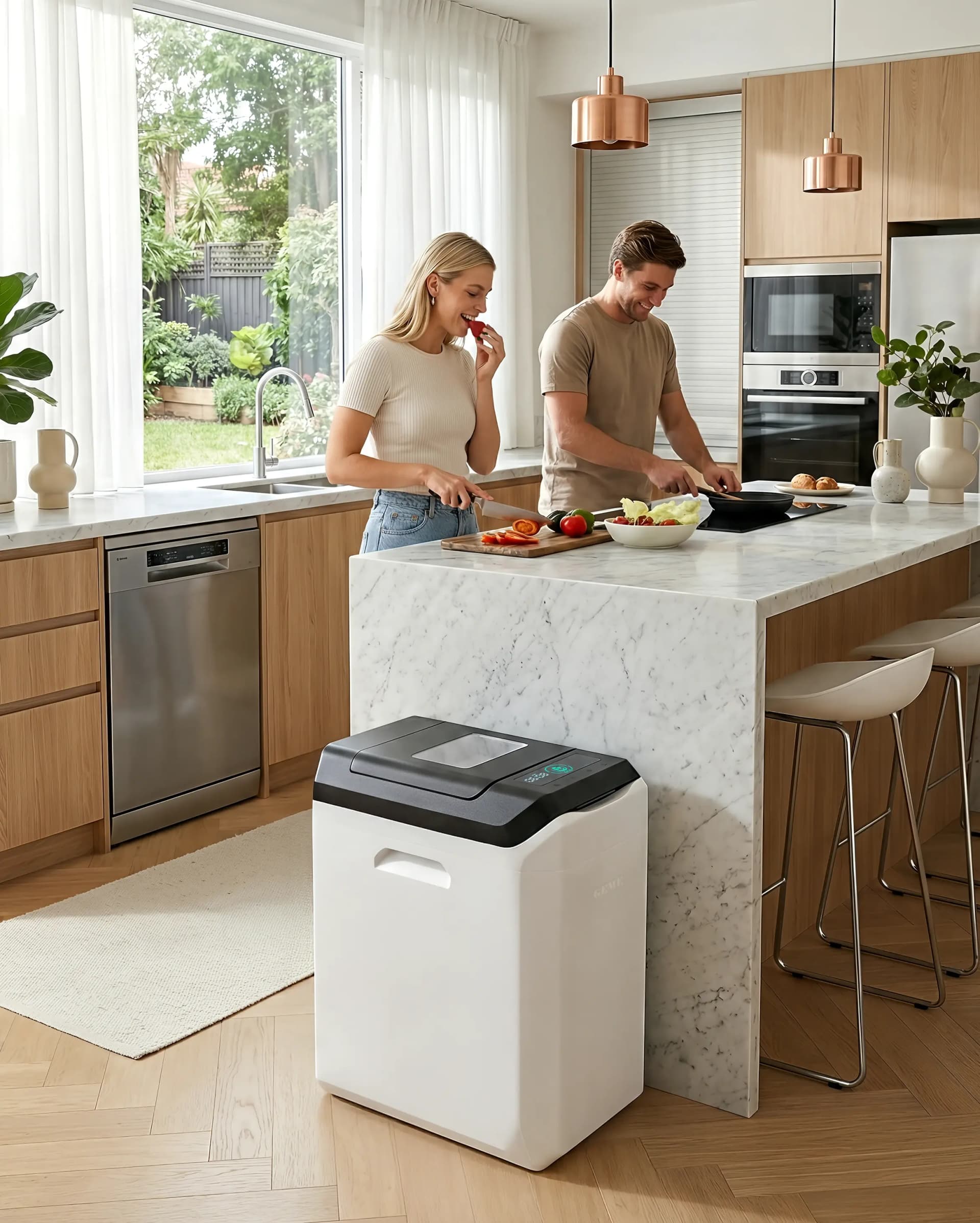
Designed for apartment kitchens.
Compost Indoors with Terra II
GEME Terra II supports daily food-scrap composting through a closed microbial system, continuous feeding, and no routine odor filter replacement.
Built for kitchen-to-soil routines.
Why Food Recyclers Are Not the Same as Microbial Composters
Some countertop machines dry and grind food waste. These devices can reduce odor and volume, but they do not always complete biological composting.
That means the output may still need disposal, municipal collection, soil-use caution, or further composting before it behaves like mature compost.
For apartment dwellers who want compost-oriented output, this distinction matters.
| Question | Food Recycler / Dehydrator | Microbial Kitchen Composter |
|---|---|---|
| Main process | Drying, grinding, heating, or storage | Microbial breakdown under controlled conditions |
| Output | Dry grounds or processed food residue | Compost-like organic material or compost base |
| Soil use | May need further composting or program-specific handling | Blend with soil according to compost-use guidance |
| Best apartment role | Cleaner waste handling and volume reduction | Indoor kitchen-to-soil routine |
For a deeper comparison, read does Lomi really compost? and does Mill really compost?.
GEME Terra II vs Mill vs Lomi for Apartment Composting
GEME Terra II, Mill, and Lomi can all help apartment users manage food waste. But they solve different problems.
| Feature | GEME Terra II | Mill Food Recycler | Lomi |
|---|---|---|---|
| Core method | Microbial kitchen composting | Dry and grind food recycling | Food recycling / volume reduction |
| Output | Compost-like organic material / compost base | Food grounds or processed residue | Processed food-waste material |
| Best apartment use | Indoor kitchen-to-soil routine | Waste volume reduction and storage workflow | Compact waste volume reduction |
| Routine filter or consumable costs | No routine odor filter replacement | Check the current service and filter model | Check current filter and consumable guidance |
| Composting biology | Designed around microbial composting | Better framed as food recycling | Better framed as food recycling |
For product-by-product comparisons, see GEME vs Mill, GEME vs Lomi, and GEME vs Reencle.
Which Apartment Composting Method Should You Choose?
Choose freezer storage if...
- You have municipal food-scrap pickup or drop-off access.
- You want the cheapest temporary odor-control method.
- You have enough freezer space.
- You do not need compost output at home.
Choose a food recycler if...
- Your main goal is to reduce wet trash volume.
- You do not need a compost base from the machine.
- You are comfortable checking filter, consumable, or service requirements.
- You understand the output may need further handling.
Choose GEME Terra II if...
- You want microbial kitchen composting indoors.
- You want compost-like output for soil blending.
- You want continuous feeding for daily scraps.
- You prefer no routine odor filter replacement.
- You want a kitchen-to-soil routine without a backyard pile.
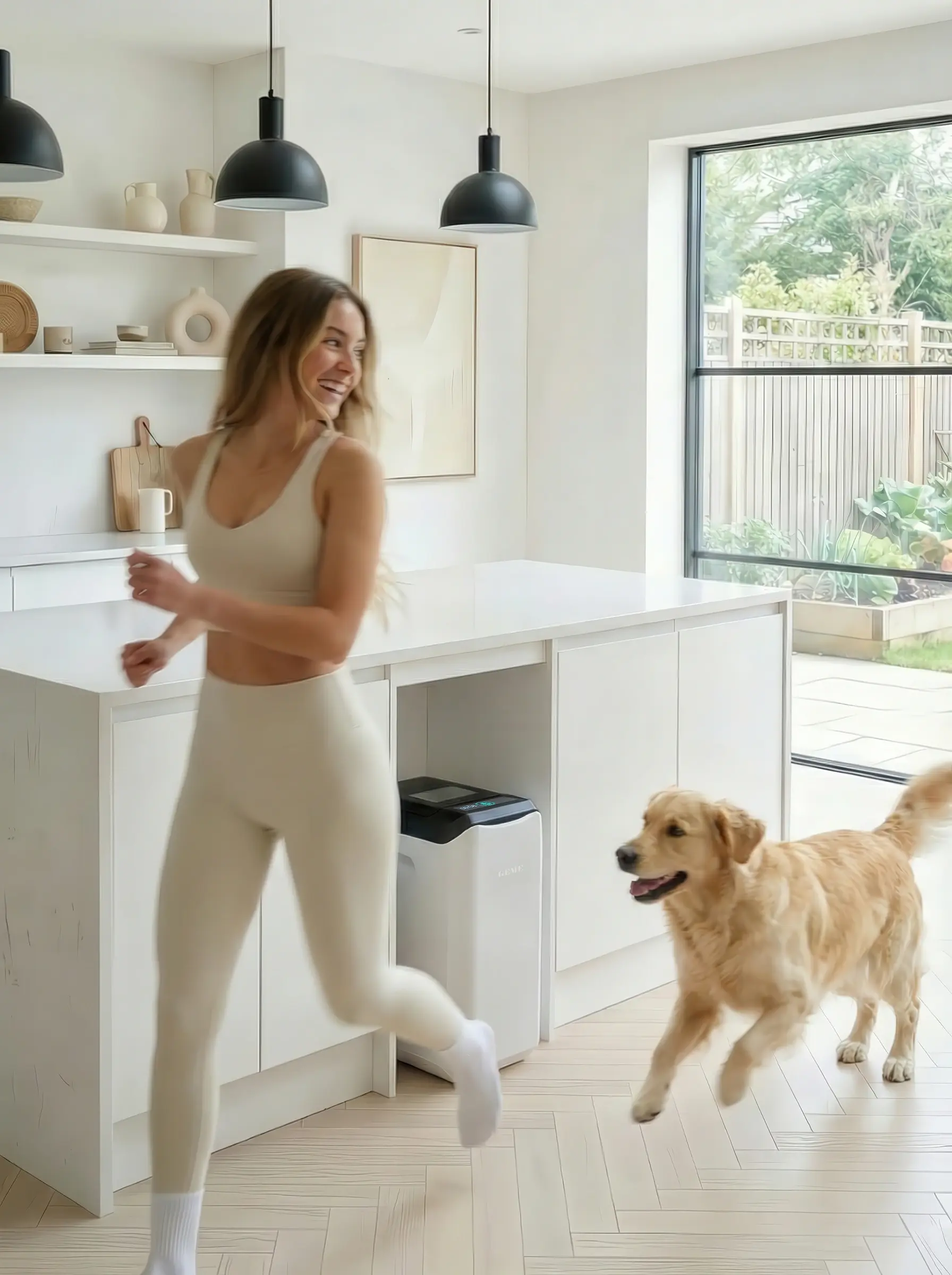
Controlled microbial processing.
Apartment Composting Made Practical
No backyard pile required. GEME Terra II helps you manage daily food scraps indoors through a controlled microbial composting routine.
Built for indoor kitchen-to-soil routines.
The Bottom Line: Traditional Composting Is Not Broken — It Is Just Not Built for Every Apartment
Traditional composting works well outdoors, where there is space, airflow, soil contact, and room for error.
Apartments are different. They are smaller, more enclosed, more odor-sensitive, and often lack outdoor space.
That is why apartment composting needs a different approach: a closed, controlled system that fits indoor life.
GEME Terra II gives apartment dwellers a way to reduce food waste and create a compost base for soil blending without relying on balcony piles, open bins, or simple dehydrated scraps.
TL;DR
Apartment composting fails when food scraps sit exposed, wet, and unmanaged.
Freezer storage and food recyclers can help reduce odor or volume, but they do not always create compost-oriented output.
GEME Terra II is a stronger choice if you want a controlled microbial kitchen composter that supports continuous indoor composting and a compost base for soil blending.
Frequently Asked Questions
Can you really compost in an apartment?
Yes. Apartment composting is possible, but the method matters. Traditional open compost bins can create odor, insects, and maintenance challenges indoors. Closed microbial composting systems are generally better suited for apartment living.
What is the best way to compost in an apartment?
For many apartment dwellers, a closed indoor composting system is the most practical option because it limits exposed scraps, reduces odor risk, and fits naturally into everyday kitchen routines.
Will apartment composting smell?
Traditional compost bins can develop odors if moisture and airflow are not balanced. Enclosed microbial composters are designed to manage decomposition in a controlled environment, which can reduce odor risk during normal use.
Will composting attract fruit flies?
Exposed food scraps can attract fruit flies and fungus gnats. Closed systems help reduce insect access by keeping food waste inside a chamber instead of leaving it in an open container.
Can I compost meat, dairy, and cooked food?
Traditional backyard compost piles often discourage these materials because they may attract pests. Some enclosed microbial composting systems can handle a wider range of everyday kitchen scraps, but users should always follow the manufacturer’s feeding guidance.
Do electric composters make compost?
Not always. Many countertop machines mainly dry or grind food waste. Microbial kitchen composters are designed to support biological decomposition and create compost-like organic material for soil blending.
Do I need a balcony to compost?
No. Modern indoor composters can work inside kitchens, utility rooms, or other indoor spaces, depending on product design and household routine.
Can I use GEME compost output in my plants?
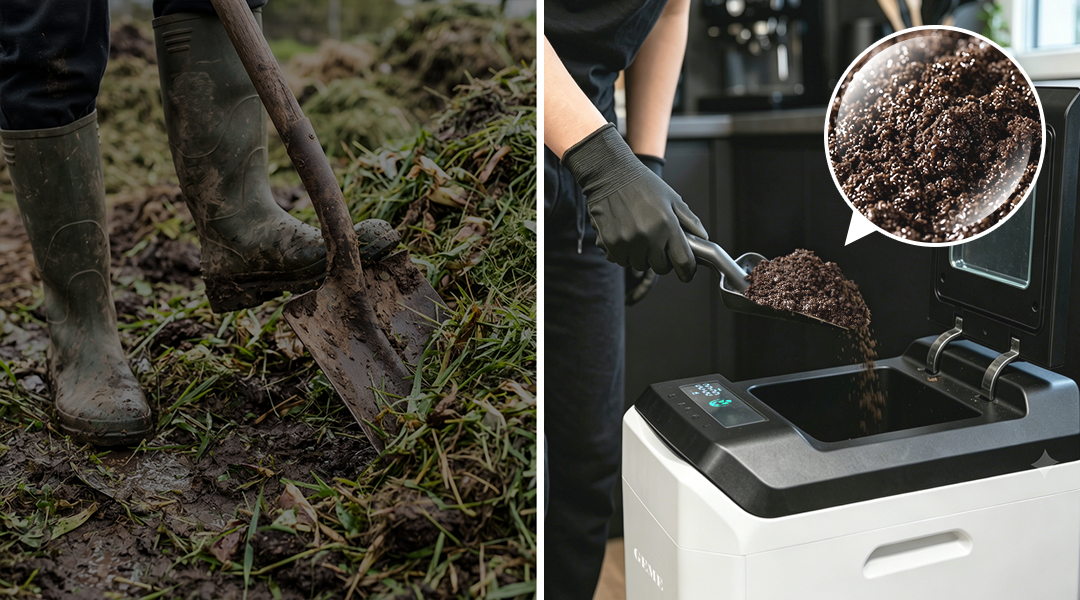
Yes, but use it as a compost base rather than pure potting soil. Screen large, unfinished pieces and start with about one part compost base mixed with eight parts soil, then adjust based on plant needs.
Sources
Food scraps become soil support.
Start Composting Indoors
Make apartment food scraps useful again with a microbial kitchen composter built for daily indoor routines.
Built for indoor kitchen-to-soil routines.

Laat een reactie achter
Deze site wordt beschermd door hCaptcha en het privacybeleid en de servicevoorwaarden van hCaptcha zijn van toepassing.