
2026 Real Compost Verdict
Not every kitchen composter actually makes compost. Some machines dry and grind food scraps into a smaller volume of waste, while others use living microbes to create real compost that can improve garden soil.
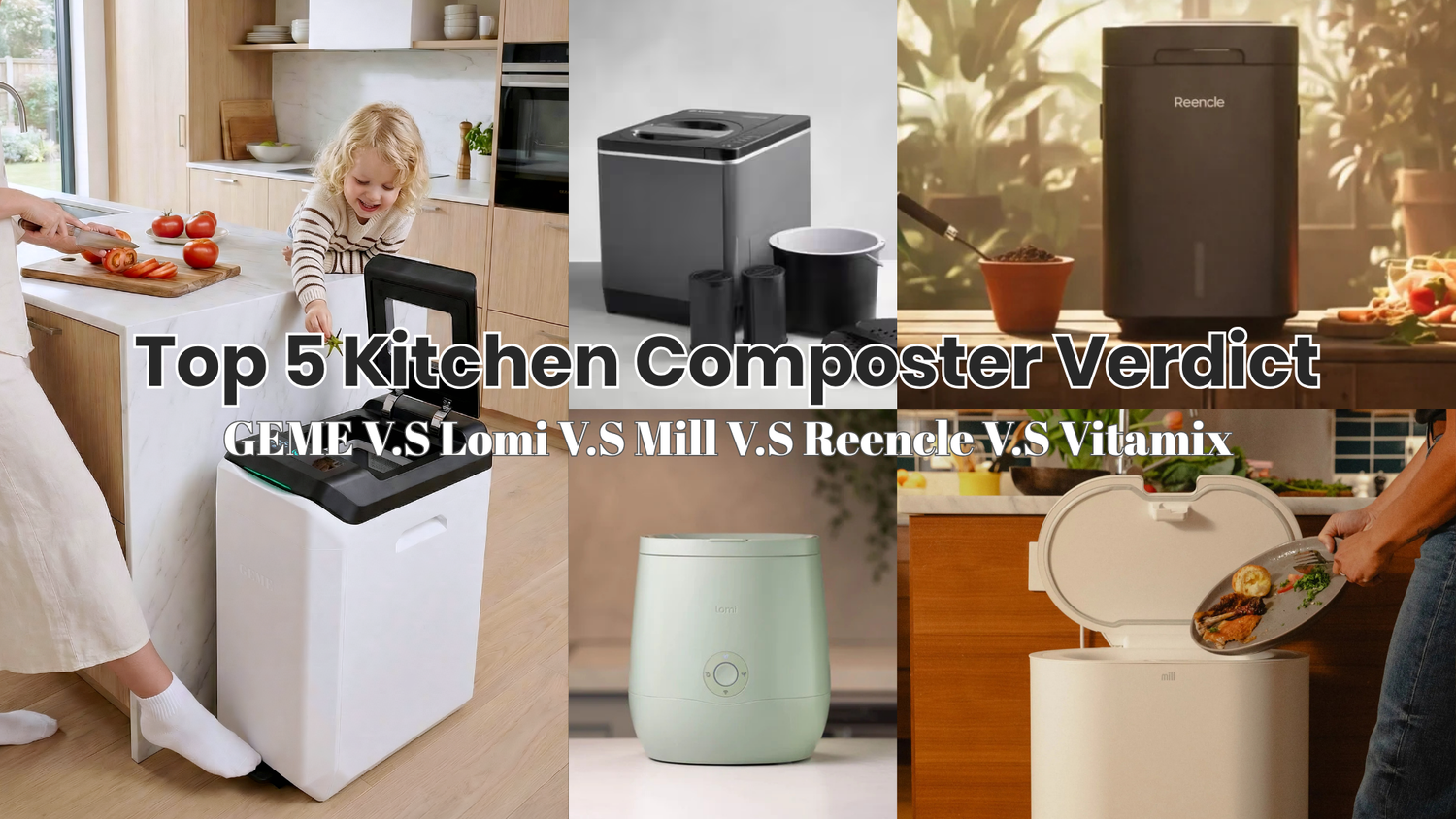
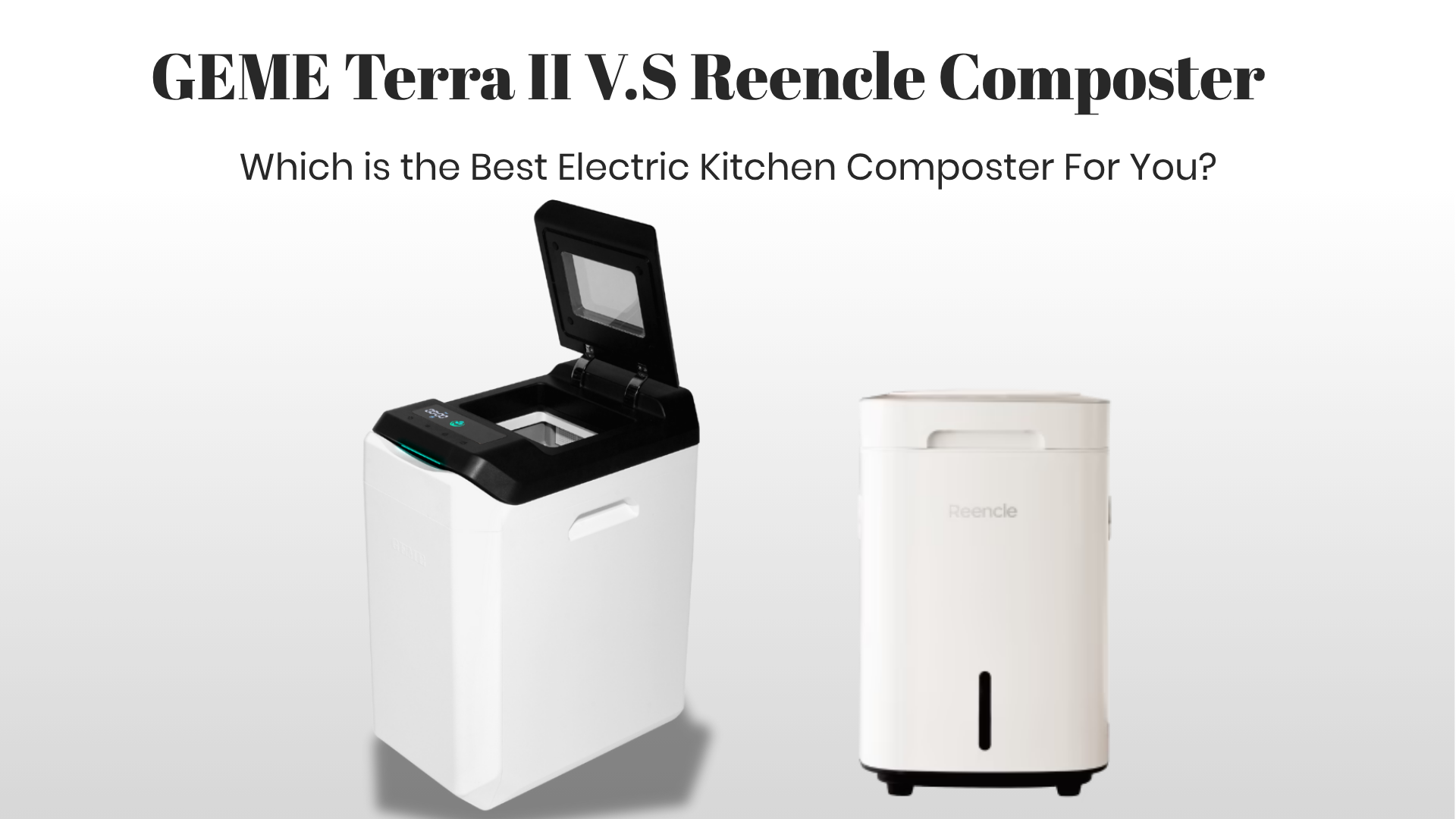
This guide compares five popular kitchen composters in 2026: GEME Terra II, Reencle Prime, Lomi, Mill, and Vitamix FoodCycler.
The focus is simple: which machines produce real compost, and which ones mainly dehydrate food waste?
Microbial composter or food recycler?
Quick Answer
Among the five popular kitchen composters compared here, GEME Terra II is the strongest choice for households that want real compost from a real microbial kitchen composter. It uses a living microbial ecosystem, intelligent composting controls, and continuous aerobic decomposition to transform everyday food scraps into real compost.
Reencle Prime is also a genuine microbial composter, but its output often benefits from additional curing before garden use. Lomi, Mill, and Vitamix FoodCycler are better understood as food recyclers or dehydrator-style machines because they primarily dry, grind, or reduce food waste volume.
For deeper context, read real compost vs dehydrated food waste, does Lomi really compost?, and does Mill really compost?.
Key Takeaways
- GEME Terra II produces real compost. It is built around real microbial composting, not simple drying and grinding.
- GEME has no filter replacements. It avoids routine carbon filter replacement and recurring filter costs.
- Reencle is the closest microbial competitor. It uses microbes, but its output often benefits from curing before garden use.
- Lomi, Mill, and FoodCycler are mainly food recyclers. They can reduce waste volume, but they do not complete the same microbial composting process.
- For gardeners, output quality matters most. Real compost is different from dehydrated food waste that only looks soil-like.
Table of Contents
Compost vs Dehydrated Waste
Real composting is a biological process. It depends on oxygen, moisture, temperature, and living microorganisms that transform food scraps into stable organic matter.
A kitchen composter should not only reduce waste volume. It should help convert kitchen scraps into biologically active compost that can support garden soil, potted plants, raised beds, and long-term soil health.
Many so-called electric composters are actually dehydrators. They heat, dry, and grind food waste into small particles. That material may look soil-like, but it has not completed microbial decomposition.
The key question: Does this machine create real compost, or does it only make dried food waste?
This distinction is why GEME Terra II belongs in a different category from food recyclers. For the full explanation, see real compost vs dehydrated food waste.
Not dehydrated food waste.
The Best Kitchen Composter for Real Compost
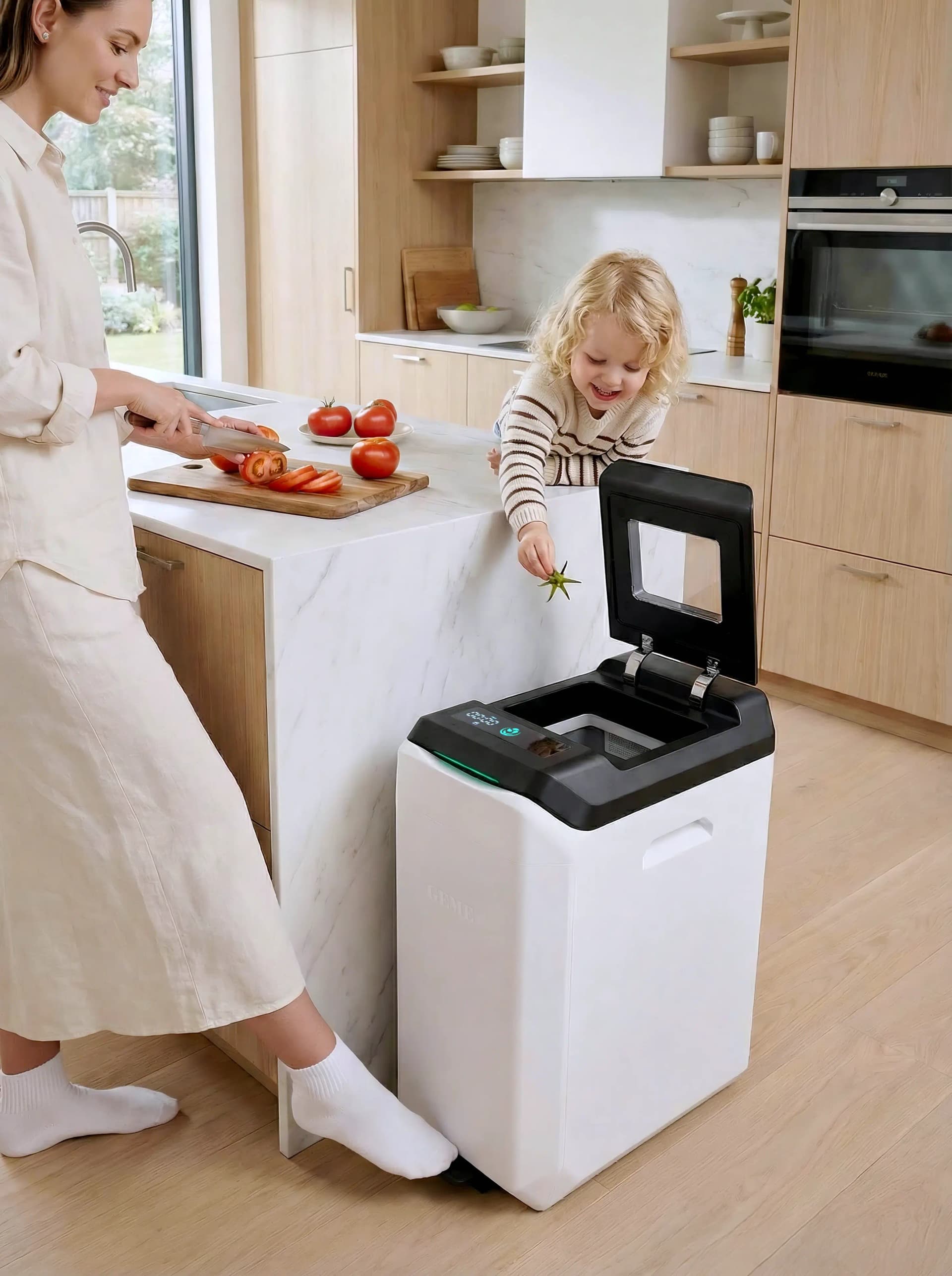
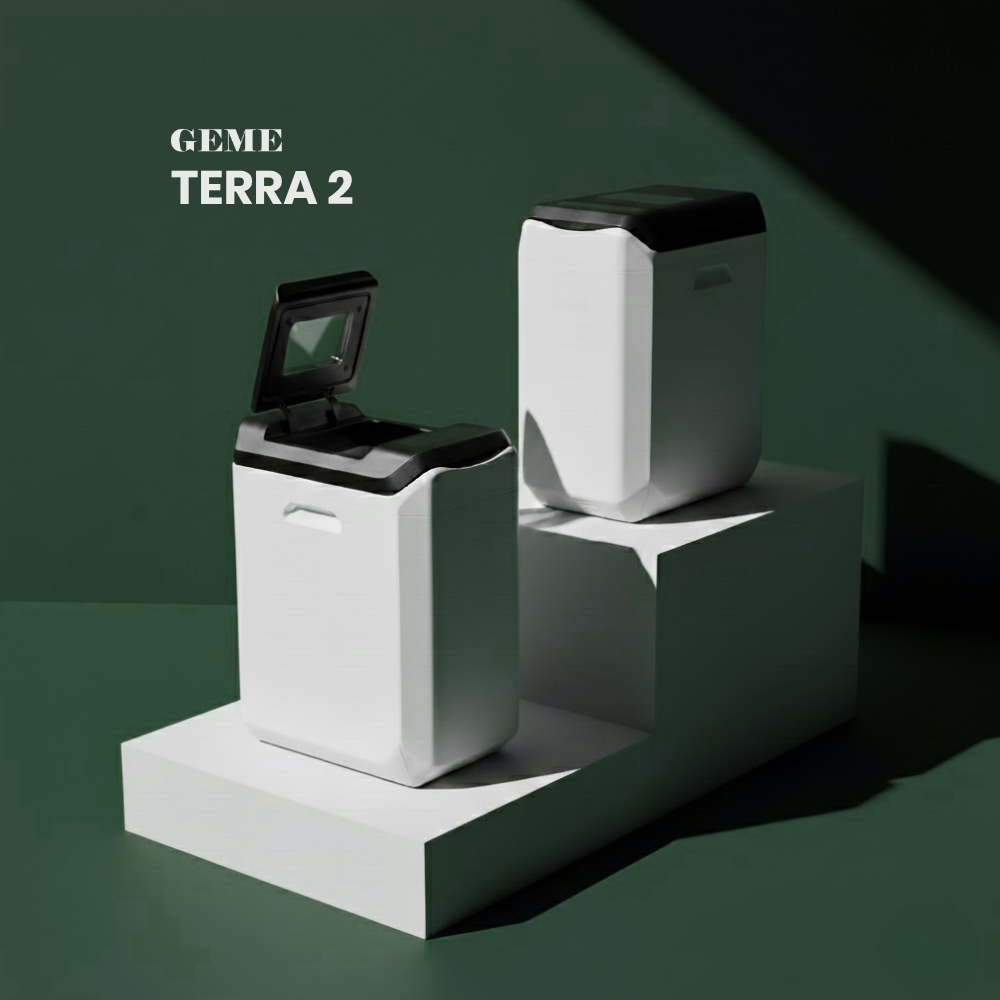
GEME Terra II is an electric kitchen composter designed to produce real compost rather than dehydrated food waste. It combines microbial composting, intelligent controls, and no filter replacements.
No filter replacements. No recurring filter costs.
1. GEME Terra II: Real Electric Kitchen Composting
GEME Terra II is an electric kitchen composter designed for real indoor composting at home. It uses a living microbial ecosystem instead of relying on drying and grinding alone.
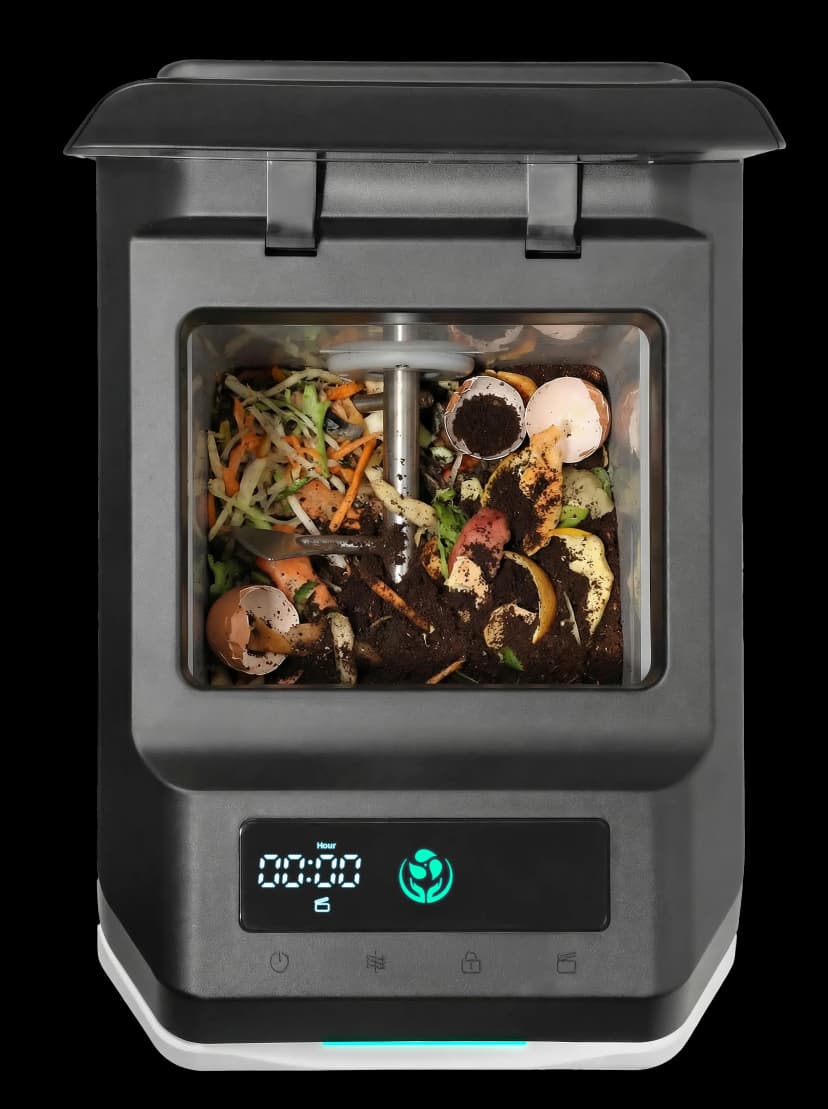
Its Kobold™ microbial system supports aerobic decomposition inside a controlled indoor chamber. Temperature, airflow, moisture, and mixing are managed to keep microbes active, helping transform everyday kitchen scraps into dark, crumbly, biologically active compost.
Why GEME Terra II Stands Out
- Real composting: uses living microbes to decompose food waste.
- Real compost output: produces compost suitable for gardens and soil improvement.
- Broader food-scrap routine: designed for everyday kitchen scraps, including many cooked foods and mixed leftovers within product guidance.
- No filter replacements: no routine carbon filter replacement.
- No recurring filter costs: no hidden filter subscription cycle.
- Continuous operation: designed for daily household food scraps.
- Garden value: supports soil improvement rather than simple waste reduction.
For households that want a kitchen composter, electric composter, and real composter in one machine, GEME Terra II is the strongest choice in this comparison.
Learn more about Kobold™ microbial technology and how GEME composting works.
2. Vitamix FoodCycler: A Dehydrator, Not a Real Composter
The Vitamix FoodCycler is often called a composter, but its core process is drying and grinding. It reduces food waste volume, but it does not complete the biological composting process.
Its output may be useful as pre-processed organic material, but it should not be treated as finished compost. For garden use, it usually needs further decomposition in soil or a compost pile.
Best For
- Reducing food waste volume
- Households without a garden goal
- Users who mainly want smaller trash output
Limitations
- Does not produce real compost directly
- No living compost ecosystem
- Output may need curing or further breakdown
3. Lomi Food Recycler: A Polished Food Waste Dryer
Lomi is popular and convenient, but it is still closer to a food recycler than a real composter. It dries and grinds food scraps, sometimes with additives, but the process is too short and too dry to create fully mature compost.
Lomi output can reduce waste and may be used carefully as organic material after further decomposition. However, it should not be confused with real compost from a true microbial composting process.
Best For
- Beginners who want less food waste volume
- Small households
- Users focused on convenience rather than soil biology
Limitations
- Requires filters and additives
- Output is not fully composted
- May require curing before garden use
For a direct comparison, read GEME vs Lomi.
4. Mill Food Recycler: Waste Logistics, Not Home Composting
Mill dries and grinds food scraps into a stable material that can be mailed or collected for off-site processing. This can help divert food waste from landfills, but it does not produce compost in your home.
Mill may be useful for people who want a managed waste service. But if your goal is to create real compost for your own garden, it does not complete that loop at home.
Best For
- Waste diversion
- Households interested in a service model
- People who do not need garden compost
Limitations
- Does not produce home compost
- Depends on the service or external processing
- Less useful for gardeners who want compost output
For a direct comparison, read GEME vs Mill Food Recycler.
5. Reencle Prime: A Real Microbial Composter, With Curing Needs
Reencle Prime is different from dehydrator-style machines because it uses microbes to break down food waste. That makes it a more serious composting system than Lomi, Mill, or FoodCycler.
However, Reencle output often benefits from additional curing before garden use. It is better understood as a compact microbial composter for small households rather than a fully garden-ready composting system for heavier daily food waste.
Best For
- Small households
- Users who want microbial composting
- People willing to manage curing and maintenance
Limitations
- May need curing before garden use
- Smaller capacity than GEME Terra II
- May require ongoing filter replacement
For a direct comparison, read GEME vs Reencle.
Not just dry scraps.
Turn Food Scraps Into Real Compost
Unlike food dehydrators that simply dry scraps, GEME Terra II is designed as an electric kitchen composter and a real composter, helping households transform food waste into compost for gardens and soil improvement.
No filter replacements. No recurring filter costs.
Top 5 Kitchen Composters Verdict Table
The table below separates real microbial composters from food recyclers and dehydrator-style machines.
| Machine | Type | Creates Real Compost? | Garden-Ready? | Best For |
|---|---|---|---|---|
| Vitamix FoodCycler | Dehydrator / grinder | No | No | Trash volume reduction |
| Lomi | Food recycler / dehydrator | No | No | Beginners reducing food waste volume |
| Mill | Food recycler + service model | No, not at home | No | Waste diversion without gardening goals |
| Reencle Prime | Microbial composter | Partially yes, with curing expectations | Often benefits from curing | Small households |
| GEME Terra II | Real electric kitchen composter | Yes | Yes, when used according to GEME guidance | Families, gardeners, and real compost users |
Best Kitchen Composter Verdict
If your goal is only to shrink food scraps before throwing them away, any dehydrator-style machine may help.
If your goal is to build garden soil, support plant growth, reduce landfill waste, and create a real circular kitchen-to-garden system, GEME Terra II is the strongest choice.
GEME Terra II is the best kitchen composter in this comparison because it is an electric kitchen composter designed to produce real compost, not dehydrated food waste.
Frequently Asked Questions
Which kitchen composter produces real compost?
Among the five machines compared here, GEME Terra II is the strongest option for real compost because it uses a living microbial ecosystem and controlled aerobic decomposition.
Are Lomi and FoodCycler real composters?
Lomi and FoodCycler primarily dehydrate and grind food waste rather than complete the microbial composting process. They are better understood as food recyclers or dehydrator-style machines.
Is Reencle a real composter?
Yes. Reencle uses microbial decomposition, although its output often benefits from additional curing before garden use.
What is the best kitchen composter for gardeners?
For gardeners who want real compost to improve soil health and plant growth, GEME Terra II is the strongest option in this comparison.
What is the difference between an electric composter and a food dehydrator?
A real electric composter should support biological decomposition. A food dehydrator mainly removes moisture and reduces volume.
Can dehydrated food waste be used in the garden?
It may be used carefully after further decomposition, but it should not be treated as finished compost.
Which composter is best for families?
GEME Terra II is a strong choice for families because it is designed for daily food scraps, continuous composting, no filter replacements, and real compost output.
Does GEME Terra II need filters or subscriptions?
No. GEME Terra II has no filter replacements, no recurring filter costs, and no filter subscription requirement.
Sources
Built for gardeners and families.
Choose the Electric Kitchen Composter That Makes Real Compost
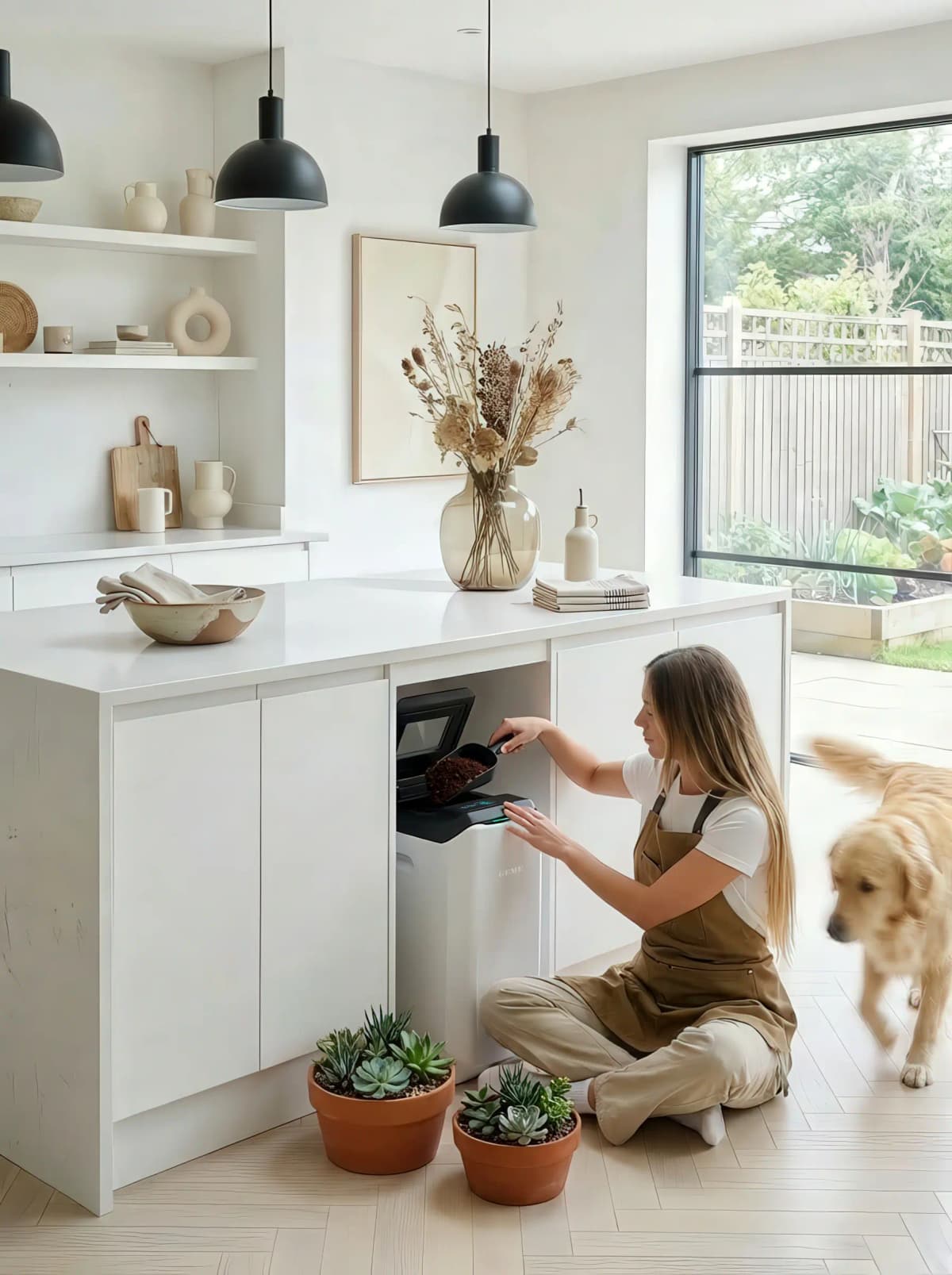
GEME Terra II helps households turn food scraps into real compost for gardens, raised beds, potted plants, and long-term soil health — with no filter replacements and no recurring filter costs.
Real compost. Real microbial composting. No filter replacements.

Laat een reactie achter
Deze site wordt beschermd door hCaptcha en het privacybeleid en de servicevoorwaarden van hCaptcha zijn van toepassing.