
Finished Compost, Curing & Garden Use Guide
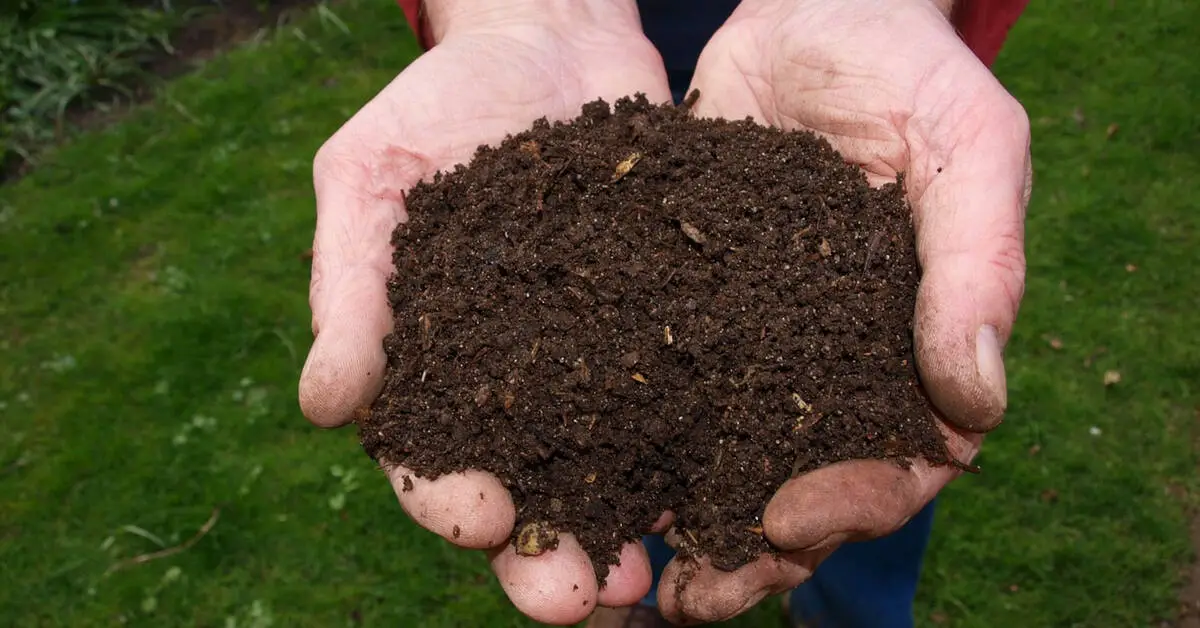
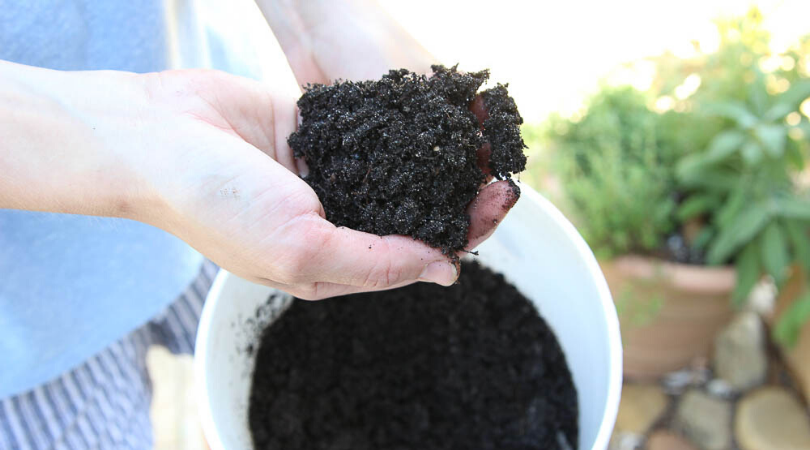
Compost is usually ready to use when it looks dark and crumbly, smells earthy, has cooled to outdoor temperature, and no longer contains recognizable food scraps. These signs show that organic matter has broken down enough to be used as a soil amendment, mulch layer, or garden soil booster.
If compost still smells sour, feels hot, looks chunky, or contains visible food scraps, it likely needs more time to finish and cure before being used around plants.
Dark. Crumbly. Earthy. Cool. Mostly unrecognizable. That is the finished compost checklist.

Use compost when it looks like soil, not food waste.
Quick Answer
Your compost is ready when it is dark, crumbly, earthy-smelling, cool, and mostly uniform in texture. If the pile still smells sour, feels hot, looks wet and sticky, or contains visible food scraps, it likely needs more time to mature.
Finished compost can be mixed into garden soil, used as a moderate top dressing, added to raised beds, or blended into potting mixes in suitable amounts. It should not usually be used as pure compost around delicate seedlings or as a complete replacement for soil.
For related context, read how to use compost correctly, garden soil vs compost, and how to compost at home.
Key Takeaways
- Finished compost looks dark and crumbly. It should resemble rich soil rather than kitchen scraps.
- Ready compost smells earthy. Sour, rotten, or ammonia-like odor usually means it needs more balancing or time.
- Most original materials should be unrecognizable. A few small woody pieces are normal; visible food scraps are not ideal.
- Temperature matters. Finished compost should be close to the outdoor temperature, not actively hot.
- Curing improves stability. Even compost that looks finished can benefit from extra curing time.
- Screen before garden use. Return large unfinished pieces to the composting system.
- Use compost as a soil amendment. Mix with soil or top-dress moderately instead of planting in pure compost.
- GEME Terra II: supports real microbial composting for appropriate kitchen scraps, with compost output for soil blending.
Table of Contents
- 5 Signs Your Compost Is Ready to Use
- How to Test If Compost Is Ready
- Try a Simple Germination Test
- How to Use Finished Compost
- Should You Let Compost Cure Before Using It?
- What If Your Compost Is Not Ready?
- From Kitchen Scraps to Finished Compost
- How to Use GEME Compost Output Responsibly
- FAQ
- Summary
- Sources
- Related Articles
5 Signs Your Compost Is Ready to Use
Compost maturity is not judged by one sign alone. The most reliable approach is to check appearance, smell, texture, temperature, and whether the original materials are still recognizable.
1. It Looks Dark and Crumbly
Finished compost should look like rich, dark brown soil. The texture should be loose, crumbly, and easy to spread. If you still see large pieces of fruit peels, vegetable scraps, rice, pasta, bread, or other food waste, the compost needs more time.
2. It Smells Earthy, Not Rotten
Ready compost should smell like fresh soil or a forest floor. It should not smell sour, rotten, moldy, or like ammonia. Bad odor often means the compost is too wet, too compacted, low in oxygen, or still actively decomposing.
3. The Original Materials Are Hard to Recognize
When compost is mature, most original materials should no longer be easy to identify. A few small woody pieces, fruit skins, or eggshell fragments can be normal, but visible food scraps should be returned for more composting.
4. The Volume Has Reduced
As microorganisms break down organic matter, the compost volume shrinks. Finished compost is often much lower in volume than the original material because water evaporates, carbon is released during microbial activity, and the original structure collapses into a more soil-like material.
5. The Temperature Has Cooled Down
Active composting creates heat. When compost is ready, it should be close to the surrounding outdoor temperature. If the pile, bin, or compost chamber contents are still noticeably warm, decomposition is still active and the material should cure longer before sensitive garden use.
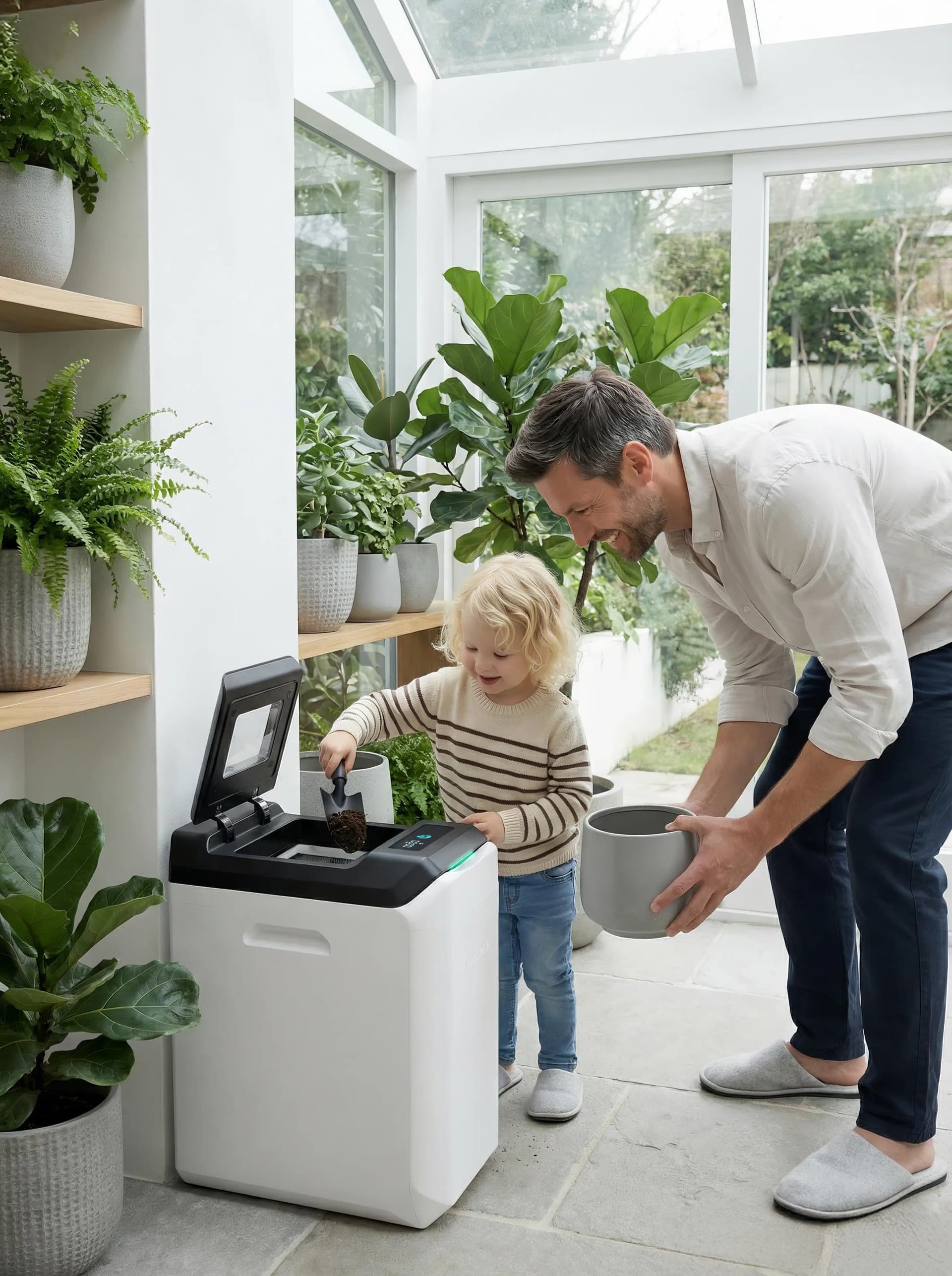
Process appropriate kitchen scraps through real microbial composting.
Make Compost Output for Soil Blending With GEME Terra II
GEME Terra II supports real microbial composting for appropriate kitchen scraps, with no drying, no replacement odor filters, and compost output that should be screened and mixed with soil before plant use.
Real microbial composting. No filter replacements. Compost for soil blending.
How to Test If Compost Is Ready
Before applying compost to your garden, use a few simple checks. No single test is perfect, but together they give a practical picture of compost maturity.
| Test | Ready Compost | Not Ready Yet | What to Do |
|---|---|---|---|
| Visual test | Dark, crumbly, soil-like | Visible scraps or large chunks | Screen and return unfinished pieces. |
| Smell test | Earthy and mild | Sour, rotten, or ammonia-like | Add browns, aerate, and cure longer. |
| Temperature test | Close to ambient temperature | Still warm or hot | Let active decomposition finish. |
| Texture test | Loose and crumbly | Wet, sticky, slimy, or clumpy | Improve airflow and balance moisture. |
| Material test | Mostly uniform material | Recognizable food scraps | Break up and continue composting. |
Try a Simple Germination Test
If you are still unsure whether compost is mature enough, try a small germination test. This is not a laboratory test, but it can help you spot compost that may still be too active for sensitive seedlings.
- Fill a small pot or tray with a compost-and-soil blend.
- Plant a few fast-growing seeds such as radish, lettuce, or cress.
- Keep the medium moist but not soggy.
- Watch for sprouting, root growth, and leaf color.
- Compare results with seeds planted in a known safe potting mix if possible.
If seeds fail to sprout, turn yellow, develop poor roots, or grow unevenly, the compost may be immature, salty, too wet, or unbalanced. Let it cure longer before using it around delicate plants.
How to Use Finished Compost
Once compost is mature, it can support soil health in several ways. The best method depends on where you plan to use it and how concentrated the compost is.
| Use Case | How to Use Finished Compost | Caution |
|---|---|---|
| New garden beds | Mix mature compost into the topsoil layer before planting. | Use soil testing for large applications. |
| Existing garden beds | Apply a modest top dressing and gently incorporate where appropriate. | Do not bury stems or crowns. |
| Mulch layer | Spread compost around plants to support soil surface health. | Keep away from direct stem contact. |
| Containers | Blend mature compost with potting mix in modest amounts. | Do not use pure compost as the full container medium. |
| Lawns | Apply a very thin layer of screened compost as top dressing. | Do not smother grass blades. |
For many vegetable gardens, mature compost is most effective when mixed into soil before planting or added as a modest annual top-up. More compost is not always better, especially if soil nutrients are already high.
Should You Let Compost Cure Before Using It?
Yes. Even when compost looks finished, curing is often helpful. Curing gives microbial activity more time to stabilize and helps the compost become more soil-like before use around roots.
Curing is especially important if you plan to use compost around seedlings, potted plants, transplants, or sensitive crops. Freshly active compost may compete for oxygen, release strong compounds, or behave unpredictably in small containers.
When Curing Is Especially Useful
- The compost still feels slightly warm.
- You can still identify some original materials.
- The compost smells mild but not fully earthy.
- You plan to use it with seedlings or potted plants.
- You recently added fresh food scraps or greens.
- The compost is very wet or dense.
What If Your Compost Is Not Ready?
Unfinished compost can usually be fixed. The solution depends on what the compost looks, smells, and feels like.
| Problem | Likely Cause | What to Do |
|---|---|---|
| Sour or rotten smell | Too wet, compacted, or low oxygen | Add dry browns and improve airflow. |
| Ammonia smell | Too much nitrogen-rich material | Add carbon-rich browns and mix. |
| Large scraps remain | Pieces too large or not enough time | Break pieces smaller and keep composting. |
| Too dry | Not enough moisture for microbes | Add water gradually and mix. |
| Cold but unfinished | Low activity or imbalance | Mix, add balanced greens and browns, and wait. |
From Kitchen Scraps to Finished Compost
Kitchen scraps such as vegetable peels, fruit scraps, coffee grounds, tea leaves, and plant-based leftovers can become part of the composting cycle when processed correctly. The goal is to turn fresh scraps into stable organic matter that supports soil health.
Traditional outdoor composting can take months and needs space, aeration, moisture balance, and regular monitoring. Indoor composting systems can make food-scrap processing more manageable for households that do not have an outdoor pile.
The same maturity rule still matters: compost output should be screened, cured when needed, and mixed with soil before plant use.
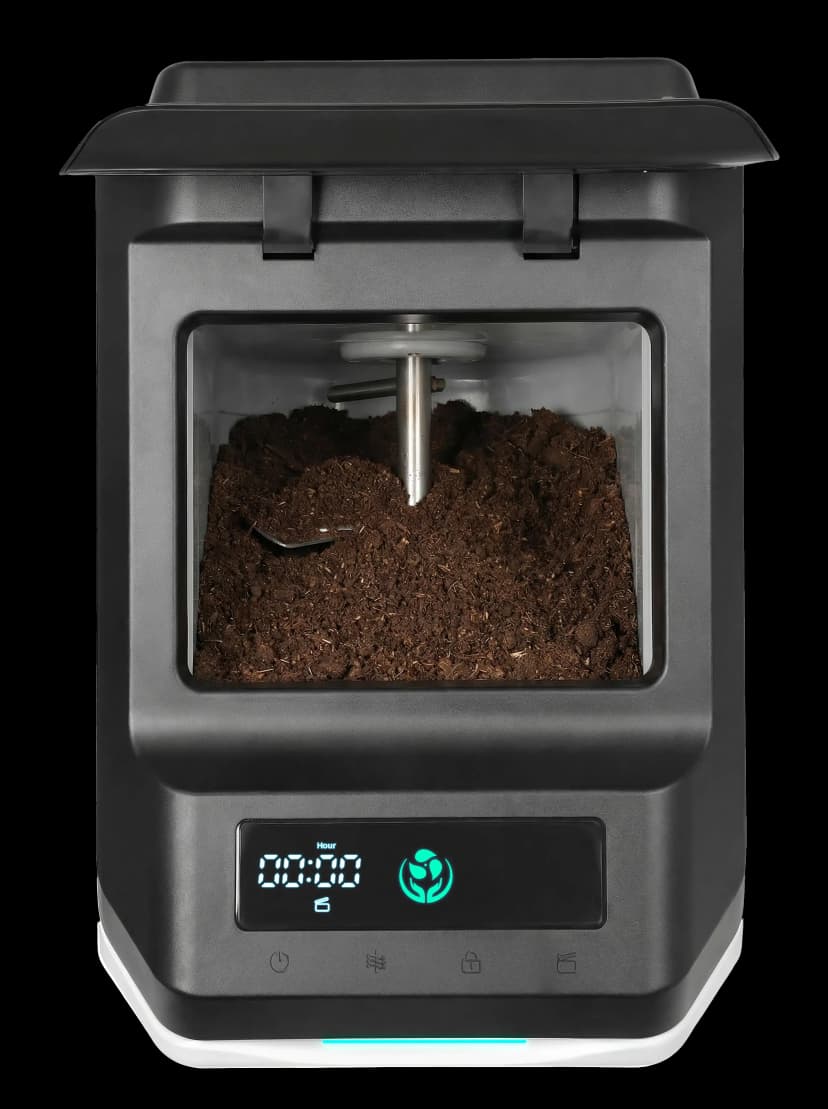
Screen, mix, and use responsibly.
Make Home Composting Easier With GEME
GEME Terra II supports real microbial composting for appropriate kitchen scraps. Use the compost output responsibly: screen large pieces, return unfinished material, and mix with soil before plant use.
Terra II for everyday homes. GEME Pro for larger routines.
How to Use GEME Compost Output Responsibly
GEME Terra II is designed for real microbial composting, not simple drying. Its compost output should be treated as a compost base for soil blending, not as a ready-to-pile pure growing medium.
- Check texture: look for moist, soil-like material.
- Screen large pieces: return unfinished chunks to the system.
- Let material cure when needed: especially if it still feels active or smells strong.
- Mix with soil: follow product guidance and blend compost output with soil before plant use.
- Avoid direct contact with edible plant parts: use compost as a soil amendment.
- Observe plants: start with modest applications and adjust based on soil and plant response.
For garden confidence, think of GEME output as part of a soil-building cycle: food scraps → microbial composting → screening and curing when needed → soil blending → healthier garden soil over time.
Final Takeaway: Finished Compost Looks and Smells Like Soil
Compost is ready when it looks dark and crumbly, smells earthy, feels cool, and no longer contains recognizable food scraps. If it still smells bad, feels hot, or looks chunky, give it more time.
Curing, screening, and soil blending are the safest next steps before using compost around plants, especially seedlings, containers, and sensitive crops.
Good compost should support soil health. It should not create odor, burn roots, or look like unfinished food waste.
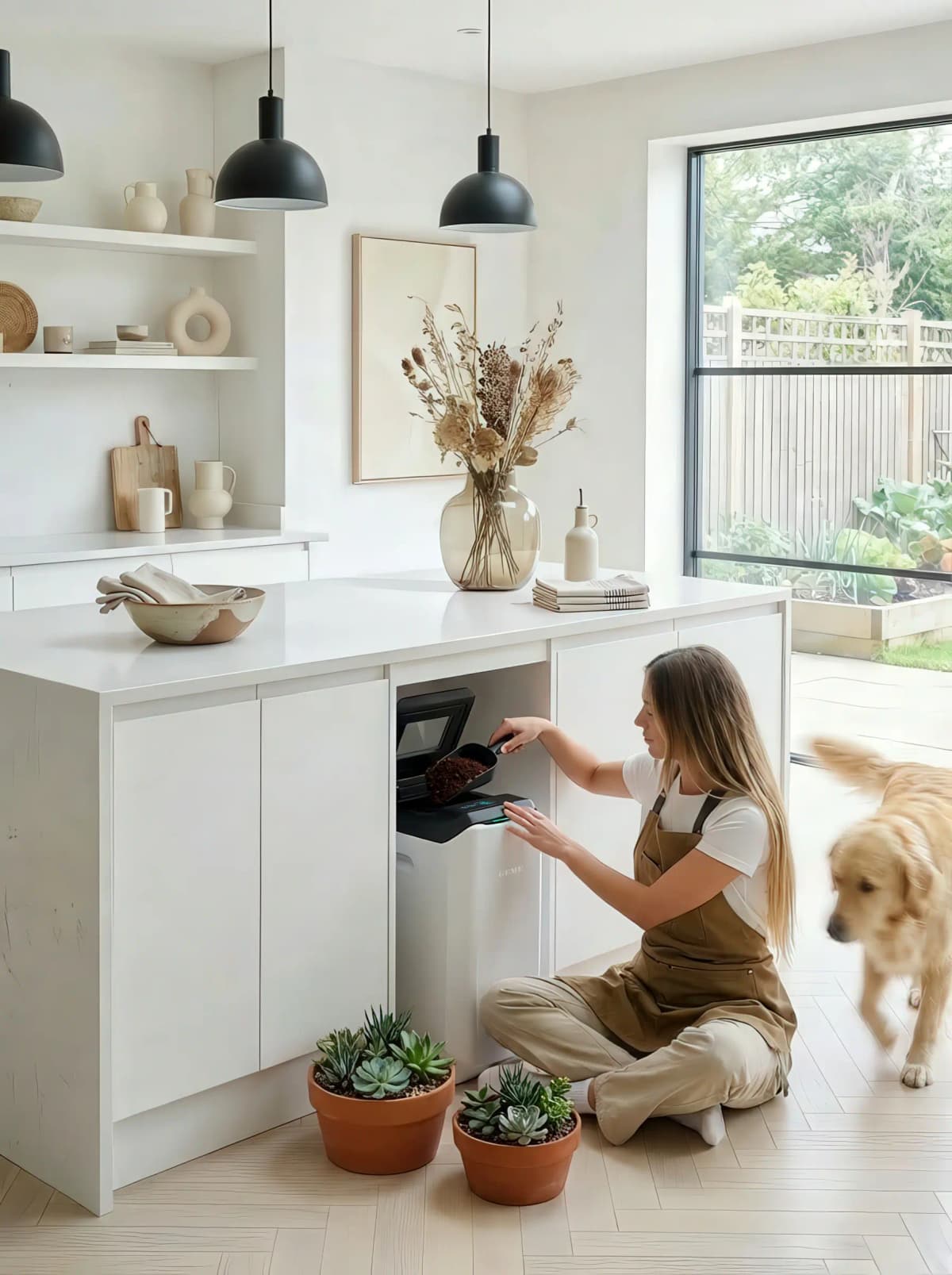
Real microbial composting for modern homes.
Build a Cleaner Home Composting Routine With GEME
GEME Terra II and GEME Pro help households turn appropriate food scraps into compost for soil blending, with real microbial composting, no filter replacements, and zero recurring filter costs.
Terra II for everyday homes. GEME Pro for larger routines.
Frequently Asked Questions
How do I know when compost is ready?
Compost is ready when it is dark, crumbly, earthy-smelling, cool, and no longer contains recognizable food scraps.
Can I use compost before it is fully ready?
It is better to wait. Immature compost may still be actively decomposing and can be too strong or unstable for seedlings, container plants, or sensitive roots.
How long does compost take to mature?
Compost maturity depends on the method, materials, temperature, moisture, aeration, and particle size. Traditional outdoor composting can take several months, while some well-managed systems process material faster.
What does finished compost smell like?
Finished compost should smell earthy and mild, similar to healthy garden soil. It should not smell rotten, sour, moldy, or like ammonia.
Can I use finished compost directly on plants?
Mature compost can be used around plants, mixed into soil, or added to potting blends in suitable amounts. Avoid using large amounts of pure compost directly around delicate seedlings.
Should I screen compost before using it?
Yes, screening is helpful. It removes large unfinished pieces, which can be returned to the composting system for more breakdown.
Can unfinished compost hurt plants?
It can. Unfinished compost may be too biologically active, too wet, too strong, or not stable enough for seedlings and sensitive plants. Let it cure before use.
Is GEME Terra II useful for finished compost?
GEME Terra II helps households process appropriate kitchen scraps through real microbial composting. Use the output responsibly by screening large pieces and mixing the compost base with soil before plant use.
Summary
- Ready compost: dark, crumbly, earthy-smelling, cool, and mostly uniform.
- Not ready: sour smell, ammonia odor, visible food scraps, heat, wet clumps, or sticky texture.
- Temperature: finished compost should be close to ambient temperature.
- Curing: extra curing time helps compost stabilize before garden use.
- Germination test: useful for checking compost before using it with seedlings.
- Garden use: mix mature compost into soil, use as top dressing, or blend modestly with potting mix.
- Screening: return large unfinished pieces to continue composting.
- GEME Terra II: supports real microbial composting for appropriate kitchen scraps, with no filter replacements and compost output for soil blending.
Sources
- University of Minnesota Extension — Composting in Home Gardens
- University of Minnesota Extension — Why You Should Test Your Compost
- U.S. EPA — Composting at Home
- U.S. EPA — Composting
- Oregon State University Extension — How to Use Compost in Gardens and Landscapes
- GEME — Terra II Product Page
- GEME — How Real Microbial Composting Works
- GEME — Advanced Compost Application Guide

Laat een reactie achter
Deze site wordt beschermd door hCaptcha en het privacybeleid en de servicevoorwaarden van hCaptcha zijn van toepassing.