


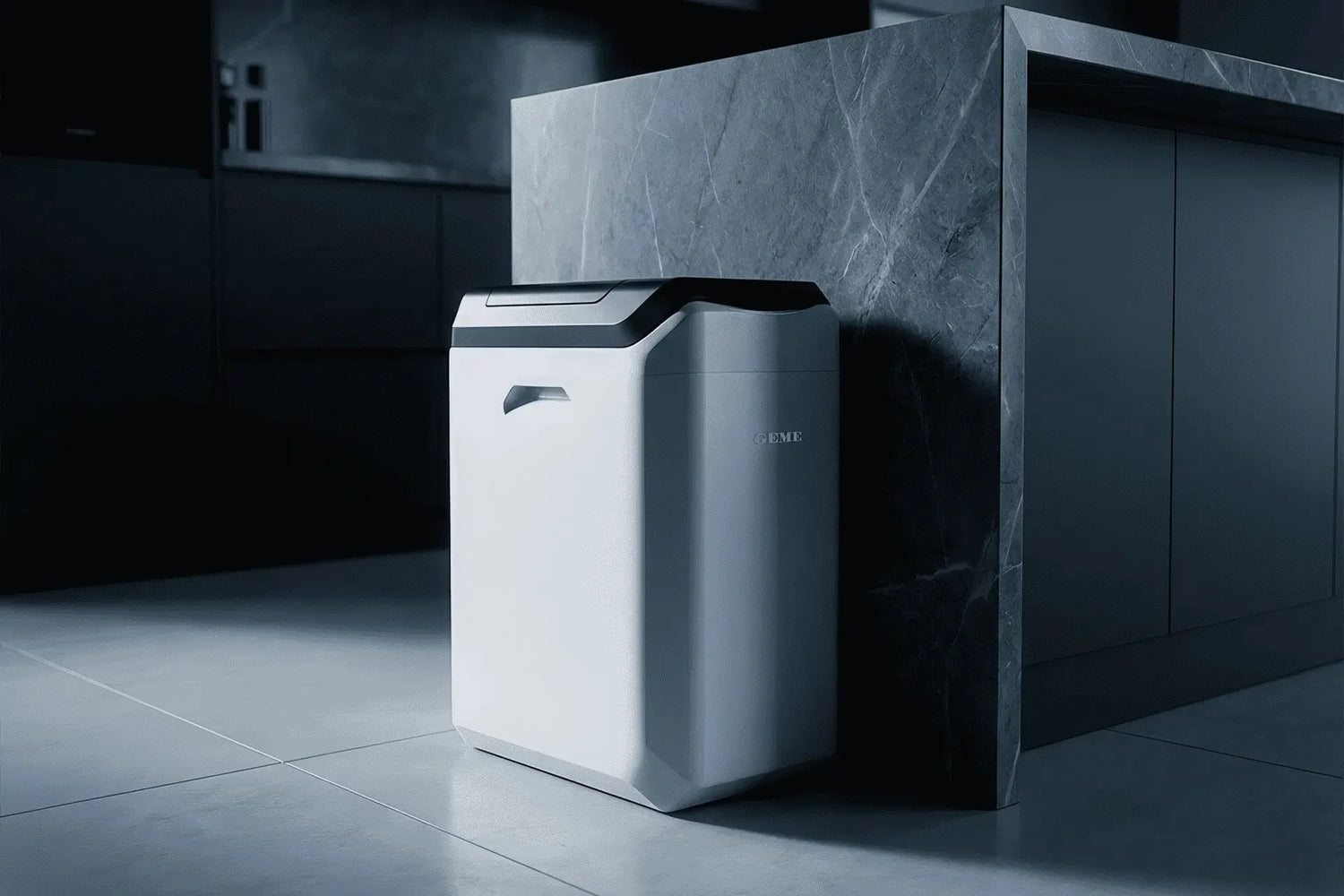
Technisch overzicht: energieverbruik, gemiddeld vermogen en dagelijks gebruik
Piekvermogen maakt indruk. Het ziet er op een specificatieblad spectaculair uit en kan een apparaat energieveriger doen lijken dan het in het dagelijks gebruik is. Maar huishoudens betalen niet voor één enkel moment. Huishoudens betalen voor energie over een langere periode.
Het energieverhaal van GEME is het best te begrijpen als een dynamisch gebruiksprofiel. Het systeem werkt de hele dag niet op één vast vermogen. Het reageert op het volume van de aangeboden afvalstoffen, de vochtigheid, de kamertemperatuur, de toestand van de verkamer en hoe vaak er etensresten worden toegevoegd.
Eenvoudige regel: vraag wat het apparaat het grootste deel van de dag doet, niet alleen hoeveel vermogen het op een piekmoment kan trekken.
Illustratief gebruiksprofiel
Het vermogen dat nodig is, varieert gedurende de dag in plaats van continu op piekvermogen te blijven.
Conceptuele illustratie, geen gemeten GEME-vermogensprofiel.
Het dagelijks gebruik wordt bepaald door het energieverbruik over een langere periode, niet door één piekwaarde.
Kort antwoord
Gemiddeld vermogen is belangrijker dan piekvermogen, omdat het gemiddelde vermogen meer zegt over het dagelijks gebruik. Piekvermogen toont alleen hoeveel vermogen een systeem op bepaalde momenten kan trekken. Gemiddeld vermogen en dagelijks energieverbruik geven aan hoe het apparaat zich op de energierekening over een langere periode vertaalt.
De GEME Terra II en GEME Pro moeten worden gezien als dynamische microbiële verwerkingssystemen, niet als constante verwarmers. Het vermogen dat nodig is, kan variëren afhankelijk van het volume van de aangeboden afvalstoffen, de vochtigheid, de omgevingstemperatuur, het herstelvermogen van de verkamer en het ritme van het toevoegen van afval. Daarom is de betere vraag niet “Wat is het hoogste getal?” maar “Wat doet dit apparaat het grootste deel van de dag bij de juiste werkbelasting?”
Bij een praktische vergelijking moet energieverbruik samen met capaciteit worden bekeken. De Terra II is het model voor dagelijks gebruik in huis; de GEME Pro biedt meer ruimte voor een zwaardere werkbelasting. Een apparaat dat aansluit op uw werkelijke ritme van voedselafval kan efficiënter aanvoelen dan een apparaat dat op papier kleiner lijkt, maar voortdurend bijna op zijn maximale capaciteit werkt.
Verder lezen: hoe een echte elektrische composter werkt, de stille versnellingsbak van de GEME Terra II en hoe wij technische beweringen formuleren.
Inhoudsopgave
- TL;DR V&A
- De waarheid in 90 seconden
- Geschiktheid voor uw keuken
- Snelle beslissing
- Waarom gemiddeld vermogen ertoe doet
- Van energierekening naar biologie
- Diepgaande blik op de Terra II
- Diepgaande blik op de GEME Pro
- Onzichtbaar werk versus reserve
- Praktische beslisregels
- Veelgestelde vragen
- Samenvatting
- Bronnen
- Gerelateerde artikelen
1. TL;DR V&A
Gebruikt GEME in het dagelijks leven veel elektriciteit?
Het eerlijke antwoord is dat GEME een dynamische belasting gebruikt, geen vast getal. Algemene referentiewaarden helpen gebruikers het verbruik te schatten, maar het werkelijke gebruik varieert afhankelijk van het volume van de aangeboden afvalstoffen, de vochtigheid, de kamertemperatuur en hoe vaak er wordt gevoerd.
Wat is belangrijker: piekvermogen of gemiddeld vermogen?
Gemiddeld vermogen is belangrijker voor het werkelijke dagelijks gebruik, omdat het het typische energiegedrag over een langere periode beschrijft. Piekvermogen beschrijft alleen het maximale vermogen dat op bepaalde momenten wordt getrokken.
Is GEME een constante verwarming?
Nee. Op de officiële How It Works-pagina van GEME wordt beschreven dat de Terra II dynamisch cyclisch werkt en dat het geen constante verwarming is. Het systeem ondersteunt een microbiële werkingstemperatuur in plaats van de hele dag door hitte uit te stoten.
Waarom kan het elektriciteitsverbruik per huishouden verschillen?
Omdat het proces dynamisch is. Nattere afvalstoffen, grotere hoeveelheden, vaak openen van de deksel, koudere kamers en intensief herstelwerk kunnen het vermogen verhogen.
Hoe moeten de Terra II en GEME Pro worden vergeleken?
Vergelijk dagelijkse capaciteit, gemiddeld vermogen, dagelijks energieverbruik en de beschikbare reserve voor de werkbelasting. De Terra II is het wendbaardere model voor huishoudens; de GEME Pro biedt meer ruimte voor zwaardere routines.
2. De waarheid in 90 seconden
De vraag die de meeste mensen eigenlijk bedoelen is eenvoudig: zal het apparaat elke dag duur zijn om te gebruiken? Het eerlijke antwoord is dat het elektriciteitsverbruik van GEME dynamisch is, niet vast. Zowel de Terra II als de GEME Pro hebben praktische referentieprofielen, maar het apparaat werkt de hele dag niet op één vast vermogen.
Het werkelijke gebruik verandert afhankelijk van wat u toevoegt, hoe nat de afvalstoffen zijn, hoeveel u toevoegt, hoe vaak u toevoegt en hoe koud de kamer is. Een microbiële composter is niet zomaar een verwarming. Het is een gecontroleerd aëroob systeem dat biologische activiteit ondersteunt en tegelijkertijd reageert op veranderende omstandigheden in de verkamer.
Daarom is gemiddeld vermogen in het dagelijks leven belangrijker dan piekvermogen. Piekvermogen vertelt u hoeveel vermogen het systeem op bepaalde momenten maximaal kan trekken. Gemiddeld vermogen en dagelijks energieverbruik vertellen u hoe het gebruik over een langere periode aanvoelt.
Piekvermogen is het plafond. Gemiddeld vermogen is de gewoonte. Dagelijks energieverbruik is de rekening.
3. Geschiktheid voor uw keuken
V1. Waar geeft u meer om?
- Een lagere dagelijkse elektriciteitslast in een normaal huishouden.
- Meer ruimte voor zwaardere of minder voorspelbare hoeveelheden voedselafval.
V2. Wat produceert uw keuken werkelijk?
- Een gelijkmatige dagelijkse hoeveelheid afvalstoffen uit gewoon gezinskoken.
- Zwaardere, nattere of onvoorspelbaardere hoeveelheden.
V3. Wat zou u meer storen?
- Een apparaat dat op papier efficiënt lijkt, maar in de praktijk te krap aanvoelt.
- Een apparaat met meer capaciteit dan u werkelijk nodig hebt.
Belangrijkste conclusie: de beste vraag over energie is niet “Wat is het hoogste getal?” Het is “Wat doet dit apparaat het grootste deel van de dag?”
4. Snelle beslissing
Kies de Terra II als...
- U een klein huishouden bent of een gewone thuiskeuken heeft.
- Uw dagelijkse hoeveelheid voedselafval binnen de capaciteit van de Terra II past.
- U het wendbare basismodel wilt in plaats van maximale reserve.
- U meer omgaat met het gewone dagelijks gebruik dan met één spectaculair piekgetal.
Kies de GEME Pro als...
- Uw hoeveelheid groter of minder voorspelbaar is.
- U meer reservecapaciteit wilt.
- U liever wat extra ruimte hebt dan een compact apparaat.
- U een groter systeem wilt voor zwaardere routines met voedselafval.
Getallen over elektriciteit maken alleen zin als u ze samen bekijkt met dagelijkse capaciteit, het ritme van de werkbelasting en de beschikbare reserve.
5. Waarom gemiddeld vermogen belangrijker is dan een spectaculair getal op het specificatieblad
Klanten betalen voor dagelijks gebruik, niet voor één spectaculair getal
Het hoogste wattagegetal op een pagina maakt emotioneel indruk, maar is vaak het minst bruikbare getal voor de werkelijke eigenaar. Huishoudens worden bejaard op basis van energieverbruik over een bepaalde periode. Een klant betaalt niet alleen voor het piekvermogen van de machine; de klant betaalt voor wat de machine gedurende dagen, weken en maanden doet.
Daarom zijn dagelijks energieverbruik en gemiddeld vermogen betere uitgangspunten dan piekvermogen. Piekvermogen is nog steeds belangrijk voor het ontwerp van de elektrische installatie en veiligheidsgrenzen, maar mag niet het hele verhaal over het gebruik van de machine domineren.
GEME is een levend systeem, dus de belasting is van nature dynamisch
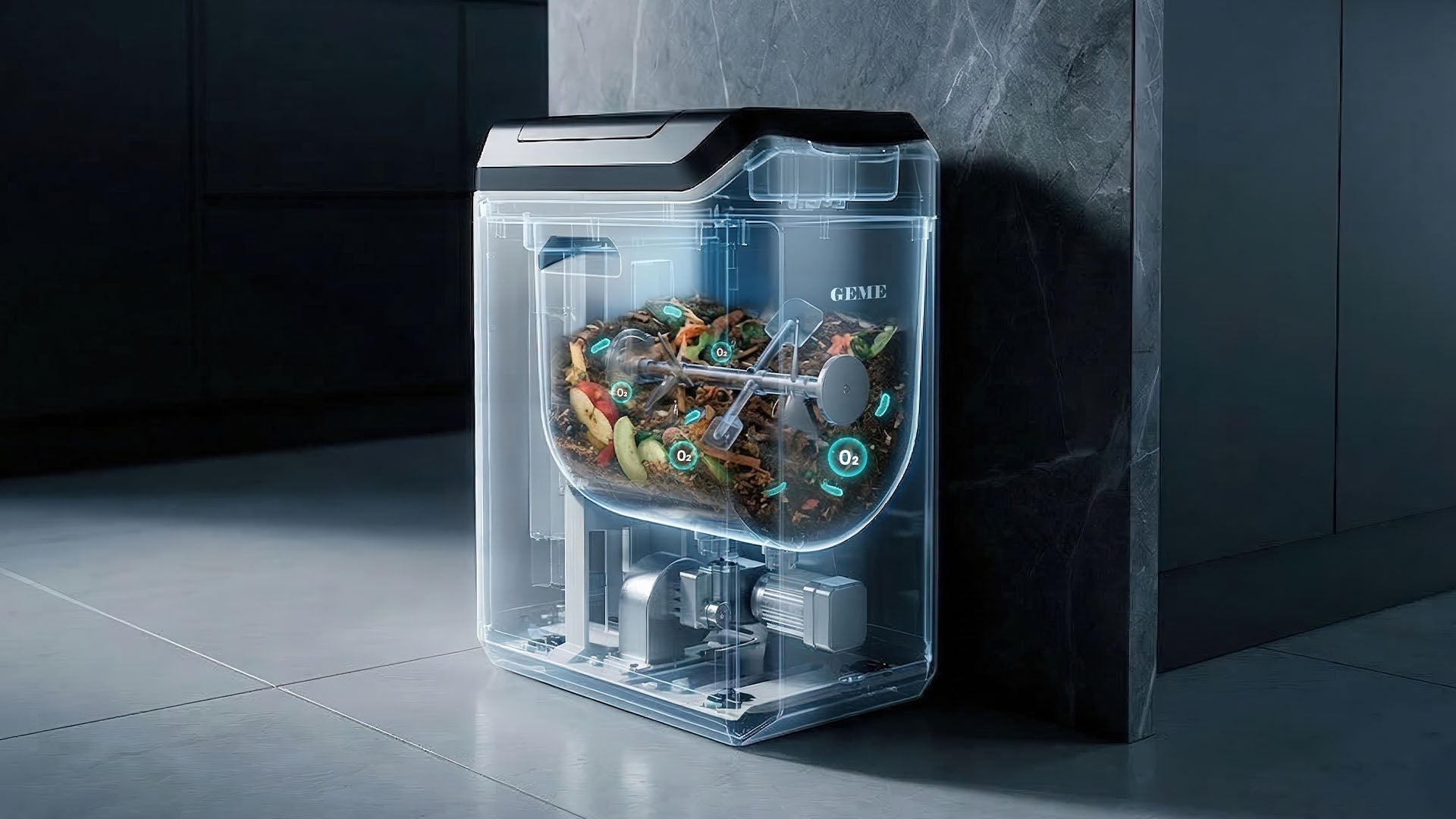
GEME ondersteunt een dynamisch biologisch proces in een gecontroleerde aerobe kamer. Het is niet simpelweg een constante verwarming die draait. Interne biologische activiteit, luchtstroom, vochtigheid, kamertemperatuur en de reactie van de bediening hebben voortdurend invloed op elkaar.
Vanuit de basisprincipes kunnen nattere inputs, koudere kamers, grotere hoeveelheden voedsel en frequente herstelfases allemaal de elektrische belasting veranderen. De eerlijke boodschap is niet: “dit is voor altijd één vast getal.” De eerlijke boodschap is: dit is het normale referentieprofiel, en dit is waarom het kan afwijken.
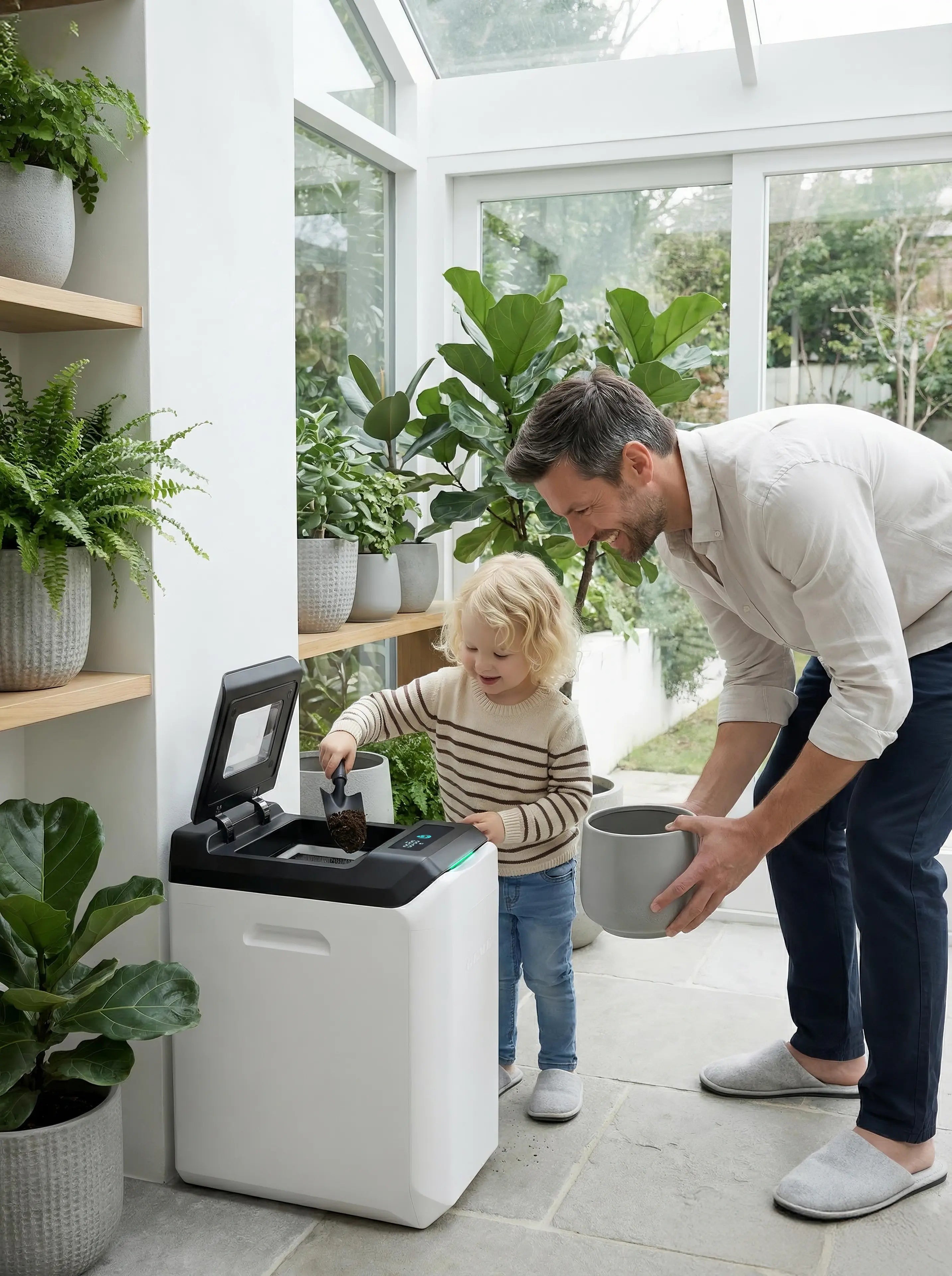
Ontworpen voor dagelijks gebruik, niet voor constante verwarming.
Maak kennis met GEME Terra II
Terra II ondersteunt echte microbiële compostering van geschikte keukenresten, met continu toevoegen, zonder uitdrogen, zonder vervangende geurfilters en met een dynamisch energieprofiel dat is ontworpen voor alledaagse huishoudens.
Gemiddeld vermogen, dagelijkse capaciteit en de aard van de belasting horen bij elkaar.
6. Waarom het verhaal over energie begint met de energierekening en dan overgaat op biologie
De meeste klanten beginnen niet met een thermodynamische vraag. Ze beginnen met een vraag over de energierekening. Dat is de juiste plek om te beginnen. Een goed artikel over energie moet eerst antwoorden op de vraag of het dagelijks gebruik redelijk aanvoelt, en vervolgens uitleggen waarom de belasting zich op die manier gedraagt.
Voor GEME is het “waarom” biologie plus bediening. Het systeem onderhoudt een levend proces: luchtstroom, vochtigheid, warmteondersteuning, microbiële activiteit en het herstel van de kamer hebben allemaal invloed op elkaar. Wanneer er nieuw afval wordt toegevoegd, moet het systeem mogelijk harder werken. Wanneer de kamer stabiel is, hoeft het systeem niet te werken als een machine die constant op hoge temperatuur draait.
Een betere energiemix:
Begin met de realiteit van de dagelijkse kosten. Leg vervolgens dynamische microbiële bediening uit. Begin niet met een beangstigend piekvermogen zonder context.
7. Diepgaande blik op Terra II
Terra II is het wendbare systeem voor de kern van het huishouden. Het verhaal over energie is logisch als je het bekijkt binnen de beoogde huishoudelijke context: een gelijkmatige dagelijkse aanvoer van keukenresten, gewoon familierecepten en een belasting die geen commerciële capaciteit vereist.
Het punt vanuit de basisprincipes is eenvoudig: de meest efficiënte machine is vaak degene die aansluit bij de werkelijke belasting, niet degene met het kleinste getal op zichzelf. Een huishouden dat Terra II past, hoeft niet alleen maar extra capaciteit te kopen omdat er een grotere machine bestaat.
Terra II is de betere keuze wanneer...
- Je keukenafval gelijkmatig en op huishoudelijke schaal is.
- Je het standaardmodel voor dagelijks gebruik wilt.
- Je waarde hecht aan een compact apparaat en een dagelijkse routine.
- Je de grotere capaciteitsmarge van GEME Pro niet nodig hebt.
8. Diepgaande blik op GEME Pro
De energiecijfers van GEME Pro moeten worden bekeken in verhouding tot de grotere belastingmarge. De verkeerde interpretatie is: “een hoger piekvermogen betekent verspilling.” De betere interpretatie is: “Welke capaciteit en marge biedt dit systeem voor een zwaardere routine?”
Als je keuken daadwerkelijk meer doorvoer nodig heeft, kan extra marge verborgen frictie verminderen. Het kan het gevoel verminderen dat je voortdurend ladingen moet opsplitsen, moet wachten met het toevoegen van resten of een kleiner apparaat tot aan zijn comfortabele limiet moet pushen.
Pro is de betere keuze wanneer...
- Je dagelijkse belasting groter of minder voorspelbaar is.
- Je vaak nattere of zwaardere resten hebt.
- Je meer waarde hecht aan capaciteitsmarge dan aan compactheid.
- Je een systeem wilt dat minder krap aanvoelt bij zwaardere routines.

Capaciteit, gemiddeld vermogen en dagelijks ritme horen bij elkaar.
Kies het model dat bij jouw keuken past
Terra II is ontworpen voor alledaags huishoudelijk composteren. GEME Pro is ontworpen voor zwaardere routines en meer marge. De juiste energiekeuze begint met je werkelijke dagelijkse hoeveelheid keukenafval.
Terra II voor alledaagse huishoudens. GEME Pro voor grotere routines.
10. Praktische beslisregels
Kies het model dat zowel je energierekening als je workflow behapbaar houdt.
- Beoordeel een elektrische composter niet alleen op piekvermogen.
- Begin met gemiddeld vermogen, dagelijks energieverbruik en je werkelijke hoeveelheid keukenafval.
- Kies Terra II wanneer je huishouden binnen de alledaagse context past.
- Kies GEME Pro wanneer je keukenafval consequent groter, natter of minder voorspelbaar is.
- Verwacht variatie in de praktijk wanneer de kamer kouder is of de resten natter.
- Bekijk energiecijfers samen met capaciteit en marge.
- Onthoud dat een te kleine machine verborgen werk kan creëren, zelfs als één getal kleiner lijkt.
Kopieer/plak-checklist
- Ik hecht meer waarde aan dagelijks energieverbruik dan aan één spectaculair piektal.
- Ik begrijp dat GEME een dynamische belasting gebruikt, geen vast wattage.
- Ik begrijp dat koudere kamers en nattere resten het energieverbruik kunnen verhogen.
- Ik zal Terra II of GEME Pro kiezen op basis van dagelijkse capaciteit en marge.
- Ik begrijp dat gemiddeld vermogen een betere gids is voor werkelijk eigenaarschap dan alleen piekvermogen.
Veelgestelde vragen
Gebruikt GEME de hele dag een vast bedrag aan elektriciteit?
Nee. GEME moet worden begrepen als een dynamisch systeem. Het onderhoudt een microbiële werkingsvenster en reageert wanneer nieuw afval, vochtigheid, temperatuur of kameromstandigheden veranderen.
Waarom is gemiddeld vermogen belangrijker dan piekvermogen?
Gemiddeld vermogen weerspiegelt beter wat de machine doorgaans over tijd verbruikt. Piekvermogen toont alleen het maximale verbruik op bepaalde momenten.
Is Terra II een constante verwarming?
Nee. De officiële How It Works-pagina van GEME beschrijft Terra II als een apparaat dat gebruikmaakt van dynamische cycli en zegt dat het geen constante verwarming is.
Kunnen koude kamers het stroomverbruik verhogen?
Ja. Wanneer de kamer kouder is, heeft het systeem mogelijk meer ondersteuning nodig om microbiële activiteit en kameromstandigheden te behouden.
Kunnen natte resten het energieverbruik verhogen?
Ja. Nattere resten kunnen meer herstelwerk vereisen omdat vochtigheid invloed heeft op beluchting, kamerbalans en verwerkingsbelasting.
Betekent een hoger piekvermogen een beter apparaat?
Niet op zichzelf. Piekvermogen vertelt je alleen het maximale verbruik. Het vertelt je niet wat de machine het grootste deel van de dag verbruikt, hoeveel capaciteit het biedt, of het bij jouw belasting past.
Moet ik Terra II of GEME Pro kiezen op basis van alleen het vermogengetal?
Nee. Vergelijk dagelijkse capaciteit, belastingritme, gemiddeld vermogen, dagelijks energieverbruik en marge samen. Het juiste model is degene die bij jouw keuken past.
Waar moeten klanten als eerste naar kijken?
Vergelijk dagelijkse capaciteit, gemiddeld vermogen, dagelijks energieverbruik en de werkelijke keukenbelasting voordat je alleen op piekvermogen focust.
Samenvatting
- Piekvermogen is slechts een plafond. Het beschrijft niet op zichzelf de dagelijkse energiekosten.
- Gemiddeld vermogen is nuttiger voor het gebruik. Het weerspiegelt het typische gedrag over tijd beter.
- GEME gebruikt dynamische cycli. Het systeem reageert op voedselbelasting, vochtigheid, temperatuur en kameromstandigheden.
- Terra II is geen constante verwarming. Het is ontworpen rond een microbiële werkingsvenster.
- Dagelijkse capaciteit is belangrijk. Energiecijfers moeten samen met belasting en marge worden bekeken.
- Terra II past bij alledaagse huishoudens. GEME Pro past bij zwaardere of minder voorspelbare routines.
- Koude en natte omstandigheden kunnen de belasting verhogen. Energieverbruik kan in echte huishoudens variëren.
- Beste aankoopvraag: welk model past bij je werkelijke keukenafvalritme?
Bronnen
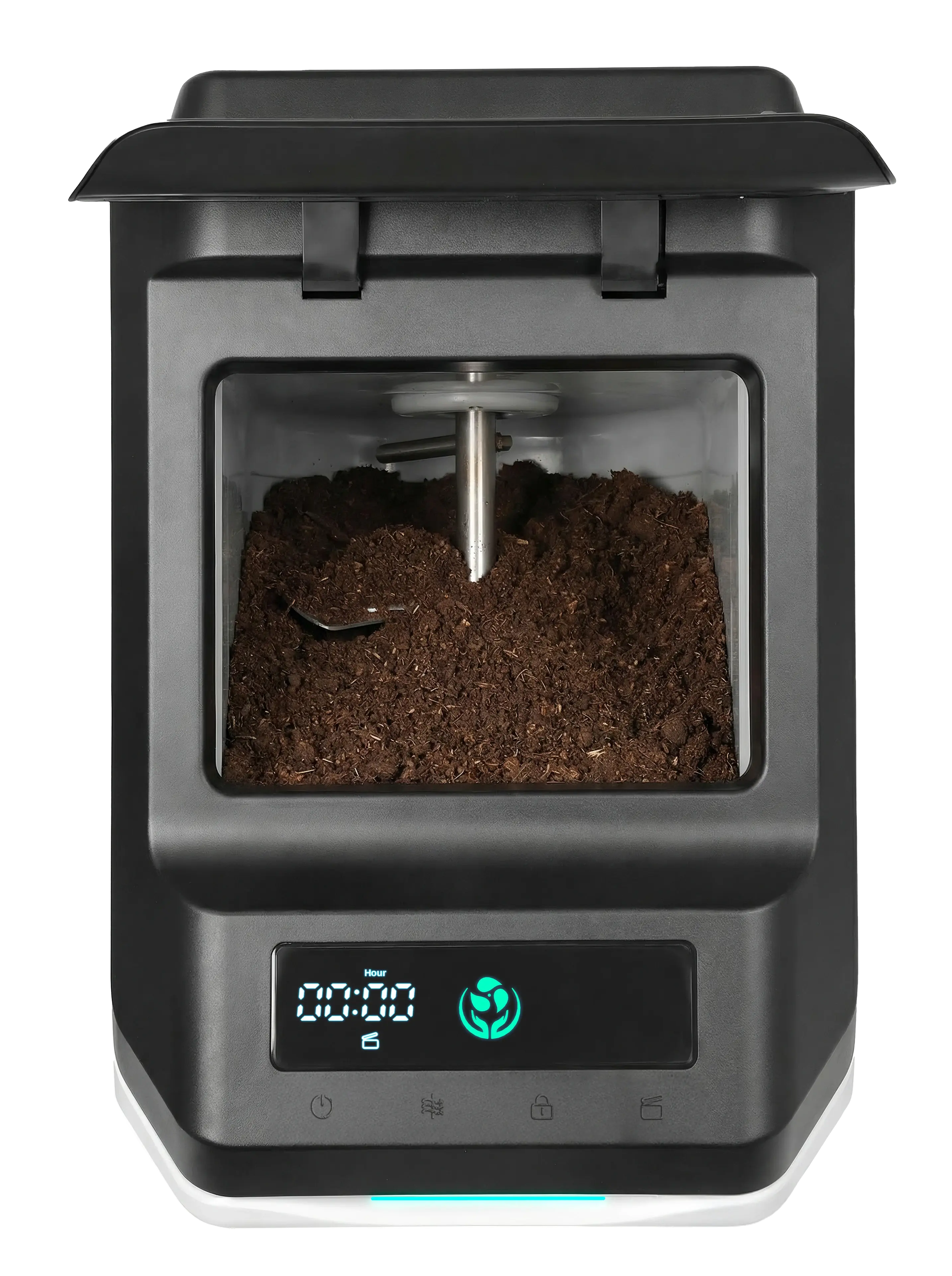
Kies op basis van gemiddeld gebruik, niet alleen op piekvermogen.
Kies de compostbak die bij uw dagelijkse ritme past
GEME Terra II en GEME Pro zijn ontworpen voor echte microbiële compostering, dagelijks continu voeren, geen routinematige vervanging van geurfilters en dynamische werking die is afgestemd op het werkelijke gebruik in de keuken.
Gemiddeld vermogen, dagelijkse energie, capaciteit en werkbelasting horen bij elkaar.

Laat een reactie achter
Alle reacties worden gemodereerd voordat ze worden gepubliceerd.
Deze site wordt beschermd door hCaptcha en het privacybeleid en de servicevoorwaarden van hCaptcha zijn van toepassing.