


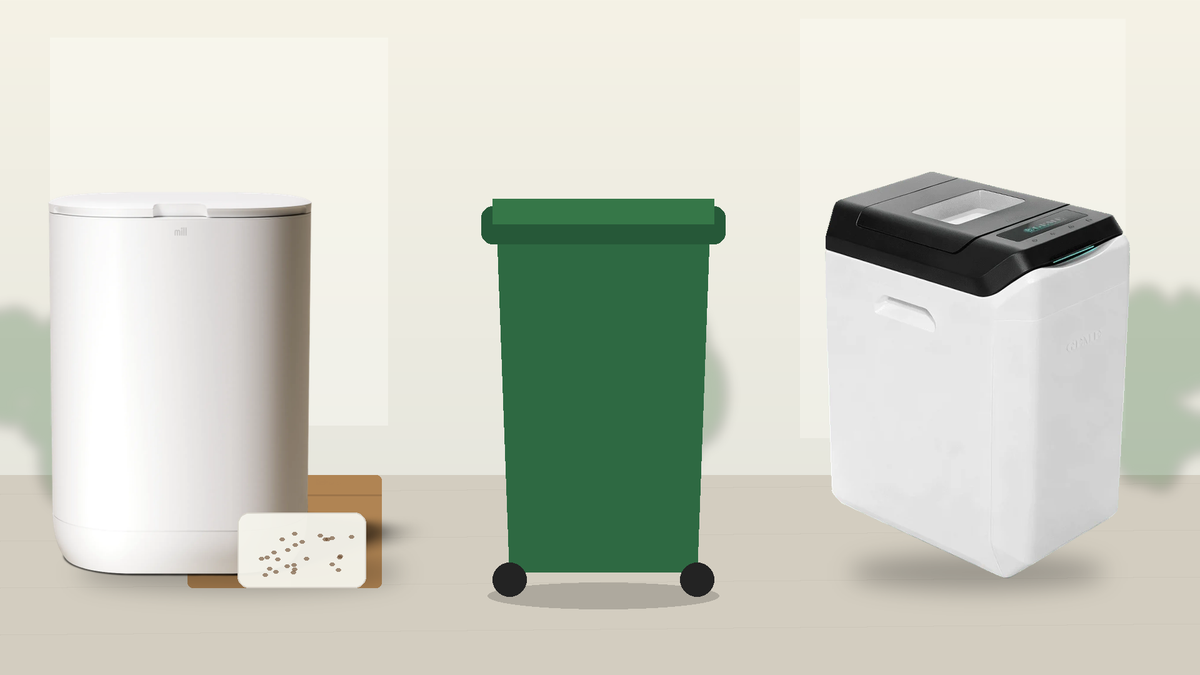
Mill Pickups · Local Organics Collection · Home Composting
The real difference between Mill Pickups, local compost collection, and GEME appears after your container fills.
With Mill, dried Food Grounds still need a destination: use them locally, place them in an eligible organics stream, or package and send them through Mill Pickups. A local compost service transfers the material to somebody else for downstream processing. GEME takes a different route: biological decomposition happens inside the appliance, so the normal next step is harvesting Compost Base and preparing it for soil use rather than arranging another waste collection.
If your goal is the shortest practical kitchen-to-soil chain without routine third-party handoff, GEME has the clearest advantage.
Quick Answer: Mill Pickup, Local Compost Collection, or GEME?
Choose based on what you want to happen after the container fills.
- Mill Pickups: best suited to households that want dry, compact Food Grounds plus a managed shipping pathway and are comfortable transferring, boxing, storing, and handing the material to a carrier.
- Local compost or organics collection: attractive when your municipality or private hauler already provides convenient food-scrap collection at an acceptable cost. Accepted materials, bags, schedules, and final destinations vary.
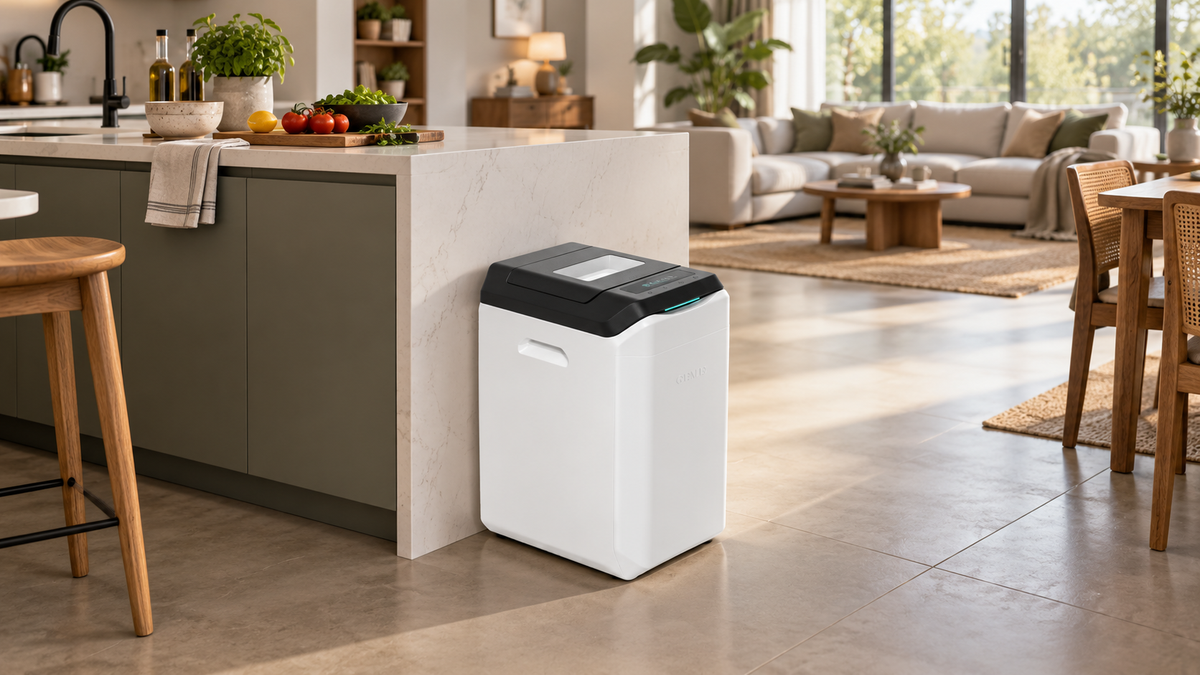
- GEME: best suited to households that want the biological processing step to happen at home and have a useful soil-return pathway for harvested Compost Base.
If you are still deciding what Mill and GEME actually do inside the machine first, read our Mill vs GEME processing comparison. This guide starts where that one stops: what happens next.
For the wider appliance category, start with our Electric Composter Comparison Hub.
1. Three Different Things Can Happen After the Bin Fills
Food-waste systems are often compared by what happens while scraps are inside the container. That misses an important part of ownership.
Once the container fills, somebody still has to decide where the material goes.
Mill: Prepare and Route
Mill dries and grinds scraps into Food Grounds. Those grounds can then follow another route: home use, composting, curbside organics, chicken-feed use where appropriate, or Mill Pickups.
Local Collection: Store and Hand Off
A municipal or private organics service removes material from your home and sends it into its own downstream processing system.
GEME: Harvest and Return
GEME performs the biological decomposition step inside the appliance. When you harvest, the next normal step is preparation for soil use rather than another collection service.

This is why comparing only bin capacity or reduction percentage can be misleading. Two appliances may both make food scraps smaller, yet leave the household with very different work afterward.
Our GEME vs Mill guide explains the processing difference in detail. Here, the unit of comparison is the last mile after processing.
2. What Happens After the Bin Is Full? The Complete Handoff Table
The most useful comparison is not simply “empty the bin.” Break the job into five separate steps: packaging, storage, handoff, final destination, and eventual soil return.
| After-the-Bin Task | Mill Pickups | Local Compost / Organics Collection | GEME |
|---|---|---|---|
| Material leaving the appliance or kitchen | Dry, ground Food Grounds. | Usually accepted food scraps or pre-processed organics according to local rules. | Biologically processed Active Compost Base. |
| Packaging | For Mill Pickups, transfer fully dry and cooled Food Grounds into the supplied liner and prepaid box. | Follow the local operator's container and bag rules. Do not assume plastic or compostable bags are accepted. | No shipping package or curbside collection container is required for the normal home soil-use pathway. |
| Storage before next step | Keep the filled liner securely closed and the box in a dry, cool indoor location until shipment. | Store material until the scheduled curbside collection or until you can reach a drop-off site. | Harvest can be used according to the soil-application guidance or held for further maturation where appropriate. |
| Household handoff | Schedule an eligible USPS pickup through the Mill app or take the prepaid return box to a USPS location. | Place the approved container curbside or take the material to the program's designated drop-off site. | No routine third-party handoff is necessary. |
| Who performs the next processing step? | Mill and its downstream feed-processing system. | The municipality, hauler, compost facility, anaerobic digestion facility, or other contracted operator, depending on the program. | The main microbial decomposition step has already occurred inside GEME; maturation can continue after harvest. |
| Current typical Mill-specific final route | Mill says shipped Food Grounds are inspected, processed, and used as an ingredient for chicken feed. | Not applicable; destination depends on the local program. | Not applicable; the user manages the Compost Base locally. |
| Direct household soil-return path | Possible through a separate home-use or composting pathway, but Mill Pickups themselves are currently primarily a feed-recycling route. | Usually indirect. Finished compost may or may not return to the household. | Yes. Screen the harvested material and blend approximately 1 part Compost Base with 8 parts plain soil, or allow further maturation when appropriate. |
| External service dependency | Yes, when using Mill Pickups. | Yes. | No external collection service is required for the standard home soil-return routine. |
| Recurring collection charge | Mill currently lists Pickups at US$192 + tax per year. | Varies from included municipal service to separately billed private collection. | No collection subscription is required. Electricity and normal appliance ownership costs still apply. |
This table exposes the most important practical difference: Mill Pickups and local collection are logistics systems after food leaves the kitchen; GEME moves more of the biological processing itself into the home.
3. What Happens When a Mill Is Full?
Mill's output is intentionally designed to be easier to store than wet kitchen scraps. The appliance dries and grinds food into material the company calls Food Grounds.
Mill itself states that Food Grounds are not compost. They remain a food-derived material that still needs another use or destination.
Source: Mill Support — What Are Food Grounds?
Option A: Send Food Grounds Through Mill Pickups
Mill currently offers an optional Pickups subscription for households that do not want to manage the material locally.
- Allow Food Grounds to finish drying and cool before emptying.
- Transfer them from the Mill bucket into the supplied food-safe liner and prepaid return box.
- Seal the liner and box.
- Store the box somewhere dry and cool until it is ready to send.
- Schedule an eligible USPS pickup through the Mill app or take the package to a USPS drop-off location.
- Mill receives the grounds, inspects and processes them, and currently routes suitable material into chicken-feed production.
As of September 2026, Mill lists the service at $16 per month when billed annually, or $192 plus tax per year. Home pickup depends on USPS address eligibility.
Sources: Mill — Pickup Pricing · Mill — Scheduling a Pickup

Option B: Do Not Send Them to Mill
Sending Food Grounds back is optional. Mill currently lists several alternatives, including adding them to a compost pile, following its garden-use guidance, using an eligible curbside organics service, or using them as a supplemental chicken-feed ingredient where suitable.
That flexibility is useful, but it also reinforces the key point: Mill is preparing food scraps for another destination. The next destination still matters.
Important: Mill also has local partnerships in some areas. For example, its current Compost Crew program serves eligible households in parts of the Washington, D.C.–Maryland–Virginia region. Therefore, do not assume every Mill household must use nationwide mail-back service.
Source: Mill + Compost Crew
4. What Happens With Local Compost or Organics Collection?
Local collection can be the simplest option when a good program already serves your address.
Instead of buying a separate mail-back service, you place accepted food scraps in the required container and hand them to a municipality, private hauler, community drop-off program, or other local operator.
The U.S. Environmental Protection Agency notes that food and other organic materials can be collected through curbside programs, private haulers, and drop-off sites.
Source: U.S. EPA — Approaches to Composting
The Advantage: Less Processing Responsibility at Home
When collection is frequent, affordable, and accepts the foods your household discards, the routine can be straightforward: store the scraps, move the container to the pickup point, and let the service manage the rest.
The Trade-Off: You Depend on Local Rules
There is no single U.S. curbside-organics rule. Before relying on a local program, confirm:
- whether food scraps are actually accepted;
- whether meat, dairy, bones, or food-soiled paper are accepted;
- which bags or liners are allowed;
- pickup frequency;
- seasonal restrictions;
- fees;
- whether drop-off is required instead of curbside service; and
- where the collected material ultimately goes.
Even Mill tells users to check the local hauler before putting Food Grounds in a curbside organics bin because some programs accept food while others accept only yard material.
Source: Mill — Putting Food Grounds in Your Curbside Bin
Does Local Collection Return Compost to Your Own Soil?
Not necessarily.
Your scraps may become finished compost at a commercial facility, enter another organics-processing system, or follow a program-specific downstream route. Some services give residents finished compost back; others do not.
Therefore, local collection is best understood as outsourcing the next processing step, not automatically as a direct household soil-return loop.
5. What Happens When GEME Is Ready to Harvest?
GEME changes the last-mile problem because the main biological processing step does not wait for another facility.
Terra 2 and GEME Pro maintain an aerobic microbial environment inside the appliance. Suitable food scraps can be added progressively while microorganisms continue decomposing organic material.
When it is time to remove material, the output is Active Compost Base, not dried food waiting for a postal or municipal collection route.

The GEME Soil-Return Routine
- Harvest only what you need. Keep the established microbial bed operating inside the machine.
- Screen the harvested material. Return larger unfinished organic pieces to the chamber.
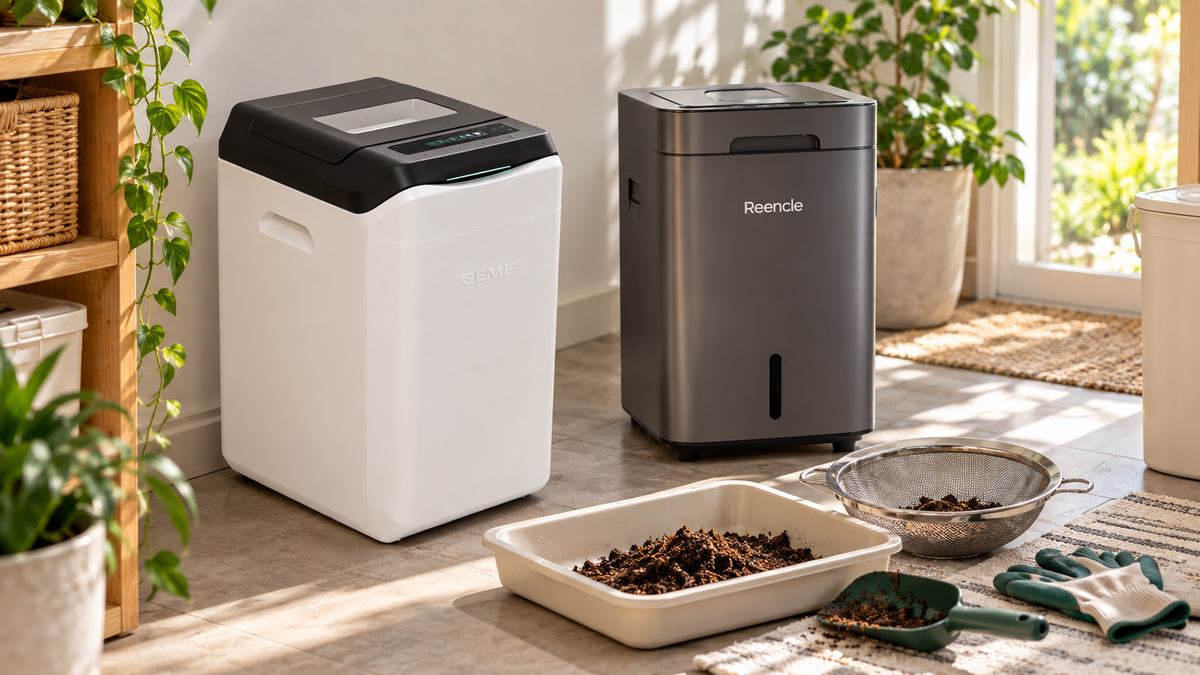
- Blend the Compost Base with plain soil. Our standard starting guidance is approximately 1 part Compost Base to 8 parts soil.
- Allow additional maturation where appropriate. Continuous-flow material can have different residence times.
- Use the prepared soil mixture responsibly. Fresh Compost Base should not be treated as standalone potting soil.
See the complete GEME Compost Base application guide before using a fresh harvest around plants.
The practical GEME advantage is fewer handoffs.
Kitchen scraps enter the appliance. Microbial decomposition happens there. Harvested Compost Base can then enter a defined soil-use routine. You are not required to box the output, book a carrier, wait for collection day, or pay for a separate food-waste pickup subscription.
But GEME Still Needs a Destination
No system makes matter disappear. GEME is strongest when your household has somewhere useful to return Compost Base: garden soil, landscaping, planters, or another appropriate soil-use or maturation route.
If you live in a home with absolutely no realistic soil-use destination and do not want to store or share processed material, a dependable collection service may fit that particular constraint better.
6. Which Route Fits Your Actual Constraint?
Instead of asking which system is universally “best,” identify the step you most want to remove from your routine.
| Your Situation | Most Direct Route | Why |
|---|---|---|
| I want biological food-waste processing at home | GEME | The biological decomposition step happens inside the appliance. |
| I want the shortest kitchen-to-soil chain | GEME | Harvested Compost Base follows a defined soil-preparation pathway without a routine external collection stage. |
| I have excellent curbside organics service already included | Local collection may be enough | A convenient existing service can make another collection subscription unnecessary. |
| Wet scraps smell before local pickup day | Mill or GEME address different parts of that problem | Mill dries and stores scraps; GEME keeps an active microbial processing environment rather than storing raw scraps. |
| I do not have garden or soil access | Collection deserves serious consideration | A managed downstream destination may be more useful than creating material you cannot conveniently use. |
| My city has no useful organics program | GEME or Mill Pickups | Both reduce dependence on a municipal food-scrap collection program, but their endpoints are fundamentally different. |
| I do not want recurring pickup fees | GEME | No separate collection subscription is required for its normal soil-return pathway. |
| I want somebody else to manage the final material | Mill Pickups or local collection | Both provide a handoff route after the household processing or collection stage. |
7. When the Obvious Choice Does Not Work
Your USPS Address Is Not Eligible for Mill Home Pickup
Mill notes that pickup is not available at every address. Users may need to take the prepaid Food Grounds package to a USPS location instead.
If doorstep pickup is a major reason you are considering the service, verify address eligibility before building your routine around it.
Your Local Green Bin Does Not Accept Food
A green cart is not automatically a food-waste cart. Some local programs accept yard material but not food. Check your local operator's current accepted-material list.
Your Local Program Does Not Accept the Scraps You Generate
Meat, dairy, bones, liners, food-soiled paper, and other materials can be treated differently by different programs. A household that cooks heavily should compare its real waste stream with the local accepted-material list rather than assuming compatibility.
You Use GEME but Have No Immediate Garden Work
Harvested Compost Base does not have to become an emergency simply because you are not planting that week. Follow the Compost Base guidance for maturation, storage, and later soil use rather than applying fresh material at excessive concentration.
Your Household Produces More Scraps Than One Model Is Designed For
No downstream strategy fixes an undersized processing system. Match the appliance to the daily kitchen load first.
Terra 2 is designed for up to 2 kg of suitable food scraps per day. GEME Pro increases that to 5 kg/day. Keep individual additions at 1 kg or less.
8. If You Want the At-Home Path, Choose the Right GEME
Once you decide that avoiding routine external handoff is valuable, the remaining decision is capacity.
| Feature | GEME Terra 2 | GEME Pro |
|---|---|---|
| Our recommendation | Best Overall | Best for Large Families |
| Typical household starting point | 1–3 people | 4+ people or heavier cooking |
| Microbial chamber | 14 L | 19 L |
| Daily processing capacity | Up to 2 kg/day | Up to 5 kg/day |
| Individual addition | 1 kg or less | 1 kg or less |
| Processing model | Continuous aerobic microbial processing | Continuous aerobic microbial processing |
| Routine external food-waste pickup required? | No | No |
| Scheduled activated-carbon filter replacement | None | None |
| Current US Basic price | US$699.00 | US$899.99 |
Terra 2 is the natural starting point for most 1–3 person homes. Choose GEME Pro when your kitchen generates substantially more suitable food waste, or you want the larger 19 L chamber.
For a deeper capacity decision, continue to our electric composter guide for large families.
US Basic prices reviewed September 23, 2026. Regional pricing and configurations may differ.
Skip the Handoff. Keep the Biological Process at Home.
Mill Pickups and local organics services give processed or collected food scraps somewhere else to go. GEME is designed for households that want the decomposition step to happen before the material leaves home.
Add scraps. Let the microbial system work. Harvest Compost Base when needed. Return it to soil with the proper preparation.
Frequently Asked Questions
Does Mill Pickups turn Food Grounds into compost?
Mill's current nationwide Pickups guidance says returned Food Grounds are inspected and processed into an ingredient for chicken feed. Mill also states that Food Grounds themselves are not compost. Separate local Mill partnerships may use other downstream routes, so check the current program available at your address.
Do I have to send Mill Food Grounds back to Mill?
No. Mill says Food Grounds may also be used through several home or local pathways, including an eligible compost pile, garden-use methods, curbside organics collection, or appropriate supplemental chicken-feed use.
Can Mill Food Grounds go into a local green bin?
Only if your local organics program accepts food material. Mill specifically advises users to check the local hauler because some green-bin programs accept yard waste but not food.
Is local compost collection simpler than Mill Pickups?
It can be when a reliable curbside food-organics service already serves your home. You avoid boxing and postal handoff, but you remain dependent on the local collection schedule, accepted materials, container rules, and downstream facility.
Does GEME need a food-waste pickup service?
No external food-waste collection service is required for GEME's normal home soil-return pathway. Suitable scraps undergo continuous aerobic microbial processing inside the appliance. Harvested Compost Base is then screened and prepared for soil use.
Can GEME Compost Base be put directly around plants?
Do not use fresh Compost Base as standalone potting soil. Screen the harvested material, return larger unfinished pieces to the chamber, and start with approximately 1 part Compost Base to 8 parts plain soil. Allow further maturation where appropriate.
What if I have no garden?
Consider the destination before choosing any system. GEME is strongest when you have a realistic route for soil use or maturation. A household with no useful soil destination may place greater value on a dependable municipal, private-hauler, or managed pickup pathway.
Which GEME should I choose for a larger household?
GEME Pro is designed for heavier use, with a 19 L microbial chamber and up to 5 kg/day of suitable food-scrap processing capacity. Terra 2 uses a 14 L chamber and is designed for up to 2 kg/day, making it our Best Overall starting point for many 1–3 person homes.
Sources and Related Guides
Competitor services and collection policies were reviewed September 23, 2026. Mill pricing, pickup availability, partnerships, and downstream programs can change. Local organics rules must always be verified with the responsible municipal program or hauler.
- Mill Support — What Do Mill Pickups Cost?
- Mill Support — Scheduling a Food Grounds Pickup
- Mill Support — What Are Food Grounds?
- Mill Support — What Can I Do With My Food Grounds?
- Mill Support — Putting Food Grounds in a Curbside Bin
- Mill Support — Mill + Compost Crew
- U.S. EPA — Approaches to Composting
- GEME Terra 2 — Product Information
- GEME Pro — Product Information


Laat een reactie achter
Alle reacties worden gemodereerd voordat ze worden gepubliceerd.
Deze site wordt beschermd door hCaptcha en het privacybeleid en de servicevoorwaarden van hCaptcha zijn van toepassing.